Good Bye, Lenin!: Guten Tag! and До свидания!

As the first “modern” film after a series of classics, Good Bye, Lenin!’s promise of a straightforward narrative and lack of rule-breaking cinematic trickery seemed like a sharp turn away from the image of European Cinema I, and the class, had been painting in our heads based on the edgy, rule-breaking, distinctly European films that came before. However, Good Bye, Lenin! is anchored by a nostalgic sentiment that makes the film a handy transition between the wildly inventive past and unusually stable present of European filmmaking.

Good Bye, Lenin! makes this nostalgic ideal the driving force of the story, which follows the siblings Alex & Ariane as they attempt to keep up the façade of East Germany’s Socialist rule in the bubble that their formerly-comatose mother, Christiane, now exists in due to her poor health, and keep the progressive, Capitalist-leaning image of the now-unifying Germany out. While the film eventually leads the failure of their attempts (something unbeknownst to the siblings), it highlights the fact that history is something that cannot be delineated and sectioned into eras marked by changes, at least to those experiencing it. Christiane’s acceptance of sociopolitical change, albeit short-lived, sews the divides between political situation and generational ideals together, things that were previously points of contention earlier in the film.

While the film takes a linear form of storytelling, with its quirks remaining within the realm of the film’s humour instead of technical form, what possibly makes the film fresh in the canon of modern European cinema is exactly its seeming divorce from the supposedly artsy craft of Europen filmmaking. By utilizing the form of a traditional mainstream narrative (as is often seen in American cinema) and placing it within the context of European history, with a specifically German humour and social awareness, Good Bye, Lenin! has subverted the shape of European cinema as prescribed by the 20th century. The film is wholesome and tackles homely conflicts, but is painfully aware of this, and smarter in execution because of this awareness.

Like Christiane’s acceptance of social change at the end of it, Good Bye, Lenin! works as a signing off on the use of mainstream modes of storytelling in European cinema, at least within the purposes of this class. Had this film actually been more open-ended, internally self-aware, or fourth wall-breaking in execution, the end result would maybe have been a lesser film. What makes Good Bye, Lenin! a practical and straightforward film is its focus on something that previous films lack, something that threatens the intelligent, radical image of European cinema – Unabashed and unashamed empathy. This is a story about a family driven by love more than anything else, after all, and by embracing this raw sense of emotion and saying good bye to cinematic acts of toying with it, Good Bye, Lenin! proves to be a step forward in the canon of European cinema.
The Five Obstructions: the real film was the friend we made along the way

When discussing European Cinema, what is foregrounded is often the filmmaking techniques that mark the film as unique or experimental in lieu of traditional cinematic techniques. In The Five Obstructions, these so-called subversive filmmaking techniques not only mark the story as unique, but their execution and the choices behind them are the story.

A work of non-fiction (for the most part), The Five Obstructions frames the relationship between Von Trier and Leth as a positive reversal of the dynamic we see between the two female leads in Persona. Where the latter has its central duo break each other down through a reversal of power dynamics to a psychologically devastating end, The Five Obstructions uses its reversal of power dynamics to the end of inspiring and creating new art. Von Trier begins as a young presence inspired by Leth’s work, then becomes a manifestation of the trials of modern filmmaking with Leth as his long-suffering contender, and finally becomes both director and tribute maker to Leth’s champion of cinema.

Von Trier’s obstructions come off as misnomers, due to the cinematic potential that the quirks of each set of obstructions offers. Each work that Leth produces seems to be the creation of a different director, giving Leth a chance to display the range of his technical and storytelling ability, through having to create an entirely new body around the spine of what The Perfect Human is at its core. Von Trier implicitly gives himself his own set of obstructions – having to direct at a meta level, being a man directing a film about a man directing a set of films about the film he originally directed. Von Trier’s feat is making this mindboggling situation into an equal display of his and Leth’s capabilities.

Leth’s remakes of his original work are admirable, mostly because of the narrative of an aged auteur being able to once again revolutionize (by way of modernizing) his cinematic techniques, this time for a new audience, as part of a new wave of filmmaking. The creative drought Leth is in at the beginning of the film is an odd situation to find him in, due to the influential status Von Trier ascribes to him. Most directors of this status, by Leth’s age, have often found their niches long before, and have a comfortable but unique set of trademarks identified as a throughline in their body of work. The film traces Leth’s reawakening as a director discovering what makes him entirely distinct and adept as a filmmaker.

The film also traces a reawakening in Von Trier himself, from an artist known for his provocative works beforehand, into one with a surprisingly empathetic edge, capable of presenting his audience with twice the filmmaking prowess one can see in another film.

L’Avventura: La Vuota Vita

Image result for l'avventura

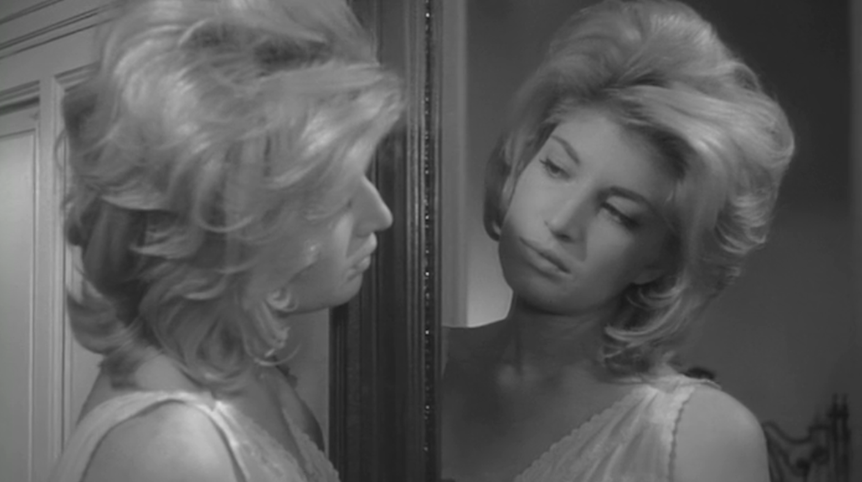
In retrospect, L’Avventura is clear from the beginning about its preoccupation with empty spaces. An empty space is where the heart of the film should be – specifically, the empty space left behind by its faux protagonist Anna after roughly 30 minutes. Upon first viewing, the rest of the film after her disappearance seems to work like a rush of cells hurrying up to fill and close a fresh wound. The end result, subsequently, evokes the despondency of scarring, with the bulk of the film following a long-winded process of healing, or lack of it.

For most of the film, we’re saddled with the two people who each held Anna as one of, if not the most significant part of their lives. Their “loss” of Anna is what becomes the shape of the narrative, instead of the actual search for her as it would in a mainstream film. However, L’avventura doesn’t seem to want to be identified as a Mystery film – almost all its plot points that seem to lead to an answer wind up becoming a dead end. While the film does dwell on the search for Anna for the bulk of its runtime, the film realistically delivers what the immediate situation around a person’s disappearance would look like – life doesn’t happen plot point to plot point until the missing party is found, it continues at its usual pace, sometimes dwelling for almost too long on captivating visuals, empty spaces, and smaller conflicts that arise. The film is unfiltered in this regard, presenting reality in a blunt fashion for all the mystery the film keeps teasing is under the surface.

Image result for l'avventura

The feminine mystique can be named as the scapegoat for all the film’s harsh turns – everyone’s fixation on one woman’s disappearance does jumpstart the film’s narrative, after all. The women in the film behave as if hiding a plot point pertinent to the central mystery of Anna’s disappearance. What makes Claudia distinct from the rest of the women in the cast is that her perspective is how most of the film unfolds, and her desires to find Anna and begin a relationship with Sandro drive the plot from her point of view. This makes Claudia the most vulnerable woman in the film, and the plot only proceeds to take advantage of how exposed she’s become. The treatment of women as either objects to seize or mysterious forces to understand is present throughout the film, and almost seems to make viewers conclude: “If this was the world Anna was dealing with, then no wonder she disappeared”.

L’avventura’s atmospheric use of accentuated settings and lingering takes on characters’ emotional experiences are what mark it as a classic of European Cinema, and its choice to tell a story mostly liberated from dramatic techniques has become influential in waves of independent cinema up until the 21st century. While L’Avventura and its mysticism may require further reflection to appreciate, its radical but simple style of execution is something audiences see and appreciate, whether they know it or not.

Persona: The Safe Word is Nothing

You don’t have to understand Persona, on any level at all, to recognize that the film is a malevolent force. The film elicits fear, emptiness, anxiety, and despondency in its viewers – feelings that often stem from watching a horror film instead of a drama. While the film matches up to its classification as a drama, there remains a threat at its foundation – an existentialist one.

The film achieves this by locking two similar, but disparate existences together – that of Elsabet, an actress, and Alma, the nurse charged with caring for her. Both, professionally, deal with empathy in their trades, the former using it to elicit the respect and understanding of an audience, and the latter using it to reduce the pain and improve the wellbeing of another. By flipping the actions of these women in relation to their roles as professionals, the film seems to examine the ability for empathy to twist into something grotesque in the wake of trauma.

Image result for persona 1966

Elisabet responds to Alma’s attempts to defuse the tension between them and reach out to her as a friend rather than nurse by treating her as a subject, devoid of respect and understanding of her experiences and feelings, becoming an audience member complicit in the dehumanization of the character before her. In response to this, Alma inflicts escalating acts of violence, both physical and emotional on her former charge, hellbent on inciting pain in the woman she was sent to help heal.

At some point in the film, it becomes clear that what makes Alma so appealing to Elisabeth is not a need or desire for human companionship or empathy, but that in Alma, she finds a scene partner – the only kind of person she finds herself able to contend with anymore. Following the laws of scenework and spurred on by the need to fulfill the chamber drama the both of them are engaged in, 2 women initially cast in the roles of nurturer and nurtured to one another become locked in a surreal ratcheting of tension, the only breaks in their conflict being (maybe?) dream sequences, and constaft shifts between provoker and provoked, violator and victim.

Related image

Their relationship is performative until they reach a comfortable point, wherein they (or at least Alma) become expressive. They remain on equal footing, while their friendship’s defining trait is one-sided banter, but when Alma begins to talk about taboo life-changing sexual experiences, the scales are tipped, and the game changes. The relationship becomes a task of keeping said scales balanced, out of love or hate, by way of affection or pain. Elisabet and Anna play this game well, until all they have left to play against one another, as Elisabet is made to speak at the end of the film, is “Nothing.” The same can maybe be said of relationships and how they decay or grow over time, though Persona would never confirm it. All the film ever needed to do was show its audience the glimpse of what to fear from interpersonal dynamics – the Nothing that remains when your capacity for empathy reaches its end.

Image result for persona 1966 nothing

A Woman Is A Woman: Is A Con

A Woman Is A Woman, like its title character, sets out to toy with her captivated audience, and break as many rules as she can and find the next best thing to a happy ending. The rest of the film is a series of detours, gags, and narrative butchery that have become key signifiers of the film’s now-iconic status. In this sense, the film is a con job on an audience thought to be well-versed, even jaded, when considering romantic comedies – A Woman Is A Woman, like a successful criminal, gets what it wants, and leaves its victims feeling more naïve than they thought was possible.

A Woman Is A Woman’s greatest trick lies in its ability to create and commit to the narrative contradictions it utilizes. Angela is the most empowered exotic dancer, at the most polite and carefree strip club, in cinematic history. She and her boyfriend argue, then decide to stop talking to eachother, yet continue the argument nonetheless via written text. The film includes a musical number, but divorces the music and the lyrics. “Is this a tragedy or a farce?”, one of the two leading men asks the other. A Woman has the audacity to attempt to be both, and is all   the better for it. “Either way, it’s a masterpiece.”, the other replies.

Where European films are allegedly known to subvert and avert Hollywood tropes of storytelling and traditional audiovisual technical work, A Woman Is A Woman instead inverts its every given trope, playing its plot for parody instead of criticism. Where a stylistically mainstream film would treat the scene where Angela tells Alfred to wait for her signal via awnings as straightforward, by having her send him a clear signal of her leaving Emile, or a subversive film would have her send no signal and leave Alfred waiting, or an aversive tactic that would do away with the sequence, considering its eventual outcome, the film plays with this dramatic tool, and toys with the audience the way Angela does, by sending Alfred mixed signals, and us a comedic situation out of a dramatic setup. The same can be said of the arc of the film’s love story – all the romantic drama set up falls on its own sword and becomes laughable. The film refuses to subject the tension between its 3 leads to tropes reserved for dramatic, all-consuming love triangles Romance genre-savvy audiences were accustomed to. The film’s most out-of-place scene is also its most typical: One where dramatic & diegetic music foregrounds Angela’s contemplation of the melodrama she’s currently embroiled in.

All these elements work towards an ending that flips off the conventions of romance as told by Hollywood – that love stories end with either a grand gesture and a comedic quip, or heartbreak and separation. A Woman Is A Woman chooses all these things, Angela turning a choice that would be simple in another, serious storyThe so-called resolution leaves its audience with the feeling that things are only going to get increasingly complicated for the characters and their relationships, but at least, for once, the story of a relationship, and the woman bringing it to hell and back, is allowed to be this complicated – the knot that the film twists itself into is what makes it remarkable.