No in betweens

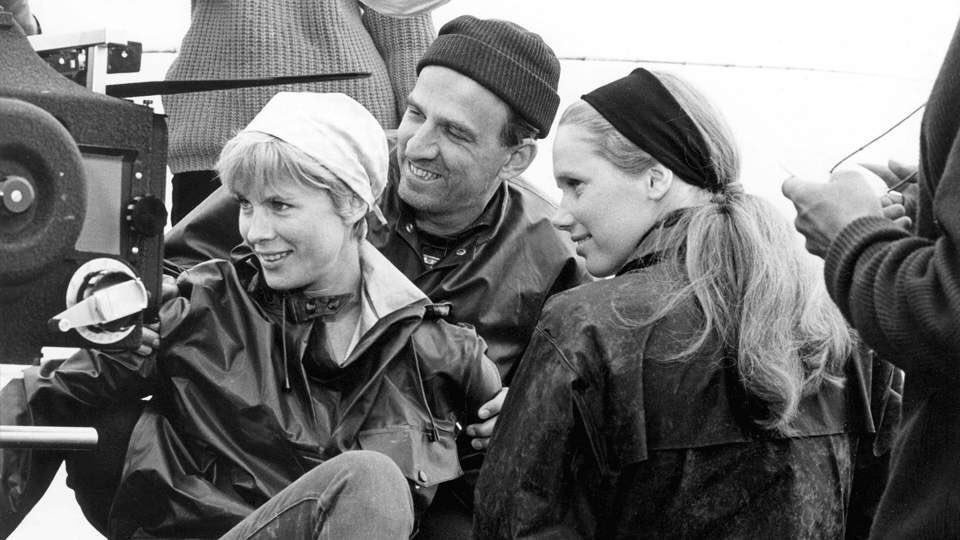
CnV7sFyXEAARNOi.jpgIf I were to describe Persona in one word, it would be “majestic.”

Majestic in a sense that it is so impressively done given the mélange of filmic nightmare aesthetics and the gravity of the natural but brilliant acting done by Liv Ulmann and Bibi Andersson.

Deemed as an experimental Swedish psychological film by Ingmar Bergman, Persona could either silently creep into your veins or lead you to spiral down the rabbit hole- there is no in between.

The film focuses on two main characters, one constantly yearning to communicate and one constantly silent all throughout. Despite the film showcasing mostly lengthy conversations between the two mains, the film goes way beyond it, given the way it is presented.

The beginning of the film is very intricate and unorthodox, starting with film rolls and camera equipment being adjusted and then later on, showcasing a projection of various dark and bold images. One might get puzzled regarding what all of this is about and even at the end of the film, there would always be various interpretations regarding Bergman utilizing these montages.

The whole film is presented in an eerie manner, but the plot draws the audience to a familiar experience of finding difficulty in one’s own constructed identity. I personally felt Alma’s frustration towards Elisabet as she sought for security and reassurance given that she has grown attached to her patient to a deeper and more complex level.

In this film, one would not be able to guess what would happen next. I can say the suspense makes you either desire to leave the movie house or stay glued to the seat.

Again, there is no in between.

The plot starts out with a very direct presentation of the conflict which is about an actress who developed a speech problem and a nurse who would be assigned to take care of her. It was the most common hospital relationship one would see, specifically in the scene, where Alma just turns on the radio and leaves Elisabet, her patient to have a good night’s sleep.

Later on, they would be picking flowers in the garden, laughing in a beach house, staying there together for the actress’ recovery. More minutes in the movie, the two women would be a few centimeters away from having any physical contact and the camera would linger on the sexual tension building up between the two. More minutes in, there would be chasing in the sand, slapping, nose bleeding, bizarre sensual dreams, direct monologues displayed in two takes, with different camera angles and many many more. 

With the variety of elements and play on score that builds up the intensity of the film, Bergman smudges the lines between fact & figment, always leaving clues but never really gives out the answer to the puzzle, leaving the audience with distorted perspectives on whether it was all just a dream or an illusion brought about the reality regarding the two women’s identical internal crisis within themselves despite externally being very very different. 


tragic, comic love affair

A Woman is a Woman, created by Jean-Luc Godard, is a free-spirited work of art, shattering the norms of a stereotypical American Hollywood musical. The film tells a story about an unconventional love triangle consisting of a stripper who wants to have a baby (Angela), her sophisticated boyfriend (Émile) who does not want to be part of the plan, and their common friend (Alfred) who is in love with Angela and is willing to do the work for her. Lots of interesting elements are brought out onto the film that somehow proves the undeniable wit of the director and his mastery of filmmaking by not following the rules but by breaking it.

One great characteristic of A Woman is a Woman is how it showcases a luscious piano score that is segmented into various scenes. The music randomly interchanges with the characters’ dialogue, making it seem like the actors are somewhat singing along with the music. This film is unconventionally theatrical given that there is a huge play on bright colored lights, entertaining choreography but no real dancing and random, quirky camera movements all throughout.

There is a sense of rawness to the film as most of the dialogue in this film is improvised, giving the actors the freedom to show who their characters are.  Other significant features include the actors addressing the camera directly showing much more vivid emotions, film captions that explicate the characters’ situations, sudden camera freezes and jumps, and wide panning that capture the entire room setting with all the extra details even before the main characters convey the storyline.

These different elements make some scenes very distinct and seem strangely realistic. An example of this is the random interplay of background music and traffic noise while Angela was strolling along the Paris streets encapsulating how it is like to be in the Paris scene back in the 1960’s. Other scenes displayed true-to-life relational dialectics between couples as Émile and Angela argued about their future, their possible marriage and the pregnancy that Angela is yearning for. Even though their arguments seem pragmatic for a couple who live together, it was creatively exhibited in the movie as they switched turns in conveying their thoughts through titles on book jackets, as they argued passionately while Émile was running around in circles on a bicycle, and as they had amusing phone calls where they hide their feelings of love through sarcasm and fake anger.

When it comes to the ludicrous yet amusing storyline, the main character delivers everything gracefully with her sweet and goofy aura. From making duck poses, to singing acapella, to overcooking dinner and to hammering the broken shower, Angela encapsulates how unvarnished and faulty a woman can be, but can still possess that dazzling beauty as she walks along the streets with her head held high. Moreover, the male leads mesh well together with Angela’s playful “I-can-get-everything-I-want” attitude, as one completely defies her overindulgence and the other, gaily chases her around. These two extremes establish the solid foundation of who Angela [as a woman] really is.  Frisky and vibrant, the movie knows too well that the audience may be confused whether the woman getting her way is a comedy or a tragedy. But as said in the movie, no matter how bizarre this experimental film might turn out to be, it truly is a masterpiece.