The adventure of L’Avventura

Coming into this elective and having watched two amazing films so far, my expectations for L’Avventura by Michelangelo Antonioni was set high. I was expecting something thrilling; something that is beyond my expectations of cinema. Indeed, my knowledge of 60s European films were limited to the oddness, yet captivating screenplay of A Woman is a Woman by Jean-Luc Godard and the eerie themes of Persona by Ingmar Bergman. Yet, despite my high expectations of being surprised with another kind of film, L’Avventura seems to both fail and exceed such expectations.

Honestly speaking, L’Avventura is the most confusing film I have ever experienced. Not only did it confuse me with its extraneous plot points, it also made me feel generally confused about my feelings towards the film and the activity of being made to watch the film for class. What was I supposed to feel about a movie that I have a hard time understanding to begin with? It may sound harsh, but such feelings led me to believe that this movie is testing me in some way. However, one thing I learned in this class is that one’s personal expectations never seem to meet what the films we’re shown present to us. There is always something surprising, or at least something worth being at awe at.

L’Avventura fulfills such expectation in a way one would not expect it to. When we think of something that surprises us, we think of extravagant things; things that deviate from what is normal, where such deviation creates an exciting feeling for the weird and the unknown. However, L’Avventura is neither extravagant nor exciting. A lot of scenes were prolonged stills of the characters expressing their emotions. In fact, the progression of the film is so slow that when you set the film at twice its regular speed, it would still look like a normally shot film. (This is proven by the fact that my friends and I tried this while watching the film, and to our amusement, the film was still comprehensible despite its unusual speed).

The film then is made surprising by its unusual way of storytelling. It may not have been as exciting as the other films we have watched so far, but it still exceeded my expectation regarding European cinema in the 60s. What makes it great for me is its ability to evoke strong emotions to its audience. It’s almost as if the mournful emotions the characters portray permeate through the screen towards its audience. We mourn for the characters’ inability to communicate their intentions just as the characters mourn for their state, made problematic by their choices. The frustration is strong for both me and the characters as they struggle to solve the real dilemma.

Despite L’Avventura’s inability to bring excitement to its audience, I believe it did bring something significant to us. It surprised us in a way that no known and popular films would. The emphasis on the slow progression allowed us to immerse ourselves with the emotions portrayed by the characters, especially in the slowest moments of the film. This, I believe is what made L’Avventura the most surprising film I have watched for this class so far. It brought me something boring, yet different and meaningful than what was initially expected. Maybe the title itself shows us that there’s an adventure one can seek when watching L’Avventura––and that is seeing its beauty amidst our preconceived expectations.
Art as a Story

Dubbed as the “Mount Everest” of cinematic analysis, it is no doubt that Ingmar Bergman’s Persona will twist one’s head with the genius of its screenplay and cinematography. This movie will leave one confused and frustrated with so many questions left unanswered. Personally, all the questions I would begin to ask at the start of the film only became more complicated the more the movie serves me its story. It felt like I was being force fed with symbolisms and allegories; and although the feeling was disorienting, in some ways it was satisfying. I may have experienced many modern movies, to which I began feeling tired of, but never have I experienced such a movie as Persona.

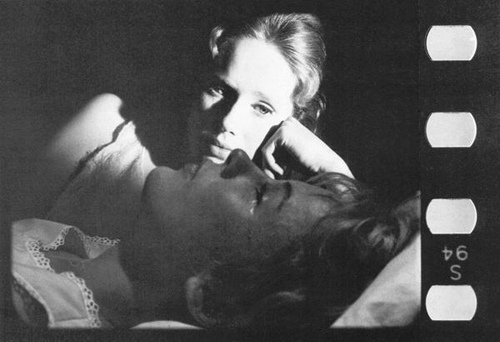
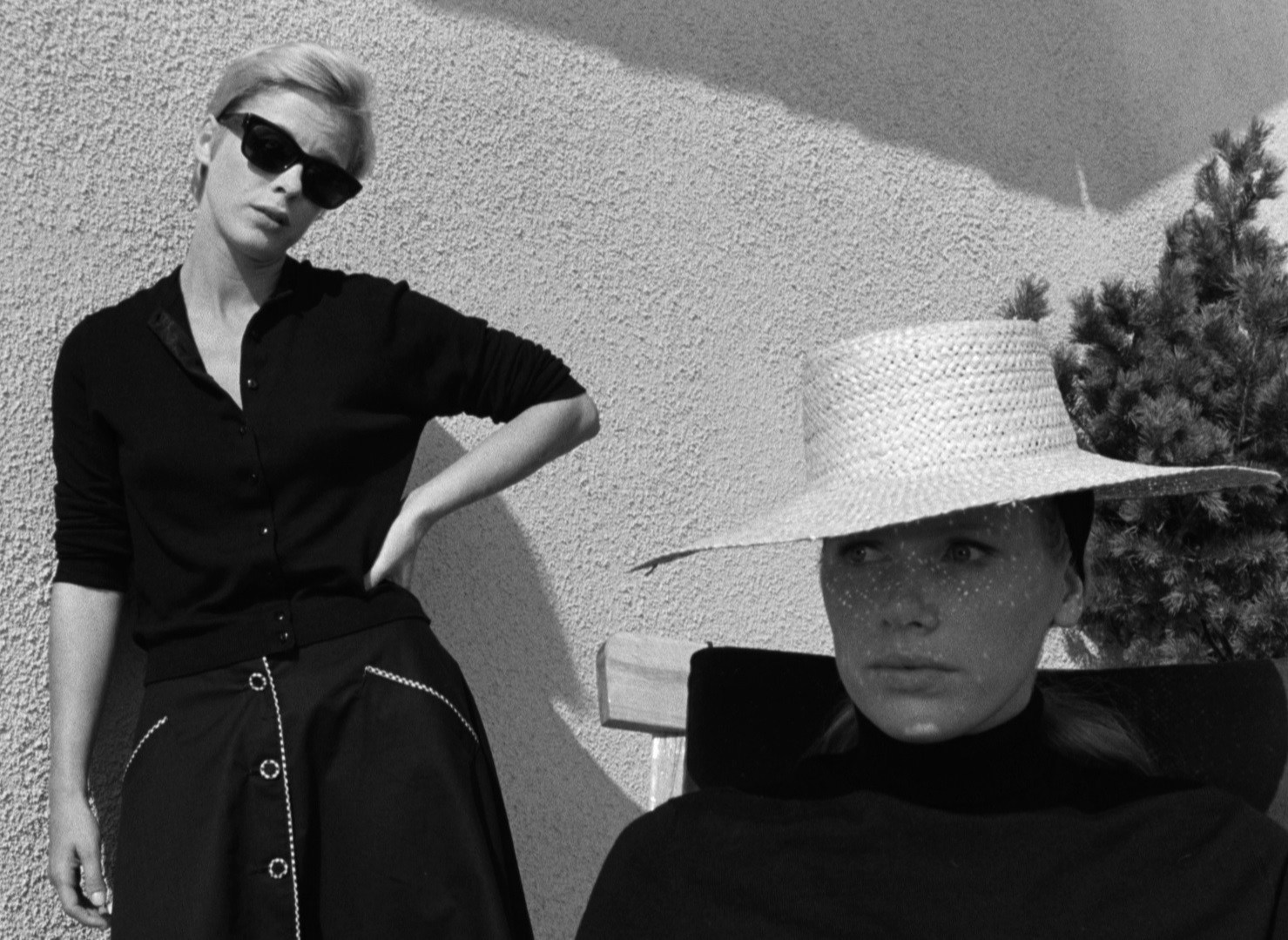
One of the things that really caught my attention about the movie is the way the cinematography was presented. It felt like each scene was a piece of a professionally done photo. As seen through the film, the way the light divides the characters’ faces on close ups really highlighted the impact of the scene. The elements of the image were divided and placed equally in the frame, like in the scene where Elisabet Vogler watches Alma sleep after sharing her intimate story. Although the scene was silent at most, much of its impact was presented through Elisabet’s expressions, which despite being in the background of the frame, was greatly highlighted by the intense light. Even if Alma’s face occupied a big portion of the frame, the audience is drawn to Elisabet’s face, which eerily looks over Alma’s peaceful, yet very distressed expression. A lot of Elisabet’s scenes are often presented this way. It’s almost as if the character purposely hovers over Alma, studying her every expression. And this is exactly what Alma discovers in the story.

I have noticed that after discovering (or at least assuming as this was never really confirmed by the movie) Elisabet’s intention of studying Alma through her letter to a friend, the roles of observant and observee are switched. Yet, we’re still drawn to Elisabet despite her being the one being observed. Maybe because now we have Alma’s commentary to guide us on what to observe about Elisabet. Whereas previously, we were only given Elisabet’s expressions as she looks over Alma, which served as our only clues to figure out what she thinks of her subject. In the two cases, I have always been drawn to Elisabet. It might be that the movie is showing us that despite Elisabet escaping her life as an actress, she still manages to draw her audience in, a skill that an actor must master. However, one thing is certain and that is Elisabet’s use of her facial expressions to communicate her character’s dilemma. What is amazing about this is that scenes that show a close up of her face looks like a different image per frame. Even the slightest movement of her lips evoke a different kind of expression. I often wonder in scenes like this what Elisabet is truly feeling.

Many observations and questions arise the more one watches Persona, as stated by many, including renowned film critics. I offer one observation which may be contradicted by another. Yet, both observations may equally be true as declared by critic Peter Cowie. Despite the confusion on the true meaning of Persona, it is in it’s art and cinematography that one may be given the satisfaction Persona seems to be depriving us from. Perhaps, its true meaning may be hidden among the frames the movie presents to us.

Comedy Against Tragedy: A Commentary on Godard’s A Woman is a Woman

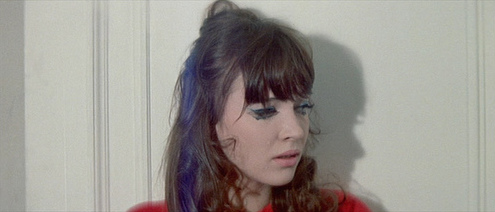
Anna Karina in A Woman is a Woman

Common western films today are, what I would describe, very mainstream. A lot of the films I have seen often have common story arcs and themes. We’re exposed to romance, comedy, horror, action, and the like which are reflective of daily life or show a break from it. These films are what we would usually classify as normal; we’re used to them and it takes a really good film to surprise us. However, in this elective we will be exposed to films that disconnects itself from the norm. Such films are meant to be different and unusual to the point that it may be discomforting at times.

A Woman Is a Woman by Jean-Luc Godard is a French film that causes such feeling. Released during the French New Wave, it is a salute to American musical comedy which rejects traditional film mediums. And because it is so different from traditional film, it may be considered to be too odd, especially for people like me who is only immersed in mainstream film.

The film begins with a beautiful woman named Angéla. She is captivating like most stereotypical women in film. Her happy-go-lucky attitude fits perfectly with the music that comes along with every scene she’s in. However, at odd moments the music stops; almost as if someone purposely muted the film randomly. It made me so uncomfortable at times that I began thinking if it was really part of the film or was the film broken given that it is old. As the movie progressed, I realized that at the moments when the music played, a comedic scene is shown.

One scene in particular where Angéla and her lover Émile began arguing about having a child, best exemplified this tug-of-war between the comforting sound of a perfectly fitting musical score and the silence which accompanied scenes that were very serious in tone. It was as if the film and all the elements in it were fighting about whether it will be a comedy or a tragedy, as said by Angéla who has dreamed of being in a comedy herself. The comedy comes when the music is cued and the characters begin acting childishly, like when Émile rode his bicycle around their apartment and when the two lovers made up. The conversations of the characters were also odd at times, first sounding childish and playful which was accompanied by music, then becomes very serious in silence as characters are pulled away from the fantasy of the comedy.

I realized that throughout this movie, the seriousness that came about the silence of the music seemed to be showing Angéla’s true emotions. The beginning of the film shows you a stereotypical woman in film but surprises you with the fact that Angéla was in fact an exotic dancer. She seems very liberated at first but through the montage of her in the bar, I saw and felt that maybe she was trapped in some way. When the silence of the music comes, you notice Angéla’s vulnerability. This for me was best shown when she performs in the bar. The song she chose talks about her being cruel, yet she is a beautiful woman. The creative use of color, music, and lines made me feel captivated, yet sorry for her. It was for me, both entertaining and somber. Although this may be foreshadowing her choosing to cheat on her lover when he refuses to have a child with her, I kind of saw that she was trapped in the limited time she has to bear a child. This being her ultimate goal, motivates her to act on her own as a woman with no limitations. In the end, her story towards this goal best exemplifies a story that is both comedic and subtly tragic.