Bonus: Mune, le guardian de la lune

Alexandre Heboyan’s and Benoit Philippon’s 2014 French computer-animated adventure fantasy film, Mune, le gardien de la lune (Mune: Guardian of the Moon), revolves around Mune, a small, elf-like creature who was chosen to be the next Guardian of the Moon, much to a lot of people’s despair.

The film revolves around nature. That is, like reality, there is a light and dark side of the world that are controlled by the Sun and the Moon, respectively. Wherever the sun is is where it is daytime and wherever the moon is is where it is nighttime. Both entities (the Sun and the Moon) have respective guardians that control these large animals who pull the Sun and the Moon; a peacock pulls the Moon while a boulder-like creature pulls the Sun.

The film, especially since it was meant for children (obviously not me), created a whimsical world, where there were all sorts of faura and fauna and these furry creatures (which kind of reminded me of minions) tried to keep the Moon from stowing away through their webs and get mad (in a cute way) at Mune when he did not play the strings correctly. Furthermore, the chosen Guardian of the Sun, Sohone, was the stereotypical jock who was arrogant and a ladies’ man but, eventually, shows compassion and courage and befriends the main character.

What I like about the film is that it creates a (maybe) new mythology about the creation of the Sun and the Moon. The film was pure fantasy and a bit fairytale-like, but it also has various themes, such as when Mune was able to realize what powers he has and what he can really do, and when Leeyoon, who was supposed to be the Guardian of the Moon, realizes his incompetency and arrogance and shamefully backs off from trying to be the Guardian. It shows how, unlike most films, Leeyoon was innocent and wanted to do what was right, as compared to the stereotypical semi-antagonist who always pushes through his/her original plan of sabotaging the protagonist.

Moreover, I like how the film tries to exhibit how no one really is mean-spirited. It tries to show that there are some factors, which in the film was the serpents, that try to corrupt our minds and, thus, our intentions, into unconsciously wreaking havoc on other people. That was the case for Leeyoon, who was freed from these “serpents” after a while, for Sohone, who managed to break free thanks to Phospho’s (the old Guardian of the Moon’s) intervention and sacrifice, and most of all, Necross, who Mune had eventually freed from the serpents after decades of hatred in his heart and had eventually found peace.

Conclusively, I think although Mune: Guardian of the Moon targets young kids, it would be better suited for older kids, as it follows a complex plot that younger kids would not be able to follow that easily. It also reminded of films such as Kung Fu Panda, where the protagonist had to show that they were worthy of the title because a lot of people were doubting them. The film was also charming in a way, with Mune’s light romance with Glim and his eventual friendship with Sohone, the genuine friendships of the past Guardians, and, fundamentally, the sceneries they get to experience through their adventure.
A Cult Classic Comedic Romance, With A Little Bit of Stupidity And A Lot of Adventure

To be honest, I was scared of watching Heavy Trip. With its use of heavy metal music and characteristics, the film’s target audience are metal fans. Suffice to say, except that one time when someone played a metal cover of Let It Go and uploaded the video on Youtube, I have never really been a fan of heavy metal music, let alone soft metal ones. However, the film proved to be better than what I expected from it.

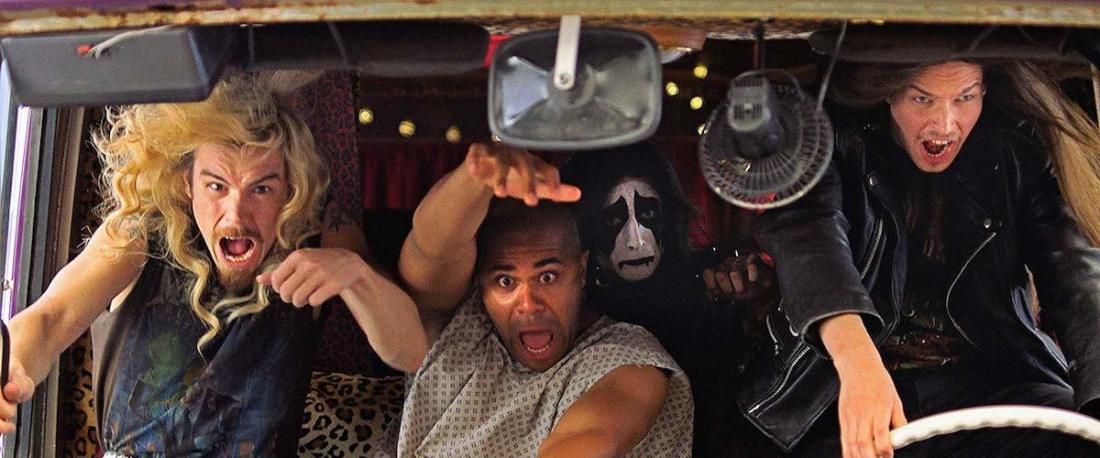
As Juuso Laatio’s and Jukka Vidgren’s first feature Finnish film, Hevi reissue (Heavy Trip) revolves around the adventure of friends Turo, Lotvonen, Pasi, and Jynkky as they try to make their way into fame and stardom from a little Finnish village called Taibalkoski to a Norwegian metal festival called Northern Damnation. In essence, the film may be a coming-of-age movie, a cult-classic, or whatnot, but what I can honestly say about it is, even though I was not part of its target audience, I was still able to enjoy watching it. Unlike the other films we have watched, this story was the most predictable for me. That is to say that although it focused on heavy metal music, I was unpredictably comfortable watching it, with its comedic, romantic, crazy, and sometimes cringey scenes that, put together, creates a feel-good film.

As a wannabe black metal band, and especially with long hair, Turo and his friends experience prejudice and mockery by the people in their small village. They were called losers, hippies, and Mia’s father even wanted Jouni to marry Mia instead of Turo, because according to him, the Impaled Rectum consisted of a druggies, addicts, and hippies and Jouni was the perfect son-in-law – not Turo. Essentially, with the exception of their families and Mia, the whole town did not like the Impaled Rectum. However, we can see that it was the opposite when they heard that the group would have their first gig – internationally! The guys who mocked Turo for his hair apologized and told him he was awesome, and everyone wanted to hear them play at where Jouni usually plays. With the exception of Mia’s father, this shows how the town only supported them when they were sure that the group had a future in what they’re pursuing. When they were not sure, they merely mocked and made fun of them – isolating them for what they stereotypically look like. However, and I have to say, that I admire what Mia’s father was trying to do. He was hard at Turo, because he wanted what he thought is best for Mia, and he thought that “best” was Jouni. But when Mia told him she wanted Turo and that her dad doesn’t have to protect her anymore, he was really supportive and tried to stop the military from advancing towards Turo when the band was playing. Essentially, even though he seemed a bit judgmental, as a father, he just wanted to protect his little girl.

Lastly, I think the death of Jynkky, although a bit extreme, was fundamental in the story. If it weren’t for them taking his casket and the casket accidentally falling into the water, the group would not be able to go the festival (by means of Vikings ships, I might say). Their adventure even had them admitted to play in the festival, which they know is what Jynkky wanted even if he was already dead.

Conclusively, Heavy Trip provided a fun and, somehow, unique way to end my last semester. Although it was a bit Hollywood-y, I think with the story’s mix of comedy, romance, adventure, craziness, and maybe a bit of stupidity, it kind of sums up my experience in the class. That is, the films we have watched throughout the semester, with the various film genres we’ve encountered, can be summed up by Heavy Trip.

Vegetarianism and Cannibalism: The Two Extremes

A female coming-of-age film, Julia Ducournau’s 2016 film, Raw, tries to unravel the awakening of Justine, a young woman who experiences increasing awareness regarding her own sexuality and appetite.

The movie begins with Justine and her parents eating at a cafeteria, and in which Justine’s mother angrily storms towards the cafeteria staff when she saw a piece of meat on Justine’s palate. As I was watching the film for the first time, I found it odd that Justine was a vegetarian even though she has not even tried meat her whole life, as was implied when her mother exclaimed the possibility of her being allergic to meat. However, especially in Asian culture, it was normal for us to not be introduced or to not be able to experience certain activities just because our parents tell us so, which is why I think I brushed it off after a while.However, especially when Justine was forced to eat the rabbit kidney and puked, I knew then that at some time, there would be a life-changing event that would, maybe, cause a shift in Justine’s character.

In terms of her and her older sister, Alex, however, a contrast in personality can be seen between them. Initially, Justine was the typical innocent goody two shoes who was sheltered by her parents, especially her mother. Especially at the start of the film, it looked like Justine was being forced to do things just because her parents want her to do it. For instance, she went to the vet school even though she did not show any sign of wanting to go there and, as stated before, was a vegetarian even though she hasn’t even experienced eating meat beforehand. However, once she was at the vet school, and especially with the encouragement of her sister in eating meat, the film exhibited how Justine became a curious, daring (both in the physical and the mental sense), and confident young woman, which can be attributed to solely her introduction to eating meat. In that sense, the start of the film made it apparent that Justine, as stated, was innocent and sheltered while her sister was confident, self-aware, rebellious and a go-getter. Furthermore, as even stated by their father, throughout her cannibalistic episodes, Justine can be seen to be stopping her inclination to eat meat whereas Alex finds no fault in it and even intentionally causes car accidents in hopes of eating whoever she knows would eventually die from said accidents.

Conclusively, the film mainly focuses on two things: Justine’s cannibalistic side and her relationship with the people around her. Her cannibalism, although taboo and maybe immoral, starts an exploration within herself in discovering who she really is – without the control of her parents. In it, she discovers that, although she initially thought she was a vegetarian, what she was taught and what/who she really is may be two completely important things. Her vegetarianism and cannibalism can be seen as two different extremes wherein she has to find a balance between not eating people off and eating meat, which I think she would be able to do someday, as her dad had said that the dilemma was not really on stopping herself from eating meat but on really handling their cannibalistic side.. Lastly, the film shows the great bond that the siblings have. Even though Justine ate Alex’ finger and Alex (tragically) ate Adrien, the two still chose to forgive and support each other. This can also be shown when they helped each other in warding off other people after their fight scene. In a sense, the film includes, but is not exclusive to, some of the goriest science fiction scenes that I have ever watched and yet tries to establish bonds between its characters within their world of differences, secrets, and genetic inclinations.

Edukative Dialogue or Terror

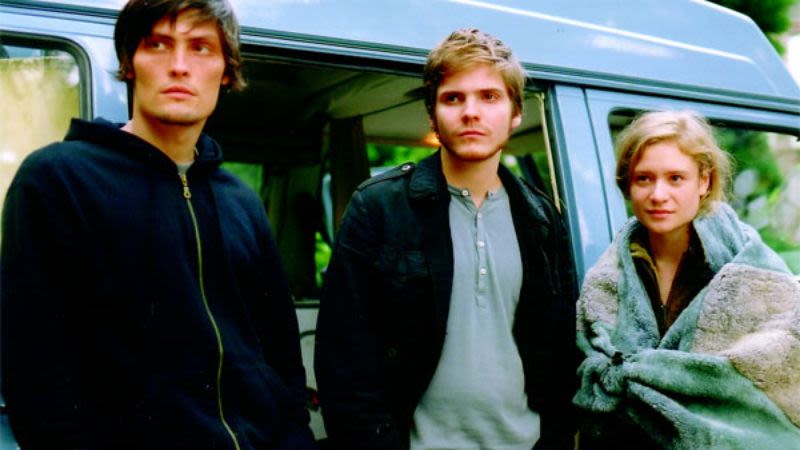
To be honest, I felt provoked half of the time I was watching the film. As someone who has grown up being taught to be accountable for my actions and realize my responsibilities without blaming others, watching Hans Weingartner’s 2004 German-Austrian crime drama film, Die fetten Jahre sind vorbei (The Edukators) honestly made me want to lash out at the characters – including Hardenberg. The film revolves mainly around three young, anti-capitalist Berlin activists, Jan, Peter, and Jules, as they find themselves involved in a love triangle while kidnapping Hardenberg, a fifty-something year old rich guy whose car Jules totaled.

The funny thing is, I understand their ideals and their cause – even respect them, like Hardenberg said. However, I think the film really aims to be provocative, to be unlikeable to its audience, as it revolves around the perspective of young activists – something that not a lot of people have experienced. In that sense, the film had successfully done that by portraying ideals that said young activists have that are mostly different from what I’m used to. It explores a new perspective that somehow makes us empathize with them – in some aspect. The film talks about the huge disparity between the rich and the poor. On one hand, the rich do not really seem to care for others but themselves – exploiting the poor to gain more money while they live in lash houses and collect artisan dolls to be merely displayed in their living rooms. On the other hand, the poor are stuck in a never-ending cycle of working their butts off just to make ends meet, risking being kicked out of their worn-out apartments because they could note pay rent’s due on time (like Jules), and turning to anti-depressants (e.g. television shows and alcohol) to forget that they’re barely living in this capitalist society.

However, I think the things that provoked me was mainly how they blamed rich people like Hardenberg for people like Jules being in debt. Although most rich people do exploit their workers, which is totally wrong, not everything they blame the bourgeoise is really their fault. For instance, although I empathize with Jules because she’s in debt, I do not think we can call it “injustice” to let someone who crashed our car pay for the damages she has caused. That is, she should pay for it, because letting her get away from it somewhat implies that those who have considerably less wealth than people like Hardenberg can cause damage to other people’s property and get away with it just because they earn way less than they do. Given that, people who do not make a lot of money won’t be accountable for their actions anymore, which is why I think it’s not injustice to let Jules pay for the car she totaled, mainly because it really was her fault. However, as an executive and, therefore, as someone with money, Hardenberg should have helped Jules in paying for the debt she owed – maybe by giving her a better job opportunity to pay him back, but nonetheless, I think it’s their duty as people with power and prestige to make other people’s lives easier – which is the Edukator’s cause. Conclusively, as a thought-provoking film that aims to portray idealisms from completely different socioeconomic classes, The Edukators reveals the different ideals of the suffering people in the working class and of the comfortably living bourgeoisie. The film somehow creates a discourse on the flaws and the good sides of the ideals and methods of both classes – slightly leaning towards those who are suffering. It allows its viewers to empathize and fundamentally understand the perspectives of those that some people may call “radicals” in a much more humane light. In a sense, I think The Edukators may be one of the most accurate portrayals of the world political system.

History as His Future

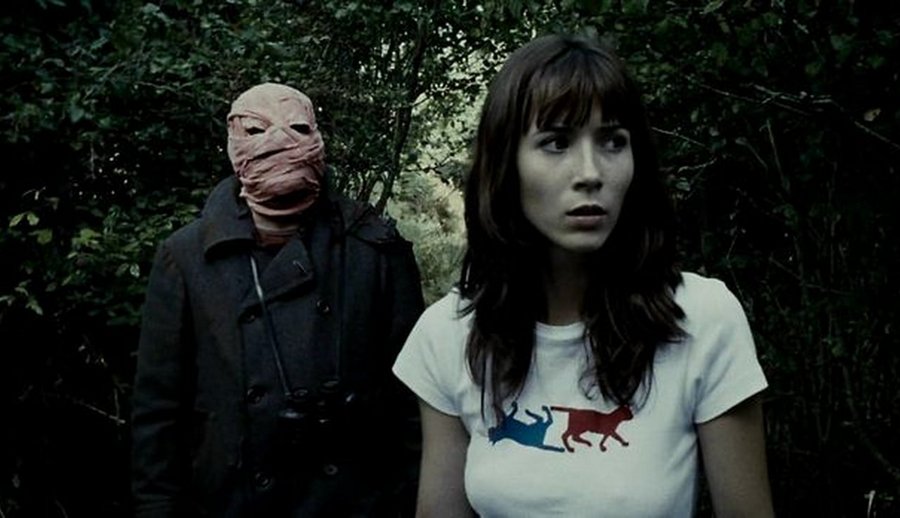
Nacho Vigalondo’s 2007 Spanish science-fiction time-travel thriller film, Los Cronocrimenes (Timecrimes) aimed to enhance its viewers skepticism, which it had successfully done with it’s storyline’s use of dark humor and bizarre twists. Having said that, I think it’s safe to say that the film was amusing. In watching it, one would think that the antagonist would be some delusional and mentally disabled person (especially during the scene when said person pretended to be copying Hector with his binocular). However, it’s funny to realize that said “antagonist” was Hector himself!

The storyline mainly revolves around Hector, a middle-aged man who finds himself part of a time loop, and his dilemma of stopping his other selves from continuing to exist, which consequently causes more trouble and makes him go back in time again and again – or maybe just three times.

At first, I thought it was going to be like The Cabin in the Woods, where cannibals and psychotic people reside in the woods, waiting for people to go there. As said before, this was especially supported by the scene where Hector 2, with his blood-stained bandages and knowledge of what he himself showed Hector 1 before, tried to act like a mentally-deranged person with imaginary binoculars. However, especially once Hector has been teleported a couple of hours back and when his bandage started to become pink because of blood he got from his car accident, it then started to become clear that Hector may have been behind everything. At that time, though, I thought the person who had seemingly hit his car accidentally and had caused him to have a bloody face was just a random passerby, but then another plot twist was it was really him! Essentially, he was the mastermind behind everything that happened that day – he just played himself.

Lastly, I like how the film manages to answer all of the puzzles it seemed to show at the start of the film – which is mainly answered from the actions of Hector 2 and Hector 3.  However, one thing that remains a mystery to me was why Hector went into the woods to investigate about a girl who he creepily watched getting naked in the woods. I do not know if he was being a pervert or being concerned for the woman. The film made it look like he was concerned, but why would you go to the woods to look for a woman that you had just seen naked with your binoculars? Because she suddenly disappeared? Maybe it’s confusing to me because I’m not a guy nor am I Spanish, but personally, if I saw a naked woman strip naked in the forest and then disappears, I would not go to the woods just to look for her. For me, that part made Hector look like a creep. However, I quickly forgot about that when somebody suddenly stabs him in the arm. That gave me “thriller” vibes, which I’m not really fond of because I easily get scared.

Conclusively, Timecrimes is a unique time travel thriller that maybe aims to tell its viewers that history has already been written, maybe by ourselves or, in this case, our future selves. In the film, the actions of the future ironically dictate the actions of the present, and that is why I think the film truly did deserve appraisals for its creativity.

Troll Conspiracy

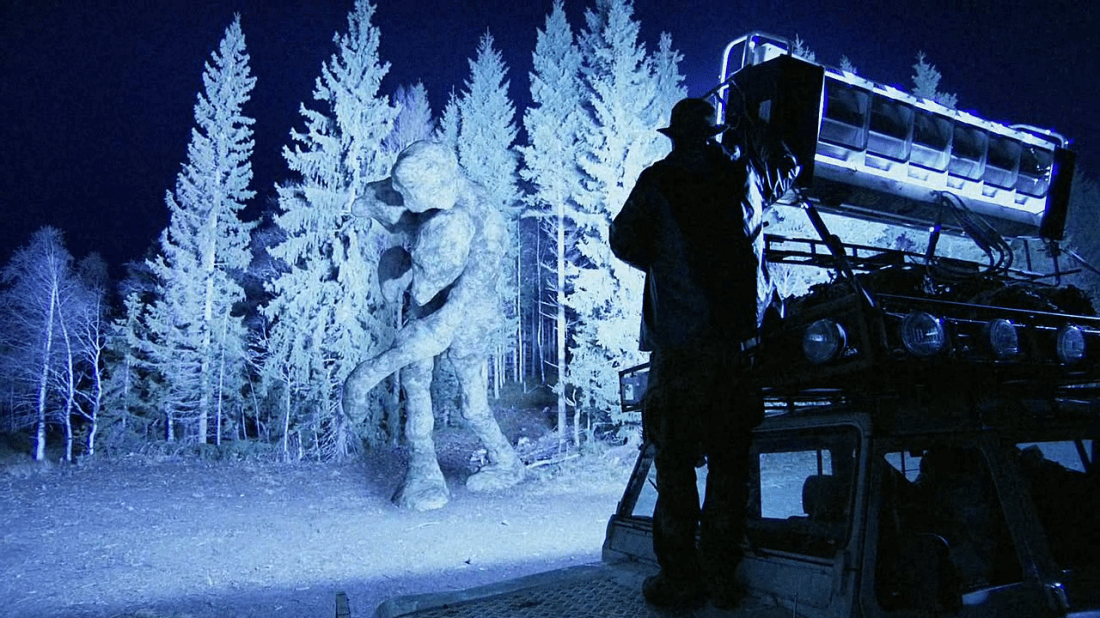
I don’t­­ why, but André Øvredal’s 2010 Norwegian dark fantasy film, Tolljegeren (Trolhunter), somehow reminded me of the German film, Good Bye, Lenin! (2003). Maybe it was because the accents of the characters were somehow similar [for me], because one of their main characters resembled each other, or because most of the main characters in both of the films seemed kind of naïve to (especially in the beginning), but both films seemed somewhat similar in an aspect. However, other than that, Trollhunter is a film that aspires to move its viewers by making them second-guess the reality that they live in.

Honestly, after watching the film, I was contemplating the possibility of whether trolls were real. Are they being hidden by the government which aims to “protect” its people from unknown possibilities? Are there really mythical creatures hiding in the forest? Are all conspiracies true? We do not know. However, Trollhunter was able to successfully make me think of those possibilities. Its use of scientific explanation, especially with how trolls can be turned into stone when exposed to ultraviolet lights also supports the idea of said possibility being true. The crew even added the ending scene where the Norwegian Prime Minister candidly confessed to trolls being real while being interviewed by the press. Moreover, the cinematography and the way the shots seemed so natural made it more realistic. There were even instances where the lens was broken while filming and when the someone dropped the camera due to fights or when they were running. It also reminded me of the Paranormal Activity films where the footages and the storylines seemed candid to make them seem real and scarier to the audience.

However, I think one flaw that the storyline seemed to underthink was the fact that trolls can smell a Christian person’s blood. To me it seemed unrealistic, as it’s kind of subjective to be a Christian. How can someone know they’re Christian? Is it because they go to church or because they pray? Also, if someone were to transition from non-Christianism to Christianism, how would his/her blood change? And what do trolls have against Christian blood anyway? In a sense, the part regarding the Christian blood dilemma made no sense to me.

However, I liked how, after their cameraman was killed by a group of trolls because he was a Christian, the film stayed true to its structure and maintained portrayal of having a “broken camera lens” until they found another camera person. I also liked how the film crew added the scene where they revealed how trolls have rabies, which affected Thomas and caused him to have rabies. However, although some viewers might not notice it, but Thomas was feeling ill one minute and the next minute, he’s running to help Hans kill the Jotnar. He even had the energy at the end of the film to run (albeit unsuccessfully) from government agents.

Conclusively, Trollhunter was entertaining and may seem realistic to some of its viewers. As a fan of fantasy and adventure movies, I like how the film was structured to seem realistic with its “shaky” footages and naïve characters. However, the only things stopping me from thinking that the footages are real were the fact that trolls can smell Christian blood and that the Norwegian government was too naïve to not find the camera footages that the crew had shot.

Pretention and Reality

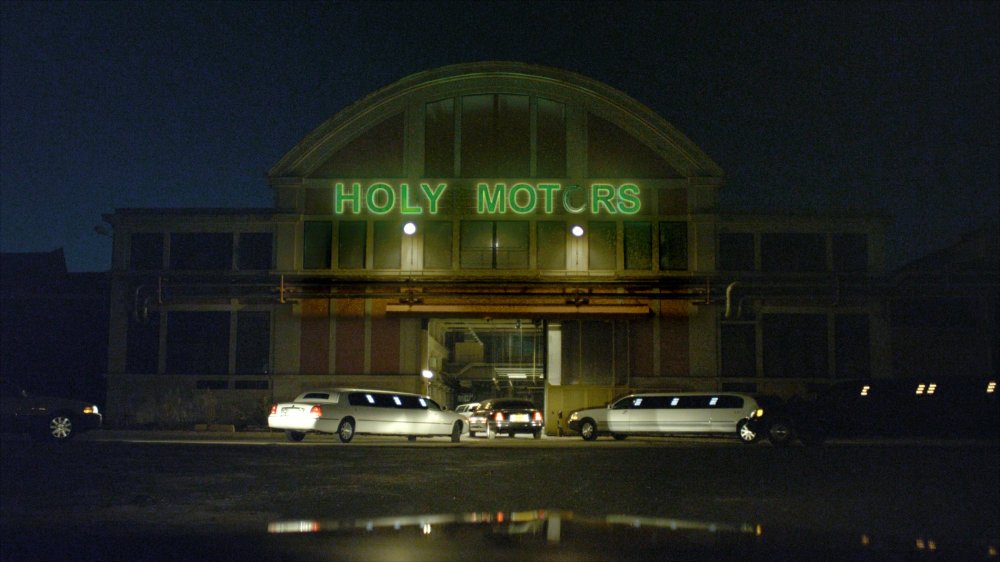
Starring Denis Lavant and Edith Scob, Leos Carax’ 2012 French-German fantasy drama film, Holy Motors, encompasses the blurred line between fiction and reality. For me, Holy Motors was a strange yet fascinating film to watch. At first, I was confused with why his job revolved around “impersonating” different characters and “freeing” these characters into the real world, where they become real and act like how they act. For instance, the weired imp he portrayed bit the finger of a producer’s assistant and kidnapped the model the media group was taking pictures of. At first, I thought it was a publicity stunt –  that Oscar was paid to create a scandal for publicity purposes of the media group. I also thought it was weird that the model he “kidnapped” did what he wanted her to do, but as I rationalized it, I thought that maybe she was scared of not following him or whatnot. However, going through the film, especially until Oscar’s boss appeared in his limousine, I realized that Oscar’s job is really to create a “reality” that people would believe in – although as his boss stated, people are starting to stop believing in their acts. Furthermore, their “gigs” were appointments, which in that moment started implying to the viewers that they were scheduled and that anything out of that timeframe did not consists of dramatics. This is where I thought it was unscripted or not pre-determined. When Oscar saw Eva when their limousines accidentally bumped into each other as they were going to their next appointments, I thought what they had was candid and real – they even talked about their next “appointments” and their child together. However, when Eva seemingly jumped with her “partner” and Oscar saw it, I realized that what was portrayed in the film about the two were, in fact, also fake – much like everything else. This leaves me to attach myself to the family that Oscar seemingly had at the start of the movie, hoping that he would go back to his “real” family, as I thought.

The film started with Oscar seemingly leaving his family and their big house to go to work. We could hear his child telling him, “Have fun! Work hard!” as he goes to his fancy limousine, with his driver waiting for him. As part of the audience, the said scene became my anchor throughout the film. For about two hours, I was awaiting for the moment he goes home to said family, from his strange work that seemed so weird and fascinating for me. I was waiting for the moment he would have that normalcy that I thought he had with his family. Imagine my surprise at the end of the film when he was appointed to another family – chimpanzees as his daughter and his wife in fact – implying that the family he had at the start of the film was also fake!

Conclusively, Holy Motors (for me) mainly focused on its existentialistic art by blurring the lines between real and fake. The actors do not have normal, stable lives, portraying different people with different lives in one day. They don’t have real families – or any physical and emotional connection to the world, really. The only thing they have connections with is their passion for their dramatics, which portrays anti-sentimentality in anything. In Holy Motors, nothing was ever as it seems. Heck, even the limousines were alive at the end of the film. However, I thought the limousine was very fascinating, and although it was as confusing as the other ones (with the exclusion of Good Bye, Lenin!), I can honestly say that I like this the best as of now – more than I liked A Woman is A Woman.

Leaving Comfort, Embracing Change

Charming and poignant, Wolfgang Becker’s 2003 film, Good Bye, Lenin! showcased messages straight to the point. Lenin is reference to Vladimir Lenin, a revolutionary having been the leader of the world’s first communist state and who, therefore, represents socialism. In face value, the film revolves around Alex Kerner in his attempt to keep the fall of the GDR a secret from his socialist mother, Christiane Kerner, for as long as possible. This is with knowing that the slightest shock would cause a heart attack for Christiane, which could prove fatal for her health. This, however, becomes a problem when Christiane starts to feel better and proves herself able to get up and roam around again. However, digging a bit deeper and in my interpretation, Good Bye, Lenin! mainly revolves around how while older “East” Germans resist the change as they try to grasp on the memories of the past and the remnants of the socialist society they had before the fall of the Berlin wall, while the youth lets go of communism in “East Germany” and embraces capitalism.

Out of the five unconventional and uniquely-styled films that we have watched until the next, I could say that I liked watching Good Bye, Lenin! most. This is not to say that I had enjoyed it the most, as it is without question that that is A Woman is A Woman. But with Good Bye, Lenin!, I was familiar with the way the plot was designed and, therefore, comfortable with watching it. Good Bye, Lenin! focuses on embracing change, trying new things and experiences, and leaving our comfort zones. However, given that, I found that there is an irony in watching it, because, on one hand, the kind of film that Good Bye, Lenin! is is what I am comfortable watching – mainly due to its contemporariness in effects, dramatics, and plot. On the other hand, the films that we have watched beforehand, with regard to their uniqueness in plots and differences in cinematic styles, gave us a chance to embrace the wide range of films that the film industry, specifically the European film industry, has, with regard to the differences in decades and geography, and, thus, culture. In other words, due to the familiarity of Good Bye, Lenin!, as compared to the films we have watched beforehand, I can say that I was in my comfort zone when I was watching it whereas I was able to embrace changes in film aspects from the other four, which is really ironic, as Good Bye, Lenin! emphasizes how one steps out of his/her comfort zone.

Conclusively, for me, it felt comforting to watch Good Bye, Lenin!, because contemporary films usually portray subtle dramatics and would tend to lean towards comedic dramatizations. Furthermore, it is a common theme in 2000’s films to exhibit characters with difficulties in grasping change and would tend to showcase the lingering nostalgia (which in the film, specifically, is nostalgia for the “East Germany” that no longer exists). This is also relatable in real life, as some people who have been used to living in conservative societies would tend to be like the adult characters shown in the film – unaccepting and radically forcing conservatism, something most, especially the youth, feels constricted with.

The Imperfect Human

Directed by Lars von Trier and Jørgen Leth featuring themselves, The Five Obstructions (De fem benspænd) is a 100 minute Dano-Belgian theatre documentary showcasing the creative processes and challenges in revisiting Jørgen Leth’s 1968 film,The Perfect Human (Det perfekte menneske) and remaking it into through sets of rules given by Lars von Tier.

After becoming exposed to some European films from the ‘60s, The Five Obstructions felt weird and foreign for me. It might just be the film, but out of the films we have watched as of now, The Five Obstructions was the least dramatic. This may be because of the theme of the film, which may be about cinematic creativity, or because what are shown in the film are not completely fictional, as compared to the films we have watched beforehand. That is, The Five Obstructions focuses on may be the challenges that film makers and directors go through in creating and editing films — there were not any romantic dramas, personality-crises, and complex cinematography that aim to convey a creative and dramatic plotline and theme for its audience and the film somewhat conveys a candid setting through its documentary-like cinematography.

Furthermore, with the five obstructions, it seems like what Lars von Trier is making Jorgen Leth do is create a perfect human that seems to showcase the personality of the films director, which is Leth. With that said, if von Trier wanted to see Leth in the film — or at least his personality in his own creation, would that mean that von Trier wanted to show that Leth can be one of those “perfect humans”?

Moreover, with the five obstructions that are seemingly the focus of the film, the idea of The Perfect Human showcasing how a “perfect human” is and how he/she lives seems far-fetched. This is because, if the “perfect human” really is so perfect, why would they want to recreate it? Although Lars von Trier once stated in the film that the first version of The Perfect Human would always be the best version, that does not mean that it was perfect. The five obstructions consisted of changes in the film’s location, editing, focus, actors, script, and cinematic style. With this, it may have been because von Tier was trying to make the idea of the perfect human more humane and diversified. The first obstruction required the film’s location to be in Cuba, where the characters looked widely different than the original’s Klaus Nissen and Makjen Nielsen. The second obstruction required Leth to play the “perfect man” in Mumbai. The third, because Leth failed the pervious task, made Leth recreate the film in Brussel, showcasing a more contemporary theme. The fourth required the film to be a cartoon — which turned into a colorful animation, much to both von Trier and Leth’s liking, and the fifth was recreated by von Trier himself, voice-overed by Leth with von Trier’s narration. With these obstructions, it seems (to me) that, from the original The Perfect Human, which consisted of bland narratives and a white background throught the film, von Trier used the obstructions to create the “perfect human” in different environment that, unlike the original film, are realistic, lively, and more relatable.

Overall, The Five Obstructions explored the cinematic possibilities that directors can create as well as showcase that, maybe, the perfect human may not be supposedly perfect. Rather, the perfect human, as diversified as our understandings are about perfection because of the different cultures around the world, may be different for every one of us because of our differences in preferences and in cultures.

L’Avventura: Emotions in an Existential World

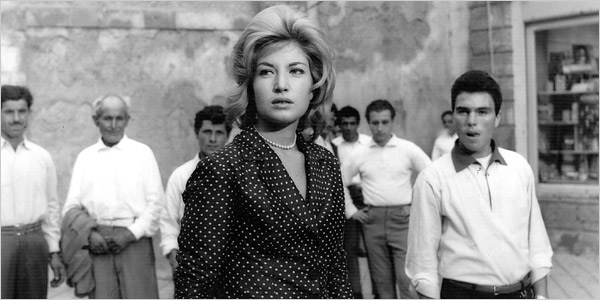
Brooding and Self-pitying, Michaelangelo Antonioni’s 1960’s film, L’Avventura, showcases the uneasy reality of civilized love in an Existential world. At first, one might think that the film would revolve around Anna, Sandro’s suddenly-missing fiance, as she goes missing and the characters try their best to find her and, in doing that, unintentionally starts drama and have realizations about Anna’s true character and intentions – much like in Gone Girl and Pretty Little Liars. However, a dig deeper in the film, especially as it progresses, makes the audience realize that the film dedicates itself to revealing gender politics, especially in Italian 1960’s, and the inner loneliness and turmoil that the characters have as they find their places in discovering meaning from their empty lives. At first, it was confusing why, in some parts of the film, the characters would randomly do things that would get others’ attention. For instance, Anna makes up a story that a shark was swimming near them, consequently forcing everyone to panic and go back to their boat. However, when she was asked by Claudia why she did that, she merely shrugs and says, “Because.” There was also an instance when Sandro intentionally ruins an art piece by spilling ink all over it. This caused the young artist to get mad at him and tries to pick a fight with him, with Sandro nonchalantly saying, “Why would I do that?” In persepective, they may have done these “random,” mischievious actions, because, as stated before, in their dull, meaningless, and lonely lives, maybe they wanted some spice and excitement in their lonely, bleak lives.  

The film would also exhibit men in different life stages. There was the 17-year-old prince who paints nothing other than nude pictures of women, Sandro, a romantic marrying-age man, Giovanni, a married man who ignores his wife, Anna’s father, a retired diplomat, and unforgettably, the hordes of men that tend to flock over pretty women like Claudia and the woman who had a rip in the hem of her skirt. A common denominator on most of these men is their exhibition of lust and their desire to find the “ideal” partner. This is with the exeption on Anna’s retired father, who’s now sole focus is his daughter. However, again with the exception of Anna’s father, the depiction of these men with their active libido may have foreshadowed what Sandro did in the last part of the film. Furthermore, Sandro’s advances with Claudia was a red flag. For one, he is technically still engaged to Anna even though she is missing. Second, his advances show that he may have already forgotten about Anna, despite him telling Claudia that he did love Anna. This may indicate that Sandro may have not loved Anna anymore even when Anna was not yet missing — or he did not love her at all, especially when he begrudgingly told Anna that he was marrying her. Furthermore, his quick pace of moving on from Anna with Claudia, as well as his nonchalantness with the affair may indicate that he had already done it before, especially since he and Anna only saw each other every couple of months. This is why it was not surprising when he was revealed to have cheated on Claudia after the party — even though Claudia was surprised about it.

What frustrated me, however, was how the women in the film were controlled by their emotions. Although she initially tried to ignore it, Claudia eventually started a full-blown affair with Sandro. Furthermore, although at the start of the film, she was hell-bent on finding Anna, the latter part of the film portrayed how Claudia did not want Anna to be found anymore as she was scared that Sandro would leave her for his unofficial former lover. Moreover, when Claudia found out that Sandro cheated on her, she was distraught — one would even think she would end their relationship once Sandro caught up with her. However, when Claudia saw a weeping Sandro, she caressed his back as if saying that she forgives him. This can be seen as idealistic, as it usually happens in real life – people cheat, and their partners usually forgive them when they show emotions. This, however, portrays how Claudia can be swept by emotions, neglecting the reason regarding the events that had occurred. Giulia was also swept by her emotions. In her loneliness and frustration from being ignored by her husband, she slept with the 17-year-old prince.

Conclusively, L’Avventura is a lot of things, but overall, it is a film that depicts the loneliness and bleakness of the life of characters, however rich the characters may be, as they struggle to achieve the “ideal” life, mostly through romance. I would say that I liked the film, however, it morally disturbed me through its dramatics and its characters’ lack of values due to the shallowness of their lifestyles—which I think is what it is trying to achieve.