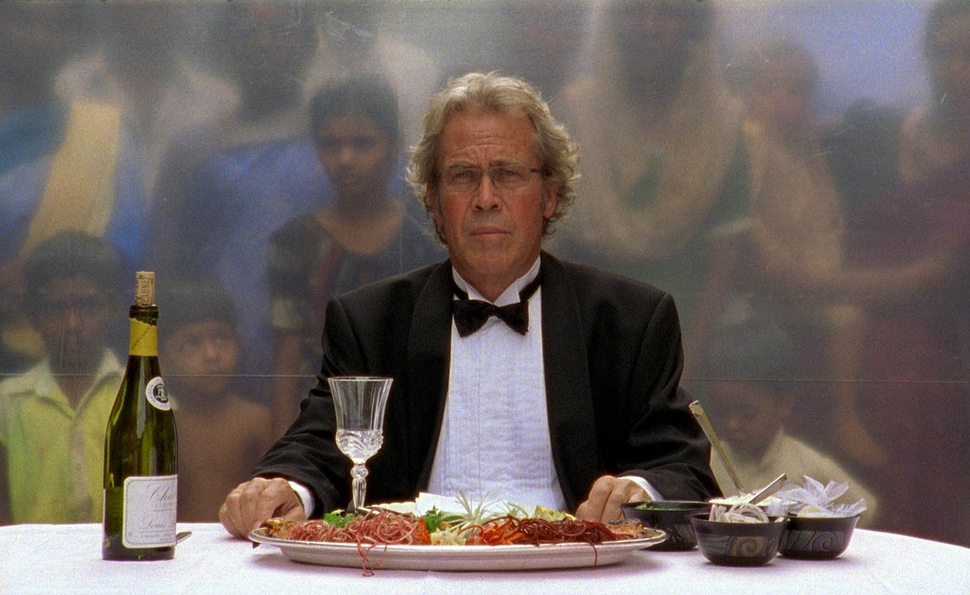
The Antics of a Metal Band: A Discussion on Heavy Trip

Heavy Trip, directed by Jukka Vidgren and Juuso Laatio

Most people dream of making it big, but don’t have the courage to get there. They refuse to get back up when they stumble along the way. In Jukka Vidgren and Juuso Laatio’s Finnish comedy Heavy Trip, Turo is the lead vocalist for a heavy metal band who has not gotten a gig for the last twelve years. When a promoter passes by their small town, he tries to get over his fear of performing in front of a large crowd and does whatever it takes to launch their career at a popular music festival in Norway.

The first act of the film seems all too familiar to the audience: a band wants to be successful in the music industry, Turo lies to his crush to impress her, and the townspeople make fun of guys with long hair. Laatio and Vidgren portrays the metal band as underdogs and outcasts in their small town, and you can tell that they will eventually achieve their goal of playing at the festival. At first glance, the film features dominant cinema techniques that make it easier for the audience to follow the plot. Boy, were we wrong to think that Heavy Trip would be similar to Hollywood films! By the time the third act rolls in, one of the main characters suddenly die, the rest of the band digs out his coffin from the ground, and a mental patient is kidnapped from his ward. The absurdity of the scenes reminds us of the 2012 French film Holy Motors, where we asked ourselves, “What’s going on in the film?” Scenes come out of nowhere, such as when the Swedish authorities attacked an unsuspecting bachelor party group in ridiculous outfits. Yet, rather than the confusion and bewilderment you might feel while watching Holy Motors, you can’t help but laugh at the antics of the band just to get to the festival. You may not understand the events that unfold in the film, similar to how incomprehensible heavy metal songs may seem to most people. Precisely, the directors are asking you to just watch the scenes like how you would just listen to a heavy metal song without trying to interpret the lyrics.

Aside from the crazy antics, what made the film interesting is how the personalities of the band members and the town’s attitude towards them are different from what you might expect. Heavy metal is often related to machismo, and members are expected to talk about sex, drugs, and Satan. People see them as aggressive and powerful because of the energy they exude. However, the members in the film are underdogs, shy towards their crushes, and mistreated by other townspeople. They insult Turo by saying that he is a homo, contrary to the usual machismo image of heavy metal. In this case, we see a glimpse of reality, a peek into the candid lives of a heavy metal band. It all makes sense, though, because as the film ends, you cannot help but root for these underdogs who went through an insane ordeal just to achieve their dream.

The Sexual Awakening of a Woman: A Discussion on Raw

Garance Marillier in Raw, directed by Julia Ducournau

College is a critical time for discovering who you are. For some, the conflict between an individual’s inner desire and society’s expectations often leads to catastrophic results. Julie Ducournau explores the sexual awakening of a young girl and the consequences in her debut feature, Raw. Justine, played by Garance Marilier, is a vegetarian who suddenly developed a craving for human flesh after getting a taste of rabbit kidneys during a hazing ritual. The film does not shy away from capturing a private waxing session between sisters, an intimate sex scene between a virgin and a gay man, and the nature of cannibalism, among others.

Interestingly, Justine’s realization of her cannibalistic tendencies occurs at the same time she began embracing her sexuality. She was initially ashamed of herself for craving meat, which was evident when she stole from the cafeteria or when her friend had to take her to a gas station. Similarly, she was hesitant to wear her sister’s stylish dress to a party because she didn’t feel like herself. Her evolution becomes much more apparent in the succeeding visually striking scenes. She dresses up and grinds in front of a mirror, then becomes more fervent when she lost her virginity, causing her to bite her arm for restraint. Her true identity began to surface, despite the painful process revealed as she contorts under her bed covers and the increasing judgements from people around her. As an audience, you’re not sure whether to root for her self-discovery or cringe at her impulsive actions. There’s a certain estrangement that arises between you and the character because of the connotations of eating human flesh. Much like cannibalism, a woman’s sexuality is taboo in the society. Ducournau succeeds in portraying the sexual needs of young girls as something that should be fulfilled just as much as boys do through the experiences of Justine.

On the road to sexual awakening, Justine encounters two opposing forces that attempt to control her actions. Her mother prevents her from discovering her true identity by raising her as a vegetarian. On the hand, her sister pressures her to act on her nature by tempting her to eat the remains of those who suffered a car accident and taunting her at the morgue. It is interesting to note how they are both women, perhaps signifying the irony of other women controlling a woman’s actions in society. For instance, some women are quick to judge the mistress in a relationship, claiming that she seduced a married man, without stopping to think about the actions of the man who cheated on his wife. In Raw, Justine defies her mother and sister in the hopes of finding a different life on her own. She gradually accepts her identity as a cannibal contrary to her mother’s wishes and at the same time, she now has the freedom to control her desires unlike her sister who went too far and ended up in prison.

One question remains at the end of the film: How did the women in Justine’s family become cannibals? The cause was not disclosed in the film, as in counter-cinema. Raw focuses on the events that happened to Justine, rather than providing a reason and a resolution to the problem. By using this technique, Ducournau directs the attention of the audience to the human condition. There’s a heavy emphasis on the woman’s body and coming to terms with it. Sexuality isn’t good or bad; it just is. With countless scenes that are painful to watch, Raw succeeds in disturbing the audience and pushing them to reflect on cannibalism, sexuality, and womanhood.

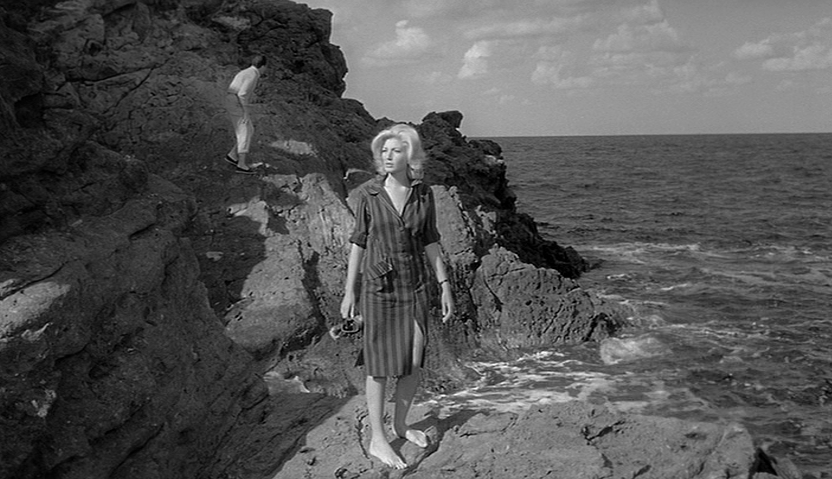
The Lost Girl: A Discussion on L’Avventura

Monica Vitti in L’avventura, directed by Michelangelo Antonioni

Why do people do the things they do? Oftentimes, we struggle finding an answer to the question because people can be unpredictable. In Michelangelo Antonioni’s 1960 Italian film L’avventura, we see how the disappearance of Anna sets in motion the unpredictable actions of her lover Sandro and her best friend Claudia. Initially, Anna seems like a main character that we will follow but after the romance buds between Sandro and Claudia, she was gradually forgotten. We may have expected a thriller, but that is not what we get. When the film seems to shift into a love story, we are misled once more. We ask: What is going on?

In L’avventura, there is no cause-and-effect driven narrative — events appear without explanation. We wonder, “Why did Anna disappear?” or “Why did Sandro suddenly kiss Claudia?” We can provide theories, but we will never get our answers. Because of this, most people are left confused and disinterested in finishing a long, seemingly incomplete film. The difficulty in understanding L’avventura lies in Antonioni, who chooses to withhold information. He refuses to give a back story or definite characterizations that films usually provide. Not only are we uncertain of what the characters are thinking or feeling at a given time, but they, themselves, are not too sure. For instance, Sandro simply says, “Why would I do that?” when he ruined an art piece. Admittedly, we can understand these instances where the character does not know the motivation behind his or her actions and suddenly, they become more real. To add to that, the haunting landscapes contributes to the distance and alienation that we feel from the characters. By doing so, Antonioni presents how the audience can still experience tension and fascination without the conventions of storytelling. He does not tell us how you should feel about the scenes; rather, he allows you to reflect on your own.

Aside from the unique take on cinema, L’avventura compels the audience to follow the film, despite the long, slow running time, through the emphasis on visual compositions. The ending shot with Sandro beside the blank wall and Claudia near the volcano was beautiful. At the end of the film, there is no resolution to the storyline. We are left with one of the biggest questions: “What happened to Anna?” Questions of plot are often answered in conventional Hollywood films, especially for events that drove the storyline. However, Antonioni leaves us with mysteries and instead, poses a challenge for us to think about the personalities of the characters.

Similar to a typical adventure, Antonioni’s L’avventura exhausts the audience with the long, slow running time. Yet, you leave the cinema with renewed vigor after witnessing one of the most mysterious and visually striking films of all time. It may not have been the adventure we were expecting, but it sure was a thrilling and unforgettable one. L’avventura deserves to be a classic because of how it paved the way for European cinema to become a breeding ground for interesting, artistic, and thought-provoking films.

The Identity of Two Women: A Discussion on Persona

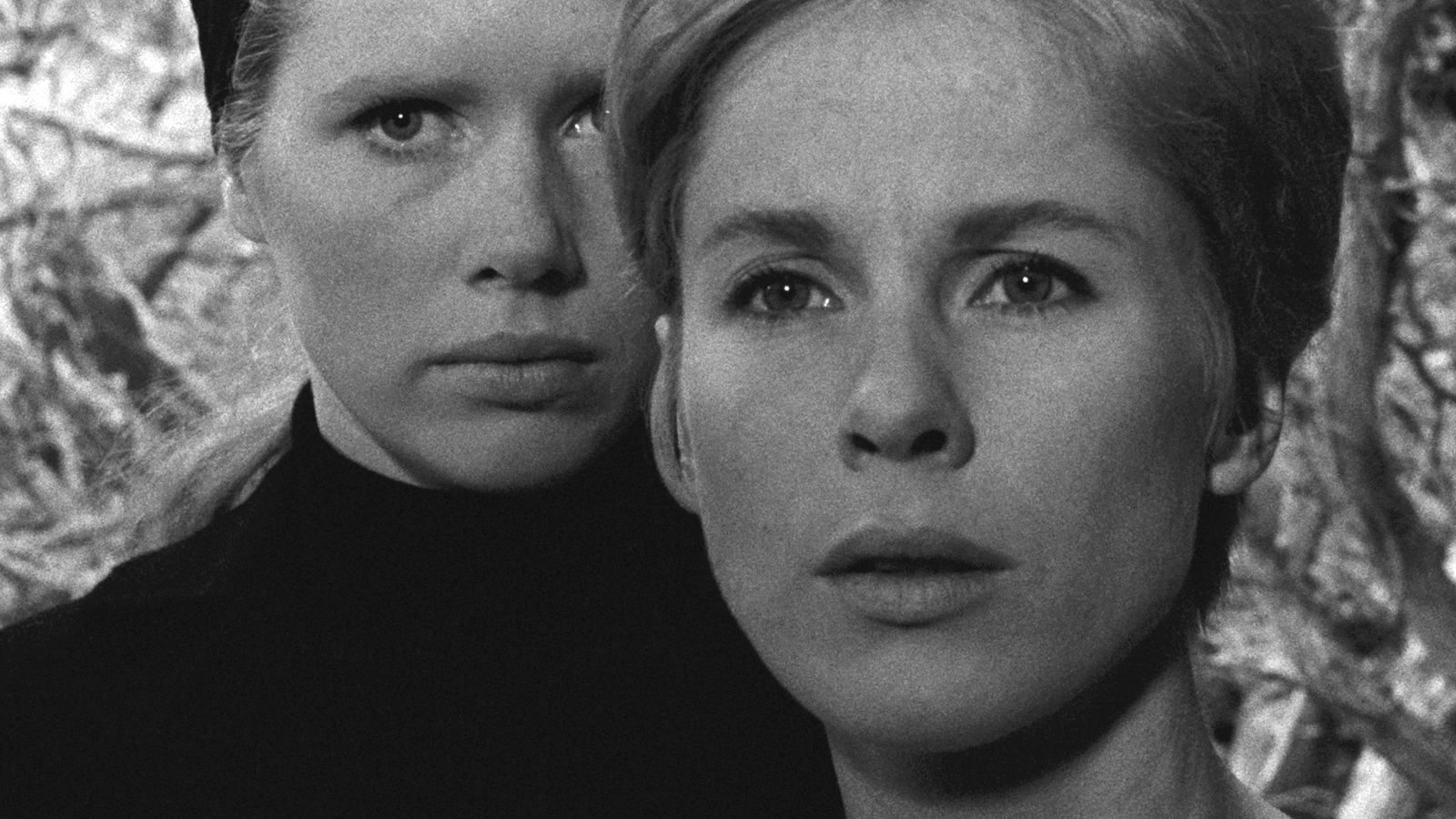
Bibi Andersson and Liv Ullman in Persona, directed by Ingmar Bergman

Slow, long films that explore themes of identity and philosophy often scare people away because they believe that the film will be difficult to understand and end up wasting their time. However, I found myself intrigued and on the edge of my seat throughout the duration of Ingmar Bergman’s 1966 Swedish psychological drama film Persona. At once, the film disturbs you with the prologue that seems to make no sense, especially when you get to the main story of the film, which revolves around a nurse named Alma and her patient, an actress named Elisabet, who stopped speaking under mysterious circumstances. As the story unfolds, you begin to realize that perhaps the film is about our identity we have in our minds and the identity that others force on us, or as the doctor in the beginning of the film says, “the chasm between what you are to others and what you are to yourself.” The roles of the characters were distinct in the beginning, as the nurse and the patient, but they begin to blur as they spend more time together. You are no longer sure who is the nurse and the patient because Alma began unveiling her secrets to Elisabet and felt good doing so. In a way, Elisabet was there to help her come to terms with her own perception of herself and how she does not conform to society, which mainly stems from the guilt she feels for having an abortion. Their identities begin to merge quite literally onscreen, which makes you wonder whether the story is the reality. Added to this is the fact that some scenes have a dream-like quality, such as when Elisabet went inside Alma’s room while she was sleeping and they faced a mirror. Thousands of questions in our heads arise because of the ambiguity of the film.

Aside from touching on the subject of identity and philosophy, another idea that made the film more interesting was how Bergman portrayed women as sexual beings with their own autonomy. Considering how a woman’s sexuality remains a taboo in our society today, it made me think how much more controversial the topic was during Bergman’s time. The scene where Alma narrated her sexual experience was very erotic, despite not showing any visual images. I felt as if I was reading someone’s private diary because the scene was simply a girl telling a story, but I can clearly picture the events in my head because of how the director set up the scene, as well as the characters’ magnificent acting. This scene, juxtaposed with the idea of women’s role in the society as a mother, supports the film’s attempt in contrasting how we view ourselves and how we are viewed by others. People keep on imposing on women the role of a mother, without acknowledging their sexuality, as evident in Alma’s story and later on, Elisabet’s revelation that she wanted to give up her child. Admittedly, I was uncomfortable after hearing Alma’s sexual escapades and Elisabet’s disgust towards her child but then, I stopped and wondered if this was because society conditioned us to consider a woman’s sexuality or her refusal of her role as mother as taboo. At this point, I thought, kudos to the film for discussing these issues and succeeding in leading me towards reflection.

By the time the film ends, you will still have difficulty comprehending its meaning and a number of scenes. It disturbs you and pushes you to ask questions, such as “Why was there a cut in the middle of the film during one of Alma’s scene, which then showed the vampires and skeleton monsters?” Are we, then, watching a film-within-a-film rather than the reality for two women? You are tempted to maybe even watch the film again — hoping to understand the message by the second time around.

Despite the confusion, you are left in awe by the sheer greatness of Bergman’s Persona. Although films that usually focus on a few characters with more dialogue than action tends to get boring for some, the chilling atmosphere and brilliant cinematography of Persona creates an impact on you and allows you to see the potential of cinema beyond entertainment. We are left with more questions, instead of the feeling of satisfaction and pleasure that we get after watching a great film.

The Passionate Youth: A Discussion on The Edukators

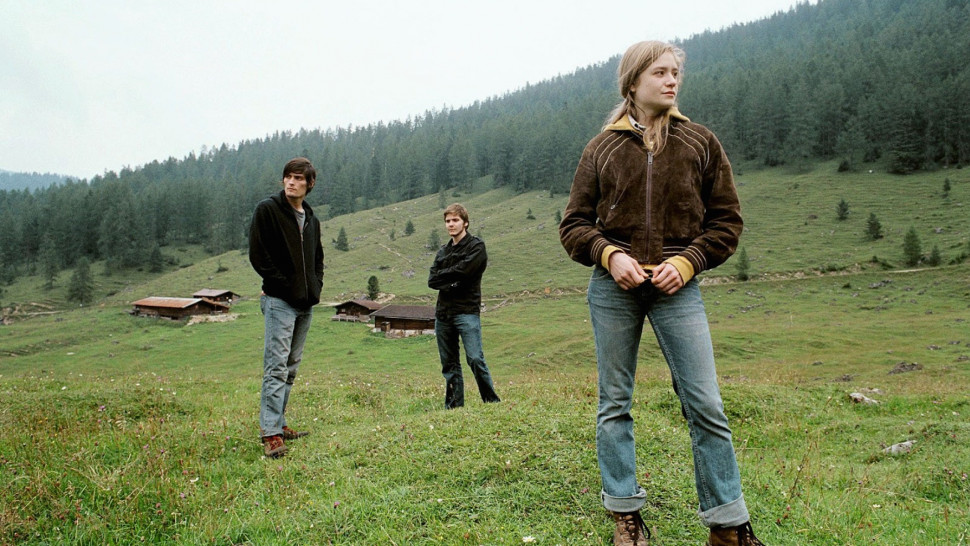
Daniel Brühl, Stipe Erceg, and Julia Jentsch in The Edukators

When we think about European cinema, visually striking, interesting, and artistically challenging films come to our mind. We view European cinema as a revolt against the entertainment films of Hollywood. It is no surprise, then, that films such as Godard’s A Woman is a Woman and Carax’s Holy Motors capture our attention because of the focus on aesthetics. Therefore, stumbling upon the 2004 German-Austrian drama film The Edukators was a surprise. Directed by Hans Weitgartner, the film revolves around three young anti-capitalists activists who invade wealthy houses in an attempt to open their eyes to their privileged lifestyles.

Rather than focusing on the visuals, the film highlights the script, specifically the storyline and the critiques on society. The style is minimalist, which prevents the audience from getting distracted from the characters and their situation. In examining the film, we realize that the focus on politics and social issues is another facet of European cinema that many students are not aware, but should be because by depicting reality and the effect of systems to common people, European films become a response to Hollywood films that only present happy endings and often romanticizes the violence and suffering when showing how a country deals with social issues. The Edukators was realistic in a sense that the youth had the courage to change things, which we also witnessed in our country in the past. The film also presents Hardenberg, who represents everything the young activists hated about society, but eventually revealed that he was just like them before. Hardenberg, then, becomes a cautionary tale to the audience to show how easy it is to lose our grip on our ideologies because of our experiences in life. He longed for security and in doing so, he embraced capitalism.

Young people standing up for their beliefs and lecturing an adult is not what others would consider entertainment and an avenue for pleasure; but in portraying strong, free-thinking individuals, Weingartner succeeds in provoking our ideologies. He does not push for a propaganda film, but provides equal opportunities for both sides to be heard and allows the audience to think for themselves. He opens up a room for discussion on issues we shy away from, such as capitalism versus socialism, instead of telling us too choose one side over the other.

Amidst the politics and social issues, the three young activists fall into a love triangle. In the past films we watched in our European Cinema class, romance was never really emphasized, in contrast to Hollywood films that usually revolve around romance plots. Surprisingly, we get to see romance as we know it in The Edukators, which created depth rather than ruining the film. Others may view it as unnecessary to the storyline, but I believe it adds another layer to the characters and makes them more real. They are not just caricatures with political statements or propaganda; rather, they are humans that have authentic relationships and emotions, who make mistakes. They are flawed, just like the society they live in. By shedding light on politics and social issues through the use of authentic characters, dialogues, and locations, The Edukators allows the audience to think about their about their beliefs and the society, instead of simply providing entertainment. Who would have thought that politics can become part of our roster of interesting, artistic films? European cinema is, indeed, a breeding ground for all sorts of storytelling and films.

The Sudden Time Loop: A Discussion on Timecrimes

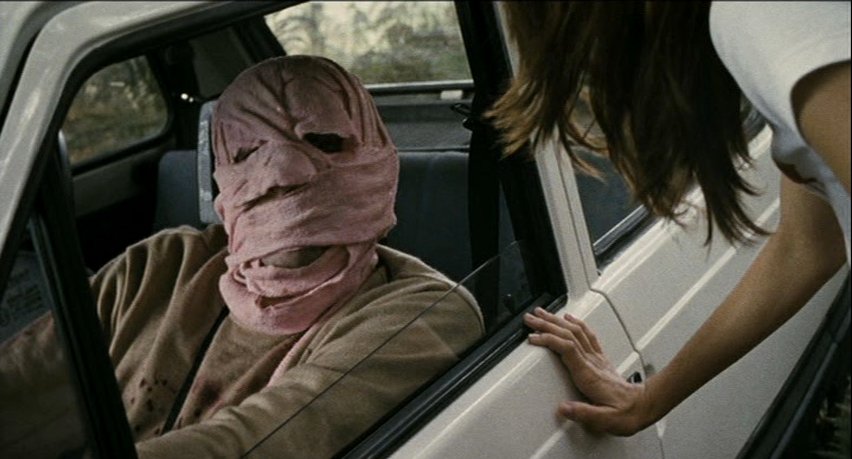
Karra Elejalde in Timecrimes, directed by Nacho Vigalondo

Oftentimes, time travel films focus on the technical and technological aspects of the fluidity of time that it becomes increasingly difficult for others to follow the story. Enter the 2007 Spanish science fiction thriller Timecrimes, directed by Nacho Vigalondo, which focuses on a simple man named Hector who finds himself in a time loop and a desperate journey to undo his mistakes. One of the great things about the film is that despite the lack of special effects commonly used in science fiction films, Timecrimes takes you an intriguing adventure that you cannot help but watch. This is not to say that the film is easy to understand since it does not focus on the technical aspects; rather, the film confuses you through the story itself because of the use of narrative intransitivity. There is no cause-and-effect driven narrative in the beginning because we do not know what started the the time loop in the first place. Initially, we think that it might be the scientist, but we are quite unsure as the film progressed. There seems to be no relation between the scenes, such as “Why was there a naked lady in the forest?” However, the interconnection between the main character’s actions becomes clearer in the middle of the film as we discover that there are two other versions of Hector. By revealing the intentions behind the initial actions at a latter part of the film, the audience is hooked and patiently waiting for the explanations to their questions. The film becomes exciting and despite being a thriller — where one is usually scared, you are begging for more once some things start to make sense.

However, boy were we wrong to expect that we will get an explanation for the whole story. Happy endings usually provide satisfaction to the audience since they usually tie up the loose ends of the story. However, although Timecrimes might have given us a sort of happy ending since Hector 3 was able to rescue her wife at the cost of the life of an innocent girl, we find it hard to move on and get up from our seats because we have even more questions that were left unanswered. The biggest question at the end of the film remains: How did the time loop start? We can come up with as many theories as we can, but we will never get the resolution we need. Yet, instead of ruining the film for the audience, this technique of leaving questions unanswered heightens our experience and allows us to appreciate the complexity of the story. The happy ending we get is reality, that sometimes, our happiness comes at the expense of someone else’s pain. Being unable to have our questions unanswered gives room reflection and ignites a rich discussion with others who watched the film. In the end, Timecrimes reminds us that perhaps, there are things that will happen in our lives with which we cannot provide an explanation, and the only way to survive is to deal with them.

The Norwegian Fantasy : A Discussion on Trollhunter

A Norwegian Troll in Trollhunter, directed by André Øvredal

Upon hearing the title of André Øvredal’s 2010 Norwegian fantasy film Trollhunter, images of action, horror, and violence flood our minds. However, this film takes us instead on an adventure along with three young students on a troll hunt, set against the backdrop of a beautiful Norwegian scenery. They did warn us that the Trollhunter can also be considered a horror film but while I was expecting jump scares, I was surprised instead with a presentation of different kinds of trolls and their natural habitats.

With this, the film allows us to appreciate Norwegian culture, unlike other films we watched during the semester for our European Cinema class. Instead of simply focusing on the characters, Trollhunters feature beautiful landscapes, Norwegian folktales, and a touch on religion, which enriches the story. For Christians, such as myself, we are intrigued as to why trolls prefer Christian blood. Yet, after discovering that religion is part of their folktales and culture, things made more sense. Moreover, the appearance of several townspeople in the film, including the government, made it feel as if we are getting to know real people and unveiling the culture of a real town. We get to see their attitude towards things that cannot be explained, such as trolls. What was striking in the film was how the troll hunter named Hans admitted that he is tired of not getting the credit he deserves from hiding the existence of the trolls from society. Here, the film shifts the focus from trolls to the townspeople and explores how the issue affects them differently. We recognize the humanity and dignity of Hans, as opposed to viewing him simply as someone who gets rid of trolls. In this way, the film captures the horrible reality of life, where Norwegian people get to revel in blissful ignorance while Hans work hard to keep them safe. Being a troll hunter is not as cool as we thought.

Aside from being considered a horror film, Trollhunter also falls under the fantasy category. One aspect that we do not usually encounter with fantasy films is the use of a found footage or mock documentary style of storytelling. As an audience, you feel part of the student’s adventure because you get to see the foregrounding of production. We become quite unsure what is real and what is fantasy because of how the scenes were composed, how the actors for the students effectively portrayed terror and confusion, and how Øvredal featured different trolls, making them appear as realistic as any other animal. With that said, CGI effects often translate to bad quality films but with Trollhunter, the CGI effects of the trolls were flawless because they appeared lifelike and intimidating. The scene where both the trolls and the actors were in the same frame was commendable. If you are not from Norway, you will begin to wonder whether trolls really do exist, similar to how you debate whether there is any truth to a horror film that claims to be based on a true story. The fact that the film ends with an archive footage of the current Prime Minister of Norway mentioning trolls at a press conference boggles our minds. The film succeeds in making us question reality, which is why I believe it does fall under counter-cinema. In contrast to the fact that many mock documentaries are comedic, Trollhunter does not merely serve as a form of entertainment; rather, the film tickles your mind and plants questions that you would not have considered before.

The Different Faces We Meet: A Discussion on Holy Motors

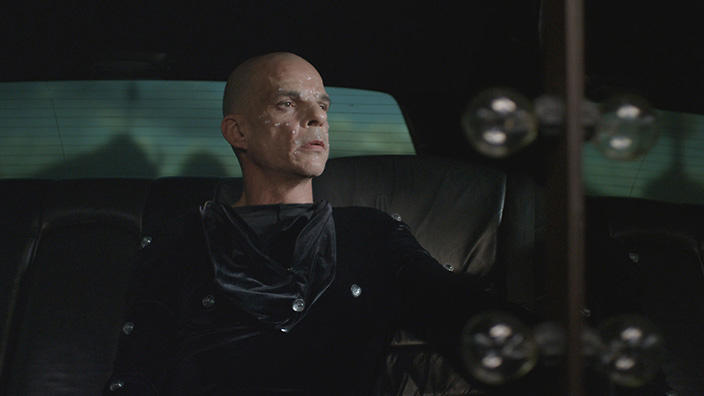
Denis Lavant in Holy Motors, directed by Leos Carax

One of our deep needs is to understand the world around us. Uncertainty and ambiguity pushes us to generate more explanations until we come up a plausible conclusion. This moment of thought and reflection is precisely the aim of Leos Carax when he created Holy Motors, a 2012 French-German film starring Denis Lavant and Édith Scob. Unlike any conventional Hollywood film you might have seen in the past, Holy Motors introduces a day in the life of Oscar, played by Lavant, as he disguises himself into different characters in the back of a limousine. His chauffeur, played by Scob, tells us that Oscar will have nine appointments throughout the day. 

The nature of Oscar’s appointments are never revealed. Initially, you might think that he is a businessman trying to show the cruelty of society when he arrived at his first appointment as a beggar woman. As soon as he dons a motion capture suit and performs an erotic scene with an actress, you begin to wonder, “What’s going on in the film?” The next scene becomes more bizarre than the last as Oscar transforms into Monsieur Merde, kidnaps a model from a shoot and makes her do all sorts of things in a cave. Thus, the film’s eccentric, strange, and provoking qualities seem to present European cinema as an avenue for wide-ranging techniques for filmmaking and storytelling. More specifically, Holy Motors points towards the idea of counter-cinema put forward by Peter Wollen in his essay, Godard and Counter Cinema: Vent d’Est. For instance, the lack of  a cause and effect driven narrative is evident in the film as we see things happening to Oscar as opposed to events being a result of his actions. His goals and desires are hidden from the audience. For some, confusion may be the dominant feeling as a result of the disconnected scenes. However, I believe that by using narrative intransitivity, Carax was able to take the audience in an exhilarating, visually compelling ride. Each scene feels as if you are opening a present on Christmas day: you will never what you will get inside. His scenes invite you, then, to stop thinking too much; rather, just sit back and enjoy the ride.

Furthermore, you may feel estrangement from the characters because we never truly see their identity. Although it seems like we see the true Oscar when he is in the back of the limousine — such as the one who admitted that he is getting tired of the job, the scene where he escapes from the limousine and remains unharmed after getting shot multiple times suggests otherwise. Other scenes such as when he played a father to an insecure daughter makes you question whether their relationship is genuine or if the daughter is simply another actress who plays a role. Having said that, the film exhibits multiple diegesis since the scenes have nothing to do with each other. The plurality of the worlds is evident in Oscar’s roles and the world around him. For instance,  the scene where he plays an accordion with other musicians came out of nowhere. The people in the cemetery seem to be normal people who were disgusted when Oscar appeared as Monsieur Merde, whereas a young woman admits that she is also an actress when Oscar took on the role of a dying old man. By using estrangement and multiple diegesis as techniques, Carax shifts the focus of the audience from building a connection with a typical character to exploring the world of making film filled with different genres and actors. He makes the work that goes into the production of a film apparent by giving glimpses of Oscar in his theatrical dressing room in the back of the limousine before and after each role. At one point, Carax includes a scene between Oscar and another man that reveals the former’s intention in performing the roles: the beauty of the act. Carax hints the effects of the changing landscape of the film industry to the actors, to the directors, and even to the audience.

Just as we thought that the film’s strangeness ends when the main characters part ways at the end of the day, the appearance of talking limousines beg us to stay for more. You may ask: Do the main characters know that the limousines can talk? At this point, we have accepted the fact that our questions will never be answered. Maybe talking limousines are just as normal as biting fingers in Oscar’s world. Holy Motors reminds us that sometimes, the best movies are meant to be enjoyed rather than understood.

The Change in our Lives: A Discussion on Good Bye, Lenin!

Maria Simon and Daniel Brühl in Good Bye, Lenin!

Change represents progress yet so often, we find ourselves struggling to accept the changes in our lives and the world around us. Imagine waking up one day, only to see your whole ideology crumbling down. This is what one of the main characters in the 2003 comedy film Good Bye, Lenin! experiences in the film, albeit in more grave circumstances. Unlike the difficult films we previously watched in European Cinema class such as Bergman’s Persona and Godard’s A Woman is a Woman, Wolfgang Becker’s film was refreshing, interesting, and clever. Set in East Berlin, the film revolves around Alex who tries to hide the fall of the Berlin Wall from his mother, who is a hardcore socialist and just woke up from a coma.

What made the film interesting is the focus on the effect of national issues on common people and their lives. When discussing the Berlin Wall, more emphasis is given on the political issues or the violence that transpired. By shifting the focus on the reality for the people at that time, Good Bye Lenin! succeeds in attempting to show the true face of the world, aligned with Peter Wollen’s essay on Godard and Counter-Cinema: Vent d’Est. Most people were overjoyed with the Fall of the Berlin Wall, but the film shows that there are some people who had a a different ideology and in turn, the issue affected them differently. German reunification, then, is viewed as a personal experience. It was also remarkable to see Alex’s efforts to keep communism very much alive for his bed-ridden mother. By highlighting the love of a family, the film becomes more realistic and touching. Thus, the most poignant scene in the film was when Alex’s mother walks out of their apartment and sees the reunified Germany for the first time. The scoring, performances, and pacing were all done beautifully that the audience cannot help but feel the confusion of the mother and the panic of her children. You feel the urge to run towards the screen and hide the mother just so she will be protected from seeing her ideology crumbling down. Because of this, I believe that Good Bye Lenin! presents the authenticity of the characters and their situation effectively.

In the end, the film encourages us to inspect the German reunification from multiple perspectives and re-examine the narratives that may have fabricated, similar to what Alex did for his mother. He redecorated her room, repackages her favorite pickles, and created news reels to convince her of the continued existence of East Germany. By presenting a different perspective on the reunification of Germany, the film allows us to see that it was not as simple as the West winning over the East, or capitalism winning over socialism. Rather, Good Bye Lenin! invites us to examine the narratives of a nation and effects on the people, and provokes us into thinking that perhaps their reunification did not go as smoothly as we thought. They are still struggling to find their identity, just like how Alex’s mother found it difficult to accept the change.

The Revival of Creativity: A Discussion on The Five Obstructions

Jørgen Leth in The Five Obstructions

After watching three drama from the 1960s, it felt like a breath of fresh air to stumble upon Lars Von Trier’s The Five Obstructions. Here, he challenges fellow filmmaker Jørgen Leth to remake his short film, A Perfect Human in five different ways. They opted for a documentary style, which enhances the viewing experience since we get to see the work that goes into filmmaking. The development of the characters and their styles become more apparent because we believe we are watching the reality, as opposed following the lives of fictional characters.

Aside from the medium, Von Trier’s playfulness made the film exciting, making the viewers anticipate what other tricks he has up his sleeve. In the beginning, we are quite unsure why Von Trier came up with the obstructions for his mentor. We ask, “What’s the point of the film?” or “Why choose those particular obstructions?” The film asks us to reflect as it presents Leth’s new films. Towards the middle, it becomes clear that the emotional connection between Von Trier and Leth was crucial in pushing the latter to reject his old habits and techniques that prevented him from maximizing his creativity. It was interesting to see how the student taught and criticized the mentor during the challenges. Ironically, the obstructions meant to hinder Leth’s progress or force him to produce a bad film, resulted to compelling, clever new films that he would not have produced were it not for Von Trier. Leth, himself was astonished, and you can see his development throughout the film. He began to smile more by the time they watched his animated film, in contrast to his controlled, stoic demeanor in the beginning of the documentary. 

At the end of the film, we realize that European cinema is truly an avenue for a variety of techniques for filmmaking and storytelling. Oftentimes, we believe European films are daring, eccentric, and difficult to understand since we are more familiar with Hollywood films. However, considering the documentary style of The Five Obstructions that is similar to Hollywood conventions, we get to see that it is not just about the aesthetic. For instance, Von Trier shows us the ethics behind filmmaking when he asked Leth to remake the film in the worst place in the world without showing the place. The exercise required empathy, but Leth refused to listen and stuck to his old practice of capturing provoking images. Aside from this, Von Trier also taught his mentor to remake the films without any rules and as a cartoon, as the third and fourth obstructions, respectively — which he hated. Despite his struggles, Leth came up with some of the best films and offers the audience not just one, but a total of six films in The Five Obstructions alone. This film-within-a-film technique satisfies the thirst of many creative professionals, allowing us to understand how we can constantly improve ourselves if we escape the comfortable box we built. Although Von Trier felt that he failed with his mission, we clearly see how he paved the way for his mentor, Leth, to nurture his film art once more.