The Lost Girl: A Discussion on L’Avventura

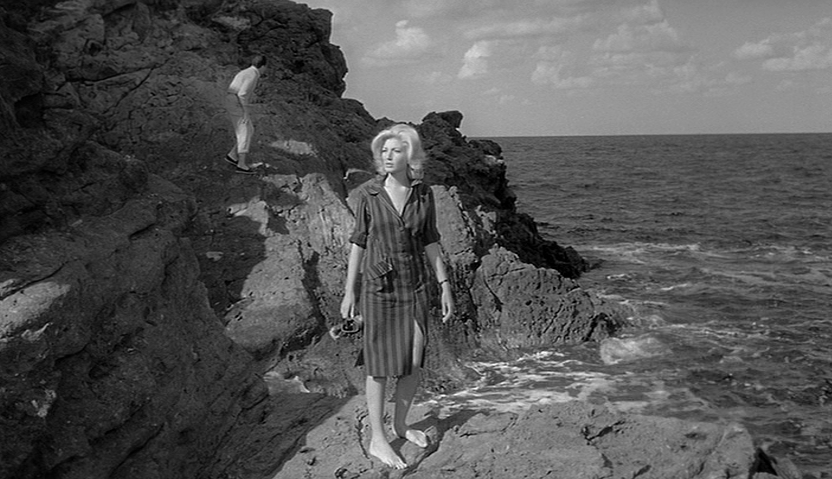
Monica Vitti in L’avventura, directed by Michelangelo Antonioni

Why do people do the things they do? Oftentimes, we struggle finding an answer to the question because people can be unpredictable. In Michelangelo Antonioni’s 1960 Italian film L’avventura, we see how the disappearance of Anna sets in motion the unpredictable actions of her lover Sandro and her best friend Claudia. Initially, Anna seems like a main character that we will follow but after the romance buds between Sandro and Claudia, she was gradually forgotten. We may have expected a thriller, but that is not what we get. When the film seems to shift into a love story, we are misled once more. We ask: What is going on?

In L’avventura, there is no cause-and-effect driven narrative — events appear without explanation. We wonder, “Why did Anna disappear?” or “Why did Sandro suddenly kiss Claudia?” We can provide theories, but we will never get our answers. Because of this, most people are left confused and disinterested in finishing a long, seemingly incomplete film. The difficulty in understanding L’avventura lies in Antonioni, who chooses to withhold information. He refuses to give a back story or definite characterizations that films usually provide. Not only are we uncertain of what the characters are thinking or feeling at a given time, but they, themselves, are not too sure. For instance, Sandro simply says, “Why would I do that?” when he ruined an art piece. Admittedly, we can understand these instances where the character does not know the motivation behind his or her actions and suddenly, they become more real. To add to that, the haunting landscapes contributes to the distance and alienation that we feel from the characters. By doing so, Antonioni presents how the audience can still experience tension and fascination without the conventions of storytelling. He does not tell us how you should feel about the scenes; rather, he allows you to reflect on your own.

Aside from the unique take on cinema, L’avventura compels the audience to follow the film, despite the long, slow running time, through the emphasis on visual compositions. The ending shot with Sandro beside the blank wall and Claudia near the volcano was beautiful. At the end of the film, there is no resolution to the storyline. We are left with one of the biggest questions: “What happened to Anna?” Questions of plot are often answered in conventional Hollywood films, especially for events that drove the storyline. However, Antonioni leaves us with mysteries and instead, poses a challenge for us to think about the personalities of the characters.

Similar to a typical adventure, Antonioni’s L’avventura exhausts the audience with the long, slow running time. Yet, you leave the cinema with renewed vigor after witnessing one of the most mysterious and visually striking films of all time. It may not have been the adventure we were expecting, but it sure was a thrilling and unforgettable one. L’avventura deserves to be a classic because of how it paved the way for European cinema to become a breeding ground for interesting, artistic, and thought-provoking films.
The Identity of Two Women: A Discussion on Persona

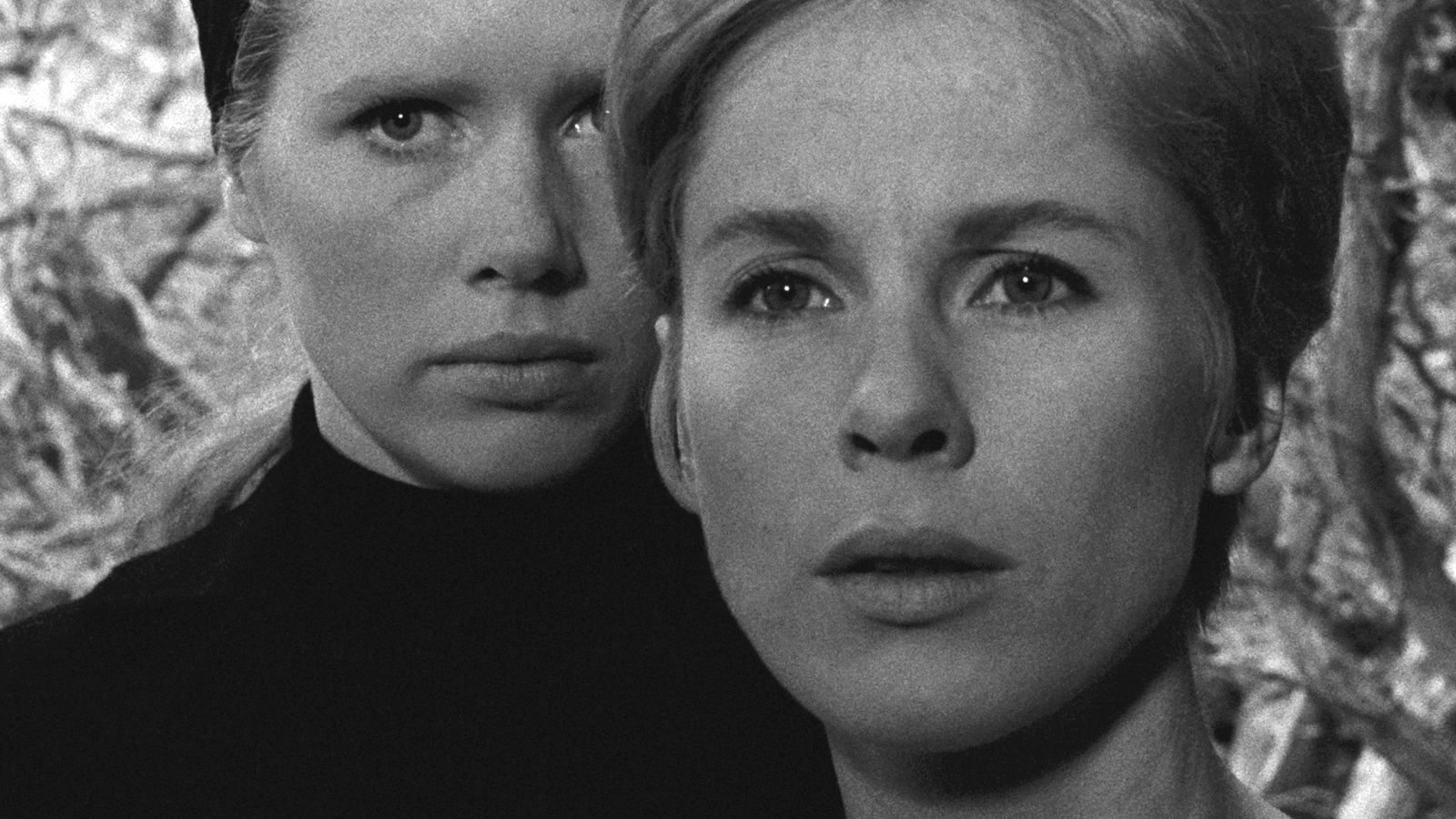
Bibi Andersson and Liv Ullman in Persona, directed by Ingmar Bergman

Slow, long films that explore themes of identity and philosophy often scare people away because they believe that the film will be difficult to understand and end up wasting their time. However, I found myself intrigued and on the edge of my seat throughout the duration of Ingmar Bergman’s 1966 Swedish psychological drama film Persona. At once, the film disturbs you with the prologue that seems to make no sense, especially when you get to the main story of the film, which revolves around a nurse named Alma and her patient, an actress named Elisabet, who stopped speaking under mysterious circumstances. As the story unfolds, you begin to realize that perhaps the film is about our identity we have in our minds and the identity that others force on us, or as the doctor in the beginning of the film says, “the chasm between what you are to others and what you are to yourself.” The roles of the characters were distinct in the beginning, as the nurse and the patient, but they begin to blur as they spend more time together. You are no longer sure who is the nurse and the patient because Alma began unveiling her secrets to Elisabet and felt good doing so. In a way, Elisabet was there to help her come to terms with her own perception of herself and how she does not conform to society, which mainly stems from the guilt she feels for having an abortion. Their identities begin to merge quite literally onscreen, which makes you wonder whether the story is the reality. Added to this is the fact that some scenes have a dream-like quality, such as when Elisabet went inside Alma’s room while she was sleeping and they faced a mirror. Thousands of questions in our heads arise because of the ambiguity of the film.

Aside from touching on the subject of identity and philosophy, another idea that made the film more interesting was how Bergman portrayed women as sexual beings with their own autonomy. Considering how a woman’s sexuality remains a taboo in our society today, it made me think how much more controversial the topic was during Bergman’s time. The scene where Alma narrated her sexual experience was very erotic, despite not showing any visual images. I felt as if I was reading someone’s private diary because the scene was simply a girl telling a story, but I can clearly picture the events in my head because of how the director set up the scene, as well as the characters’ magnificent acting. This scene, juxtaposed with the idea of women’s role in the society as a mother, supports the film’s attempt in contrasting how we view ourselves and how we are viewed by others. People keep on imposing on women the role of a mother, without acknowledging their sexuality, as evident in Alma’s story and later on, Elisabet’s revelation that she wanted to give up her child. Admittedly, I was uncomfortable after hearing Alma’s sexual escapades and Elisabet’s disgust towards her child but then, I stopped and wondered if this was because society conditioned us to consider a woman’s sexuality or her refusal of her role as mother as taboo. At this point, I thought, kudos to the film for discussing these issues and succeeding in leading me towards reflection.

By the time the film ends, you will still have difficulty comprehending its meaning and a number of scenes. It disturbs you and pushes you to ask questions, such as “Why was there a cut in the middle of the film during one of Alma’s scene, which then showed the vampires and skeleton monsters?” Are we, then, watching a film-within-a-film rather than the reality for two women? You are tempted to maybe even watch the film again — hoping to understand the message by the second time around.

Despite the confusion, you are left in awe by the sheer greatness of Bergman’s Persona. Although films that usually focus on a few characters with more dialogue than action tends to get boring for some, the chilling atmosphere and brilliant cinematography of Persona creates an impact on you and allows you to see the potential of cinema beyond entertainment. We are left with more questions, instead of the feeling of satisfaction and pleasure that we get after watching a great film.