The Five Obstructions: a cinematic face-off

Portraying itself as a documentary, “the five obstructions” directed by Lars Von Trier is a highly inventive and visionary film composed of a series of films and behind the scenes shots, all coming together to construct the masterpiece that is “the five obstructions”. The short film, “the  perfect human” directed by Jorgen Leth presents ordinary, day-to-day tasks done by a man and a woman separately. With the hopes of recreating Danish filmmaker, Jorgen Leth’s masterpiece, he was put to the test by another renowned filmmaker, Lars Von Trier to recreate the film under his rules— five times in five different ways and places. 
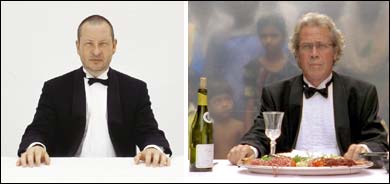
Leth and Von Trier went head-to-head throughout the film as Leth followed Lars Von Tier’s monstrous and far-fetched requests and challenges. Without a doubt, It was not a smooth ride. It is definitely not easy to re-create a film, most especially if this film was shot in the 60’s, even more when you, as the director, will be starring in this remake in different locations. Commendable and insurmountable are understatements as to how Leth was able to excellently execute Von Trier’s commands. This whole idea of reinvention has brought him to the worst/most miserable place on earth, asking him to create an animation in which he expressed his dismay for, but did it anyway, and excellently, at that. Von Trier was actually dissatisfied with what they shot in Mumbai and gave Leth two options— either to fly all the way to India and do it all over again or create a freestyle film. Despite this, Leth continued on. 

In the five obstructions, we are able to perceive the film from the creator’s perspective. It gives you a bird’s eye view on why these filmmakers work the way they do, the creative process that takes place and how everything comes together by listening to their discussions and exchange of views. We see the film unfold beautifully before us, I think that is what sets this film apart. 

Although Leth may have had a hard time with Von Trier’s challenges, the whole point of Von Trier’s ridiculous commands only led Leth to eventually step out of his comfort zone, which brought colour and vibrance to his previous masterpiece, “the perfect human“. Lars Von trier’s ridiculous requests/proposals only led Leth to create and produce another masterpiece, potentially as big or even bigger than his much acclaimed short film, “the perfect human”. More than anything, it was a work of art. The visual style of the sequences and shots were magnificent, leaving you mesmerised while watching. Leth’s style of film making was definitely put to the test in the process but in the end, he was victorious in putting the film together, successfully stepping out of his comfort zone. We see how Leth cherished and believed in control and stability, and putting him together with Von Trier’s twisted ideas defying what he valued, only resulted in a ravishing work of art. It has driven Jorgen Leth’s much esteemed spot in the film world to even greater heights with this remake. 

162622
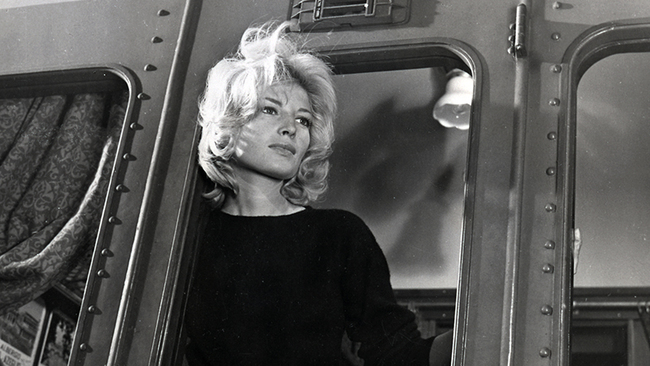
A sense of being and nothingness

Michaelangelo Antonioni’s stunning black and white film is a great representation of what the 60’s era with the sharp-looking characters in their lavish costumes was all about, which allows a person to easily identify the era it was set in. A few minutes into the film it gets you thinking whether or not this is a love story, or merely just two individuals seeking pleasure, and just that. Sexual relations seem to be their way of “coping” or just a means of passing the time, and the feeling seem to be mutual for both parties. The first thing that comes into mind a few minutes into the film is that the relationship dynamics of the characters seem be lacking. Just a bunch of individuals with money somehow finding a way to fill in the emptiness they have inside. As a matter a fact, the film had a different take on filling the emptiness within. The characters seemed to be mindless and unwilling of anything. However, one comes to realize how the film successfully depicts their journey as they face the experience of inner turmoil and unrest and find a way to fill the void in their lives. 

L’avventura meaning “The Adventure” in English is quite oxymoronic for me. Because nothing monumental really happens throughout the film, just very minimal drama. There was no drastic “rise” and “fall” of events. It also seemed to be missing certain values that must be upheld, especially with how they poorly managed Anna’s mysterious vanishing. Anna just disappears all of a sudden shortly after going ashore, no traces, no clues, while her supposed best friend, Claudia, takes centre stage and aiming to gain the affection of her Anna’s boyfriend during their quest of looking for Anna. They are passionate lovers all of a sudden. No conclusion is even given, it just sort of ends— no resolution. She is just forgotten.  There are very minimal details given out. It did not have a close ending nor a happy ending but rather, an empty one.

However, this film has a cutting edge in the view of the fact that it has the potential to surprise and amaze its viewers with a better understanding each time they would watch it again. Watching it the first time around, the audience could be questioning the true motivations of the film and the characters themselves. There could always be a new discovery or unearthing of an interpretation, more questions could arise. There is always gratification and amusement in finding out what it is truly about. The audience is given a role in trying to interpret and give meaning to the series of events, not to mention the lack of information presented. Moreover, it was able to portray a great deal of allurement and grandeur as to the way the camera moved and the angles shot, which allowed the audience to be fully cognizant of the true emotional states of the characters.

Justifying the title itself, the plot was quite adventurous for a movie in the 60’s, which often than not, followed almost the same narratives with idealised portrayal of love and romantic relationships. This film was definitely daring for that time, it is not exactly the adventure that we know of, but it is rather a strange one. 

162622

An artwork expressed through a film

At the beginning, the film immediately grabs your attention, opening it with weird sound effects and black and white flashy images. There are creepy, eerie images of pain, flashing on the screen one frame after another like spiders, nailing a person’s palm, and the like, somewhat exploring the egoistic and idiosyncratic nature of art.

It reminds me of an artwork. 

The camera angles and cinematography add personality and charisma to the film. The marvelous shots contributed greatly to the overall magnificence of the film. As the audience, I am not entirely sure of the motive of the film. It has a very odd, unusual setting with thrilling music creeping in the background. Not to mention this all  began before the title sequence. At first, it will get you thinking if this is actually a horror movie with the weird jumpy music, but as the film goes on, you realize something else is going on, the same way an artwork can turn out differently as you look closer or observe it longer. 

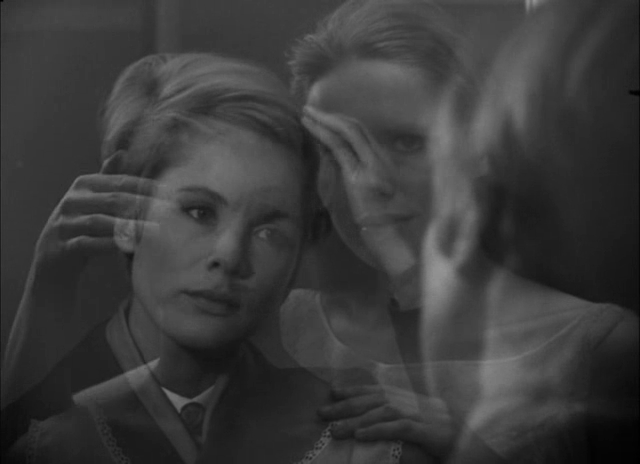
Persona is a very experimental film. The more you watch, the more you are engrossed and riveted by it. There is a sense of insanity and psychological horror it aims to portray through the cinematography, music and the unusual behavior of the characters. There were many questions running in our heads while watching it. Why was Elisabet not speaking out of willpower? Was there sexual tension between the two? Elisabet claims to not have visited or spoken the previous night, which was obviously a lie. What was “nothing”? What was happening with their distorted, amalgamated faces? What was this trying to portray? It will leave you asking, “what is going on?”

With the series of events that bring confusion to the audience, the viewer might need a minute or two to process what was absorbed, to find meaning in the occurrences. It is definitely not an easy film to watch. It’s actually quite rattling, leaving you wondering how things are connected, the messages uncovered and what they represent.

The film does not give explanations as to the connection of events or characters, like the boy at the beginning of the film observing the blurry, ill-defined image of a woman.  Could that be Elisabet’s son? No explanations are given. It is just for you to figure out on your own. Like many artworks, it’s complex, almost bewildering, which result in varying interpretations from the viewers, but that’s what makes it a masterpiece anyway. It is its ability to capture viewers in different ways, different angles. 

Love in full color

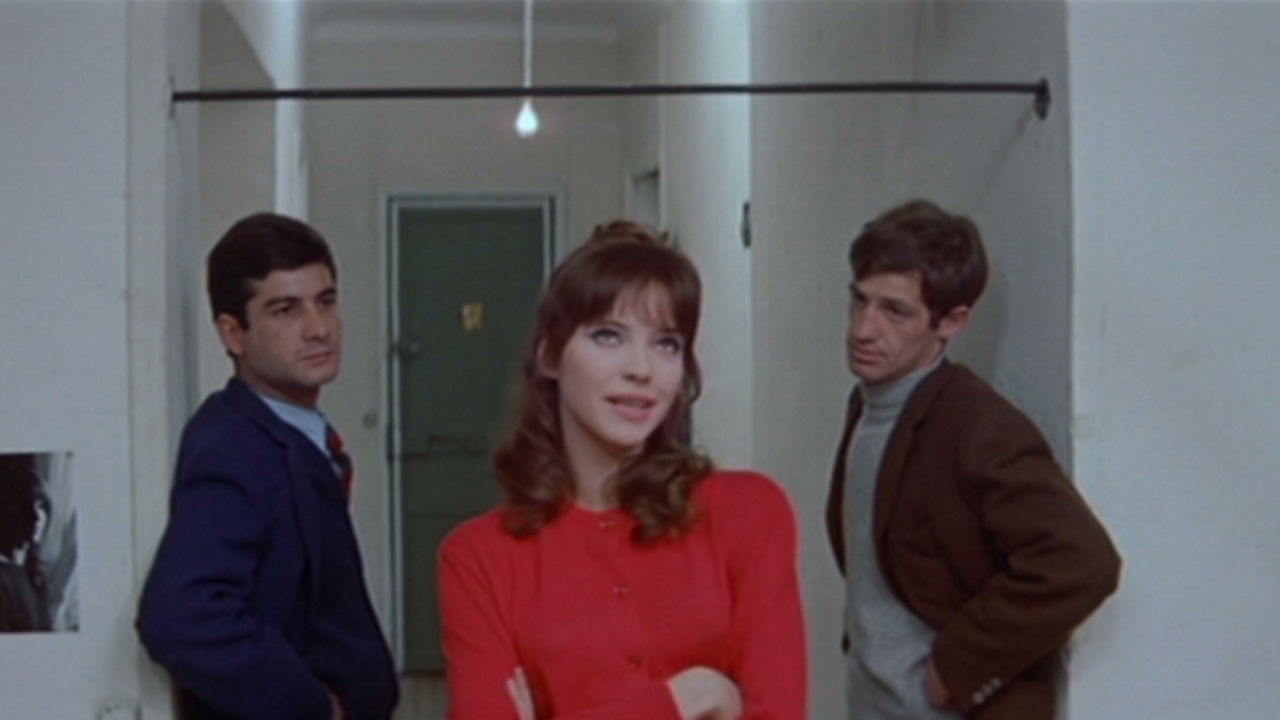
Jean-Luc Godard’s avant-garde masterpiece, A Woman is a Woman, revolves around Angela, a strip tease dancer, and her desire to conceive a baby with her boyfriend, Emile. However, Emile is not exactly pleased with her idea, which only leads them to go on and on with Angela convincing him throughout the film with teasing, sneering and playful scenes that make it a film so full of life and high-spirited. 

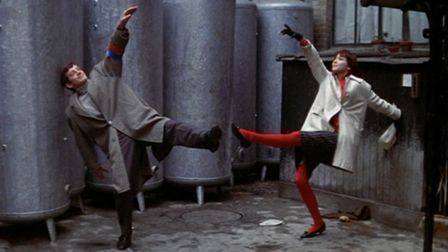
The mis-en-scene of the film depicted a play with vibrant colors and quite fashionable statements from that era as scene in Angela’s clothing choices and make up, which were strongly expressed throughout the film. I believe these were big factors as to why Angela was such a captivating character. I really liked the definition of the cinematography, with the jolly and lighthearted music in the background, at the same time putting a halt to this at certain parts of the film.

The strip club she works in is quite the concept. It’s quite different from the strip clubs one would envision, she walks in fully clothed, slowly undressing herself under a mood light. The spectators sitting quietly in a line of round tables surrounding the supposed “dance floor” with their drinks at hand. Angela gracefully dancing for a few minutes, she ends her “show” and departs the club, living a normal life on the streets. But the questions is, why was Emile completely fine and unbothered by the fact that his girlfriend is a striptease artist? Or was this just not an issue at all? Even when Angela was planning to sleep with Alfred in order to conceive a baby, he seemed to be strangely okay with it. 

In addition, there is a sense of ridicule in its plot, which was expressed when she was cooking an egg, tossed it and dashed towards the telephone to answer the call, runs back a few moments later to catch the egg she tossed. There were also some parts of the film where there were a few questions unanswered. I wish they gave us a background on Angela and Emile’s relationship as well as Emile’s relationship with his best friend, Alfred.

It is definitely not your average romantic film, it was quite odd. There were moments throughout the movie that confused me, when the music would stop abruptly, what they were doing exactly in the scene before bed, where they were grabbing books. It took me quite some time to realize they were quarreling through the titles of the books since they did not want to speak to one another. In comparison to the films shown at present day, the central love story remains— the predicament a man and a woman would face in the relationship and how they would overcome this in the end. Love is complex, the movie was able to exhibit this in full color literally and figuratively; however, unlike most romantic films nowadays that leaves you bawling your eyes out frame by frame with cheesy pick up lines here and there, A Woman is a Woman had a different take on it with humor, mockery and a visual portrayal of jealousy. Maybe these inputs are what made this film so great.