Raw

In Julia Ducournau’s Raw, we are able to see a complex depiction of a female character in the horror genre. We are used to the idea of the “scream queen” and “final girl” trope in horror films, that seeing the full perspective of the female character as told by a female director  is such an interesting watch. It was also interesting to watch that this kind of horror film is not the typical type that relies on the jump scares. It was more skin-crawling because it relied on the more physical aspect of the horror, as seen on the canibal storyline. This film is clear example of the French extremity movement, wherein it truly tests the audience by depicting harsh scenarios that are rare in mainstream films.

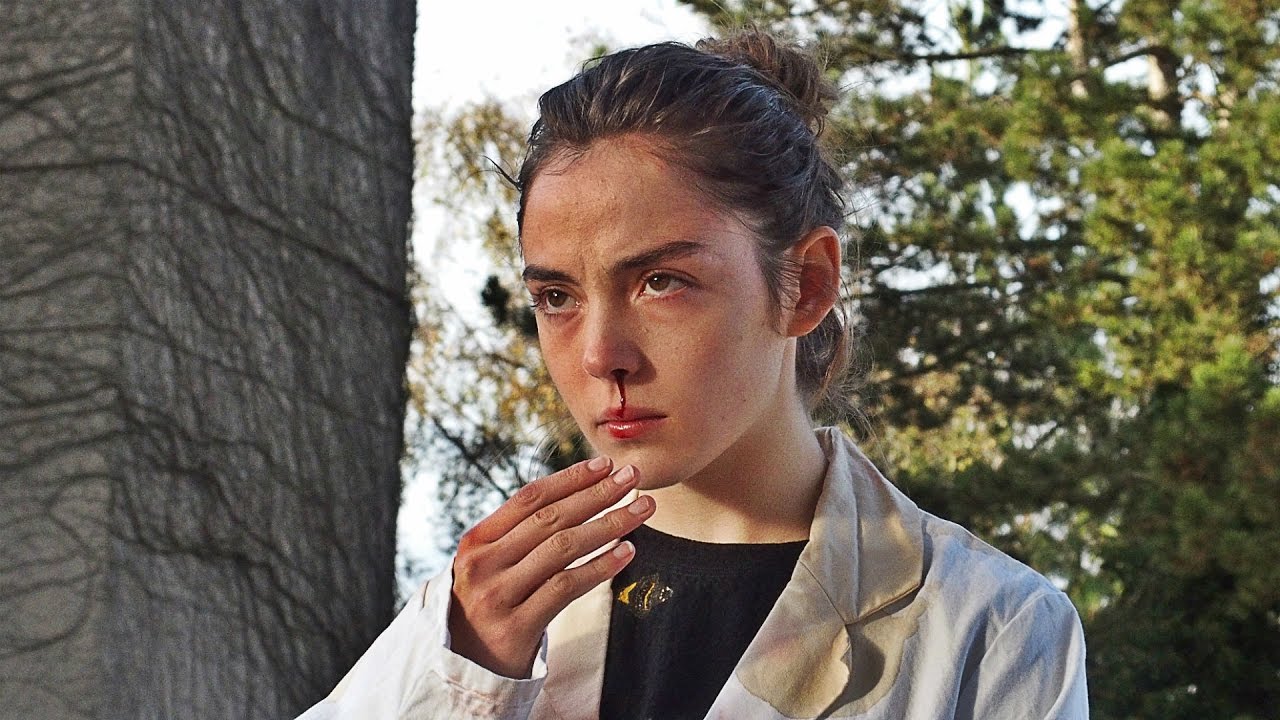
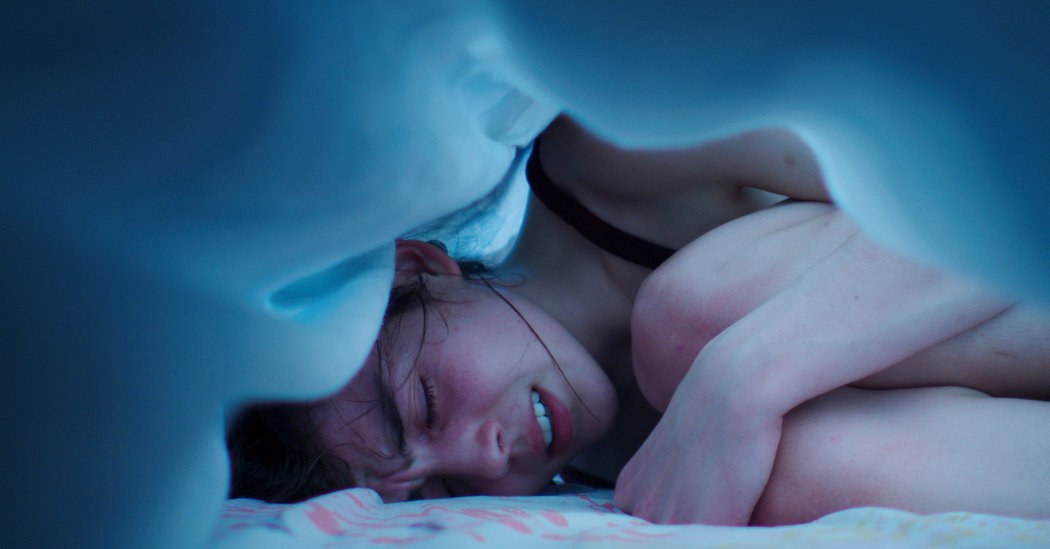
The vibe of the film is a departure from most mainstream horror films because it does not rely on cheap jump scares to produce a reaction from the audience. We saw in the experiences of Justine in the veterinary school, that the environment of the film makes it creepy and makes sure it is connected to the cannibalistic aspect of the film. By having this more creepy vibe, the film is successful in not falling in the pitfalls most Hollywood horror films usually get trapped in. Instead they bring something very rare in the genre by making sure gut-wrenching scenes is what made it a horror. The most noteworthy scene for me was when Justine was in bed being tormented by her body that resulted to hear severely scratching herself.  This scene was very hard to watch because the film made the audience feel every scratch she made as if it was happening to them. This scene was successful, due to to committed performance of the actress and the sound of the film that highlights scratching sounds. This aspect of the film ensured that it belonged in the French extremity movement, because it was a horror film of bizzare and skin-crawling scenarios rather than simple jump scares.

Another aspect that I liked about the film that is not typical in most horror films was that it was very much character driven. The relationships of Justine with her sister, Alexia, and her roomate, Adrien, made the film more engaging because it humanizes Justine. By focusing in the character’s coming of age, we get to see a horror film that focuses on the character’s descent into madness. The actress, Garance Marillier, was very committed to her performance and made sure the audience followed her story because even though they might not relate in the cannibalistic aspect, they can relate in the coming of age and growing up aspect.

Lastly, the most noteworthy thing about the film for me is that it did not pursue the typical storylines that female characters in horror film usually have. We usually see them as the victims of the antagonists in the horror film. In this case it is purely in Justine’s perspective and tackling her own agency. It also important to see that this film is under the female gaze since it is done by a female director. With that she was able to tackle her film’s issues in the female perspective without exploiting her female characters, which is abundant in mainstream horror films. Also she does not make her heroine perfect by making sure the characterization of Justine is complex, which she gravitate being the heroin and the monster of the film . The film was not afraid to tackle these themes it because of that the film was very successful in the execution.

Enrico R. Barruela COM 115.5
Sisterhood of man-eating

At the beginning of the movie, one might be deceived by the image of Justine, a seemingly  innocent young girl entering veterinary school. As a strict vegetarian, she definitely did not know what she was getting into trying out meat for the first time. Her true character was revealed. It became some kind of addiction. She would try it over and over again, not to mention lusting over her best friend/ room mate’s flesh and would turn to choking herself to regurgitate all the meat out of her system. She had thought she was going crazy and she did not know how to stop the cycle, only to find out her sister, Alexia, has been on it all this time. Alexia acknowledges whatever it is going on with her sister.

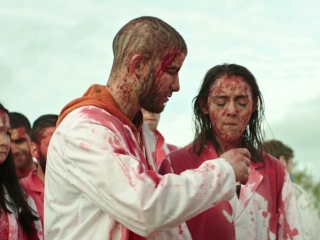
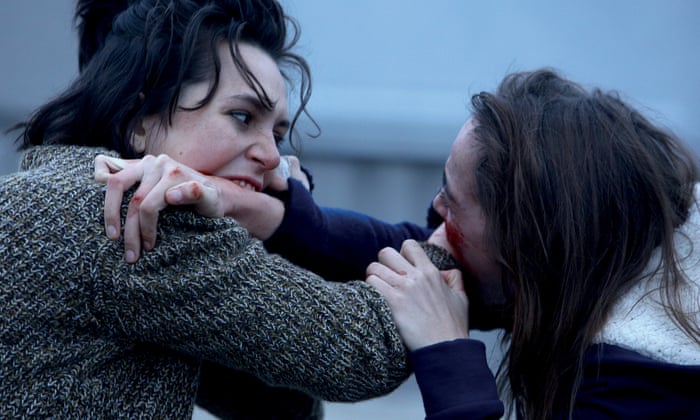
This drama-horror is a visually disturbing movie with scenes that will be better off with your eyes closed. Some scenes include watching two sisters literally biting each other’s hands off like wild animals,  regurgitating tresses of your own hair, deliberately getting cars into accidents to devour the victims and seeing your best friend dead beside you, only to find out he was eaten by your sister. Every scene made me ponder whether or not the scene was a mere dream or if it were reality.

The director has a great technique and style in letting us go deeper into Justine’s life of cannibalism unfolding before us. From watching her experiences of gripping, soul-stirring nightmares under her bed sheets to watching her eyes full of desire lust over the people’s flesh. The audience is left overwhelmed with scenes of carnage in unsettling ways. 

Aside from cannibalism, we are also let in on disturbing hazing rituals in colleges, and other common harassments that could happen in school grounds. The audience understands the pressure she’s feeling from entering this school almost clueless, wanting to succeed and find herself, she was forced to eat rabbit kidney as a part of the many alarming initiations the school had. Moreover, it touched up on familial relations like sibling relationships and it was a fearless and spectacular performance by the two sisters. It was the same vet school both her parents attended and her sister is currently attending. Towards the end of the movie, it was later unveiled that her mother suffered from the same illness. No wonder their mother was so adamant about not eating meat as seen in the first few minutes of the film. From this, it gives us hope that Justine could eventually find a solution to this, the same way their mother did and still found a way to live a somewhat “normal” life with their father. 

One thing is for sure, it is not for those afraid of the sight of blood and human flesh. To me, it was not scary but rather disturbing. It does not exactly startle you but you would much likely choose to look away in a lot of scenes. Nevertheless, it was entertaining and captivating— the twists and turns of the movie make it a strongly executed film. This cannibal fantasy film was definitely gruesome. It went on from being a subtle horror film to frame after frame of horrifying flesh-eating scenes. Many unpleasant aspects of humanity are portrayed in the film like cannibalism, humiliation and even topics of sexuality, which makes it somehow relatable. It’s an ingenious film that has a fresh take on cannibalism, blurring the lines between a growing sense of self and pleasure-seeking. 

162622

Raw

Ironically, a film about cannibalism is hardly the weirdest film I have seen in this class thus far. Unironically, it was also the most interesting, captivating its audience all throughout with its simple yet compelling storyline, inciting conflict (at least in me) to watch more due to the nature of such carnal and raw scenes, making me want to look away but refusing to allow me to.

Raw is a film that beautifully encapsulates a young woman’s journey into becoming – almost like a coming-of-age film on steroids. The entry into college, where most of the youth are ultimately thought to learn of their identity by their integration into the entry point of the real world, highlighted by the initiation sequence the film revolves around, was a clever way to analogise the concept of the main character’s emerging discovery of her true nature. While the film begins with what simply looks like a college initiation, quickly turns to a film that thrives on keeping its viewers lured in through its gory scenes of animals and blood, and intimate, more sexual and abjectly explicit renderings of human and student interaction. The film explores themes of human sexuality and the awakening of previously repressed desires – the awakening of the most raw, carnal human being at its most animalistic. The main character quickly becomes almost primal in her desire for human flesh to simultaneously satisfy and carnal appetites. The films rendering of raw and intimate human moments (close-up scenes of kissing, sex, naked bodies, masturbation, and ultimately the devouring of actual flesh) all contribute to the central tone of the film as one that refuses to hold back, with no rendering for the concepts of taboo and without regard for the viewers’ feelings.

A lot of the scenes were obviously quite uncomfortable to watch, however the film excelled at keeping us locked in either way – a difficult task, all things considered.

A question the film raised was that of freedom – who is more free, Justine or Alexia? One who is free in the objective sense yet having to hide her identity, or Alexia, who is literally imprisoned, yet free and without restriction to embracing who she truly is? In this sense, I believe it is Alexia. In the few scenes we see of her at the end of the film in the facility, despite being physically imprisoned, she seemed not at all bothered by this – perhaps, it is not so far off to say that she actually seems happy.

Finally, I believe an important aspect of the film is the fact that it can be perceived as feminist film and empowerment. Women in the real world and in film have often regressed to the backdrop – in real life through the oppression of a system that inherently remains patriarchal, and in film as supporting characters, more often than not depicted as the “love interest”, of the brave male hero. Thus, it is exciting to see the how in these women’s control (the mother and the main character) or embracement (the sister) of their utmost carnal desire, there nonetheless remains the fact of their acknowledgement of it – and this has power. To portray a film that already goes against taboo, using the lead characters of women taking power over their individuality, is a powerful testament to the rest of the filmmaking world – not to mention a unique was of doing so.

It

Raw – review

I don’t think I’ve ever seen a movie as bloody, graphic, and as the movie suggests – “raw”. The film, which is clearly not meant for the squeamish nor the faint hearted, is a story of a young girl who develops a desire for raw meat and ventures on a journey to find out who she really is. From being grown up in a strict vegetarian family; Mom nearly freaks out after seeing a bit of beef along with the mash potatoes near her family. she quickly discovers her cravings for raw meat after being forced to eat a raw organ during a sorority night, and the selected meals become quickly off-the-menu and very very bloody.

At the start of the film, despite the warnings of the title of the film, I really had no idea where the movie was heading for. I should have taken the hint when the mother freaked out for having meat near the family, but I did not. To be honest, I found the scene where she was forced to eat a raw duck kidney bad enough, so when she ate her older sister’s finger, you could have imagined the horror. I thought the worst part had passed, but when the sisters get into an accident and sees the “course meal” that is laid in front of them, I realized that it was far from over.

Despite feeling half-sick most of the duration of the film, I found the underlying message of the film interesting enough to keep me going. Justine’s realization of the truth behind her diet happened as she started exploring her sexuality as well. I found that the timing of the awakening of her physical desires was a metaphor of how we tend to find out more about ourselves in a new environment such as in Justine’s case, a university. Universities are generally a place where we can do most of the exploring in our early adult lives, and it was clearly something that Justine was doing a plenty of as evident in her solo grind performance in front of the mirror. At home we have to live by certain rules that have been in place since we were little children. This all comes crashing down when we start to exercise our freedom in trying out new ideas.

I also found this film to be very feminist and empowering. While the director chose to use a rather bloody approach, it still is a story about a girl who found out what she wanted, and despite the repercussions she might face from those around her and the society, she still decided to embrace who she was and went for it. To be completely clear, I do not endorse cannibalism. But, I do advocate continuously challenging oppressive social norms, and if that is what the director truly intended the audience to feel, then this is a bloody good film.

The Sexual Awakening of a Woman: A Discussion on Raw

Garance Marillier in Raw, directed by Julia Ducournau

College is a critical time for discovering who you are. For some, the conflict between an individual’s inner desire and society’s expectations often leads to catastrophic results. Julie Ducournau explores the sexual awakening of a young girl and the consequences in her debut feature, Raw. Justine, played by Garance Marilier, is a vegetarian who suddenly developed a craving for human flesh after getting a taste of rabbit kidneys during a hazing ritual. The film does not shy away from capturing a private waxing session between sisters, an intimate sex scene between a virgin and a gay man, and the nature of cannibalism, among others.

Interestingly, Justine’s realization of her cannibalistic tendencies occurs at the same time she began embracing her sexuality. She was initially ashamed of herself for craving meat, which was evident when she stole from the cafeteria or when her friend had to take her to a gas station. Similarly, she was hesitant to wear her sister’s stylish dress to a party because she didn’t feel like herself. Her evolution becomes much more apparent in the succeeding visually striking scenes. She dresses up and grinds in front of a mirror, then becomes more fervent when she lost her virginity, causing her to bite her arm for restraint. Her true identity began to surface, despite the painful process revealed as she contorts under her bed covers and the increasing judgements from people around her. As an audience, you’re not sure whether to root for her self-discovery or cringe at her impulsive actions. There’s a certain estrangement that arises between you and the character because of the connotations of eating human flesh. Much like cannibalism, a woman’s sexuality is taboo in the society. Ducournau succeeds in portraying the sexual needs of young girls as something that should be fulfilled just as much as boys do through the experiences of Justine.

On the road to sexual awakening, Justine encounters two opposing forces that attempt to control her actions. Her mother prevents her from discovering her true identity by raising her as a vegetarian. On the hand, her sister pressures her to act on her nature by tempting her to eat the remains of those who suffered a car accident and taunting her at the morgue. It is interesting to note how they are both women, perhaps signifying the irony of other women controlling a woman’s actions in society. For instance, some women are quick to judge the mistress in a relationship, claiming that she seduced a married man, without stopping to think about the actions of the man who cheated on his wife. In Raw, Justine defies her mother and sister in the hopes of finding a different life on her own. She gradually accepts her identity as a cannibal contrary to her mother’s wishes and at the same time, she now has the freedom to control her desires unlike her sister who went too far and ended up in prison.

One question remains at the end of the film: How did the women in Justine’s family become cannibals? The cause was not disclosed in the film, as in counter-cinema. Raw focuses on the events that happened to Justine, rather than providing a reason and a resolution to the problem. By using this technique, Ducournau directs the attention of the audience to the human condition. There’s a heavy emphasis on the woman’s body and coming to terms with it. Sexuality isn’t good or bad; it just is. With countless scenes that are painful to watch, Raw succeeds in disturbing the audience and pushing them to reflect on cannibalism, sexuality, and womanhood.

The Lost Girl: A Discussion on L’Avventura

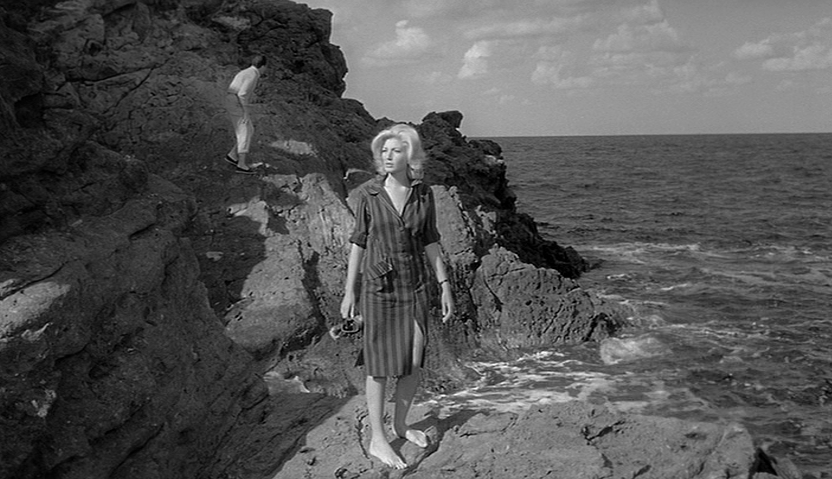
Monica Vitti in L’avventura, directed by Michelangelo Antonioni

Why do people do the things they do? Oftentimes, we struggle finding an answer to the question because people can be unpredictable. In Michelangelo Antonioni’s 1960 Italian film L’avventura, we see how the disappearance of Anna sets in motion the unpredictable actions of her lover Sandro and her best friend Claudia. Initially, Anna seems like a main character that we will follow but after the romance buds between Sandro and Claudia, she was gradually forgotten. We may have expected a thriller, but that is not what we get. When the film seems to shift into a love story, we are misled once more. We ask: What is going on?

In L’avventura, there is no cause-and-effect driven narrative — events appear without explanation. We wonder, “Why did Anna disappear?” or “Why did Sandro suddenly kiss Claudia?” We can provide theories, but we will never get our answers. Because of this, most people are left confused and disinterested in finishing a long, seemingly incomplete film. The difficulty in understanding L’avventura lies in Antonioni, who chooses to withhold information. He refuses to give a back story or definite characterizations that films usually provide. Not only are we uncertain of what the characters are thinking or feeling at a given time, but they, themselves, are not too sure. For instance, Sandro simply says, “Why would I do that?” when he ruined an art piece. Admittedly, we can understand these instances where the character does not know the motivation behind his or her actions and suddenly, they become more real. To add to that, the haunting landscapes contributes to the distance and alienation that we feel from the characters. By doing so, Antonioni presents how the audience can still experience tension and fascination without the conventions of storytelling. He does not tell us how you should feel about the scenes; rather, he allows you to reflect on your own.

Aside from the unique take on cinema, L’avventura compels the audience to follow the film, despite the long, slow running time, through the emphasis on visual compositions. The ending shot with Sandro beside the blank wall and Claudia near the volcano was beautiful. At the end of the film, there is no resolution to the storyline. We are left with one of the biggest questions: “What happened to Anna?” Questions of plot are often answered in conventional Hollywood films, especially for events that drove the storyline. However, Antonioni leaves us with mysteries and instead, poses a challenge for us to think about the personalities of the characters.

Similar to a typical adventure, Antonioni’s L’avventura exhausts the audience with the long, slow running time. Yet, you leave the cinema with renewed vigor after witnessing one of the most mysterious and visually striking films of all time. It may not have been the adventure we were expecting, but it sure was a thrilling and unforgettable one. L’avventura deserves to be a classic because of how it paved the way for European cinema to become a breeding ground for interesting, artistic, and thought-provoking films.

The Identity of Two Women: A Discussion on Persona

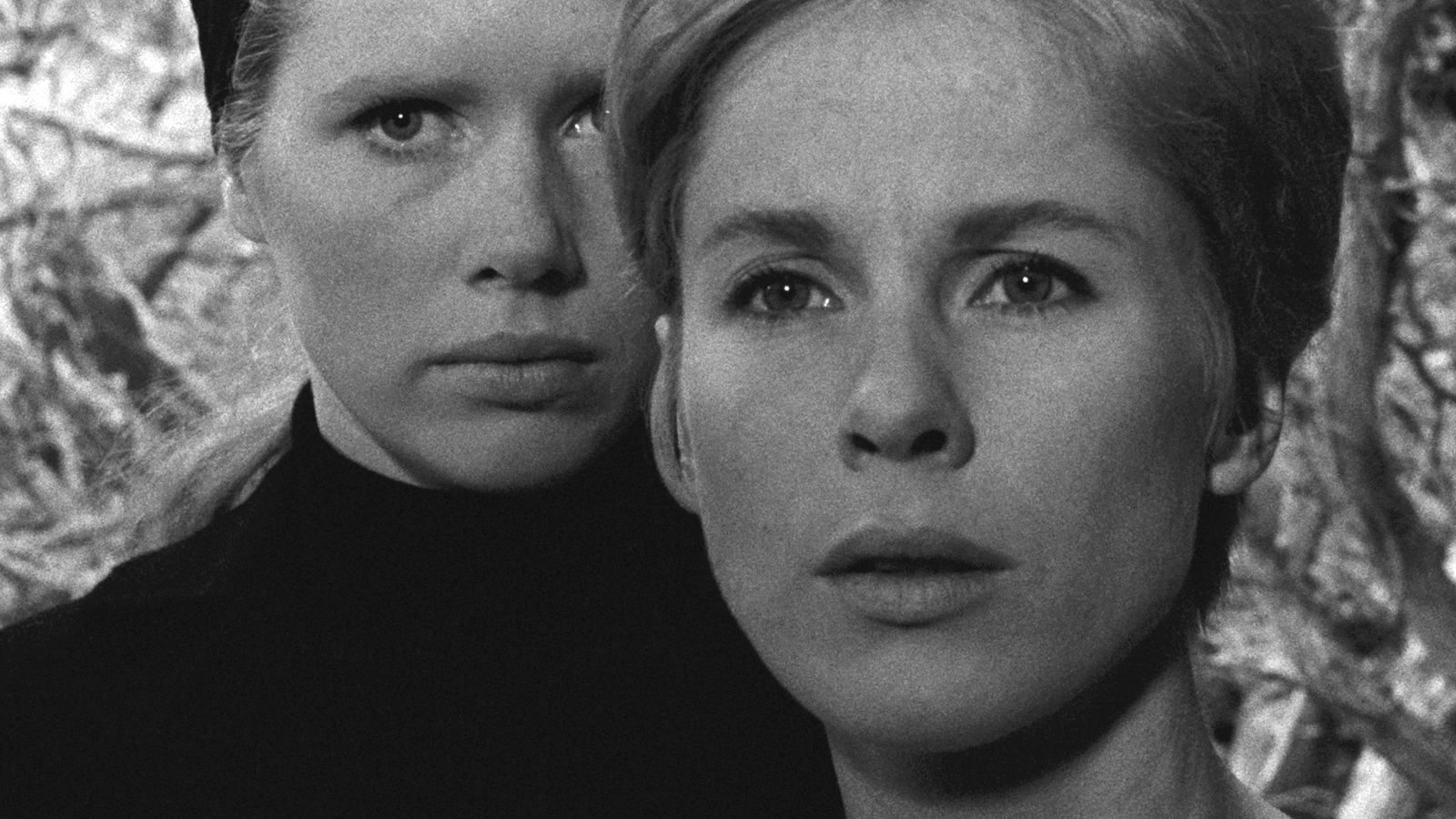
Bibi Andersson and Liv Ullman in Persona, directed by Ingmar Bergman

Slow, long films that explore themes of identity and philosophy often scare people away because they believe that the film will be difficult to understand and end up wasting their time. However, I found myself intrigued and on the edge of my seat throughout the duration of Ingmar Bergman’s 1966 Swedish psychological drama film Persona. At once, the film disturbs you with the prologue that seems to make no sense, especially when you get to the main story of the film, which revolves around a nurse named Alma and her patient, an actress named Elisabet, who stopped speaking under mysterious circumstances. As the story unfolds, you begin to realize that perhaps the film is about our identity we have in our minds and the identity that others force on us, or as the doctor in the beginning of the film says, “the chasm between what you are to others and what you are to yourself.” The roles of the characters were distinct in the beginning, as the nurse and the patient, but they begin to blur as they spend more time together. You are no longer sure who is the nurse and the patient because Alma began unveiling her secrets to Elisabet and felt good doing so. In a way, Elisabet was there to help her come to terms with her own perception of herself and how she does not conform to society, which mainly stems from the guilt she feels for having an abortion. Their identities begin to merge quite literally onscreen, which makes you wonder whether the story is the reality. Added to this is the fact that some scenes have a dream-like quality, such as when Elisabet went inside Alma’s room while she was sleeping and they faced a mirror. Thousands of questions in our heads arise because of the ambiguity of the film.

Aside from touching on the subject of identity and philosophy, another idea that made the film more interesting was how Bergman portrayed women as sexual beings with their own autonomy. Considering how a woman’s sexuality remains a taboo in our society today, it made me think how much more controversial the topic was during Bergman’s time. The scene where Alma narrated her sexual experience was very erotic, despite not showing any visual images. I felt as if I was reading someone’s private diary because the scene was simply a girl telling a story, but I can clearly picture the events in my head because of how the director set up the scene, as well as the characters’ magnificent acting. This scene, juxtaposed with the idea of women’s role in the society as a mother, supports the film’s attempt in contrasting how we view ourselves and how we are viewed by others. People keep on imposing on women the role of a mother, without acknowledging their sexuality, as evident in Alma’s story and later on, Elisabet’s revelation that she wanted to give up her child. Admittedly, I was uncomfortable after hearing Alma’s sexual escapades and Elisabet’s disgust towards her child but then, I stopped and wondered if this was because society conditioned us to consider a woman’s sexuality or her refusal of her role as mother as taboo. At this point, I thought, kudos to the film for discussing these issues and succeeding in leading me towards reflection.

By the time the film ends, you will still have difficulty comprehending its meaning and a number of scenes. It disturbs you and pushes you to ask questions, such as “Why was there a cut in the middle of the film during one of Alma’s scene, which then showed the vampires and skeleton monsters?” Are we, then, watching a film-within-a-film rather than the reality for two women? You are tempted to maybe even watch the film again — hoping to understand the message by the second time around.

Despite the confusion, you are left in awe by the sheer greatness of Bergman’s Persona. Although films that usually focus on a few characters with more dialogue than action tends to get boring for some, the chilling atmosphere and brilliant cinematography of Persona creates an impact on you and allows you to see the potential of cinema beyond entertainment. We are left with more questions, instead of the feeling of satisfaction and pleasure that we get after watching a great film.

Raw

Having watched this film before, I already had an idea of what the film would entail but after I watching this film for a second time I found it to be much more. During the first time I watched the film, I was just focused on the graphic content and reason behind why the two sisters crave human flesh like animals. One scene that really struck me the most is when Justine and Alexia fight and bite each other in school because Alexia manipulated her to bite a corpse for entertainment. It made me see a different side Alexia because I initially thought she was just a kind and loving sister until that point. I saw how she can be manipulative even over one of her family members. The ending of the film also shocked me because I learned that the craving for flesh is actually a trait passed down from the mother after the father showed his wounds. It shocked me because there was no mention of the mother having these traits or that the behaviour was even inherited. The parents knew this and yet they did not make any efforts to guide their daughters of this behaviour. If they sent their daughters to a different school or if they informed them ahead about what they have, then things could have been different like Alexia would not be in jail.

Watching this film a second time allowed me to understand the deeper meanings in the film and in the characters. I noticed how Alexia’s character is a contrast to the character of Justine. Alexia is more confident in herself and does not care for what other people think of her, and this leads to her taking more action. An example of this trait can be seen in the during the part wherein she jumps in front of a car to make it crash into a tree. After it crashes, she starts eating into the flesh of the person in the passenger seat, but Justine stops her. Justine is more hesitant about herself, and is more concerned about other people and what they may think. Even though Justine craves flesh, she still makes efforts to stop herself because she knows of how it will affect others. One example is when she has sex with Adrien and starts biting him, and so in order to stop her from going farther, she bites herself instead. Even thought Alexia is in jail while Justine is not, the fates of these two sisters are still similar in way. Alexia is confined in jail, but she does not let her craving for flesh constrict her in any way because she accepts it and does not care for what others think. Justine is not in jail, but she must make sure her actions are in accordance with societal norms and ethics. She must control her behaviour, and restrain herself from eating other people. These two characters are both trapped in a sense, and I think it depends on the perspective to see which is a better situation.

Vegetarianism and Cannibalism: The Two Extremes

A female coming-of-age film, Julia Ducournau’s 2016 film, Raw, tries to unravel the awakening of Justine, a young woman who experiences increasing awareness regarding her own sexuality and appetite.

The movie begins with Justine and her parents eating at a cafeteria, and in which Justine’s mother angrily storms towards the cafeteria staff when she saw a piece of meat on Justine’s palate. As I was watching the film for the first time, I found it odd that Justine was a vegetarian even though she has not even tried meat her whole life, as was implied when her mother exclaimed the possibility of her being allergic to meat. However, especially in Asian culture, it was normal for us to not be introduced or to not be able to experience certain activities just because our parents tell us so, which is why I think I brushed it off after a while.However, especially when Justine was forced to eat the rabbit kidney and puked, I knew then that at some time, there would be a life-changing event that would, maybe, cause a shift in Justine’s character.

In terms of her and her older sister, Alex, however, a contrast in personality can be seen between them. Initially, Justine was the typical innocent goody two shoes who was sheltered by her parents, especially her mother. Especially at the start of the film, it looked like Justine was being forced to do things just because her parents want her to do it. For instance, she went to the vet school even though she did not show any sign of wanting to go there and, as stated before, was a vegetarian even though she hasn’t even experienced eating meat beforehand. However, once she was at the vet school, and especially with the encouragement of her sister in eating meat, the film exhibited how Justine became a curious, daring (both in the physical and the mental sense), and confident young woman, which can be attributed to solely her introduction to eating meat. In that sense, the start of the film made it apparent that Justine, as stated, was innocent and sheltered while her sister was confident, self-aware, rebellious and a go-getter. Furthermore, as even stated by their father, throughout her cannibalistic episodes, Justine can be seen to be stopping her inclination to eat meat whereas Alex finds no fault in it and even intentionally causes car accidents in hopes of eating whoever she knows would eventually die from said accidents.

Conclusively, the film mainly focuses on two things: Justine’s cannibalistic side and her relationship with the people around her. Her cannibalism, although taboo and maybe immoral, starts an exploration within herself in discovering who she really is – without the control of her parents. In it, she discovers that, although she initially thought she was a vegetarian, what she was taught and what/who she really is may be two completely important things. Her vegetarianism and cannibalism can be seen as two different extremes wherein she has to find a balance between not eating people off and eating meat, which I think she would be able to do someday, as her dad had said that the dilemma was not really on stopping herself from eating meat but on really handling their cannibalistic side.. Lastly, the film shows the great bond that the siblings have. Even though Justine ate Alex’ finger and Alex (tragically) ate Adrien, the two still chose to forgive and support each other. This can also be shown when they helped each other in warding off other people after their fight scene. In a sense, the film includes, but is not exclusive to, some of the goriest science fiction scenes that I have ever watched and yet tries to establish bonds between its characters within their world of differences, secrets, and genetic inclinations.

Growing Pains

Raw is an extremely disturbing and jarring film. Having watched it for the second time in our European film class, I was surprised that it imparted upon me the same level of shock it did when I first watched it. It definitely deviated from the usual coming-of-age film through its usage of repulsive themes such as gore and cannibalism, but it employs them so wonderfully liberally as to capture the animalistic nature of growing up within such powerful and influential forces.

The movie presents us with a protagonist who struggles to find her footing in the veterinary school attended by her parents as well as her older sister. She is depicted to struggle with the initiation procedures imposed upon them by the previous batches of students. We are witnesses to the difficulties she encounters in adjusting to her new environment, making the film relatable to students like us who have been cast into the foreignness of college. Different shots depicting the minutiae of student life makes Raw an effective coming-of-age film. We see Justine experience the burden of her academic workload, the overwhelming noise and chaos of a party, the all-consuming need to fit in — all these juxtaposed against her cannibalistic awakening. These experiences are ones we have, in one way or another, have gone through as well, and the film appeals to our adolescent journeys of self-discovery and struggle.

Her animalistic tendencies seem to bring out authenticity from our meek, fidgety protagonist. For instance, in the beginning of the film, she was made to wear a dress by her sister, Alexia, as punishment for her correcting her sister’s work. A shot shows her fumbling around in high heels on the way to her dormitory, the dress draped over her clothes. As the movie progresses, this image of awkwardness and shame is erased and replaced by shots of her wearing the dress confidently at a party where the video of her in the morgue was taken. This shift was brought about by her being acquainted with her desire to eat human flesh. In this way, the movie sort of uses her cannibalism as some sort of a coping mechanism for the many pains that she was experiencing at the time, albeit a strange and horrendous one. However, the way she chooses to deal with these difficulties created more problems for her as she has become insatiable, and her roommate-turned-crush gets in the mix. The film inevitably spirals into madness as all of these things were brewing.

Raw provides us with a fresh and unusual take on a genre we frequently encounter. Its peculiar use of horror themes in conjunction with painfully relatable moments of vulnerability and anxiety makes the film an interesting and unforgettable watch. In a way, it concretizes the emotional and mental marks and scratches we incur in the process of growing up and coming to terms with who we really are. The elements of gore and horror that the film utilizes is only supplementary to the internal turmoils being presented to us on screen.