TrollHunters: Close to Life and Fantasy

This film surprised me, not only does it integrate a real feel to such a fantasy plot such as people hunting for mythical trolls, but it is done in a film that is most commonly known in the horror genre. Trollhunters incorporates multiple ideas emerging in Hollywood, such as the found footage genre which is affiliated with horror films such as Blair Witch Project and Quarantine, and a documentary similar in vein with a film we watched in class; The Five Obstructions. It’s interesting to see how the direction and flow of the narrative presupposes itself that the events are indeed real, justified by how the actors and direction of scenes seems to follow people in this documentary-style. There are numerous scenes where the characters would casually talk about trolls as if they were indeed real in this life, making it as if the film we were watching was authentic or true to life. This blending of reality and fantasy makes the film interesting in terms of how different they are with the other films we watched in class; where either it is deeply intrenched with its own abstract plot (e.g. Persona, Goodbye Lenin) or too close to reality (e.g. The Five Obstructions). Trollhunters makes a mark in European cinema as it tries to present fantasy and pass it to us as reality, through clever use of the found footage genre of film.

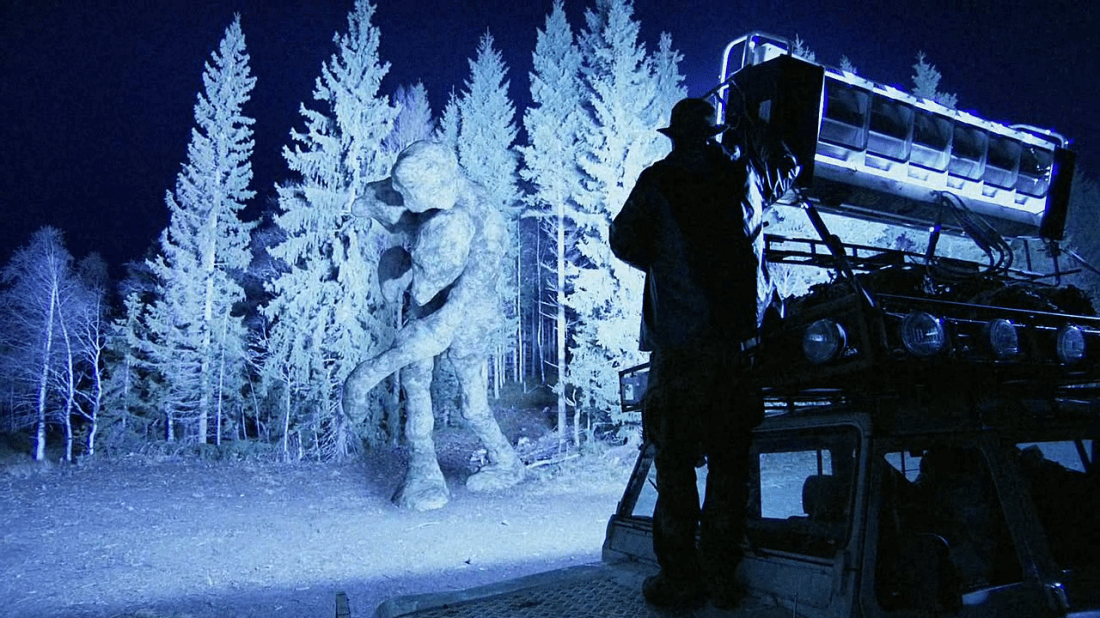
For this insight, I’d like to focus on how to director, André Øvredal made true to life documentary out of such an abstract and fantastic idea such as trolls in modern day. It was interesting to see the buildup of what the troll is, whether it was real or not, and what it would look like. Øvredal really touched upon the mystery and intrigue of the troll, as even the characters who are filmed are skeptical of this idea of trolls in the woods. The intro itself, which comprises of subtitles describing the scenes coming as legitimate and authentic film, a tactic not seen in other types of cinema and even found footage films. The use of one source or viewpoint of seeing this film is justified as it is all untampered lost footage, presented to us as real. The establishing shots and conversations littered throughout this film leave me comfortable with how real it is – not anticipating the terror of the troll and the massive impact it can do to the rest of the characters. In essence, the characters conducting their research in these areas can be an extension of the audience – grounded with the comforts of reality, disconnected from the fantasy. When they first encounter the massive troll in the woods, we feel terror and the shock reflected by the cameramen and woman as they experience such an absurdity.  In essence, this film can be a play of expectations with how ideas locked and restricted onto one genre or mood of film (in this case, found footage and bio-documentaries) can create a sense of discomfort as the ideas breach those barriers. If this was done in the Hollywood setting, it would be in the way of multiple shots and scenes in different camera angles, showing of the massive presence the monster possesses. Monster movies such as Pacific Rim and Godzilla are great examples in how they represent the magnitude of the monster using all the directing tools they have. In this however, the experience of the monster is locked onto one screen of them, in darkly set areas where it can be hard to see the monster in its entirety. This is the disconnect Øvredal develops through this film; You would expect a straight documentary that would lock itself onto reality, but instead, we get a film which blurs the line between reality and fantasy because of the medium it was shot in and the direction it took in presenting the main monster and developments surrounding these characters. I appreciate the effort made in this film as it one of the first I’ve seen that incorporates a fantasy element in such a real life setting.


Trollhunter

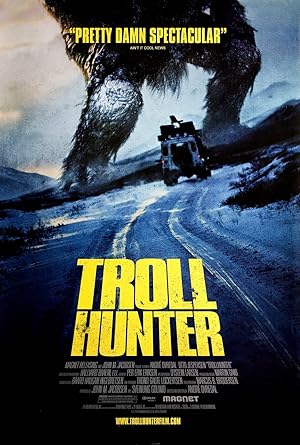
I was fortunate enough to have visited Norway during my summer break last year. While my family and I were doing our typical clutch souvenir shopping, I noticed that a lot of products were related to trolls. I did not understand why and I was not able to get a chance to ask about it back then. I figured that it had something to do with local cultural beliefs but I never got to confirm it. After seeing the film Trollhunter, it was able to inspire me to go back to a culture I was yet to uncover. Trollhunter is simply a mockumentary about the fictional existence of trolls in the Norwegian region. The film was centered on a group of college students interviewing and following the undertakings of a man who’s sole purpose is to kill trolls when necessary.

Frankly, I do not know anything about Norway’s film industry but this film caught me by surprise. Being able to visit Norway in the past, I never expected to see a fantasy film that would be able to greatly capture the country’s culture and beauty. The idea of having some sort of found footage as the foundation of the film fit the theme well given that trolls are ideally creatures people have never witnessed. It gave the audience that “what if” idea at the very beginning of the film, immediately making them question the genuineness of what they are about to see. The director, Andre Ovredal, was also able to find the right balance in making the audience believe whether the film was fantasy or not. Despite viewers’ curiosity on how these trolls look like, they were not shown minute after minute, trying to ensure that the curiosity lasts throughout the film. A well thought-out pacing was executed for the appearance of trolls given that the audience should always remember that the film is just a “documentary.” Moreover, although not as significant, the film utilized the vast amount of scenery that can be found in Norway’s land. Ovredal was effectively able to use Norway’s landscape for setting the trolls’ territories. Every location a troll was found made sense if they were to actually exist in real life.

All in all, Trollhunter is a refreshing play on certain imaginary creatures a country has developed in its culture. Trolls are commonly heard of in Scandinavian mythology as creatures potentially dangerous humanlike creatures that are not Christian. The film was able to show these characteristics and even more as the trolls were boosted to drastic strengths. It was able interestingly captivate viewers’ attention throughout the length of the film, keeping everyone judging whether trolls do live around us.

Troll Hunter

The concept of the film was amazing, and the execution of that very idea was brilliant, the whole fantasy aspect of the movie was not merely to grab the attention of the audience, the fantasy genre was given paid its due, and not just used for viewership. The viewers are presented a very different perspective of the fantasy world, and are shown modern day depiction of the legend of heroes and of trolls. The film discovered and showed its audience a bridge of the two very different worlds, the world of Fantasy and that of Reality. The director also made the interplay of the two words so intricately woven together, that the very fabric of reality of the film was sown together with the two different worlds. This is shown in how the mythology aspect of the trolls was intertwined with the government that was covering it up, with the help of modern day folklore heroes, in their conspiracy to keep the existence of these trolls from the general public.

The movie also conveyed a beautiful storyline, that made it seemingly impossible for the secret to be kept from the people any further than it already was, and the flow of the tale was intriguingly organic and was made so that it was not confounding for the audience to follow. Then we are treated to the antipathy and dissatisfied portrayal of Otto Jespersen as the Troll Hunter Hans, who deserves recognition for his exceptional performance. In the film he was so serious, and somehow so aloof, so authentically captivating that by his performance, the audience was made to believe in the fictional world and the whole scheme of the motion picture. The overall tone of the film is serious and yet it is subtle to that fact, however it is not too subtle to the extent that the impending threat of doom from the trolls to humanity and further to troll-kind felt understated. The atmosphere of the film is that of fear and imminent threat, the details of the film tell the tale of a land where danger is palpable in the air, we the viewers are shown vehicles demolished, trees unrooted, lands desolated, and living things devoured.

The setting was so very appropriate, for the what the film seems to have been going for, there was mystery and enchantment in the cinematography of the movie. The film delights its viewers with details in nature believed to only be found in realms of fantasy. There are wisps of fog, elegant fjords, plentiful waterfalls flowing from mountain vistas and wildernesses seemingly prehistoric. With its cinematography, the film makes any of its viewers believe in the fictional tale André Øvredal has made for them, for they feel as if they are also part of the film, that they are not merely onlookers, or outsiders. They are within the movie and the events unfolding within it are happening to them right before their eyes. In what seem like too short a time period to completely satiate the thirst for fantasy the viewers have, the director feeds the audience enough, but leaves them wanting more.

Trollhunter – Not Scary or lack of budget?

To be a troll or not to be a troll? Well, trolls have traditionally been told in the Scandinavian folklore as mischievous leprechaun-like beings that live and hide in the woods and mountainous caves. In this Blair Witch Project-meets- Men in Black movie, the trolls are depicted less appealingly, not quite as scary as initially promised, and not quite charming as the folklore led us to believe. Therefore my answer to the “dilemma”, based on how trolls were depicted in the film, would sadly have to be a no. I would most likely not want to be haunted and attacked with weapons, live exclusively in the cold, gloomy, and often deserted forests of Norway. Most importantly however, I think my Christian values would contrast with the fundamental being of a troll, which lives to hunt Christians.

My first encounter with the found-footage genre was in the Blair Witch Project, which was also assembled from the found video recordings of a group of students. One reason I perceive the Blair Witch Project to have done so well was because it was able to maintain a high tension of suspense throughout the whole film. They never revealed the face of the demonic being, they kept signs of its existence in the periphery, and it installed the fear in the audience. In the case of the Troll Hunters, whilst the thought of encountering a Christian-blood lusting Troll was scary, the scenes revealing the trolls weren’t that scary, in fact it looked too fake to be scary. Perhaps what instills the biggest fear within us are from the unknown and the unseen – where they are hidden invisible deep within the forest of Norwegian forests, or it was simply the lack of budget for computer graphics that seemed to be far inferior then the first series of Jurassic Park movies.

It was nonetheless an enjoyable film however, and one element I really enjoyed in this film was its usage of the Norwegian landscape into the story – power lines, animal herds, and vast forests turns out to be part of a vast government secret attempt to keep the trolls from being revealed to the public. The misty Norwegian landscape of mountains and fjords reminded me of the documentaries on the mysterious existence of Loch Ness – briefly making me wonder if Loch Ness is being hidden by the Scottish government or not.

Troll Conspiracy

I don’t­­ why, but André Øvredal’s 2010 Norwegian dark fantasy film, Tolljegeren (Trolhunter), somehow reminded me of the German film, Good Bye, Lenin! (2003). Maybe it was because the accents of the characters were somehow similar [for me], because one of their main characters resembled each other, or because most of the main characters in both of the films seemed kind of naïve to (especially in the beginning), but both films seemed somewhat similar in an aspect. However, other than that, Trollhunter is a film that aspires to move its viewers by making them second-guess the reality that they live in.

Honestly, after watching the film, I was contemplating the possibility of whether trolls were real. Are they being hidden by the government which aims to “protect” its people from unknown possibilities? Are there really mythical creatures hiding in the forest? Are all conspiracies true? We do not know. However, Trollhunter was able to successfully make me think of those possibilities. Its use of scientific explanation, especially with how trolls can be turned into stone when exposed to ultraviolet lights also supports the idea of said possibility being true. The crew even added the ending scene where the Norwegian Prime Minister candidly confessed to trolls being real while being interviewed by the press. Moreover, the cinematography and the way the shots seemed so natural made it more realistic. There were even instances where the lens was broken while filming and when the someone dropped the camera due to fights or when they were running. It also reminded me of the Paranormal Activity films where the footages and the storylines seemed candid to make them seem real and scarier to the audience.

However, I think one flaw that the storyline seemed to underthink was the fact that trolls can smell a Christian person’s blood. To me it seemed unrealistic, as it’s kind of subjective to be a Christian. How can someone know they’re Christian? Is it because they go to church or because they pray? Also, if someone were to transition from non-Christianism to Christianism, how would his/her blood change? And what do trolls have against Christian blood anyway? In a sense, the part regarding the Christian blood dilemma made no sense to me.

However, I liked how, after their cameraman was killed by a group of trolls because he was a Christian, the film stayed true to its structure and maintained portrayal of having a “broken camera lens” until they found another camera person. I also liked how the film crew added the scene where they revealed how trolls have rabies, which affected Thomas and caused him to have rabies. However, although some viewers might not notice it, but Thomas was feeling ill one minute and the next minute, he’s running to help Hans kill the Jotnar. He even had the energy at the end of the film to run (albeit unsuccessfully) from government agents.

Conclusively, Trollhunter was entertaining and may seem realistic to some of its viewers. As a fan of fantasy and adventure movies, I like how the film was structured to seem realistic with its “shaky” footages and naïve characters. However, the only things stopping me from thinking that the footages are real were the fact that trolls can smell Christian blood and that the Norwegian government was too naïve to not find the camera footages that the crew had shot.

Trollhunter: A Realistic Portrayal of Fantasy

Related imageTo be honest, this film was one of my least favorites so far compared to the previous films that we watched in this course. To some extent, the plot was intriguing but I did not really feel super into the film. Nonetheless, I liked how it was structured as a “found footage” mockumentary and the film’s take on trolls was pretty interesting. The portrayal of the movie as found footage allowed the viewers to feel that they are actually part of the adventure of the Norwegian students as they tried to capture footage of trolls after learning that the hunter that they followed hunts trolls instead of bears, which was kept as a secret by the government. I found this found footage type of movie that is just continually rolling as a way usually used by horror films to make it seem more realistic but I did not really connect with the Trollhunter as I usually do in these types of films, and I could not really pinpoint why.
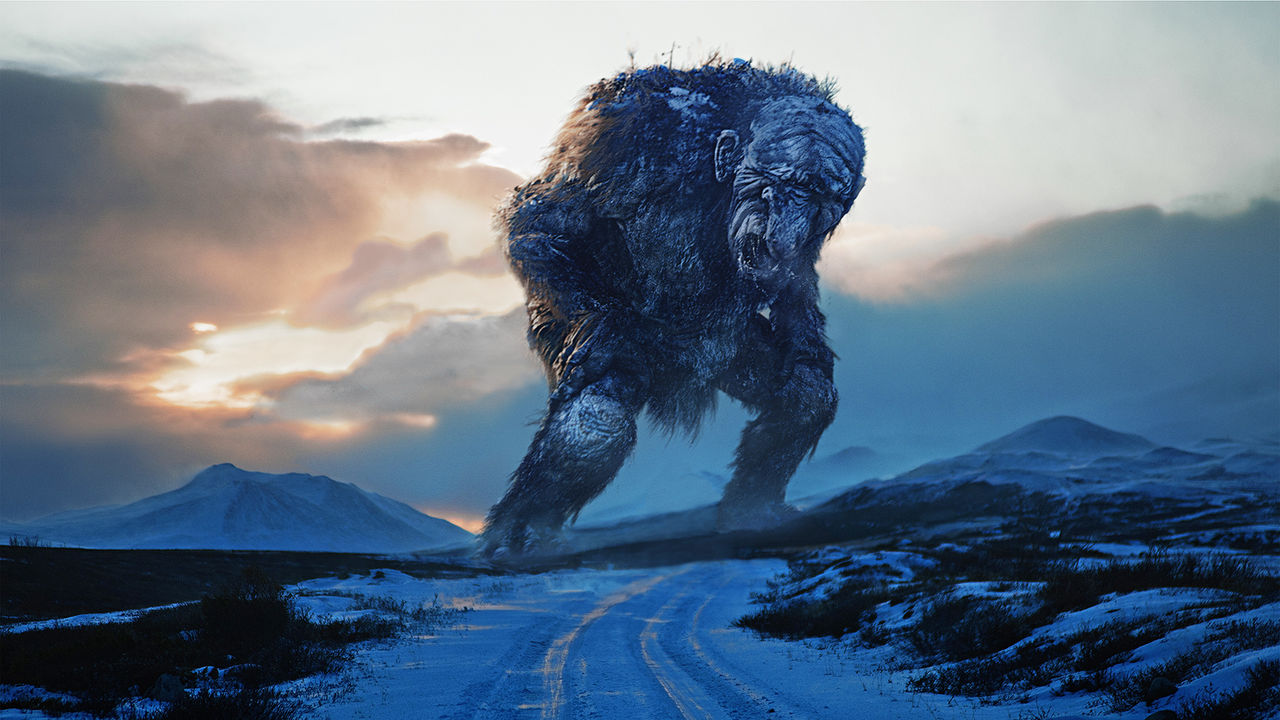
Based on my prior knowledge and expectations of the idea of trolls, certain aspects of the film did not really make sense for me and I was a bit disappointed with how they were portrayed in the film. The weirdest part for me was that the trolls could smell the blood of Christians, which ended up killing the cameraman when they were trapped in an abandoned mine with a pack of trolls. The killing of Kalle, the cameraman, was one of the scenes that I found interesting tough because it stayed true to the film’s structure and it even maintained the broken lens of the camera until they found a new cameraman. I also liked how the shots seemed so natural as how cameras are usually held and even the shaky footage added to the realistic feel of the film, which it was going for despite tackling trolls, which I would say are far from reality.

André Øvredal’s film attempts to portray fantasy to make it look like reality through his film. Admittedly, the CGI effects used and how the scenes that had both the trolls and the characters in the same frame were impressive. Given that the film was in the form of a found footage, the director tried to make sure that the same suspense was still portrayed, without the aid of a film score and relied on the natural sounds that were present in the scenes. Despite the absence of the film score, it still contributed to the authenticity of the film and contributed to making it more real.

After learning that trolls are really a part of Norway’s folklore, the film made sense as it portrayed their culture and even included the beautiful landscapes in Norway. I liked how it included the discussion on the tolls so that the viewers have a better understanding of the fantasy that the film tackles such as the habits and the different kinds of trolls. While watching the film, I found it a bit too dragging and slow-paced but overall, I still enjoyed André Øvredal’s take on portraying fantasy as realistic through the use of found footage, and the film gives another take on European cinema.

Trollhunter

My viewing experience of Trollhunter (2010) was comparable to when we watched Good Bye, Lenin! (2003). The familiarity in terms of how the narrative was emplotted, as well as the clear motives and actions of the characters made way for a relatively easier viewing compared to the other films we have watched in class so far. I particularly enjoyed the film’s effectiveness in making its viewers believe that actual trolls inhabited the forests of Norway, and people are being dispatched by the government to eliminate these trolls as discreetly as possible. The attention to detail in Øvredal’s troll-filled world was impeccable. Case in point, the scene where the scientist explains how ultraviolet light causes the death of the trolls–exposure causes instant calcification of the trolls–was a nice nugget of information to know about the world being unveiled to us in the movie. The different kinds of trolls enumerated throughout the film also gave more depth to this world. Even the processes of the government intervention were given attention by the film. The form Hans fills out whenever he slays a troll seemed legit, but looking at it now it does appear a little ridiculous. These little spoonfuls of detail being fed to the viewers led to an enhanced understanding of what was going on throughout the film, and informed our viewing of the film immensely.

This troll-infested Norway being presented by the movie was made more real through the use of the documentary style of the film. Knowing that this was a found-footage-style documentary, I did not mind the sloppy camerawork and the peculiar editing for they are ingrained in the genre. In fact, it contributed to the effectiveness of the movie in unearthing the “reality” of trollhunting. It was as if we were alongside the characters in their quest to kill these trolls. The CGI used to generate the trolls we saw in the film was also quite impressive. To be honest, I wasn’t expecting nor did I want to see the trolls themselves because attributing a physical form to these majestic creatures might not give justice to their extraordinary and larger-than-life quality. However, I was pleasantly surprised with how the CGI trolls looked like. Their depictions were as gross as I imagined a troll would be. Instead of ruining the experience of trollhunting, the beautiful troll animation added to its authenticity.

This film brought to my notion of a European cinema a look into European culture via Norwegian mythology. While the drama-comedy Good Bye, Lenin! inculcated me with the tragedies of history and its repercussions on humanity, Trollhunter imparted me with a high-octane, nuanced experience on a monster so iconic in European folklore. The idea of ancient behemoths inhabiting our modern-day world was pulled off by the film brilliantly. It also brings to fore the power of documentation–how vital it is in terms of concretizing danger by giving it a face, and how intrusive it is of nature and its processes. The product was a thrilling and believable adventure peppered with the relief of dry humor.

The Norwegian Fantasy : A Discussion on Trollhunter

A Norwegian Troll in Trollhunter, directed by André Øvredal

Upon hearing the title of André Øvredal’s 2010 Norwegian fantasy film Trollhunter, images of action, horror, and violence flood our minds. However, this film takes us instead on an adventure along with three young students on a troll hunt, set against the backdrop of a beautiful Norwegian scenery. They did warn us that the Trollhunter can also be considered a horror film but while I was expecting jump scares, I was surprised instead with a presentation of different kinds of trolls and their natural habitats.

With this, the film allows us to appreciate Norwegian culture, unlike other films we watched during the semester for our European Cinema class. Instead of simply focusing on the characters, Trollhunters feature beautiful landscapes, Norwegian folktales, and a touch on religion, which enriches the story. For Christians, such as myself, we are intrigued as to why trolls prefer Christian blood. Yet, after discovering that religion is part of their folktales and culture, things made more sense. Moreover, the appearance of several townspeople in the film, including the government, made it feel as if we are getting to know real people and unveiling the culture of a real town. We get to see their attitude towards things that cannot be explained, such as trolls. What was striking in the film was how the troll hunter named Hans admitted that he is tired of not getting the credit he deserves from hiding the existence of the trolls from society. Here, the film shifts the focus from trolls to the townspeople and explores how the issue affects them differently. We recognize the humanity and dignity of Hans, as opposed to viewing him simply as someone who gets rid of trolls. In this way, the film captures the horrible reality of life, where Norwegian people get to revel in blissful ignorance while Hans work hard to keep them safe. Being a troll hunter is not as cool as we thought.

Aside from being considered a horror film, Trollhunter also falls under the fantasy category. One aspect that we do not usually encounter with fantasy films is the use of a found footage or mock documentary style of storytelling. As an audience, you feel part of the student’s adventure because you get to see the foregrounding of production. We become quite unsure what is real and what is fantasy because of how the scenes were composed, how the actors for the students effectively portrayed terror and confusion, and how Øvredal featured different trolls, making them appear as realistic as any other animal. With that said, CGI effects often translate to bad quality films but with Trollhunter, the CGI effects of the trolls were flawless because they appeared lifelike and intimidating. The scene where both the trolls and the actors were in the same frame was commendable. If you are not from Norway, you will begin to wonder whether trolls really do exist, similar to how you debate whether there is any truth to a horror film that claims to be based on a true story. The fact that the film ends with an archive footage of the current Prime Minister of Norway mentioning trolls at a press conference boggles our minds. The film succeeds in making us question reality, which is why I believe it does fall under counter-cinema. In contrast to the fact that many mock documentaries are comedic, Trollhunter does not merely serve as a form of entertainment; rather, the film tickles your mind and plants questions that you would not have considered before.

“No one here believes in God or Jesus?”: Trollhunter (2010)

dir. André Øvredal

Trollhunter is a refreshing take in a market saturated by unimaginative found footage films. Mockumentaries are often hit-or-miss affairs for me, and this one definitely hits a lot of the right notes. Who knew trolls were all we needed to reinvigorate a tired genre?

This is a movie that attempts to bridge the gap between fantasy and reality. College students attempt to uncover the truth about bear-poaching in Norway but instead get more than what they bargained for. We, as the audience, are in for a wild ride as Hans the trollhunter runs from the woods and screams “Troll!” into the camera. From then on, it becomes an adventure movie in which we learn more about the existence and presence of trolls in Norway.

This movie succeeds because of the details that make its world just a bit more magical. The Norwegian landscapes are a given but they add a certain atmosphere to the movie that make it feel more alive and more realistic. It’s also nice that the movie attempts to give a scientific explanation to several elements of troll lore. For example, the film gives a reason as to why some of them have 3 heads and why they turn to stone under the sun. I’m very unfamiliar with troll mythos and I don’t know what it mentions or if it says anything at all about their ability to sniff out Christians, but that was a really fun and interesting detail to add to the film. For me, that particular detail actually gives the movie a comedic side despite going with more of a horror/thriller tone for the most part.

It’s also impressive how the filmmakers managed to make the CGI look acceptable. I wasn’t expecting much but the design of the trolls were alright despite the film’s relatively low budget. It’s obviously a mockumentary but what makes it even better is that it doesn’t take itself too seriously.

The performances within this movie are also appreciated. Hans is portrayed brilliantly by Otto Jesperson who gives the character depth and steers him away from being one dimensional. He has a great moment in a scene where he empathizes with the trolls, seeing them not merely just as chaotic hazards but more as sentient, feeling creatures. However, the same treatment or depth is not given to the other characters. I wish we could’ve had the chance to know them better. Even when one of them dies, it’s the guy who spent 80% of the movie behind the camera. So there’s no emotional attachment there whatsoever and there’s no effect to the viewers emotionally. I just really wish that that scene had more gravitas to it; it would’ve made the entire ‘this is based on a true story’ concept feel a little bit more real with a sudden drastic tone shift in the movie.

The movie ends with two playful twists, the first one being that the trolls have rabies and one of our main characters is possible afflicted with it now as well. It’s left open ended and it’s both funny and tragic to think of the outcome of that event. The last scene is the news clip where government officials straight up talk about the existence of trolls but is then ignored.

I do hope that someday, some local director sees this movie, realizes how rich filipino folk lore is, and creates a movie that explores it just as Trollhunter did. There have been attempts, but none that have made it to mainstream consciousness as far as I know. I sure would enjoy an in depth look into a tikbalang’s lifestyle, especially with the humorous tone that Trollhunter gave its titular monsters.


Trollhunter

In André Øvredal’s Trollhunter, we can a glimpse of how European films can also tackle mainstream and genre themes to be applied to to the culture of the country the film is made in, in this case Norway. It was an interesting pivot, especially after Holy Motors, to watch a film that was made to entertain. There was really less hidden meanings or symbolism that was made in the film that was in contrast to the more arthouse film that we have tackled. This shows a different side to European films, which is less about artistic sensibility, but more wanting to be accessible and be entertain the audience. It also shows that it is a film that uses genre tropes like fantasy to not only showcase the culture of Norway, but also used as the device to make the film an amusing watch. The most interesting part of the film for me is the melding of two kinds of film genre, found footage and fantasy, to create a film that attracts the audience’s attention.

The film was beautifully shot and showcases the gorgeous landscapes around Norway. Using these beautiful setting, the film veers away from what most other found footage films look like. Other found footage films tend to have an ugly cinematography, to make it appear realistic, and confusing camera movement. But, this film was able to escape this genre stereotype by using the environment around them as an attractive looking setting.

The characters are also an interesting bunch, although they did lack depth or any character development. They were all likeable and were easy to engage with, which makes the audience interested in the story they are trying to tell and keep their attention to the characters. It was also interesting to see the use of comedic themes to keep to humanize the characters, especially the trollhunter named Hans. This was an interesting use of comedy, especially noting that the characters experience fantastic and horrific instances. This combination of moods was really molded together well so that there were different levels of entertainment in the film.

The best part of the film was really the world building like nature, where we are introduced to the reality that trolls are living in our world. The trolls were very interesting that the filmmaker adapted them to how they would fit in our world right now. This was successfully done by the filmmakers to creatively create a world, where the magical creatures are government kept secret. The use of TSS, was also a creative way how our world could handle these magical creature around us.

Lastly, what I appreciated most of the film is that it did not take itself seriously. By doing this, the filmmakers were able to have fun and create an enjoyable film. The addition of the conspiracy theory  aspect, seen most at the end with the Norwegian politician in real life, showcases the entertaining ways the filmmakers did to create an alternate world with trolls. In the end, the film was an enjoyable ride that doesn’t make it difficult to understand. The filmmakers gave us everything we need to understand, so that we just need to watch and enjoy the show instead.

Enrico R. Barruela COM 115.5 A