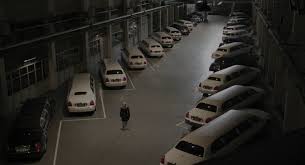
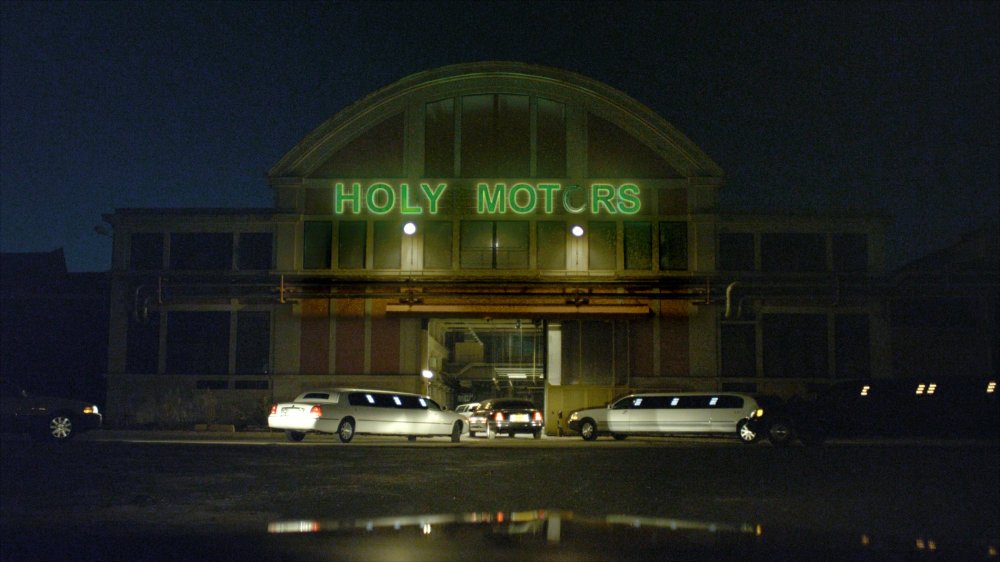
Holy Motors

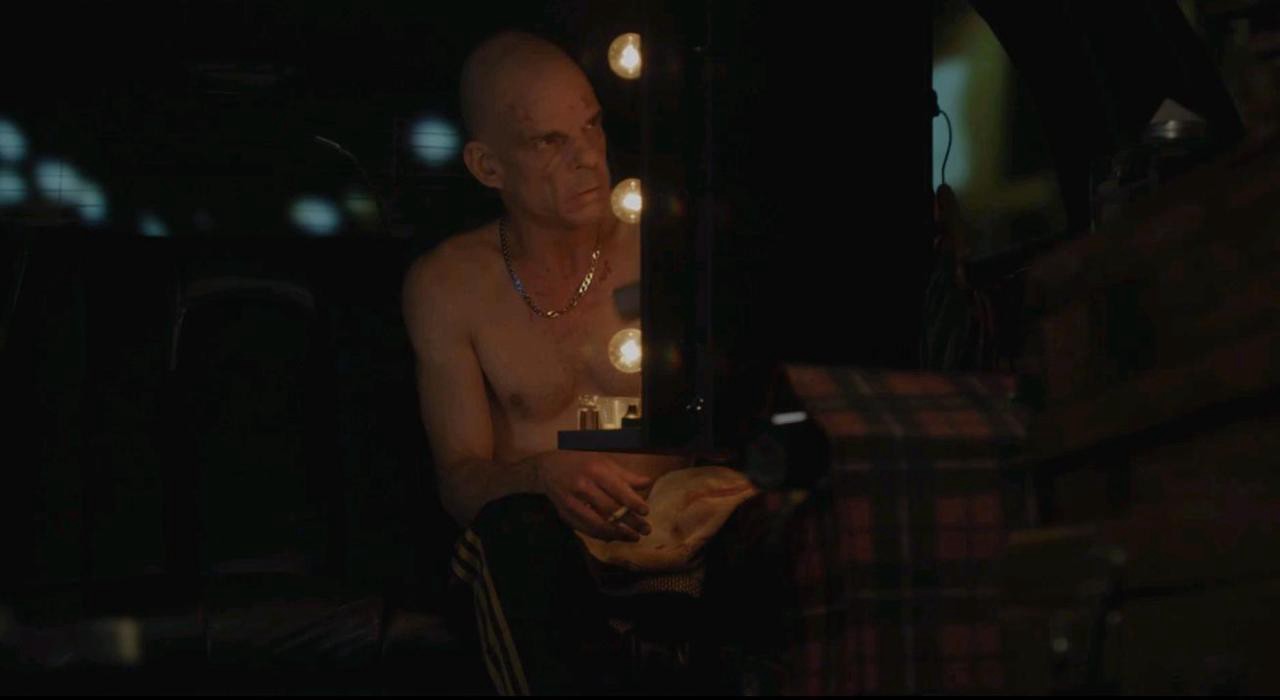
Out of all the films that I have watched so far for this class, the film Holy Motors has left me the most confused and uncertain because of its bizarre plot and acting. I am not sure if there even is clear story goal in the film because of the many random scenes and subplots. Throughout the film, Mr. Oscar is tasked with many different roles and complex scenes that can be for another person or sometimes for no reason at all. The role that struck me the most is his third role wherein he plays the role of a crazy red haired man, and he kidnaps a beautiful model from her photoshoot in the cemetery. This struck me the most because his acting showed a completely different person from his last role. I felt very disturbed and scared for the actress because based from his irrational behaviour I thought he was going to kill her. He brought her to the cave and ate a part of her hair, and then he strips off his clothes and goes to sleep on her. This scene also confused me because I was wondering if he did this role for no reason as there were no cameras seen filming his performance. The terror and fear of the people looked so genuine that it looked unscripted and very real. Another moment in the film which I did not understand was the last part wherein Mr. Oscar reaches his last role which is a family scene, but it turns out his wife and daughter are both chimpanzees. All these roles are very random and do not seem to be connected, and because of that it leaves me wondering how to make sense of it.

Despite the confusing and random scenes in the film, I think it makes a great job in blurring the lines between reality and fantasy. There are many scenes in the film, which I am unsure of if they are his real life or just a role Mr. Oscar played. One scene which looked very real was when he picked up his “daughter” from a party, and scolded her for staying in the bathroom and not socialising with others. The whole scene was inside a car, and there was no indication that he was being filmed or that it was really a role. I thought that she could have been really his daughter, and that this could have been a peek at his real life. Then there is another scene with a woman named Eva who supposedly had a child with Mr. Oscar in the past, and then after leaving he sees Eva and her partner jump off a building. The pain he shows makes me think that his relationship with Eva could have been real as well, but then if it was real why did he just run away to the car instead of staying to help. Finally the last scene shows him having a chimpanzee family, and this leaves me being unsure again about what is his real life. I think that this uncertainty in the film is what makes it exciting because it makes the audience continuously reflect and try to understand what they are watching.
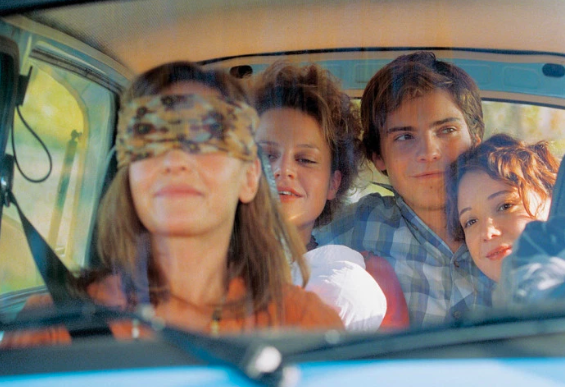
Goodbye Lenin! A Family, A Nation

Screen Shot 2019-03-07 at 18.57.19Goodbye Lenin is a film about family and the past regime of the Socialist Unity Party. When a single mother comes into coma, waking to a radically changed reality, how does her son Alex and daughter Ariane, keeping their mother in the dark for her health and safety. Though it is a moral dilemma to lie to one’s own mother, it this justifiable if the truth could very well shock her to death? This film addresses a historical reality, which is the taking down of the Berlin Wall, to a somewhat fantasy scenario in which Alex has to recreate the past regime and the society within it. Alex goes to great lengths for the safety of her mother – still believing that the Socialist Unity Party is active to this day.

This film, released in the year 2003, melds both historical truths in a stroke of fantasy to a ridiculous scenario of recreating old Germany. Since the new wave of industrialization and entrance of democratic and western attitudes, the film compares and contrasts the ideas of socialism developed in old Germany and the newer, more westernized ideals embodied after the events of the unification of Germany. The family becomes a symbol of the state of Germany, perhaps after its unification, where people of east (socialist) and west come together -bearing different norms, culture, and traditions with them. Since the coma of their mother, Alex and Ariene find ways to adapt to their new nation, finding means to coping with the situations presented to them. On the other hand, Alex’s mother, left at a stasis due to her coma, is forced to adapt to rapid changed, which doctors have advised to Alex would lead to her own death. Alex’s mother, holding to heart the dream of a Socialist Germany, has to live in a state in which she believes that can still come true. In that sense, the film drives home themes of sacrifice and love, in how Alex pushes himself to accommodate the needs of mother, no matter how ridiculous they are. Recreating Socialist Germany with the help of his neighbors and friends not only keep his mother healthy up to her final days, it opened the eyes of Alex, the one reformed to believing western ideals, to open his sense with what was and has been – the Socialist Unity Party of old Germany.

Goodbye Lenin, apart from the other films tackled in this course, is mainly character driven by historical and actual events in reality. Seeing how European cinema directors tackle such a grand and broad concept as keeping your mother thinking it is still 1989 is an ambitious project to undertake, and the acting and execution of the story is handled to great extent. The characters feel the weight of the situation – making the scenes more emotional. It really is a good film, despite being some of the more coherent and narratively straightforward ones in the lot. It still maintains a form of depth to its story that makes it a charm in its own rights.

Holy Motors: So Which Parts Made Sense?

Image result for holy motorsAfter a quick break from the confusing and unusual movies that we watched in the course through Goodbye Lenin!, we are back to the strange and challenging movies but on a whole other level through Leos Carax’s Holy Motors. Looking at the film itself, it was very hard to comprehend. It was different and frustrating, but it was not boring at all because of how it is animated and constructed. Instead of the usual reaction to a movie wherein you ask questions about what you do not understand after watching it, I found myself focusing on the few things that I understood and made sense of. Although confusing, I quickly realized that the film’s focus was not about understanding the movie. It did not have a classical narrative and instead, it focused on the experience and the reactions of watching the movie.

Focusing on the character of Oscar, who goes through different appointments throughout the day, portraying different roles that really showed his commitment to what he was doing. I found myself intrigued after each role and portrayal as it seemed like a completely different person every time he went out of the limousine. As his job was to completely replicate the character depicted in the envelopes for his appointments, it was amusing to see how he was so passionate but at the same time, it seemed as though he was also getting tired from the different roles that he had to play. At the end of the movie, it seemed as though his real identity was never shown since the scenes that seemed realistic such as when he picked up his daughter from the party, was also part of his acting.

One of the interesting things that I the structure of the film was somehow operatic. The use of music was also intriguing for me such as when Kylie Minogue’s character suddenly sang and when Oscar played the accordion with a bunch of random people that appeared out of nowhere in a church. These sequences did not seem to have a connection but it still worked. After the film, I also had a lot of questions because of the inconsistencies that were presented. One of the things that the film portrayed was how death seemed reversible in how Oscar was suddenly cured whenever the scene cuts back to the limousine. However, Kylie Minogue’s character who also had the same job as him seemed to be dead when she jumped off the building—so was she really dead?

There were a lot of things that I completely do not understand about the movie—why the limousines were talking at the end of the movie, why the family that he went home to at the end of the film were chimpanzees, what his actual job was and why some of the characters that he interacted with were also doing the same job, and a lot more. This made me reflect on what the movie was really intended for and that it was simply for the pure sense of gesture. Despite the movie not being clear and coherent, I still found myself appreciating Holy Motors for how it was. As a fan of videography and cinematography, I appreciated how the movie was shot and it was definitely visually appealing. The film tackles the different roles that we have to play as a part of our life and how we present ourselves vary depending on the different situations that we find ourselves in. Watching Holy Motors was a completely different viewing experience to say the least, but it really shows the complexity of cinema, art, and creativity.

Holy Motors

In Leos Carax’s Holy Motors, we get introduced to a filmmaker that has no intent in making the film watching experience easy for the audience. The film does not spoon feed the audience on what it is trying to say. I interpreted it in a way that the film is trying to evoke a reaction with the audience through its use of provocations. It can also be appreciated as a film that tackles the unwavering commitment of actors to inhabit their roles. Lastly, the film just captures a directorial vision that cannot be explained, but just showcase the film making talent of the filmmaker and the actors.

The first reaction that I experienced when watching the beginning of the film is that it confused me. There was no introduction to what we will experience, so it was really puzzling to find out what we are watching and what the images that is being shown to us mean. Throughout the whole film it depicts a man through provocative situations like kidnapping and murder. These scenes were not entirely  narratively linear, but they did evoke a reaction from the audience. This process of provocation showcases that a film does not have to be entirely understood to catch the audience attention. This film effectively uses its powerful images without needing to tell a coherent story.

Another interesting thing I noticed is how the actors, both the real and fictional, totally committed to every role they were ask to depict. Both Denis Lavant and his character, Oscar, gives intense and diverse performances that really takes a lot out of an actor. What I appreciated most about this aspect of the film is the total commitment of the actor to do bizarre things like act crazy in a paris cemetery or participate in an erotic motion capture scene. My interpretation of this aspect of the film is that the filmmaker is trying to showcase the unnerving capacity of actors, especially method actors, to fully convey the roles they are assigned to and be directed without any question. It’s an interesting take on the unglamorous side of acting, wherein the actors face total transformation when they take up a role.

An interesting thing that I also like in the film is that it is most akin with the 60’s European films that we have watched, wherein it tries to redefine how films show be done. It appears to be the filmmaker’s uncompromised vision of what he is trying to say. I really appreciated that he is not giving us all the answers to understand his film. It really appears  to be his vision and we the audience should just accept it as it is. The more I stopped trying to understand or interpret the film, the more I enjoyed watching the film. Accepting the absurdities as it is and no longer asking questions made the film such an exciting watch because of its unpredictable nature. It’s such a great experience to watch uncompromising piece of work that challenges the audience, but it also rewards the audience by giving them a visionary cinematic experience.

Enrico R. Barruela COM 115.5

holy motors

Holy Motors is by far the weirdest and strangest film I have ever seen. Most of the movies we watched in class also fall under ‘weird’ and ‘strange’, but this one was the most challenging one for me in terms of understanding the film and keeping myself engaged with it. When our professor warned us before the movie started that this one won’t be easy to understand and that we should focus on the acting and performance instead, I already knew I wasn’t going to like this movie or the experience of watching this particular one. True enough, I found myself really disturbed and confused. It felt like so many things were happening in the movie and I couldn’t keep up.

The film was generally about a man named Mr. Oscar and his “appointments” where he would dress up and act out different roles in each of these appointments. He started off as an old beggar, becomes a motion capture actor, then turns into a madman in a green suit, and plenty more roles. None of these roles were connected to one another, but each one was played out with so much effort and passion that his role playings or acts felt like they were real and were actually happening to him. He was so invested in each of his roles to the point that he bit a finger off of one of the photographers’ hand in his appointment as a madman and kidnapped the model, and even to the point of stabbing and killing in his other appointments.

Before Holy Motors, I have never watched a film that was “not meant to be understood” in terms of its plot and storyline. Films to me are meant to entertain in a way that tells a story and manifests this concretely through the actors living out the plot. Although Holy Motors probably did have a story, our attention wasn’t meant to be drawn to it, but rather to the performance of the actors themselves, particularly Oscar’s. Although this movie really weirded me out, I can’t deny the fact that the performances were truly remarkable. As I said, all his acts felt real even if none of those roles were indeed his actual life. I guess the point of this film is to show how flexible art can be expressed, and the different beauties that come with passion for someone’s art. But one thing I noticed in the film aside from the all out performances was how Oscar didn’t really look happy doing what he does. He looked tired way more than he looked like he was fulfilled with his career. Having said this, I believe it’s also a reality that many people are faced with when doing things we love to do. We aren’t robots; we also get tired even when it’s from doing something that means a lot to us. But sometimes, when it’s really the thing that makes us most magnanimous, it doesn’t mean that we should just stop. Oscar says this himself when he was asked why he continues to do what he does, and he says that it’s because of why he started.

Overall, the film was a challenge to watch, digest, and write about. But I believe this is what I signed up for when I took this class. So although there was difficulty, I’m still looking forward to the rest of what this course has to offer.

Holy Motors: a Metaphor of Life

260px-Holy_MotorsTo say that Leos Carax’s film, Holy Motors, is a very memorable movie to watch is quite an understatement. I found myself still reflecting on the movie minutes before I went to sleep. The movie is truly a unique one. Of course, as all European films we have watched in class, the movie was weird and confusing. Despite my confusion, I enjoyed watching the film. The movie was marvelous, vibrant, witty, different, and puzzling. Personally, there was not a dragging moment. I was always looking forward to the next role he would play every time he gets in the limousine.
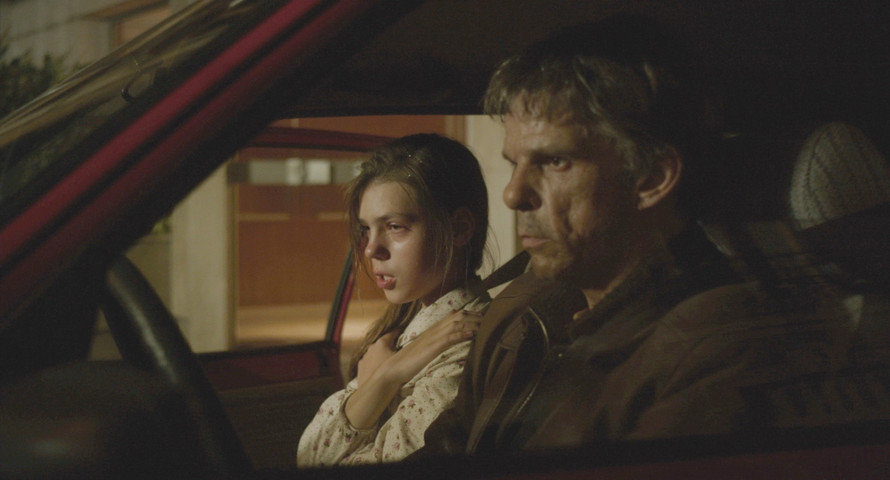
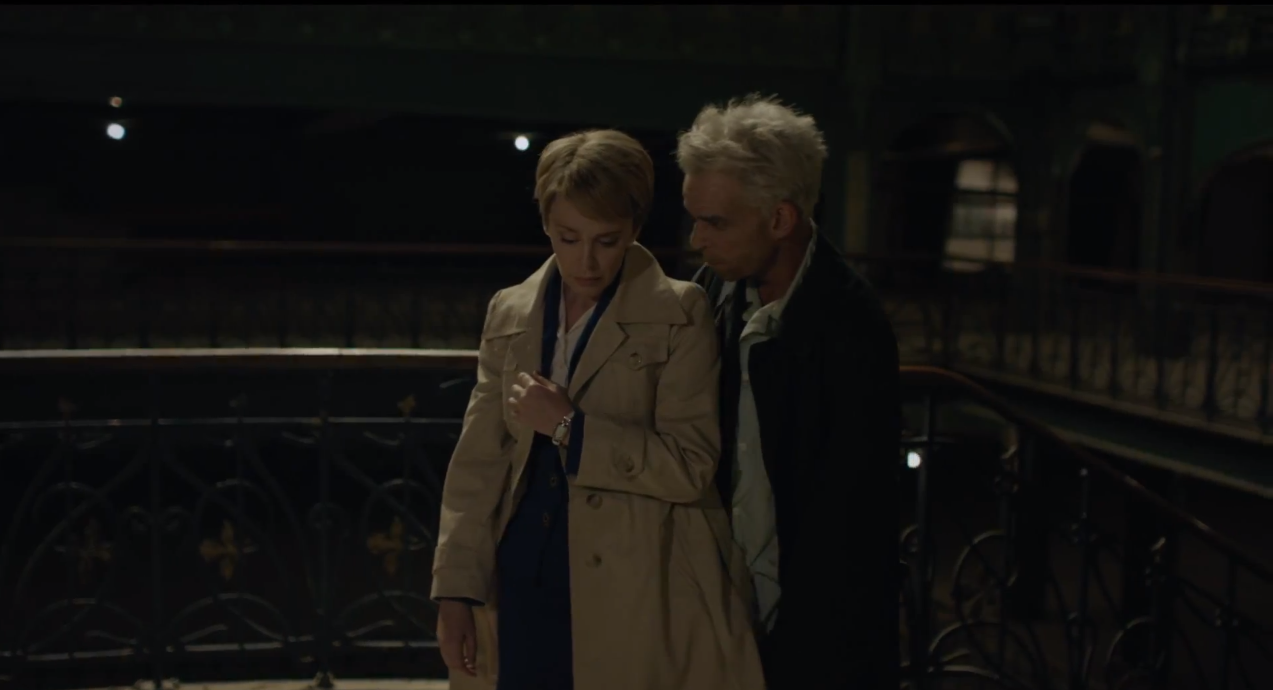
2029023565Screen-Shot-2012-10-22-at-3.42.06-PMI felt excited for every role that he had to play. I want to be an actor myself once I step out of college, but if to be an actor means that I’ll be subjected to terrifying roles that involve biting a production assistant’s fingers off, among others, I think I would rather not work at all. But if it means that I get to live in Paris as well and be driven around in a white limousine, then maybe I’ll think about it. All jokes aside, Monsieur Oscar had a really challenging job. He proves that to be an actor in his world, one must really have the passion and the guts for it. It must really be tiring to pretend to be someone who you are not every day of your life. I think this poses a threat to one’s identity, especially in the film, where it felt like Oscar did not have a real identity. I wasn’t able to distinguish right away whether he was playing a role or being his real self. For example, I thought that was his real identity when he picked up his daughter from the party. It turns out he was also just acting in that scene. I was also confused when he saw his lover, if they were really acting or not. Above all, I was confused by how the limousines started talking at the end of the movie.

the-woods1

images

The movie is a work of art. Even more so because many of the scenes in the movie are references to other works of art. For example, the scene wherein Carax opened a door in his bedroom which looked like a dense forest was a reference to Dante’s Inferno. Meanwhile, the scene where the limousines started talking to one another was a reference to Pixar’s Cars. The film used cinema as a metaphor for the journey of life. And it can be said that watching the movie immersed us into Carax’s movie-educated-eyes, his journey on filmmaking and using other films as inspiration (French, 2012).

Given that the movie was used as a metaphor for the journey of life made me realize that playing different roles and having different tasks to complete every single day really do reflect life. Our daily routines and the choices we make reflect our identity—our purpose. Despite the many challenges that we face, like Oscar slowly losing his passion for acting, we must always remind ourselves to keep true to our goal. We may have to play different roles, one by one, to bring us to the ultimate role that we want to play in our life. I can only imagine that Oscar is working as an actor and doing all those silly, mind-boggling, roles so that he can be the father that he wants to be and to provide for his real family.

French, P. (2012). Holy Motors – review. Retrieved from: https://www.theguardian.com/film/2012/sep/30/holy-motors-philip-french-review


Holy Motors

H

Among the EU film, this is the weirdest film I watched. I did not completely understand what was the context of everything that was happening since I could not decipher what was the role of the main character. His role in the film itself kept changing from a father, a businessman, a beggar, a gangster, a lunatic, and even a dying relative. Each character was assigned to him to mimic in real life and along with this there was a mission to accomplish (at times it would involve killing)  [to be continued]

Pretention and Reality

Starring Denis Lavant and Edith Scob, Leos Carax’ 2012 French-German fantasy drama film, Holy Motors, encompasses the blurred line between fiction and reality. For me, Holy Motors was a strange yet fascinating film to watch. At first, I was confused with why his job revolved around “impersonating” different characters and “freeing” these characters into the real world, where they become real and act like how they act. For instance, the weired imp he portrayed bit the finger of a producer’s assistant and kidnapped the model the media group was taking pictures of. At first, I thought it was a publicity stunt –  that Oscar was paid to create a scandal for publicity purposes of the media group. I also thought it was weird that the model he “kidnapped” did what he wanted her to do, but as I rationalized it, I thought that maybe she was scared of not following him or whatnot. However, going through the film, especially until Oscar’s boss appeared in his limousine, I realized that Oscar’s job is really to create a “reality” that people would believe in – although as his boss stated, people are starting to stop believing in their acts. Furthermore, their “gigs” were appointments, which in that moment started implying to the viewers that they were scheduled and that anything out of that timeframe did not consists of dramatics. This is where I thought it was unscripted or not pre-determined. When Oscar saw Eva when their limousines accidentally bumped into each other as they were going to their next appointments, I thought what they had was candid and real – they even talked about their next “appointments” and their child together. However, when Eva seemingly jumped with her “partner” and Oscar saw it, I realized that what was portrayed in the film about the two were, in fact, also fake – much like everything else. This leaves me to attach myself to the family that Oscar seemingly had at the start of the movie, hoping that he would go back to his “real” family, as I thought.

The film started with Oscar seemingly leaving his family and their big house to go to work. We could hear his child telling him, “Have fun! Work hard!” as he goes to his fancy limousine, with his driver waiting for him. As part of the audience, the said scene became my anchor throughout the film. For about two hours, I was awaiting for the moment he goes home to said family, from his strange work that seemed so weird and fascinating for me. I was waiting for the moment he would have that normalcy that I thought he had with his family. Imagine my surprise at the end of the film when he was appointed to another family – chimpanzees as his daughter and his wife in fact – implying that the family he had at the start of the film was also fake!

Conclusively, Holy Motors (for me) mainly focused on its existentialistic art by blurring the lines between real and fake. The actors do not have normal, stable lives, portraying different people with different lives in one day. They don’t have real families – or any physical and emotional connection to the world, really. The only thing they have connections with is their passion for their dramatics, which portrays anti-sentimentality in anything. In Holy Motors, nothing was ever as it seems. Heck, even the limousines were alive at the end of the film. However, I thought the limousine was very fascinating, and although it was as confusing as the other ones (with the exclusion of Good Bye, Lenin!), I can honestly say that I like this the best as of now – more than I liked A Woman is A Woman.

“And if there’s no more beholder?”: Holy Motors (2012)

dir. Leos Carax

Holy Motors is a movie that made me realize how much of cinema there really is that I haven’t seen. I consider myself a bit of a cinephile, albeit not having seen all of the ‘essentials’, on the basis that I watch more movies than the casual viewer. I’d like to think that I’ve seen some of the best that the industry has to offer, but Holy Motors has somehow destroyed that way of thinking. I knew even back then that there’s still so much that I have to learn when it comes to movies (that’s why I’m in this class in the first place), but now it feels like I have to go back to the very start.

The movie opens with a surreal dreamlike sequence. The director, starring in his own movie just for this one scene and making it somewhat meta, uses his fingers as a key and opens a passageway that leads to a movie theatre. He stumbles slowly inside and sees a black and white film projected onscreen. throughout the ongoing action and the loud sounds coming from the projector, a shot of the audience reveals that they have their eyes closed. We then move forward with the actual story.

There doesn’t seem to be a clear goal in terms of Holy Motors’ narrative. We have Monsieur Oscar, played by Denis Lavant, who bounces from one appointment to another in order to fulfill several roles in short periods of time. It’s most definitely an acting exercise for the lead actor.

We don’t know who these performances are for because as far as we know, he just does them. Seemingly, he starts off that day as a rich man playing the role of monsters. However as the movie ends and he goes home to a household comprised of monkeys, we wonder whether he has any identity at all.

“It’s you?”

“I think so.”

I do agree with the sentiment that there is a performative element even in being ourselves. This movie, for me, talks about how we perform in different relationships. There is the tendency to project a different version of yourself to every person you meet, even if you don’t notice it. After all, we’re all just simply playing a role in other people’s lives. But is it possible to become a slave to these interactions? To move from one relationship to the next, one identity to another, to the point that we don’t fully understand who we actually are?

This movie has no answers. Only talking limousines.

Even though the movie was apparently written within the span of two weeks, it conveys an interesting premise combined with amazing in universe details. For example, the URLS on the tombstones are subtle but definitely add to the world building. It was also really nice to hear Kylie Minogue’s music blasting in a party, only to find out later on that she has a musical part in the movie. Apart from having a song, the movie also has a musical intermission, dramatic performances, crazy action-esque sequences, horror elements, and a bunch of other weird stuff combined in a way that is coherent and not jarring at all, which truly makes the film a masterful genre-mix of a movie.

It’s a fascinating film to watch but I wouldn’t say that it’s for everyone. It can be seen as too arthouse, even going as far as bordering pretentious, which might make it hard for some people to fully enjoy it. I personally thought it was interesting but it’s not exactly something I would want to revisit. Just as Monsieur Oscar keeps moving forward with his appointments, I’d like to move on to the next movie and leave this one behind.

“The beauty, they say, is in the eye of the beholder.”

“And if there’s no more beholder?”

A life of ambiguity

Encapsulating the entirety of the dazed human mind with its vivid patchwork of images, sounds and ideas, Holy Motors exercises its full time freedom to do whatever the hell it wants to do just because it can. The film begins with Director Leos Carax himself, entering a movie theater, stumbling blindly representing a direct commentary on how cinema can reflect the way of life. With its enigmatic and idiosyncratic vignettes, this film reflects how life can sometimes be both a dream and a nightmare, just like how cinema portrays it to be. Carax, the meteoric genius of the modern cinema, crafts a piece of art with film as its language but deeming it as more than just about an appreciation of film. This 2012 French-German fantasy plot showcases a man inhabiting several roles with no apparent cameras filming the man’s performances. Having several role assignments for the day and the pressure to carry each one out the best way he can– lead character Monsieur Oscar played by Denis Lavant, puts his heart and soul into everything, bearing the emotional transformations, losing and gaining identity for each scene he plays.

images

Acting and filmmaking are prominent themes as it showcased a variety of themes per vignette ranging from documentary to science fiction to drama to musical to thriller. Extravagant camera techniques accompanied the various genres in the scenes such as cinema verite, slow motion, quick cuts and melodramatic camera movements. These stories bursting onto the screen, projects the vast imagination of a director’s mind and projects it through the catastrophic sacrifice of the actor to give out everything he can to satisfy these cultivated imaginations. This can showcase the reality of how difficult an actor’s life can be at the same can represent the difficulties in human life as we all give out an immense amount of energy just to portray the multitude of roles we possess.

0_o3i-iiWOXBZf7RLD

One scene showed a man, presumably to be Monsieur Oscar’s boss or director, wherein they discussed about what makes actors carry on with their job. Monsieur Oscar discusses how cameras are now shrinking and the absence of it gives him less motivation to do his job. The absence of a visible camera can represent a message regarding how people nowadays, lose their purpose. An actor, having trouble believing in his own acting, given the absence of the camera can show how everything must have reached up to an ambiguous place now, where we do not even believe in ourselves because no one actually watches or guides us. The entire responsibiliy falls entirely on ourselves and every single day, we try to get as much energy to experience different roles and assignments, just to carry on through the day. We do things on a routine but we lose the intrinsic purpose of it. Carax puts Denis Lavant for quite a number of changes in character and the ambiguity itself posts a question to the audience regarding what really constitutes an identity and what constitutes a purpose. Or maybe, as alienated human beings, we actually do not even care about our identity nor our purpose. We just live to see everything through, one day, one role at a time.


-161997-