How Real Can It Be?: Reflections on Trollhunter

I have always been interested in conspiracy filled films, especially ones involving creatures that are of course, too impossible to be real. Films like these can either be too good or too bad, depending on how real the creature looks, and how fearsome it is to the characters. The Norwegian dark fantasy mockumentary film, Trollhunter by André Øvredal, showcases such creatures and how it would be like to have them in our reality. Their scary and foreboding presence is scary enough, most especially since such secret has long been kept away from the public.

There’s always something thrilling about mockumentaries, in that they portray such realistic scenes, you’d really think that the characters are real people who have experienced the horrors of what they filmed. Yet, there’s also a sense of it being unrealistic, considering that no one in their right mind would’ve probably continued a documentary far too risky. It’s also funny how in some scenes, the characters are making unreasonable decisions, which of course is an important factor if these people were actually risking their lives for filming such phenomenon. For one thing, they should’ve followed the rules dictated by the experienced trollhunter, which could’ve avoided some tragedies that happened to the group later on. Decisions like these made by the characters has made the film, for me, a little unreal. It would’ve been more real and effective for me if characters were being realistically logical about their actions without sacrificing the element of surprise and suspense.

However, one redeeming factor for me was how well the trolls were done in the film. The CGI for such a small-scale film is amazing and the way the trolls acted were very much like how I imagined them to be. The way the camera moves whenever the troll would jump and how the sound effects were perfectly synced with each scene, resulted to the film looking like it was an actual found footage. Sceneries that showed the aftermath of what the trolls have done to it, like the fallen trees when the characters were driving on the road in daylight, also added to the film’s “realness.” The scenes’ landscapes were well-planned, the audio was almost too real, and the effect put into making each troll seem life-like made the film both enjoyable and thrilling.

Overall, Trollhunter should be applauded for its story and how well it is put together. Although the characters may have made some foolish decisions, we can’t deny how engaging their emotions were, most especially when they come face to face with the trolls. The lore and the information they posed as scientific fact also made the film all the more realistic that you wonder if such information may actually be fact. The film’s take on a classic European creature set in modern-day Norway, was effective in showing us a thrilling experience of what it’s like to have monster in our reality.


Eccentric or Simply Perfect?: Reflections on Holy Motors

If you would ask me what’s the weirdest film I have ever watched, I would say Persona by Ingmar Bergman. But then we’re shown with Holy Motors by Leos Carax which features very different stories, all of which are encapsulated in a bigger story that is as mysterious as the ones we’re shown. It is both confusing and stressful to watch because you’ll never know what to expect after the character Oscar finishes one of his assignments. It goes light at first, but each tasks become more difficult as Oscar is faced with many dilemmas including killing and getting killed. Yet, it is also fantastic how after all his struggles in each dramatic task, you see him alive and wanting to do more.

Despite it’s very eccentric scenes, one thing that really kept me interested was how the actor for Oscar was able to act so perfectly, even though as if each scene were filmed for different movies. It was thrilling to see what the actor has to offer because each task he had to accomplish was weirder than the last. For a man who could enact a scene so dramatic like the scene when he was on his deathbed and then switch to an erratic leprechaun who was borderline cannibalistic-slash-herbivore, all I could say is that he is by far one of the best actors I have ever seen. It is also perfect because it was as if he was playing his own life as Oscar, except it was in a more imaginary alternate universe where cars discuss about the philosophy of their existence. It is through this that I saw the dedication necessary to be able to execute such scenes, and the film never fails to show this. Although the scenes during his breaks in the car were mundane compared to when Oscar is in action, these scenes for me were the strongest, because it is where we see the real Oscar. It is where we see him transform, and in this transformation, he becomes so alluring because it is as if he’s still acting even when he is at his most vulnerable. Such scenes for me were the most dramatic because it is here when we try to figure out what is actually Oscar’s life and why he is doing such things.

One thing is certain in this film, it is the dedication necessary to practice the art of acting. Although of course, it seems that this film is on overdrive because the dedication shown is to the death. But, Oscar, for some mystical reason, cannot seem to die even after being shot when he attacks a man who looks exactly like him. I think this could indicate that despite the taxing job, actors live in through it. Their love for the art is what makes them continue, even if the job gets harder and more haunting. That being said, the passion seen in Holy Motors as expressed by its main protagonist is what made me love the film. Despite his odd and almost horrifying scenes, you can’t help but wonder, what is he going to do next?

Nothing Like Your Ordinary Metal Head: Reflections on Heavy Trip

For such a heavy theme, you’d think that Heavy Trip would include gore, violence, sex, rituals, and other metal and goth things. But it begins with a scene in a small town that looks so homey and safe, you’d wonder if you’re watching the right movie. You’d also think that the main character Turo, with his long hair and all black outfit, would crash and destroy anyone who’d get in his way. And yet, you’re presented with a shy type that can’t even respond back to the insults his neighbors have for him. Personally, I was excited to see this film given that I’m familiar with metal music and quite actually enjoy it. But the film presented me with scenes far from what I associate metal music with. The film itself was a complete contrast to how most people would imagine metal heads to be like; and that for me, was its best feature.

Heavy Trip shows us a very lighthearted take on how a “Symphonic Post-Apocalyptic Reindeer-Grinding Christ-Abusing Extreme War Pagan Fennoscandian metal band” pursued their dreams despite constant stereotyping and scrutiny from their community. It begins with a band with big dreams, who despite their heavy outfits, could still be mistaken as teenagers with the way they’re acting. Given this, the metal heads really where breaking all the stereotypes assigned to them. For one, Turo’s character as the lead vocalist of the metal band doesn’t seem to match his shy attitude and his anxiety with performing in front of an audience. He is sweet to his neighbors and even works in a nursing home, which isn’t very metal at all. However, Turo’s dilemma of lying to his community about being accepted into the metal festival in Norway, became an avenue for him to grow. It showed us the progression of a basement metal band to a band that proved to be the most “metal” band there is.

There is always this constant struggle present with the characters trying to break free from the stereotyping they receive from the people around them. Heavy Trip itself being a comedy that features metal heads is already breaking away from the stereotype of metal bands being “metal.” Although the band were true to their persona, given the outfits and the hair, I believe it was only after they left their basement and pursued their dream of playing in Norway that they were able to truly break away from the confines of what was expected of them. Pasi remodeled himself to Xytrax, wearing corpse paint on his face and reindeer fur, which showed his love for mythology, occultism, Satanism, and crappy fantasy literature. Oula was able to redirect his aggression through playing drums for the band, and he has never been more calm than ever. And Turo was able to fight back the people who called him gay by showing them how gay he could be, and then saying that “Gays are real men. Manly men.” 

This film only goes to show us that even metal heads can be as lighthearted as how the film was. It shows us a different side to them where they try to pursue their dreams despite the many challenges they are faced, which a lot of us can relate to. They too, struggle just as normal people do, it’s just that they live their lives quite differently from us. Maybe a lesson one can learn from watching Heavy Trip is that corpse-make up wearing, occult-loving, gore enthusiasts metal heads can also be your loving neighbor that gives you pie every morning.

Caged Cannibals: Reflections on Raw

For all of us, college was a scary step into a new world of freedom. Compared to high school, the authority that limited our experiences now really couldn’t care less about what we do in college. We’re allowed to mingle more, go out, and experience even the things that we thought were bad when we were younger. Having this much freedom after growing up in a very secure environment was sort of a drug to many because of the excitement it brings. In the movie Raw directed by Julia Ducournau, the character Alexia best exemplifies this as she openly and even initiates many of the wild college activities we see in the film. Yet there are some, like Alexia’s sister, Justine, whose first experience of college is a scary step outside the safety of her once innocent life. The interactions between the two sisters show us the kind of growth the youth experience on their last step towards adulthood. Sometimes however, this experience can go beyond our own limitations, pushing us to do things we never even considered doing. In the film’s case, cannibalism could possibly be the best way to show such transition, as both girls grow into the almost primitive life in college.

More than just a cannibal film, Raw shows us a perspective on the coming-of-age of two sisters, who seem to be polar opposites of each other. Alexia shows a more liberated and carefree attitude, while Justine seems to be timid and uptight at first. But, as the story progresses, it was discovered that the two had a taste for human flesh. It was through their cannibalistic experiences together, which began with Justine eating her sister’s finger, that they were able to open themselves up to conflict not just within themselves and with each other, but also with their lives outside the comfort of their restrictive parents.

Cannibalism was a way to show how the two girls were growing out of their youth. However, in my perspective, such actions were symbolic of the extreme ways they experienced such event. It showed them in a primitive light; almost animal-like and without a care for morals and ethics. They were hungry for the freedom they got, so much so that they couldn’t get enough of it. It was violent because it was as if they were so limited and restricted in their lives with their parents that the splurged on bad habits in college. Yet, the mistakes that they did often resulted to maturity. Justine best exemplifies this by the way her character progresses in the film. At first, she was uneasy with her new life but grew into it and even began taking care of her sister, despite harming her. A necessary violence, whether physical or emotional, was necessary for both sisters to realize the maturity that is needed outside their restrictive family lives, most especially with each other.

The film may have been gory, but it does not fail to show us a piece of our lives in college, or that transition stage between childhood to adulthood. It shows us that freedom can be both liberating and violent. I have to say that Raw is one of my favorites so far because it was able to utilize the coming-of-age theme by applying grotesque scenes such as cannibalism.

Young Idealists and Change: Reflections on The Edukators

The Edukators was not discreet in discussing the issues on capitalism, which are of course, still relevant to this day. The idealism seen in the young characters are pretty much what we see online, especially on Twitter which is the common medium that people of my generation are using. I believe most of us share the sentiments of the characters Jule, Peter, and Jan; we all have been victims of an unforgiving system, with the rich being more powerful than ever. And with the oppression of the poor, especially those who are educated yet are continuously being punished by an unfair system, brings forth ideas that incite anger and frustration. Such emotions therefore reveal ideals among the young who are motivated to begin movements, whether violent or not, much like the characters in the movie. Radical ideas such as anti-capitalism may sound too violent for some, but The Edukators were able to show us a different way to advocate for change.

The German film seems to be coming from a view of a person who was once part of the old Germany which was once divided by opposing ideals. Capitalism was not present in East Germany whose people predominantly believed in Socialist ideals. Coming from this background, a lot of Germans may be longing for the life that Socialist Germany brought, much like what was shown in Good Bye, Lenin! However, because of the changing society, growing unrest from the imperfect system, and inspiration of a peaceful revolution, people demanded for an open country. Yet the new ideals that came with such change also failed them in the future. Its greatly exemplified through the everyday struggles of the characters in The Edukators. I think that it is through this that we see Europe’s struggle in finding justice in its struggle to find the perfect balance between the bourgeoisie and proletariat. The masses rising above the injustices of their country’s system is not uncommon in European history, that is why even to this day, we see that protests are prevalent in such countries.

I believe that European political movies such as The Edukators are very much in touch with their history. Although unlike before, the themes we see are far less radical than we think. Violence is always out of the picture, as seen in Jule, Peter, and Jan’s choice to let their prisoner go. We see that despite their constant struggle against a violent system, the film rather propagates ideas that poetic resistance.

A Simple Thrill: Reflections on Timecrimes

Of all the films we have watched in class, Timecrimes has by far been the closest to how I perceive a Hollywood film would be, which made me more comfortable in watching it. However, it is also different because it is able to pull in an audience so deep into its plot that you’ll just be left with wanting more of the thrill you got watching it. As a fan of thrillers, Timecrimes was honestly one the best thriller films I have watched, close to Christopher Nolan’s Memento.

Nacho Vigalondo’s film was simple; everything we saw was ordinary, yet it did not fail in bringing us the excitement of trying to figure out what was going on in the film. It’s simplicity for me is what made it great because ordinary things turned into something surprising. And it is through these things we see in the film that we’re able to piece together a story that one cannot figure out without the guidance of the characters in the film’s complicated timeline. For example, I immediately knew that there was something odd about the woman whom Hector 2 accidentally killed on the rooftop because, while Hector 2 perceived her to be his wife, I for one knew I can’t be her because of how the framing of the scene highlighted the woman’s shoes. I knew from then on, that this woman was the woman in the forest because she was wearing the same black shoes that was also previously emphasized in a frame in the previous scenes. Purposely framed scenes like this which emphasizes little details are important, especially in thriller films that require the audience to figure out elements in the story. Yet, despite these little clues, the story of Timecrimes itself seems to fit each other perfectly, like a puzzle.

I compared this film to Memento due to its odd use of the film’s narrative. Memento, although not a sci-fi time travelling film, was able to utilize its story in such a way that would have the audience solve a mystery along with its character. Similarly, Timecrimes leaves us solving for what is really happening in the story, or rather, what really did happen. It’s also confusing at times since the story itself is stuck in an infinite loop where the cause and effect of such events comes from a single source.

I think that what makes this film all the more thrilling is the fact that it ended so perfectly, with each scene falling into place. However, we’re left to wonder, what if the characters were to make a single mistake? Would it change the entire plot? Would it create a drift in time? How would that look like in such a simply made film? Questions like these is what makes me love films such as Timecrimes, and for this I have to say it is my favorite film so far.

Good Bye, Old!

The sudden shift in the type of movies we have been watching in our class has honestly been refreshing for me. I think it’s nice to be shown a type of movie that is familiar to my taste. Wolfgang Becker’s Good Bye, Lenin! showed us elements that are quite similar to the West’s Hollywood. The comedic scenes and transitions reminded me of a lot of films that mainstream media are more familiar with. However, what struck me the most is the film’s take on the historic shift from a past to a new future.

A lot of the films we have been watching in class were glimpses of how European art films shaped the way most modern European films are now today. Yet, in Good Bye, Lenin!, it’s not through the film’s elements that we’re shown a change in something, but rather in the story of the film itself. Through the use of the historical context of Germany, the film showed us a more personal view of such event to a person who has lived their lives as part of the old which, in the film is replaced by a radical new. While Christiane Kerner, a perfect model citizen of the then existing Socialist Unity Party of East Germany, was kept hidden from the massive shift to West Germany’s more capitalistic approach, her son Alex tries his best to shield her away from what he assumed would be a horrific scene for his ailing mother. It is through this fear that I saw a general fear for a change, which of course was something different from what the other characters in the film were experiencing as they immediately welcomed the change in their everyday lives. For me, Alex’s efforts exhibit his extreme fear for losing the traditional life he had before. Despite his constant assurance that all these things were for the sake of his mother, I firmly believe that Alex was just scared to change his life and what he has to leave behind in his past, which coincidentally includes his mother.

The story itself was tragic, however Good Bye, Lenin! shows us a more lighthearted way of understanding something that was very significant to the people of Germany, especially those coming from German Democratic Republic. For me, the use of history in the film is art in itself because it shows us a side of Europe that we will never know. Their sentiments will never reach us as we did not experience this event personally, but the film shows us an easy way to understand the feelings of people like Christiane and Alex Kerner.

I’d like to note that while the film’s story shows us the characters trying to hide the fragments of the new Germany, we can’t deny that the film itself is showcasing elements that were greatly influenced by the mainstream west films. This for me best exemplifies the change of European cinema as coming from the individual minds of great filmmakers, to coming to accept the influence that Hollywood cinema and other mainstream media has on the new films that Europeans are able to produce.

A Cross of Old and New: A Reflection on The Five Obstructions

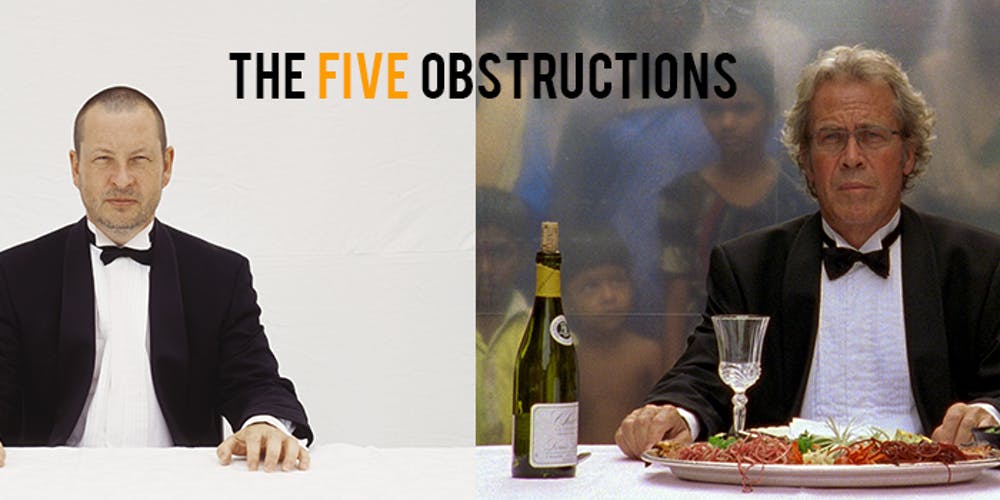
Late 20th century European cinema has shown me films in many art forms which I never would’ve expected coming from the familiarity of Hollywood cinema. The past few films in class showed me different takes on both the story and the execution of the film, often times playing and messing with many common tricks in the way a film is expected to be. This art movement in Europe experimented with many elements which brought forth many filmmakers who have made their mark in the history of film. To end this era, however, was a step forward to modern European cinema which of course still have remnants of its previous craft. Lars von Trier and Jørgen Leth’s The Five Obstructions is a cross between these two eras, having both elements of experimental art cinema and the modern-day style of documentary film.

I feel as though the two known directors of this film represent the two times in European cinema, with Leth as the man of the past and von Tier as the modern man. My observation was that through von Tier’s obstruction, Leth was able to explore a kind of cinema that is still discovering. Five very different variations of Leth’s The Perfect Human was produced out of von Tier’s obstructions, yet all of this is from Leth’s own conceptualization and understanding of the set rules. He was able to explore deeply into what was asked of him and oftentimes have to go against conventions that he has been comfortable with. For example, he expressed his displeasure with cartoons, yet was able to go beyond this discomfort and produce something that is still very Leth-esque. Much like many filmmakers in the old European art cinema, Leth went against common executions of narratives in film, almost as if creating his own style. Similar to this, some of the films we have watched offer unconventional ways of storytelling, which I perceived to be “never before seen.”

Although I may refer to Europe’s art cinema as old, it can’t be denied that a lot of the techniques in producing such films were pretty new at that time. Although these forms may not be considered modern today, maybe those in their time upon the film’s creation believed that such films will lead to a different kind of modern cinema. Leth’s use of common modern techniques showed us that it can still change and could potentially lead us into a new realm of cinema; one that Hollywood has never even touched on yet. And this for me is where von Tier’s role comes in; as the man who pushes for the new. His obstructions may have been very difficult for Leth, however it was because of these prompts that Leth was able to produce such films. Von Tier forces the filmmaker to go beyond himself to produce films that would define a new era for cinema. This for me is what modern is; it is something that goes beyond the limitations of the past and creates its own, new interpretation of what it represents and what is beyond itself. The Five Obstructions, being a documentary shows us a new format of film where one can watch the old style of European art cinema unfold through modern-day techniques.

The adventure of L’Avventura

Coming into this elective and having watched two amazing films so far, my expectations for L’Avventura by Michelangelo Antonioni was set high. I was expecting something thrilling; something that is beyond my expectations of cinema. Indeed, my knowledge of 60s European films were limited to the oddness, yet captivating screenplay of A Woman is a Woman by Jean-Luc Godard and the eerie themes of Persona by Ingmar Bergman. Yet, despite my high expectations of being surprised with another kind of film, L’Avventura seems to both fail and exceed such expectations.

Honestly speaking, L’Avventura is the most confusing film I have ever experienced. Not only did it confuse me with its extraneous plot points, it also made me feel generally confused about my feelings towards the film and the activity of being made to watch the film for class. What was I supposed to feel about a movie that I have a hard time understanding to begin with? It may sound harsh, but such feelings led me to believe that this movie is testing me in some way. However, one thing I learned in this class is that one’s personal expectations never seem to meet what the films we’re shown present to us. There is always something surprising, or at least something worth being at awe at.

L’Avventura fulfills such expectation in a way one would not expect it to. When we think of something that surprises us, we think of extravagant things; things that deviate from what is normal, where such deviation creates an exciting feeling for the weird and the unknown. However, L’Avventura is neither extravagant nor exciting. A lot of scenes were prolonged stills of the characters expressing their emotions. In fact, the progression of the film is so slow that when you set the film at twice its regular speed, it would still look like a normally shot film. (This is proven by the fact that my friends and I tried this while watching the film, and to our amusement, the film was still comprehensible despite its unusual speed).

The film then is made surprising by its unusual way of storytelling. It may not have been as exciting as the other films we have watched so far, but it still exceeded my expectation regarding European cinema in the 60s. What makes it great for me is its ability to evoke strong emotions to its audience. It’s almost as if the mournful emotions the characters portray permeate through the screen towards its audience. We mourn for the characters’ inability to communicate their intentions just as the characters mourn for their state, made problematic by their choices. The frustration is strong for both me and the characters as they struggle to solve the real dilemma.

Despite L’Avventura’s inability to bring excitement to its audience, I believe it did bring something significant to us. It surprised us in a way that no known and popular films would. The emphasis on the slow progression allowed us to immerse ourselves with the emotions portrayed by the characters, especially in the slowest moments of the film. This, I believe is what made L’Avventura the most surprising film I have watched for this class so far. It brought me something boring, yet different and meaningful than what was initially expected. Maybe the title itself shows us that there’s an adventure one can seek when watching L’Avventura––and that is seeing its beauty amidst our preconceived expectations.

Art as a Story

Dubbed as the “Mount Everest” of cinematic analysis, it is no doubt that Ingmar Bergman’s Persona will twist one’s head with the genius of its screenplay and cinematography. This movie will leave one confused and frustrated with so many questions left unanswered. Personally, all the questions I would begin to ask at the start of the film only became more complicated the more the movie serves me its story. It felt like I was being force fed with symbolisms and allegories; and although the feeling was disorienting, in some ways it was satisfying. I may have experienced many modern movies, to which I began feeling tired of, but never have I experienced such a movie as Persona.

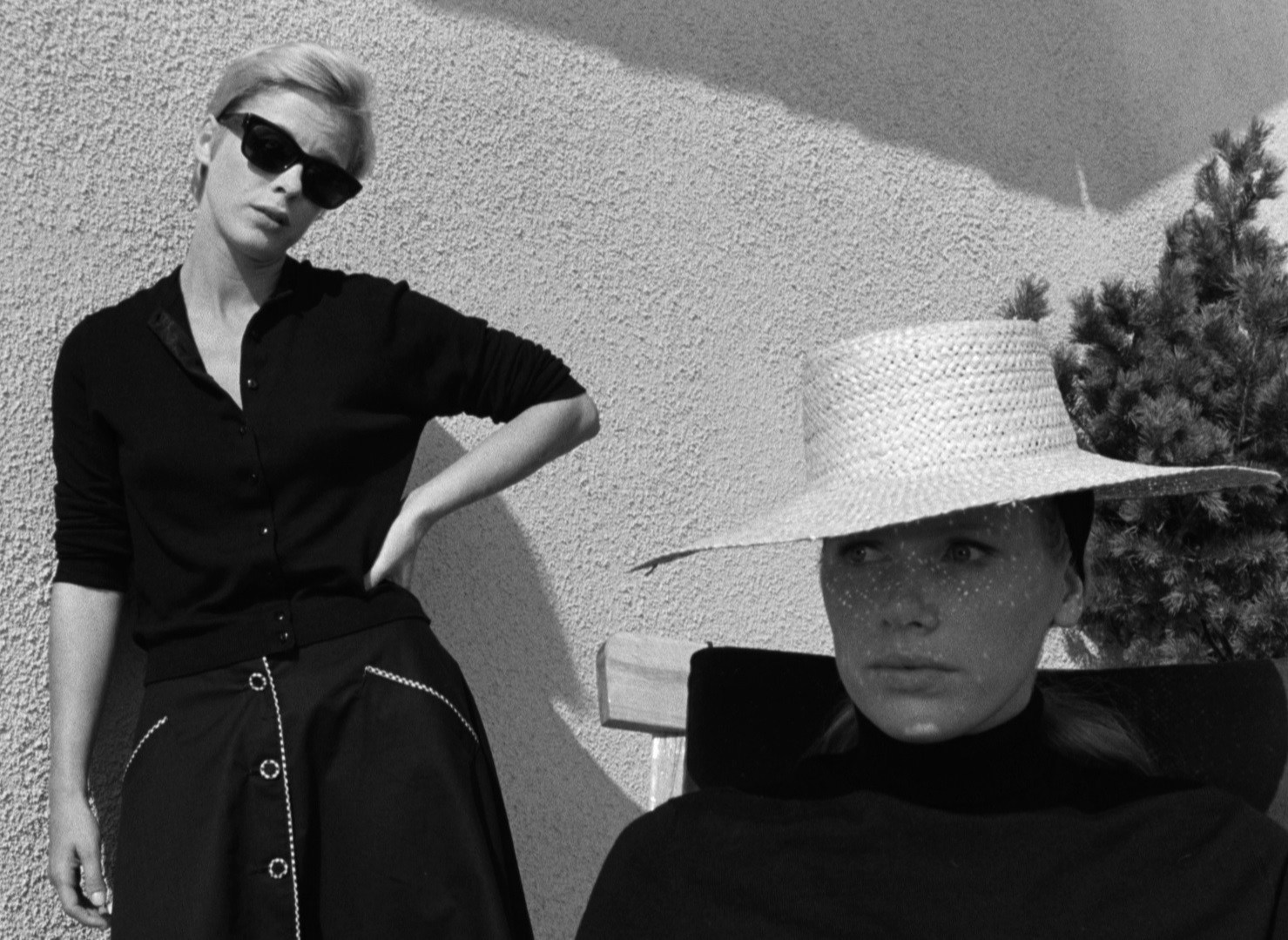
One of the things that really caught my attention about the movie is the way the cinematography was presented. It felt like each scene was a piece of a professionally done photo. As seen through the film, the way the light divides the characters’ faces on close ups really highlighted the impact of the scene. The elements of the image were divided and placed equally in the frame, like in the scene where Elisabet Vogler watches Alma sleep after sharing her intimate story. Although the scene was silent at most, much of its impact was presented through Elisabet’s expressions, which despite being in the background of the frame, was greatly highlighted by the intense light. Even if Alma’s face occupied a big portion of the frame, the audience is drawn to Elisabet’s face, which eerily looks over Alma’s peaceful, yet very distressed expression. A lot of Elisabet’s scenes are often presented this way. It’s almost as if the character purposely hovers over Alma, studying her every expression. And this is exactly what Alma discovers in the story.

I have noticed that after discovering (or at least assuming as this was never really confirmed by the movie) Elisabet’s intention of studying Alma through her letter to a friend, the roles of observant and observee are switched. Yet, we’re still drawn to Elisabet despite her being the one being observed. Maybe because now we have Alma’s commentary to guide us on what to observe about Elisabet. Whereas previously, we were only given Elisabet’s expressions as she looks over Alma, which served as our only clues to figure out what she thinks of her subject. In the two cases, I have always been drawn to Elisabet. It might be that the movie is showing us that despite Elisabet escaping her life as an actress, she still manages to draw her audience in, a skill that an actor must master. However, one thing is certain and that is Elisabet’s use of her facial expressions to communicate her character’s dilemma. What is amazing about this is that scenes that show a close up of her face looks like a different image per frame. Even the slightest movement of her lips evoke a different kind of expression. I often wonder in scenes like this what Elisabet is truly feeling.

Many observations and questions arise the more one watches Persona, as stated by many, including renowned film critics. I offer one observation which may be contradicted by another. Yet, both observations may equally be true as declared by critic Peter Cowie. Despite the confusion on the true meaning of Persona, it is in it’s art and cinematography that one may be given the satisfaction Persona seems to be depriving us from. Perhaps, its true meaning may be hidden among the frames the movie presents to us.