The five obstructions

When I heard that the film, The Five Obstructions, would be set in more recent times, I thought this film would be easier to understand compared to the past films, but it still proved a bit of a challenge to interpret. The story is narrated in a straightforward manner but the content of the film is what confused me. The character Lars asks Jorgen to remake his old short film The Perfect Human five times with different rules and restrictions. When I saw parts of The Perfect Human I was very confused as to what the goal or the driving force of it was because it just shows a man and woman performing various actions and a person narrating what they are doing and asking why they are performing those actions. The would also repeat himself, and the camera angles would sometimes just pause at the person’s face or body part. After researching a bit to understand the point of Jorgen’s old film, I learned that it was meant to understand the human person and how his mind works because of how it would observe the man and woman as if they were test subjects. This helped me understand better the context of the story of the current film.

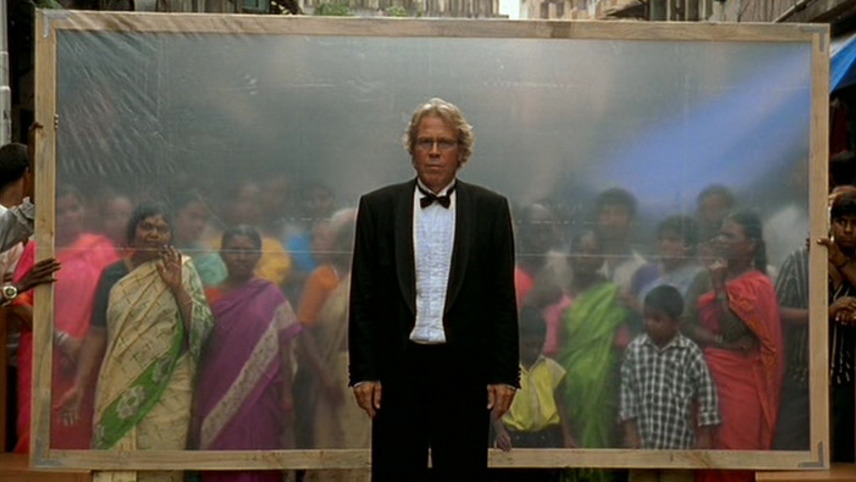
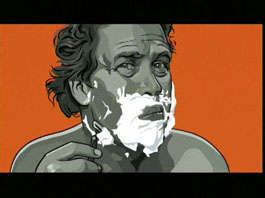
I believe that the whole film can be one big remake of The Perfect Human because of how it allows the audience to see and understand the minds of two great filmmakers. Lars sets boundaries for the remakes such as having no set, shot in Cuba, and many more, and these rules can make filming a good movie seem impossible. Then next we see Jorgen adapt to these rules and express his creativity in successfully remaking his old film. I enjoyed the cartoon remake the most because it was a very different approach compared to the past remakes. Even though Lars and Jorgen both stated that they hate cartoons, I believe that the art of the cartoons helped bring beautiful visuals to his old film, and it brought a fresh perspective to me. I also found interesting the second obstruction because one restriction was to not show the place in the film. I was confused at first because I wondered how would he not show the place. Will he put up a blank wall behind him as he ate? Then when he began filming the second obstruction he had placed a transparent wall behind him, and I was impressed with his creativity even though he did not follow the rule to the letter. The film not only showed the creativity of great filmmakers, but it also showed the conditions and processes that filmmakers have to go through. For the first and second obstructions, Jorgen had to fly to Cuba and Bombay, set up the place, and look for actors to join the film. The fourth obstruction needed to be a cartoon, and Jorgen needed the aid of Bob to film because cartoons are not his specialty. The goal of this documentary is to inform and show the audience what creativity in filmmaking can achieve, because his old film was remade five times and yet it gives the audience a fresh perspective.


The Imperfect Human

Directed by Lars von Trier and Jørgen Leth featuring themselves, The Five Obstructions (De fem benspænd) is a 100 minute Dano-Belgian theatre documentary showcasing the creative processes and challenges in revisiting Jørgen Leth’s 1968 film,The Perfect Human (Det perfekte menneske) and remaking it into through sets of rules given by Lars von Tier.

After becoming exposed to some European films from the ‘60s, The Five Obstructions felt weird and foreign for me. It might just be the film, but out of the films we have watched as of now, The Five Obstructions was the least dramatic. This may be because of the theme of the film, which may be about cinematic creativity, or because what are shown in the film are not completely fictional, as compared to the films we have watched beforehand. That is, The Five Obstructions focuses on may be the challenges that film makers and directors go through in creating and editing films — there were not any romantic dramas, personality-crises, and complex cinematography that aim to convey a creative and dramatic plotline and theme for its audience and the film somewhat conveys a candid setting through its documentary-like cinematography.

Furthermore, with the five obstructions, it seems like what Lars von Trier is making Jorgen Leth do is create a perfect human that seems to showcase the personality of the films director, which is Leth. With that said, if von Trier wanted to see Leth in the film — or at least his personality in his own creation, would that mean that von Trier wanted to show that Leth can be one of those “perfect humans”?

Moreover, with the five obstructions that are seemingly the focus of the film, the idea of The Perfect Human showcasing how a “perfect human” is and how he/she lives seems far-fetched. This is because, if the “perfect human” really is so perfect, why would they want to recreate it? Although Lars von Trier once stated in the film that the first version of The Perfect Human would always be the best version, that does not mean that it was perfect. The five obstructions consisted of changes in the film’s location, editing, focus, actors, script, and cinematic style. With this, it may have been because von Tier was trying to make the idea of the perfect human more humane and diversified. The first obstruction required the film’s location to be in Cuba, where the characters looked widely different than the original’s Klaus Nissen and Makjen Nielsen. The second obstruction required Leth to play the “perfect man” in Mumbai. The third, because Leth failed the pervious task, made Leth recreate the film in Brussel, showcasing a more contemporary theme. The fourth required the film to be a cartoon — which turned into a colorful animation, much to both von Trier and Leth’s liking, and the fifth was recreated by von Trier himself, voice-overed by Leth with von Trier’s narration. With these obstructions, it seems (to me) that, from the original The Perfect Human, which consisted of bland narratives and a white background throught the film, von Trier used the obstructions to create the “perfect human” in different environment that, unlike the original film, are realistic, lively, and more relatable.

Overall, The Five Obstructions explored the cinematic possibilities that directors can create as well as showcase that, maybe, the perfect human may not be supposedly perfect. Rather, the perfect human, as diversified as our understandings are about perfection because of the different cultures around the world, may be different for every one of us because of our differences in preferences and in cultures.

The Five Obstructions: an Obstruction, Indeed.

Just when I thought we would finally be watching a nice, comprehensible, normal movie from the 2000s, we are shown The Five Obstructions by Jørgen Leth and Lars von Trier. To say I was confused is an understatement. I mean, almost all movies that we have been tasked to watch in this class has made me quite perplexed, anyway. But I got a different kind of confusion from this movie. I’m afraid, it was not the positive kind. I don’t normally sleep when watching a movie, but this one made me quite sleepy. Maybe because I felt like there was no conflict at all. It was not a typical film with a story. No offense to the creators of the film, but the unending conversation between directors really bored me to tears.

Five_Obstructions_04the-five-obstructions

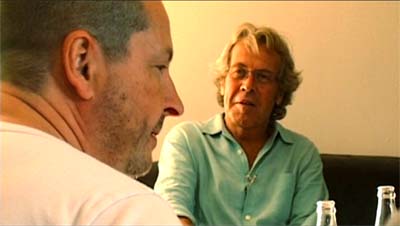
Don’t get me wrong, I tried my best to be interested in this film, but I just could not comprehend it. I knew they were both directors trying to make a movie about The Perfect Human, their constant bickering made this clear for me. The only thing that kept me interested in the movie were the dance steps of the man in white, and the reactions of the Cubans behind the transparent screen and how they probably found the man weird. I also thought that maybe the two directors would fight and have a big argument because of the work that they are trying to achieve, but they didn’t. The two directors seemed like two very talented ones with so much passion and creativity to showcase but they could just not get into an agreement.

larsandjorgen1

The Five Obstructions seemed to overlap the documentary part of the film, along with the actual film, which I thought was nice. I did not like, however, how the images kept repeating and zooming in and then out again, and then showed it again in the same way twice or thrice over. It felt a bit overwhelming for me and I think I had to close my eyes for a while because it was making me dizzy. Just like the film Persona, The Five Obstructions also showed repeating images, weird close-ups, and rewinding scenes. It also made use of alternating images and flipping ones. The technique, for me, was sort of like the start of a very hippie and artsy fashion commercial. It worked for a while, but when constantly showed in the same way, it gets duller, “nakakaumay,” in Filipino.

thefiveobstructionspic2Suddenly, I became more attracted to the film when it started showing The Perfect Human in a cartoon version. This gave a pop of color to the scenes and gave it more life. The artistic effect that it brought was a “buzzer beater” for me. All of a sudden, I was able to appreciate what the directors were trying to work on, and the strange shots of people became nice to watch. I may not have appreciated the movie from the start, but The Five Obstructions showcased a lot of creativity and artistic skills from the directors. Maybe their style is just really not for people like me.

“This is how the perfect human falls”: The Five Obstructions (2003)

dir. Lars von Trier

Lars von Trier is a sadist, this much I know. He’s notorious in the film community as someone who loves misery and ugliness, and this documentary serves as further proof. Where others would worship their idols, he sets out to challenge (and sometimes even punish) his. He wants to see them go through hell just for the sake of showing his idol’s humanity. He scares me and I love him for it.

“A good perversion to cultivate” (Leth)

From what I’ve gathered, Jørgen Leth’s ‘The Perfect Human’ claims that the perfect human sees or experiences no limitations. This serves as a paradox to what von Trier is trying to achieve with his documentary. He asks Leth to recreate his own film but with several obstructions — limitations. So if the original film serves as the perfect version of all the subsequent films, the question then becomes: Can the remake of a perfect film still be considered perfect even if it is not true to its essence?

“It’s totally destructive. He’s ruining it from the start.” (Leth)

Lars von Trier fails and he falls hard. He gives torturous filmmaking rules for the first obstruction, notable editing-wise, where he restricts Leth from having any single edit that lasts longer than 12 frames. One would think that this would completely ruin the end product. The resulting film, however, is a breath of fresh air. It’s an editing nightmare full of life. The film itself is frenetic and vibrant, and the obstruction which was supposed to hinder acts as an advantage. What once was seemingly a detached piece of art feels much more human now that it’s attached to a location (Cuba). For this film, Leth has gained the upperhand.

“I want to banalize you… We may be able to do so by finding things that hurt.” (von Trier)

For the second short film, von Trier seemingly wants to humanize Leth. Based on ‘The Perfect Human’ and on the other things that Leth has said (ex. “I isolate places and things that I want to examine precisely”), there is a certain detachment to Leth’s filmmaking. Lars von Trier wants Leth to film a movie in the most miserable place on earth but to not show any of it on camera. From what I think, I believe that von Trier is trying to get some of that misery to affect Leth and is hoping that it bleeds into the movie through innovative nuances. Leth, however, remains unaffected.

There’s a small interaction in this movie which made me laugh the first time that I saw it and I can’t stop thinking about it whenever I’m reminded of this movie:

Leth: [talking about the 4th film] I am very pleased with it. [von Trier’s face falls]

“Lars von Trier has this romantic notion that I’ll be so affected by being placed in a situation where a social drama is going on beside you. He wants to quantify how much it rubs off, how much it affects me. Will it be visible? Will it be quantifiable? But I think it’s pure romanticism.” (Leth)

Being directors, both of these men seem hyper aware of the camera. They may be in front of it for the most part of the documentary, but in some ways they are still directing how the film turns out. Both of them are incredibly dramatic with their words, which is why I’ve decided to collect a lot of their quotes and include them here. They want to be in control of the situation because that’s what they’re used to. They want to be in charge of how they are perceived through the lends because this is what they know the audience sees. Their job is to frame reality and as a result, they too become characters in their own documentary.

“He serves hard and we return hard as nails. That’s the way it is.” (Leth)

It’s clear that von Trier holds Leth to high standards. What differentiates him from other ordinary fans though is that he too is an accomplished filmmaker. He plays the same game as Leth. Throughout this entire project, it is von Trier who dictates what to do and Leth must follow. It’s an interesting role reversal and it produces a great collaboration between the two.

“Here there are no limits. Here there is nothing.”

Leth overcomes the next two films and produces stunning outputs. Even his hatred for animation couldn’t falter the creativity of the fourth film. Each of his new films remain truthful to their thesis and yet all of them feel new and reinvigorated. Leth is clearly a master at work and at times it feels like von Trier is experiencing more obstructions than he is, which is why I understand von Trier’s choice for the last film.

von Trier has complete control over the final film and knowing Leth, this isn’t an easy decision. This is the man who refused complete artistic freedom over his own film saying, “I’d rather have something to hang onto”. By having his name attached to a film he has no say in, that just might be one of the biggest subtle obstructions in filmmaking there is.

“You wanted to make me human but that’s what I am!”

Nevertheless, he pushes through. And by doing so, he winds the game against von Trier. Going by Leth’s film, the perfect human is someone who has no limitations. Bringing this further, we can say that the perfect human has no limitations because of his ability to overcome them. Throughout this process, he is perfect because he does this while staying true to his version of humanity. von Trier knows this which is why he ends the movie accepting his defeat. He repeats a clip of Leth falling to the ground,

“This is how the perfect human falls.”


The Five Derivatives

The Five Obstructions (d. Lars Von Trier, Jorgen Leith; 2003)

In all honesty, the film The Five Obstructions was probably the only movie so far that I’ve seen in this class that I did not enjoy. Part of this was because I felt the film was too redundant, and another was because I felt the film was too self-indulgent for its own good.

Maybe another is that I am not a fan of Director Lars von Trier. The films of Von Trier that I have seen feel like it’s too much pandering for art for the sake of art or for something to force a message. Von Trier’s style is really just not for me, and while this specific film does not have any graphic violence or dark themes, rather it is a more straightforward look into what makes a film, I found it to be just too slow and uninteresting.

The film’s basic plotline is Von Trier challenging fellow director Jorgen Leth to remake his short film entitled The Perfect Human. The titular ‘five obstructions’ come in the form of challenges Von Trier imposes on Leth. These include remaking the film in Cuba with a forced frame limit for each cut, remaking the film in “the most lonely place in the world”, and animating the film. Leth takes on each challenge in a unique way – he films in Cuba and makes the framerate challenge work by taking on hyperspeed editing, he films in India by having a near-transparent screen, and he finds an animator to help bring his vision to life.

In my opinion, while the first version of the film was very interesting (and honestly really well-made – despite the messy and frantic editing the basic gist of the short film was still faithfully translated), the rest of the film just does not live up, despite the clear quality of the craft on display.

I think the main scene that I also have a hard time with the film is when Von Trier and Leith talk about animation in a negative way and deride it. I really just found this entire conversation pretentious and condescending, especially since they were so dead set on knowing that as long as its animated “its going to be crap”. Considering the value animation has (it is a medium where the impossible is possible, it is a world where non-realism can prevail) to cinema as a whole, I found both Von Trier and Leith’s comments very disrespectful and close-minded as directors.

Furthermore, the movie seems to be aimless. While the central conceit is interesting in seeing five different versions of a short film, what the structure of the film means is that by seeing five different versions, even though they are different aesthetically, the inner message is still the same, which leads to very very monotonous viewing. I felt that while the movie-making parts of each obstruction had their own merits, the actual showing of the obstructions felt very very slow. This is why despite the movie not even being 100 minutes long, it feels like it went on for even longer than that.

Overall, there is no denying that there is a lot of talent and craft that went into the film from both Von Trier and Leth’s perspectives. Von Trier for attempting to make something new out of a documentary framework and Leth for showing the different facets of filmmaking, particularly how a story can be told in multiple ways. However, it is really just not for me.

Creative Derivations of the Perfect

The movie, The Five Obstructions, was a great comedic movie that showed a competitive challenge offered by Lars von Trier and taken by Jorgen. Here, there were lots of instances of creative shots, where it allows the audience to appreciate forms of art and beauty. When it showed the original version of The Perfect Human, it was evident that the focus is meant to be placed on various human body parts such as eyes, lips, face, legs, and many more for both male and female. This was the case when the characters in the film are eating, shaving, smoking, or even as simple as lying down. It was simply a movie of the ideal person in different cultures and contexts, while maintaining the message of what it means to be ideal. 

In other cases, when Jorgen was doing the variations, there were different backgrounds for each The Perfect Human version. It included Brussels, Bombay, Cuba, Denmark, and even a cartoon version. The notable one for me was the one in Bombay, where he chose to shave and to eat with a real background of kids and residents there watching him film the specific scene. For me at first, I thought it was out of place and inappropriate. It seemed like it was in a public market and he starts to jump as the public looks on. Afterwards, he shaves and then later on start to eat a fine dining. The dining scene struck me the most because it shows how much the people wanted to be in his position, having an abundance of delicious food while living a comfortable life. For them, it was the ideal life which shows how for the people of Bombay, it is the perfect human. On the other hand, in the cartoon version, I really appreciated the animated form of the characters. I thought the drawings were really excellent as the facial expressions truly captured the scenes. Furthermore, I noticed the nudity was more explicit as compared to the one with real characters. It was bold in terms of showing the private parts of both male and female. The bodies were really well-crafted, as there were details such as the defined abs, attractive breasts, and other beautiful body parts. It was certainly an animated version of manifesting on what a perfect human is like. In the Cuba version, the dancing was compromised to be more in-line with its culture. Another act that they changed for the culture was the smoking scene and how the Cuban actor plays around with the cigarette. I believe this was a way of conveying a perfect man in the eyes of Cuba. 

When deriving the original version of The Perfect Human, Jorgen took into consideration the context, challenge of Lars, and culture of his audience while maintaining its message. I believe this was very creative and credit to Jorgen for being well-versed with different cultures and knowing what kind of person is ideal in their perspective in the form of lifestyle, clothing, food, and etc. 

ReplyForward