The Imperfect Human

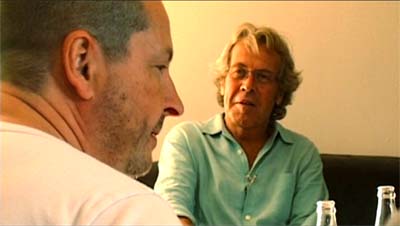
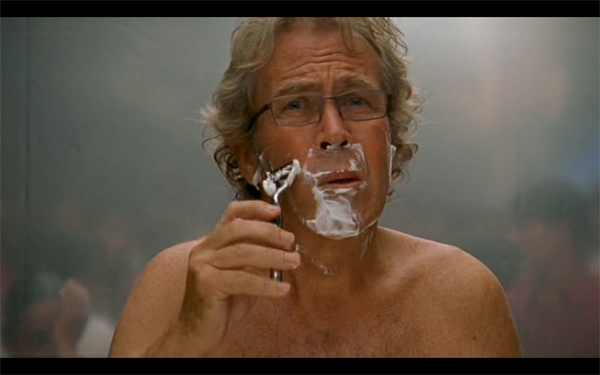
Directed by Lars von Trier and Jørgen Leth featuring themselves, The Five Obstructions (De fem benspænd) is a 100 minute Dano-Belgian theatre documentary showcasing the creative processes and challenges in revisiting Jørgen Leth’s 1968 film,The Perfect Human (Det perfekte menneske) and remaking it into through sets of rules given by Lars von Tier.

After becoming exposed to some European films from the ‘60s, The Five Obstructions felt weird and foreign for me. It might just be the film, but out of the films we have watched as of now, The Five Obstructions was the least dramatic. This may be because of the theme of the film, which may be about cinematic creativity, or because what are shown in the film are not completely fictional, as compared to the films we have watched beforehand. That is, The Five Obstructions focuses on may be the challenges that film makers and directors go through in creating and editing films — there were not any romantic dramas, personality-crises, and complex cinematography that aim to convey a creative and dramatic plotline and theme for its audience and the film somewhat conveys a candid setting through its documentary-like cinematography.

Furthermore, with the five obstructions, it seems like what Lars von Trier is making Jorgen Leth do is create a perfect human that seems to showcase the personality of the films director, which is Leth. With that said, if von Trier wanted to see Leth in the film — or at least his personality in his own creation, would that mean that von Trier wanted to show that Leth can be one of those “perfect humans”?

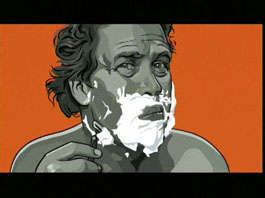
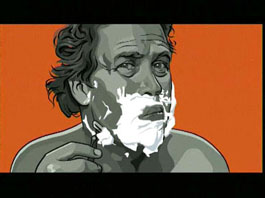
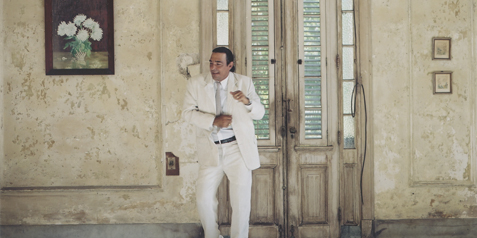
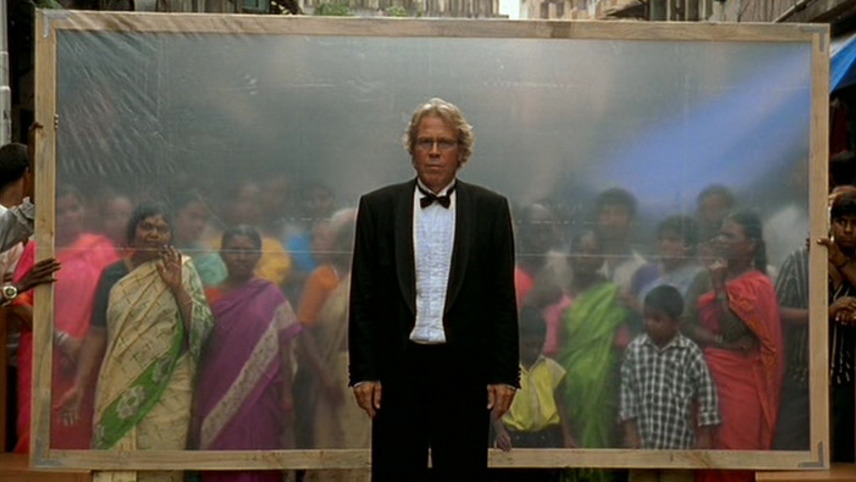
Moreover, with the five obstructions that are seemingly the focus of the film, the idea of The Perfect Human showcasing how a “perfect human” is and how he/she lives seems far-fetched. This is because, if the “perfect human” really is so perfect, why would they want to recreate it? Although Lars von Trier once stated in the film that the first version of The Perfect Human would always be the best version, that does not mean that it was perfect. The five obstructions consisted of changes in the film’s location, editing, focus, actors, script, and cinematic style. With this, it may have been because von Tier was trying to make the idea of the perfect human more humane and diversified. The first obstruction required the film’s location to be in Cuba, where the characters looked widely different than the original’s Klaus Nissen and Makjen Nielsen. The second obstruction required Leth to play the “perfect man” in Mumbai. The third, because Leth failed the pervious task, made Leth recreate the film in Brussel, showcasing a more contemporary theme. The fourth required the film to be a cartoon — which turned into a colorful animation, much to both von Trier and Leth’s liking, and the fifth was recreated by von Trier himself, voice-overed by Leth with von Trier’s narration. With these obstructions, it seems (to me) that, from the original The Perfect Human, which consisted of bland narratives and a white background throught the film, von Trier used the obstructions to create the “perfect human” in different environment that, unlike the original film, are realistic, lively, and more relatable.

Overall, The Five Obstructions explored the cinematic possibilities that directors can create as well as showcase that, maybe, the perfect human may not be supposedly perfect. Rather, the perfect human, as diversified as our understandings are about perfection because of the different cultures around the world, may be different for every one of us because of our differences in preferences and in cultures.
Behind the Scenes

After watching various European films from the 60s, The Five Obstructions was a refreshing take on European cinema. The Five Obstructions is a film about making film. Although it is considered a relatively modern documentary, it still goes back to a film from the past. Lars Von Trier, the actual director of the documentary, challenged Jorgen Leth, the director of the film The Perfect Human, to remake his own film multiple times given certain obstructions.

The original The Perfect Human was shown at the beginning of the documentary and I had mixed thoughts about it. The film was quite peculiar, showing multiple clips of people doing random things such as eating, lying down on the bed, and even jumping. The film did not make sense to me at first. However, after pondering about it as the documentary progressed, I realized that Leth was trying to show that the “perfect human” is basically all people. The film was simply trying to show people in their natural habitat. There can never be just one true perfect human as all of us are all human with our own respective characteristics.

All the obstructions Trier gave to Leth were given with the intention to make life hard for Leth. Trier’s obstructions for his fellow director tested Leth’s prowess for film making. Obstruction after obstruction, Leth always delivered a film, however, it was not always to Trier’s liking. Although all the films Leth made were arguably also great films, there was an instance wherein he was not able to fully understand one of Trier’s obstructions. While watching the film, Leth’s artistry amazed me. The original The Perfect Human was somewhat dull but that certainly changed for the new films he made. It is astonishing to see how a director could come up with different ways of making the film, yet all still share the same message. Whether the film was done as a cartoon or in one of the worst slums of Bombay, Leth was effectively able to show Trier that he could overcome all challenges directly targeting his character. Moreover, the film also showed that despite having a great overall film, it is impossible to please everyone. Every film is really up to the audience’s judgement.

In the end, Trier made the last film with the 5th obstruction of not letting Leth do anything aside from making him be the voice of the narrative. Honestly, I am not sure whether documentary itself is supposed to be part of the 5th obstruction film or whether it could be considered as the “6th obstruction.” Nevertheless, the entire documentary was a great way for Trier to show respect for Leth and his work. It was evident that The Perfect Human was not forgotten over time. The documentary shows Leth’s competence and commitment during the supposedly unseen processes of film making. It shows the possible challenges these people face on a regular day. It leads the audience to appreciate the minds behind the industry, showing what dedication is being put for our entertainment.

The Five Obstructions: an Obstruction, Indeed.

Just when I thought we would finally be watching a nice, comprehensible, normal movie from the 2000s, we are shown The Five Obstructions by Jørgen Leth and Lars von Trier. To say I was confused is an understatement. I mean, almost all movies that we have been tasked to watch in this class has made me quite perplexed, anyway. But I got a different kind of confusion from this movie. I’m afraid, it was not the positive kind. I don’t normally sleep when watching a movie, but this one made me quite sleepy. Maybe because I felt like there was no conflict at all. It was not a typical film with a story. No offense to the creators of the film, but the unending conversation between directors really bored me to tears.

Five_Obstructions_04the-five-obstructions

Don’t get me wrong, I tried my best to be interested in this film, but I just could not comprehend it. I knew they were both directors trying to make a movie about The Perfect Human, their constant bickering made this clear for me. The only thing that kept me interested in the movie were the dance steps of the man in white, and the reactions of the Cubans behind the transparent screen and how they probably found the man weird. I also thought that maybe the two directors would fight and have a big argument because of the work that they are trying to achieve, but they didn’t. The two directors seemed like two very talented ones with so much passion and creativity to showcase but they could just not get into an agreement.

larsandjorgen1

The Five Obstructions seemed to overlap the documentary part of the film, along with the actual film, which I thought was nice. I did not like, however, how the images kept repeating and zooming in and then out again, and then showed it again in the same way twice or thrice over. It felt a bit overwhelming for me and I think I had to close my eyes for a while because it was making me dizzy. Just like the film Persona, The Five Obstructions also showed repeating images, weird close-ups, and rewinding scenes. It also made use of alternating images and flipping ones. The technique, for me, was sort of like the start of a very hippie and artsy fashion commercial. It worked for a while, but when constantly showed in the same way, it gets duller, “nakakaumay,” in Filipino.

thefiveobstructionspic2Suddenly, I became more attracted to the film when it started showing The Perfect Human in a cartoon version. This gave a pop of color to the scenes and gave it more life. The artistic effect that it brought was a “buzzer beater” for me. All of a sudden, I was able to appreciate what the directors were trying to work on, and the strange shots of people became nice to watch. I may not have appreciated the movie from the start, but The Five Obstructions showcased a lot of creativity and artistic skills from the directors. Maybe their style is just really not for people like me.
Persona: a Disturbing Work of Art

6b_persona_0

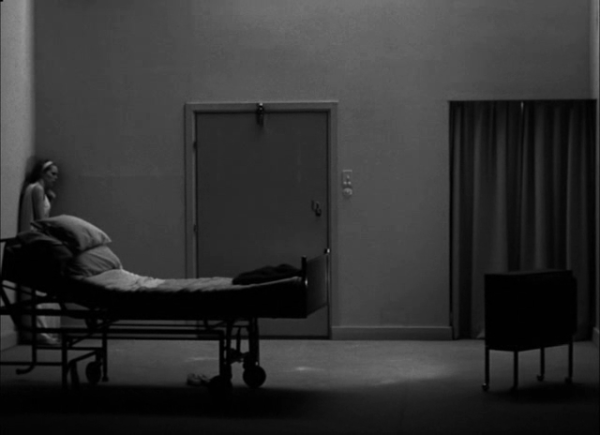
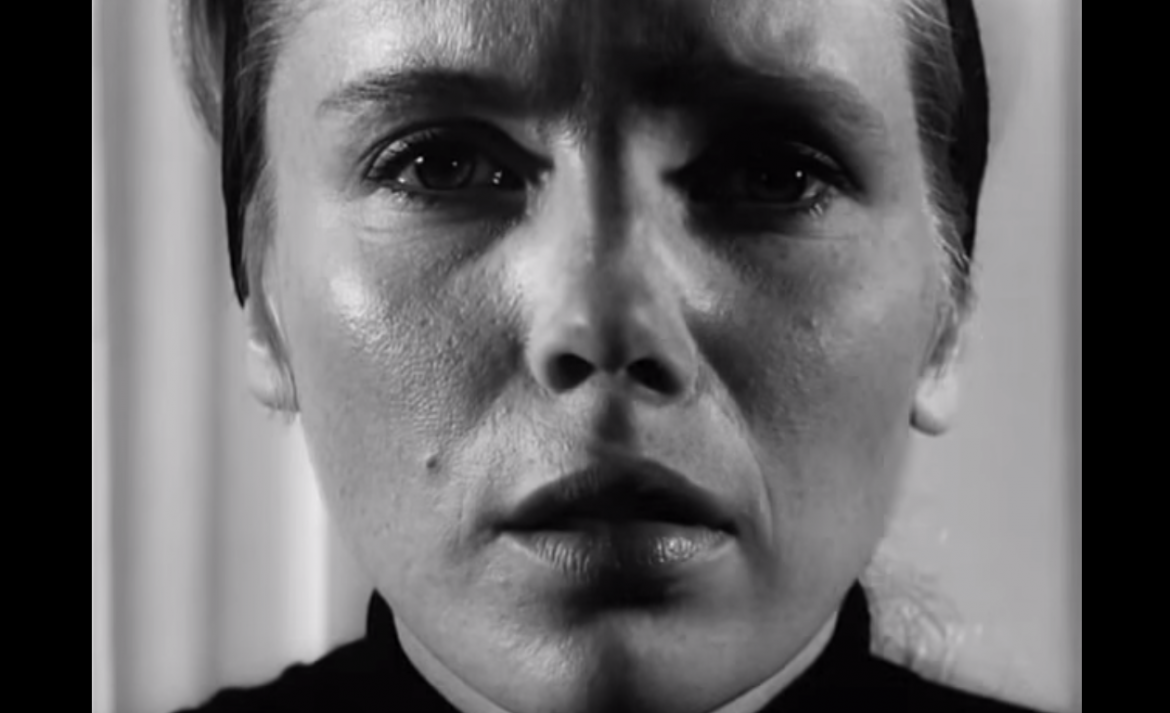
It’s safe for me to say that the movie, Persona, is one of the most confounding movies that I have ever watched. Despite this, I still think that the movie was a work of art. The tone of the movie was set early in the film. The first scene of the movie, which showed the boy in what looked like a mortuary bed, was a bit creepy for me. This continued on with the awkward and uncomfortable close-ups, pauses, cut scenes, and repeating images all throughout the film.

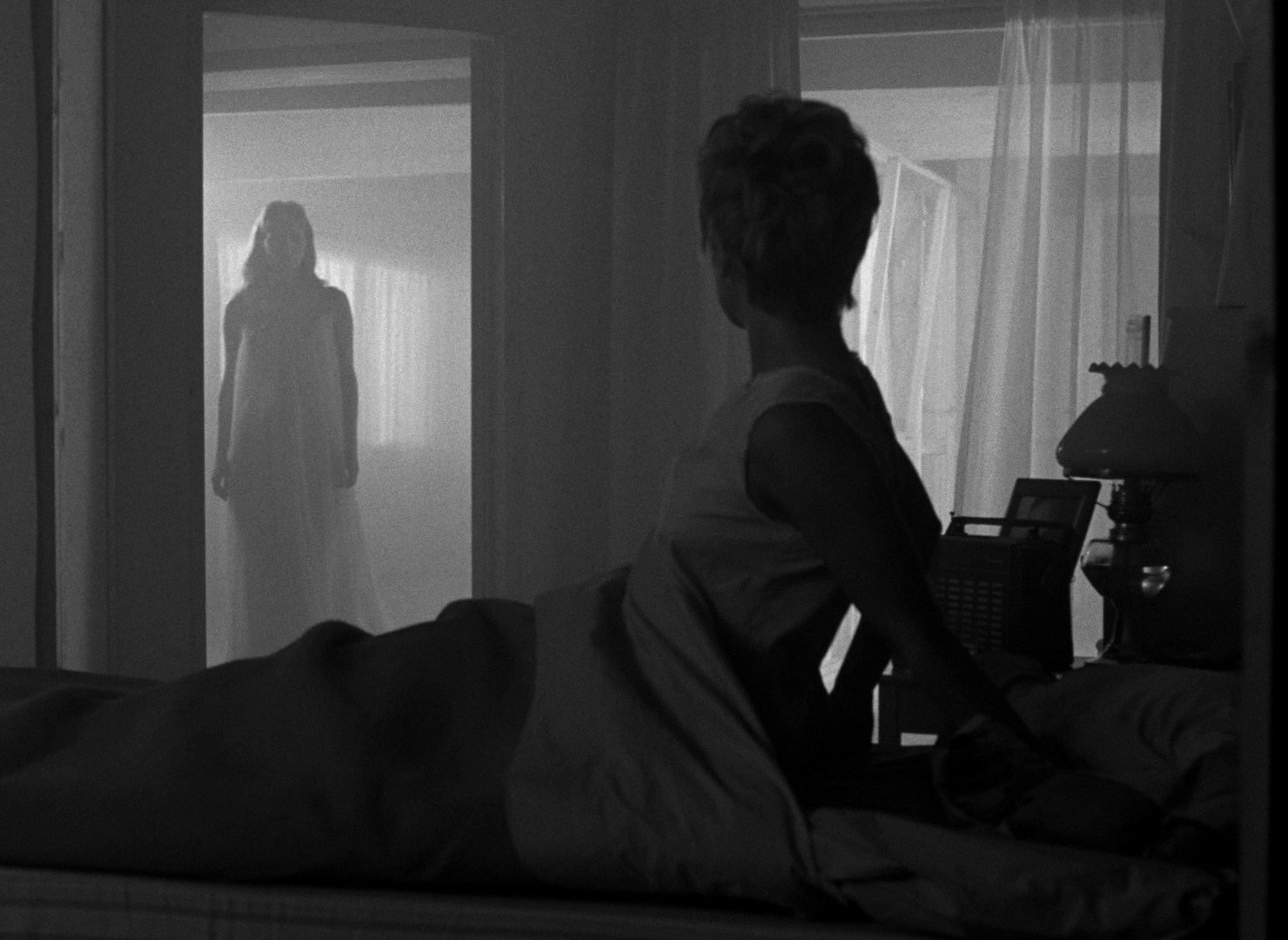
Persona-screenshot-1170x713The plot of the movie was confusing for me. This is probably because of the mysterious effect that the personality of Elisabet brings to the mood of the movie. It was unclear to me what triggered her decision to be silent. Most of the close-up shots made on her face also made me think that maybe she would do something psychotic later on in the movie, like maybe murder her nurse, Anna. But, this didn’t happen and to my surprise, the two developed a  very intimate relationship.  In fact, Too intimate at some points of the movie that sometimes I would think their relationship would level up into an erotic homosexual love affair. An example of a scene like this was when Anna was sleeping and then Elisabet secretly enters her room and watches her sleep. Anna then wakes up and they stare at each other, massage each other’s heads and look at the mirror at the same time. This, for me, was strange. The movie was very unpredictable. Personally, my expectations or predictions on what might happen in the movie were consistently let down. This added to the “shocking” factor of the movie.
26281480_persona


With this said, the movie was also shocking, making the movie somewhat a horror/ thriller one. The aesthetic of the movie only added to the mysteriousness of the film. As well as the black and white color of the movie that gave a lot of depth to the film and heightened the “thriller” effect of it. The cinematography matched the overall mood of the movie for me. For example, the close-up scene of  Elisabet, wherein she was on stage and suddenly stared into the camera with an unexplainable face and decided to become silent. And this shot was repeated many times in the movie that made me feel uncomfortable and scared. Besides this scene, many others confused me. Such as when the husband of Elisabet went to the beach house where they were staying and mistook Anna for Elisabet.

vlcsnap-437305

persona7_0


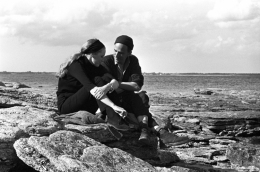
However, I liked how the shots of the film somehow evolved. Starting with very minimalist, boring, and plain backgrounds such as the walls of the hospital and the mortuary and then moving to the picturesque beach and beach house. The beach gave so much life to the movie and despite the strange events in the movie, it was nice to watch the movie and witness the artistic images brought by the well-thought-out shots.

Perfectly Human

Imagine a trailblazing filmmaker, named Jorgen Leth back in the 1960’s, now retired and settling for a peaceful, unobtrusive life in Haiti during present time. Then suddenly, a young menacing art film director named Lars Von Trier, decides to ruin his daily routine, challenging him to recreate his superb 12-minute black and white film “The Perfect Human” that he created way, way back with the whimsical rules and limitations of Von Trier’s own concoction.

fiveobstructions_02

And why is this so? Maybe Von Tier wanted to see if the rusty gears in Leth’s brilliant mind was still working, despite years of unpractice. Was his mentor still able to generate flabbergasting experimental films of dogma, perfection and splendor? Would all Leth’s future works still seem to be perfect?

Maybe he just wanted to see what Leth could still add up to the plate of art cinema.

And maybe it was not perfection he was looking for because he was already used to that.

Maybe Von Tier was looking for something more profound from Leth—something more natural.

Maybe something more human.

It is enthralling to witness camaraderie between two filmmakers, one master, one student, switching roles from one moment to another, bickering over the need to set creative boundaries when creating a film.

thefiveobstructionspic2In this film, one sees how a filmmaker works around the random conditions of the weather, the location, and the cultural situation of where, when and what they are shooting. The Five Obstructions is said to be a perverse game of one-upmanship given the various situations where both would display their mastery on their crafts.
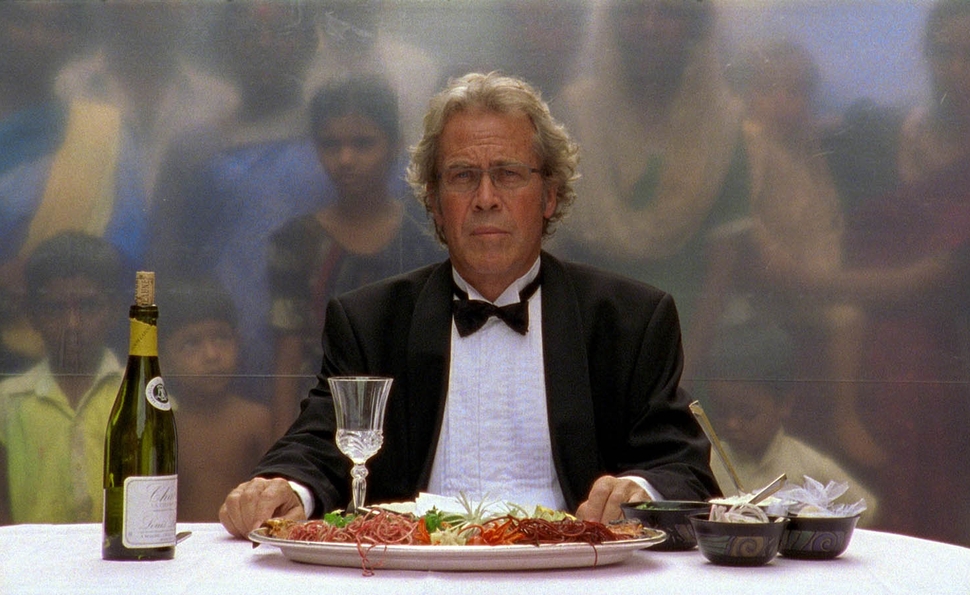
Moreover, Von Tier projects the film with a raw and clean wisp of documentary style shooting with natural lighting, sounds and shakey camera movement, showing the reality of filmmaking which is disheveled, convoluted and frustrating.

[1] A 12 frame film, [2] a film shot in the worst place on Earth without showing its misery, [3] a free-style film contradictory to Leth’s filmmaking style, and [4] an animated film which really challenged Leth— Lars Von Trier frets that his master, Leth, is attempting to make the films too good. He grouses repeatedly, desiring to see the evolution of Leth from being too perfect to being human. Von Tier expressed how everything was structured to its ultimate refinement and there was no room for flaws in Leth’s craft.

This film raises awareness about Jorgen Leth’s legacy that is not as widely recognized like the other European films that has been well-respected all through out the years. Moreover, the 5th obstruction seems to be a film created by Von Tier himself, showcasing the entire journey of Leth, remaking his piece again and again with utmost craftsmanship. The showcase of Leth’s talent in a film recreated five times over shows how an artist evolves together with his art as time progresses. And given this documentation of raw and messy and exasperating filmmaking, comes the reality of what makes a filmmaker perfectly a filmmaker and what makes a human perfectly human.


-161997-


The Five Obstructions

The film “The Five Obstructions” by Danish director Lars von Trier, was definitely one of the most challenging movie that I had to analyse. To start off, I was a little confused as to why scenes from being a documentary would change to a man eating inside a box-like figure is being shot by the camera for a long period of time without even having a proper conversation. Next issue that I had was the fact that this movie was created based from Jorgen Leth’s “The Perfect Human” in 1967.

I will be honest, I really did have a hard time following the movie that is why I hardly have anything to say about the film. However, this curiosity of mine bothered me because I really wanted to understand the film as much as I can. With the help of the internet and some analysis of the film available, I just learned that the film was sort-of a documentary that included certain challenges or “obstructions” that Tier and Leth created. As the movie progresses, we find out the Leth has been leading over Trier but then he makes one more challenge which forces Leth to recreate his own “The Perfect Human” film. This “fifth obstruction” gives a clue that there is still a continuation after this documentary.

Compared to the other European film that I was able to watch, this film was indeed harder to understand even though it was created more recently than the other films. A reason as to why I found this film difficult was may be because this film was in documentary form. Unlike the other films which focused on visuals and cinematography, this film by Trier brought out a more sophisticated and yet a clever way of telling a story.fullwidth.200b994d.jpg

A Look into the Human Mind

Watching Persona was a very unsettling and harrowing experience. The movie left me with a feeling of inexplicable dread, as if something bad had happened. It felt like a horror film. The premise–two women in a beach house, one of them resigning herself to a life of silence while the other practically bares her soul to the other woman–seems like the perfect horror movie scenario. Coupled with thrilling music that seemed to foreshadow something sinister, scenes that depicted the two women eerily (e.g., that scene where they stroke each other’s face), and disturbing shots of people being burned alive or a nail being driven through someone’s hand, the film was disturbing and difficult to watch at times.

Distancing myself from the immediate feelings of terror and confusion right after my viewing of the film, I can now marvel at how the movie depicts the workings of the human mind. It depicts tensions between emotions and actions, our deepest desires and how we choose (or choose not) to externalize them.Alma is this vulnerable creature in front of the receptive yet guarded Elisabet. She practically bares herself to the actress during their stay in the beach house. We see her reveal the most intimate stories and respond humanly to them. In contrast to Alma, very little is known of Elisabet–at least in the first half of the film. She plays the role of listener to Alma’s stories and provides a comforting presence to her. What I find interesting in this juxtaposition of these two arguably different women is how they seem to merge into one another as the movie progresses. We see Alma’s attempts to shatter the walls within which Elisabet has contained herself. Violence comes into the picture as Alma threatens to splash boiling water over Elisabet to get her to violate her vow of silence, or leaves a shard of glass for Elisabet to step on. Why Alma chooses to do these things and go to such lengths in order to get Elisabet to crack is still unknown to me. But I interpret it as repressed feelings surfacing, clawing their way through a persona we have established for ourselves. 

Nearing the end of the film, the reality of two women existing within the film is blurred, and I personally began to question if the scenes that I was watching depicted only one or two women. This nodded to the gradual fusion of the two women into one complex entity, an entity that seemed to escape any comprehension. Even the two women seem to be aware of this phenomenon, and they try to differentiate themselves from each other. In one instance, Alma is shown with Elisabet’s husband. They embrace tenderly, and the husband acts as if Alma really were Elisabet. She resents the idea when she wakes up from what appears to be just a dream, and even screams “I’m not like you. I don’t feel the same way you do . . . I’m not Elisabet Vogler: you are Elisabet Vogler.” However, the fusion seems inevitable and self-driven. Persona was a difficult film to watch, and an even more difficult to write about. 

the five obstructions

When our professor said that the next film we would watching was a film from 2003, I felt relieved because I thought that maybe this one wouldn’t feel so foreign and different as compared to the other films we watched which I found very odd and ~old~. I wanted to understand and at the same time enjoy a European film on our list for once, and I was hoping this one would be it.

The Five Obstructions by Lars von Trier is a documentary that involves two filmmakers challenging each other on their expertise on art and cinema. Protégé Lars von Trier summons his mentor Jorgen Leth to recreate one of Leth’s most popular films, The Perfect Human. His challenge came with a twist: Leth has to recreate his own film five times, with five different obstructions for every remake that gets more and more amusing.

To be honest, it took me some time to understand what was going on in the film. I was initially confused why there were two men arguing about something about 12 frames and why this younger man seemed to be bossing around this older guy. When I finally understood what was going on, things started to make more sense and things got a bit more interesting. Though it didn’t take awhile until I felt confused and lost again; I couldn’t seem to figure out why von Trier was giving those kinds of ‘obstructions’ and what its purpose was. It felt so random to me. He loved the original film, didn’t he? He’s the student in their relationship, right? But towards the end of the film, I realized that it wasn’t really about making fun of Leth nor was it in any way disrespecting him. Leth was a lot older than von Trier, and based on my research, he’s a good and experienced filmmaker. So maybe this wasn’t von Trier being bossy and arrogant; maybe it was his attempt at challenging Leth’s filmmaking style and creativity, and helping him develop his technique in this new generation of arts and filmmaking. We see this initially in the film when von Trier gave his first obstruction, and Leth reacting negatively because he thought it would be impossible to shoot in just 12 frames. Yet he ended up doing it flawlessly, just as he did in the original. In a way, it can be said that von Trier was helping Leth push himself outside of his comfort zone and evolve as an artist. More than it being a good message for change and progress, I think it’s also an empowering message for mentee-mentor relationships in general, as it teaches students to constructively criticize, give valuable input, and even challenge their mentors.

In a more general, relatable, and non-film-related perspective, I think The Five Obstructions is a good reminder that humans are, contrary to the film title, imperfect. From the snippets of The Perfect Human that we saw from the documentary, it just shows how the “perfect human” (or at least the idea of it) is only in a box, which is perhaps our imagination or our concept of this kind of human. But what von Trier tries to show us through his obstructions is that humans exist outside this perfect box with a constantly changing environment and factors that makes genuine human life and interaction unpredictable, unautomated, and perhaps perfectly imperfect.

Where is Anna / who is Anna

One of the most misleading films I have ever watched was L’Avventura. I originally thought that the movie had a searching-for-a-missing-person kind of plot because it began with Anna’s disappearance on the island the main characters went to for a vacation. However, I noticed how Anna being gone just paved the way for more drama to ensue. It seemed to me like it was merely used as a catalyst to drive the story forward.

Poor Anna – stuck as an afterthought 20 minutes into the film. They never even found her!

After looking for Anna for a solid 5 minutes, the rest of the crew seemed to focus on their own lives already. It suddenly became a story about “forbidden love” between Sandro and Claudia. It was a classic spin on the best-friend-and-boyfriend trope in romance movies. But was the “love” between them real? Was it sincere? Or was it just for fun? (How millennial could they have gotten?)

Sandro and Claudia establish some kind of sexual tension while figuring out where Anna (Sandro’s ACTUAL girlfriend) went. Normal, decent people would not have acted on this “tension” because 1) it was inappropriate — Sandro had a girlfriend and Claudia was the said girlfriend’s best friend and 2) they should have been focusing on looking for the girlfriend! I guess we can infer that they were, in fact, neither normal nor decent. Well, at least, Claudia had a little decency to reject Sandro for a few minutes, but I still think she made a mistake. At least she got what she deserved with Sandro cheating on her. Perhaps some people may believe that Claudia did not really deserve what she got, but I believe that she did. If my best friend gave up on looking for me when I go missing just because she wanted to be with my significant other, a part of me would not really want him/her to have the happiest of endings. Speaking of the significant other: Sandro, on the other hand, could not seem to keep it in his pants. He did not act like a taken man should act — it was as if his girlfriend did not exist! He was probably the worst character on the film — not that any of them were better in comparison, they were just less… unbearable than Sandro.

All of these thoughts bring me back to the question: where is Anna? More importantly: who even is Anna? Her character was not fleshed out in the film, making it difficult for me to empathize with her disappearance. In the first (and only) scenes where Anna was present, she was portrayed as a carefree, selfish, tantrum-throwing adult woman. What made me feel bad for her was how the other characters acted after she disappeared, not because I cared about her character specifically.

All I have to say is: if I suddenly go missing, I hope my friends care about me enough to look for me for more than a few minutes. I also hope none of my friends would ever betray me the way Sandro and Claudia did while I was gone.

L’Avventura: A Ride of Emotions

L’Avventura takes us on a ride of love affairs, complicated characters, and breathtaking scenery. The story revolves around three main characters, namely Anna, Sandro and Claudia. Each of them bring a different perspective of what is happening to the table, and it intrigues the audience to find out what their purpose and hidden motives are. On the surface, L’Avventura can seem very extensive and dragging for some, but that is because Antonioni challenges the viewers to look deeper into what the characters’ do and say, and more importantly, what they don’t.

In the first act of the film, we are introduced to Anna, the daughter of an Italian diplomat. We don’t really learn much about her at the start aside from the fact that she is quite dramatic and hostile towards her lover that she hasn’t seen for a while, Sandro. While he tries to figure her out and when they eventually make love, her close friend Claudia is seen framed in the middle of the curtains, peeking just enough into their room. This gives us a little foreshadowing into what eventually happens to the trio.

Not long after, they go on a boat trip in order to visit a remote island. More characters are introduced, and their interactions follow. Anna even fakes seeing a shark in the ocean, and only telling Claudia this in the dressing room. Nobody can figure out what is on Anna’s mind, not even Sandro. He even asks her, “Why should we be here talking, arguing? Believe me Anna, words are becoming less and less necessary; they create misunderstandings.” Soon after their quarrel on the island, Anna disappears. The next acts of the film focus on how the other characters coped with her loss, starting off with shock, then confusion, sadness, and ultimately acceptance.

In an unexpected turn of events, Sandro passionately kisses Claudia, while she pulls herself back and questions why he did that. Viewers are just made to speculate if these two characters are simply supporting ones, or if there is something more to them. Throughout the rest of the story, it revolves around Claudia trying to wrestle with her feelings towards Sandro and her feelings towards her missing friend. Ultimately, and strangely, the two start to act as lovers and grow closer towards each other while investigating Anna’s death.

If the audience didn’t think that was enough, however, Sandro takes another turn once again. When he asks her to marry him, Claudia replied, “How should I answer? No.” It seems as though they might have progressed in their relationship with each other, Claudia still cannot override the guilt and pain she faces from missing her friend. But nothing will beat the final scene of L’Avventura, where Claudia sees Sandro cheating on her with Gloria, a very beautiful writer and aspiring “actress”, but later on goes to him weeping on a bench and watches the horizon while comforting him.

Indeed, there is no doubt that L’Avventura was made to confuse, shock, and even annoy its audience. The characters may be seen as uptight, apathetic and spoiled with lust and glamor. The story brought us many twists and turns, and made us hate characters we might have loved at first. But perhaps what this film was trying to tell us is that people, even those that seem to have it all—looks, riches, power—nothing will really fill in the emptiness that they hold within.