Time, Age, and Anxiety: Reflections on Clouds of Sils Maria

Among the films we have watched in class, Clouds of Sils Maria had the most familiar set of actors and actresses, and the most Hollywood of all. Yet, it is captivating and still encompasses the cinematography and dialogue that European films has, which we all grew familiar with. With such a big ensemble of casts, it is not surprising that the chemistry between them is riveting, despite the often simple scenes that each actors have to enact. Despite this simplicity, the dialogue between each characters is what elevated the film where it was able to show different stages of an actor’s life and the anxiety of facing their imminent drop of fame.

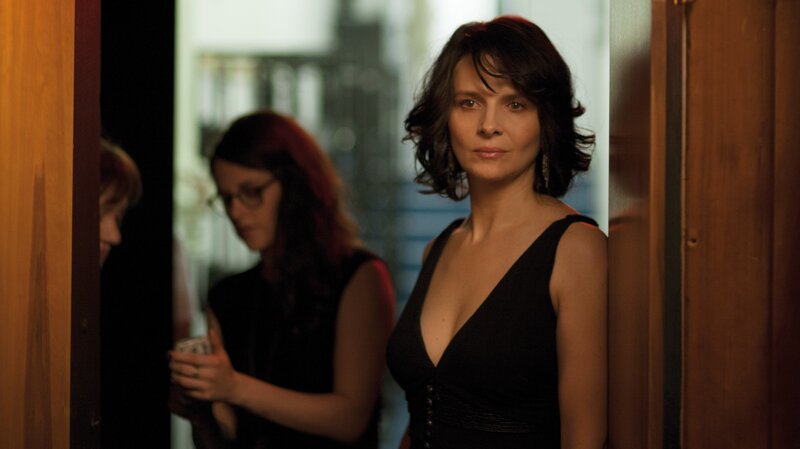
Maria Enders, much like Juliette Binoche the actress who played her, is renowned for her work in the film industry. She is famous for many things, however her greatest pride is her breakout role as a young Sigrid in a play, which gave her the opportunity to rise as a star. Of course, her fame would not last as she comes face to face with the fact that she is growing old; a trait which she perceives to be detrimental to her career. This anxiety towards her aging in an industry that is obsessed with the youth, makes her question her legacy as an actress. This is heightened by her assistant Valentine, who seems to be more intrigue with seeing younger actress Jo-Ann who will be replacing Enders’ role in the remake of the play.

Enders’ midlife crisis is of course not surprising, considering that the industry demands so much from actresses like her. However, it is through the consonance of the play and Enders’ own reality that we truly see her struggle. Often times, her reading with Valentine feels like it’s the real thing; that the characters of Sigrid and Helena become real through Valentine and Enders. You also begin to wonder if Valentine is truly helping Enders or if she is actually contributing to Enders’ growing anxiety. One thing cannot be denied though, that is, the chemistry between the two actresses. With such mesmerizing performances, the audience is left to wonder in the philosophies of aging, time, and modern pop culture. Slowly though, we see Enders get lost in her own fears, almost acting childlike as she heads towards the clouds. After Valentine’s disappearance, we see Enders fall into background; almost as if she wasn’t the star of the film anymore. We focus on Jo-Ann, whose life is again bombarded by paparazzi, replacing Enders’ spot as the main focus in the film. In the end, it seems that Enders have come to accept her fate, and simply stays quiet as she watches Jo-Ann’s tabloid-popular life unfold.

Suspiria: A Postmodern Classic out of a Modern Classic

Related image

There’s a telling moment in Suspiria’s 2nd act where the invisible line that connects the film to its predecessor seems to be severed – the iconic sequence wherein Olga is savagely destroyed by Susie’s prowess as a dancer, by way of witchcraft. The sequence boasts of the nightmarish giallo bloodlust of the 1977 original, but tonally, the violence doesn’t have the raw cathartic energy of it. The sequence as a spectacle is coldly executed, calculated the way a dancer or camera moves, and creeps under a person’s skin rather than cutting into it, in terms of the bluntness of its horror. These key differences are what make Suspiria 2018 an entirely different beast from its mother, Suspiria 1977 – and the brilliant changes made to the tale work on both narratively enriching and meta levels.

Luca Guadagnino, the director (who was last known for directing Call Me By Your Name, making his choice to direct this remake a turn), believed that his rendition of Suspiria wasn’t an exact remake, but rather a homage to the original and the feelings seeing it incited in him when he was younger. This explains key differences in the styles and atmospheres of both films – Most notably, Suspiria ’77 was shot, filtered, and edited to be as raw and colorful as possible, with an equally overwhelming metal score, while Suspiria ’18 is devoid of any warm or characteresque color, and scored with a somber, primal electronic sound. the He adds to this reimagining several contextual elements that enrich and frame the original story in a more throught-provoking light: the sociopolitical backdrop of Germany’s division (mirrored in that of the school’s matrons), the idea of past trauma shaping or driving a person or an institution (something Dr. Klemperer’s subplot revolves around), as well as the twist that forces viewers to question the film in its entirety in relation to Susie’s status as a meek ingenue.

Both films follow the skeleton of a young dancer (Suzy/Susie) joining a school of dance (Ballet in the original, Modern/Interpretive in the remake) only to find that the school is run by a coven of witches (hag-like as in fairytales in 1977, and unsettlingly realistic and bureaucratic in 2018). What’s refreshing in this update is that the stitches between witchcraft and dance are sewn tighter and are stronger in relation to advancing the plot. Whereas the original Suspiria used the dance school as a front for the evil underneath, this version makes it clear that, in the context of the central coven, dance is witchcraft, whether the girls performing know it or not (as Patricia, then Olga, then Sara, unfortunately find out), with the acts of choreography they work to perfect connecting them to a greater power, the earth they take their strength from, and their own capabilities as women and witches.

Guadagnino’s thematically rich, non-exploitative look at a coven of witches as a microcosm of sociopolitical divisions and how people look to violent, powerful figures for stability doesn’t sound like the Suspiria anyone under 20 grew up with. But his hijacking of a horror story from recent history and inoculating it with a realistic, social horror within reach is what makes Suspiria (2018) the kind of horror film audiences today look to for a satisfying representation of these similarly chaotic times, in the same manner any of the women victimized by the film looked to the revealed Mother Suspiriorum – for justice, or for rest.

Related image

Holy Motors: A Performance Piece

Denis Lavant

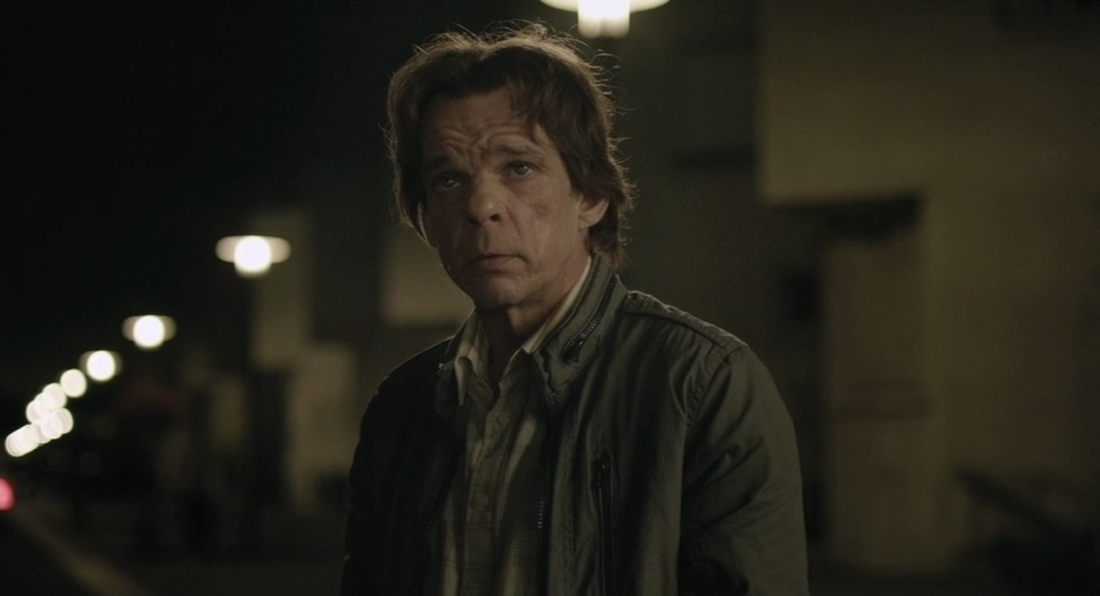
Holy Motors is a film that was not particularly my cup of tea, but still one that I rather enjoyed studying. Like the other European films we were required to watch for the class, it was far from the customary, but it was still much weirder than all the other movies presented to us. It didn’t really have a plot and the character was odd, free of any charisma, and even performing extremely peculiar acts that I was originally completely repulsed by. At first, I couldn’t sit through the off-putting acts the character was engaging with like the random 3D sex, biting off someone’s hand, licking a woman’s armpit while blood was coming out of his mouth, etc. It’s as if the movie wanted so bad for people not to like it that it decided on the nastiest things someone could do and made the character do it. However, I realized that beyond the weird acts that were committed by the protagonist, the film was a study on performance, and how an actor’s talent still remains an essential part of cinema.

Guillermo del Toro once talked about the genesis of cinema rooting from theatre, costume-design, set-design, and other forms of art which pale in comparison to what people notice in movies now, such as screenplay and cinematography. By abandoning a comprehensible plot and grand special effects, the film allowed other art forms to take center stage. The movie focused on complex a complex performance with brilliant makeup and costume-design showing that even without a coherent story, other art forms can still stand on their own. It kind of reminds me of how other paintings do not have to be thoroughly analyzed and squeezed for an interpretation and history, when they can be appreciated for what they are. Some modernist paintings require us to take a step back and just appreciate them organically and I think this movie is making a modern movement that mimics that statement as well. It’s sort of similar to how L’Avventura abandons the importance of a plot, only this is more dedicated in truly not having a driving force of a story.

I was surprised with the scene of the protagonist suddenly picking up his daughter in the middle of the film and acting like an actual father with real questions that a real father would ask. I thought that that was really just him picking up his daughter in the midst of all the performances he had for the day, instead of it being just another acting gig. But after watching the scene with the niece who turned out to be an actress as well, I realized that the daughter might have been an actress too. However, the idea that the daughter could be real and that ordinary life is situated in the middle of all the madness seemed more appealing to me. I think it symbolizes the possibility of grappling the absurdity too in our day-to-day lives because they can exist side by side with the mundane.

The conversation in the car with the random old man also striked me. He mentioned doing what he does simply because of the act itself. However, he was specific in naming the change of the size of cameras nowadays as the reason, but I think it symbolizes how modernity is changing how art is. Nowadays it’s more common to lose the sense of creating for creation’s sake because of how fast the world is moving. I think it’s the creator of the film also talking to us about how he sometimes does not believe his works anymore because they no longer feel real to him. This is also supported by the character continously getting mad at lying (getting mad at his daughter and to someone named, “Theo” for lying). It contrasts how acting is basically making an audience believe in something that is fake, but talks about how acting in it’s own way is honest in essence because of how much artists of the craft believe in it.

Although despite all these musings about the film, there are still so many things that confuse me such as the monkeys, the talking cars in the end, and the significance of a driver to the point of even showing her put on a mask. But despite all the ambiguous things in the film, I can’t help but appreciate it’s dedication in shining light on the importance of performance in cinema.

Volver: All About My Mother, Sister, Daughter, Neighbors, et al.

One review of Volver on Letterboxd simply says: “I think men have like… maybe ten lines total in this entire film. I feel refreshed and rejuvenated and ready to give back to the community”. Though intended as a joke, I believe that the line resonates with the main plot thread of the film and where the women in the film go right and wrong in finding their way to building new connections with one another.

Image result for volver

Pedro Almodovar is a director whose trademarks have always been well-written female characters, telenovela plotlines taken to an entertaining extreme, and a tonal mix of snappy comedy and somber drama unique to only him. With regards to these elements, Volver might be considered peak Almodovar.

Volver’s female-centric narrative keeps its viewers in a state of disbelief regarding its treatment of men and how the film smoothly crafts a world where women thrive in spite of them. For a film that begins with a murder and a death, the stakes are kept rather personal for the most part, with the murder becoming a subplot that’s treated more like a nuisance than a major development in the story. The treatment of Paco’s death even comes off as unwitting retribution for the phenomenon of “fridging” in mainstream cinema, wherein a woman is killed off to further a man’s plotline by motivating him with grief. Here, the concept is reversed: Over the course of disposing of his body, his wife Raimunda stumbles on opportunities to begin a new, independent life for herself and her daughter. The men in the film, while posing threats in the past (as is the case with Paco and Raimunda’s father), are inconsequential and easy to handle in the present – the women of the film and their complicated relationships with one another dominate the narrative.

Volver’s great accomplishment is pulling this off without romanticizing the idea of “female relationships”. The relationships between all the women, at least intiially, are fraught with judgment of, and tension with one another. Raimunda and Paula have a typical nagging mother-rebellious daughter dynamic, All the adult women treat Soledad with contempt due to her status as a divorced woman living in the shadow of her imperious sister, and Agustina is desperate for the emotional support of the rest – their only connection being the shared demise of their parents’. Irene’s titular act of returning to the rest of her family, while out of left field, becomes the choice changes all these dynamics for the better. The movie is centered on this untangling of dramatic knots, despite also featuring a murder, subsequent coverup, illegal business practices, and a dark backstory involving incest and arson.

Image result for volver

Volver might as well be called the first great modern female-centric film. It follows a 20th century tradition of well-crafted films about, and for, women such as Terms of Endearment, 3 Women, and 9 to 5. Volver even seems to take plot points directly from these films. However, Volver is original in its kitchen sink approach to women in conflict – these women could be your mother, sister, daughter, etc., and they may hate one another, but despite this, a uniquely female sense of camaraderie is palpable.

What is a Perfect Human?

Lars Von Trier tortures his personal hero, Jørgen Leth, in The Five Obstructions challenging him to recreate his 1967 short film, The Perfect Human, in five different ways. Throughout the film, Von Trier presented five different ways of obstructing his favorite film describing it as a masterpiece already, and should only be subjected to getting “ruined.” Leth agreed at the beginning saying a a good perversion can cultivate but soon found himself suffering over the impish rules Von Trier had set out for him to follow. Both The Perfect Human and The Five Obstructions itself are pieces completely unknown to me previously that I was confronted by this film completely free of any presuppositions on how it was going to be. I was completely glad that that was the case because prior to that I haven’t had a movie-viewing experience like that in so long wherein I anticipated every second intrigued on how the film would play out. At first I found Von Trier condescending and couldn’t stomach the self-righteous way of speaking he was using towards his supposed “hero”. But the more I watched, the more I came to admire the way he was only challenging Leth’s creativity by daring him to rethink a work already so familiar with him, and even one that he’s already satisfied with. The film formulates the question of whether rules restrict creativity, or simply enhance it begetting the individual to think innovatively within the walls of his or her limitations. This was especially shone light upon during the third obstruction when Leth was asked to make a film completely free of restrictions. It rendered the question, is it harder to work with following a list of constraints, or is it necessary for creation? Although both circumstances, whether with limitations or without, Leth was still able to create crafts so beautifully, I felt that he was learning more and more from each obstruction.  He grew each time he reinvented his magnum opus, proving that our best works could still be challenged, and should be challenged. It is the only way we can grow without playing victim of being too satisfied with ourselves hindering expansion of our art.

Jørgen Leth

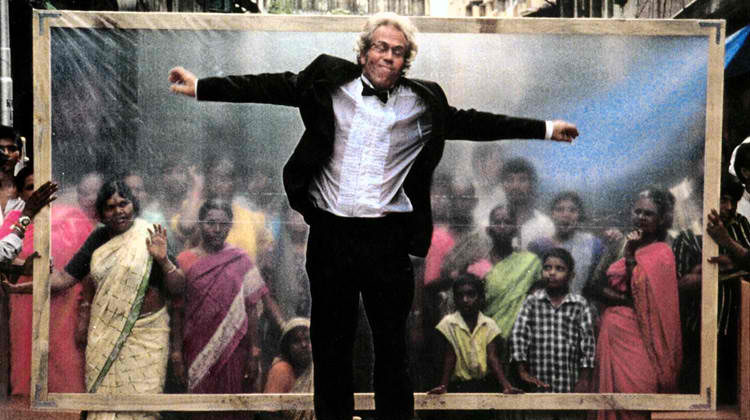
Regarding creative decisions made throughout the film, I was completely impressed with the idea of using the transparent screen in Bombay for the second obstruction despite Von Trier disliking it. I think it emphasized the merging of the perfect human with the real world. The concrete reality were the people framed behind the screen and the perfect human was not completely out-of-reach from them, but just on the other side. It supports Von Trier’s desire for this film to minimize the distance between the perfect and what is truly human. Another factor that I loved from this film was how, even if there was tension between the two characters, it was hard not to agree with both of them. Von Trier wanted to challenge Leth to create a “crappy” work and told him that he’s already a genius, so he shouldn’t be satisfied with that and forever be in competition with himself, he should seek beyond and receive “therapy”. However, Leth found this completely impossible saying, “We can’t help becoming instinctively involved looking for a solution that would satisfy us” pertaining to his decisions concerning his craft. I think it’s a poetic parallel of life and how sometimes, despite our desire to let go of wanting to be perfect, it’s in our very human nature to look for the perfect, and that is just what simply is human. The film concludes with the fifth obstruction requiring Leth to give his name to Von Trier completely and allow him to be the one responsible for creating the final short. I was completely aghast with that request wondering how it would ever be possible for someone to completely let go of their work and pass it onto someone releasing all proprietorship over it. But it made me realize that that is what art entails us, to learn how to completely let go. Because once we’ve released a craft that came from our own ideas our own inspirations and release it into the real world, it no longer belongs to us but to the world. Because no matter what, beauty is always determined by the beholder.

Moreover, the movie was more than a study on creativity, but a study on the person himself. From how far he’s willing to go for the sake of creation, to the degree of perversion he could endure that could separate him from his idea of art and himself. Because even with his resistance to being dull and obsession with being “perfect,” Leth is just delivering what it means to be human. The film wanted to study the bridge between perfect and human and Leth is a perfect example of someone bridging that gap.

Eccentric or Simply Perfect?: Reflections on Holy Motors

If you would ask me what’s the weirdest film I have ever watched, I would say Persona by Ingmar Bergman. But then we’re shown with Holy Motors by Leos Carax which features very different stories, all of which are encapsulated in a bigger story that is as mysterious as the ones we’re shown. It is both confusing and stressful to watch because you’ll never know what to expect after the character Oscar finishes one of his assignments. It goes light at first, but each tasks become more difficult as Oscar is faced with many dilemmas including killing and getting killed. Yet, it is also fantastic how after all his struggles in each dramatic task, you see him alive and wanting to do more.

Despite it’s very eccentric scenes, one thing that really kept me interested was how the actor for Oscar was able to act so perfectly, even though as if each scene were filmed for different movies. It was thrilling to see what the actor has to offer because each task he had to accomplish was weirder than the last. For a man who could enact a scene so dramatic like the scene when he was on his deathbed and then switch to an erratic leprechaun who was borderline cannibalistic-slash-herbivore, all I could say is that he is by far one of the best actors I have ever seen. It is also perfect because it was as if he was playing his own life as Oscar, except it was in a more imaginary alternate universe where cars discuss about the philosophy of their existence. It is through this that I saw the dedication necessary to be able to execute such scenes, and the film never fails to show this. Although the scenes during his breaks in the car were mundane compared to when Oscar is in action, these scenes for me were the strongest, because it is where we see the real Oscar. It is where we see him transform, and in this transformation, he becomes so alluring because it is as if he’s still acting even when he is at his most vulnerable. Such scenes for me were the most dramatic because it is here when we try to figure out what is actually Oscar’s life and why he is doing such things.

One thing is certain in this film, it is the dedication necessary to practice the art of acting. Although of course, it seems that this film is on overdrive because the dedication shown is to the death. But, Oscar, for some mystical reason, cannot seem to die even after being shot when he attacks a man who looks exactly like him. I think this could indicate that despite the taxing job, actors live in through it. Their love for the art is what makes them continue, even if the job gets harder and more haunting. That being said, the passion seen in Holy Motors as expressed by its main protagonist is what made me love the film. Despite his odd and almost horrifying scenes, you can’t help but wonder, what is he going to do next?

Clouds of Sils Maria: An Actress, An “Actress”, & Kristen Stewart

Image result for clouds of sils maria ending

Are celebrities people who truly earn their accolades, status, and our respect? Or are they mostly hollow mythical figures elevated by a less-than-artistic need to seek drama from a public figure? This is one of the questions that Clouds of Sils Maria asks through its central character, Maria Enders, and those around her seem to be a measure of what the answer to that question is, in relation to Maria, her work, and her status as veteran actress and aging woman.

Each woman the film focuses on is indicative of her generation in a professional setting. Maria, of Gen X, is accomplished in her own right, having built a career during a less postmodern, traditional era through breaking through with a modern, efficient style of working, specifically in the area of acting – she manages to balance both a career as a serious theatrical actress, as well as a successful Hollywood actress working in the mainstream (what she must refer to as a well-paying side gig). Valentine, on the other hand, like most millennials, seems to find herself stuck in a job that doesn’t force her to change any aspect of her distinct and youthfully cynical personality in her pursuit of accomplishing her work as an assistant efficiently and tactfully, but seems to demand more of her at a personal cost than any other job might – and she begins to resent the tasks she’s chosen to accomplish more and more with each day that passes. Jo-Ann Ellis, meanwhile, representative of the burgeoning Gen Z, incorporates her personality, image, and youthful potential as a professional tool, which works to her advantage, despite the chaos and judgment that invites.

Image result for clouds of sils maria

While Maria represents a Yes to the 1st question at the beginning of this essay, and Jo-Ann seems to be a Yes to the 2nd, both women display depths that contradict the answers to those respective questions. While Maria is a refined, classically trained, and methodical actress, she is also complicit in creating a dichotomy between artistically sound, “real” actors, and image-based cash cow mainstream actors. Jo-Ann, on the other hand, questions that dichotomy on the basis of her actions. Yes, she is a young woman whose beauty, scandals, and provocative personality are tenets of her celebrity persona, but she proves herself to be an intelligent, cultured, and tactical artist underneath the façade as well.

The film follows Maria Enders at the end of one era of her career, and the beginning of another. Her relationships with Valentine and Jo-Ann mark the former and the latter, respectively, and both force her to come to terms with her views on the craft and business of acting, her status as an older woman in the face of younger generations coming into their own, and what will become of her once she figures out how she’s changed in relation to these things. As for the answer to the question that began this essay, and how the film answers it – Actors like Maria or Jo-Ann either care too much, or not at all about these questions, but what matters in the face of either answer is a need to be relevant, as artists or as living myths.

Image result for clouds of sils maria ending

Heavy Trip: Metal At Its Softest

Heavy Trip’s protagonists are impossibly soft and adorable. For all the odes to Satan they sing and accompany with the raw, threatening sound of pure Nordic Metal, the band is as laughable and foolhardy as their band name, Impaled Rektum implies. However, the film takes on a journey that changes them into the men they want to be, men lauded and vilified for their power as artists, which until the film begins, was trapped as potential in a small town known best for its flowers and livestock – the perfect origin story for a band as hard as theirs. The catch? Their journey is one that makes them twice as soft and deluded. But it’s also one that makes themt wice as lovable as they already are.

Not much can be said about Heavy Trip’s artistic qualities as an entry in the highbrow, intelligentia-controlled canon of European cinema. The film is an approximation of the mockumentary-like Rock n Roll road film subgenre that’s flourished in the mainstream of filmmaking since the time of This is Spinal Tap, a trend continuing into films as recent as Popstar: Never Stop Stopping. However, like another film seen in this class that initially looked like a wrong turn, Good Bye, Lenin!, Heavy trip actually proves European Cinema’s ability to fit into the mainstream without tarnishing the name of European Cinema as we know it.

By taking the adventurous formula of films like Get Him To The Greek and combining it with a look into a group of grim but impossible-not-to-love outcasts as seen in What We Do In The Shadows, and placing this blend into the context of petty, overly-polite Finland, Heavy Trip is able to transcend its status as a slapstick comedy intended to be consumed and discarded by mainstream audiences. The film is a look into a subgenre that is, as presented in the film, smacked with the juvenile labels of freakish or weird and presenting how this manifests in a tongue-in-cheek traditional European setting. If forgettable, Heavy trip is at least lovable for as long as you can stand listening to its upbeat, outlandish sound and story.

Fourteenth

Suspiria (2018) by Luca Guadagnino

Having watched the original Suspiria from the 70s I have already had an understanding of the plot of the movie. Witches and dancing. But after watching the original there was something that I found lacking, the dancing itself. The original was great as it was very nice with so much vivid colors in the setting and how it was edited which was very different from how the remake was, very gritty and neutral colors were used. But what I loved about the remake was all the dancing. How the choreography was used as some sort of witch spell that was used to control, as a weapon. Such as in the scene of Susie dancing which was cut with Olga having her body crushed and distorted by some mystical force (one of my favorite scenes) was so organic and beautifully made and shot. What I liked about the movie as well was how there were random zoom shots that made the scene more eerie and confusing. The dream sequences that were split with random images of hair clogged toilets, bloody faces, and weird colorful wispy clouds that hovered over Susie.

This movie was AMAZING. The kind of horror that lingers, not over the top and simply too gore-y that you cant unsee or even making it hard to look away. Everything about the movie was masterfully crafted with its costumes and colors that helped set the mood for the scenes and the movie overall but also the actors and their incredible acting. What I was so amazed with was the twist in having Susie as actually Mater Suspiriorum because it seemed so impossible yet possible at the same time all from the actions of Susie even from the beginning of the movie when we first see her in the train station with the sign Suspiria above her head which other than being the title of the movie could have helped us piece together the fact that she was Mater Suspiriorum. Dakota Johnson as Susie was actually pretty good especially since I only knew her from THAT “BDSM” movie. And ofcourse Tilda Swinton can absolutely slay anything that she has to do. Comparing it to the original may not be right but I cannot help but love the remake more as other than it having more dancing which I appreciated there was more depth to the characters and a better backstory for Susie which was cool.

In the end I would very much recommend this movie to horror geeks and just cinephiles in general. This is such a great movie to present what horror is all about. Having it linger on you with all its creepiness and gore is unable to be brushed off anytime soon. I’m happy that this was the last movie I got to watch for this class and I’m truly going to miss having to watch films weekly. But in the end yes please watch Suspiria because it really is such a great horror movie.

Raw: How To Be A Maneater

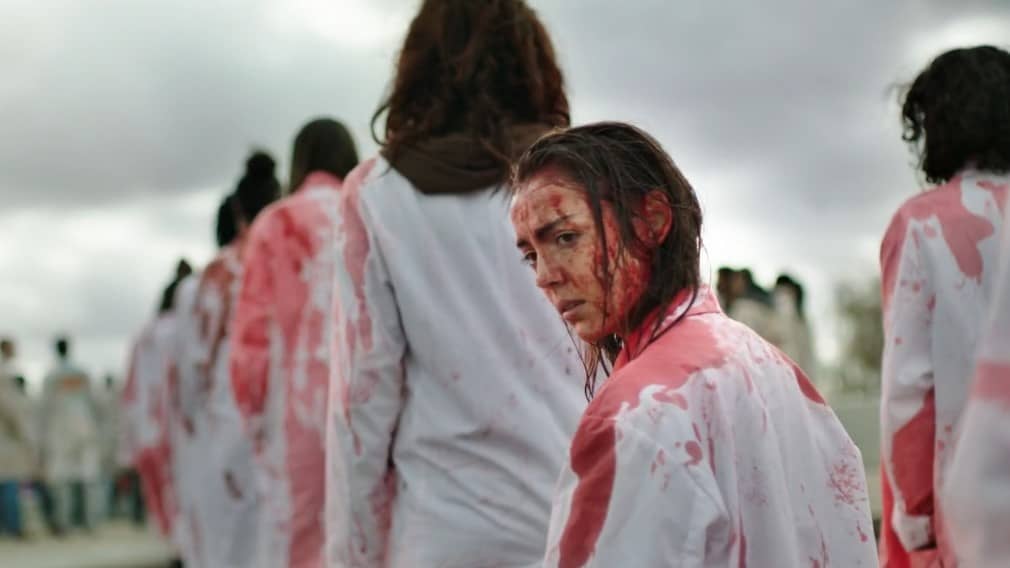
Raw can be described as “Rules of Attraction, except that the Attraction is Cannibalism”. The film contains hallmarks of all the college “horror” stories before it: It’s a tale of corruption, hazing, and submission to a brand new, soul-crushing norm that highlights how sexuality, hedonism, the need to belong to an exclusive group, and how your given circumstances can work against you are all used to unnerving effect in the campus context. But alongside this all-too-real tradition of coming-of-age films, Raw adds an element of true, outlandish horror: A female-centric cannibalism.

I name the affliction of cannibalism that the characters face in Raw as female-centric due to the affliction’s ties with the main characters’ relationships to their own femininity, as well as how their acting upon it serves as a response to the treatment of women in realistic experiences they go through. Raw is described as a feminist horror story, and the film succeeds in earning that moniker by plot alone.

Image result for raw 2016

Raw juxtaposes Justine’s descent into cannibalism with her ascent into modern womanhood, as prescribed by those around her, the most influential instigator of Justine’s decline being her sister Alexia. Alexia serves as both a beacon and a model for Justine to strive to be. Alexia is a headstrong, edgy survivor who knows how to have a good time and clever enough to get what she wants out of people. But from the start, Justine and her circumstances make it impossible for her to fit in on all accounts without (literally) ripping out a chunk of herself. And so she almost does, but her strongest differentiator from Alexia – her self-control – is what saves her from declining to the state of animalistic indulgence her model of cannibalistic behavior does at the film’s conclusion.

The film furthers its central metaphor by framing the plot around the hazing of Justine and her peers to fit into a heirarchy of unflinching, resourceful veterinarians-to-be. The unertaking of how a social imperative to become a supposedly practical & empathetic caretaker is implemented by way of trauma is a process familiar to med students and women alike. The cannibalistic metaphor also highlights how expressions of feminist behavior are often regarded by those opposed to it as “incisive” – constantly biting into parts of society that are unjust in order to highlight the injustice that calls for a change.

Image result for raw 2016

As its protagonist discovers she must at the end of the film, Raw similarly finds its own way of coping with the ambiguity and unjustified dichotomy at its core – and does so by reassuring its audience that while this demonstration of violence is over, resolution remains open and in what each viewer can imagine. One can only hope that Justine is able to break a cycle on the basis of the character and resolve she displays throughout the film, but as she can see from what her mother, sister, father, and the systems they’ve chosen to be part of can tell her, a woman can only make it so far in a man-eat-man world.