The Edukators: Annoying Yet Enjoyable

Hans Weingartner’s The Edukators (2004) is one of the better movies we’ve seen in the course. Yet again we see Daniel Bruhl in a film, now playing the role of Jan, which is somewhat of a similar setting in the other film we encountered him in but on the opposite side of the spectrum. Jan and Peter are the “Edukators” that the title pertains to. They are anti-capitalists who infiltrate rich people’s houses, not to steal anything, but rather to rearrange their crazy expensive furniture. They also leave a note which seems to be their “signature” in their form of art just to identify that it was the edukators that had made this nuisance of a mess.

Coming from the perspective of someone who just got out of their immersion, it was quite confusing to me as to what these people were complaining about. These were people that actually had homes live in, beds to sleep in, food to eat, and clothes to wear. These “edukators” weren’t really poor in my eyes. They looked like the people from the middle class that were fighting for something that they barely had the right to complain about. They seemed to have been living a life that was probably more comfortable than most. I had much disagreements with the manner of which that they were addressing the problem as well. I understand that they feel like they are at a disadvantage compared to the rich in the game of life, but there was something about their methodology and their intention that didn’t feel right. The fact that they had to break into a house and mess up the things that could have sentimental value to certain people just to make them feel scared did not sound quite pleasant to my ears. Hardenberg captures it the right way as he spends his time with these people after he was kidnapped, when he mentions he understood what they were fighting for but also does not like the manner of how it is approached by the group.

Somehow the movie turns into one crazy love triangle. As Peter leaves for his trip to Barcelona, his girlfriend, Jule falls in love with his best friend, Jan. I felt that the movie was beginning to attempt to make the audience root for the new couple but clearly it was quite difficult for the class to do so as it wasn’t within a normal person’s morals to be able to cheat on someone they had actually loved. It even annoyed everyone when there were moments that the two were getting “kilig” and it was not so hard to understand the reasons as to why it was something, we would not be appreciative of.  Somehow and some way, Peter is able to forgive his Jan and Jule as they continue to live their lives. This just confused everyone in way that it was funny.

Despite my disagreements, it was easy to appreciate that the movie was made in a “clean” way. I have no arguments as to how it was produced, and I did not feel like in any point in the movie that it was rushed. It was not that complicated for me to be able to understand. It was even entertaining to watch with friends as there were much laughs and forms of confusion together regarding the crazy love story.

Daniel Bruhl never fails to impress me with his acting. I suppose that’s why he’s seen in bigger Hollywood films such as Burnt. His work is a testament as to how you can simply make it to the biggest stage as long you remain consistent with the major roles offered to you.

Overall, I found the experience of watching the film in class quite enjoyable despite the many disagreements with the plot. I hope we have the same amount of fun watching the last few films we have in the course.

The Hunger Games

Raw (d. Julia Ducournau; 2017)

Without a doubt, Raw was the most disturbing movie of the class thus far. From people just outright yelling to people audibly gasping and looking away from the screen, it was certainly something that will remain in my mind for quite some time. And yet a few days after watching Raw, the more I realize that the film was more than just a movie meant to disturb or terrify. In fact, now that I think about it, Raw may also be a coming-of-age movie of sorts, although a bloody and violent one.

The main storyline of the film can be summed up in a simple sentence – and IMDB honestly nails it: “An innocent teenager, studying to be a vet, develops a craving for human flesh.” That’s the basic premise of the film, with the rest of it mainly concerning itself with how she reacts to this newfound craving and how her personality changes, most especially how the lead character handles her relationship with her sister and her attraction to her roommate.

I mentioned that the film almost might be a coming-of-age movie, and the reason for that is that after the main character begins her cravings, she begins to act much more liberated. Instead of being soft-spoken and reserved, she is more outgoing and impulsive. Once she wants something, she does anything to satisfy her cravings and it’s almost as if the movie is commentary on how one giving in too much to their urges is too much. 

In fact, one of the more disturbing scenes in the film that actually contains no violence is a scene where the lead performs a dance in front of the mirror. She puts lipstick on, dances provocatively, and even outright kisses her mirror multiple times, all while a French pop song with a disorienting techno background with lyrics involving extreme sexual undertones plays. It goes to show that as much as her cravings for actual human flesh have come to the surface, so to have the other kind of cravings come to her life. Another is when she looks longingly at her roommate playing soccer. From the way she stares at him and her nose begins to bleed, it is almost uncertain if she is looking at him in the lens of attraction or the lens of hunger, and the dizzy and zig-zag camera work helps make this scene feel uncomfortable to watch.

It is this duality in violence and coming of age themes that makes Raw a unique movie to think about. While I definitely think that the violence and gore alone makes it almost a certainty that I do not want to see the film again, it is discussion of the film and thinking about its themes after that makes it stand out even more in my mind as something to remember, and part of why the film is so memorable is this said violence.

The violence of Raw is easily its biggest talking point. It is violent, it is brutal, to the point where I read that the film supposedly made people at Cannes throw up and go to the bathroom. Without mincing words, especially considering the reactions of the class, this is something that I absolutely get. A finger is cut off, part of a lip is bitten off, and full-on depictions of dead animals are shown… and yet the violence of Raw almost feels necessary to show the events of the film. Is it graphic? Yes. Is it brutal? Absolutely. And yet it never feels like blood and gore for the sake of blood and gore. For lack of a better word, the violence in Raw is tasteful and fitting to the film’s tone. It is this almost necessary graphic violence that really drives the film’s themes home.

At the end of it all, Raw is an unforgettable film. It is terrifying in its violence, thought-provoking in its themes, and all-in-all, this is certainly one of the more uncompromising and graphic views on growing up and coming of age.

no longer vegetarian or virgin

Julia Ducournau’s 2016 film, Raw, beautifully and disturbingly captures the emergence of a young teenage girl, Justine, as she balances her first year in college with her new-found love for human flesh. Unsurprisingly, Ducournau’s portrayal of cannibalism is extremely grotesque, with dozens of shots of dismembering, tearing-off, and biting at. I, myself, someone who is fond of horror films, couldn’t handle the gore and had to look away several times. Though this theme has been portrayed diversely in the cinematic film, Raw is unique. The Hannibal series and film portray the main character as a meticulous cannibal who plays smart, while The Santa Clarita Diet series puts a light spin on the whole cannibalism subject. Raw is unsettling in that its portrayal of cannibalism was irrational and animalistic, as implicated by all the dead animals in the veterinary school. It explores indulgences, not just for raw, human meat, but also for sex, alcohol, and other vices. It was a spin on addiction and how the more she tries to deny and abstain from her desire for meat, the more ravenous and voracious she becomes.

No one would think that a film on cannibalism would go hand-in-hand with the themes of coming-of-age, sexuality, and empowerment, but again, Raw impresses the audience and critics by doing just so. You can easily compare how different post-carnivorous Justine is to when she had just entered school. She was a vegetarian and a virgin. Timid, afraid. But as the movie progresses, we see how she starts to explore sexuality and discover who she is. She became more certain and controlled of her actions. Beneath its surface, Raw successfully tackles a young woman realizing who she is and what she wants, albeit, the answer to these are rather extreme and grotesque, like well… cannibalism and raw, human flesh. The director herself, Julia Ducournau, is a celebration of female power. For her directoral debut, she breaks boundaries and shatters glass ceiling by directing a horror film, an incredible one at that—a feat considering how male-dominated the field has become.

The plot of the movie itself started of very confusing. I was confused as to how all of this happened to her suddenly. Not to mention, how weird her school is. What kind of veterinary school initiates their freshmen by dousing them in cow blood and forcing them to eat raw rabbit kidney? This question is never really answered throughout the film, but we slowly start to realize what is happening to Justine, especially when we see her sister do the same things. Towards the end, we are sure now, this is genetic, and the parents knew this would happen. The audience is then left with many ethical and methodological questions, why would the parents let their daughters go to the same school knowing that this would be the outcome? Should the parents have let them know about this inevitable future of theirs beforehand, or let them figure out a solution as they go along? Nonetheless, the film ends on a hopeful note, Justine still has a lot to learn about herself, but she’ll figure it out and be saved.

The Passionate Youth: A Discussion on The Edukators

Daniel Brühl, Stipe Erceg, and Julia Jentsch in The Edukators

When we think about European cinema, visually striking, interesting, and artistically challenging films come to our mind. We view European cinema as a revolt against the entertainment films of Hollywood. It is no surprise, then, that films such as Godard’s A Woman is a Woman and Carax’s Holy Motors capture our attention because of the focus on aesthetics. Therefore, stumbling upon the 2004 German-Austrian drama film The Edukators was a surprise. Directed by Hans Weitgartner, the film revolves around three young anti-capitalists activists who invade wealthy houses in an attempt to open their eyes to their privileged lifestyles.

Rather than focusing on the visuals, the film highlights the script, specifically the storyline and the critiques on society. The style is minimalist, which prevents the audience from getting distracted from the characters and their situation. In examining the film, we realize that the focus on politics and social issues is another facet of European cinema that many students are not aware, but should be because by depicting reality and the effect of systems to common people, European films become a response to Hollywood films that only present happy endings and often romanticizes the violence and suffering when showing how a country deals with social issues. The Edukators was realistic in a sense that the youth had the courage to change things, which we also witnessed in our country in the past. The film also presents Hardenberg, who represents everything the young activists hated about society, but eventually revealed that he was just like them before. Hardenberg, then, becomes a cautionary tale to the audience to show how easy it is to lose our grip on our ideologies because of our experiences in life. He longed for security and in doing so, he embraced capitalism.

Young people standing up for their beliefs and lecturing an adult is not what others would consider entertainment and an avenue for pleasure; but in portraying strong, free-thinking individuals, Weingartner succeeds in provoking our ideologies. He does not push for a propaganda film, but provides equal opportunities for both sides to be heard and allows the audience to think for themselves. He opens up a room for discussion on issues we shy away from, such as capitalism versus socialism, instead of telling us too choose one side over the other.

Amidst the politics and social issues, the three young activists fall into a love triangle. In the past films we watched in our European Cinema class, romance was never really emphasized, in contrast to Hollywood films that usually revolve around romance plots. Surprisingly, we get to see romance as we know it in The Edukators, which created depth rather than ruining the film. Others may view it as unnecessary to the storyline, but I believe it adds another layer to the characters and makes them more real. They are not just caricatures with political statements or propaganda; rather, they are humans that have authentic relationships and emotions, who make mistakes. They are flawed, just like the society they live in. By shedding light on politics and social issues through the use of authentic characters, dialogues, and locations, The Edukators allows the audience to think about their about their beliefs and the society, instead of simply providing entertainment. Who would have thought that politics can become part of our roster of interesting, artistic films? European cinema is, indeed, a breeding ground for all sorts of storytelling and films.

The Edukators

In Hans Weingartner’s The Edukators, the audience is opened to the political and ideological discussions happening in their country. The film centers on three characters, Jan, Jule and Peter, who are young people opposing the capitalistic nature of Germany. The film was really opening the discussion on relevant political matters, even to this day, concerning the effects of capitalism on the lowers class, especially the youths. The film really fleshed out the youth experience in Germany and how their economic status affects them and how they react. The characters, specifically Jule, epitomizes the youth population struggling in society and with the help of Jan, she is able to externalize her emotions. The film was successful in opening the discussion, but through its use of comedy was able to make it entertaining.

One aspect of the film that was very successful was the chemistry of the four main characters. They were able to embody the specific characteristics of their respective roles that made them interesting to watch. They also played on one another to showcase each other’s personality better to the audience. They were also able to create the  dramatic tension between differing political beliefs and complicated relationship status and combine it with the deadpan humour that really captures German comedy.

The discussions concerning their ideological difference was also a highlight for me in the film because it truly captures the important ideas and arguments. It was really interesting, especially in the case of Jule, on how she was affected by economic inequality rooted from capitalism. This makes her and her friends become radicals in the form of becoming edukators, or people who invade houses to disrupt their environment and make apparent that their bourgeoise living was not only bad but also not permanent. This radicalism is interesting to see unflod due to the u just structures in our society. The film tries its best to give a human face to this radicalism, wherein they are rooted from personal experience of inequality and injustice. This drives these people to commit these bizarre acts to showcase their grievance to this capitalist society. It was also interesting to see the character Hardenberg, a former radical himself but turned to capitalism when he was able to reap benefits from this kind of living. His character embodies what these young people hate the most in their society. Although they become open to him and even treat him as somewhat as a friend, at the end of the film he proves himself as a capitalist sell out who will never change.

The only negative part of the film is that compared to other European films that we have watched, this film is one of the least visually appealing. They use the handheld camera format for the film and I feel it was done to showcase visually the chaos of the lives of these young people. But, even with this interpretation, it was still very dizzying to watch the film and that it didn’t really focus on making the visuals appealing to look at. The film was still successful in other ways, especially through its script that really delves in the characters and the topic at hand.

Enrico R. Barruela COM 115.5

The Edukators

I found the film entitled Edukators is a very interesting film because of how it brought out an important theme and problem in today’s society. The story is about three teenagers who break into the houses of the rich and privileged in order to make them snap out of their selfish ways and indifference to the less fortunate. The film brings a realization about progress and capitalism, which is that it does not benefit everyone equally. It is the rich who benefit from this society, while the poor are left to suffer, and the rich seem to be uncaring of these people suffering. The theme of this movie reminds me a lot of my Theology 141 lesson regarding the inequality between the rich and the poor. Thoughtlessness and greed are one of the main roots of this problem because many of the rich just care about improving their wealth and benefiting themselves. Another contributor to this is that majority of the rich do not share the same experiences as the people suffering, and so it leads to the mindset that “if I am not suffering or being affected then it is not my problem”. This division and isolation from the poor leads to a inability to empathise and relate. One example of this from the film is Hardenberg whom they kidnapped because Jan knocked him unconscious for attacking Jules. When they take refuge in cabin, it is revealed that Hardenberg was a radical as well before in the 1960s and even the leader of the Socialist German Student Union. After marrying and getting a good job he later lost his ideals. Then later in the film we see that Hardenberg character starts changing and going back to former self. He even forgives Jules and promises her that he will not make the police come after her. This new experience for Hardenberg made him realise that he is not entirely happy even with all his money. He was able to reflect and change his mindset that a life full of riches does not bring meaning.

This film teaches us what wealth and material objects can really influence our perspectives in the world. It can close us off from caring about other people and our relationships. We may think that we need more money and possessions to be happy, but in the end we will not find meaning here. The film also shows how changing society can really be a struggle and even seem impossible. We saw how Hardenberg was a radical as well in his youth, but as he got more successful he succumbed to the temptations of wealth and greed. It makes the quest of the three teenagers seem like just a dream because of how imperfect society is. This film sends us a message to really reflect on today’s society because it is not a task that only three teenagers can solve. We need the cooperation of everyone in society to wake up to these problems and make the resolve to change these unjust structures.

Time Crimes Movie Review

I had low expectations for the film since they said it was a low budget film. I wasn’t quite sure what to expect. I originally thought it would be about a serial killer who was going to attack hector and his wife and that they had to find a way to escape. I even thought that the naked woman was bait for hector to go into the woods so that the killer could murder him. But as the movie progressed, it got more and more interesting. I like to analyze or predict the plot of movies so I was thinking the entire time that the scientist who was helping him was actually the killer just trying to lure him. So when he went inside the “big tub” and the man didn’t follow, I kept thinking ok hector is doomed because he just trusted the other killer. But I was completely wrong. When they introduced the time travel machine, I was more intrigued wondering how it would play out in the movie. I think one of the most shocking scenes in the film was when hector picked up the phone and heard his voice. I thought in the earlier part of the film that this scene wasn’t so important so it kind of really struck me. I was literally like woah! It reminded me of when I watched the movie inception and I would literally get confused about what the starting point of everything was. I think this kind of mind boggling situations just kept happening in the film. Like after seeing the woman in the bike who was the same naked woman in the earlier scene, I just kept thinking oh so this is how she got here. But then when hector broke his face and started wrapping his head with cloth, I realized he had been the man he was hiding from the entire time. This really made me so puzzled and I think at this point I was just really trying to understand what was going on. I couldn’t wrap my head around it and I kept thinking, how is he going to make sure only one hector lives? I felt so bad for the naked woman because she was literally collateral damage, she just happened to be in the wrong place at the wrong time. She was even being such a good person and trying to help out, she really didn’t deserve what happened to her. When hector 3 was finally introduced, I felt a sense of hope thinking ok I think he can save his wife and the naked girl because they were both still alive. I was also really curious about what his plan was going to be. I realized though when he made his wife hide that his wife didn’t really die. But then I was thinking who was the woman that fell then? And then it hit me that in the original scene where hector was trying the catch the woman in the roof, she was wearing the same chucks (converse) that the young woman was wearing. But why did it hector 2 think that it was his wife who had fallen. It all started to make sense in the next scene when hector 3 would instruct the young woman on what she had to do and when he put on the coat and cut her hair. At this exact scene, I felt so bad for the woman. It felt so twisted and deceitful. I already knew what was going to happen and still dreaded it because I didn’t want it to happen. The ending was sort of a cliffhanger where we don’t really know what events would happen. We know that the police was going to come but I didn’t know if they would be able to piece everything together. I really did enjoy this movie, it was one of a kind and completely unexpected. In fact, I find it funny how such a mundane day (which was how the movie started) could become such an eventful and thrilling day. It really did take a turn.

The Edukators

Young individuals – the youth, essentially – fighting against an oppressive, unjust, and seemingly domineering economic structure is a concept that underlies a multiplicity of films under a variety of different genres. Rebellious youth can be found in a range of genres including Drama (Rebel Without a Cause), Drama-Comedy (The Breakfast Club), and even Science-Fiction (Star Wars). What I found interesting about The Edukators was that although the way it was shot was, in a way, very realistic, a brief foray into the characters themselves make it a little bit less so. The three main characters allow themselves to undergo so much risk for the mere act of making a statement – to break into a rich man’s house, risking getting caught, risking getting jail time, risking breaking into the house of a crazy man and getting caught – without any motivation of stealing (despite their obvious need for funds) or other common motivations for breaking in – indicative of the naivety of teen spirit.

The characters, then in a sense, may be said to be quite relatable, and thus is what ultimately drew me into the film. At some point in life, everyone wishes they could rebel, or simply do something about the society we live in and what we perceive to be fair or unfair. Furthermore, the film exemplified throughout its run the message it was trying to bring across regarding power, and the arrogrance and insensitivity of the ruling class. This is done in even the simplest and most minute and seemingly rather insignificant scenes – i.e., the scene where the restaurant guests order Julie to take back their drinks since they were placed in the wrong cup. A small action – a small scene – was able to evoke emotions of rage or at least disgust already inherent within us towards the obscenity of a ruling class that enjoy humiliating the lower people and asserting their power over them.

Furthermore, the introduction of a love triangle, while initially cheesy for me, ultimately sought to remind me that these people – these rebels who do things others normally would not – are ultimately just teenagers, and are human, too, making them all the more relatable despite the rather implausible concept of an otherwise highly-realistic and entirely plausible film. It allowed us to relate to the characters on a level that we could all relate to – of love, and relationships. While it does disgress from the main premise of the film, nonetheless it proves its purpose of reminding us of the characters’ humanity, and of their youth.

If I had one critique, it would be the rather awkward acting and music overlays (diagetic) in the final scenes of the film.

Extra Comments: Now that I understand what the relevance of the song used to distinguish between and show the relation between two significant moments in the film, perhaps it is not as misplaced as I initially thought. I do believe the song choice was still rather odd, although it is, admittedly, a brilliant song, especially in the brevity of using an English song for a European film. Perhaps it was the switch in language that initially bothered me. Nonetheless, given its intent, it was a smart decision from the director, especially considering song’s capacity to evoke feelings and relations within us.

Edukated

The Edukators, by Hand Weingartner, had everything one would want to have in a movie. It was what most would consider as the “complete package.” From comedy, to romance, to thrill, and to social awareness, Weingartner made sure to seamlessly incorporate all those various elements into one film.

The film began with Jan and Peter, childhood best friends that have stuck to each other ever since. Together, aside from their normal day jobs, they comprise the “Edukators.” Without giving away their identities, they are known by the public as a group who breaks into mansions only to leave messages for the owners, never stealing anything. During a trip Peter took, Jan and Jule, Peter’s girlfriend unexpectedly fell in love with each other. This led to Jan and Jule breaking in the house of Jule’s creditor; however, their identities were compromised and this was when all started to go out of control. They had to kidnap Jule’s creditor, Hardenberg, and they eventually had multiple discussions with him about social causes.

Compared to the previous European films seen, I found this film to be the most interesting. The film kept me engaged from start to finish. I believe that Weingartner wanted the film to be influential, and it definitely was. Ever since the beginning of the film, most of the audience surely felt that they were being educated by the Edukators. The film presented various social point of views which kept the audience thinking. Whether it based from the rebellious teens or the experienced businessman, or both, a new perspective on viewing the society was obtained.

Nevertheless, the social message aspect of the film was not the only part to look out for. As mentioned, there was also a great interplay of comedy, romance, and thrill in the movie. Whenever scenes may seem to lead viewers to be being stressed out by the standpoints being presented, Weingartner effectively found a way to strike a balance. An over-saturation of a specific feeling would have never occurred in the film, yet, all are still engaged.

The Edukators

The Edukators (2005) is a heavily politicized film dominated by themes such as the bourgeoisie-proletariat dichotomy, the current imbalance in wealth distribution and proposed reappropriation, and the excesses of the rulers of our highly economized world. With all the movies that we have watched in class so far, The Edukators is most similar to Good Bye, Lenin! not only because of Daniel Bruhl’s excellent acting in both films , but with the infusion of socio-political subject matter into the personal lives of the characters in the film. These cumbersome themes are interspersed within the trappings of daily human life depicted in the movie: complicated relationships, unfulfilling work, struggles to make ends meet. We see in the film that far larger forces are at play in our day-to-day, and they influence the trajectories of our lives immensely. These impose upon us a sense of passivity, a helplessness to the social behemoth that dictates how we progress in the world. The Edukators presents us with a portrait of a struggle against this passivity, how the human intersects with the ideal.

What drives this movie throughout its 127-minute running time are the central characters’ motivations and the execution of their actions. I enjoyed how knowledgeable the characters were of the various realities and injustices being committed by the upper 1% of society in order to retain the power and privilege that they possessed. The passion that they had in battling the oppressions faced by most of society emanated from the dialogues that they had with each other and with Hardenberg, the film’s figure of this 1%. Instilling fear in the minds of the upper class a la The Edukators–breaking into their houses, making a complete mess, and leaving an ominous note–was genius for me. It pushed forth a non-violent yet equally menacing approach to leaving a statement, one that would be imprinted in their minds forever. It was perfect, until Jule and Jan’s erroneous encounter, which completely shifted the progression of the movie. Here we begin to see the frailties of the human person interfering with the idealist actions of the characters.

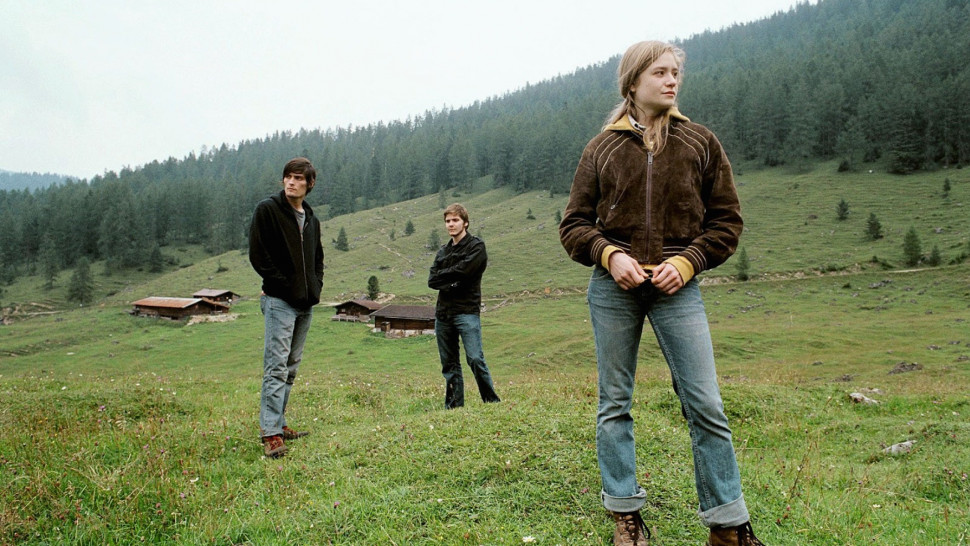
The latter half of the film focused on the kidnapping of Hardenberg, and their encampment in a cabin situated in the beautiful Austrian Alps. In this part of the film, human responses take over as panic surges with the current situation, and tensions were high when Peter finds out about Jan and Jule’s budding romance. Character development is also prominent in the part of Hardenberg, as it is revealed that he was a radical in his youth and fought for the same things as the main characters. We see how these shape the succeeding events, still juxtaposed with discussions on political ideologies among Hardenberg and the three. Given the idealistic tendencies of the movie, we see how life is still shaped by human experiences and our responses to them. Despite political and economic forces ruling our lives, human interaction has the capability to influence our lives just as much. We see Hardenberg giving Jule a letter that waived her debt after that eye-opening second act. It is in interactions such as these where we witness the human in everyone, unadulterated by hegemonic forces.