Good Bye, Confusion!

After four confusing and unconventional film screenings, Good Bye, Lenin! (2003) is arguably the most enjoyable film we have watched in our European Cinema class so far. It’s a fun and grappling display of grit and heart. The enjoyable quality of the movie may be attributed to the fact that it has adhered to the features of dominant cinema with which we are so used to. We go back to Peter Wollen’s essay on these features to assess the movie.

In terms of narrative transitivity, the emplotment of the film’s narrative was digestible and easily understandable. As I watched the movie, I understood why the events being displayed are happening, and why they must happen. For instance, why does Alex exert so much effort in fabricating this world which his mom is accustomed to–so as not to risk his mother’s health. All of the why’s in terms of the plot were answered reasonably by the film.

The movie also had characters which we identified with. Their experiences and emotions are accessible to us, and their actions and motivations are clear–so much so that we find ourselves rooting for their causes. I found Alex to be a particularly likable character because somehow I resonated with his intentions. I bet that if my mother were under the same conditions, I would do as he did in the movie. We identify with his desire to protect his mother, we admire his perseverance despite the disequilibrium of the worlds he is currently occupying, we understand the logic behind his actions. All these make Alex one of the identifiable characters in the film.

The film also presented us with a world in which everything made sense within the context of the world i.e., a single diegesis. The events, characters, and details in the film cohered to a single world. None of the elements seemed anachronistic or out-of-place. It is interesting to note, however, how our main character was sort of inhabiting two worlds in the film, yet we still understand that all of these things are happening within a unified world.

As I mentioned earlier, this film was definitely enjoyable because of how easy the movie experience was given how familiar we are with the way it was made. The comedic moments also gave us a lot of laughs–probably the most laughs I’ve heard in the five screenings we had. The entertainment value of the film juxtaposed with its subject matter is fascinating to me. Dominant cinema, at least as described by Wollen, is characterized by its attempt to escape reality, which is why it’s so amusing to watch. However, Good Bye, Lenin! sort of confronts us with the atrocious realities of European politics at the time. I admire the film’s capability to provide a great viewing experience despite a heavily politicized narrative.

The difficulty I had in watching the film was of a contingent kind. Not being well-versed with European history gave me a sense of alienation while watching the film. Although snippets of historical background were provided throughout, I couldn’t help but feel a little detached from the film. However, that did not prevent me from enjoying myself. Overall, Good Bye, Lenin! was a nice palate cleanser from all of the arthouse-y films we have watched in class so far.
Goodbye, Lenin: Lessons on Love

83894-jqemzeyziv-1520421814The film, Goodbye Lenin! is one of the most comprehensible movies that we were tasked to watch in class, next to A Woman is a Woman. For me, being able to understand the plot of the film gives the viewer a deeper sense of appreciation for the movie. The film was still quite peculiar (I’m starting to think maybe all European films are…), yet I was able to enjoy it much more than the others. The film was comedic, historical, and dramatic all at the same time. While there were times when I’d find myself laughing along with the whole class during funny scenes, I also found myself learning and being interested in the fall of the Berlin wall. Not just this, I also felt sad when Christianne died at the end of the movie. I think the class felt quite sad too as I was able to hear sniffing sounds, as if crying, from the people behind me. This just goes to show how Wolfgang Becker’s movie was successful in capturing the audience’s attention. Personally, the film taught me a few things about different types of love.


goodbye_lenin_0_43_28_360

goodbye-lenin


The first and I think the most obvious one, Goodbye Lenin! showed the lengths that a son would go through for his mother. Because the doctor told Alex that Christianne could not feel any deep emotions after waking up from her 8-month comatose, Alex chose to hide the truth from her. He went through the hassle of redecorating the newly renovated apartment to convince her that nothing has changed. He came up with phony videos with his friend to relieve his mother from her doubts after she saw a Coca-cola advertisement. He even got a taxi driver to play the role of Sigmund Jahn and cause a commotion in a public library. Aside from this, he was patient enough to buy groceries and repackage them every time. Though we can say that Alex somehow manipulated his mother and her surroundings, he did this with good intentions. It’s safe to say that maybe Alex’s motto in life is, “A little white lie never hurt nobody.”

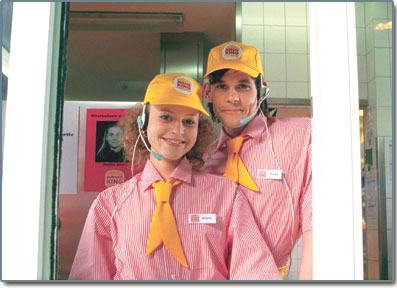
image1357297_origAside from Alex’ love for his mother, the film also shows the characters’ love for their country. Alex met his girlfriend during a rally, that he was willing to be part of and even got beaten up for by the police on national television. His mother, on the other hand, cares for the country and the regime so much that knowing about the changes pose a risk to her health. Despite Christianne’s situation, the film showed how resilient the characters were and how quickly a nation can adapt to the sudden changes in the country. We saw that Alex’ sister, from being a scholar, got a job at Burger King, found a new boyfriend, and redecorated their apartment with new and modern pieces. Meanwhile, Alex enjoyed strolling around with his girlfriend and finding empty houses to stay overnight.

The way Alex allowed his mother’s ashes to burst in the air, along with the firework, says a lot about the message of the film. For me, it symbolizes how change should not mean negative things all the time. We must accept the changes in our lives and maybe even celebrate them. We should let our anxieties and our worries disappear in the air just like a firework.

Goodbye Lenin

In Wolfgang Becker’s Goodbye Lenin we get to be immersed to the culture of East Berlin back then. It’s an interesting film to watch, especially in opening our eyes for how the east Germans lived back then through the facade that Alex was making for his mother. It is also an noteworthy point that this was the most accessible film that we watch so far in class. It was very easy watch and very akin to the movies that we watch in the current day and age. But, even if it was accessible it still had an out there plot that can still be compared to other Europeans filmmakers. It was an interesting to watch a film that basically showcases the culture of a country back the, but adding cinematic qualities to keep it both educational and entertaining.

The first thing that really struck me in the film was the style, which was more similar to the movies we watched that come from Hollywood. Unlike the previous films we watched, which can be considered difficult films to watch, this film was able to convey the story without alienating the audience. It just shows how diverse the cinema is in Europe because there is not distinct style in their filmmaking.

One of the strong points in the film was the story itself. Even though we can deem the film as accessible, the plot is still very out there but successfully executed through the storytelling decisions of the filmmakers. The film was able to translate, what could have been a gimmicky plot, into a film with so much heart, specifically centered on family. The occurrences in the film showed how to depict a quirky family dynamics, with still inserting some historical context of the country they live in. Although the film was able to explain everything, even the context of what was happening in the country during that time, I felt that the inside jokes, pertaining to the culture back then, would have had a greater impact to me if I fully new the lives of the people in East Berlin back then.

Another strength of the film was the charismatic cast of characters that really brought the film to light. The actors were able to convey the quirky sensibilities of their respective characters without making them caricatures. The film had may comedic moments that needed very game actors to fully realize the humor in the scenes. The family dynamic also showed the chemistry of the actors with one another  because they were able to successfully embody being a family, both the fun and the more serious parts.

Lastly, what I like most of the film is that it is very educational without being in your face about the things they want to convey. The film really showed so many things that captured how the people in East Germany lived back then. I also appreciated that I learned so many thing about their culture but I didn’t feel like it was a lecture. They were really able to do it by making the film entertaining, through comedy and its plot structure.

Enrico R. Barruela COM 155.5

good bye, lenin!

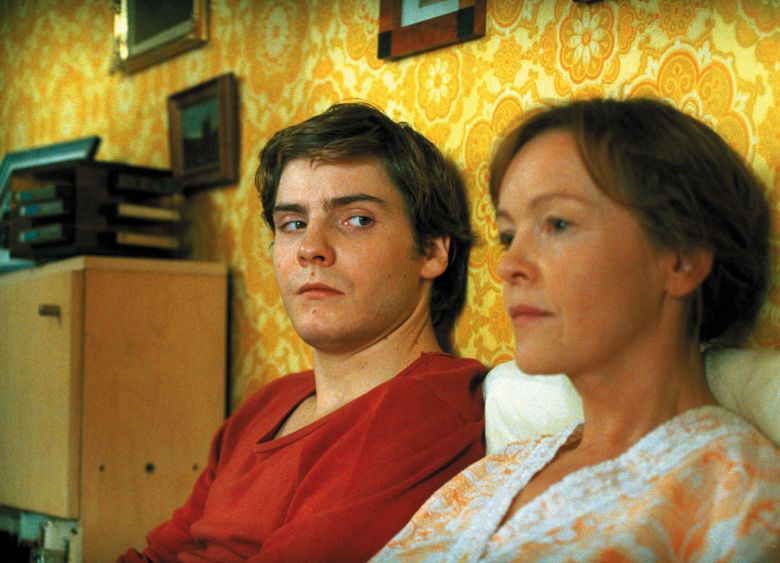
Good bye Lenin! by Wolfgang Becker captures the struggle of a young man named Alex to keep his mother Christiane healthy and alive by recreating the world as she knew it before she went into a coma. Christiane is a loyal socialist from West Germany, and she gets a heart attack and eventually falls into a coma when she saw Alex protesting against the regime. Shortly after this incident, the Berlin Wall falls, the GDR collapses, and Germany is reunited. Knowing full well that this would be a shock and a heartbreak to Christiane who had just awoken from a coma, Alex and his sister Ariane exert extreme efforts to rebuild the old Germany for their mother.

This, to me, is the most enjoyable film we have watched so far in class. Not only is it easy to understand, but it’s also incredibly comedic and subtly but smartly educational (for people like me, at least, who don’t know much about the history of Germany). What kept me hooked throughout the film was its unique storyline; I don’t think I’ve come across a movie with a plot like this one yet. It keeps you enticed because you want to know how much further the children are going just to protect their mother, and also if their mother is ever going to find out about the truth.

To me, the film was all about love and the means that you would go to just to protect the ones you love, whether it be a person or a country. Christiane loved her country so much that she chose its beliefs and ideals over her husband, resulting to her family being separated. Meanwhile, Alex loved his mother to the point that he went through extreme measures to keep her happy and healthy, even if it meant lying to her about the world she lived in and even getting other people to lie to her as well. The love these characters have and give is truly noble, but what made it somewhat questionable was its moral and ethical implication. I understand that Alex just wanted to make sure that he is able to keep Christiane from possible triggers to another heart attack, but how much more lies did he think was acceptable to keep up this charade? How many people would he have to involve to make sure his mother doesn’t get suspicious? Was he just planning on keeping her in her room the whole time? Initially, I was fine with him covering up what happened while Christiane was in a coma, but I was hoping he would gradually break the news to her so she could start adjusting and live normally again. But this dilemma kept the plot more and more interesting, so I slightly kind of wanted him to keep going. Eventually, Christiane finds out the truth because of Lara, Alex’ girlfriend, but Christiane chooses to go along with Alex’ charade. This, I believe, is Christiane’s way of showing appreciation to Alex. Although I’m sure it was painful finding out the truth about the country she ever so loved, she understood why Alex did what he did, and it took that much love for Christiane not to get angry at Alex and let herself die with Alex convinced that she never found out, passing away happily.

Overall, the movie was beautiful and delightful for being able to encapsulate the themes it had in such a unique, witty, and understandable way. It’s a refreshing movie to watch after all those difficult films we previously saw, and I wouldn’t be surprised if I find myself searching for this movie and watching it again.

The Cat out of the Bag

With its expeditious time-lapses and speedy plot progression, Goodbye Lenin! showcases how a world can change in just one snap of a finger. Satirical of the ever so reserved communist state and its anguished sentimentality to what has been established for the past years, the film portrays both a dramaturgical and a historical account of what the republican democrats experienced after the collapse of the Berlin Wall. This film revolves around a conservative loyalist mother, Christiane, who falls into a coma and wakes up not knowing what the hell happened. Her son, Alex,  driving the plot action, did all that he can for her to not find out the truth.

On a micro perspective, this film paints a picture of a boy’s love for his mother and on a macro-level, these characters can represent a man’s love for his nation. In this film, one would see how far people can go to enact the necessary evils just to maintain a good, precious and preserved state of what and whom they love. Moreover, it celebrates the Machiavellian ideal that the ends justify the means, no matter how bad the process is.

Scenes show an overtone of the hailed “fall of communism”, welcoming the arrival of capitalism that brought good to East Germany. The characters treasured their new conveniences and freedom of expression but also wallowed away in their sentimentality of the past.

Screen Shot 2019-03-07 at 18.57.19.png Concretely shown in the renovation of Alex’s apartment that used to be a very hidebound, bland living space with dusty curtains to a retro finish with a sun tanning machine with his sister (turned from a scholar to a burger king employee) playing kinky Indian role play with her boyfriend. The movie does shed light on the complex (and sudden) transformation of German life that resulted from the fall of the Wall.

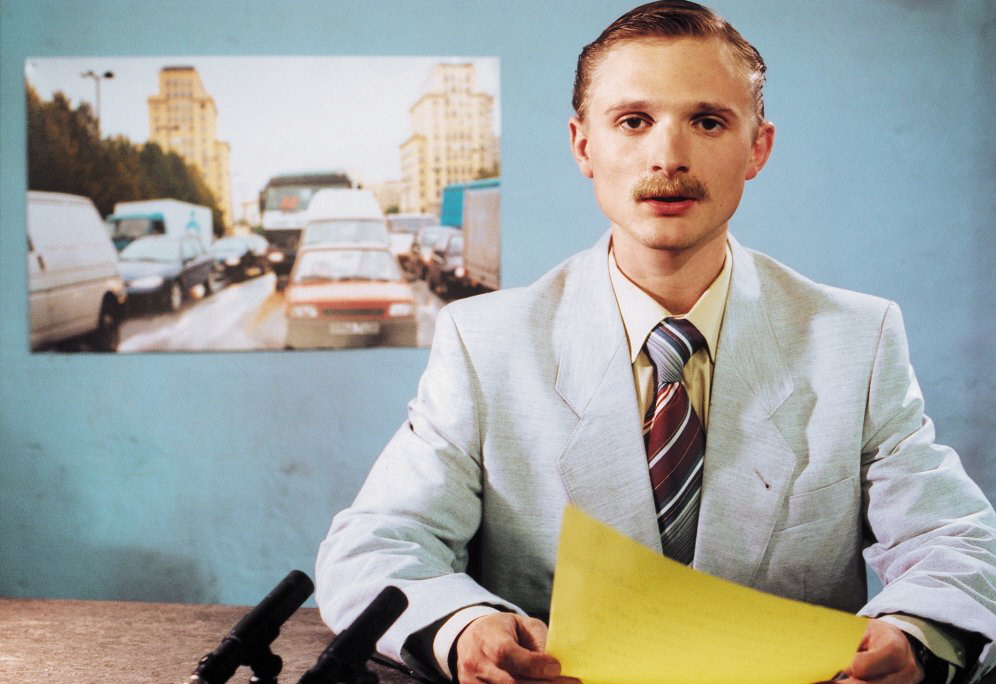
A significant scene for me was when the mother, Christiane accidentally glimpses a giant billboard for Coca-Cola and the whole audience would think the whole microcosm game was over but then Alex, proving himself to be a nuanced neurotic, control freak, loyalist, films his own phoney report, claiming that Coca-Cola is in fact a GDR invention and the East has already won its patent dispute with the deceitful west. With his work buddy who is into film editing, they join forces in doctoring random clips of the Wall’s collapse. Without a clue, Alex has provoked almost every agency of a commun

523d0d467d6b3.image.jpg

ist state, distorting the the news media, forcing people to remain in the same manner as they were before the wall collapsed, contradicting against their real natures and principles, bribing and blackmailing people to keep their shit for the sake of his mother’s health.. Sometimes in the movie, one might wonder if Alex was doing all these just for his mother or did he actually evolve into a loyalist as well, not because he believed in the regime but he also had a hard time adapting to the new. He loved how simple the way things were before just like his mother. But at the end of the film, he, along with his mother accepted the fact that nothing ever remains the same.

Goodbye Lenin! is compelling and enjoyable, as Alex goes through challenge by challenge in trying not to let the cat out of the bag.  This film can be considered a slapstick comedy, founded on fraud and lies: just like the old conservative regime with lots of manipulation for the “good” of the people. This film may bring out a variety of responses from the audiences- be it a pitiful retort for the loyalists who will never accept change or a slipshod laugh with the reality that capitalism has really taken over the world. One could get a kick out of Goodbye Lenin! because it is really worth your watch.


-161997-

A Beautiful Lie

The film Good Bye, Lenin has both a comedic and serious tone for the fall of the German Democratic Republic. The story revolves this German family wherein the mother falls into a coma after seeing her son get arrested in the riot. After the she has fallen into a coma, the Berlin Wall collapses and this shows the audience that times are changing and capitalism has triumphed. When his mother finally wakes up, the doctor tells Alex and his sister that any sudden shock can kill their mother, and so this begins Alex efforts to give his mom an illusion that everything is still the same. Alex goes to great lengths such as refurnishing the apartment with communist decor, finding the groceries that his mother loves, paying kids to dress as Young Pioneers to serenade his mother, and even recreating old TV newscasts. These ridiculous feats achieved by Alex are what bring a comedic tone to the movie and what shows his great love for his mother, like for example Alex and his friend, Denis, filming for hours to produce fake news in order to ensure his mother that the world is still the same. This illusion brought by Alex has a comedic feel also because of the cinematography effects used in these scenes. For example, the scene wherein Alex is refurnishing the apartment is played in fast forward with music that brings a light and funny tone to the scene. Apart from bringing a comedic atmosphere, the film also shows a serious message to the audience concerning this period because the friction between the two parties brought positive and negative consequences to the German citizens. It was shown in the film that Christiane also had her own secret which she kept from her family, and the truth was that the father did not just run away with some “enemy of the state girlfriend”. The truth was that the father’s refused to join the ruling party at that time, and so it would make his job more difficult. The plan was to flee the country and his family would follow him, but the Christiane decided not to because she feared the government would take the children away from her. She also hid the fact that the father wrote many letters to them. We can see here the parallelism of lies because one lie made by the mother and one made by Alex. Both Christiane and Alex went to great lengths in constructing these lies and illusions to protect their loved ones from the truth which could bring them harm. I find this aspect of the film to be very interesting because it shows how far people would go for the ones they love even if it means lying to them. After watching the film I was left with many emotions because of the complexity of the characters and interesting perspective during this time period in Germany. I enjoyed how the perspective showed one of the two sides of the reunification which many of us do not realise.

Rebuilding the Berlin Wall

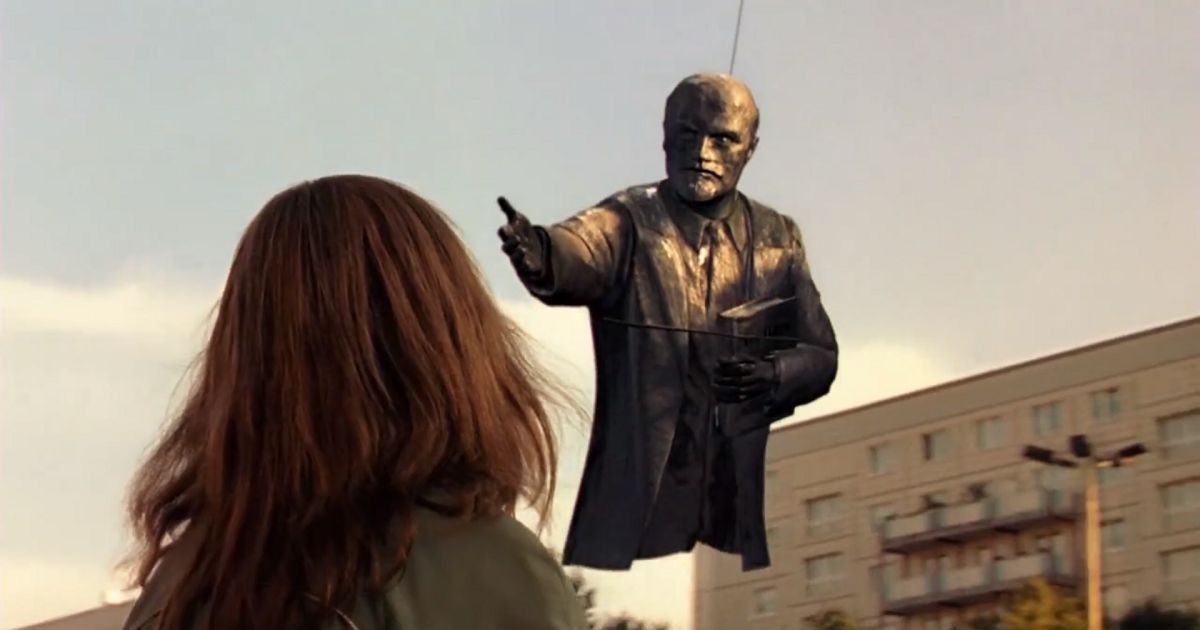
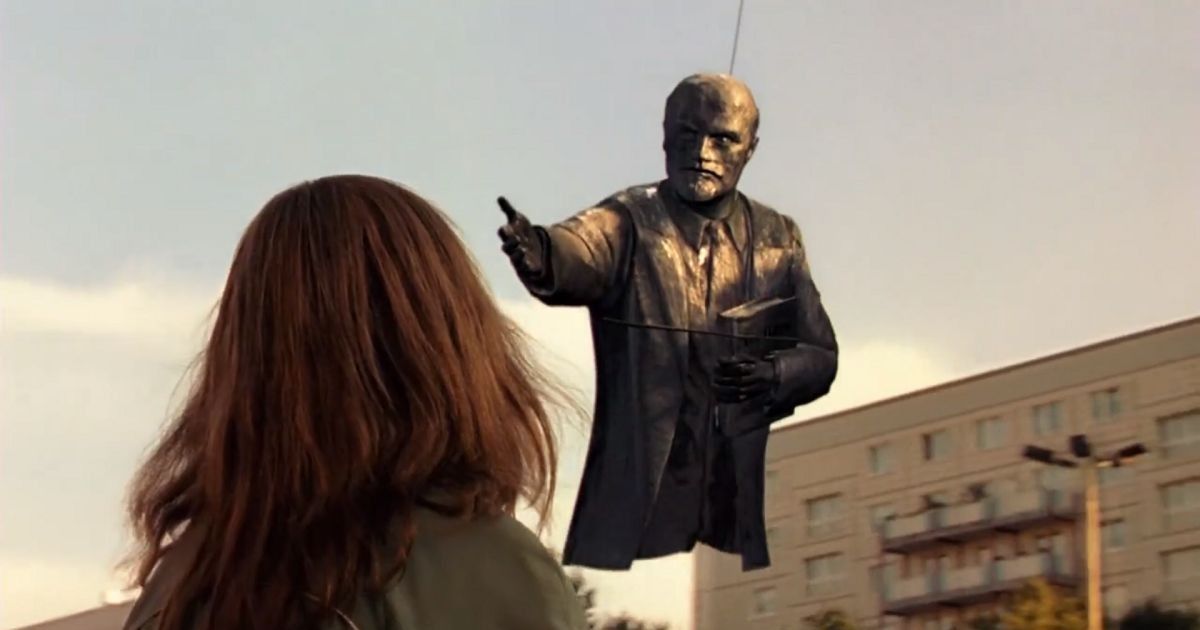
Set in 1989 in Germany, Christiane, a loyalist and mother of two, falls into a coma after seeing her son, Alex, who was part of a crowd of anti-communist protesters was being arrested. When she wakes up from her coma, doctors advised Alex that she cannot have elevated emotions because it could lead to another heart attack. With that being said, Alex decided to conceal the truth from her, that the revolution had ended and the East and West side have confided already. He pretended as if everything was the same as it was before. Choosing to recreate what life was like in East Germany back then, he watches old news reports with her, pretending as if they were live on TV. He goes as far as fiddling with videos of the collapse of the Berlin Wall, and he continues staging numerous events and fake reports until his mother’s death. However, one day, his mother steps out while he was asleep and actually catches sight of everything, even the statue of Lenin being carried by a military helicopter. Christiane dies without Alex knowing she actually found out the truth.

Good Bye, Lenin! tells the tale of the German reunification, from a different perspective or viewpoint. We see how the citizens, and families were greatly affected by this. We see the distinct transition from the old to the new. We all have a set of expectations when it comes to films related to this event in history; however, the story is told from the perspective of an average east German family and we see how life was like for them. It explores new aspects of the event that are not told or touched upon in most narratives. We are able to perceive how the German culture and identity evolved during the transition process of the German unification. Going through lengths with his elaborate lies and schemes to keep up this made up world and  conceal the reality from his mother, a son’s love for his mother is highlighted upon in this film too.

We see the irony in the film and the repetitive, circular motion of events. Alex deceives his mother and creates an illusion that communism is still in power, however, Alex and his sister, Ariane are deluded by Christiane about their father and in the end, Alex is completely unaware that his mother actually found out the truth about everything. It allows us to see different perspectives, how the collapse of the wall could not have been good news for everybody, like Alex’s mother, Christiane. After eight months of being in a coma, we see how it was so quick for the East and the West to reunite and merge after the fall of the wall. This was able to show us a reality we never saw in any other film depicting the reunification. It was able to clearly depict how life was like in Germany at that time, specifically in the East side. 

“A country we kept alive”: Goodbye, Lenin! (2003)

dir. Wolfgang Becker

Out of all the films we’ve seen so far, ‘Goodbye, Lenin!’ is the first with a clear linear narrative structure and is probably one of the simplest in terms of style and technique. Surprisingly, it is also my least favorite and the one that I felt the most detached to (and this is coming from someone who saw L’Avventura a few weeks ago).

Admittedly, I’m not that good with history. It’s a weakness of mine and I can’t really find the motivation to immerse myself with understanding all of its intricacies. I understand its importance and I realize that everything that I’ve said up to this point only makes me look ignorant. Please know that I still make the effort to understand the most notable events in history and I do further research when needed. I just don’t enjoy it as much as a lot of people do.

Now that I’ve said my disclaimer and established myself as a non-history buff, I can say that it took me some time to understand what was really happening in ‘Goodbye, Lenin!’. Props to the film though, I think they managed to explain the situation concisely and they did include important historical events in the movie gracefully. I had to read up on the differences between socialism, communism, and capitalism to fully understand how significant this shift was in German culture but afterwards, I recognized that a lot of the scenes in the movie backed up the information that I read really well.

The movie itself is a nice mix of comedy and drama with several touching moments sprinkled in throughout. It’s most impressive sequence is when Alex’s mother steps out of her isolated room for the first time and sees the current capitalistic state of Germany. She is bombarded by the vibrancy of a totally different culture and we understand the shock that she feels with every step that she takes. The disembodied Lenin floating across the sky seemingly waving at her feels like a fever dream come to life and it’s one of the best images that this film has produced.

The movie managed to make complex ideologies feel approachable. It’s a great way to introduce these things: to view a serious topic through a smaller scale lens which in this particular case is the mother’s room. It carries criticism without being overbearing, and tackles several themes such as nostalgia in creative ways.

Alex is a very relatable character. He has big dreams for himself, is passionate, and is motivated by the love that he has for his family. He is driven by the desire to protect his mother. We understand the incredible lengths that he goes on in order to keep a lie because we know what is at stake. He never truly lets go of his original love for the stars but instead he has to choose something more realistic given his circumstances, which is something I think the majority of us can relate to.

His best friend, who further strengthens his character traits, is my favorite character of the bunch. Editing a wedding video to resemble ‘2001: A Space Odyssey’s’ most famous shot has to be one of the most enjoyable moments in the film for me.

It’s a film with a lot of heart and you can see it shine through the character’s performances. The only reason I have for not liking it as much as the other films is that it doesn’t give me the creativity or freedom to explore themes or characters as much because a lot of it is pretty straightforward. Nonetheless, it’s an interesting watch and I’m glad I got to see a premise such as this one.

The film ends with a farewell to Alex’s mother, a poignant scene captured beautifully.

“She’s up there somewhere now. Maybe looking down at us. Maybe she sees us as tiny specks on the Earth’s surface, just like Sigmund Jähn did back then. The country my mother left behind was a country she believed in; A country we kept alive till her last breath; A country that never existed in that form; A country that, in my memory, I will always associate with my mother.”

Hiding the Truth Out of Love

Good Bye Lenin was a film with a plot that revolves around a son’s love for his mother. It was evident that Alex was very concerned about his mother. I thought his efforts to keep his mother from a heart attack were admirable which is what really kept the movie going. Somehow, there was also a thrill whether or not Alex’s mom will find out the truth, which was that the Berlin Wall no longer existed. I believe it was what made me kept watching the film, as Alex thinks of creative ways to hide it. One of the scenes that exhibit this is when the mom sees a Coca-cola banner outside their home. This generated doubts. As a result, Alex and his friend start to make broadcast films that would help the mother understand its presence. 

Another way Alex tried to keep up the lie was how he transfers modern food products into the packaging that his mother is used to. I thought it requires a lot of effort to do that, given that he is also working throughout the day and has to keep on doing it at least once a week. Furthermore, the supply of food products that his mom desired were already scarce by that time. 

Aside from the thrill, I believe the movie also gave a comedic feel, given that the idea of Alex altogether seems unfeasible. Furthermore, the lengths of Alex and his friends they would go through in order to convince the mother that nothing has changed. An example of this was how Alex and his friend requested Sigmund Jahn to report in the library which disturbed everyone studying.  Another was how Alex’s friend Denis enjoyed making broadcast films for the mother which allowed him to showcase his passion and talent. 

I really thought the movie also developed a lot of characters. Despite the daunting effort of preserving his mother’s life, Alex showed a lot of character and willingness to keep his mother alive even if it meant facing the past or to live a schizophrenic lifestyle, meaning that outside of home he is modern however inside, he is back in the past. On the other hand, I also liked how the movie also gave us an idea of other characters such as Alex’s sister, Ariane. It seems that her biggest problem is her desire to meet her father. Given that their father left them when they were kids, both siblings never really got to bond with him. It also did not help when Ariane saw her father with a new family. The tensions between the parents were also given a glimpse, as the couple eventually reunited in the hospital when Christiane, the mother received her second heart attack as it was her last wish to see him once more. Of course, this was achieved because of Alex. 

Overall, the movie had a great plot and storyline. Almost every scene developed the characters while also entertaining the audience about the main conflict of the story which was whether Christiane would find out about the truth. 

L’Avventura: An Adventure just trying to watch.

Maaaaaaaaaaaaan was this movie hard to watch, let me explain…

The movie revolves around 3 main characters: Anna, Claudia (Anna’s best friend), and Sandro (Anna’s lover). *SPOILER ALERT* So the thing that drives the plot of the movie is the disappearance of Anna. Most of the movie consists of Sandro and Claudia looking for her. But why was this movie hard to watch? The most glaring thing is that Anna is never found. Usually in movies the problem is introduced and eventually payed off by the end of the movie, not the case with L’Avventura.

Another point that makes the movie hard to watch is that the characters, at least the main 3, are hard to relate to because none of them are like-able. I can understand that some characters are really written for the audience to not like them, but nah dude, it’s all of them.

Let’s start with Anna; Anna from the get go seems like s brat who is used to got whatever she want and when she doesn’t she’ll make it seem like it’s the biggest inconvenience in the world. For example, after reuniting with her lover, Sandro, she then creates this scene when they’re swimming in the ocean that there’s a shark nearby just to have more attention focused on her. That’s not even the half of it! She then argues with Sandro that they were separated for too long (one month) and that she “can’t take it anymore”. Girl, lent is longer than the time that you spent apart, and if you can’t even handle that, maybe it wasn’t meant to be.

Then there’s Sandro, Anna’s “lover”. Why did I put it in quotes? Let’s find out. So most of the movie Sandro is looking for Anna. Seems nice right? WRONG! He asks Claudia to go with him and then he falls in love with Claudia faster than Usain Bolt can run the 100m dash. So okay, Sandro and Claudia are now together, but NOPE! He gets caught by Claudia with a next girl that catches his eyes. DAMN DUDE!! Keep it in your pants!

The last of the main 3, Claudia, is probably the most “innocent”, but she is no walk in the park either. In the movie, one moment she’s Anna’s best friend, then the next moment she’s falling in love with her former lover Sandro. Claudia doesn’t do herself any favors by just letting herself just be victim to the things that are going on around her.