The Impact of Loneliness

Image taken from: https://www.researchgate.net/publication/326901082_Soundscape_and_Environmental_Design_Towards_Defining_a_Method/figures?lo=1

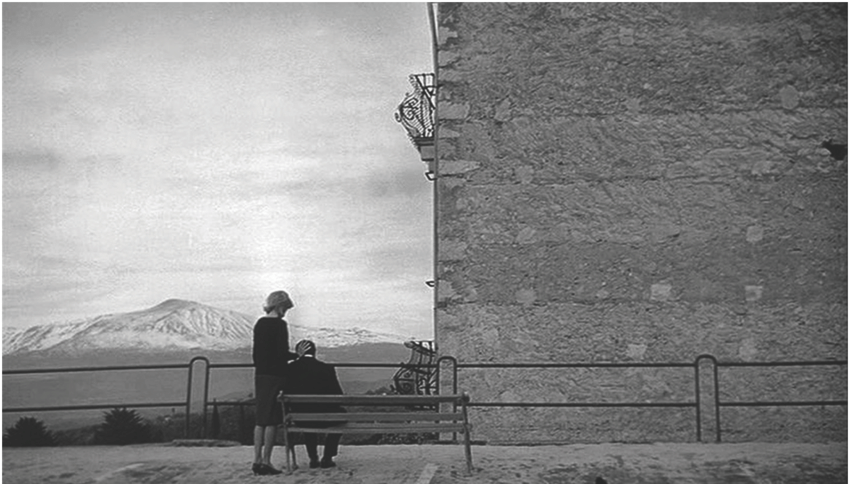
L’avventura was a film that I felt tried to paint a picture of the impact of loneliness and the tragedy that comes with it. Ever since the disappearance of Anna, the two lead characters that were mostly affected was her best friend Claudia and her lover Sandro, were placed in a vulnerable position that had no closure. After disappearing without a trace, both seemed to be confused, guilty, and lonely especially when here was no closure to Anna’s disappearance that was quite sudden. I believe that Anna saw no future with her lover, Sandro, so she decides to make an escape. 

Loneliness was key in the film’s storyline, especially when Sandro could not be at peace as he travels all around different cities and asking various people that can help him find Anna. However, it is in this process Sandro starts to fall for Anna’s best friend, Claudia. At first, she is reluctant to saying no but eventually admits she reciprocates Sandro’s feelings for her. I believe that Anna was also feeling this sense of loneliness and grievance towards losing her best friend, given that she really had no one else to run to. 

One of the things I noticed was the position loneliness puts the characters into. In the case of Claudia, she seemed to be very conflicted. It is also worth noting on how she suspected Sandro as one of the strongest factors for Anna to disappear. She cherished her best friend in Anna and grieves her loss. However now that she is gone, she gains a new lover but in the form of Sandro who is Anna’s former lover. When she finally gives in to Sandro, she still thinks about how Sandro still has feelings for Anna instead of loving her. In fact, she loses her bearings when she thought Sandro got back with Anna as she ran to the paint store. Furthermore at the near end of the movie, she actually becomes paranoid. She would want to see Anna again and reunite with her, but then again she would have to give up Sandro as he obviously still has unfinished business with her. On the other hand in the case of Sandro, he misses Anna but this feeling of loneliness actually leads him to have feelings for Claudia. I believe this was really just a matter of her being there as loneliness placed him in such a vulnerable position. This could be seen in how in the party, he was checking out other women as Claudia excused herself since she was already too sleepy. At the end of the movie, Claudia catches Sandro being intimate with Gloria Perkins, who was famous, as Sandro met her while pursuing the missing case of Anna. Claudia runs and Sandro follows her. The movie ends with Sandro crying and Claudia rubbing his head. This is a scene that shows how their actions were influenced by this loneliness and it resulted into nothing but regret and tragedy. Their relationship may have have provided comfort and safe haven from Anna’s disappearance but in the end it was not really the love that marriages were built upon. 

I believe the movie built the relationships sufficiently and it shows how Claudia and Sandro were left to cope with the loss of Anna, prompting them to be in a relationship together as they faced this loss without any form of closure. L’avventura showed how loneliness can disrupt peace and breed regret. 
To Merge

Ever had that feeling when your Algebra teacher would fill an entire blackboard of equations and solutions, and after looking at each set of numbers and its entirety, it just leaves you confused? You’re left with several numbers, fractions, etc., not knowing how to piece them together. You feel overwhelmed with the amount of information, asking yourself, where does this conclusion spring from? What were the processes used in solving the equations? With that said, an individual who comes across Ingmar Bergman’s psychological drama film, “Persona”, can probably muster a similar feeling after watching it.

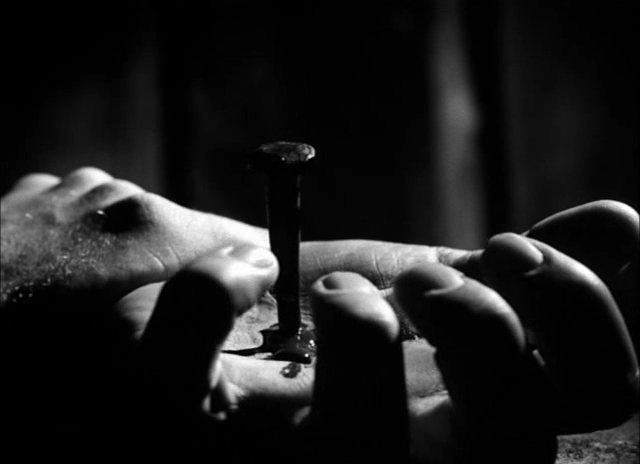
Ingmar Bergman welcomes his audience with a montage of clips that, honestly, don’t make any sense. Instead, he establishes the ambience and mood of his film through the opening sequence. A hand being hammered with a nail, and blood being drained from a sheep’s neck, Bergman created a disturbing and eerie atmosphere that keeps you at the edge of your seat, making his audience already know what to expect in the coming scenes of his film. He couples this with an insidious-like, skin-crawling scoring that leaves you feeling unsettled. Like the sound of nails that scrape against a blackboard, making you cringe from your seat. 

He introduces us to Alma, a young nurse, and Elizabeth Vogler, an actress who is healthy yet refuses to speak. As they were both sent to a cottage by the sea, their relationship with each other started to develop. In several scenes after, Bergman uses dialogue as an instrument and device that play a pivotal role in his film through the use of monologues by Alma. This allows Alma to be able to voice herself, (or lend) a part of herself to Elizabeth who quietly listens to her as she shares her deepest desires and secrets to Elizabeth who seemed to be engaged with Alma despite her lack of speech. As they both struggle with their identities, the word “persona” comes into play.

“We look alike.”

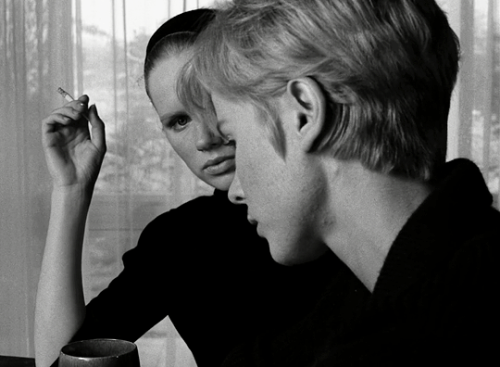
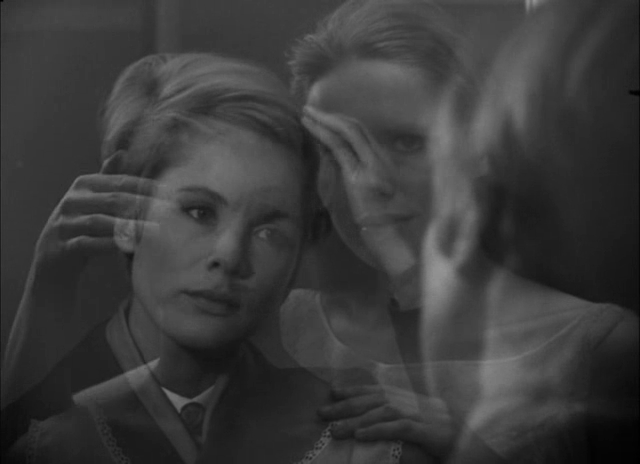
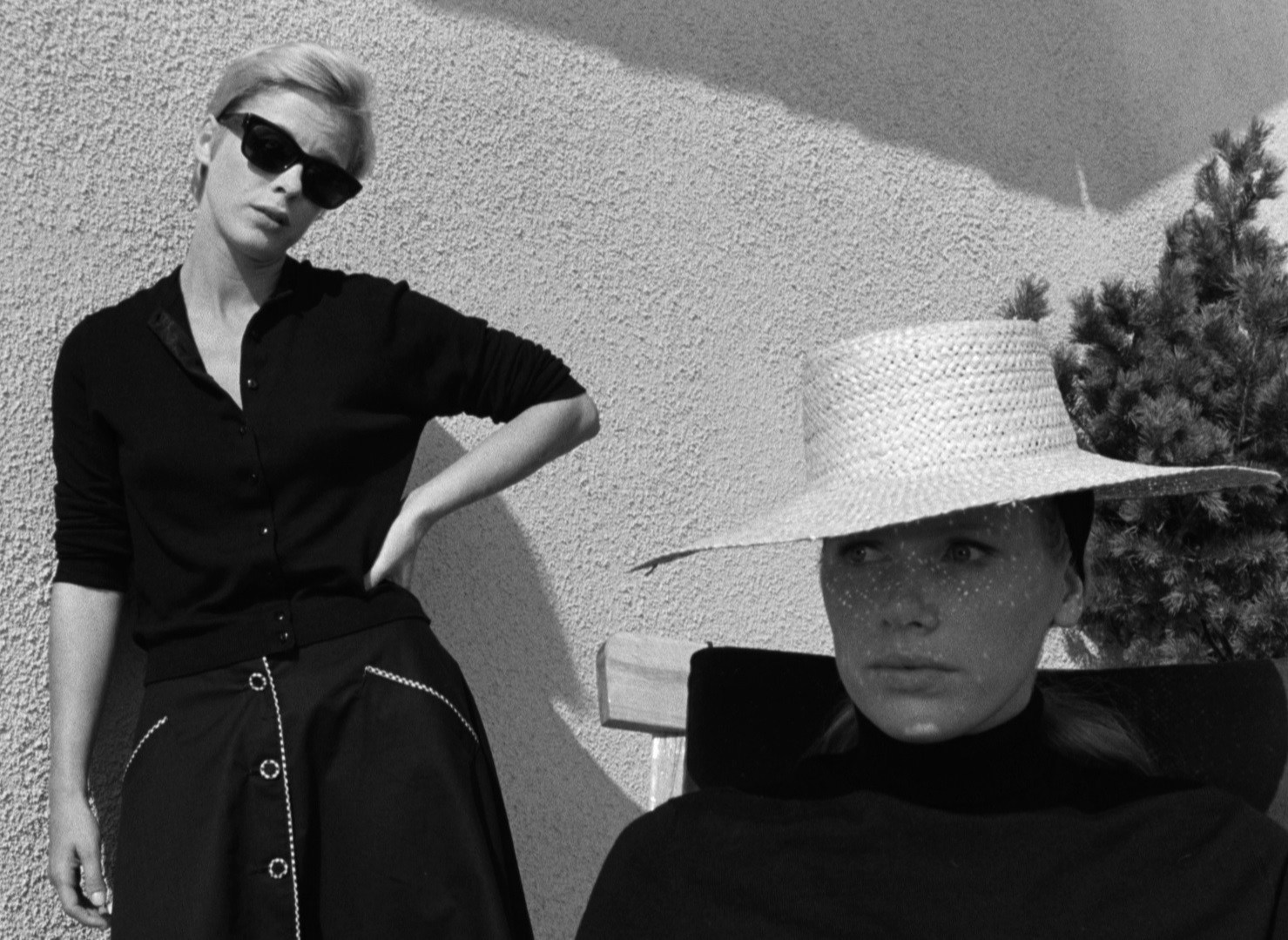
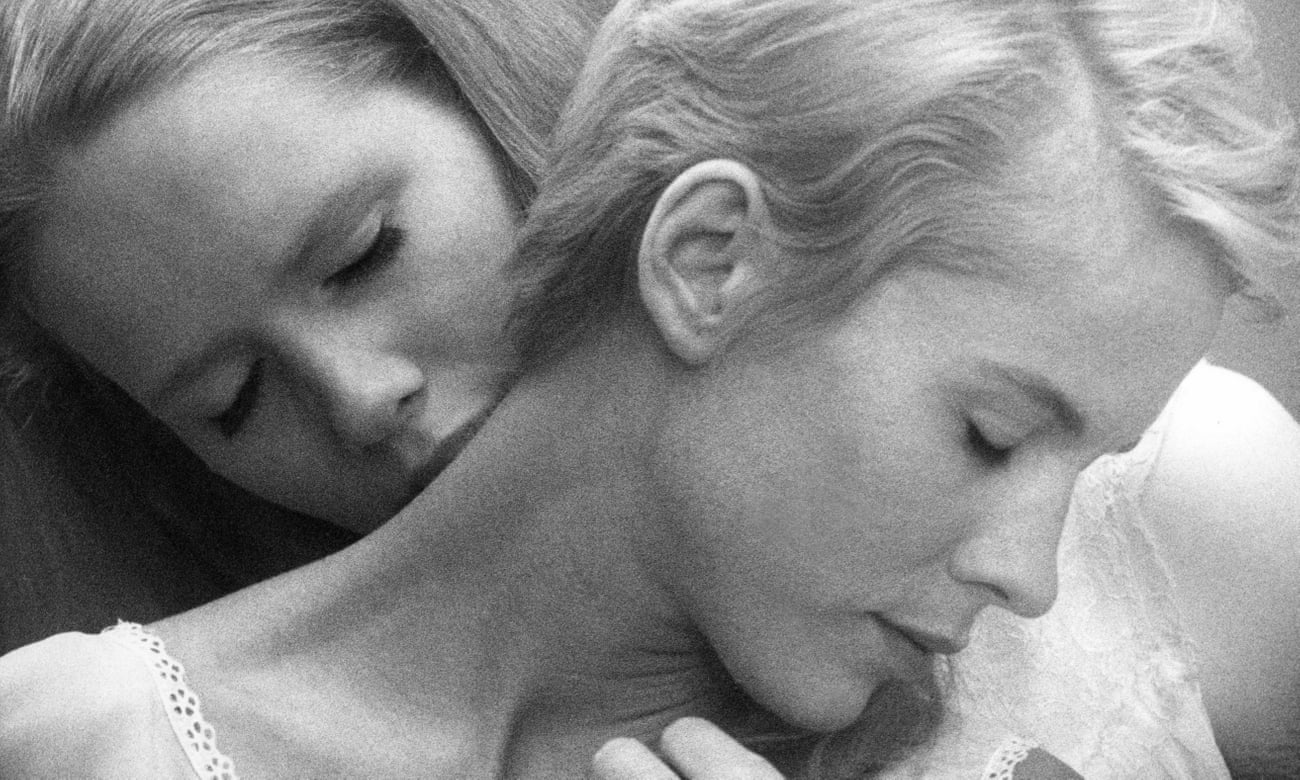
Bergman brings focus on the word “persona” which can be defined as a “theatrical mask” or the “appearance that you bring forth to the world”. His film, an artistically-created spectacle as it is,  unveils the aspect of the merging of personas between Elizabeth and Alma through the idea of overlapping images and characters in his cinematography. He utilizes the act of merging through the element of symmetry manifested in several shots and scenes that reveal depth to his cinematic plot. The use of this camera technique alludes to Alma and Elizabeth’s merging personas as two separates halves, yet completely identical in a sense. 

Bergman’s experimental work is very ambiguous and can be interpreted in several distinct ways, each one different from the other. The idiosyncratic aspect of the film’s entirety make it seemingly difficult to understand and decipher given its plethora of elements, techniques, and innuendos. Yet, this fusion of aspects construct a balance in each point of the plot, similar to a poem being written by a writer.

An Inquiry Into Identity: Review of Ingmar Bergman’s Persona

persona bergman.png

At the mere mention of how Ingmar Bergman’s Persona would be a more challenging watch than Godard’s Une Femme est Une Femme, one would assume how it would be a complete deep dive into art cinema. Indeed, the manner in which the narrative of Persona was relayed was quite bizarre. Opening shots seemingly consisted of random and cryptic visuals was unnerving, especially given the context that the film would simply focus on two women. Yet, as the film progresses, one recognizes the inherent genius that Bergman is. These seemingly random shots are a reflection of the events of the film—an individual’s slow descent into disillusionment over the loss of identity.

The audience is introduced to Elisabet Vogler (Liv Ullmann), a well-known actress who has suddenly decided to stop speaking and currently resides in a hospital. In order to help her regain her voice, Sister Alma (Bibi Andersson) is assigned to be her caretaker. The first few minutes of the film seem light as Elisabet and Alma begin to live together in the hospital director’s summer house near the sea. Alma divulges truths to Elisabet that she herself has not fully understood and shared to those closest to her. From this seemingly innocuous beginning of a friendship, the film descends into chaos.

Tasked to deliver Elisabet’s letters, Alma decides to read through one meant for the hospital director. This sparks a change in Alma as she feels betrayed and used due to how Elisabet takes her suffering lightly and finds amusement in it. This further escalates due to Elisabet’s commitment to silence leaving no response at all to Alma’s vitriol.

Unable to reconcile her rage and need for company, Alma shifts violently from begging Elisabet to forgive her and threatening to kill her. From here on, the manner in which the film is shot are convoluted and messy—aptly reflecting the disillusionment that has come upon Alma. Scenes being abruptly interrupted by unrelated footage or cutting to a new scene without context are proof of this. Little by little, the lines between what distinguish Alma and Elisabet blur. First through their similar clothing then gradually turning into scenes where the audience is unable to tell who is who. The scene sure to be engraved in the minds of the audience is the one nearest the ending, where Alma and Elisabet repeat the same lines. This heralds the complete blurring of the two identities, leaving the audience questioning whose story is being told through the lines. As if to confirm this, the scene ends with a merging of the faces of Elisabet and Alma respectively. Only at this point does the viewer realize how unsettling both Elisabet and Alma look alike.

Beautifully shot and evocative, Persona rightfully claims its reputation as an art film classic. The audience is given a surreal experience and is placed as a spectator to this tragic and disturbing story of how a woman slowly descends into madness. Bergman is able to masterfully give form to what it feels to lose one’s identity and does it in a manner that is hauntingly beautiful.

2/17/19 Bautista

Persona (1966)

The film, Persona (1966) was quite jarring to me, as it had a disturbing effect on the viewers. Due to its complex plot and ideas, it was definitely difficult to pinpoint and digest the meanings of certain parts of the film. The first part of the film, which consisted of a boy reaching towards a screen that displayed Elizabeth’s face, was already so confusing to a point that I had decided to ignore it as I felt like it wasn’t an important piece of the story. Weirdly enough, that same scene appeared again in the middle of the film which confused me even more.

The story of the movie seems to share a story of the two main characters, Elma and Elizabeth. Elizabeth, a stage actress, loses her speech while she was shooting scenes for a movie. This scene was repetitively shown throughout the film for reasons, which were honestly quite difficult to understand and pick up. Without the ability to really cure her silence, the doctor decided to send her to rest house by the beach with Elma, a new nurse, as her aid.

As Elizabeth continues to have problems with her speech, it seems like all Elma could really do was talk to her and share her life experiences. This has gotten to a point that she even shared her deepest and darkest secrets to Elizabeth. The two seemed to care for each other so much, that when they were in a situation that got Elma intoxicated, Elizabeth was able to speak for a mere second. In this point and time of the film, the two characters were getting to know each other so much that it seems like there was some romantic tension that was going on. I felt that Elizabeth seemed to become attached to Elma as she would always be brushing her hair and watching her every move. After a while, the film also led me to think that the two characters probably saw who they wanted to be in each other. They seemed to be each other’s persona, which is why I assume the title of the film is “Persona”. Elma always looked up to the theatrical works of Elizabeth, as she would always see herself. Elizabeth, who lost her voice, seemed to not really understand who she was as she was an actress playing the roles of different characters. It seems like she saw herself most in Elma as well. The film used much cinematic symbols and situations, as the two seemed to be so attached to each other that you couldn’t even tell them apart, which was both very weird and freaky.

The way the whole movie was constructed and produced seemed all quite new to me. My inability to be able to appreciate the film, as most people would, frustrated me. I felt like all it was able to do was confuse and creep me out. This film, Persona (1966) is one that definitely left me questioning my ability to be able to understand and digest films with much deeper and hidden meanings, through the used symbols.

Persona: More Than Face Value

Persona could not have been more appropriately named, since the word came from early 20th century Latin meaning ‘mask’ or ‘character played by an actor’. The whole movie revolves around this theme while being ambiguous about the characters and their motives in the most captivating way. At the start of the film, we are greeted with an interesting set of moving images to say the least. To the unsuspecting audience, these images are nothing but random and, for some, disturbing. It ends with a little boy touching a screen with what appears to be the faces of two women that would be introduced to us later: Alma and Elizabeth.

We get to learn more about the two characters as the story unfolds, with Elizabeth as an actress that decided to stop speaking and Alma as her personal caretaker. What makes this film unique is that while Alma is the one doing most, if not all, the talking, we get to connect with and consider both women as main characters. Upon watching the first few minutes it seems that Elizabeth is the main character, but Alma reveals more of herself such as her experiences, thoughts, and even regrets. At one point, they start to dress alike, appear to be morphing together in dream sequences, and a scene shows Alma saying to herself as Elizabeth is sleeping that she smells of sleep and tears. These hint at the audience that there is an underlying meaning to the two women, without being too straightforward.

The cinematography of the film also gives us a look into the minds of Alma and Elizabeth. In some of the scenes, hands are being highlighted since they can also be a sign of expression. At the beginning, Alma’s hands are seen to be very restless while trying to hide it from the doctor. As the two women start to become closer, they compare hands. At the very end, during the monologue, Alma is seen banging her hands on the table in frustration. This shows us that even without talking, we get to understand what the women are feeling at the moment, aside from looking at their facial expressions and body language. Another technique being used by Bergman is breaking the fourth wall, as a film strip is being shown at the start and end of the movie, and the film “breaks” in the middle of Elizabeth and Alma’s big fight. At the prologue sequence, a little boy is seen touching a screen showing a blurry face of a woman that turns into Elizabeth or Alma.

But one should not overanalyze the film, but instead appreciate it for what it is. Another clue would be looking at the definition of the title, which is “the particular type of character that a person seems to have, which is often different from the real or private character that person has” (Persona, n.d.). Alma starts to rant about having to have a “face” that she shows to others. She asks Elizabeth at one point, “Can you be one and the same person at the same time?” And sheds light on a truth that we are all familiar with. We all wear masks every day, and sometimes this can take a toll on us. We do not act the same when we are with certain friends, family, loved ones, or when we are alone. Knowing this, one possible film theory would be that Elizabeth is Alma’s persona or the other way around. As for my main takeaway, it would be Alma’s realization that maybe we would be better off if we allow ourselves to be who we truly are.

Works Cited:

Persona. (n.d.) In Cambridge Academic Content Dictionary. Retrieved from https://dictionary.cambridge.org/us/dictionary/english/persona

Persona Review

The first few scenes and images bothered me because it seemed creepy and eerie. I think that the black and white color added a more horror effect to the film. I really thought that I was about to watch an old horror film. Even as the next scenes showed Elisabet and Alma in a psychiatric ward, I still assumed that it was going to be horror or thriller. But as the movie progressed, I realized that Elisabet wasn’t actually crazy but she was definitely battling with something inside of her that she could not express. Alma was also really patient with Elisabet even if at first she doubted her capacity to be able to get through her. Their relationship seemed to develop as they left the city and isolated themselves. For a time being, I really thought that Elisabet would eventually converse with Alma. Although it would appear that although Elisabet was the patient, it seemed Alma had her own battles inside that she tried to conceal from everyone else. I was a bit confused as to whether there was sexual tension or infatuation going on between the two women or if it was simply a deep friendship and sisterhood that had developed. I think that somehow, Alma looked up to Elisabet and she felt proud to know that someone like Elisabet who was beautiful and successful would actually listen to her rants and choose to be friends with her. As the movie progressed, the difference between nurse and patient started to blur and at one point I wasn’t really sure who was taking care of who.

Another thing emphasized in the movie was the likeness of the two characters in appearance. Although I don’t really see how they look alike, the movie plays with camera angles to show their likeness. I think Alma liked the idea of being/having the life of Elisabet. Which is why Alma also felt betrayed when she found the letter of Elisabet stating that she was observing Alma. She felt like she opened up to Elisabet and really created a relationship with her. She felt used and tricked by Elisabet. The scene where Alma almost throws boiling water at Elisabet for me shows how although she is the nurse, she has the tendency to be unstable as well. Which again begs the question of who was really being observed between the two characters. This scene was also the scene where Alma hears Elisabet talk for the first time out of fear. I would say that this proves that Elisabet has the capacity to talk but she just really chooses not to. I’m not quite sure what she’s really scared of. Things start to get weirder when Elisabet’s husband who appears to be blind, mistakes Alma for Elisabet and sleeps with her. I think this was another indication of how Alma did want Elisabet’s life.

Up until the last scene, I was still left pretty confused at the situation the two characters were put in. It felt like, the movie never really answers any of your questions but leaves you to wonder about it on your own. In the last scene I couldn’t confirm if Alma’s analysis of Elisabet was right or if it could have been an analysis of her own life. The very last scene shows the two faces of the women put into one picture indicating that their lives may have intertwined more than we know.

An artwork expressed through a film

At the beginning, the film immediately grabs your attention, opening it with weird sound effects and black and white flashy images. There are creepy, eerie images of pain, flashing on the screen one frame after another like spiders, nailing a person’s palm, and the like, somewhat exploring the egoistic and idiosyncratic nature of art.

It reminds me of an artwork. 

The camera angles and cinematography add personality and charisma to the film. The marvelous shots contributed greatly to the overall magnificence of the film. As the audience, I am not entirely sure of the motive of the film. It has a very odd, unusual setting with thrilling music creeping in the background. Not to mention this all  began before the title sequence. At first, it will get you thinking if this is actually a horror movie with the weird jumpy music, but as the film goes on, you realize something else is going on, the same way an artwork can turn out differently as you look closer or observe it longer. 

Persona is a very experimental film. The more you watch, the more you are engrossed and riveted by it. There is a sense of insanity and psychological horror it aims to portray through the cinematography, music and the unusual behavior of the characters. There were many questions running in our heads while watching it. Why was Elisabet not speaking out of willpower? Was there sexual tension between the two? Elisabet claims to not have visited or spoken the previous night, which was obviously a lie. What was “nothing”? What was happening with their distorted, amalgamated faces? What was this trying to portray? It will leave you asking, “what is going on?”

With the series of events that bring confusion to the audience, the viewer might need a minute or two to process what was absorbed, to find meaning in the occurrences. It is definitely not an easy film to watch. It’s actually quite rattling, leaving you wondering how things are connected, the messages uncovered and what they represent.

The film does not give explanations as to the connection of events or characters, like the boy at the beginning of the film observing the blurry, ill-defined image of a woman.  Could that be Elisabet’s son? No explanations are given. It is just for you to figure out on your own. Like many artworks, it’s complex, almost bewildering, which result in varying interpretations from the viewers, but that’s what makes it a masterpiece anyway. It is its ability to capture viewers in different ways, different angles. 

Art as a Story

Dubbed as the “Mount Everest” of cinematic analysis, it is no doubt that Ingmar Bergman’s Persona will twist one’s head with the genius of its screenplay and cinematography. This movie will leave one confused and frustrated with so many questions left unanswered. Personally, all the questions I would begin to ask at the start of the film only became more complicated the more the movie serves me its story. It felt like I was being force fed with symbolisms and allegories; and although the feeling was disorienting, in some ways it was satisfying. I may have experienced many modern movies, to which I began feeling tired of, but never have I experienced such a movie as Persona.

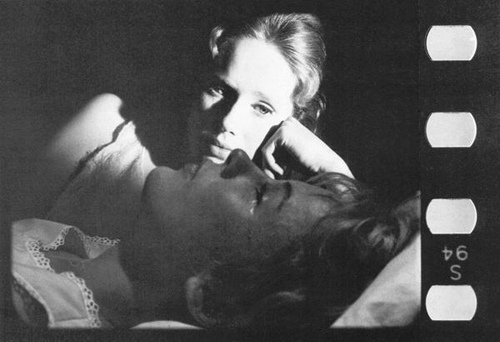
One of the things that really caught my attention about the movie is the way the cinematography was presented. It felt like each scene was a piece of a professionally done photo. As seen through the film, the way the light divides the characters’ faces on close ups really highlighted the impact of the scene. The elements of the image were divided and placed equally in the frame, like in the scene where Elisabet Vogler watches Alma sleep after sharing her intimate story. Although the scene was silent at most, much of its impact was presented through Elisabet’s expressions, which despite being in the background of the frame, was greatly highlighted by the intense light. Even if Alma’s face occupied a big portion of the frame, the audience is drawn to Elisabet’s face, which eerily looks over Alma’s peaceful, yet very distressed expression. A lot of Elisabet’s scenes are often presented this way. It’s almost as if the character purposely hovers over Alma, studying her every expression. And this is exactly what Alma discovers in the story.

I have noticed that after discovering (or at least assuming as this was never really confirmed by the movie) Elisabet’s intention of studying Alma through her letter to a friend, the roles of observant and observee are switched. Yet, we’re still drawn to Elisabet despite her being the one being observed. Maybe because now we have Alma’s commentary to guide us on what to observe about Elisabet. Whereas previously, we were only given Elisabet’s expressions as she looks over Alma, which served as our only clues to figure out what she thinks of her subject. In the two cases, I have always been drawn to Elisabet. It might be that the movie is showing us that despite Elisabet escaping her life as an actress, she still manages to draw her audience in, a skill that an actor must master. However, one thing is certain and that is Elisabet’s use of her facial expressions to communicate her character’s dilemma. What is amazing about this is that scenes that show a close up of her face looks like a different image per frame. Even the slightest movement of her lips evoke a different kind of expression. I often wonder in scenes like this what Elisabet is truly feeling.

Many observations and questions arise the more one watches Persona, as stated by many, including renowned film critics. I offer one observation which may be contradicted by another. Yet, both observations may equally be true as declared by critic Peter Cowie. Despite the confusion on the true meaning of Persona, it is in it’s art and cinematography that one may be given the satisfaction Persona seems to be depriving us from. Perhaps, its true meaning may be hidden among the frames the movie presents to us.

Persona

The film Persona by Ingmar Bergman starts off with Elizabeth, an actress who is being treated by psychiatrist, watching peculiar scenes on television such as a man burning himself and a face of a small boy. These scenes may have some hidden meanings to it but Bergman, having such a creative mind, would never tell it as it is. Or does he? The film continues to Elizabeth’s sudden silence and her nurse Alma, who was at first doubting her own capabilities to help the actress’ condition, staying in an isolated home without anybody else with them. This was a method suggested by the doctors in order to help and find the reason as to why Elizabeth stopped talking.

In some parts of the film, I was somehow bothered and confused to see how certain scenes happened. The weird relationship that Elizabeth and Alma had, the abortion story of Elizabeth, and the intimate scene between Alma and Elizabeth’s husband. Throughout the film, I was trying my best to interpret each scene and look for a possibility that theres a hidden meaning to it. However, Bergman may jus have simply shown such scenes as it is. Straight to the point. Although with those circumstances, I still found the movie very interesting since it was the first film that I watched with just black and white colours. It gives the feeling of old and classic films that are rare these days.

I also found it brilliant when the movie was slowly showing these two such apposite characters in the beginning, becoming one. This was even taken to a literal context when the two faces were merged and vaguely even being to distinguish which character was which. The artistry and amount of drama in this film truly highlights the beauty of European films.

Persona


In Ingmar Bergman’s Persona, I fully experienced for the first time what an uncompromising art film looks like. The beginning of the film was such a culture shock because I just did not get what it was trying to say. It was a barrage of somewhat random images that I felt was used to provoke a reaction from the audience. But, even though the first flash of images was confusing, it was still very interesting and really grabbed my attention. I was really enamored by the images because I wanted to know what they meant and do they have a purpose for the film later. I really didn’t get any answer after watching the film but it was an effective hook for me to really get interested in the movie.

The film itself was somewhat of a new experience because it was purely a conversation between one woman who speaks and another who just listens. This is quite different from the mainstream movies that we are accustomed to because it feels like there was no real exciting moments that was happening in the movie. But, when you actually listen to every word that Alma says it is quite an interesting conversation. She bare all her deepest darkest thoughts to Elisabet and it is quite refreshing to have such a bare conversation that is not afraid to tackle the dark topics that was presented.

The two actresses were so interesting to watch, but in very different ways. Majority of the film, we only hear the voice of Alma and her delivery of her dialogue is so striking because she has to embody the vulnerability in most of the movie. She keeps us locked in the screen because she was able to capture  our attention and want to listen to her like Elisabet.

For Elisabet, it was different because she barely had any lines in the movie. With that the actress, Liv Ullmann, had to carry out the character through her facial expressions. I found that her expressive eyes were so enamoring and that they were able to capture your attention immediately.

I personally still have so many questions about the movie, but visually it was one of the most beautiful movies I watched in the most minimalistic way. One of the most noteworthy scenes were the blockings between the two actresses that that really highlighted their faces. The use of the close up in the movie was really done well because the facial expressions of the two actresses could really just tell the story of the movie.

I really found this film to be a great way to introduce oneself to art films because even though it might be a difficult watch, there is so much to appreciate in the movie. It is also such a refreshing way to make movies that is so opposite from the mainstream. It feels like you are not watching the movie to be entertained, but I suddenly began watching it more of appreciating the new or different thing being done in the film. It may not be easy to understand, but it cannot be denied that there is something amazing in the movie.

Enrico Barruela COM 115.5 A