
Hello, Brilliant Comedy!

Daniel Brühl

In comparison to other European movies shown in class, Goodbye, Lenin! was surprisingly very normal, and of the most easily understandable. It dealt with a linear plot, a clear premise, a charismatic central character, not that unconventional ways of storytelling, and a discernible conflict. However, despite it seeming very formulaic of Hollywood movies, I find that its art cinema tendencies are integrated in how it’s able to present itself as conventional, but in its very essence makes fun of the craft of cinema itself. Through a ridiculous over-the-top dedication to movie-making, that parallels so many film majors I know, the movie uses cinema as a major force in Daniel Brühl’s character’s deceit of his mother.

Daniel Brühl, the actor that plays the main protagonist in the film is one of the most charming actors I’ve ever seen on-screen—not in a Hugh Grant charming way, no—but in his own kind of slightly quirky and compelling and magnetic and lively and lovable way. Yes, I am in love with him. To top it all off, he’s one hell of a performer too. I firmly and confidently declare that the film is already worth-watching from Daniel Brühl’s performance alone.

However, the movie itself doesn’t pale in comparison to its vibrant star. It has several notable charms of its own. I find the wonderful satire plot well-written that it’s silly yet still a smart political commentary. Actual documentary footages of this tumultous time in history are shown, and the presence of the dreams and delusions upon which the East Germans were sustained with were all situated in the film, yet everything is discussed with sophistication. A confrontation with a bank teller about Alex’s fortune was based on actual history of the reunification favoring the West Germans. Another commentary of the film is the ridiculousness of the tendency of political beliefs in infiltrating matters such as family and health. There were a lot of other gripping moments in history that the film captured, but they were absolutely elegantly integrated. I think this is firmly what sets it apart from The Edukators, since it is more successful in delivering political and social commentaries subtly and more elegantly.

The driving force of the movie is how it rises above the usual comedy films that made me despise the whole comedy genre. Usually, comedy movies that I am familiar of are filled with shallow jokes, condescending humor, and insulting joculars. Instead, this German masterpiece can humor without making fun of its characters. It mainly is driven by sublime comedic timing that complements the tender story being told. As Alex’s family faced new challenges scene after scene, it’s up to him to come up with hilarious solutions on how to address them. The thoughtful look into the great lengths to which people will actually go for for important relationships is also what makes this movie beautiful. Ideologies melt when it comes to affairs of the heart and that’s what people should remember.
Good Bye, Lenin! (2003)

Wolfgang Becker’s Good Bye, Lenin! (2003) sees siblings Alex and Ariane going to great lengths to conceal East German society’s many social developments from their mother Christiane, who falls into a deep coma just months before the fall of the Berlin wall and the collapse of socialism and eventual triumph of capitalism.

This premise alone reveals two of the film’s greatest strengths: its historically-charged themes and its sociopolitical commentary. Despite its often humorous undertones, the film’s entire world is underscored by the social and historical significance of its covered context. Viewers need not be comprehensively knowledgeable on world history or their own political leanings to be aware of the gravity of each situation. In this sense, the film is also very educational for the most part; as a viewer from the Philippines, I was genuinely unaware of certain events that happened in the film, and I was moved to read up on them later on.

Although the film took place in one singular world, the illusion of an unchanged world in Christiane’s point of view signified a certain multiple diegesis, one of the noted staples of European cinema according to Wollen (1972), although this was one instance where the viewer was wholly aware of these two quasi-separate worlds, and the effect of this multiple diegesis seemed to be minimal as it hinged on the story and not the actual mechanics of the film.

Speaking of the story, one universal theme the film touched on was love for family. For as absurd and contrived as Alex’s efforts were, the viewers at every point saw a certain fire and determination in his eyes, and it was clear that his actions were ultimately motivated by a pure and unadulterated love for the woman who raised him.

All things considered, Good bye Lenin is a remarkable entry-level sort of film for audiences looking to explore European cinema. Since the film was released rather recently, the plot’s progression was linear and easy to follow. As a viewer, I truthfully did not feel like I was watching a foreign flick, save for the European language and the need for subtitles. What I mean is that the experience was rather straightforward, accessible, and entertaining, all qualities I’ve come to not expect from European films. The strangeness, intransitivity, unpleasure, and foregrounding I have come to expect from these films was strangely absent in this film for the most part.

I feel as though this comes as something of a reminder that European cinema is not necessarily countercinema, even though the two do share many significant similarities. That is not to say the watch felt similar to an offering from mainstream or Western cinema. Because even though the most obvious elements separating European films from those in the mainstream market, everything from the film’s plot to its execution to all the minuscule details in between seemed to still contain a very distinctly European flavor, likely due in part to its historical subject matter.

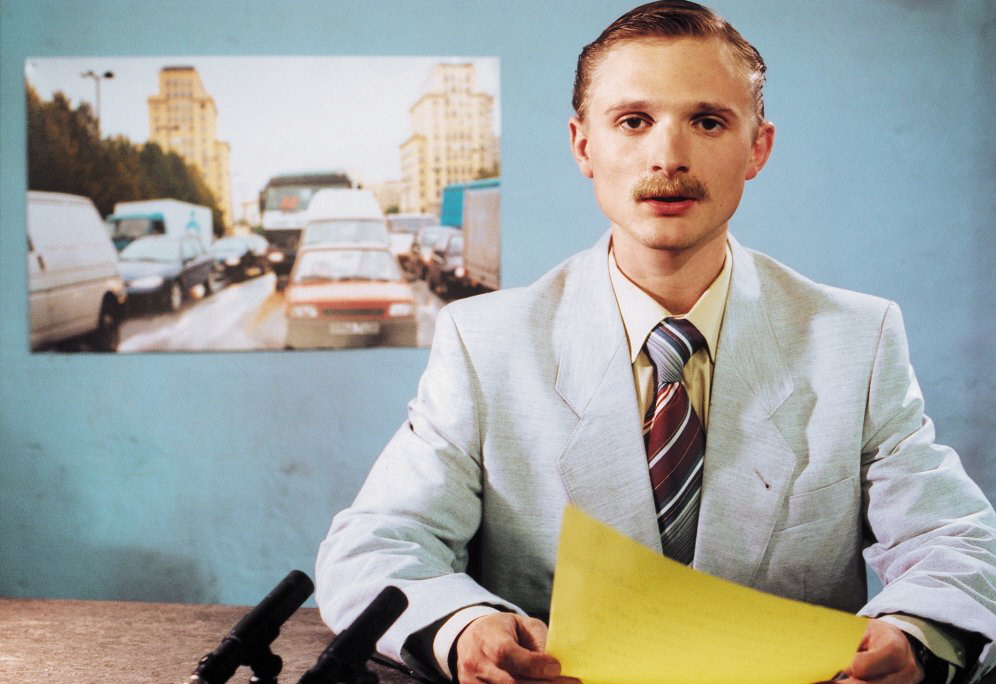
I realize it seems like I am contradicting myself here, but Good Bye, Lenin! effortlessly fuses the historical with the sentimental; Alex’s attempts at reviving the Germany of old, particularly that of the German Democratic Republic afforded the film a cheeky sort of comic relief as he goes to great, often unreasonable lengths to continue his illusion. These included but were not limited to dressing in old, un-Westernized garments, producing fake food supplies by looking for old jars, to filming and directing faux news programs with the help of his friend and co-worker Denis, an aspiring filmmaker. And although the implications behind his attempts were heavy (since he was doing these to preserve his mother’s health), the absurdity of the lengths he went to lent the film a certain absurdity that made it quite an entertaining watch overall.

Fifth

Good Bye, Lenin! by Wolfgang Becker

A story where in familial love trumps all. A story where in you realize you must do anything for you loved ones and protect them from the harsh realities of life no matter how mundane it may be to the viewer. This movie made me laugh and was enjoyable from start to end.

Unlike the past few movies that we watched this was not as heavy in plot as the others. It was not confusing, the characters were dynamic and their relationships were fun to watch as they interacted and grew together. At the beginning learning that this was a story about a Socialist East German mother who falls into a coma after seeing her son rallying against the Socialist Party and waking up after the fall of the Berlin Wall was quite funny. Random, quite quirky but as I watched the film, I could see it was more than just Alex trying to avoid his mother from learning the truth about the German Unification but did it in a place of love as the doctor said that if she knew about the present situation, her illness may worsen.

In a situation of life and death, I would have done what Alex had done. To just keep my mother at a mindset that makes her comfortable and happy. The ways in which he tried to protect her were both hilarious and really had no bounds. From creating his own news broadcasts to asking his long time idol astronaut (which may actually just be a look-a-like) to become the new leader of East Germany. Inter cut with this story of Alex and his mother, we must never forget that this was actually history. The harsh realities of police brutality and heavy censorship during these times for Germany before its unification and in the fall of the Berlin Wall, an integration of a more capitalistic and democratic society. We realize that change is difficult, it may not be for everyone but it may not always be a bad thing. The movie subtly shows these changes in history through scenes such as when Alex and his sister Ariane must exchange their old money to the new currency but the bank denied this request. From the removal of his mother’s favorite kind of pickles as this has now been changed with a new brand from another country as Germany has now allowed the import from other markets

All this change would have been difficult for the mother but in the movie, all it took was time. Alex’s girlfriend finally told her without Alex’s knowledge but she did not have a heart attack right away, she was even able to see Alex’s final news broadcast with a smile on her face realizing that this was done by Alex just to protect her from these realities never mentioning to her son that she knew. I would like to believe she died happy, able to have lived a full life doing what she believed in and surrounded by those that she loved.

Goodbye, Lenin: Lessons on Love

83894-jqemzeyziv-1520421814The film, Goodbye Lenin! is one of the most comprehensible movies that we were tasked to watch in class, next to A Woman is a Woman. For me, being able to understand the plot of the film gives the viewer a deeper sense of appreciation for the movie. The film was still quite peculiar (I’m starting to think maybe all European films are…), yet I was able to enjoy it much more than the others. The film was comedic, historical, and dramatic all at the same time. While there were times when I’d find myself laughing along with the whole class during funny scenes, I also found myself learning and being interested in the fall of the Berlin wall. Not just this, I also felt sad when Christianne died at the end of the movie. I think the class felt quite sad too as I was able to hear sniffing sounds, as if crying, from the people behind me. This just goes to show how Wolfgang Becker’s movie was successful in capturing the audience’s attention. Personally, the film taught me a few things about different types of love.


goodbye_lenin_0_43_28_360

goodbye-lenin


The first and I think the most obvious one, Goodbye Lenin! showed the lengths that a son would go through for his mother. Because the doctor told Alex that Christianne could not feel any deep emotions after waking up from her 8-month comatose, Alex chose to hide the truth from her. He went through the hassle of redecorating the newly renovated apartment to convince her that nothing has changed. He came up with phony videos with his friend to relieve his mother from her doubts after she saw a Coca-cola advertisement. He even got a taxi driver to play the role of Sigmund Jahn and cause a commotion in a public library. Aside from this, he was patient enough to buy groceries and repackage them every time. Though we can say that Alex somehow manipulated his mother and her surroundings, he did this with good intentions. It’s safe to say that maybe Alex’s motto in life is, “A little white lie never hurt nobody.”

image1357297_origAside from Alex’ love for his mother, the film also shows the characters’ love for their country. Alex met his girlfriend during a rally, that he was willing to be part of and even got beaten up for by the police on national television. His mother, on the other hand, cares for the country and the regime so much that knowing about the changes pose a risk to her health. Despite Christianne’s situation, the film showed how resilient the characters were and how quickly a nation can adapt to the sudden changes in the country. We saw that Alex’ sister, from being a scholar, got a job at Burger King, found a new boyfriend, and redecorated their apartment with new and modern pieces. Meanwhile, Alex enjoyed strolling around with his girlfriend and finding empty houses to stay overnight.

The way Alex allowed his mother’s ashes to burst in the air, along with the firework, says a lot about the message of the film. For me, it symbolizes how change should not mean negative things all the time. We must accept the changes in our lives and maybe even celebrate them. We should let our anxieties and our worries disappear in the air just like a firework.

“A country we kept alive”: Goodbye, Lenin! (2003)

dir. Wolfgang Becker

Out of all the films we’ve seen so far, ‘Goodbye, Lenin!’ is the first with a clear linear narrative structure and is probably one of the simplest in terms of style and technique. Surprisingly, it is also my least favorite and the one that I felt the most detached to (and this is coming from someone who saw L’Avventura a few weeks ago).

Admittedly, I’m not that good with history. It’s a weakness of mine and I can’t really find the motivation to immerse myself with understanding all of its intricacies. I understand its importance and I realize that everything that I’ve said up to this point only makes me look ignorant. Please know that I still make the effort to understand the most notable events in history and I do further research when needed. I just don’t enjoy it as much as a lot of people do.

Now that I’ve said my disclaimer and established myself as a non-history buff, I can say that it took me some time to understand what was really happening in ‘Goodbye, Lenin!’. Props to the film though, I think they managed to explain the situation concisely and they did include important historical events in the movie gracefully. I had to read up on the differences between socialism, communism, and capitalism to fully understand how significant this shift was in German culture but afterwards, I recognized that a lot of the scenes in the movie backed up the information that I read really well.

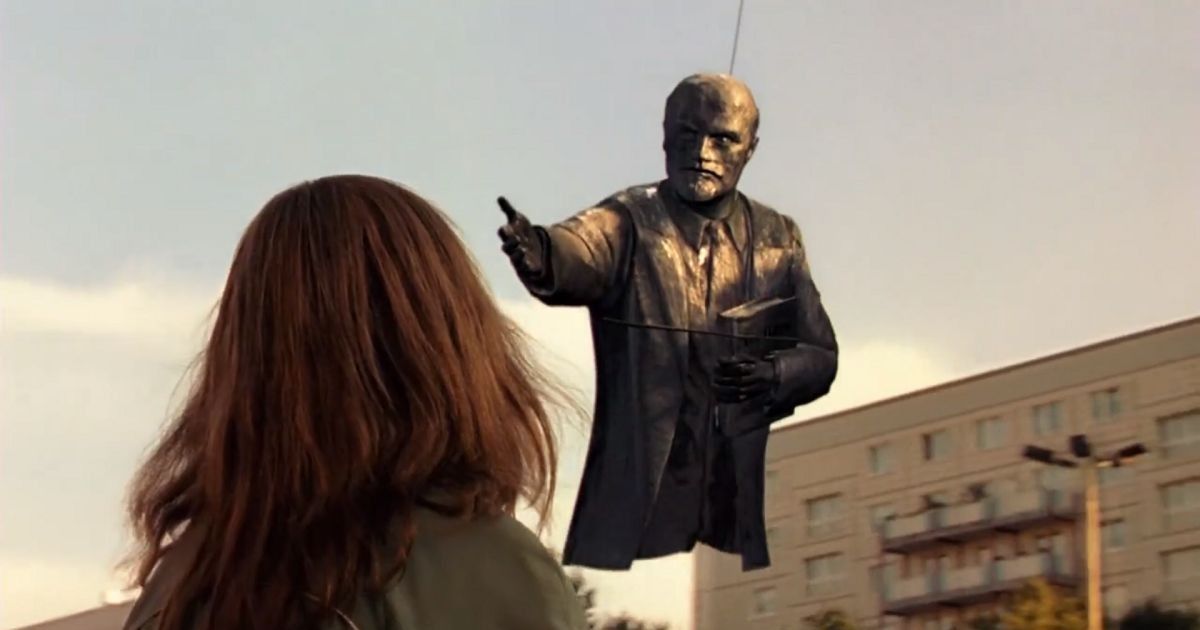
The movie itself is a nice mix of comedy and drama with several touching moments sprinkled in throughout. It’s most impressive sequence is when Alex’s mother steps out of her isolated room for the first time and sees the current capitalistic state of Germany. She is bombarded by the vibrancy of a totally different culture and we understand the shock that she feels with every step that she takes. The disembodied Lenin floating across the sky seemingly waving at her feels like a fever dream come to life and it’s one of the best images that this film has produced.

The movie managed to make complex ideologies feel approachable. It’s a great way to introduce these things: to view a serious topic through a smaller scale lens which in this particular case is the mother’s room. It carries criticism without being overbearing, and tackles several themes such as nostalgia in creative ways.

Alex is a very relatable character. He has big dreams for himself, is passionate, and is motivated by the love that he has for his family. He is driven by the desire to protect his mother. We understand the incredible lengths that he goes on in order to keep a lie because we know what is at stake. He never truly lets go of his original love for the stars but instead he has to choose something more realistic given his circumstances, which is something I think the majority of us can relate to.

His best friend, who further strengthens his character traits, is my favorite character of the bunch. Editing a wedding video to resemble ‘2001: A Space Odyssey’s’ most famous shot has to be one of the most enjoyable moments in the film for me.

It’s a film with a lot of heart and you can see it shine through the character’s performances. The only reason I have for not liking it as much as the other films is that it doesn’t give me the creativity or freedom to explore themes or characters as much because a lot of it is pretty straightforward. Nonetheless, it’s an interesting watch and I’m glad I got to see a premise such as this one.

The film ends with a farewell to Alex’s mother, a poignant scene captured beautifully.

“She’s up there somewhere now. Maybe looking down at us. Maybe she sees us as tiny specks on the Earth’s surface, just like Sigmund Jähn did back then. The country my mother left behind was a country she believed in; A country we kept alive till her last breath; A country that never existed in that form; A country that, in my memory, I will always associate with my mother.”

Hiding the Truth Out of Love

Good Bye Lenin was a film with a plot that revolves around a son’s love for his mother. It was evident that Alex was very concerned about his mother. I thought his efforts to keep his mother from a heart attack were admirable which is what really kept the movie going. Somehow, there was also a thrill whether or not Alex’s mom will find out the truth, which was that the Berlin Wall no longer existed. I believe it was what made me kept watching the film, as Alex thinks of creative ways to hide it. One of the scenes that exhibit this is when the mom sees a Coca-cola banner outside their home. This generated doubts. As a result, Alex and his friend start to make broadcast films that would help the mother understand its presence. 

Another way Alex tried to keep up the lie was how he transfers modern food products into the packaging that his mother is used to. I thought it requires a lot of effort to do that, given that he is also working throughout the day and has to keep on doing it at least once a week. Furthermore, the supply of food products that his mom desired were already scarce by that time. 

Aside from the thrill, I believe the movie also gave a comedic feel, given that the idea of Alex altogether seems unfeasible. Furthermore, the lengths of Alex and his friends they would go through in order to convince the mother that nothing has changed. An example of this was how Alex and his friend requested Sigmund Jahn to report in the library which disturbed everyone studying.  Another was how Alex’s friend Denis enjoyed making broadcast films for the mother which allowed him to showcase his passion and talent. 

I really thought the movie also developed a lot of characters. Despite the daunting effort of preserving his mother’s life, Alex showed a lot of character and willingness to keep his mother alive even if it meant facing the past or to live a schizophrenic lifestyle, meaning that outside of home he is modern however inside, he is back in the past. On the other hand, I also liked how the movie also gave us an idea of other characters such as Alex’s sister, Ariane. It seems that her biggest problem is her desire to meet her father. Given that their father left them when they were kids, both siblings never really got to bond with him. It also did not help when Ariane saw her father with a new family. The tensions between the parents were also given a glimpse, as the couple eventually reunited in the hospital when Christiane, the mother received her second heart attack as it was her last wish to see him once more. Of course, this was achieved because of Alex. 

Overall, the movie had a great plot and storyline. Almost every scene developed the characters while also entertaining the audience about the main conflict of the story which was whether Christiane would find out about the truth.