Persona: A Study on Timeless Cinema

Persona (1966)

Bergman’s masterpiece holds the incredible feat of being considered one of if not the best film ever made. Furthermore, if L’Avventura was one of my favorite films from this class, Persona is my favorite.

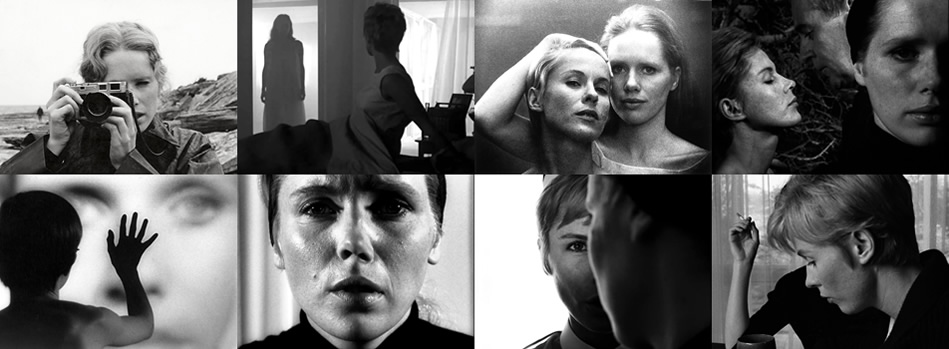
There are many factors that go into Persona being a masterpiece. From the famous opening sequence that is an editor’s paradise (in fact often cited as an example of the best edits in film history) to iconic shots and frames with light and texture. The way the film molds the two actresses with the camera utilizing their shadows and poses. And incredible dialogues all under the masterful direction and brilliant performances.

On the surface, the film is obviously concerned with the recurring symbolism of duality. There is duality within the two characters: their on-the-surface dispositions, to their deeper nature and persona. There is also duality in the interpretation that the two women may be one, and just representations of two extreme characters of one woman. However, this is just one of the many interpretations that could be extracted from Persona.

The intelligent blend of surrealism and realism is also a topic to discuss. The film constantly makes you wonder which scenes really occurred and which ones are mere imaginations. The motives are never really clear, and the actions are subjects to interpretation. The film’s use of surrealism vs realism keeps the audience at bay and imprisons them to be engaged with the material. The possibility of vast film discussions regarding the events of the movie is one of its most attractive qualities.

Another heavy theme that can be found in the movie is the reversal in roles. Who is the nurse and who is the patient? Who is the one that is “mad”? Who is actually treating who? In the beginning, Alma, with her profession, is clearly the caretaker, but once in the summer home she becomes increasingly more dependent of Elisabeth, and starts to show insane tendencies and lunacy. Alma becomes the more manic one in need of help, while Elisabeth despite her forced muteness still applied, is the more sane of the two. The gradual and subtle role reversals delivers in raw power of the characters. This of course is aided by the wonderful talents, Bibi Andersson and Liv Ullmann.

But perhaps, the least talked about theme of the movie, but is my favorite (because I pride myself in completely figuring it out on my own) is it’s study on motherhood. Both characters exhibited insanity that throughout the movie is carefully revealed as quite connected to their maternal roles. Their mental illnesses can be perceived as unconsciously rooting from their failure as mothers, and how that messes with their personas and perceived ideas of themselves. The opening shot of the sickly boy who reaches out to a white screen which turned out to be the character’s faces, can be argued as the aborted baby that is reaching out to its mother that killed him. This opening can be one of the mental horrors that cloud Alma’s mind that induces her to be manic.

Overall, Persona is a film that could be interpreted in many ways, and I find that it could be viewed in varying voices and lenses which make it a timeless cinematic triumph.
Persona

Persona is another 1960s film, written and directed by Ingmar Bergman. It revolves around two women, Elisabet, an actress turned patient, and Alma, her nurse. They move into a secluded area, where they have nothing to worry about but their mental state.

The film is in black and white, and as a person with a short attention span, watching movies in black and white is a challenge for me. Although this film kept me on its hook because of the twists that kept happening throughout its runtime. My reaction while watching this film was a mix of feeling confused and intrigued, and it kept me wondering what will happen next, or how the film will end.

In my point of view, the two characters had strong sexual tension present during their stay in the cottage. As they continued to bond and grow closer, some sort of love or lust was suddenly present, similar to Black Swan or other psychological love thriller-esque type of film.

There were a lot of things in this film that I did not understand. An example was the use of the intro and outro of the film. These vague images felt important at first, but at the end of the film, something was still amiss for me. After we watched this film, I knew in my heart that I would not be able to appreciate art cinema fully after being exposed to it for two semesters.

Despite the things that I did not understand, this film was somehow enjoyable because it made me want to understand what was happening. Although, I would not recommend it to people with short attention spans.

Persona

I really thought A Woman is a Woman is a weird film to begin with but after seeing Persona by Ingmar Bergman, I realized that European Film can still get a lot more strange. The very beginning of Persona is rather disturbing as it shows a montage of images that are quite unrelated to one another. Up until now, I still cannot figure out what those images actually meant in relation to the film. It gave an eerie vibe that lasted throughout the film and supplemented the black and white colors.

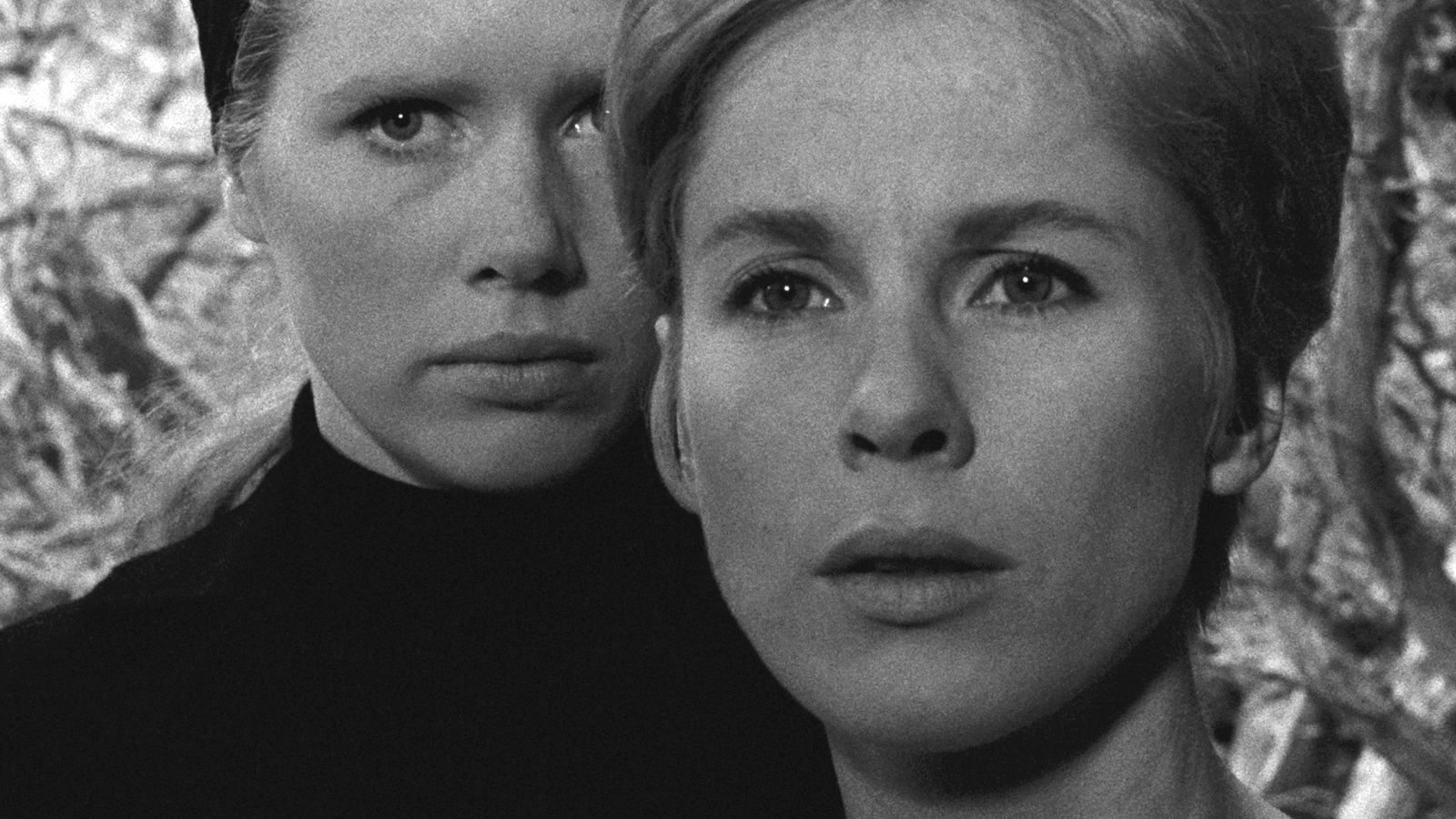
In the film, our protagonists were put into a position wherein they had no choice but to be intimate to one another. Elisabet is a renowned stage actress who is spending time in a psychiatric facility because she suffered psychological breakdown. Alma is the nurse that was assigned to Elisabet. The doctor decides to lend her summer vacation house to Elisabet for the entire duration of her recovery and Alma was to accompany her. With this, Alma had to trust and confide to Elisabet eventually. Things started to take unexpected turns from this point onwards as some of the events that would follow would not make any logical sense. The two got increasingly close with each other and even got themselves into a drama. Their fascination with one another led them to create a deep emotional connection. They may be two different individuals but with the time spent with one another, they are almost merged into one persona. This was reinforced by Bergman’s act of composing a close up which connects half of Alma’s face to half of Elisabet’s face. They were shown to be eerily similar to one another.

I am yet to appreciate the elements that are present in this film. I had a hard time trying to grasp what is really happening because of the illogical instances that would suddenly interrupt the storyline. It might be Bergman’s way of adding artistic value to the film but I think I might need to watch Persona again in order to appreciate them. With this, I honestly am not too fond of how the movie turned out. I am not a big fan of the genre that was covered by Persona but it was a film that was worth seeing and learning.

The Identity of Two Women: A Discussion on Persona

Bibi Andersson and Liv Ullman in Persona, directed by Ingmar Bergman

Slow, long films that explore themes of identity and philosophy often scare people away because they believe that the film will be difficult to understand and end up wasting their time. However, I found myself intrigued and on the edge of my seat throughout the duration of Ingmar Bergman’s 1966 Swedish psychological drama film Persona. At once, the film disturbs you with the prologue that seems to make no sense, especially when you get to the main story of the film, which revolves around a nurse named Alma and her patient, an actress named Elisabet, who stopped speaking under mysterious circumstances. As the story unfolds, you begin to realize that perhaps the film is about our identity we have in our minds and the identity that others force on us, or as the doctor in the beginning of the film says, “the chasm between what you are to others and what you are to yourself.” The roles of the characters were distinct in the beginning, as the nurse and the patient, but they begin to blur as they spend more time together. You are no longer sure who is the nurse and the patient because Alma began unveiling her secrets to Elisabet and felt good doing so. In a way, Elisabet was there to help her come to terms with her own perception of herself and how she does not conform to society, which mainly stems from the guilt she feels for having an abortion. Their identities begin to merge quite literally onscreen, which makes you wonder whether the story is the reality. Added to this is the fact that some scenes have a dream-like quality, such as when Elisabet went inside Alma’s room while she was sleeping and they faced a mirror. Thousands of questions in our heads arise because of the ambiguity of the film.

Aside from touching on the subject of identity and philosophy, another idea that made the film more interesting was how Bergman portrayed women as sexual beings with their own autonomy. Considering how a woman’s sexuality remains a taboo in our society today, it made me think how much more controversial the topic was during Bergman’s time. The scene where Alma narrated her sexual experience was very erotic, despite not showing any visual images. I felt as if I was reading someone’s private diary because the scene was simply a girl telling a story, but I can clearly picture the events in my head because of how the director set up the scene, as well as the characters’ magnificent acting. This scene, juxtaposed with the idea of women’s role in the society as a mother, supports the film’s attempt in contrasting how we view ourselves and how we are viewed by others. People keep on imposing on women the role of a mother, without acknowledging their sexuality, as evident in Alma’s story and later on, Elisabet’s revelation that she wanted to give up her child. Admittedly, I was uncomfortable after hearing Alma’s sexual escapades and Elisabet’s disgust towards her child but then, I stopped and wondered if this was because society conditioned us to consider a woman’s sexuality or her refusal of her role as mother as taboo. At this point, I thought, kudos to the film for discussing these issues and succeeding in leading me towards reflection.

By the time the film ends, you will still have difficulty comprehending its meaning and a number of scenes. It disturbs you and pushes you to ask questions, such as “Why was there a cut in the middle of the film during one of Alma’s scene, which then showed the vampires and skeleton monsters?” Are we, then, watching a film-within-a-film rather than the reality for two women? You are tempted to maybe even watch the film again — hoping to understand the message by the second time around.

Despite the confusion, you are left in awe by the sheer greatness of Bergman’s Persona. Although films that usually focus on a few characters with more dialogue than action tends to get boring for some, the chilling atmosphere and brilliant cinematography of Persona creates an impact on you and allows you to see the potential of cinema beyond entertainment. We are left with more questions, instead of the feeling of satisfaction and pleasure that we get after watching a great film.

Persona: Two Persons Two Faces


In the story of Persona (1966), directed by Imgmar Bergman, the details whether the character of Elisabeth Vogler, who experiences a life-changing moment which stops her from socializing and living a normal life, recovers from her own dilemma. Though the focal point of the film narratively should be how Elisabeth recovers with her personal issues, the direction soon shifts the vocal and very empathetic character of Elisabeth’s caretaker or private nurse, Alma. The relationship between patient and nurse shows off the tension of each other’s relationship regarding their own lives, where they find themselves comfortable with one another at times then later on frustrated with even the most trivial things. Through shown as two separate characters in the narrative, the film pushes scenes where their likeness and personalities resemble each other, to even editing their faces side-by-side. Though their character traits and where they came from are different ways, their meeting up show a similarity displayed only in the medium of film. Persona is a play of two women characters and their interaction with one another.

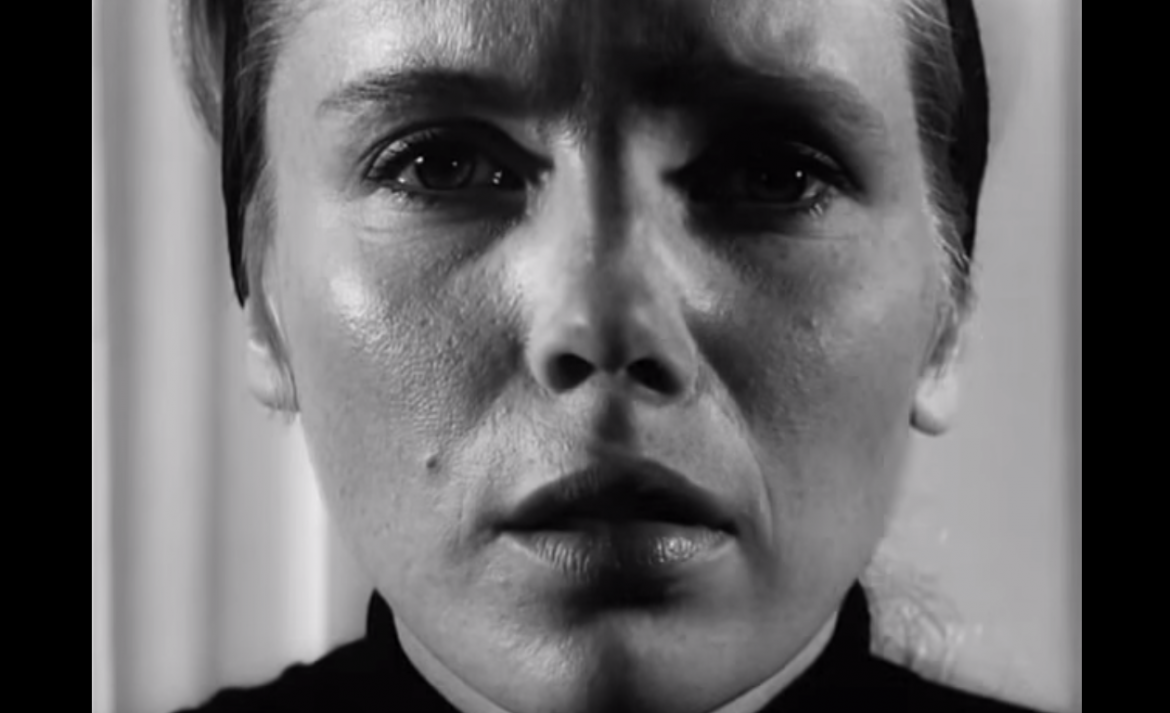
On a literary definition of the word “persona,” it means “the aspect of someone’s character that is presented to or perceived by others.” I would like to make the distinction in how the passage selects the term, a perceived character by others, when during a majority of the film, these two characters of Alma and Elisabeth spend every waking hour with each other’s company. Some of the more tender and emotional scenes contain their conversations with one another. For example, in the scene where Alma shared her story on the beach, you can see the interest and compatibility they have with one another – listening intently to their stories and feelings. There’s a certain charm and curiosity they have for one another, when Alma shows her respect of Elisabeth as an actor and Elisabeth shows her respect for Alma’s care. Since their seclusion at a cottage, where all they have are themselves, the external pressures of society and their peers don’t come into play when they kept each other’s company. Telling this tell is such an intimate level, there’s this appearance of reality of what the people or persona of Elisabeth and Alma are, especially in how Alma grows a very personal and sincere relationship with Elisabeth. Since Elisabeth’s condition won’t allow her to speak, Alma becomes more open to telling her deepest thoughts and desires with Elisabeth, from her upmost respect for Elisabeth to the naughty tale when she was at the beach with her friend. There’s this certain merging of these characters due to their likenesses and intimacy with another that happens in this character-driven film – and it’s an effective and creative telling of the two characters and their time alone.persona-screenshot-1170x713

Later in the film, one scene that striked me was when Alma had a monologue with Elisabeth, venting her frustrations with her silence and this current situation, then suddenly shows their faces as one. It goes to show how much they know about each other, and the relationship that developed after days spending so much time with one another. Parts of the film show Alma saying that both of them look so similar in shape, hinting to the imagery where their faces would be editing to make up one complete face. The character of both Alma and Elisabeth will be forever affected in their intimate exchanges with one another. It is really unexpected to see their character congregate in this way, but I see and appreciate the director’s choice in putting Alma and Elisabeth onto one face, as it shows the change a person may experience when they encounter a certain person, or when they spend a lot of precious time with that certain person. The film struck at me with a character-study and tells a tale how one would experience a person – showing how transformative people can be to ones own person.

Persona: a Disturbing Work of Art

6b_persona_0

It’s safe for me to say that the movie, Persona, is one of the most confounding movies that I have ever watched. Despite this, I still think that the movie was a work of art. The tone of the movie was set early in the film. The first scene of the movie, which showed the boy in what looked like a mortuary bed, was a bit creepy for me. This continued on with the awkward and uncomfortable close-ups, pauses, cut scenes, and repeating images all throughout the film.

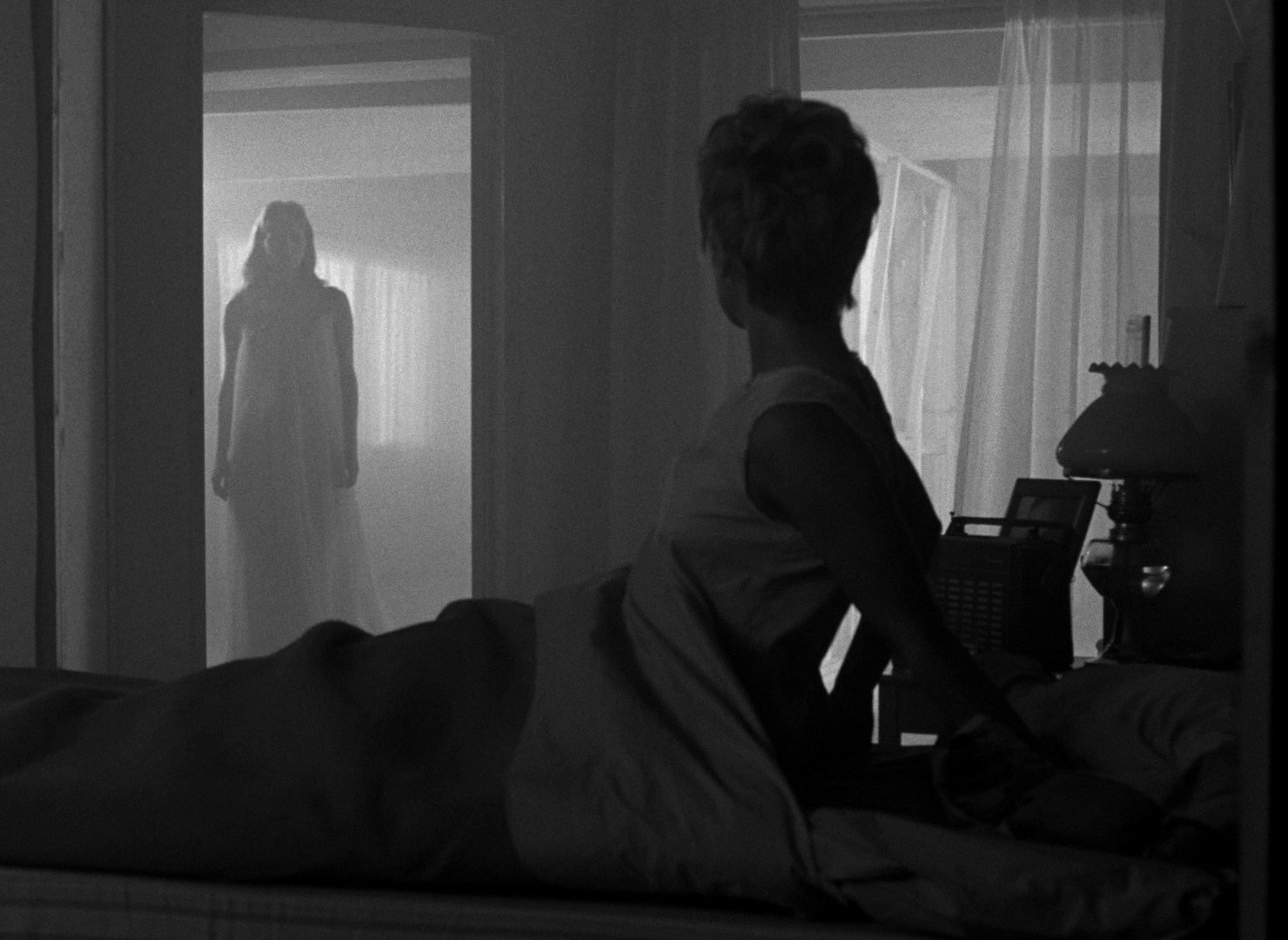
Persona-screenshot-1170x713The plot of the movie was confusing for me. This is probably because of the mysterious effect that the personality of Elisabet brings to the mood of the movie. It was unclear to me what triggered her decision to be silent. Most of the close-up shots made on her face also made me think that maybe she would do something psychotic later on in the movie, like maybe murder her nurse, Anna. But, this didn’t happen and to my surprise, the two developed a  very intimate relationship.  In fact, Too intimate at some points of the movie that sometimes I would think their relationship would level up into an erotic homosexual love affair. An example of a scene like this was when Anna was sleeping and then Elisabet secretly enters her room and watches her sleep. Anna then wakes up and they stare at each other, massage each other’s heads and look at the mirror at the same time. This, for me, was strange. The movie was very unpredictable. Personally, my expectations or predictions on what might happen in the movie were consistently let down. This added to the “shocking” factor of the movie.
26281480_persona


With this said, the movie was also shocking, making the movie somewhat a horror/ thriller one. The aesthetic of the movie only added to the mysteriousness of the film. As well as the black and white color of the movie that gave a lot of depth to the film and heightened the “thriller” effect of it. The cinematography matched the overall mood of the movie for me. For example, the close-up scene of  Elisabet, wherein she was on stage and suddenly stared into the camera with an unexplainable face and decided to become silent. And this shot was repeated many times in the movie that made me feel uncomfortable and scared. Besides this scene, many others confused me. Such as when the husband of Elisabet went to the beach house where they were staying and mistook Anna for Elisabet.

vlcsnap-437305

persona7_0


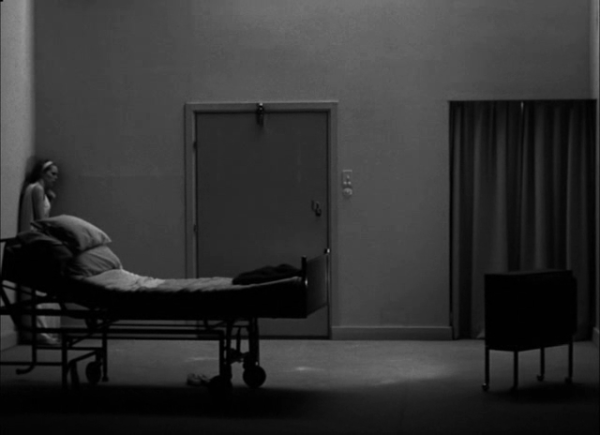
However, I liked how the shots of the film somehow evolved. Starting with very minimalist, boring, and plain backgrounds such as the walls of the hospital and the mortuary and then moving to the picturesque beach and beach house. The beach gave so much life to the movie and despite the strange events in the movie, it was nice to watch the movie and witness the artistic images brought by the well-thought-out shots.

A Look into the Human Mind

Watching Persona was a very unsettling and harrowing experience. The movie left me with a feeling of inexplicable dread, as if something bad had happened. It felt like a horror film. The premise–two women in a beach house, one of them resigning herself to a life of silence while the other practically bares her soul to the other woman–seems like the perfect horror movie scenario. Coupled with thrilling music that seemed to foreshadow something sinister, scenes that depicted the two women eerily (e.g., that scene where they stroke each other’s face), and disturbing shots of people being burned alive or a nail being driven through someone’s hand, the film was disturbing and difficult to watch at times.

Distancing myself from the immediate feelings of terror and confusion right after my viewing of the film, I can now marvel at how the movie depicts the workings of the human mind. It depicts tensions between emotions and actions, our deepest desires and how we choose (or choose not) to externalize them.Alma is this vulnerable creature in front of the receptive yet guarded Elisabet. She practically bares herself to the actress during their stay in the beach house. We see her reveal the most intimate stories and respond humanly to them. In contrast to Alma, very little is known of Elisabet–at least in the first half of the film. She plays the role of listener to Alma’s stories and provides a comforting presence to her. What I find interesting in this juxtaposition of these two arguably different women is how they seem to merge into one another as the movie progresses. We see Alma’s attempts to shatter the walls within which Elisabet has contained herself. Violence comes into the picture as Alma threatens to splash boiling water over Elisabet to get her to violate her vow of silence, or leaves a shard of glass for Elisabet to step on. Why Alma chooses to do these things and go to such lengths in order to get Elisabet to crack is still unknown to me. But I interpret it as repressed feelings surfacing, clawing their way through a persona we have established for ourselves. 

Nearing the end of the film, the reality of two women existing within the film is blurred, and I personally began to question if the scenes that I was watching depicted only one or two women. This nodded to the gradual fusion of the two women into one complex entity, an entity that seemed to escape any comprehension. Even the two women seem to be aware of this phenomenon, and they try to differentiate themselves from each other. In one instance, Alma is shown with Elisabet’s husband. They embrace tenderly, and the husband acts as if Alma really were Elisabet. She resents the idea when she wakes up from what appears to be just a dream, and even screams “I’m not like you. I don’t feel the same way you do . . . I’m not Elisabet Vogler: you are Elisabet Vogler.” However, the fusion seems inevitable and self-driven. Persona was a difficult film to watch, and an even more difficult to write about. 

Persona (1966)

Long after viewing Ingmar Bergman’s Persona (1966), I still do not feel as though I have completely processed the events in the film, nor do I feel like a complete understanding of it is possible. Bergman offers a unique experience with the film, one that I felt was a rather headfirst introduction into European cinema.

Persona sees decorated stage actress Elisabeth Vogler settling into life as a recluse after she suddenly stops speaking. Her only company is her nurse, Alma, with whom she forms a different kind of bond.

A number of Peter Wollen’s noted features of counter-cinema are made glaringly obvious in Persona from the get-go, particularly those of estrangement and un-pleasure. In the first ten minutes alone, I was overcome by a deeply palpable sense of dread despite not fully comprehending just what I was watching. While this dread is something of a staple in the psychological horror genre, the film, whose genre is already hard to pinpoint as it is, the execution completely dismantles any expectations a viewer might have of the film.

Estrangement, on the other hand, comes in that the viewer knows practically nothing about Elisabeth for most of her screen time save for her background as an actress and a few bits about her family despite her being somewhat a protagonist. It is clear from this that Liv Ullmann puts on a fantastic performance as Elisabeth, given that she was limited solely to facial expressions for the most part.

I felt that the movie was a very sensory experience in most parts: I felt as though my senses were disturbed by the strange sounds and images I was faced with. I get the sense that the introductory scenes were placed there solely for the visual effect, and not necessarily to contribute to the film’s plot directly. In this portion of the film, viewers are left confused as to what is happening. Yet, despite the lack of clarity and explanation, the film is still completely engaging, as these scenes manage to capture the audience’s attention in a nearly trance-like manner.

Thematically, the film tackled a number of topics; the sincerity of interpersonal relationships, the fragility of the human psyche, insanity, gender, lesbianism, infidelity, among other things. Content-wise, this rather unusual subject matter alone already signifies a departure from what I have grown accustomed to in mainstream cinema.

Personally, I felt a deep sense of catharsis after witnessing Alma’s impassioned and seemingly unsound ramblings. Her circumstances aside, I feel like she touched on a few very relatable themes: for instance, the inherent existential insecurity and fundamental loneliness that comes with being human.

By the film’s end, viewers still do not quite understand exactly what caused Elisabet to enter her catatonic state, or what will become of her and Alma. But that is far from the point. As the film’s plot sets in, the initial disturbance felt is only heightened by this point, and this is a feeling that will stick with audiences for many days to come.

Who’s who?

I did not know what to expect when Persona started. It had random, erratic scenes that had such weird, vivid imagery. Because of the emotions I felt while watching the beginning – confusion, anxiety, fear – I thought that Persona was actually a horror film. As the film went on, my fear lessened, but the anxiety and the confusion stayed. I was anxious because of the uncertainty the film gave me; confused because it was strange and difficult to understand from the get-go.

The turning point for me – the scene where I thought I kind of understood what was happening (I may be wrong though) – was the scene where Alma reads the unsealed letter Elisabet gave for her to send with her other mail. The letter contained Elisabet writing to her doctor about Alma – how she was studying Alma during their time of isolation. At first, it was ironic. I asked myself, “Shouldn’t it have been the other way around?” Alma was the nurse and Elisabet was the patient. Why was the patient studying the nurse? Then it hit me. Thinking of the title made it easier for me to interpret what the scene may have meant. Perhaps there is a persona between the two of them – I assumed it was Alma. Maybe Elisabet was “studying” her inner thoughts and emotions – Alma in “human” form.

Another scene which solidified my interpretation in my head was when the husband came. When the husband saw Alma, he referred to her as “Elisabet”. Alma was confused at first, but when Elisabet urged her to kiss her husband, she complied. I figured this meant that Elisabet did not have the best relationship with her husband because Elisabet kind of had to encourage (or force) Alma to spend time with her husband. But that’s just me.

Persona made me feel uneasy all throughout the film. The fact that it was black and white did not make it any better. We live in a world today where film is filled with color. Color and lighting are important tools in film – tools that must be used wisely because they set the mood of the entire film. I know that all films used to be black and white back in the day, but coming from the perspective of this generation, the color and the lighting perfectly captured the darkness of the movie. I feel like the effect would be lessened if the film were not in black and white. The colors and the lighting kept an aura of mystery surrounding the film.

This kind of film is not for passive audiences. It entails its viewers to think and interpret the movie themselves. I’m sure many have different interpretations. My own thoughts on the film may not be what the writers intended. If one does not try to understand it, he would not be able to get anything from the film because it is the type of film that does not spoon feed its audiences. Films that make people think should be more appreciated in our world today.

“The hopeless dream of being”: Persona (1966)

dir. Ingmar Bergman

Bergman is such a big name in the industry and I’ve personally always wanted to see one of his movies to see what all the ‘hype’ was about. Now that I have, I can say that I don’t think I was ready for this film nor do I think I ever will be. I mean, where do I even begin?

That opening sequence had teeth. We see quick flashes of moving celluloid and various instances of graphic violence. The camera lingers on a particularly gruesome moment: several seconds dedicated to a closeup of a crucifixion; a hand bleeding profusely from a nail being driven right through it. It’s a quick-fire montage that serves as an attack to the senses. Unforgiving, unflinching, in-your-face goodness. It sets the tone for the rest of the movie and it’s just like what people say about car wrecks. It’s horrific but you can’t bring yourself to look away.

The narrative begins with a surreal quality to it, opting for a bare bones production design and instead focusing on the actors’ performances. Bergman chooses to train his camera mostly on faces, seeing how his characters react and deliver their dialogue. Majority of the film is focused on two characters: Alma (Bibi Andersson) and Elizabeth (Liv Ullman), who he mostly places in shots together. The characters often face the camera, almost looking into the lens but never fully. We see the eyes — windows to the soul — but never in their entirety. Bergman plays with lighting to ensure that for the most part, one of their faces is covered in shadows. In film, this often signifies secrecy and we later find out why.

Elizabeth is an actress turned apathetic to her surroundings. Someone who supposedly relates and understands everyone else in order to play their roles chooses to turn her back on the world and its horrors. There is nothing medically wrong with her, her apathy is a conscious decision. There is a determination behind it which Alma recognizes, realizing that she may not be strong enough for it. Alma is her nurse and at first, is somewhat presented as Elizabeth’s antithesis. Alma is optimistic, choosing to see the beauty with the life that she is given. But she has her own doubts, her own fears, and own insecurities which slowly consume her.

“The chasm between what you are with others and what you are alone.”

These two people are then secluded in an island together. Although one of them doesn’t speak, there is a connection between the two. French philosopher Emmanuel Levinas claims that the face of the other is the key to human consciousness. (I’d like to take this moment to thank my PH102 professor for giving me something to add to this review.) Alma is honest and raw when she sees Elizabeth as a mirror. Alma confesses her deepest secrets to Elizabeth and she lets it all out because she feels that there is no judgement whatsoever. When she later finds out that Elizabeth may only be studying her, her feelings instantly shift. Alma’s paranoia switches to her and she spirals out of control. She becomes hostile towards Elizabeth, even going as far as letting her get hurt by a shard of glass, becoming the opposite of her role as Elizabeth’s nurse.

Their differences feels smaller. This is Elizabeth’s retreat but it is Alma who undergoes a more significant transformation. Who then is the patient and who is the nurse? Who is treating who?

The climax of the film is a lengthy dialogue about Elizabeth’s past. The scene repeats to show the reactions of both women. It ends with both of their faces merged in one image. There is a blurring of identities. Although initially different, they have the same fears at their core. Elizabeth turns away from them while Alma chooses to face them and live with that knowledge.

The ending leaves the viewer with several questions. Are both of these women real, or is one of them just a figment of imagination of the other? There are two scenes that may be used for this theory. Only Alma leaves the island. Earlier on, Elizabeth’s husband mistakes Alma for Elizabeth. His eyes are covered by heavily tinted shades so it’s possible that it means that he’s not really seeing. Whatever it may be, there are no answers here.

Although very different, this film reminds me of ‘Under the Skin’ (2013) in the sense that they have a few similar themes, have the same uncomfortable/upsetting feeling all throughout, and they leave the viewers with more questions than answers. If you haven’t seen it, I highly recommend that you give it a watch.

Overall, I’m still confused (haha). I don’t understand all of it but I still really enjoyed it. Both actresses deliver great performances, with Andersson delivering majority of the lines and having to carry most of the dialogue while Ullmann does her best to express using only her facial expressions. One thing I found really interesting is that this film passes the Bechdel test despite one of the characters having only around 2 lines of dialogue. Definitely would give this one a rewatch but not any time soon.

“I think I could turn into you if I really tried. From the inside.”