What is a Perfect Human?

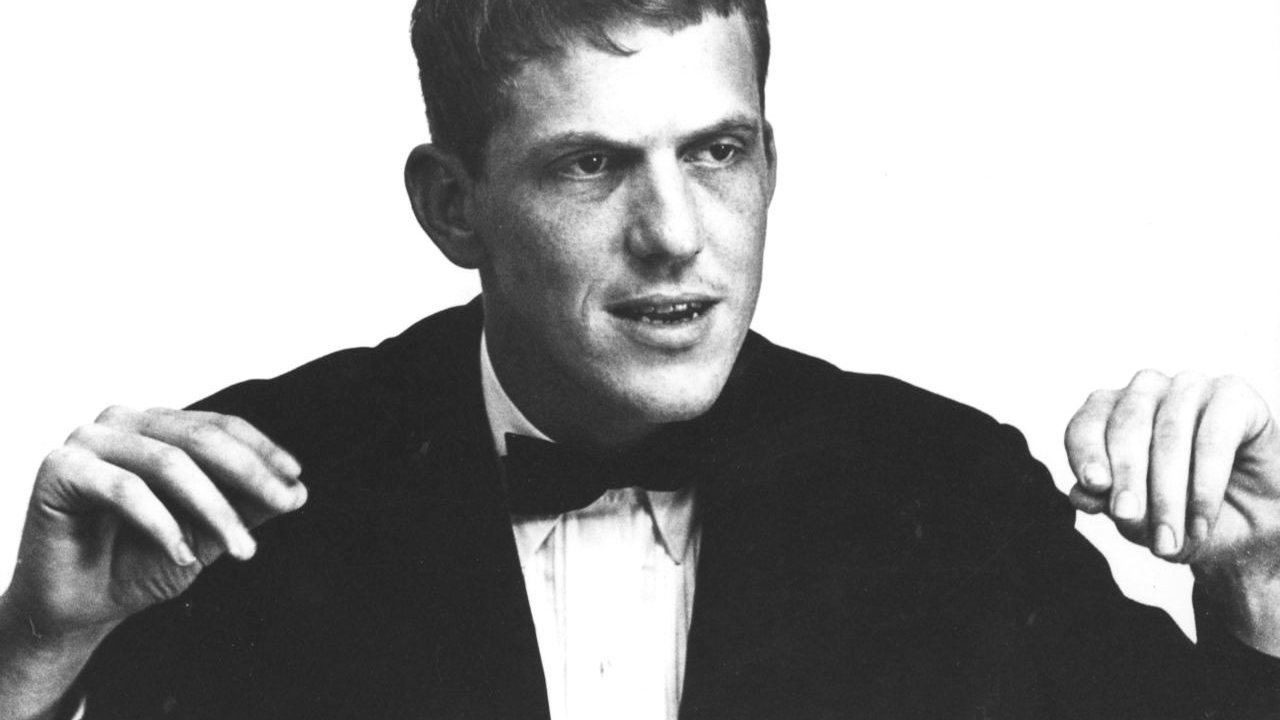
Lars Von Trier tortures his personal hero, Jørgen Leth, in The Five Obstructions challenging him to recreate his 1967 short film, The Perfect Human, in five different ways. Throughout the film, Von Trier presented five different ways of obstructing his favorite film describing it as a masterpiece already, and should only be subjected to getting “ruined.” Leth agreed at the beginning saying a a good perversion can cultivate but soon found himself suffering over the impish rules Von Trier had set out for him to follow. Both The Perfect Human and The Five Obstructions itself are pieces completely unknown to me previously that I was confronted by this film completely free of any presuppositions on how it was going to be. I was completely glad that that was the case because prior to that I haven’t had a movie-viewing experience like that in so long wherein I anticipated every second intrigued on how the film would play out. At first I found Von Trier condescending and couldn’t stomach the self-righteous way of speaking he was using towards his supposed “hero”. But the more I watched, the more I came to admire the way he was only challenging Leth’s creativity by daring him to rethink a work already so familiar with him, and even one that he’s already satisfied with. The film formulates the question of whether rules restrict creativity, or simply enhance it begetting the individual to think innovatively within the walls of his or her limitations. This was especially shone light upon during the third obstruction when Leth was asked to make a film completely free of restrictions. It rendered the question, is it harder to work with following a list of constraints, or is it necessary for creation? Although both circumstances, whether with limitations or without, Leth was still able to create crafts so beautifully, I felt that he was learning more and more from each obstruction.  He grew each time he reinvented his magnum opus, proving that our best works could still be challenged, and should be challenged. It is the only way we can grow without playing victim of being too satisfied with ourselves hindering expansion of our art.
Jørgen Leth

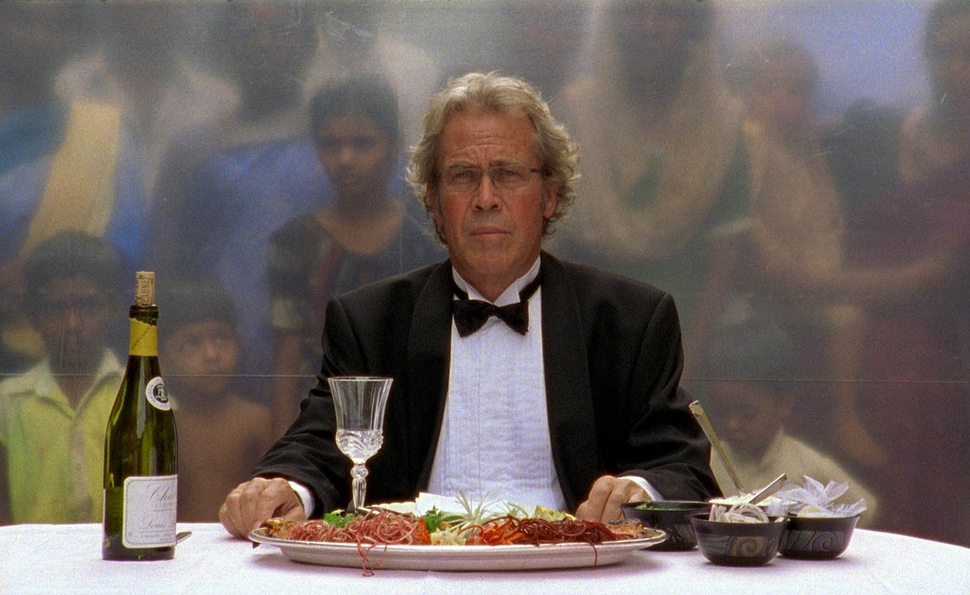
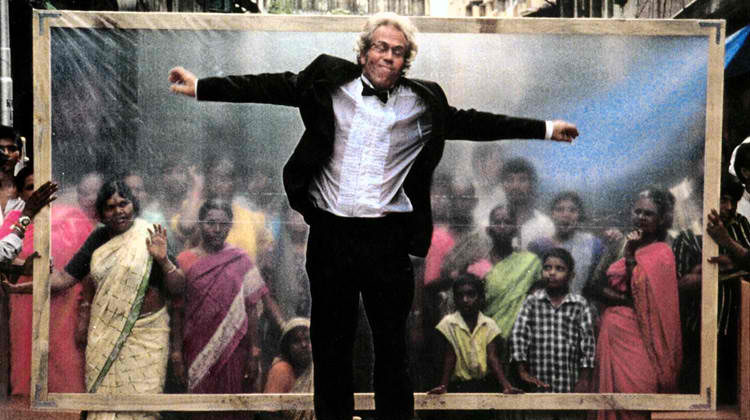
Regarding creative decisions made throughout the film, I was completely impressed with the idea of using the transparent screen in Bombay for the second obstruction despite Von Trier disliking it. I think it emphasized the merging of the perfect human with the real world. The concrete reality were the people framed behind the screen and the perfect human was not completely out-of-reach from them, but just on the other side. It supports Von Trier’s desire for this film to minimize the distance between the perfect and what is truly human. Another factor that I loved from this film was how, even if there was tension between the two characters, it was hard not to agree with both of them. Von Trier wanted to challenge Leth to create a “crappy” work and told him that he’s already a genius, so he shouldn’t be satisfied with that and forever be in competition with himself, he should seek beyond and receive “therapy”. However, Leth found this completely impossible saying, “We can’t help becoming instinctively involved looking for a solution that would satisfy us” pertaining to his decisions concerning his craft. I think it’s a poetic parallel of life and how sometimes, despite our desire to let go of wanting to be perfect, it’s in our very human nature to look for the perfect, and that is just what simply is human. The film concludes with the fifth obstruction requiring Leth to give his name to Von Trier completely and allow him to be the one responsible for creating the final short. I was completely aghast with that request wondering how it would ever be possible for someone to completely let go of their work and pass it onto someone releasing all proprietorship over it. But it made me realize that that is what art entails us, to learn how to completely let go. Because once we’ve released a craft that came from our own ideas our own inspirations and release it into the real world, it no longer belongs to us but to the world. Because no matter what, beauty is always determined by the beholder.

Moreover, the movie was more than a study on creativity, but a study on the person himself. From how far he’s willing to go for the sake of creation, to the degree of perversion he could endure that could separate him from his idea of art and himself. Because even with his resistance to being dull and obsession with being “perfect,” Leth is just delivering what it means to be human. The film wanted to study the bridge between perfect and human and Leth is a perfect example of someone bridging that gap.
The Five Obstructions

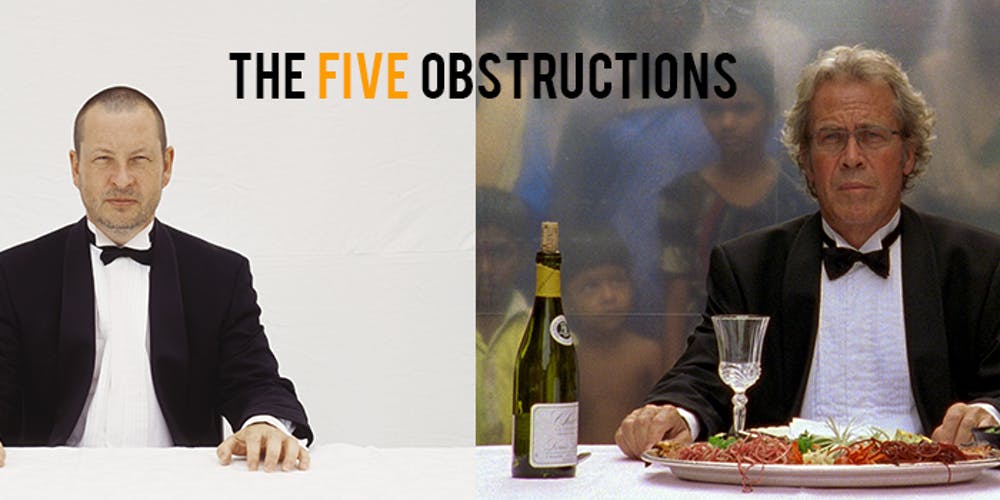
The Five Obstructions is a documentary film revolving around the recreation of Jorgen Leth’s film, The Perfect Human, as he is directed by Lars von Trier to follow instructions that would make each recreation a challenge.

This is one of the films in class that I enjoyed the most. Watching a director recreate his film multiple times with different results was fascinating. The director was put through many challenges and at some points, it was pretty obvious that he was struggling with the different ways that he was changing his film.

I especially enjoyed the fourth obstruction, which was to remake the film as a cartoon. In this obstruction, he used rotoscoping, a form of animation where an animator draws over pre-made scenes to animate them. The explosion of colors and the semi-realness that rotoscoping presents is something I enjoy watching. Similarly, this was the type of animation that was used in a film called Waking Life, a film about philosophical discussions.

Overall, this film is something I would recommend to someone who likes making films. I would definitely watch this again.

A Cross of Old and New: A Reflection on The Five Obstructions

Late 20th century European cinema has shown me films in many art forms which I never would’ve expected coming from the familiarity of Hollywood cinema. The past few films in class showed me different takes on both the story and the execution of the film, often times playing and messing with many common tricks in the way a film is expected to be. This art movement in Europe experimented with many elements which brought forth many filmmakers who have made their mark in the history of film. To end this era, however, was a step forward to modern European cinema which of course still have remnants of its previous craft. Lars von Trier and Jørgen Leth’s The Five Obstructions is a cross between these two eras, having both elements of experimental art cinema and the modern-day style of documentary film.

I feel as though the two known directors of this film represent the two times in European cinema, with Leth as the man of the past and von Tier as the modern man. My observation was that through von Tier’s obstruction, Leth was able to explore a kind of cinema that is still discovering. Five very different variations of Leth’s The Perfect Human was produced out of von Tier’s obstructions, yet all of this is from Leth’s own conceptualization and understanding of the set rules. He was able to explore deeply into what was asked of him and oftentimes have to go against conventions that he has been comfortable with. For example, he expressed his displeasure with cartoons, yet was able to go beyond this discomfort and produce something that is still very Leth-esque. Much like many filmmakers in the old European art cinema, Leth went against common executions of narratives in film, almost as if creating his own style. Similar to this, some of the films we have watched offer unconventional ways of storytelling, which I perceived to be “never before seen.”

Although I may refer to Europe’s art cinema as old, it can’t be denied that a lot of the techniques in producing such films were pretty new at that time. Although these forms may not be considered modern today, maybe those in their time upon the film’s creation believed that such films will lead to a different kind of modern cinema. Leth’s use of common modern techniques showed us that it can still change and could potentially lead us into a new realm of cinema; one that Hollywood has never even touched on yet. And this for me is where von Tier’s role comes in; as the man who pushes for the new. His obstructions may have been very difficult for Leth, however it was because of these prompts that Leth was able to produce such films. Von Tier forces the filmmaker to go beyond himself to produce films that would define a new era for cinema. This for me is what modern is; it is something that goes beyond the limitations of the past and creates its own, new interpretation of what it represents and what is beyond itself. The Five Obstructions, being a documentary shows us a new format of film where one can watch the old style of European art cinema unfold through modern-day techniques.

The Five Obstructions (2003)

Lars von Trier and Jørgen Leth’s The Five Obstructions (2003) features its two directors as its sole protagonists, with the former challenging the latter, his mentor and good friend, to a series of filmmaking challenges he calls “obstructions” in which Leth is asked to remake his film The Perfect Human, von Trier’s favorite film, a total of five times, each remake with a different twist and instruction.

Despite being a very recent offering, The Five Obstructions could be considered one of the more advanced films for new fans of European film. I say this because most, if not all of the noted staples of European cinema according to Wollen (1972) were present in the film.

For instance, what was immediately striking about The Five Obstructions was that the plot once again was far from linear. Narrative intransitivity was very much present; although the five obstructions were shown in what seemed to be chronological order, none of these seemed to build off each other and presented fresh starts and clean slates each time. As a result of this approach, the scenes were segmented, episodic, and never necessarily transitioned into each other smoothly, with loose ends hardly being tied up and leaving the viewers to make sense of each event. Especially in the film’s opening moments, the audience’s full attention is demanded in order for them to make sense of the on-screen scenarios.

Multiple diegesis was also very much present. Even though the two protagonists an were the only two elements that remained constant throughout the entire film, nothing in the film seemed to exist solely to tie each obstruction together. To an extent, the environment each obstruction was taken up in seemed to be a world of its own.

The film’s articulation of these individual worlds are where European cinema’s unpleasure and estrangement played out. For instance, strange and unusual images were shown in the scenarios of The Perfect Human, as one particular obstruction portrayed a luxuriously-dressed Leth in the middle of poverty. I felt this kind of visual stimulus alone provoked my sensibilities rather than cause entertainment or pleasure. This occurred many more times throughout the film as each obstruction gave them viewer something to ponder intensely about, enough to be a distraction at times. Estrangement, on the other hand, was obvious in that the characters within the aforementioned film (including the perfect man himself) did not actually contribute to the film’s plot unfolding or to the dialogue and themes in any way.

A certain dedication to theatrics and experimentation is present in the film’s finest details. Everything from the dialogue and word choice of dramatic words (obstruction, suffering, torture) to the concepts and execution (limiting the sudden use of film animation) is creative, unconventional, and wildly eclectic in the way only European cinema seems to have the capacity to present.

I feel as though the film was heavy with themes of self-discovery; this became more evident as each obstruction was overcome, particularly towards the end where the film seemed to find itself launched into a deeply reflective and relatable commentary on the human psyche. What the film ultimately left with me as a viewer is the idea that the idea of perfect evolves, and this notion holds truest for artists aiming for just that. In Leth’s rehashing the same idea five times we see the misery of struggle, of work and toil, but ultimately this only serves to reveal a certain perfection in the struggle, as the fifth obstruction reveals his most authentic self having gone through the first four and escaped his comfort zone. The film’s experimental edge also comes in that the obstructions were a way to demonstrate cultural ideas of the perfect man (Cuba, cigarettes, etc.).

By the end of the movie, closure does not come in the way the plot’s progression would have its viewers expecting. Audiences eventually find that the goal was not simply the accomplishment of the five different obstructions but something much more human and much more meaningful. While not necessarily a complete rejection of proper closure, this demonstrates aperture in a number of ways; the film’s end is rich with equally valid meanings that any viewer can glean a message from. Both protagonists are also to an extent self-aware about the meanings of the entire experience and how these might affect them later on.


How to lose your mind in five remakes

When we were told that we were going to watch a “docu-film” kind of movie, The Five Obstructions was not what I had in mind. Truth be told, I was not excited to watch the film mainly because documentaries are one of my least favorite film genres. There is just a slowness to it that never sits well with me because my attention span is very short and I get distracted easily. However, I realized that it was going to be a little different from the documentaries I am used to right when the film began and showed the man dancing in a white space, or as they liked to call him, “The Perfect Human”.

On the surface level, the relationship between Leth and Von Trier is the typical mentor-mentee relationship. It seemed a little ironic because the in their case, the mentee was telling the mentor what he should do and not the other way around. In the movie, Von Trier, the mentee, was daring his mentor, Leth, to remake his past film, “The Perfect Human”, in five different ways with various “obstructions”.

The obstruction that struck me the most was the second one where he was tasked to remake the film in the most miserable place in the world without actually showing the misery of the location. It did not even strike me in the way that it should have if I were looking at it from the most objective point of view possible. I found the scene memorable because of the story of the scene itself — there is a man living lavishly with a full meal in front of him while there are poor people behind him watching him eat. This scene was honestly so heartbreaking for me (even though I know it was not the intention of the scene to make me feel sad) because it targeted a group of people very close to my heart — the poor. They made it look like the man (Leth) was flaunting his wealth and resources in front of all these people and isolating himself from them at the same time using the wall between them. Throughout the scene, the only thing I was thinking of was: if this is what it entails to be “the perfect human”, then I would rather live imperfectly.

Another thing that struck me in the same obstruction is the obstruction in itself. It was probably just a part of the creative process for them, but it showed me a different reality altogether. It reminded me of the fact that films often only show parts and not the whole. For example, films make use of the beautiful scenery in the Philippines which shows how pleasing to the eyes the country seems, but behind all that is poverty and marginalization. Yes, sure, it was simply a challenge for Leth, but it was also able to showcase a reality in films and the media today.

The Five Obstructions may have had different intentions and motives behind the film, but it was able to bring out a different insight from me, especially from the second obstruction. It was not difficult for me to relate it to the real world today which was why I was able to come up with these opinions. The remakes seemed surreal, oh-so fictional and maybe even borderline insane, but if it were watched closely, it would be possible to relate it to our reality.

Fourth

The Five Obstructions by Lars von Trier & Jørgen Leth

What makes a mentor? A teacher? An ‘idolized figure’? What makes art artistic?

The movie The Five Obstructions gives us a deep look and understanding of a mentor and mentee relationship. The story begins with Lars von Trier asking his friend and mentor Jørgen Leth to recreate and imagine Leth’s famous short, The Perfect Human in von Trier’s terms creating five obstructions that he must have to comply with. The beginning was all fun and games, von Trier giving the most random yet somehow meticulous instructions such as filming the scene in Cuba or make it into a cartoon. The different obstructions were unique in its own way as the film split between showing scenes from the original shirt film The Perfect Human with the new creations that Leth has created. All very weird that I may not be too much of an intellectual to understand but I’d like to think that this was created just for art. So in that case it was merely art for art’s sake. It made me want to watch The Perfect Human by its own without any cuts because I wanted to see how it actually flowed. To at least try and understand the true basis from where the documentary and von Trier’s obstructions were coming from. Would it have been a difference? Would it have changed my perception of the documentary itself if I had watched it before The Five Obstructions? All these obstructions made me question what truly is art and how it is made. Did The Perfect Human become more special or unique with these obstructions or should it have been left alone and let the short film speak for itself?

But what really struck me was the fifth and final obstruction. How it felt as if von Trier was actually the mentor in all this and Leth the mentee. In the beginning it was clear to me that von Trier is technically the mastermind in all this. When Leth had made a mistake in one of the obstructions, von Trier insisted that he must go back and do it again. During the documentary I felt as if their relationship although friendly on the outside, there was a strained relationship between them. I felt there were times that Leth did not want to do it yet von Trier kept insisting and so Leth did it. They did not really give any context as to why they did this experiment in the first place so for me it made it all more confusing because there weren’t any great incentives to what Leth was doing for von Trier.

At the end, I think the real take away I got from the documentary is that these mentors, the people that we look up to and idolize do not always have the answers to everything. We learn through them and with them as well. Sometimes these students can also give outputs and ideas that turn out to be better and there is nothing wrong with that. They have created their own masterpieces with the help of their own mentors but can also speak for itself.

The 5 Obstructions: New Take, Old Film

273598-11200-clp-950image-w1280

The Five Obstructions is a documentary showing the director Jorgen Leth faced with five peculiar challenges in film-making. Jorgen Leth was tasked to recreate his 1968 film, The Perfect Man in different styles and creative instructions determined by his fellow director Lars von Trier. These instructions ranged from keeping each shot 12 frames, having a particular background or backdrop in the scene, to even a fully animated recreation of The Perfect Man. This task of creating new renditions of his older film gave Jorgen Leth a personal drive to show off his caliber and talent in creating film and screenplay, as well as proving himself to be capable in Lars von Trier’s eyes. This film went to show the experiences, joys, and frustrations of creating art through film.fiveobstructions

The story follows Jorgen’s journey following the specific instructions given to him to how he will create a revision of his old film. Though challenging, he sees an interesting way of doing these challenges – which motivate him to push with these and create beautiful works of film to present to his peer Lars von Trier. What’s interesting, in my opinion, is how Jorgen undertakes this challenge (something that was created to be difficult and taxing to him and his filmmaking abilities) and still finds a way to create works of art that not only impresses us as the audience but the challenge-giver himself. Reviving a film from the 1960s with new contemporary ideas and perspectives, Jorgen can be a representative of the newer movement and approach to the slower and more arthouse style of European Cinema. This is shown in how despite the challenges he faced, Jorgen finds time to smile and find joy in his work as a director, actor, and storyteller in cinema – shown in the private shots where he talked endlessly about his plans for every obstruction. The Five Obstructions really shows that you can teach an old dog some new tricks, as the saying goes.

 One of the obstructions given to Jorgen that piqued my interest was the (3) complete freedom or go back and redo challenge. It’s interesting to see how much of a challenge Jorgen saw in this challenge, even contemplating redoing his second film. The idea of complete freedom with absolutely no restriction, he thought, was a tough task, and I still am baffled to why he would think that. Does the ide of having certain limitations leave him with more material to work with, or is the idea of freedom a daunting gift (or curse)? In the end, I find it curious to see his work of creative freedom more difficult compared with the other tasks given to him.

This film feels like a callback to the older European films watched in our lectures, as the older concepts in the European film of when are given a new perspective or turn in Jorgen’s reviving of them. Given the challenge of not only recreating Jorgen’s old film of The Perfect Human but also added restrictions and obstructions onto its production, you would think these would create a lackluster film out of this aged director. Instead, we see how an aged and clever director finds a creative spin to not only meet the requirements given to him, but create a film that can stand on its own, producing a new approach to European cinema in general.

the perfect human x5

When I heard that we were going to watch a movie actually made in the 21st century, I was excited—I felt like the best films I could relate to and understand were more modern films. The Five Obstructions is a documentary film directed by Lars von Trier and Jørgen Leth. It follows the two directors as von Trier challenges Leth to remake his own famous short film, the 1967 The Perfect Human. Each remake, however, was accompanied by an obstruction or obstacle set by von Trier. Though many people have viewed The Five Obstructions as a game of one-upmanship, I chose to view it as a film that examined the friendship of the two directors. One that showed how one friend challenges another to better his skill and widen his own way of thinking. The roles between a mentor and his protégé have suddenly switched—von Trier was now guiding Leth as he starts his film anew.

I think that the challenges were something that they both enjoyed doing. It was an opportunity for something different than the typical, almost routine films they would normally do. Leth did it not because he had to, but maybe because he wanted to. He needed a challenge. We can tell from the original film that Leth had a style of filming: classical, simple, and rather minimalist. But von Trier challenges this through his obstructions with a different cinematography, with a loud, disorderly, and almost uncontrollable setting, with Leth in front of the camera rather than behind it, and with Leth using a new and modern technology, which he had no experience with at all. Even von Trier was evidently not giving Leth these obstructions just for fun—he was critical of them, as we can see when he fails Leth in the second obstruction. Von Trier knew what he wanted from Leth without giving it away. We know that these challenges work when, after completing the first obstruction, Leth was grateful for the obstruction, stating: “the 12 frames were like a gift.” The two brilliant filmmakers knew that there was always more to improve or change about any project, for even a film called ‘The Perfect Human’ was no perfect film.

The Five Obstructions was definitely a more modern film compared to what we have been watching, but we can still use the things we have seen in this film to understand the older films in terms of what goes on behind the camera, or rather, in the head of a filmmaker. Long, silent shots, similar to the ones used from The Perfect Human, seem to be common in many of the 60s films we have watched in class. The Perfect Human even reminded me of the style of Persona, with its black and white film, and silent and strange aura. The documentary also used a lot of dialogue, which I enjoyed. Although, the film was a bit repetitive, I didn’t mind so much because there was also something new and different with every remake.

Overall, the film was a challenge of creativity. A challenge to test our own limits, and to go beyond our first impression. The film was a literal work of art, with how it showed the process and thinking that went behind making a film. The result of the fourth obstruction was my favorite. It turned The Perfect Human into a contemporary piece of art. Leth was a perfect example of one of the greatest challenges of filmmaking: working with what you have and making it better than what was expected.

The Revival of Creativity: A Discussion on The Five Obstructions

Jørgen Leth in The Five Obstructions

After watching three drama from the 1960s, it felt like a breath of fresh air to stumble upon Lars Von Trier’s The Five Obstructions. Here, he challenges fellow filmmaker Jørgen Leth to remake his short film, A Perfect Human in five different ways. They opted for a documentary style, which enhances the viewing experience since we get to see the work that goes into filmmaking. The development of the characters and their styles become more apparent because we believe we are watching the reality, as opposed following the lives of fictional characters.

Aside from the medium, Von Trier’s playfulness made the film exciting, making the viewers anticipate what other tricks he has up his sleeve. In the beginning, we are quite unsure why Von Trier came up with the obstructions for his mentor. We ask, “What’s the point of the film?” or “Why choose those particular obstructions?” The film asks us to reflect as it presents Leth’s new films. Towards the middle, it becomes clear that the emotional connection between Von Trier and Leth was crucial in pushing the latter to reject his old habits and techniques that prevented him from maximizing his creativity. It was interesting to see how the student taught and criticized the mentor during the challenges. Ironically, the obstructions meant to hinder Leth’s progress or force him to produce a bad film, resulted to compelling, clever new films that he would not have produced were it not for Von Trier. Leth, himself was astonished, and you can see his development throughout the film. He began to smile more by the time they watched his animated film, in contrast to his controlled, stoic demeanor in the beginning of the documentary. 

At the end of the film, we realize that European cinema is truly an avenue for a variety of techniques for filmmaking and storytelling. Oftentimes, we believe European films are daring, eccentric, and difficult to understand since we are more familiar with Hollywood films. However, considering the documentary style of The Five Obstructions that is similar to Hollywood conventions, we get to see that it is not just about the aesthetic. For instance, Von Trier shows us the ethics behind filmmaking when he asked Leth to remake the film in the worst place in the world without showing the place. The exercise required empathy, but Leth refused to listen and stuck to his old practice of capturing provoking images. Aside from this, Von Trier also taught his mentor to remake the films without any rules and as a cartoon, as the third and fourth obstructions, respectively — which he hated. Despite his struggles, Leth came up with some of the best films and offers the audience not just one, but a total of six films in The Five Obstructions alone. This film-within-a-film technique satisfies the thirst of many creative professionals, allowing us to understand how we can constantly improve ourselves if we escape the comfortable box we built. Although Von Trier felt that he failed with his mission, we clearly see how he paved the way for his mentor, Leth, to nurture his film art once more.

The Five Obstructions: Film as a Form of Art

Image result for five obstructionsMovies usually work in different ways, each having their own structures, narratives, and variations from the usual practices. This can be seen in the first three movies that we watched, as each film had something new to bring despite being released in a span of just a few years. Our latest film, The Five Obstructions, by Lars von Trier, was also completely different as it deviates from the usual film structure.

The Five Obstructions was sort of like a documentary, with how the shots were filmed and how it was constructed but it was also sort of like an anthology in the sense that different variations of the same film were shown, each having a different twist to it. It serves as a post script for Jørgen Leth’s “The Perfect Human,” released in 1967, as the film revolves around the challenges given by Jørgen Leth to Lars von Trier in reconstructing what he deemed as a masterpiece and a perfect film.

The film was a bit confusing for me because of how the shots were made and how the transitions were done. It was made of different variations of the same film and behind the scenes shots, which included the thoughts of the directors, the discussions about the film, and processes that they went through. The Five Obstructions allowed the viewers to see the process of the film-making to the end product through the perspective of the directors. It included the exchange of thoughts and arguments that unwinded how the finished versions came about.

After watching the movie, I appreciated the love that they showed for what they do and how Lars von Trier was willing to step out of his comfort zone just to give respect and recreate The Perfect Human, despite the difficulties that he encountered. One of the things that I think could have made the viewing experience better was highlighting The Perfect Human first, since it was the basis of the recreations and I personally have never heard of it before. I also think that the film could have been more enjoyable if we watched The Perfect Human prior to it without the thoughts of the directors. There were also parts that were too slow and dragging, especially some of the conversations that were shown.

The visuals used in the movie definitely caught my attention and left me intrigued as to why Lars Von Trier kept going despite the difficulties that he had to endure. One of the things that I realized was how the film focuses on their love for film-making. Given the challenges proposed by Jørgen Leth, it allowed him and the viewers to see the different perspectives of how the film could have been made. In this way, they are able to portray film as a form of art. When it comes to art, there are no limitations, given the limitless ways that The Perfect Human could have been remade. There are also different interpretations to art, represented by the recreations of Lars von Trier, which also give viewers a better appreciation of the film.