Troll Fantasy At Its Best

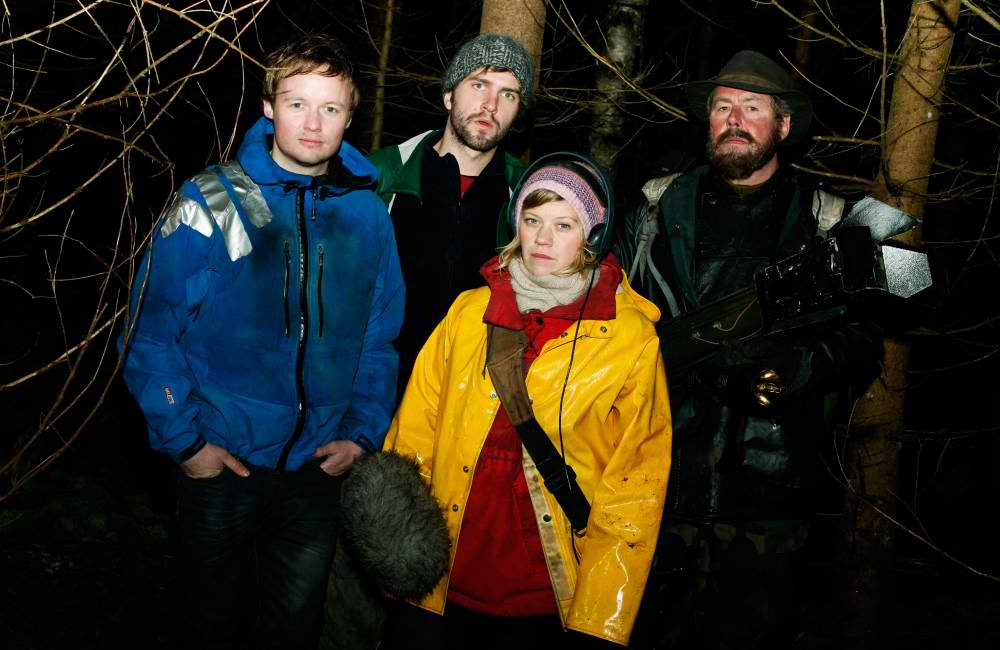
Otto Jespersen, Johanna Mørch, Tomas Alf Larsen, and Glenn Erland Tosterud

Director André Øvredal convincingly turned the fairy tale troll into a reality through one great entertaining footage film. By methodically creating a more modern day treatment of the Troll legend, the movie successfully bridged the gap between fantasy and reality. The devil is in the details, in this fantasy film. From the mythology to the orchestrated government conspiracy to keep the trolls existence underwraps. From the storyline that make impossible for the secret to be maintained, up to the conflicted, disgruntled Troll Hunter, played by Otto Jespersen, who plays the role with a certain level of stellar dramatic weight that in my opinion truly deserves recognition.

While the overall tone of the film is serious, the underlying nature could be best described as subtle fun. But never compromising the very real threat the Trolls poses to the human population. Fear and imminent danger go hand in hand in this film (downed trees, demolished vehicles, unfortunate deaths). The location also couldn’t have been more fitting as it has the appearance of being equally mysterious and charming. The wisps of fog hanging eerily in the air, the fjords, the plentiful waterfalls jetting out of mountainside, and the rocky remote wilderness.

I never imagined I would enjoy a movie about Trolls this much. And I never wanted it to end. I literally felt myself disappear and feel like I was part of the footage. I had for all intents and purposes become one with the film.

It doesn’t just treat the idea of Troll Hunting as another big fantasy epic that happens to have a Found Footage ankle, it actually treats it with a fair mix of the fantasy we know from classic tales with the modernization of common silence. For example, the most famous trait of trolls is that they turn to stone when exposed to sunlight, and the film cleverly explains why once we’re about half way through.

The found footage angle as well doesn’t come off as a cheap gimmick to draw in the viewer, but used for getting a hands on feel for the act of Troll Hunting. Again, this isn’t a movie about Trolls, it’s about hunting them, so the documentary style gives the film a grounded sensuality that pays off greatly.

How Real Can It Be?: Reflections on Trollhunter

I have always been interested in conspiracy filled films, especially ones involving creatures that are of course, too impossible to be real. Films like these can either be too good or too bad, depending on how real the creature looks, and how fearsome it is to the characters. The Norwegian dark fantasy mockumentary film, Trollhunter by André Øvredal, showcases such creatures and how it would be like to have them in our reality. Their scary and foreboding presence is scary enough, most especially since such secret has long been kept away from the public.

There’s always something thrilling about mockumentaries, in that they portray such realistic scenes, you’d really think that the characters are real people who have experienced the horrors of what they filmed. Yet, there’s also a sense of it being unrealistic, considering that no one in their right mind would’ve probably continued a documentary far too risky. It’s also funny how in some scenes, the characters are making unreasonable decisions, which of course is an important factor if these people were actually risking their lives for filming such phenomenon. For one thing, they should’ve followed the rules dictated by the experienced trollhunter, which could’ve avoided some tragedies that happened to the group later on. Decisions like these made by the characters has made the film, for me, a little unreal. It would’ve been more real and effective for me if characters were being realistically logical about their actions without sacrificing the element of surprise and suspense.

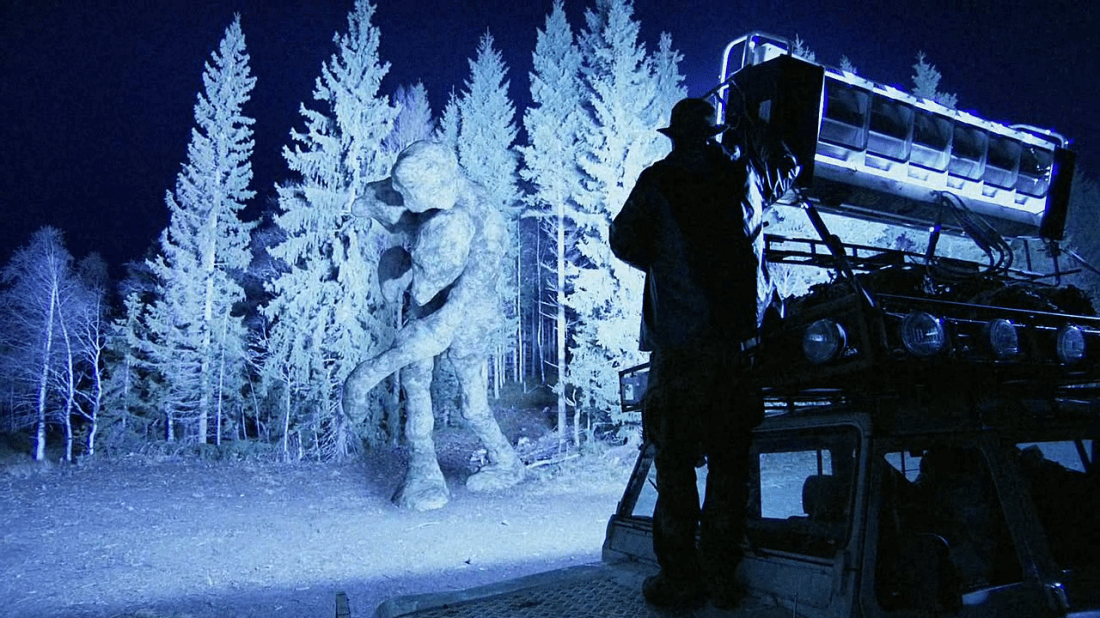
However, one redeeming factor for me was how well the trolls were done in the film. The CGI for such a small-scale film is amazing and the way the trolls acted were very much like how I imagined them to be. The way the camera moves whenever the troll would jump and how the sound effects were perfectly synced with each scene, resulted to the film looking like it was an actual found footage. Sceneries that showed the aftermath of what the trolls have done to it, like the fallen trees when the characters were driving on the road in daylight, also added to the film’s “realness.” The scenes’ landscapes were well-planned, the audio was almost too real, and the effect put into making each troll seem life-like made the film both enjoyable and thrilling.

Overall, Trollhunter should be applauded for its story and how well it is put together. Although the characters may have made some foolish decisions, we can’t deny how engaging their emotions were, most especially when they come face to face with the trolls. The lore and the information they posed as scientific fact also made the film all the more realistic that you wonder if such information may actually be fact. The film’s take on a classic European creature set in modern-day Norway, was effective in showing us a thrilling experience of what it’s like to have monster in our reality.

Trollhunter

Trollhunter is a Norwegian fantasy film by Andre Ovredal. Done in the style of found-footage mockumentaries, the film revolves around a group of students who gets sucked into a conspiracy regarding the truth about trolls.

The film was very enjoyable for me as it felt a bit mainstream. It also incorporated Norwegian mythos. This film definitely taught me a lot about trolls, like the fact that they hate Christians, or how they turn into stone when hit by light.

I also enjoyed the twist in the end, as the reason of their disappearance weren’t the trolls themselves, but the government. This definitely supported their ominous presence throughout the film, being more threatening than the trolls themselves.

I would definitely recommend this to people who want to watch something a bit light, but somehow also a bit wack.

Trollhunter (2010)

Trollhunter (2010) is a Norwegian dark fantasy film written and directed by André Øvredal, most known for mystery and thriller flick The Autopsy of Jane Doe (2016) among other works.

The film presented an interesting take on the found-footage execution that has become something of a trope in recent years. As a viewer completely new to dark fantasy and what the genre was all about, I felt this was achieved by marrying this with elements of European cinema (and European culture in general) including Norse mythology and Norwegian culture.

Being that the film was released under a decade ago, it presents a rather modern take on European cinema in comparison to the other films taken up in class. This will be an accessible watch even for or viewers of mainstream, American cinema: it was entertaining and full of action and suspense given its found footage format. It was also a unique take as found footage was very popular at the time but was largely concentrated in the horror genre. I expected the director’s approach to be similar to those films (e.g. Paranormal Activity, Blair Witch Project), but what came out was instead something like Jurassic Park and was more of an adventure movie than a thriller. It was interesting to see found footage outside of horror and the supernatural where the found footage was more of the medium than the point of the entire affair.

I quite appreciated that the film’s director refused to lean on the tropes of the found-footage format to be engaging. It was very refreshing to see an entry in the genre that didn’t rely on jumpscares, which I’d seen so much of that I almost expected more of the same from this film. There were no jumpscares, yet the film brought a certain sort of fear into the hearts of the audience. Rather than scare us with anticipation and aggression (as jump scares do), the film toyed with viewers as we came to grips with the unknown. Because of the commitment to this form, I felt it made the audience think about whether trolls were real or not, especially towards the end of the film (Press conference at the end, the filming with a broken camera, etc.)

Most of the dark fantasy aspect came from the trolls themselves. The film included many elements of Norwegian culture and folktales. I appreciated that the world of the trolls seemed to be very fleshed out. Examples of this include the different species and breeds of trolls, each with special names and abilities, along with the existence of a secret organization formed to keep the existence of these trolls a secret from the public eye. The fact that the trolls turned into stone in direct sunlight and possessed the ability to sense a Christian man’s blood further elevated this eclectic fantasy element to the film. All these afforded the film a distinctly Norwegian and mythical flavor that I felt made the film very interesting to viewers.

Trolls: retold

Usually, I steer clear of documentaries. I find the pacing too slow for my liking, which is how documentaries are made. When I saw the title of the film — Trollhunter — I would have never thought that the movie was going to be in the form of a documentary (or a mockumentary, more specifically). I thought it was going to be a fictional adventure, so I was stunned (and slightly disappointed) when I realized that Trollhunter is a (fictional) documentary.

Despite my obvious dislike for documentary films, while post-processing the film inside my head, I realized that the film was not so peculiar at all. I thought about it this way: it was a different way of showing their audiences about Norwegian folklore. It is like how there are various retellings of Greek and Roman mythology (which are my two favorite types of mythology). If I do not find those modern retellings weird (I actually find them really interesting and cool), then why can’t I appreciate Trollhunter, a documentary-type retelling of Norwegian mythology?

As I thought about it in this way, I started to dig deeper into the “weird” beliefs found in the film. I found it strange that trolls could pinpoint Christian blood. Some say that people started believing less in trolls when they learned about Christianity. Trolls apparently got “offended” which led them to hating Christians. Therefore, whenever trolls smelled Christian blood, they would attack. Others say that it was merely based off of Norwegian folklore that the ancients created back in the day. It is interesting how these Norwegian beliefs were integrated into the movie.

My favorite thing about the movie is the fact that they humanized Hans. Hans seemed so cold and indifferent at the start, most especially when he refused to participate in the students’ documentary. As the film goes on and he agrees to participate, he still appears to have no concern and compassion whatsoever for anyone but himself. He was only keeping the students close to him because he had a motive of his own — to use their documentary to expose the trolls. However, as the film passed, I realized how human he was through the emotions he showed. The real reason why he keeps hunting trolls is because of the fact that he has seen what they had done to innocent people — pregnant women, children, etc. I am the type of person whose favorite characters are usually the mean ones on the exterior but have hearts of gold. Hans is one of those characters.

Besides Hans, the other main characters were also easy to empathize with. They were just students trying to give their all for their project — I can relate (hahaha). Even though the path ahead of them was dangerous, they still went through with it because they needed to do so for the grade. I also liked how each character had a different personality. Thomas was the leader; he was always the one who pushed the group to continue. He was confident to stay in front of the camera at all times. He was also the most eager in finding out the truth about the trolls. Johanna, the group’s sound engineer, seemed to be a bland character to me up until the part when Kalle dies and Finn confronts them about their tapes. I admire how she stood her ground when Finn threatened them to give them their camera. Kalle, the cameraman, was the quietest one of the group, but when he died, it was so difficult for me to watch. I felt so bad for him because he was just trying his best, going along with the group, but he ends up dying in the end just because he was Christian.

Trollhunter was peculiar, but it was interesting. It was an interesting play on Norwegian folklore. I am glad I came to appreciate it at the end.

Trollhunter: European vs American

Compared to the past films, I enjoyed watching Trollhunter the most because of its mix of European culture and American style narrative. It showed American style of narration because of its straightforward plot, dynamic characters, and the many action scenes. The college students are shown to be active characters because of how they set out to make a documentary about the bear poacher named Hans. They soon find out that he is a Trollhunter, and they follow along in his journey by helping him hunt trolls. This is a contrast to many European films because many of their characters are not very active, and so little is accomplished. The action scenes are very exciting, and they are not very common in the usual European films. The scene which I enjoyed the most was the fight with the last troll named the Jotnar in the snowy mountains. During this scene, Hans failed several attempts in killing it, and then it became him facing the troll of one on one. At this point I thought he was going to fail because of how impossible it looked in the scene, and it was like a David and Goliath battle. However, Hans was able to defeat the Jotnar by shooting it with a missile which turned the troll into stone.

After researching about the background of this film for a presentation in class I believe that what made this film uniquely European cinema, is the incorporation of the many cultural references of Norway. The characteristics and appearance of the trolls in the movie are faithful to Norwegian legend like for example, the multiple heads, ability to smell Christian blood, and turning to stone when exposed to sunlight. There are also a references to Norwegian fairy tales such as Three Billy Goat Gruffs, which can be seen during the part wherein Hans lures a troll by using three goats. There is another reference to a fairy tale entitled Soria Maria Castle wherein Thomas stands in the same pose mirroring the painting by Theodore Kittelsen, and then asks his friends if he looks like a famous painting. Another European film characteristic is how the film does not end with closure but instead it leaves it open ended. After Hans defeats the last troll, the government comes after the college students, and they lose the footage during the chase. Then the film states how the students are never found nor heard from again. This leaves the audience to speculate what happened to the students since no information was given, and this is a common trait of European films.

Even though this film incorporates American style of narration, I do not think it loses its identity as European film because the many cultural references in the movie are unique only to Norway. If this film was remade in American cinema, then it would become entirely different because it would lose these cultural references and even the Norwegian humour present in the film. It would likely be about a different creature like Bigfoot or the Yeti, and it would American humour instead.

Seventh

TrollHunter by André Øvredal

What does it mean to believe in something? Is to see something with your very own eyes the easiest way to finally understand that something is real? The movie Trollhunter made me think how do we truly start to believe in something and to what extent are we able to reach to be able for others to start believing as well?

I will be honest in saying that this movie was not my favorite. I rank it the lowest from all the other movies we have watched for this class. There was something about the ‘script’ or dialogue of the characters were flat coupled with the fact that trolls for me were kind of an ‘okay’ and not really amazing thing to be talked about for a movie. The CGI of the trolls were kind of off for me. Although, I was impressed with how it was filmed in a “found footage” mockumentary way. This would make most of the viewers more interested, giving it more of an edge. Even if they did say it was a found footage movie, it was obvious that it was not real enough for there to be actual trolls in Norway because of the way the trolls looked for me. The action and interactions with the trolls were quite cool since this was a found footage movie its almost as if you are part of the action itself, the viewer becomes the camera man witnessing these trolls up close and fighting them.

The trolls in Norway plot is a heavily cultural thing. There are many Norwegian folktales about how there are many different species of trolls in the country as like the ones in the movie. I feel that maybe this was also why I did not really like the movie because I could not really connect with the culture (especially coming from a highly traditional catholic society). This movie went to be rated highly by Norwegian critics which in turn means that a huge part of how one may actually enjoy a movie is if it is something they can relate to and actually believe in as well.

This goes back to the questions I posed in the beginning, what does it mean to believe in something? The movie gives us a confusing answer, yes that trolls are real (knowing that it was seen ‘in real life’ by these students) yet they suddenly disappeared, gone forever with only a movie to account for evidence. Is that enough for others, the viewers of the movie specifically, to be able to believe in trolls as well? We may never get to know. How strong are your beliefs? In the end, we see the Norwegian Prime Minister actually say that these trolls were real which was quite funny and a big win towards the students and Hans to be able to spread their point across to others.

Overall if you are into the mockumentary or found footage type of genre this is a great movie because other than it being action packed it was funny at times in that dead-pan sort of way. But for me this may not be my kind of movie.

TrollHunters: Close to Life and Fantasy

This film surprised me, not only does it integrate a real feel to such a fantasy plot such as people hunting for mythical trolls, but it is done in a film that is most commonly known in the horror genre. Trollhunters incorporates multiple ideas emerging in Hollywood, such as the found footage genre which is affiliated with horror films such as Blair Witch Project and Quarantine, and a documentary similar in vein with a film we watched in class; The Five Obstructions. It’s interesting to see how the direction and flow of the narrative presupposes itself that the events are indeed real, justified by how the actors and direction of scenes seems to follow people in this documentary-style. There are numerous scenes where the characters would casually talk about trolls as if they were indeed real in this life, making it as if the film we were watching was authentic or true to life. This blending of reality and fantasy makes the film interesting in terms of how different they are with the other films we watched in class; where either it is deeply intrenched with its own abstract plot (e.g. Persona, Goodbye Lenin) or too close to reality (e.g. The Five Obstructions). Trollhunters makes a mark in European cinema as it tries to present fantasy and pass it to us as reality, through clever use of the found footage genre of film.

For this insight, I’d like to focus on how to director, André Øvredal made true to life documentary out of such an abstract and fantastic idea such as trolls in modern day. It was interesting to see the buildup of what the troll is, whether it was real or not, and what it would look like. Øvredal really touched upon the mystery and intrigue of the troll, as even the characters who are filmed are skeptical of this idea of trolls in the woods. The intro itself, which comprises of subtitles describing the scenes coming as legitimate and authentic film, a tactic not seen in other types of cinema and even found footage films. The use of one source or viewpoint of seeing this film is justified as it is all untampered lost footage, presented to us as real. The establishing shots and conversations littered throughout this film leave me comfortable with how real it is – not anticipating the terror of the troll and the massive impact it can do to the rest of the characters. In essence, the characters conducting their research in these areas can be an extension of the audience – grounded with the comforts of reality, disconnected from the fantasy. When they first encounter the massive troll in the woods, we feel terror and the shock reflected by the cameramen and woman as they experience such an absurdity.  In essence, this film can be a play of expectations with how ideas locked and restricted onto one genre or mood of film (in this case, found footage and bio-documentaries) can create a sense of discomfort as the ideas breach those barriers. If this was done in the Hollywood setting, it would be in the way of multiple shots and scenes in different camera angles, showing of the massive presence the monster possesses. Monster movies such as Pacific Rim and Godzilla are great examples in how they represent the magnitude of the monster using all the directing tools they have. In this however, the experience of the monster is locked onto one screen of them, in darkly set areas where it can be hard to see the monster in its entirety. This is the disconnect Øvredal develops through this film; You would expect a straight documentary that would lock itself onto reality, but instead, we get a film which blurs the line between reality and fantasy because of the medium it was shot in and the direction it took in presenting the main monster and developments surrounding these characters. I appreciate the effort made in this film as it one of the first I’ve seen that incorporates a fantasy element in such a real life setting.


Troll Conspiracy

I don’t­­ why, but André Øvredal’s 2010 Norwegian dark fantasy film, Tolljegeren (Trolhunter), somehow reminded me of the German film, Good Bye, Lenin! (2003). Maybe it was because the accents of the characters were somehow similar [for me], because one of their main characters resembled each other, or because most of the main characters in both of the films seemed kind of naïve to (especially in the beginning), but both films seemed somewhat similar in an aspect. However, other than that, Trollhunter is a film that aspires to move its viewers by making them second-guess the reality that they live in.

Honestly, after watching the film, I was contemplating the possibility of whether trolls were real. Are they being hidden by the government which aims to “protect” its people from unknown possibilities? Are there really mythical creatures hiding in the forest? Are all conspiracies true? We do not know. However, Trollhunter was able to successfully make me think of those possibilities. Its use of scientific explanation, especially with how trolls can be turned into stone when exposed to ultraviolet lights also supports the idea of said possibility being true. The crew even added the ending scene where the Norwegian Prime Minister candidly confessed to trolls being real while being interviewed by the press. Moreover, the cinematography and the way the shots seemed so natural made it more realistic. There were even instances where the lens was broken while filming and when the someone dropped the camera due to fights or when they were running. It also reminded me of the Paranormal Activity films where the footages and the storylines seemed candid to make them seem real and scarier to the audience.

However, I think one flaw that the storyline seemed to underthink was the fact that trolls can smell a Christian person’s blood. To me it seemed unrealistic, as it’s kind of subjective to be a Christian. How can someone know they’re Christian? Is it because they go to church or because they pray? Also, if someone were to transition from non-Christianism to Christianism, how would his/her blood change? And what do trolls have against Christian blood anyway? In a sense, the part regarding the Christian blood dilemma made no sense to me.

However, I liked how, after their cameraman was killed by a group of trolls because he was a Christian, the film stayed true to its structure and maintained portrayal of having a “broken camera lens” until they found another camera person. I also liked how the film crew added the scene where they revealed how trolls have rabies, which affected Thomas and caused him to have rabies. However, although some viewers might not notice it, but Thomas was feeling ill one minute and the next minute, he’s running to help Hans kill the Jotnar. He even had the energy at the end of the film to run (albeit unsuccessfully) from government agents.

Conclusively, Trollhunter was entertaining and may seem realistic to some of its viewers. As a fan of fantasy and adventure movies, I like how the film was structured to seem realistic with its “shaky” footages and naïve characters. However, the only things stopping me from thinking that the footages are real were the fact that trolls can smell Christian blood and that the Norwegian government was too naïve to not find the camera footages that the crew had shot.

Trollhunter: A Realistic Portrayal of Fantasy

Related imageTo be honest, this film was one of my least favorites so far compared to the previous films that we watched in this course. To some extent, the plot was intriguing but I did not really feel super into the film. Nonetheless, I liked how it was structured as a “found footage” mockumentary and the film’s take on trolls was pretty interesting. The portrayal of the movie as found footage allowed the viewers to feel that they are actually part of the adventure of the Norwegian students as they tried to capture footage of trolls after learning that the hunter that they followed hunts trolls instead of bears, which was kept as a secret by the government. I found this found footage type of movie that is just continually rolling as a way usually used by horror films to make it seem more realistic but I did not really connect with the Trollhunter as I usually do in these types of films, and I could not really pinpoint why.

Based on my prior knowledge and expectations of the idea of trolls, certain aspects of the film did not really make sense for me and I was a bit disappointed with how they were portrayed in the film. The weirdest part for me was that the trolls could smell the blood of Christians, which ended up killing the cameraman when they were trapped in an abandoned mine with a pack of trolls. The killing of Kalle, the cameraman, was one of the scenes that I found interesting tough because it stayed true to the film’s structure and it even maintained the broken lens of the camera until they found a new cameraman. I also liked how the shots seemed so natural as how cameras are usually held and even the shaky footage added to the realistic feel of the film, which it was going for despite tackling trolls, which I would say are far from reality.

André Øvredal’s film attempts to portray fantasy to make it look like reality through his film. Admittedly, the CGI effects used and how the scenes that had both the trolls and the characters in the same frame were impressive. Given that the film was in the form of a found footage, the director tried to make sure that the same suspense was still portrayed, without the aid of a film score and relied on the natural sounds that were present in the scenes. Despite the absence of the film score, it still contributed to the authenticity of the film and contributed to making it more real.

After learning that trolls are really a part of Norway’s folklore, the film made sense as it portrayed their culture and even included the beautiful landscapes in Norway. I liked how it included the discussion on the tolls so that the viewers have a better understanding of the fantasy that the film tackles such as the habits and the different kinds of trolls. While watching the film, I found it a bit too dragging and slow-paced but overall, I still enjoyed André Øvredal’s take on portraying fantasy as realistic through the use of found footage, and the film gives another take on European cinema.