Trollhunter

My viewing experience of Trollhunter (2010) was comparable to when we watched Good Bye, Lenin! (2003). The familiarity in terms of how the narrative was emplotted, as well as the clear motives and actions of the characters made way for a relatively easier viewing compared to the other films we have watched in class so far. I particularly enjoyed the film’s effectiveness in making its viewers believe that actual trolls inhabited the forests of Norway, and people are being dispatched by the government to eliminate these trolls as discreetly as possible. The attention to detail in Øvredal’s troll-filled world was impeccable. Case in point, the scene where the scientist explains how ultraviolet light causes the death of the trolls–exposure causes instant calcification of the trolls–was a nice nugget of information to know about the world being unveiled to us in the movie. The different kinds of trolls enumerated throughout the film also gave more depth to this world. Even the processes of the government intervention were given attention by the film. The form Hans fills out whenever he slays a troll seemed legit, but looking at it now it does appear a little ridiculous. These little spoonfuls of detail being fed to the viewers led to an enhanced understanding of what was going on throughout the film, and informed our viewing of the film immensely.

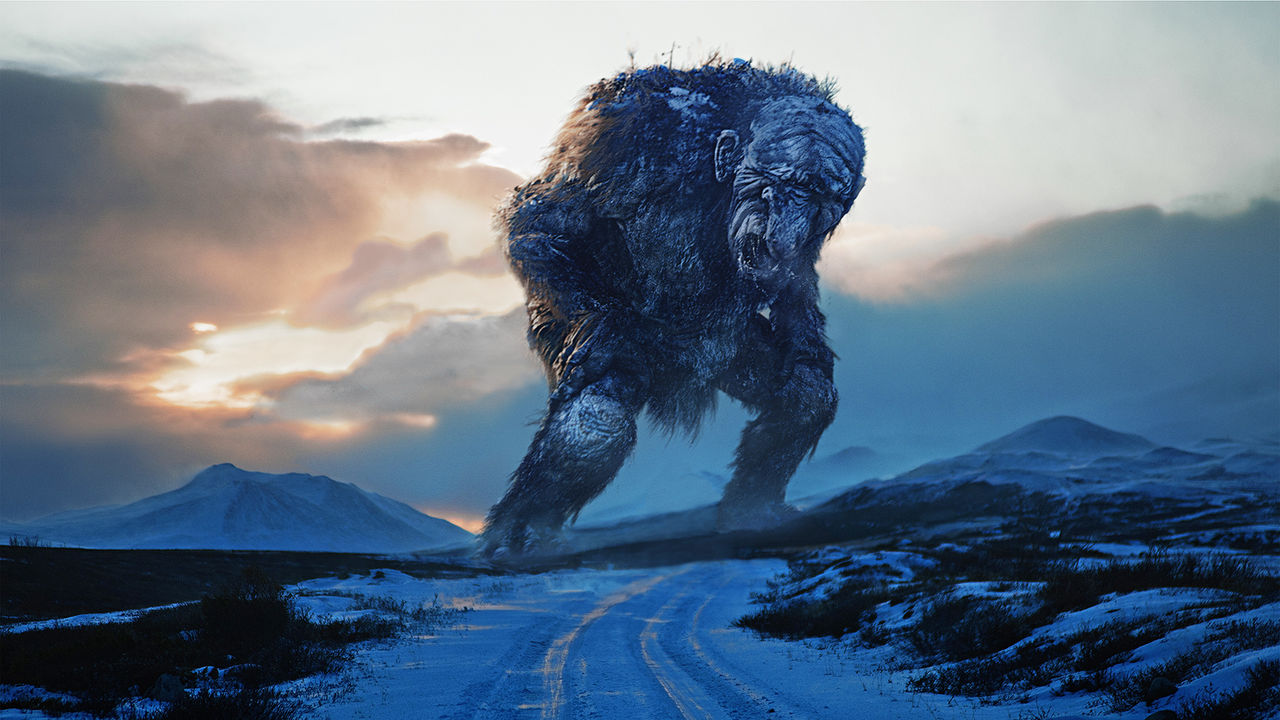
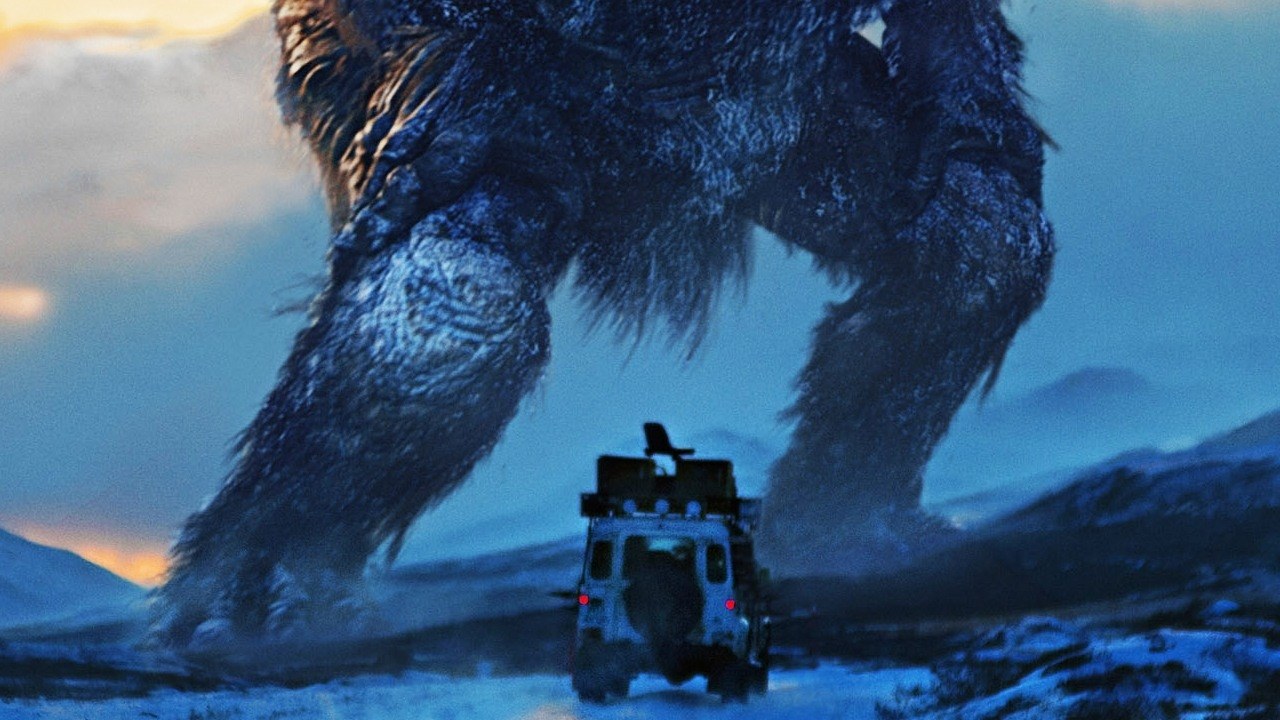
This troll-infested Norway being presented by the movie was made more real through the use of the documentary style of the film. Knowing that this was a found-footage-style documentary, I did not mind the sloppy camerawork and the peculiar editing for they are ingrained in the genre. In fact, it contributed to the effectiveness of the movie in unearthing the “reality” of trollhunting. It was as if we were alongside the characters in their quest to kill these trolls. The CGI used to generate the trolls we saw in the film was also quite impressive. To be honest, I wasn’t expecting nor did I want to see the trolls themselves because attributing a physical form to these majestic creatures might not give justice to their extraordinary and larger-than-life quality. However, I was pleasantly surprised with how the CGI trolls looked like. Their depictions were as gross as I imagined a troll would be. Instead of ruining the experience of trollhunting, the beautiful troll animation added to its authenticity.

This film brought to my notion of a European cinema a look into European culture via Norwegian mythology. While the drama-comedy Good Bye, Lenin! inculcated me with the tragedies of history and its repercussions on humanity, Trollhunter imparted me with a high-octane, nuanced experience on a monster so iconic in European folklore. The idea of ancient behemoths inhabiting our modern-day world was pulled off by the film brilliantly. It also brings to fore the power of documentation–how vital it is in terms of concretizing danger by giving it a face, and how intrusive it is of nature and its processes. The product was a thrilling and believable adventure peppered with the relief of dry humor.
The Norwegian Fantasy : A Discussion on Trollhunter

A Norwegian Troll in Trollhunter, directed by André Øvredal

Upon hearing the title of André Øvredal’s 2010 Norwegian fantasy film Trollhunter, images of action, horror, and violence flood our minds. However, this film takes us instead on an adventure along with three young students on a troll hunt, set against the backdrop of a beautiful Norwegian scenery. They did warn us that the Trollhunter can also be considered a horror film but while I was expecting jump scares, I was surprised instead with a presentation of different kinds of trolls and their natural habitats.

With this, the film allows us to appreciate Norwegian culture, unlike other films we watched during the semester for our European Cinema class. Instead of simply focusing on the characters, Trollhunters feature beautiful landscapes, Norwegian folktales, and a touch on religion, which enriches the story. For Christians, such as myself, we are intrigued as to why trolls prefer Christian blood. Yet, after discovering that religion is part of their folktales and culture, things made more sense. Moreover, the appearance of several townspeople in the film, including the government, made it feel as if we are getting to know real people and unveiling the culture of a real town. We get to see their attitude towards things that cannot be explained, such as trolls. What was striking in the film was how the troll hunter named Hans admitted that he is tired of not getting the credit he deserves from hiding the existence of the trolls from society. Here, the film shifts the focus from trolls to the townspeople and explores how the issue affects them differently. We recognize the humanity and dignity of Hans, as opposed to viewing him simply as someone who gets rid of trolls. In this way, the film captures the horrible reality of life, where Norwegian people get to revel in blissful ignorance while Hans work hard to keep them safe. Being a troll hunter is not as cool as we thought.

Aside from being considered a horror film, Trollhunter also falls under the fantasy category. One aspect that we do not usually encounter with fantasy films is the use of a found footage or mock documentary style of storytelling. As an audience, you feel part of the student’s adventure because you get to see the foregrounding of production. We become quite unsure what is real and what is fantasy because of how the scenes were composed, how the actors for the students effectively portrayed terror and confusion, and how Øvredal featured different trolls, making them appear as realistic as any other animal. With that said, CGI effects often translate to bad quality films but with Trollhunter, the CGI effects of the trolls were flawless because they appeared lifelike and intimidating. The scene where both the trolls and the actors were in the same frame was commendable. If you are not from Norway, you will begin to wonder whether trolls really do exist, similar to how you debate whether there is any truth to a horror film that claims to be based on a true story. The fact that the film ends with an archive footage of the current Prime Minister of Norway mentioning trolls at a press conference boggles our minds. The film succeeds in making us question reality, which is why I believe it does fall under counter-cinema. In contrast to the fact that many mock documentaries are comedic, Trollhunter does not merely serve as a form of entertainment; rather, the film tickles your mind and plants questions that you would not have considered before.

“No one here believes in God or Jesus?”: Trollhunter (2010)

dir. André Øvredal

Trollhunter is a refreshing take in a market saturated by unimaginative found footage films. Mockumentaries are often hit-or-miss affairs for me, and this one definitely hits a lot of the right notes. Who knew trolls were all we needed to reinvigorate a tired genre?

This is a movie that attempts to bridge the gap between fantasy and reality. College students attempt to uncover the truth about bear-poaching in Norway but instead get more than what they bargained for. We, as the audience, are in for a wild ride as Hans the trollhunter runs from the woods and screams “Troll!” into the camera. From then on, it becomes an adventure movie in which we learn more about the existence and presence of trolls in Norway.

This movie succeeds because of the details that make its world just a bit more magical. The Norwegian landscapes are a given but they add a certain atmosphere to the movie that make it feel more alive and more realistic. It’s also nice that the movie attempts to give a scientific explanation to several elements of troll lore. For example, the film gives a reason as to why some of them have 3 heads and why they turn to stone under the sun. I’m very unfamiliar with troll mythos and I don’t know what it mentions or if it says anything at all about their ability to sniff out Christians, but that was a really fun and interesting detail to add to the film. For me, that particular detail actually gives the movie a comedic side despite going with more of a horror/thriller tone for the most part.

It’s also impressive how the filmmakers managed to make the CGI look acceptable. I wasn’t expecting much but the design of the trolls were alright despite the film’s relatively low budget. It’s obviously a mockumentary but what makes it even better is that it doesn’t take itself too seriously.

The performances within this movie are also appreciated. Hans is portrayed brilliantly by Otto Jesperson who gives the character depth and steers him away from being one dimensional. He has a great moment in a scene where he empathizes with the trolls, seeing them not merely just as chaotic hazards but more as sentient, feeling creatures. However, the same treatment or depth is not given to the other characters. I wish we could’ve had the chance to know them better. Even when one of them dies, it’s the guy who spent 80% of the movie behind the camera. So there’s no emotional attachment there whatsoever and there’s no effect to the viewers emotionally. I just really wish that that scene had more gravitas to it; it would’ve made the entire ‘this is based on a true story’ concept feel a little bit more real with a sudden drastic tone shift in the movie.

The movie ends with two playful twists, the first one being that the trolls have rabies and one of our main characters is possible afflicted with it now as well. It’s left open ended and it’s both funny and tragic to think of the outcome of that event. The last scene is the news clip where government officials straight up talk about the existence of trolls but is then ignored.

I do hope that someday, some local director sees this movie, realizes how rich filipino folk lore is, and creates a movie that explores it just as Trollhunter did. There have been attempts, but none that have made it to mainstream consciousness as far as I know. I sure would enjoy an in depth look into a tikbalang’s lifestyle, especially with the humorous tone that Trollhunter gave its titular monsters.


Three Billy Goats Gruff: A Movie Review of Trollhunter (2010)

Given its title, I was expecting this film to start in such a high note or at least open with an intense action scene wherein our protagonist is being chased down by an enormous troll. I also thought it was going to be an action-adventure film with a mortal hero that hunts overpowered trolls with his sidekicks. Soon after realizing that it is a “found footage” documentary type of film, I got disappointed for I am not a fan of those types of movie. I like how they add a more realistic and intimate touch to the stories that they tell. However, I am not too fond of the first person point-of-view and the film qualities that come along with it. Going back to the movie, the opening scenes gave me the chance to immerse myself into it. They gave a quite dark and serious tone that makes you feel that something big is about to unfold. The footage of the interviews made by our protagonists gives a certain involvement for the audience. The perspective puts us in the shoes of our characters but what differs is that we already have our notions of the possible outcomes in the film. It makes you want to stop our protagonists from proceeding further given the feeling of impending danger but the story goes on.

I personally find the film very tiring to watch. Some scenes take longer than usual for a significant event to happen. Despite the suspension of disbelief, it was difficult for me to agree with the logical reasoning of our characters because I am really not on the same page as them. As a regular viewer who imagines the things that I would do if I were in their position, I do not really find myself making the same decisions. Also, I must be used to seeing “found footage” films in the form of horror movies which are way more fast-paced and thrilling. I tried to appreciate the film as it is anyway.

On a more positive note, I loved the idea behind the film’s story. I am familiar with the idea of trolls given my knowledge about Norse Mythology, stories from childhood fairy tales and folklore, and contemporary films and cartoons. This film gave me a newfound appreciation for this mythological creature and its significance to Norwegian culture. I never expected a film to include trolls in a much modern setting but this movie was able to mix the two quite well. It also stays true to how these creatures are presented in other media or in the original folklore. I remember knowing certain details about trolls such as their vicious nature and weakness to sunlight among others. These were carried into the movie, even with its own modifications like Hans’ UV light anti-troll weapon. Details such as these draw me closer to a movie because it has something to say especially when it comes to the culture of the country being represented. If a similar movie was made about the creature from Philippine folklore, I would love to watch it.

creatures and cultures

When I found out that we were going to watch a found footage film named Trollhunter, I was excited; I love watching sci-fi films that tackle supernatural monsters and mythology. I was expecting that the film would be a lot more serious, like Cloverfield or The Blair Witch Project, but I was pleasantly surprised with how Øvredal managed to incorporate some light humor and satire into its sci-fi/fantasy/horror aspects.

I really liked how Øvredal gave the cinematography a found footage style. Trollhunter’s attention to details, especially of authenticity and continuity, was something I really appreciated with the film and something I think sets them apart from a lot of typical found footage films that focused too much on its horror elements. For example, when Kalle died and the camera lens cracked, they (annoyingly) kept that crack on film for almost 5 minutes until they could change the camera when Malica arrived with, both literally and figuratively, a new lens. The effort to try to convince the viewers about the authenticity of the found tapes was entertaining, especially at the start with the black screen with text and the end of the film with the press conference. They were really pushing for a conviction that the film was realistic and “raw and unedited”, making me think that maybe this wasn’t just an effort to try to portray a good found footage movie, but perhaps also trying to hint at the possibility of this reality—of trolls and secret government agencies actually existing.

Aside from this attention to detail, having a mockumentary style film provides the opportunity for the filmmaker to manipulate the plot and the scenes to their advantage. This helps in keeping the film interesting, while still maintaining that realistic and unprocessed aura. An example of this can be seen when we contrast the mockumentary to the documentary style of The Five Obstructions. Though its five remakes kept the film interesting, the scenes in between them could get boring at times.

Most importantly, I appreciated how much Norwegian culture was evident in the film. Even though it was trying to come off as a horror or sci-fi film, I couldn’t help but really notice how much of their culture was being reflected inadvertently. When I was doing research on the film’s background I found out that Øvredal really wanted his film to accurately represent Norwegian folk legends and he even used inspiration from many of the country’s myths. Even if the CGI and special effects were adequate for a monster movie, I was still fascinated with their portrayal of the trolls on the camera, because unlike most horror films, they really tried to show what they looked like and they stuck to physical details common in most popular folklore. Additionally, one of the best outcomes of having a documentary-style film is its random, yet seemingly normal insertions of the Norwegian scenery in the background whenever they were travel or filming the trolls.

Overall, I genuinely enjoyed Trollhunter for its style and story, but its subtle play on certain elements like culture and comedy really adds some depth to the movie for me, bringing it beyond the simple and characteristic thriller-fantasy film.

Trollhunter: a New Take on an Old Fairytale

troll-hunter-1280jpg-e94bb7_1280w

When we were told that the class would be watching the movie, Trollhunter, I thought I would be watching a film just like Ghostbusters (2016). I was a bit disappointed at the start of the film because I realized that unlike Ghostbusters, Trollhunter would not involve cool gadgets and funny action scenes. Despite this, I came to appreciate Trollhunter for the movie that it is. I can only imagine how much fun the director of the film must have had while making it. The film even gave updates on the situation of the characters in the end to somehow tell us that the film actually happened and the people in it are true. I really liked that the film was a mockumentary. This gave so much authenticity to the film that it almost had me fooled. Even when we all know that trolls are mythical creatures that do not exist, I started to question this. What if trolls actually exist in that part of the globe? Maybe that’s why there are a lot of weirdly-shaped rocks in the forest because those were trolls that have been hit with light. My sanity tells me, maybe not.

leappad-dreamworks-trolls-game_80-490600_1Another thing that I thought of when I heard the title, Trollhunter, was that maybe it was going to be a cute movie. Given that I watched the movie, Trolls (2016), a fantasy-adventure movie with lots of singing and dancing, I was shocked about how ugly and terrifying the trolls were portrayed to look like in the film. They were mean and even killed one of the characters. It was a good thing that the main characters did not die because the movie would end up being even more tragic.

The film can be described to have a genre that is a horror/thriller. The CGI effects of the movie were very good, in my opinion, and scared me a little bit. The trolls seemed real next to the human characters, which made the film more exciting. The plot of the film was also very interesting. I liked how there was some sort of biological and scientific explanation to the trolls. It was nice to think that trolls are real especially because of how they were described in the movie. They were just like regular animals, mammals, that mate, and that have different classifications. Some live in the mountains, and some live in the forests. The different types of trolls meet up somewhere and throw rocks at each other. I wish the film showed a clip of the trolls fighting with one another, this would have given the film a Lord of the Rings/Narnia vibes.

All in all, the movie was a fun experience. It gave a new and different perspective on the old mythical creature. Among all the European films that we have watched in class, I can say that this one is among my favorites. It is quite a thriller but still a feel-good movie that is perfect to watch on a lazy night.

Humor and Secrecy

Trollhunter was a movie that showed a coexistence of humor and suspense. I believe the movie was a great artwork that thrilled its audience with the kind of thrill you get from horror movies such as Jaws, Anaconda, Crocodile, and etc. In this case, the movie made use of mysterious creatures in the form of trolls. I thought it was also creative of them to make the film into a video made by students, of which were silenced by the government in order to prevent the public from knowing the existence of trolls. Because of this nature, the film was able to get away with shaky cameras and poor video effects, as the nature of the film made it understandable. 

In terms of the plot, it was very clear where the students want to expose the existence of trolls. Hans, the expert troll hunter, was the key to success for their mission. It started with convincing, then their persistence pays off and Hans made them a key figure in his pursuits. To be honest, I expected a lot more casualties especially with a film like this that evokes danger. By having more casualties, it would really give the trolls a lot of credibility as a dangerous creature. However, the movie did just enough to show what it is capable of such as barreling through trees, eating sheep, and killing their fellow camera crew. In terms of the ending, it was announced at the beginning and the real ending of the movie simply showed how it was played out. I believe the ending of the movie gave the audience a feeling of curiosity on the situation of the kids and doubt towards the government. The movie also inserted a short humorous clip that showed the government admitting to the existence of trolls to the public, with no one noticing. 

One of the things I expected from the story was the effect of the bite on one of the main characters. After discovering that trolls had rabies, the character showed signs of weakening as if it is showing a more negative effect of the bite. However, the movie does not show what happens, although it gets away with it due to the fact that it was a film made by students who disappeared. 

I believe the film also allows its audience to question the reality of hidden mysteries. For instance, the development of power lines is known to power cities, households, buildings, and etc. However in the movie, its hidden reason is to limit the movement of the trolls. Furthermore, the movie also conveys how the government is very serious about hiding facts from the public such as the existence of trolls. Instances of this could be seen on how they cover up troll incidents with dead bears, as authorities would always be a step ahead of the media. Another instance is how government cars chased the students who filmed the movie in the ending in order to prevent critical information from decimating to the public sphere. 

Overall, I believe Trollhunter was a great suspense film. It made me watch, as there is always a thrill whether the characters will make it out alive or not in every troll situation. Furthermore, it also allowed Hans to exhibit his skills and show why he is the man they call on to control troll activities.  

The Troll Toll

Trollhunter (2010, André Øvredal)

When I first found out that we were going to watch Trollhunter, I was pretty surprised. This is because I actually have had the pleasure of watching this movie before when it came out at the height of the fount footage movie boom. After Paranormal Activity’s breakout and success in 2007, found footage horror movies became the in and new industry trend, and while plenty of these movies were terrible, some used the found footage conceit to create something distinctly unique and wonderful – and it just so happens that one of those movies that I have seen is Trollhunter.

Trollhunter’s main plot concerns itself with a group of students investigating the death of a bear that was illegally poached. What begins as an ordinary investigation suddenly turns into something much more supernatural as the students find out that the hunter of the bear is actually a Trollhunter – mandated in secret by the government. With the titular trollhunter wanting to quit his dangerous and underpaid job, the students join him as he hunts trolls and risk their lives along the way. 

In essense, Trollhunter’s plot is actually almost like the found footage movie that started it all – The Blair Witch Project. It is like Blair Witch in the sense that the film is about students recording something mysterious that is happening, and yet at the same time one can also see how this blind devotion to recording takes a toll on the characters. They get scared, they get injured, they risk their lives several times, and yet the camera keeps rolling as their determination sticks. What the film has differently over Blair Witch, however, is that while the scared students panic and run over each other, the film’s titular character is nonchalant and indifferent towards his work. To him, this is just something normal, and it is this neutrality that makes every troll encounter in the film equal parts thrilling and almost-comical.

Furthermore, something that really surprised me about the movie is that while the found footage style of filmmaking allows this movie’s visual effects to have more wiggle room with regards to how good it looks, the movie does not take this road and instead utilizes this style of filmmaking to amplify the scale and fearful wonder that the movie brings. When the eponymous trolls are on screen, the loud sound design and nervous camerawork keeps the film’s pace at a high rate.

Additionally, despite the film not being bound by normal means of cinematography, the film manages to capture beautiful views of the Norwegian landscape. From bright green forests to desolate and cold fjords, the film moves with its setting as much as its characters move the cameras, and this was very memorable and noticeable.

The movie, however, like most films in the genre, suffers from issues. One is that I felt that the characters were rather flat allthroughout. There was really no distinct character that stood out, and that made it very hard to empathize with any of them. Secondly, for some reason, the film felt too long near the second act. While the movie is a very easy and breezy 104 minutes, the midportion of the stretch suffers from some pacing issues that were very noticeable and contradictory to a majority of the movie. And the last issue of the film is that its ending manages to both be vague and confusing – maybe part of it is that I do not understand the social or political satire that the film attempts at times with the presence of the government agents but it just did not feel like an appropriate ending

Still, despite these problems, as a whole, Trollhunter was still an exhilarating and thrilling 104 minutes and is one of the best examples of this type of film.