Heavy Trip: A Trip to end all Trips

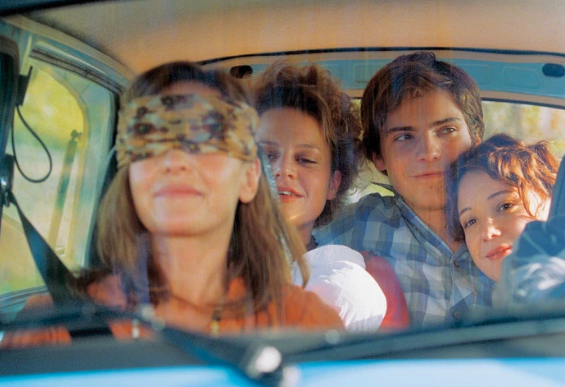
This movie was great. The movie follows a familiar scenario when an upstart band wants to prove their worth as metal rock band. Excited for their big gig, they had to evade their enemies and people stopping them by driving through them, a metal thing to do. This movie utilized the element of heavy metal to a huge degree. Comedic takes from them getting their mixtape to a big event organizer to them creating a song out of a reindeer stuck in a grinder was wicked and cool that only a movie like this would accomplish. While the idea of metal is over-the-top even in the music industry, the characters are well grounded in how they desired for being acknowledged and even accepted in their local community. Against all odds, they needed this to show what they are capable of and prove the bad guys wrong – a tale told countless times.

Movies that did this sort of scenario are movies like the Lego Movie, Zootopia, and The Spongebob Squarepants Movie, where all of the heroes were underestimated by their peers and rose up to prove themselves. All of the movies mentioned are animated, kids’ movies that have a happy ending where the hero triumphs despite their enemies and even community attempts to put them in their place. They proved them wrong, a theme seen in this film. In a radical way, the film embraces the metal and tries to present this narrative in a metal way. Metal music, metal attitude, and metal references are sprinkled around the film to make the film comedic and ridiculous at the same time. Despite it having a simplistic narrative akin to the kids’ movies mentioned, Heavy Trip is also about a movie about companionship and living one’s dreams. Being recognized by their community is a dream of theirs and they needed to prove their mettle somehow someway. A very treaded narrative but executed as if it were new. Heavy Trip relives the metal in everyone and makes the audience want to support their cause because of their hilarity and antics as both a metal band and a group of friends.

For me, this movie really was a pleasant end of the semester. It left a pleasant feeling when the band performed their piece to an audience that listened and enjoyed them. The culmination of their work was celebrated by the ears that wanted to listen to them. That was their dream all this time, to be heard by fans of metal. To me, it spoke to a person who understands the struggle for being recognized in a society which is competitive in the music industry. Sometimes, it takes perseverance and a good group of friends to get through these rough times. Learning from this film, embrace what you are and give it your all. The film adopts the usual narrative of these animated films but stylizes it through the ridiculous of rock and roll, or heavy metal. The movie is cool and rocks on!

L’Avventura: What

Oh boy, this movie was crazy. Not only was there an extra plot which the movie went for, but there was no closure for what happened with the missing woman, Anna. The story behind that was left dangling while a love story developed between Claudia and Sandro. Using the premise and feigning it as an inciting incident was a clever trick to attract attention to what happened with the missing woman. While we were curious of what had happened with Anna and her whereabouts, the story begins to separate itself something different. There are not many examples of films that use the introductory characters (and their disappearance) as a means to justify or situate a setting or plot. Especially when a good amount of screen time was given just for Anna. The movie then shifts into a love story between Claudia and Sandro, finding a way to mediate this strained or scuffed relationship. As one of the introductory films for this course, it really was a challenge to get through this movie due to its runtime and its shift in narrative.

While the movie was set in a black-and-white scene, the film manages to take on numerous vista shots, showing off cities and glamour shots of the island the characters were staying at. To its credit, it illustrates the adventure these characters took, from the moment Anna was missing to the very end. Despite the lack of color, there’s color in their expressions as the  frustrations of their newfound relationship developed. The disappearance of Anna was left to accommodate this relationship and how Claudia can cope with her struggle of moving on.

As a character-driven movie, the film relies on the interactions of both Claudia and Sandro as they mention Anna over and over again. Given the runtime and how the film was black-and-white, the film for me was difficult to follow in times because of these concentration with their relationship and instead of the pressing matter of Anna’s disappearance.

The movie, in itself, is a tale about a relationship that should’ve been really about Anna. It subverted my expectations since I thought the adventure was looking for Anna and the possibility of Anna emerging from the narrative once more. Instead, the movie took its good time to develop the characters of Claudia and Sandro, a decision very bold in direction. It diverts the attention of the emergency situation and finds a place to create a conflict / romance between characters because of Anna’s disappearance.

In this sense, I appreciate the film for taking risks in diverting narratives. However, the length made it difficult to watch, and the characters themselves where hard to follow.

Edukators: WOKE


Youths can change the world. That’s what the Edukators thought as they tried to rally against capitalism of the world. Angered with the situations of rich abusing the poor, Jan, Julie, and Peter came together to pursue their goals for world change. The movie itself is juvenile, more emotive in the sense of how the youth protests win against the bad guys – which were the corporations or the adults. The ways of getting back to them are breaking into their villas or houses and warping and defacing their furniture, and then later leaving a calling card. Jan begins to influence Julie with the ideas of their movement and push her into joining him along with Peter after his trip. The movie is really a ­think piece of how the youths fantasize their ideal world, despite the irony of depending on these structures of capitalism when they ran out of supplies in the cabin. During the rising action, where they kidnap the homeowner when he found out about their identities, do the edukators give up or do they find a way to persevere? This movie, in itself, really is a story of solidarity between friends – coming to their goals and aspirations to the very end, despite the challenges within and outside them.

The story began with the Educkators doing their MO, breaking into houses and trashing their furniture. The dilemma began with a love connection between Jan and Julie, who was Peter’s girl. Despite them having the same vision-mission for world change against corporations, the find tension between themselves in finding out what to do in their hostage situation.

As anti-capitalist activists, the edukators wanted the world to see what they’ve done and their message against the systems of capitalism. As the movie started, their acts were unorganized and driven through emotion – frustrations against the capitalist world of today. Getting revenge against a boss who fired Julie, and Jan angry with the systems that undermine the poor for the sake of the rich 1%. They were driven but had no fuel to continue. As a small sign of rebellion against the system, things started to break down when they were caught by the owner of the house. Soon after, Peter finds out of Julia infidelity, straining the relationships within the group. Do they proceed for their movement, or was this the end of the Edukators right there?

From there, the film became more character-driven. Rather than the movement itself being a noble cause, it was the characters who found their way because of their affiliation for their movement. They settled their differences because of how the Edukators wanted to make a statement. Rather than adhering with the demands of the kidnapped, which was to release him quietly and he wouldn’t snitch, they outsmarted even the police together. As a group, they can do many things as long as they kept their wits with them and banded as one. This film was of how they learned their motivation for this movement and whatever it would take to get them out of this mess.

Timecrimes: A movie in Three ways


Despite the film taking the least time in its setting (about one hour), we see here a journey of a man who ends up in a time-loop when his future Hector (self) assaults him. Timetravel movies, in my opinion, are really a hit-or-miss because of how easily convoluted the narrative can get on itself. Films such as Avengers: Endgame, and Back-to-the-Future accomplish this by using the scenes of one timeline sparingly, while accomplishing plenty while the characters are at one timeline. This was also done in Timecrimes, when Hector devises numerous schemes and tactics that eventually lined up with the events we viewed in the film. Rather than Timecrimes justifying its convoluted timeline for Hector, it tries to create a flowing narrative for our viewing experience. We begin to say “Ah, so that’s how it happened,” denoting on how a certain event was justified in the whole narrative. Truly, it is a movie done in three ways, where we as the audience must unpack how the curious hour-long adventure of Hector began and ended.

Starting from Hector 1, he was lounging about with his wife, when he saw a certain woman in the woods. He soon became a victim when Hector 1 was assaulted by (at the time) an unknown man. He rushes out in a panic, confused until he ended up in a vat provided by a mysterious scientist. By this point, we were following the narrative of a suspense thrill film for the sake of Hector’s safety.

When Hector 2 comes out of the Vat, realizing what must be done to repeat the events of time. Instead of being worried for Hector’s safety, we become more curious of how Hector 2 executed the story of the assailant, while following what we knew from the scenes preceding those. It was a curious display as Hector 2 tried, with great effort, to replay and recall what happened during the Hector 1 timeline so that the events follow through. This resulted in Hector’s wife dying (?)

The most shocking part was how they began to introduce Hector 3, a more tired and no non-sense character who seemed to want to get things over with. This began our shift from how we were concerned for Hector’s safety, the journey to how the events proceeded, and back to how Hector can find a way to save his wife. In the end, he managed to find some way to save his wife and get things back to normal.

Despite the extremely confusing process of Hector’s journey in time, the narrative becomes sound and the story is concise. All the scenes that preceded and followed other scenes were justified in the sense of how Hector did something to make them happen. All of the doings and events happening in the film, in some way, make up a movie – with the three of them directing a different flow to Hector’s challenge. From escaping a killer, orchestrating the attack, to finding a way to save his own wife, Hector changes faces just to remove himself from the situation he was locked in, no matter how hard and how precise that needed to be.

Raw: The Carnal Hunger

This movie was difficult to watch. This was so in the sense of how brutal the story went and how extreme the story progressed. Set in a university setting, it’s relatable if it’s looked at the lens of a coming-of-age movie of a girl learning her ways with new friends and a new setting. This is seen in how the protagonist, Julia, was a virgin in both the metaphorical and material sense. Raw shows the transformation and way of how Julia found herself in this setting – through the imagery of cannibalism.

First, the movie starts of with her having a meal with her family – no protein mashed potato. As a vegetarian, it set the beginning in where she began exploring her curiosity or craving for meat, escalating exponentially as the scenes go by. From entering the medical school, seeing the animals and lunch available, being introduced to the trippy parties and school events, this triggered her spiraling into her discovering herself through her urges and sexuality – feigned through cannibalism.  Shown of as an innocent and more quiet or timid girl, she soon enters the wild scene of orgies, college parties, having a crush and having too much to drink, through very grotesque and rather gory segments. While the story develops, she begins to act more rashly, succumbing to the cravings and temptations she has – with either sex or with the hunger. Supporting with Justine’s sister, the stigma of cannibalism was continued by the pair instead of it being treated or handled. This brought major conflicts between the sisters, as they used their taboo secrets to humiliate and harm each other within the campus community. This is shown in how they broke out fighting on campus, and how Julia began to fantasize her craving during a college party, where everyone and even her new boyfriend -Adrien, was freaked out. Distancing herself from what she was in the beginning of the film, Julia in turn found solace with her sister as they really understood what their condition was like. This was also seen, in the finale, about how the tendencies of cannibalism were in their family, and that the father wishes she “finds her solution.” On a simple inspection, the hunger their family felt can be alluded to sexual cravings and virginity. Knowing the pleasure of something that you crave for it forever more can be one way of looking into their condition and the progression of the film. Another way I saw was the craving as a drug or pretense of maturity in a university. Situating yourself with unfamiliar people with only your sister as a familiar face can cause very drastic and careless decisions in their part – such as Julia accidentally cutting her sister’s finger off, and her drunken dazes where she does embarrassing acts. In the end, the connection that I can understand is that it is a allegory of growing up, a coming-of-age film in its purest sense.

The grotesque and gory execution was indeed impactful. I felt like I was going to throw up because of how intense and extreme the movie went. From her sister eating someone’s brains out, to the act of biting someone’s lips of their face, it’s very shocking to watch and follow. The movie kept on presenting these gross scenes yet still find relevance to what is happening to the film – to its credit where the scenes are earned and not forced. We see here the descent or growth of a “child,” who finds herself in the most extreme image of cannibalism.


TrollHunters: Close to Life and Fantasy

This film surprised me, not only does it integrate a real feel to such a fantasy plot such as people hunting for mythical trolls, but it is done in a film that is most commonly known in the horror genre. Trollhunters incorporates multiple ideas emerging in Hollywood, such as the found footage genre which is affiliated with horror films such as Blair Witch Project and Quarantine, and a documentary similar in vein with a film we watched in class; The Five Obstructions. It’s interesting to see how the direction and flow of the narrative presupposes itself that the events are indeed real, justified by how the actors and direction of scenes seems to follow people in this documentary-style. There are numerous scenes where the characters would casually talk about trolls as if they were indeed real in this life, making it as if the film we were watching was authentic or true to life. This blending of reality and fantasy makes the film interesting in terms of how different they are with the other films we watched in class; where either it is deeply intrenched with its own abstract plot (e.g. Persona, Goodbye Lenin) or too close to reality (e.g. The Five Obstructions). Trollhunters makes a mark in European cinema as it tries to present fantasy and pass it to us as reality, through clever use of the found footage genre of film.

For this insight, I’d like to focus on how to director, André Øvredal made true to life documentary out of such an abstract and fantastic idea such as trolls in modern day. It was interesting to see the buildup of what the troll is, whether it was real or not, and what it would look like. Øvredal really touched upon the mystery and intrigue of the troll, as even the characters who are filmed are skeptical of this idea of trolls in the woods. The intro itself, which comprises of subtitles describing the scenes coming as legitimate and authentic film, a tactic not seen in other types of cinema and even found footage films. The use of one source or viewpoint of seeing this film is justified as it is all untampered lost footage, presented to us as real. The establishing shots and conversations littered throughout this film leave me comfortable with how real it is – not anticipating the terror of the troll and the massive impact it can do to the rest of the characters. In essence, the characters conducting their research in these areas can be an extension of the audience – grounded with the comforts of reality, disconnected from the fantasy. When they first encounter the massive troll in the woods, we feel terror and the shock reflected by the cameramen and woman as they experience such an absurdity.  In essence, this film can be a play of expectations with how ideas locked and restricted onto one genre or mood of film (in this case, found footage and bio-documentaries) can create a sense of discomfort as the ideas breach those barriers. If this was done in the Hollywood setting, it would be in the way of multiple shots and scenes in different camera angles, showing of the massive presence the monster possesses. Monster movies such as Pacific Rim and Godzilla are great examples in how they represent the magnitude of the monster using all the directing tools they have. In this however, the experience of the monster is locked onto one screen of them, in darkly set areas where it can be hard to see the monster in its entirety. This is the disconnect Øvredal develops through this film; You would expect a straight documentary that would lock itself onto reality, but instead, we get a film which blurs the line between reality and fantasy because of the medium it was shot in and the direction it took in presenting the main monster and developments surrounding these characters. I appreciate the effort made in this film as it one of the first I’ve seen that incorporates a fantasy element in such a real life setting.


Goodbye Lenin! A Family, A Nation

Screen Shot 2019-03-07 at 18.57.19Goodbye Lenin is a film about family and the past regime of the Socialist Unity Party. When a single mother comes into coma, waking to a radically changed reality, how does her son Alex and daughter Ariane, keeping their mother in the dark for her health and safety. Though it is a moral dilemma to lie to one’s own mother, it this justifiable if the truth could very well shock her to death? This film addresses a historical reality, which is the taking down of the Berlin Wall, to a somewhat fantasy scenario in which Alex has to recreate the past regime and the society within it. Alex goes to great lengths for the safety of her mother – still believing that the Socialist Unity Party is active to this day.

This film, released in the year 2003, melds both historical truths in a stroke of fantasy to a ridiculous scenario of recreating old Germany. Since the new wave of industrialization and entrance of democratic and western attitudes, the film compares and contrasts the ideas of socialism developed in old Germany and the newer, more westernized ideals embodied after the events of the unification of Germany. The family becomes a symbol of the state of Germany, perhaps after its unification, where people of east (socialist) and west come together -bearing different norms, culture, and traditions with them. Since the coma of their mother, Alex and Ariene find ways to adapt to their new nation, finding means to coping with the situations presented to them. On the other hand, Alex’s mother, left at a stasis due to her coma, is forced to adapt to rapid changed, which doctors have advised to Alex would lead to her own death. Alex’s mother, holding to heart the dream of a Socialist Germany, has to live in a state in which she believes that can still come true. In that sense, the film drives home themes of sacrifice and love, in how Alex pushes himself to accommodate the needs of mother, no matter how ridiculous they are. Recreating Socialist Germany with the help of his neighbors and friends not only keep his mother healthy up to her final days, it opened the eyes of Alex, the one reformed to believing western ideals, to open his sense with what was and has been – the Socialist Unity Party of old Germany.

Goodbye Lenin, apart from the other films tackled in this course, is mainly character driven by historical and actual events in reality. Seeing how European cinema directors tackle such a grand and broad concept as keeping your mother thinking it is still 1989 is an ambitious project to undertake, and the acting and execution of the story is handled to great extent. The characters feel the weight of the situation – making the scenes more emotional. It really is a good film, despite being some of the more coherent and narratively straightforward ones in the lot. It still maintains a form of depth to its story that makes it a charm in its own rights.

The 5 Obstructions: New Take, Old Film

273598-11200-clp-950image-w1280

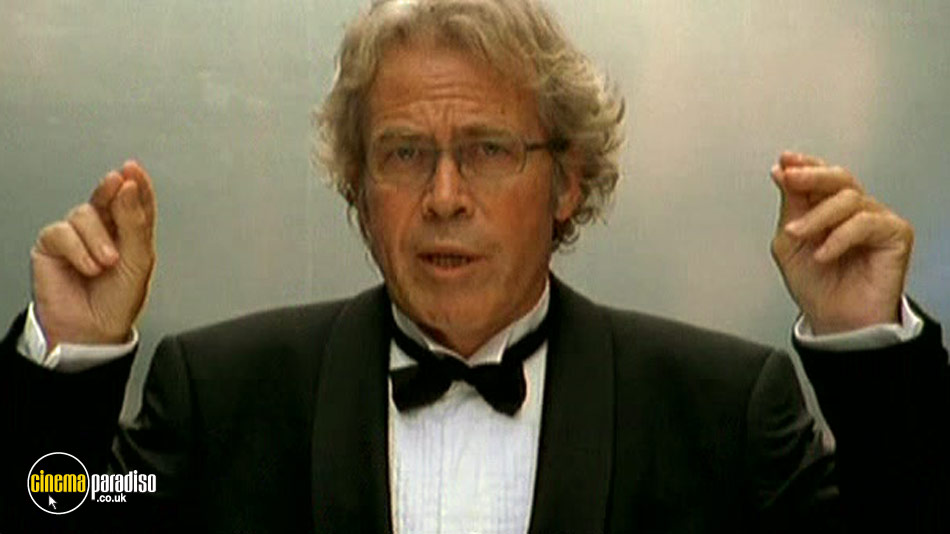
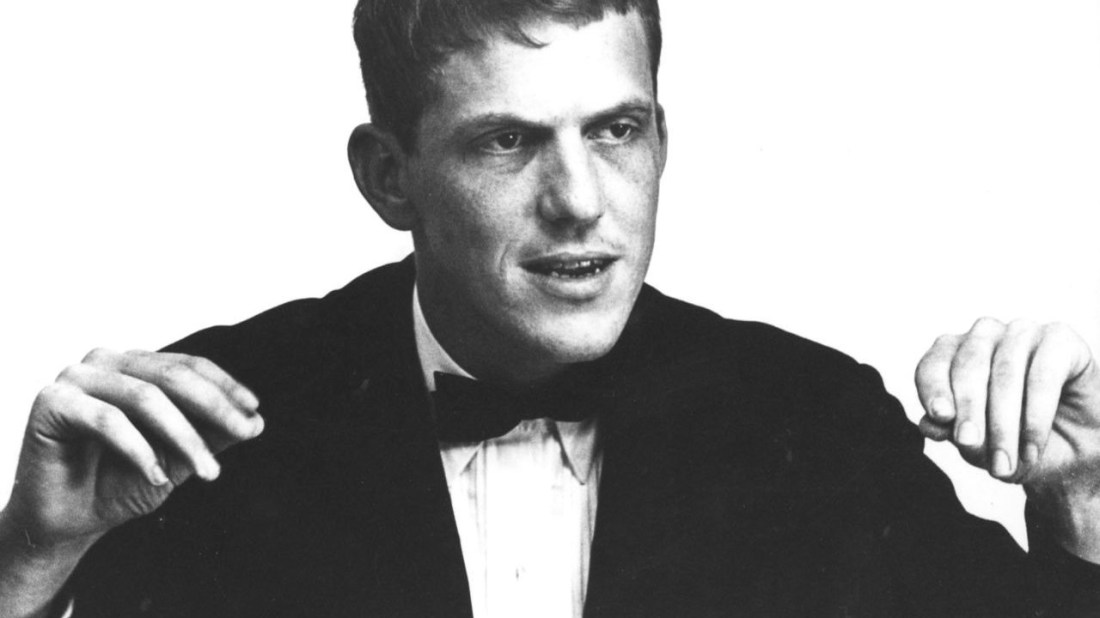
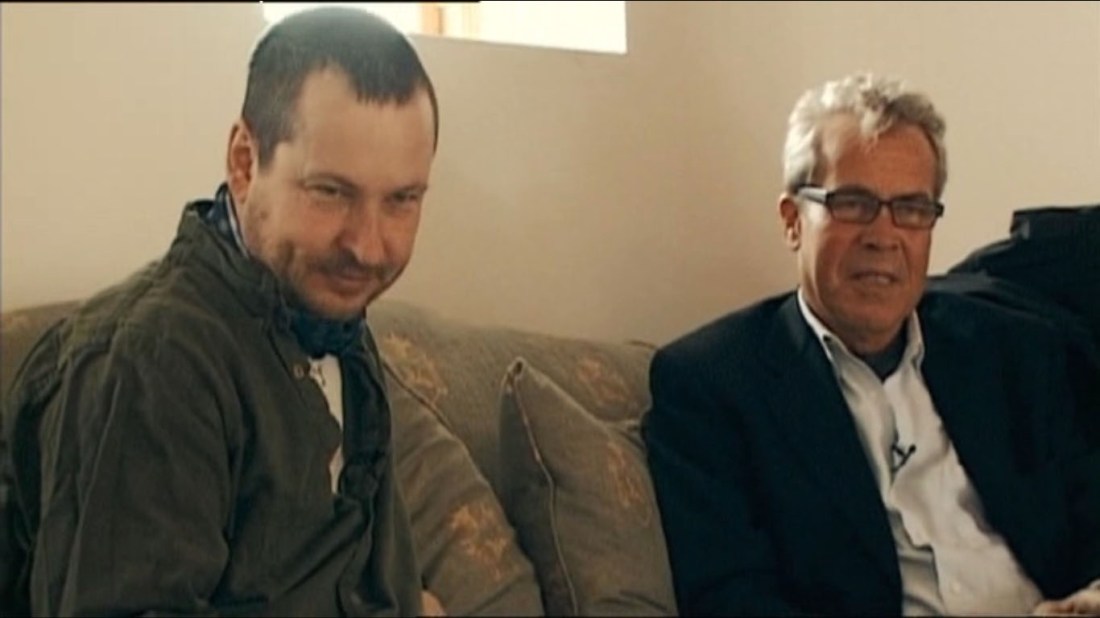
The Five Obstructions is a documentary showing the director Jorgen Leth faced with five peculiar challenges in film-making. Jorgen Leth was tasked to recreate his 1968 film, The Perfect Man in different styles and creative instructions determined by his fellow director Lars von Trier. These instructions ranged from keeping each shot 12 frames, having a particular background or backdrop in the scene, to even a fully animated recreation of The Perfect Man. This task of creating new renditions of his older film gave Jorgen Leth a personal drive to show off his caliber and talent in creating film and screenplay, as well as proving himself to be capable in Lars von Trier’s eyes. This film went to show the experiences, joys, and frustrations of creating art through film.fiveobstructions

The story follows Jorgen’s journey following the specific instructions given to him to how he will create a revision of his old film. Though challenging, he sees an interesting way of doing these challenges – which motivate him to push with these and create beautiful works of film to present to his peer Lars von Trier. What’s interesting, in my opinion, is how Jorgen undertakes this challenge (something that was created to be difficult and taxing to him and his filmmaking abilities) and still finds a way to create works of art that not only impresses us as the audience but the challenge-giver himself. Reviving a film from the 1960s with new contemporary ideas and perspectives, Jorgen can be a representative of the newer movement and approach to the slower and more arthouse style of European Cinema. This is shown in how despite the challenges he faced, Jorgen finds time to smile and find joy in his work as a director, actor, and storyteller in cinema – shown in the private shots where he talked endlessly about his plans for every obstruction. The Five Obstructions really shows that you can teach an old dog some new tricks, as the saying goes.

 One of the obstructions given to Jorgen that piqued my interest was the (3) complete freedom or go back and redo challenge. It’s interesting to see how much of a challenge Jorgen saw in this challenge, even contemplating redoing his second film. The idea of complete freedom with absolutely no restriction, he thought, was a tough task, and I still am baffled to why he would think that. Does the ide of having certain limitations leave him with more material to work with, or is the idea of freedom a daunting gift (or curse)? In the end, I find it curious to see his work of creative freedom more difficult compared with the other tasks given to him.

This film feels like a callback to the older European films watched in our lectures, as the older concepts in the European film of when are given a new perspective or turn in Jorgen’s reviving of them. Given the challenge of not only recreating Jorgen’s old film of The Perfect Human but also added restrictions and obstructions onto its production, you would think these would create a lackluster film out of this aged director. Instead, we see how an aged and clever director finds a creative spin to not only meet the requirements given to him, but create a film that can stand on its own, producing a new approach to European cinema in general.

Persona: Two Persons Two Faces


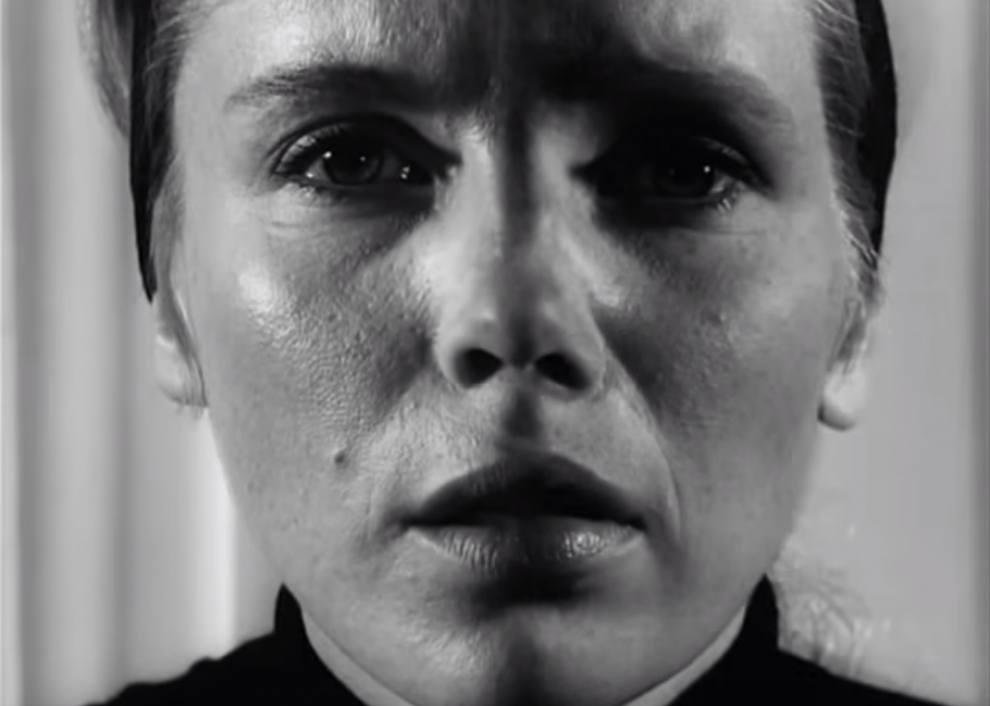
In the story of Persona (1966), directed by Imgmar Bergman, the details whether the character of Elisabeth Vogler, who experiences a life-changing moment which stops her from socializing and living a normal life, recovers from her own dilemma. Though the focal point of the film narratively should be how Elisabeth recovers with her personal issues, the direction soon shifts the vocal and very empathetic character of Elisabeth’s caretaker or private nurse, Alma. The relationship between patient and nurse shows off the tension of each other’s relationship regarding their own lives, where they find themselves comfortable with one another at times then later on frustrated with even the most trivial things. Through shown as two separate characters in the narrative, the film pushes scenes where their likeness and personalities resemble each other, to even editing their faces side-by-side. Though their character traits and where they came from are different ways, their meeting up show a similarity displayed only in the medium of film. Persona is a play of two women characters and their interaction with one another.

On a literary definition of the word “persona,” it means “the aspect of someone’s character that is presented to or perceived by others.” I would like to make the distinction in how the passage selects the term, a perceived character by others, when during a majority of the film, these two characters of Alma and Elisabeth spend every waking hour with each other’s company. Some of the more tender and emotional scenes contain their conversations with one another. For example, in the scene where Alma shared her story on the beach, you can see the interest and compatibility they have with one another – listening intently to their stories and feelings. There’s a certain charm and curiosity they have for one another, when Alma shows her respect of Elisabeth as an actor and Elisabeth shows her respect for Alma’s care. Since their seclusion at a cottage, where all they have are themselves, the external pressures of society and their peers don’t come into play when they kept each other’s company. Telling this tell is such an intimate level, there’s this appearance of reality of what the people or persona of Elisabeth and Alma are, especially in how Alma grows a very personal and sincere relationship with Elisabeth. Since Elisabeth’s condition won’t allow her to speak, Alma becomes more open to telling her deepest thoughts and desires with Elisabeth, from her upmost respect for Elisabeth to the naughty tale when she was at the beach with her friend. There’s this certain merging of these characters due to their likenesses and intimacy with another that happens in this character-driven film – and it’s an effective and creative telling of the two characters and their time alone.persona-screenshot-1170x713

Later in the film, one scene that striked me was when Alma had a monologue with Elisabeth, venting her frustrations with her silence and this current situation, then suddenly shows their faces as one. It goes to show how much they know about each other, and the relationship that developed after days spending so much time with one another. Parts of the film show Alma saying that both of them look so similar in shape, hinting to the imagery where their faces would be editing to make up one complete face. The character of both Alma and Elisabeth will be forever affected in their intimate exchanges with one another. It is really unexpected to see their character congregate in this way, but I see and appreciate the director’s choice in putting Alma and Elisabeth onto one face, as it shows the change a person may experience when they encounter a certain person, or when they spend a lot of precious time with that certain person. The film struck at me with a character-study and tells a tale how one would experience a person – showing how transformative people can be to ones own person.

A Woman is A Woman: A Lover’s Quarrel

Francis Gavin S. Musngi

A Woman is a Woman tells a story of a conflict between the sexes male and female. Angela planned to have a child with her boyfriend Emile, but Emile says otherwise, and provides him alternatives to her conundrum. Godard, the director of this film, tells this tale by creatively using out-of-this-world cinematography and acting choices to display this spectacle of when a woman doesn’t get what she wants. And when a woman really wants something, sometimes she needs to maneuver around her own problems. The film shows how much Angela and Emile stood their ground in the idea of birthing a child, and eventually found a resolution to their predicament – while showcasing interesting direction provided by Godard’s vision.

The tensions between the two, Emile and Angela, create a feeling of playfulness or light-heartedness as they tackle the idea of childbirth in their own ways. Emile tries to openly reject Angela’s advances – even suggesting one of his friends sire their child. While on the later scenes, Emile circles around in his bicycle and talks with Angela despite saying “no talking” in bed. This goes to show that even though he may be stern on his response, he feels a softness for his girl Angela – that even with differences between the couple, they still find time to love one another. Angela, on the other hand, tries to push her agenda forward with Emile, adamant with getting a baby from his lover. She tries things available to him, even “sleeping” with Emile’s close friend, just to get Emile to get her pregnant. All of which is shown in a dramatic and funny way – with friendly banter sprinkled throughout the film.

The film goes to show that indeed, “A woman is a woman,” in the way that they would be fixated to something they really want. The film goes to show the cleverness of the “woman” in a society that is depicted dominated by the opposite gender. Men tending the stores, bars, and other business, while women in the movies are depicted as the temptresses and mistresses shown in the strip club. It’s interesting to see that despite the gender divisions shown, the woman can wrap a man around her finger through her sharp wit and charm, depicting the battle between the sexes that resonated with that generation of people then. It’s an attempt to change the viewers perspective of women – to show that women are more than what they seem, and they are persons who go after what they want, no less than any other person.

What I enjoyed out of this film is the interactions between Angela and Emile, especially during the times when they share opposite reservations about the childbirth. The conversations regarding the pregnancy is what I would call, “cute,” as the playful cinematography alleviates the tense topic of one reject her lover’s will for bearing a child. Angela and Emile love each other, without a doubt, and this shown on how they interact and exchange words with one another. The conflict, despite it being very dramatic and something tense, becomes a play on who gets their way, and what it will take to get that.