A Simple Thrill: Reflections on Timecrimes

Of all the films we have watched in class, Timecrimes has by far been the closest to how I perceive a Hollywood film would be, which made me more comfortable in watching it. However, it is also different because it is able to pull in an audience so deep into its plot that you’ll just be left with wanting more of the thrill you got watching it. As a fan of thrillers, Timecrimes was honestly one the best thriller films I have watched, close to Christopher Nolan’s Memento.

Nacho Vigalondo’s film was simple; everything we saw was ordinary, yet it did not fail in bringing us the excitement of trying to figure out what was going on in the film. It’s simplicity for me is what made it great because ordinary things turned into something surprising. And it is through these things we see in the film that we’re able to piece together a story that one cannot figure out without the guidance of the characters in the film’s complicated timeline. For example, I immediately knew that there was something odd about the woman whom Hector 2 accidentally killed on the rooftop because, while Hector 2 perceived her to be his wife, I for one knew I can’t be her because of how the framing of the scene highlighted the woman’s shoes. I knew from then on, that this woman was the woman in the forest because she was wearing the same black shoes that was also previously emphasized in a frame in the previous scenes. Purposely framed scenes like this which emphasizes little details are important, especially in thriller films that require the audience to figure out elements in the story. Yet, despite these little clues, the story of Timecrimes itself seems to fit each other perfectly, like a puzzle.

I compared this film to Memento due to its odd use of the film’s narrative. Memento, although not a sci-fi time travelling film, was able to utilize its story in such a way that would have the audience solve a mystery along with its character. Similarly, Timecrimes leaves us solving for what is really happening in the story, or rather, what really did happen. It’s also confusing at times since the story itself is stuck in an infinite loop where the cause and effect of such events comes from a single source.

I think that what makes this film all the more thrilling is the fact that it ended so perfectly, with each scene falling into place. However, we’re left to wonder, what if the characters were to make a single mistake? Would it change the entire plot? Would it create a drift in time? How would that look like in such a simply made film? Questions like these is what makes me love films such as Timecrimes, and for this I have to say it is my favorite film so far.
The Edukators: On Youth In Revolt

The Edukators left me thinking in a way that the other films didn’t—it made me think about the situation of our world and what I am doing to respond to it. Not many movies have the power to do that, while making a compelling narrative that immerses audiences into the characters and the story. At first, it feels and looks like the regular heist thriller movie, but Weingartner has so much in store for viewers to leave empty-handed.

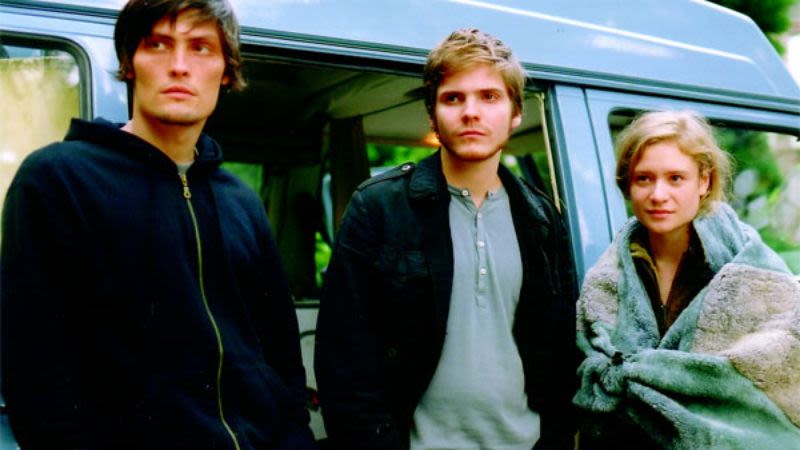
We are introduced to three idealistic, free-thinking activists Jan, Peter, and Jule. Each bring a personality and a human aspect to these ideals for a better society. What sets them apart, aside from their ultra-complicated-romance-friendship love triangle, are what they each think about their vision and values for a better society. At first, Jan and Peter were the self-proclaimed “Edukators” who would raid and trash the houses of the upper class in private subdivisions to teach these elites a lesson. Jule, on the other hand, joined in later on, and was able to let out most of her aggression towards Hardenberg, albeit too recklessly. The movie was able to showcase the class struggle in Germany so well from the point of view of these free spirits, while showing the humanity in their mission. They all decided not to steal from the houses they raided, and took care of Hardenberg to the best of their ability while he was kidnapped by them. It is easy to forget that behind all the ruckus they were making are just three idealistic, yet frightened, young adults who just want a good life despite the corrupt social system.

Another interesting and notable element in the film was the dialogue between characters. Not only were the actors able to portray these people as real, oppressed working class, but it also portrayed people like Hardenberg very well—even to the point that makes you pity him. One of my favorite scenes of the film was when Hardenberg was having lunch with the three activists in Jule’s uncles’ cabin. They were able to have real discourse on the matter on social classes, and although they had opposing views, it was interesting to know the motives of both sides. Hardenberg even admitted, “Some of what you say is true, but I’m the wrong person to be blamed for. Yes, I’ve been playing the game but I didn’t make up the rules,” yet Peter replied, “It’s not who invented the gun. It’s who pulls the trigger.” Most of the lines said by the three are very timely and relevant even in our own context (and the Philippines was even mentioned a number of times in the movie), such as when Jule said, “You want them poor! It’s the way to control them. Make them sell their raw goods at dirt cheap prices…”

What I like most about the film and its story is that it emphasizes a call to action, but not a violent one. And although the characters faced a lot of difficulty and oppression from the upper class, they were able to keep a light and hopeful tone at the end of it all and still managed to have fun. In one of the scenes when Jan and Jule were talking about their views on revolution and hope, he tells her, “Even if [some revolutions] didn’t work, the most important thing is that the best ideas survived. The same goes for personal revolts. What turns out good, what survived in you that makes you stronger.” This gives all of us that watched the movie hope, because we all have something the fight for. It may not be as large scale as social class struggle, but in a way this movie touches our emotions and our personal advocacies in such a charming, heartfelt and playful manner.

Edukative Dialogue or Terror

To be honest, I felt provoked half of the time I was watching the film. As someone who has grown up being taught to be accountable for my actions and realize my responsibilities without blaming others, watching Hans Weingartner’s 2004 German-Austrian crime drama film, Die fetten Jahre sind vorbei (The Edukators) honestly made me want to lash out at the characters – including Hardenberg. The film revolves mainly around three young, anti-capitalist Berlin activists, Jan, Peter, and Jules, as they find themselves involved in a love triangle while kidnapping Hardenberg, a fifty-something year old rich guy whose car Jules totaled.

The funny thing is, I understand their ideals and their cause – even respect them, like Hardenberg said. However, I think the film really aims to be provocative, to be unlikeable to its audience, as it revolves around the perspective of young activists – something that not a lot of people have experienced. In that sense, the film had successfully done that by portraying ideals that said young activists have that are mostly different from what I’m used to. It explores a new perspective that somehow makes us empathize with them – in some aspect. The film talks about the huge disparity between the rich and the poor. On one hand, the rich do not really seem to care for others but themselves – exploiting the poor to gain more money while they live in lash houses and collect artisan dolls to be merely displayed in their living rooms. On the other hand, the poor are stuck in a never-ending cycle of working their butts off just to make ends meet, risking being kicked out of their worn-out apartments because they could note pay rent’s due on time (like Jules), and turning to anti-depressants (e.g. television shows and alcohol) to forget that they’re barely living in this capitalist society.

However, I think the things that provoked me was mainly how they blamed rich people like Hardenberg for people like Jules being in debt. Although most rich people do exploit their workers, which is totally wrong, not everything they blame the bourgeoise is really their fault. For instance, although I empathize with Jules because she’s in debt, I do not think we can call it “injustice” to let someone who crashed our car pay for the damages she has caused. That is, she should pay for it, because letting her get away from it somewhat implies that those who have considerably less wealth than people like Hardenberg can cause damage to other people’s property and get away with it just because they earn way less than they do. Given that, people who do not make a lot of money won’t be accountable for their actions anymore, which is why I think it’s not injustice to let Jules pay for the car she totaled, mainly because it really was her fault. However, as an executive and, therefore, as someone with money, Hardenberg should have helped Jules in paying for the debt she owed – maybe by giving her a better job opportunity to pay him back, but nonetheless, I think it’s their duty as people with power and prestige to make other people’s lives easier – which is the Edukator’s cause. Conclusively, as a thought-provoking film that aims to portray idealisms from completely different socioeconomic classes, The Edukators reveals the different ideals of the suffering people in the working class and of the comfortably living bourgeoisie. The film somehow creates a discourse on the flaws and the good sides of the ideals and methods of both classes – slightly leaning towards those who are suffering. It allows its viewers to empathize and fundamentally understand the perspectives of those that some people may call “radicals” in a much more humane light. In a sense, I think The Edukators may be one of the most accurate portrayals of the world political system.

History as His Future

Nacho Vigalondo’s 2007 Spanish science-fiction time-travel thriller film, Los Cronocrimenes (Timecrimes) aimed to enhance its viewers skepticism, which it had successfully done with it’s storyline’s use of dark humor and bizarre twists. Having said that, I think it’s safe to say that the film was amusing. In watching it, one would think that the antagonist would be some delusional and mentally disabled person (especially during the scene when said person pretended to be copying Hector with his binocular). However, it’s funny to realize that said “antagonist” was Hector himself!

The storyline mainly revolves around Hector, a middle-aged man who finds himself part of a time loop, and his dilemma of stopping his other selves from continuing to exist, which consequently causes more trouble and makes him go back in time again and again – or maybe just three times.

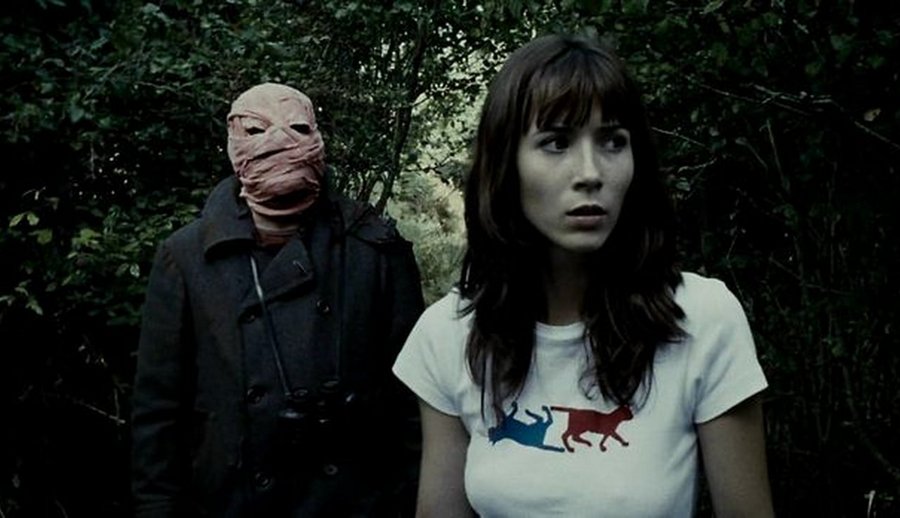
At first, I thought it was going to be like The Cabin in the Woods, where cannibals and psychotic people reside in the woods, waiting for people to go there. As said before, this was especially supported by the scene where Hector 2, with his blood-stained bandages and knowledge of what he himself showed Hector 1 before, tried to act like a mentally-deranged person with imaginary binoculars. However, especially once Hector has been teleported a couple of hours back and when his bandage started to become pink because of blood he got from his car accident, it then started to become clear that Hector may have been behind everything. At that time, though, I thought the person who had seemingly hit his car accidentally and had caused him to have a bloody face was just a random passerby, but then another plot twist was it was really him! Essentially, he was the mastermind behind everything that happened that day – he just played himself.

Lastly, I like how the film manages to answer all of the puzzles it seemed to show at the start of the film – which is mainly answered from the actions of Hector 2 and Hector 3.  However, one thing that remains a mystery to me was why Hector went into the woods to investigate about a girl who he creepily watched getting naked in the woods. I do not know if he was being a pervert or being concerned for the woman. The film made it look like he was concerned, but why would you go to the woods to look for a woman that you had just seen naked with your binoculars? Because she suddenly disappeared? Maybe it’s confusing to me because I’m not a guy nor am I Spanish, but personally, if I saw a naked woman strip naked in the forest and then disappears, I would not go to the woods just to look for her. For me, that part made Hector look like a creep. However, I quickly forgot about that when somebody suddenly stabs him in the arm. That gave me “thriller” vibes, which I’m not really fond of because I easily get scared.

Conclusively, Timecrimes is a unique time travel thriller that maybe aims to tell its viewers that history has already been written, maybe by ourselves or, in this case, our future selves. In the film, the actions of the future ironically dictate the actions of the present, and that is why I think the film truly did deserve appraisals for its creativity.

The Slow Edukators

(The Edukators, 2004, Hans Weingartner)

In all honesty, after watching The Edukators, I had no idea how to feel. I thought that the film was far too long for its own good, and in comparison to another film, also German at that, that I’ve seen in class, I felt the way Good Bye Lenin approached its political statements about capitalism and government was much more subtle and effective than The Edukators, which seems to just outright give the viewer a lecture in the middle of the film.

And this is puzzling because the basic premise of the movie really does not feel like it had to be almost two full hours. It’s simply about a trio of anti-capitalist activists, two of which are a couple, and them committing a kidnapping-by-circumstance, and the relationships of these three and their captor. Along the way, the captor learns to bond with them, the third wheel of the activists falls in love with the girl, and more issues are discussed.

I think what the movie also fails at from the start is introducing these characters. Obviously it is always a tricky thing to have a crime film with likable characters, considering how the very nature of the genre represents a fantasized view in the acts one shouldn’t normally do, but the main characters all start off very bland and unlikable, particularly Jule (Julia Jentsch). I never truly bought the romance between the characters as well, and the more kissing scenes there were, the more the romance subplot felt forced in as well as uncomfortable to watch. While the characters all eventually learn to grow, and they become more likable and understandable, it happens far too close to the end of the film for it to truly have any impact. In fact, the film’s ending even attempts to try a twist ending where it initially appears that the activists would not get away with their crimes only to reveal that they in fact did, but at the very end of the film I was just more annoyed they just didn’t get caught.

And another thing I felt the movie was lacking was a consistent theme. The film begins with a strong opening scene of the leads protesting a store’s sweatshop practices, and then builds up to them breaking into the home of Hardenberg, a man who would eventually be their hostage. Once they appear to get caught and commit the kidnapping, the film takes a more panic-induced tone, and the actual kidnapping is intense. But when the dust settles, the film transitions from a crime drama to an almost slice-of-life drama with the four characters. It feels almost like an entirely different film, and the sudden shift is truly jarring, with its bloated runtime also adding to the pain.

The one thing I did like about the film though was the performances. As much as the characters felt unlikable or flat, I never felt that they were poorly acted. Everyone in the film’s 4-person ensemble is doing their best, and the emotions of each character as well as the tone in their dialogue is felt. The actors all did a very good job, and their performances are easily the best part of the film.

In the end, after much thought, I honestly didn’t expect to dislike a movie any more than The Five Obstructions out of all the films I’ve watched in this class, but The Edukators successfully managed to dethrone it. It’s a well-acted film that, like its characters, sadly feels like it doesn’t know what it’s doing or where it’s going.

El Viaje en el Tiempo

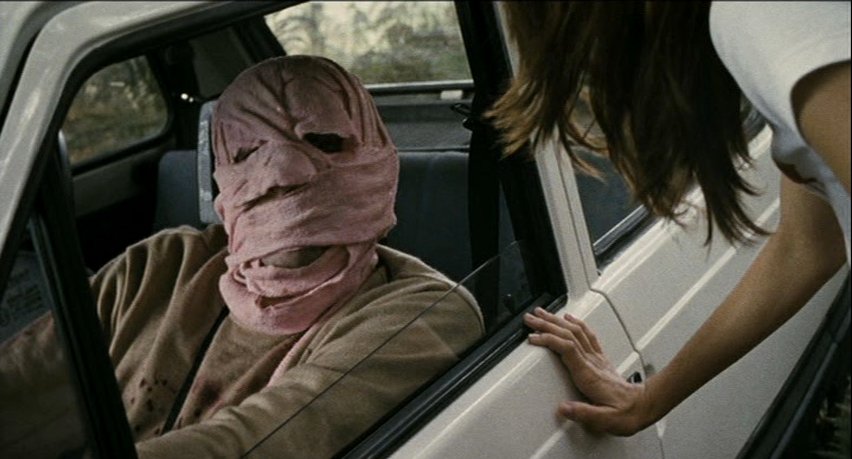
The film Los Cronocrimenes was especially good for me as previously I had been watching a new tv show, “Love, Death and Robots” which is an anthology. In this anthology, there is an episode which focuses on the same type of time travel/ loop that Hector found himself in. The suspenseful thriller of a movie started out as a horror film to me as a mummified man was terrorising poor hector after stabbing him with scissors and chasing him around.

The plot twist of the film definitely had me shook because I would have never pegged the movie as the time travel type. The cinematography was minimalistic but understandable as it was a low budget film. The movie definitely did well considering as it ventured into different genres throughout the movie from a horror/thriller into a sci-fi/thriller. But what I found the most interesting about the film was the character development aspect of the movie. Hector develops from a timid, middle aged man in the beginning to a hardened man burdened by accidental murders. His person slowly started to change and it is evident in how he was trying to shape the next hectors that were to come following the same sequences Hector 1 had him follow. I still find it strange that he did not try and break the loop however.

Timrcrimes

In  Nacho Vigalondo’s Timecrimes, we get to see a European take on the science fiction and the thriller genre. It is interesting that the film tackled the genre in such a small scale, which resulted to a more focused and endearing film. The film was successful in molding the two genres together so that it can produce an interesting character study on the main character, Hector. The film really showed such a complex concept, but done in a simple setting, which makes it easy to scrutinize. Vigalondo really succeeds in producing not only an accessible and entertaining film, but he made a complex film that makes the audience think. In a sense it’s the combination of the more mainstream side and more artistic side of European cinema.

One of my favorite aspects of the film is that Vigalondo decided to encase the film in a small setting. Rather than creating an epic sprawling cinematic experience, he decided to keep it small scale. This is effective in the study of Hector’s character, because he is in almost in every scene and thus we get to realize his own being as we watch the film. The small scale of the film also helped in not making the story to complicated, as seen in a couple other science fiction films. With the more focus setting, we get to observe the occurrences in the film and the little details that will make us understand the film further. The easter eggs were more evident because of the time travelling aspect of the film, which makes the film even more enjoyable to watch.

The film also successfully merged two different genres, science fiction and thriller. The film let the two genres compliment each other so that they can seamlessly tell the plot. These two genres also made the film very entertaining and put the audience at the edge of their seats. The thriller aspect was used well because it really made the tension between the Hectors spine-chilling. The thriller aspect was most successful at the first half of the film, where Hector is being chased by the man with bandage on his face. The scenes in the house really made it feel like a pin drop can be heard through the eerie quietness. The science fiction aspect was also successful, most especially because it was used in a small scale. By minimizing the sci fi aspect of the film, it was able to encapsulate a more creative way to handle a time travel plot. The audience were able to be immersed to the time travelling storyline, especially when we get to be revealed concerning the different Hectors in one single timeline.

Lastly, I found the twist and turns of the film to be successful and not just to elicit a reaction from the audience. The storyline was clearly structured to have the audience on the edge of their seats on what the actions of Hector will be. The revelations were also not coming out of nowhere and instead the film really put easter eggs, which foreshadowed the impeding twists in the film. The film was a successful use of genre in  the European film canon. It molded the accessible entertainment we are accustomed to in mainstream cinema with the more artistically weird characteristic European cinema is known for.

Enrico R. Barruela COM 115.5

Timecrimes – Reflection paper

If I were to describe the film with one word, I would say that Timecrimes is best characterized as a paradox. Watching the film, I was weirdly reminded of the mind games, such as chess, that I used to play when I was younger. The plot of the film seduced the minds of the audience as we tried to keep up with the twists and turns of the story line. While in other classes it would rather be inappropriate comparison, Timescrimes was very much like a game of chess, only with more nudity and violence.

The start of the film was a sign of the things to come – it began by showing us a Spanish man named Hector, sitting on the lawn of his vacation house, who spots a lady stripping in the woods. While it is hardly for Hector to decide to investigate this mysterious stripping of a pretty lady in the deep part of the woods, while his wife was only a few steps away inside their house, it serves as an important decision for the film. He was about to participate in the reality that he had already lived in through time travel.

I have always found the topic of time travelling fascinating. Because there are no rules that has been set on such topic, I suppose that every story could have its own unique set of rules. However, there is a common fundamental concept that I perceive to be crucial – consequence of ripping through the fabric of space-time continuum. The reason we don’t get more warnings of this danger, is that travelers into the past tend to do things which unalterably change the future, so that their present no longer exists for them to return to. I love this stuff.

Time travelling has been discussed and explored in numerous attempts. Because the matter of whether time travelling is possible or not has yet to be decided, it is not a surprise to see that the rules of time travelling differ from movie to movie. One common understanding that most of the time travelling genres have in common however, is the “butterfly effect” – there has to be dire consequences when a mere mortal rips the fabric of the space-time continuum. The reason we don’t get more warnings of this danger, you understand, is that travelers into the past tend to do things which change the future, so that their present no longer exists for them to return to.

I was impressed how the film was able to use the elements that were unique to the time travelling genre in relaying its thrilling scenario to the audience. It revealed important scenes in the beginning of the plot and allowed the rest of the plot to take the audience in its journey to solve the presented mysteries. The thrilling death of a stranger on the roof of their house, the bravery mustered to save the woman one of them loves, or the love of all three, was wrapped and packaged in an entertaining way that left the audience searching for understanding even after the credits have rolled.

Eighth

Timecrimes by Nacho Vigalondo

This film was quite the entertaining ride. It really caught me off guard how the narrative progressed because I genuinely thought it would be a sort of slasher horror film that would end in the protagonist’s death. In the beginning I did not expect for the time travel aspect to be a part of the plot because there was never an indication from the movies aesthetics that it would take this turn. The time travelling was confusing at times but it helped reason with the earlier missing plot points that made you go “ah, so that’s why he did what he did”. As the story goes back and forth to deepen the plot I kept anticipating the cause and effects of each of his actions.

Yet the movie surprised me as a time travel thriller that was exciting and really kept me on my toes wondering what would happen next. The film started off simple, a husband and wife going about their day but suddenly the husband, Hector, sees something odd beyond the fences of his home. It was a wild trip from that point on wards. Seeing everything unfold and seeing how he had to follow through with these all the wrong things pilling on top of each other. It was shocking to watch how he had to kill an innocent woman and having to have three versions of himself reliving the day over and over. It was quite scary at times because in the beginning you never realize the madness in Hector until he acted upon it. The slow and steady decent to him becoming his own enemy and making that day his own personal and living hell. All three Hectors sort of blurred into each other wherein we would have to watch the same events and connecting why and how the events took place. You do not know whether to sympathize with the Hectors or would rather see them as a villain. You sympathize with him because he is just an average man protecting himself and his wife but then you also see him as a villain in him having to be the reason for someone’s death and being the cause for a temporary paradox that affected lives.

I enjoyed the movie a lot as I have never seen a time travelling movie such as this and with an added thriller/horror added to it. It was action packed and fun to see how each event unfolded. In the end you see how much man would do to resolve his problems and yet want to avoid it at all costs. I would recommend this movie to people who may be into these time travelling science fiction-y drama because as stated it sort of deviates from the average as it adds more depth with it being a thriller/horror. The actors especially Hector played by Karra Elejalde was brilliant making the viewers hooked on to the story wanting to see how everything played out in the end.

The Sudden Time Loop: A Discussion on Timecrimes

Karra Elejalde in Timecrimes, directed by Nacho Vigalondo

Oftentimes, time travel films focus on the technical and technological aspects of the fluidity of time that it becomes increasingly difficult for others to follow the story. Enter the 2007 Spanish science fiction thriller Timecrimes, directed by Nacho Vigalondo, which focuses on a simple man named Hector who finds himself in a time loop and a desperate journey to undo his mistakes. One of the great things about the film is that despite the lack of special effects commonly used in science fiction films, Timecrimes takes you an intriguing adventure that you cannot help but watch. This is not to say that the film is easy to understand since it does not focus on the technical aspects; rather, the film confuses you through the story itself because of the use of narrative intransitivity. There is no cause-and-effect driven narrative in the beginning because we do not know what started the the time loop in the first place. Initially, we think that it might be the scientist, but we are quite unsure as the film progressed. There seems to be no relation between the scenes, such as “Why was there a naked lady in the forest?” However, the interconnection between the main character’s actions becomes clearer in the middle of the film as we discover that there are two other versions of Hector. By revealing the intentions behind the initial actions at a latter part of the film, the audience is hooked and patiently waiting for the explanations to their questions. The film becomes exciting and despite being a thriller — where one is usually scared, you are begging for more once some things start to make sense.

However, boy were we wrong to expect that we will get an explanation for the whole story. Happy endings usually provide satisfaction to the audience since they usually tie up the loose ends of the story. However, although Timecrimes might have given us a sort of happy ending since Hector 3 was able to rescue her wife at the cost of the life of an innocent girl, we find it hard to move on and get up from our seats because we have even more questions that were left unanswered. The biggest question at the end of the film remains: How did the time loop start? We can come up with as many theories as we can, but we will never get the resolution we need. Yet, instead of ruining the film for the audience, this technique of leaving questions unanswered heightens our experience and allows us to appreciate the complexity of the story. The happy ending we get is reality, that sometimes, our happiness comes at the expense of someone else’s pain. Being unable to have our questions unanswered gives room reflection and ignites a rich discussion with others who watched the film. In the end, Timecrimes reminds us that perhaps, there are things that will happen in our lives with which we cannot provide an explanation, and the only way to survive is to deal with them.