‘How do you solve a problem like Maria?’

The film begins as it presents two women, possibly with an age gap of 20 years are on a train on the way to Zurich to acclaim the man who provided her (Maria) with her first role and stardom, Wilhelm Melchior, who also had passed away. Coming across director Klaus Diesterweg during the tribute, who wishes to stage the Maloja Snake persuades Maria, the well-renowned actress, into playing Helena. Val (Kristen Stewart) encourages her to take this part and strongly believed it was a good opportunity for her, even if she felt detached from the character of Helena since she played Sigrid (the younger character) when she was younger. 

Things take a turn when Maria accepts the job and runs lines with her assistant, Valentine. We see them having a hard time separating from their true selves, they end up strongly identifying with their characters. The cinematic experience is unlike any other as we feel the tension between the two. Due to much conflict between them, Val just disappears all of a sudden as they were hiking to see the Maloja snake.
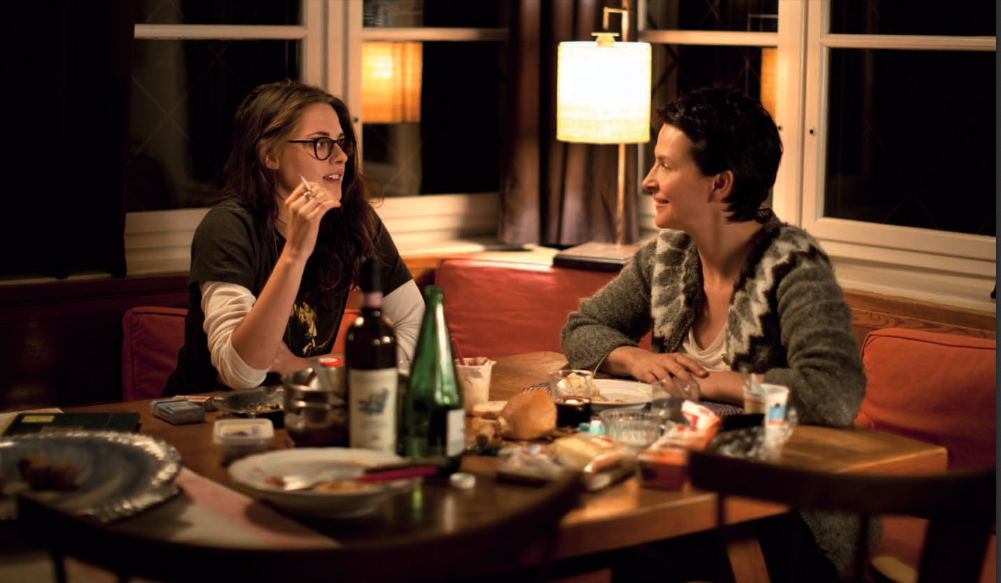
Assuming the role of the older woman, paved the way for Maria to realise a lot of things. More complications arise as the divide between her personal life and career was slowly blurring. Not only for her, but for her assistant as well. The audience is given an outpouring of dialogue, allowing us to seep through their words and their true feelings and emotions, as we watch the plot organically unfold before us. The character dynamics is incredible and well-played out, with Val’s hostility and Maria’s passion for her craft. We see them play power games with each other as Maria prepares for her role running lines in the house. The sexual tension and immense desire is felt all throughout the movie; they are rather translucent with their feelings, yet they don’t speak of it nor take action. Many aspects of the play reflects their personal lives, which caused quite a hysteria between the two.

The film is strange yet beautifully crafted uncovering many elements of what it means to be a woman, depicting the different stages of a woman’s life. There is a pressure that women have to conform to that was evident in the film and in the obstacles the characters faced. The movie also touches up on the difficulty of adapting through time and change. Maria finds comfort in Val who provides emotional and executive assistance to her boss, possibly due to the fact that she misses her younger self and identifies with Val’s youth.
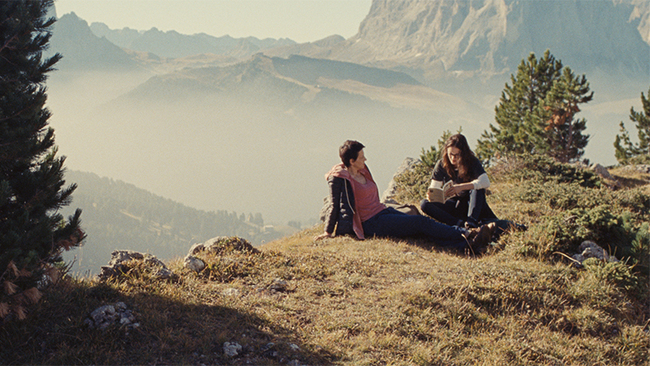
 We see these two women (Stewart and Binoche) take on daring roles, that require them to create “sparks” between them through solely their conversations and eye contact— without the physicality of it all, which they successfully achieved. It is also exploratory in a sense, with regards to the lives of celebrities and gives greater appreciation for the gruelling process of their job, similar to Holy Motors. As if we’re watching celebrity frenzy from a distance the same way Val is.

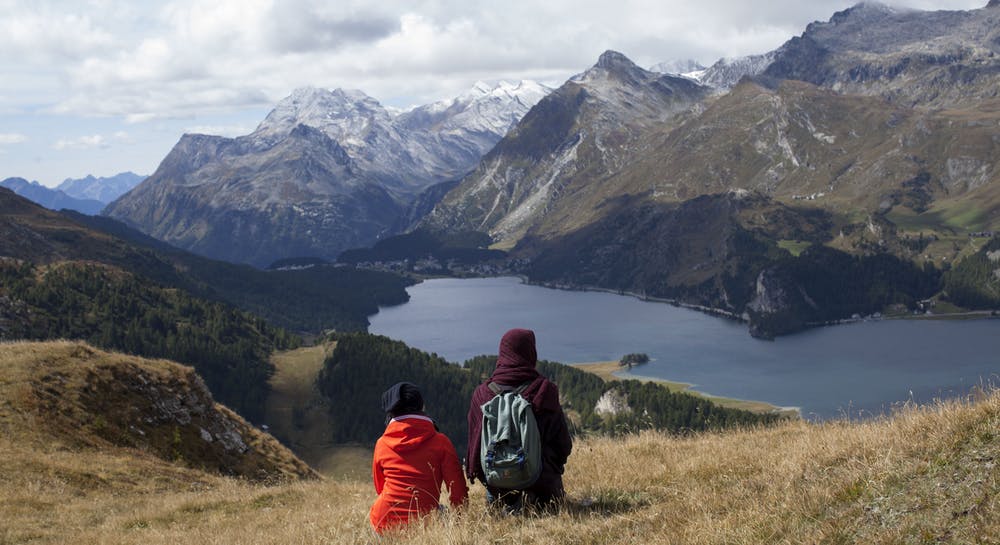
Throughout the movie, the viewers are treated with heavenly views of the Swiss alps. It is like a visual treat of watching art and life come together. A tale focused on soul-searching, we see a woman in the midst of contending with her personal life and professional life.

162622 

L’avventura (1960)

L’avventura (1960)

                The movie L’avventura directed by Michaelangelo Antonioni and released on the year 1960 was made to confuse its viewers because of how the story did not have a clear story line and conclusion. It is a very mysterious movie which had no closure to each scene which left the viewers hanging and curious about what happened next. The movie did not have a specific story and had numerous plot twists without conclusions.

         The movie is about a group of wealthy friends cruising around. Sandro and Anna were lovers who had misunderstandings and Anna wanted to be alone and then got lost. Sandro and Anna’s friend, Claudia started looking for Anna. While searching, Sandro started flirting with Claudia and heard about a lady named Gloria Perkins who attracted a lot of men in Messina. After, Sandro asked Claudia to marry him. While in the search for Anna, the two had gone to Taormina to check on a hotel Sandro’s boss and the wife is staying. Here, Sandro saw Gloria Perkins and was attracted which resulted to him and Gloria in a sexual encounter. They were caught by Claudia but she did not do anything about it and showed compassion. 

            The movie was very confusing and was very shallow. The context of the movie was not specific and was very unclear. Personally, I do not recommend the movie because it did not have a conclusion. It confuses the audience and makes me question what the point of the movie really was. 

Of hair flips and leather pants

There is a lot of hair going on in this film. I may or may not be overdoing this, but I must say: “Heavy Trip” has become appealing to me because of the unique charms of every man in the band and all the hair flipping.

Contrary to its title, heavy trip has taken me to places my imagination could only aspire to reach. The movie was campy but comic in a hearty way. The relationships showcased in the film were fragile, familiar and relatable, so much so that I just wanted nothing but the best for the main characters [the Impaled Rektum]. They were rockstars, yes, but their characters seemed innocent, passionate and so loving (contrary to their dark, leather clad looks) that as a viewer, you just wish they have a happy ending.

I must say, Laation and Vidgren have made good choices when it comes to comic timing and pop culture references. A particular moment that shone for me was that point where they came out of the water to find people ‘hanged’ on crosses. It was an exciting time during the film because you never really know if it’s true and what is about to happen. I never expected it to be this funny for a Finnish film, especially because I have never seen one, but “Heavy Trip” has this capacity to lift your spirits up. It talks, at least for me, of how the dreams you dream to achieve may not always come in the form you wanted it to take on but it will take form if you work to achieve it, and that’s all that matters.

The film was also eye candy to me. At certain points, like that time when Turo was on his bike and the camera would focus on him, it’s as if I am watching a video to some slow romantic theme and he is about to burst into song. This kind of minute attention to detail had me reeled in. And of course the long hair did the magic!

I also want to express my appreciation on how the film touched on sensitive areas of discussion like discrimination based on looks, origin or mental condition, as well as loyalty, love, and above all friendship. I could not have chosen a more fitting way to end the semester. In the end, “Heavy Trip” has become one of those films I think would be great to show to younger audiences to raise their hopes on their dreams, while keeping them hooked and eager to see what’s about to happen. That said, I will definitely watch this film again when I have time.

When educators get a taste of their own medicine

This film had me all over the place. Hans Weingartner made a great gamble when he used three idealistic people as main characters to a film called “The Edukators.” These kinds of films, almost like documentaries usually end up being didactic and obtrusive because they tend to tell the audiences what to do and what not to do explicitly. This film, on the other hand, utilized absurdity to bring out the very points they wish to be discussed critically. 

The three main characters we see, a group of friends going around and “punishing” people, are found engaging proactively on political activism. Viewed from the lens of funny, risky, and unabashed breaking of the law in the name of ideals, we see three youngsters living their best lives. That was until one of those bourgeoisie people whose house they were ransacking walked into them in the middle of the act. It’s as if they were deers caught in the headlight, getting a taste of their own medicine because they learn at that moment that they won’t always be right in their choices. At the moment, we see the camera move like it is one with the group in panic, which is interesting because it means the director knows how to make the camera act in sync with the scene. 

I may have also found myself out of breath following the subtitles [because I cannot speak the language] but I was still hooked by the rollercoaster of emotions that is this film. Aside from the political activism angle, which led to them having to isolate themselves in a cabin in the middle of nowhere, there were other perspectives utilized that made the film more compelling. Perhaps the best example would be the palpable tension between the three because of the budding relationship and cheating that happened between the girlfriend and the other guy friend. Funny enough, the old man who was supposedly the hostage, became so relatable because he ended up being a spectator to the mess that is unfolding before his eyes. It became problem on problem on problem for the three kids, which forced them away from each other for a while. Beat by their friendship, the kidnappers ended up ‘getting back together’ as a gang in forgiveness of each other. Their attention then refocuses to the hostage they have taken away form his home to ‘teach a lesson.’ 

Fascinatingly enough, the old man cooperated well in most of the things he was asked to do. He had barely any attempts to escape, probably because he knew it would all be over soon anyway. Although happening in a homogenous world, with the usual continuous and chronological narrative, the film had surprisingly made a huge impact on me as a person. That last scene made me think of the level of trust we have in our own system and politics in our own context. It also made ma ask myself how come the youth in my own context are not as idealistic and not as proactive in manifesting those ideals. Anyway, the film ended on a high note with that paper making me hope that the man had kept his promise to the youth. 

If I am to comment on this heck of an entertaining viewing experience, I only have this to say: Well done. 

No holds barred

“Raw” has left me nothing but dumbfounded. I am struck. I was literally at a loss for words after seeing it and to be honest, there were literally times when I would . As I saw the title, I honestly thought this would be some ratchet horror or thriller film but I did not know that I was in for a treat. The way the film was colored, constructed and developed gave off the vibe that it was like one of those local, indie films that you have already seen somewhere. But I have never been more wrong. 

It started out fresh and easy with an opening that portrays what it is like to be a vet student in that gory institution where Justine and her sister were studying. There was a lot of blood involved, which did not really sit well with my stomach. However, the film packed amazingly transitioned and devised jaw-droppers [especially that first time Justine bit off flesh from someone else]. This movie comes a close second to “Holy Motors” when it comes to shock factor. Because the film showcased something so absurd, that is the act of human eating raw flesh from fellow humans, I found myself laughing, cringing, and crying at the same time. “Raw” has made it possible for me to stick around watching a movie I am so utterly disgusted by, despite the many opportunities to do so. I think this movie is an experience in itself and becomes more enjoyable to watch when in groups. This is precisely because the movie really brings out the different ways people take in concepts as absurd as was shown in the film and how they respond to it. 

Justine, while showing animalistic tendencies as she suffered in pain, also packed so much sensuality to narrative. Throughout the course of the movie, I found that a lot of scenes involved human touch, interaction—push and pulls, attempts to resist temptation, and the many opportunities to succumb to their desires [or better yet, cravings]. It was violent in a way that Justine had to inflict harm upon herself just to be able to protect the people around her and not eat them or their parts off, which proved compelling to me as an audience. It speaks so much of the sacrificial pains we humans have to go through everyday because the very nature of our relationship requires us to experience so. 

The familial involvement also made an impact on me especially during that last confrontation scene with the dad, where he admitted to having an understanding of what his two girls were undergoing. Justine and her sister also showed an unmistakable bond in spite of their grave differences, so much so that the kind of forgiveness when given and asked of them, is the kind that has high stakes. Docournau did these female characters justice as she gave them very complex personas, instead of turning them into mere decorations. Now, there is nothing out of the ordinary in the way the film was shot., scored or colored. The camera seemed like an all-seeing eye, without being obtrusive. The characters unique and charming, but they hooked me enough to allow myself to appreciate their motivations and inclinations. Overall, “Raw” is a fantastic serve.

Stuck on a loop

I could not have made sense of Vigalondo’s attempt to show the repercussions of playing with time until there were multiple Hectors on screen in “Timecrimes.” The film was set in what seemed like a timeless location. The characters featured were very ordinary people, a couple, living a very ordinary life in a quaint neighborhood. That was until we see the man sat on a reclining chair with his binoculars, looking intently at a distance only to find out that there is a whole new story unfolding right before his eyes. His curiosity leads him [and us viewers along the way] to follow and trace the steps of the shadow he saw through the lenses. The narrative is a bit slow-paced for me and I felt a level of impatience as I waited to make sense of what was happening and what was going to happen. Personally, I am not a big fan of how the story unfolded not because it was objectively unappealing. It’s just that the way the narrative was laid out brought me more confusion than interest. I would normally want to see films like these through the end but I realized I ended up watching and sticking around just to see the story through.

I would give props, however, to the actors. The performances were brilliant especially for the actor who played Hector because I could clearly see the difference in the way he portrays every version of Hector. There was a Hector who was eager to learn what was really happening, a Hector that seemed to me like a creep, a Hector that had just made sense of the repercussions of one’s addictive inclination to change one’s past actions through a device/machine. They all had their own worlds and so the story did not revolve a homogenous world, at least from what I understood. I have come to develop contrasting feelings to the way the women’s characters were developed and portrayed in the film. They were showcased as weak, dependent, victims of the choices made by the male lead character. I, for example, squirmed at how easily the young lady so easily surrendered to masked Hector’s commands [although I acknowledge that it’s hard to say no when a gun is pointed at you]. She could have resisted or done something but the way she acted turned her into an accessory in the story of the guy. The operator in the tower house proved pivotal in the film. To some extent, I considered him the voice of reason in the film, albeit there were moments when I found him to be didactic. 

Technically speaking, there is nothing spectacular of “Timecrimes.” It was shot in a way that film are ideally shot, the colors and the scoring of the film corresponded to the storyline, the setting was nothing out of the ordinary, and the sci-fi part [the time travelling part] was not peculiar. Genre-wise, it came off as a thriller with a hint of sci-fi. Again, nothing new or out of the ordinary when it comes to film, but overall I do appreciate the attempt of the film to highlight how a man’s choice has its ripple effects and there is definitely no way to go but forward [otherwise, it would be chaos]. After all, “Timecrimes” dwelt okay with unpredictability. 

Persona

I really thought A Woman is a Woman is a weird film to begin with but after seeing Persona by Ingmar Bergman, I realized that European Film can still get a lot more strange. The very beginning of Persona is rather disturbing as it shows a montage of images that are quite unrelated to one another. Up until now, I still cannot figure out what those images actually meant in relation to the film. It gave an eerie vibe that lasted throughout the film and supplemented the black and white colors.

In the film, our protagonists were put into a position wherein they had no choice but to be intimate to one another. Elisabet is a renowned stage actress who is spending time in a psychiatric facility because she suffered psychological breakdown. Alma is the nurse that was assigned to Elisabet. The doctor decides to lend her summer vacation house to Elisabet for the entire duration of her recovery and Alma was to accompany her. With this, Alma had to trust and confide to Elisabet eventually. Things started to take unexpected turns from this point onwards as some of the events that would follow would not make any logical sense. The two got increasingly close with each other and even got themselves into a drama. Their fascination with one another led them to create a deep emotional connection. They may be two different individuals but with the time spent with one another, they are almost merged into one persona. This was reinforced by Bergman’s act of composing a close up which connects half of Alma’s face to half of Elisabet’s face. They were shown to be eerily similar to one another.

I am yet to appreciate the elements that are present in this film. I had a hard time trying to grasp what is really happening because of the illogical instances that would suddenly interrupt the storyline. It might be Bergman’s way of adding artistic value to the film but I think I might need to watch Persona again in order to appreciate them. With this, I honestly am not too fond of how the movie turned out. I am not a big fan of the genre that was covered by Persona but it was a film that was worth seeing and learning.

Bonus: Skyfall

While Skyfall is “technically” a European film, I chose to write about it as it is one of the primary films of British cinema that has made itself a hallmark in the schema of the world, establishing itself as a global enterprise and brand while remaining distinctly British. Also, I chose this film because it is the first Bond film I’ve ever watched, and because prior to this class my knowledge of European cinema was quite limited (Which is, of course, not the case now. Thank you for the semester Sir!)

Skyfall, I later learned after watching the other Bond films, represented a departure from previous films in that as opposed to seeing the quip-ladden and witty and abjectly talented individual at his best, we are exposed to both his mental and physical vulnerability – a risk, considering viewers often want their heroes untouchable. But given the entire history and number of films in the enterprise, showing a weaker Bond in a sense even strengthened his character and character development, showing us a more human side of him – an ageing side of him.

A key element which has contributed to the continued success of the films is the adaptability of the storylines.  The villains and their methods have reflected the social and political times in which the films were released(e.g., the cold war weapons of Dr. No). Eva Mendes character represented a new type of villain in that while the themes of the film still relied on the formulaic approach of beautiful women, explosions, fast cars and easily-defined villainy, this was modified to show Mendes’ character as someone who works i the background, and in the shadows – just like Bond.

The use of music in this film is also extremely well-placed and orchestrated. The films titular “Skyfall” was penned and sung by the hit British artist Adele, keeping the film distinctly British in almost every aspect imaginable – characters, location, and now, music. The use of music to enhance different scenes by evoking specific emotions is greatly exemplified here, e.g., the impactful scene between Bond and Severine standing on the bow of Silva’s yacht as they approach his island hideout, wherein Bond is, at this point in the film, back in full form. Again, Newman’s sweeping orchestration in this scene, entitled “The Chimera” (the name of the yacht), increases the tension and hints at the dramatic turn of events that lies ahead.

Ultimately, what captures us in the bond enterprise despite it technically being an action film is that it is not merely an action film. Aside from the quite obvious fact that it is extremely well done, it plays into the concepts of humanity, fragility, unique villains, beautiful women, in a way wherein it simultanously sticks to formula while not seeming formulaic, and in a way that doesn’t seem repetitive. The film exudes class, and a world we would not otherwise ever be exposed to except through film. It plays on our fantasies of the underground of the world and plays it out onscreen in all its glory.

Film is, I believe, ultimately about the experience it gives its viewers. This film and the entire enterprise left its mark on the entire world, and on us – as with the films we watched in class. All of which imposed on us in their unique narrativity an experience unforgettable, evoking a multiplicity of emotions and playing with expectations – playing with us – in a way we don’t expect. Regardless of if it is an experience of excitement, or boredom, or confusion, European film has this distinct capacity to always, always,leave us with an experience we won’t ever forget.

A visual adventure: L’Avventura (1960)

L’Avventura (English: The Adventure) released in 1960 is perhaps the hardest yet most worthwhile film to appreciate in our class roster for the semester. The film forces our attention with long pauses that tend to get draggy as the film forges on. It seemed to me that the mood and the characters were the central focuses of director Michelangelo Antonioni instead of the story and narrative.

Yet for most if not all the film’s viewers, it becomes quite hard to make sense of the muddled plot in all of this chaos. It reads like a warning to the rich and privileged that the act of traveling can very well reveal uncomfortable personal truths, derail your carefully-cultivated relationships, and throw you into existential crisis.

Through the film’s runtime, it felt as though the film was not really plot-centered anymore as the movie started to wear on Antonioni’s directing style has always been noted for exploiting colors and this showed as the film highlighted the many beautiful images director was able to capture in the absence of plot. It almost afforded him a certain kind of creative freedom and elevated the cinematography to another level. However, as only a casual filmgoer who never completely understood these technical aspects of film, it took a while to appreciate the cinematography.

Later on, though, I felt I grew to understand it at least a little bit: in the absence of Anna, for instance, the shots of choice served to heighten the growing tension among the group of friends, as well as the feeling of lostness that came with being on their own in an island far from civilization.  

It comes off as a modernist piece of art that does away with the story. However, it doesn’t do this in the same way as the willfully obtuse Holy Motors does: there is a clear story here; it just doesn’t seem to want you to follow it. In fact, the execution here is the complete opposite: rather than take hold of the audience’s attention with an eclectic, sensory experience, the film leaves you to your own devices and leaves you to make sense of the visuals on your own.

Truthfully, I felt like I could not figure out any of the characters’ motivations as they were all rather blank and opaque in their own ways. This was one way the use of color (or lack thereof) was exploited as the black and white definitely contributed to this as well.

At the end, the question remains: Where is Anna? Yet, as a viewer, I found that this was not the most pressing matter anymore once the final credit rolled.

Timecrimes: time travel done right

So I really enjoyed this movie, easily one of the better time travel movies that I have seen, let me explain…

Timecrimes follows a man, Hector, who seems like an average man at first, that is until some weird things start to happen to him. The timeline of the whole movie only actually takes place within the span of one hour, the runtime of the movie is actually longer haha Anyway, due to different things happening to Hector, i.e. time travel, he goes back in time and has to do things in order to make sure the things that have already happened to him in the past, still happen to him in order to keep things in balance. However, Hector is eventually caught in a loop. The use of time travel in the movie is really well done, the audience has to really pay attention to the different clues, like the different items, each time Hector goes back in time. This technique that the director employed really caught my attention because it really had me yearning to find out more, and to be more skeptical about the things that are happening to the Hector that we’re following at any one given moment. This also helps the “rewatch-ablity” of the movie, since it brings up so many things as the movie is going along, you start to wonder to yourself “Oh dang, I wonder what else I missed”. I feel like it’s so easy to mess up time travel movies, or make it a gimmick, wherein time travel is only there for the convenience of the plot to fill in some plot holes that may not have been answered by the time the movie is about to end. Timecrimes uses time travel very effectively in order to drive it’s plot and to engage the audience to think more critically.