Edukators: WOKE


Youths can change the world. That’s what the Edukators thought as they tried to rally against capitalism of the world. Angered with the situations of rich abusing the poor, Jan, Julie, and Peter came together to pursue their goals for world change. The movie itself is juvenile, more emotive in the sense of how the youth protests win against the bad guys – which were the corporations or the adults. The ways of getting back to them are breaking into their villas or houses and warping and defacing their furniture, and then later leaving a calling card. Jan begins to influence Julie with the ideas of their movement and push her into joining him along with Peter after his trip. The movie is really a ­think piece of how the youths fantasize their ideal world, despite the irony of depending on these structures of capitalism when they ran out of supplies in the cabin. During the rising action, where they kidnap the homeowner when he found out about their identities, do the edukators give up or do they find a way to persevere? This movie, in itself, really is a story of solidarity between friends – coming to their goals and aspirations to the very end, despite the challenges within and outside them.

The story began with the Educkators doing their MO, breaking into houses and trashing their furniture. The dilemma began with a love connection between Jan and Julie, who was Peter’s girl. Despite them having the same vision-mission for world change against corporations, the find tension between themselves in finding out what to do in their hostage situation.

As anti-capitalist activists, the edukators wanted the world to see what they’ve done and their message against the systems of capitalism. As the movie started, their acts were unorganized and driven through emotion – frustrations against the capitalist world of today. Getting revenge against a boss who fired Julie, and Jan angry with the systems that undermine the poor for the sake of the rich 1%. They were driven but had no fuel to continue. As a small sign of rebellion against the system, things started to break down when they were caught by the owner of the house. Soon after, Peter finds out of Julia infidelity, straining the relationships within the group. Do they proceed for their movement, or was this the end of the Edukators right there?

From there, the film became more character-driven. Rather than the movement itself being a noble cause, it was the characters who found their way because of their affiliation for their movement. They settled their differences because of how the Edukators wanted to make a statement. Rather than adhering with the demands of the kidnapped, which was to release him quietly and he wouldn’t snitch, they outsmarted even the police together. As a group, they can do many things as long as they kept their wits with them and banded as one. This film was of how they learned their motivation for this movement and whatever it would take to get them out of this mess.
Timecrimes: A movie in Three ways


Despite the film taking the least time in its setting (about one hour), we see here a journey of a man who ends up in a time-loop when his future Hector (self) assaults him. Timetravel movies, in my opinion, are really a hit-or-miss because of how easily convoluted the narrative can get on itself. Films such as Avengers: Endgame, and Back-to-the-Future accomplish this by using the scenes of one timeline sparingly, while accomplishing plenty while the characters are at one timeline. This was also done in Timecrimes, when Hector devises numerous schemes and tactics that eventually lined up with the events we viewed in the film. Rather than Timecrimes justifying its convoluted timeline for Hector, it tries to create a flowing narrative for our viewing experience. We begin to say “Ah, so that’s how it happened,” denoting on how a certain event was justified in the whole narrative. Truly, it is a movie done in three ways, where we as the audience must unpack how the curious hour-long adventure of Hector began and ended.

Starting from Hector 1, he was lounging about with his wife, when he saw a certain woman in the woods. He soon became a victim when Hector 1 was assaulted by (at the time) an unknown man. He rushes out in a panic, confused until he ended up in a vat provided by a mysterious scientist. By this point, we were following the narrative of a suspense thrill film for the sake of Hector’s safety.

When Hector 2 comes out of the Vat, realizing what must be done to repeat the events of time. Instead of being worried for Hector’s safety, we become more curious of how Hector 2 executed the story of the assailant, while following what we knew from the scenes preceding those. It was a curious display as Hector 2 tried, with great effort, to replay and recall what happened during the Hector 1 timeline so that the events follow through. This resulted in Hector’s wife dying (?)

The most shocking part was how they began to introduce Hector 3, a more tired and no non-sense character who seemed to want to get things over with. This began our shift from how we were concerned for Hector’s safety, the journey to how the events proceeded, and back to how Hector can find a way to save his wife. In the end, he managed to find some way to save his wife and get things back to normal.

Despite the extremely confusing process of Hector’s journey in time, the narrative becomes sound and the story is concise. All the scenes that preceded and followed other scenes were justified in the sense of how Hector did something to make them happen. All of the doings and events happening in the film, in some way, make up a movie – with the three of them directing a different flow to Hector’s challenge. From escaping a killer, orchestrating the attack, to finding a way to save his own wife, Hector changes faces just to remove himself from the situation he was locked in, no matter how hard and how precise that needed to be.

Raw: The Carnal Hunger

This movie was difficult to watch. This was so in the sense of how brutal the story went and how extreme the story progressed. Set in a university setting, it’s relatable if it’s looked at the lens of a coming-of-age movie of a girl learning her ways with new friends and a new setting. This is seen in how the protagonist, Julia, was a virgin in both the metaphorical and material sense. Raw shows the transformation and way of how Julia found herself in this setting – through the imagery of cannibalism.

First, the movie starts of with her having a meal with her family – no protein mashed potato. As a vegetarian, it set the beginning in where she began exploring her curiosity or craving for meat, escalating exponentially as the scenes go by. From entering the medical school, seeing the animals and lunch available, being introduced to the trippy parties and school events, this triggered her spiraling into her discovering herself through her urges and sexuality – feigned through cannibalism.  Shown of as an innocent and more quiet or timid girl, she soon enters the wild scene of orgies, college parties, having a crush and having too much to drink, through very grotesque and rather gory segments. While the story develops, she begins to act more rashly, succumbing to the cravings and temptations she has – with either sex or with the hunger. Supporting with Justine’s sister, the stigma of cannibalism was continued by the pair instead of it being treated or handled. This brought major conflicts between the sisters, as they used their taboo secrets to humiliate and harm each other within the campus community. This is shown in how they broke out fighting on campus, and how Julia began to fantasize her craving during a college party, where everyone and even her new boyfriend -Adrien, was freaked out. Distancing herself from what she was in the beginning of the film, Julia in turn found solace with her sister as they really understood what their condition was like. This was also seen, in the finale, about how the tendencies of cannibalism were in their family, and that the father wishes she “finds her solution.” On a simple inspection, the hunger their family felt can be alluded to sexual cravings and virginity. Knowing the pleasure of something that you crave for it forever more can be one way of looking into their condition and the progression of the film. Another way I saw was the craving as a drug or pretense of maturity in a university. Situating yourself with unfamiliar people with only your sister as a familiar face can cause very drastic and careless decisions in their part – such as Julia accidentally cutting her sister’s finger off, and her drunken dazes where she does embarrassing acts. In the end, the connection that I can understand is that it is a allegory of growing up, a coming-of-age film in its purest sense.

The grotesque and gory execution was indeed impactful. I felt like I was going to throw up because of how intense and extreme the movie went. From her sister eating someone’s brains out, to the act of biting someone’s lips of their face, it’s very shocking to watch and follow. The movie kept on presenting these gross scenes yet still find relevance to what is happening to the film – to its credit where the scenes are earned and not forced. We see here the descent or growth of a “child,” who finds herself in the most extreme image of cannibalism.


A Call to Arms

I just want to say that I am not a fan of heavy metal.

Never been.

Never thought I would.

Watching Heavy Trip for the first time, made me willing to watch it again twenty times through because I never laughed that hard with a foreign film.

Everything about it was amusing– the characters, the setting, the costumes, the jokes and even the cliché plot twists.

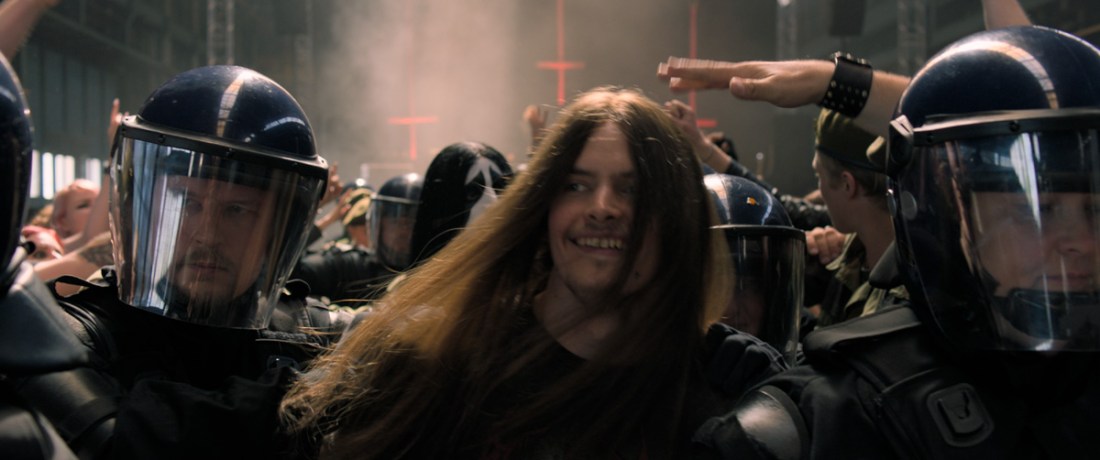
In this film, we resonate within the bounds of metalheads that society stereotypes to be druggy crackbrains and spawns of satan who really have a way of disrupting the peace and order of neighborhoods with their pandemonic sounds.

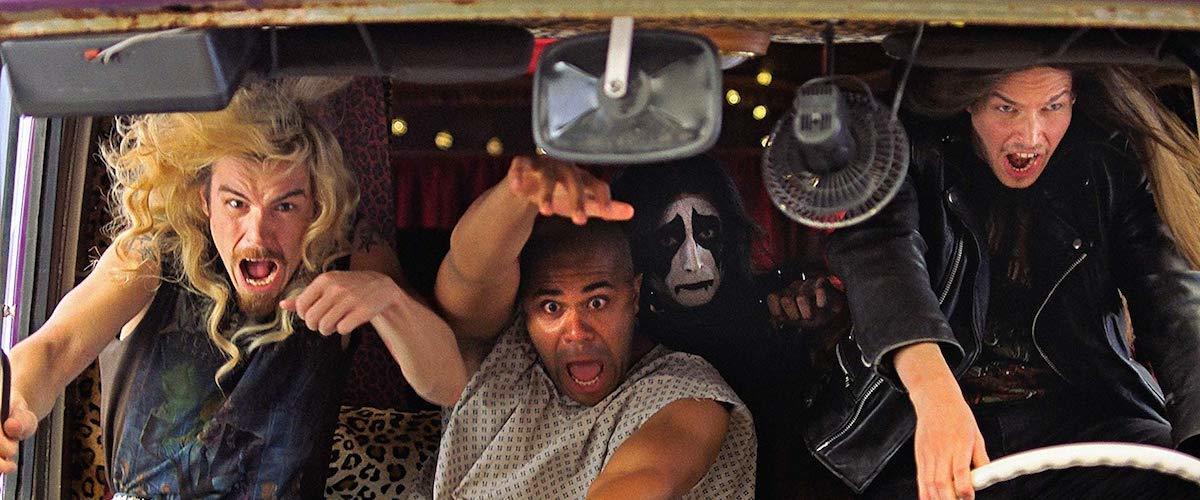
Heavy-Trip-2-300x169

Other films would celebrate the rock & roll of it all, the glamorous and alluring road shows, with the fame, women and fortune-(e.g. Bohemian Rhapsody and Still Crazy)

Here we see, a group of men who still seem to act like they are still teenagers, dreaming but also fearful of materializing their crafts and having their own spotlight in the future. Futile with their livelihoods, outcasted by their neighborhood, solitary in their own homes with no ongoing relationships, even being labeled as Homo on the streets and criminals by the police— for them, music was the only thing that kept them going.

Lead singer Turo powerfully states, “This music is our thing. Other guys can play hockey and drive around chasing pussy. We play metal.”

A feel-good film, it derides the geeky band culture, the goofiness of it all, but at the same time celebrates its art and the undying passion of its members.

Co-directors Juuso Laatio and Jukka Vidgren brings into the film, a conjunction of both old and novel comedic elements that makes the film fresh but also keeps it classic. I don’t think you’ll see a film with a rock band crowd-surfing corpse or an aggressive mental patient suddenly becoming the greatest drummer in town.

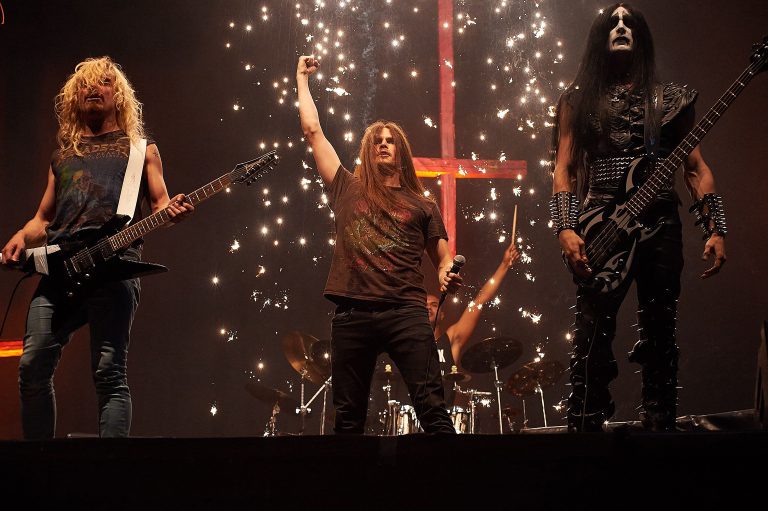
From their accustomed frivolous band practices in a basement underneath a reindeer slaughtering factory, came a big break when the band bumps into the Norweigan Metal Festival director. With an ounce of hope and a sparkle in their eyes, the band members attempt to play their “Symphonic Post-Apocalyptic Reindeer-Grinding Christ-Abusing Extreme War Pagan Fennoscandian metal” music on the road for the first time after twelve years. With an iconic official band photo taken by a traffic speedcam, Impaled Rektum sets out their love for metal to the world. 

Heavy-Trip-02

Taking off in a stolen van, with their dead bandmate roped to the top, they enter the border of Sweden, witnessing a miniature civil war with drunken bachelor entrants wearing Jesus costumes with Norweigan troops. Having been mistaken for the best band in town, they had one shot of playing their sound. Despite lead singer Turo vomiting, the crowd went wild as they played their one and only reindeer-slaughtering demo.

This film, amusing in all aspects is a call to the underdogs, with a love for something that celebrates alienation from the outside but vitalizes togetherness with the people that share the same passion as theirs.

Really, really a must-watch if you just want to laugh your pants off while celebrating the music genre together with the characters of the film. Maybe somehow, you’ll get  inspired with materializing your own personal dreams, whether it is accepted by everyone around you or not.


–161997–

Silliness and absurdity within reach

Heavy trip is a loving story of outcasts who have hopes of becoming something more by getting out of the small, rural town they’re living in in order to reach their dreams. It is a ridiculous movie filled with laughter and unforgettable scenes. It makes you see metal heads in a different light— metal heads are not so tough as they seem after all. They can be quite shy and timid, too. It goes against the convention of metal heads being tough and scary. We see them with feelings and actually a lot softer than most would picture.

This hilarious film gives us a very charming set of characters who lived in rural Finland. We see the characters in their most true, and vulnerable selves. It starts from Turo, a shy, bike-riding metal head who also works at a mental institution. He is part of a metal band called Impaled Rektum comprised of him and his friends who enjoy the genre in their bandmate’s basement. They are comic characters who have their own distinct personalities that set them apart from one another. They regard themselves as a “Symphonic Post-Apocalyptic Reindeer-Grinding Christ-Abusing Extreme War Pagan Fennoscandian” metal band. 

People who are not familiar with the metal genre would totally enjoy this film. The absurdity that goes on in this film would be enjoyable to any audience. Shortly after lying to impress Turo’s crush, Miia, that they were soon to be playing a gig in Norway, the word travels fast and next thing you know it the whole town is impressed and loves them suddenly. They were highly regarded and respected all of a sudden. Their journey  filled with obstacles begins. In the process of reinventing themselves, they were even able to help a mental institution patient to get to of the lonely and depressing walls of his room, and play with them in Norway. 

We see the shift of tone and mood from Turo when he gets mocked by the other villagers, and how he cannot even think of anything witty to say whenever they scoff at him to when he’s screaming his lungs out with his metal band. 

Unlike many other comedy movies nowadays, Heavy Trip does not turn to mockery and making their characters objects of ridicule, instead it tries to build a connection between the characters and the audience. The movie urges the audience to find great appreciation for not only the music but the loveable characters as well and sympathise with them. 

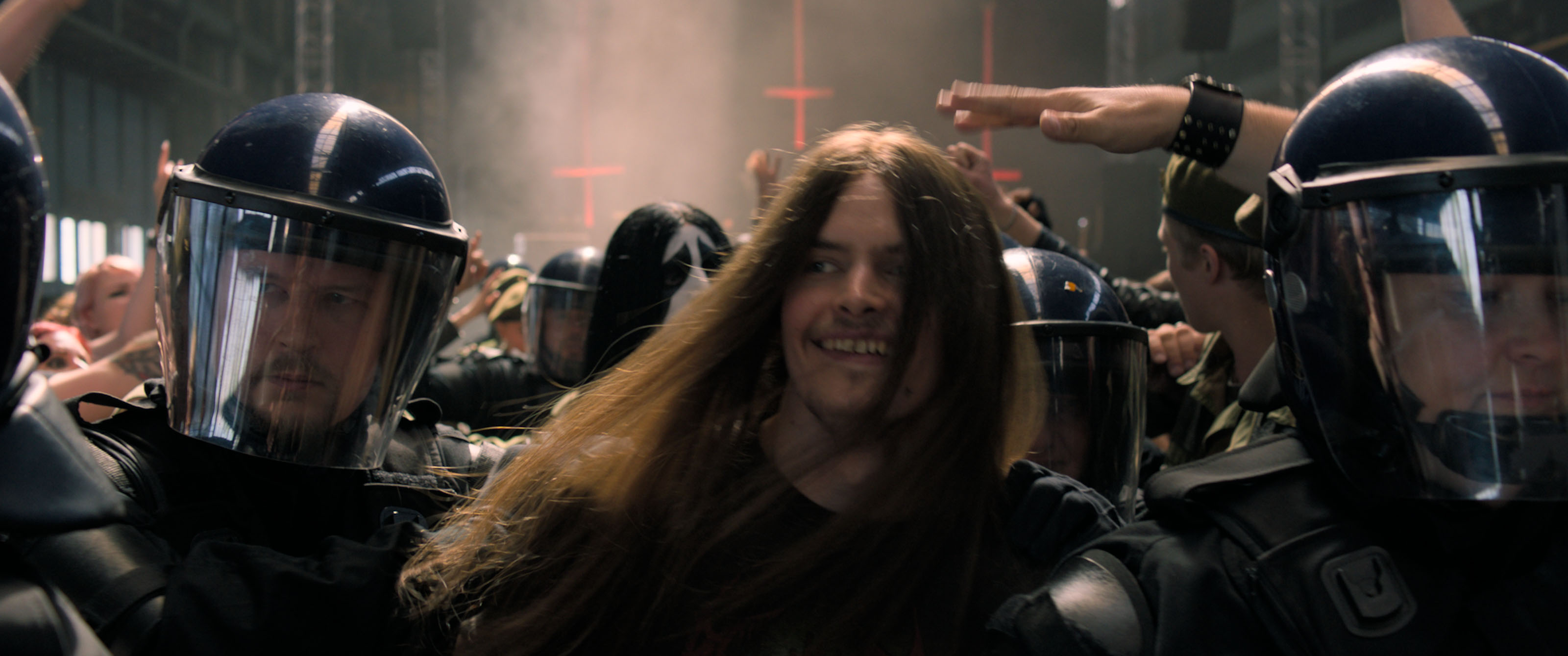
The last part of the movie where Turo imparts to us some of the things he learned with a big smile plastered on his face even if the guards were already taking him was a great touch and it makes of a meaningful ending. It just tells us that this movie is far more than its comical plot lines and humour, it actually has a lesson that it wants to impart to us as well. There is a metal head inside every one of us.

I think this movie is exploratory and it gives us a fresh new take on comedy movies like never before with Finnish metal heads. Although it is not exactly a movie that asks you to take it seriously, the movie also depicted many unfair expectations with regards to masculinity. Being subject to constant mockery and humiliation by homophobes mostly due to his long hair did not stop Turo. Despite his appearance, he was an innocent, naive man who wouldn’t hurt a fly. There is a place for every kind of person in heavy Trip.

Heavy trip is more than a comedy, it’s a movie that touches up on a lot of things in our everyday lives that the audience can definitely relate to, it is also a heartfelt story of following your dreams and goals in life. It takes us into the gruelling process of chasing one’s dreams and the adversities that come with it. Despite all the hurdles thrown at them and the hopelessness of the circumstance they were in, they still pushed through and found themselves singing on the stage they coveted and dreamed of. Heavy Trip reminds us to live and dream a little more, and stay courageous in the process. Heavy Trip could not have said it any better.

“Better to shit yourself than to forever be constipated.”

162622

Holy Motors (2012)

The willfully eccentric Holy Motors (2012) is more than likely the strangest film I will ever watch. In it, we follow a balding, middle-aged man named Oscar (played by actor Denis Lavant) who is driven around the city in a limousine by his driver to play different roles. The catch is, these roles are unlike any theatre, film, or production roles we see in art. There is no stage, no audience, and no explanation. He plays a CGI stand-in for a dragon-like creature in heat, an elvish, leprechaun kidnapping a celebrated supermodel from her graveyard photoshoot, and a beggar on a bridge, among others.

If one were to cite a film arguing for European cinema’s role as a sort of counter cinema, this would be that film. All of Wollen’s elements of counter cinema after all, are present. The execution of this movie is truly unlike anything I’ve seen from mainstream and Western cinema. Besides the fixed itinerary of “appointments” followed by our protagonist, there is also no clear narrative. No semblance of straightforwardness or transitivity is present, and viewers have a hard time piecing together the narrative and the world it takes place in. No identification is given of the characters portrayed; all we are really sure of about them by the film’s end is their names. The characters are estranged from beginning to end. Everything happens in a homogenous world (single diegesis, from day in to day out) but seemingly takes you to another world as the protagonist moves from “appointment” to appointment. The only semblance of a homogenous world is the character himself: a strange man with a strange day job, working for the same agency and coming home to the same family every day after playing how many roles for who knows what purpose. Towards the film’s conclusion, the film’s overall impact shifts from unpleasure to a strange kind of pleasure. I found myself curious as to what role the man would play next, and whether or not it would outdo the last.

The film delves into different kinds of genres, and I genuinely feel like there is no one genre that can completely encapsulate what Holy Motors is. The “fantasy” tag assigned to it by many websites online feel like a mere formality. For instance, by adding music and theatrical elements, the film does transform essentially into a musical. It’s also hard to pinpoint what exactly the film is about and what it’s trying to say. With no audience to watch and no readily apparent purpose, one cannot help but wonder what the point of all this is. Ultimately, I personally feel as though the film is about cinema itsef, about actors and performance and the beauty of the art.

The question of art for arts sake thus also arises during the film. For instance, is it still art when no one is watching? His talent, after all, is obvious. The talent of Lavant, too, is more so when you consider the role he had to play: an actor playing an actor playing many different roles. He sits in his car and has a few minutes to acquaint himself with the script. More admirable still is the fact that not all the roles he had to play were even human; not all of them spoke his language.

In the beginning of the film, Oscar’s children call out to him as he walks away, asking him to work hard. This is something of a foreshadowing once you see the effort he puts into his many performances. All this does afford me a deeper appreciation for the performing arts. I realize that there really are countless aspects to take note of when you are playing the part of someone or something other than yourself.  

By its end, Holy Motors doesn’t give us any sense of closure whatsoever. Instead, I am left with the thought that as viewers we have to be able to detach from our need or desire for finality and conclusion. The film’s overall impact for me approaches a reminder that sometimes things aren’t explained in art, but it can still give us a substantial experience in terms of how we relate to the scene.

Is it possible to understand such a film when it’s made glaringly clear that the film wasn’t meant to be understood? If understanding is a viewer’s goal, perhaps that is not achievable. Yet, what is surprising is that I found that this didn’t matter at all, because after giving it a chance with an open mind, it was the complexity and the complete and utter chaos of a confusing plot, coupled with captivating performances that drew me in and kept me staying until the end.

The willfully eccentric Holy Motors is more than likely the strangest film I will ever watch, but it also makes a case for the most immersive, memorable, and thought-provoking one, too.

Heavy Trip: Enjoyable Experience Through Music and Humor

download.jpegGiven the movies that we watched throughout the course, from musical comedies to fantasies portrayed as realistic to movies that absolutely made no sense, Jukka Vidgren and Juuso Laatio’s Heavy Trip was a great movie to cap off the series of movies. It provides a new take and perspective on European cinema and it was overall an interesting and fun cinematic experience that allowed me to connect to the story and the characters. Being a fan of music myself, heavy metal is not really something that I listen to but it was able to add something new and fresh to the movie since not everyone really likes this genre. Despite this, the plot, the use of humor, and even the musical score made the movie particularly enjoyable.
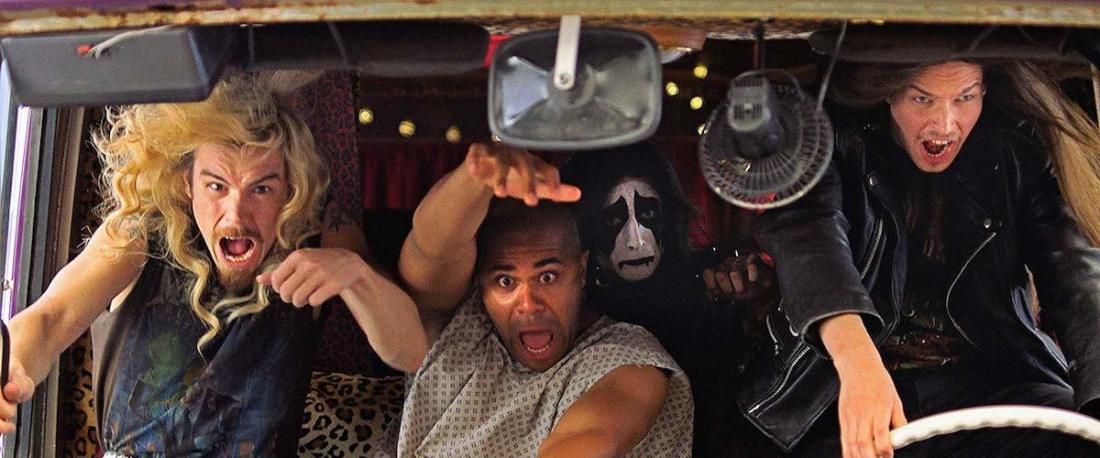
Revolving around a metal band that dreams of playing in front of an audience, their experiences throughout the movie really allowed the viewers to connect with them and really feel invested in their journey. Turo, in particular, was for me a likable and even relatable character that really just wanted their band to be recognized. This pushed him to lie about getting the gig in Norway and his character development was really seen in how by the end of the movie, he really tried to put himself out there and do the things that are outside of his comfort zone. I was also drawn in by the members of the band, being outcasts when they were younger but they found music that brought them together. Despite their everyday struggles, they still find time for their music and I felt their accomplishment when they reach a milestone for their band after creating their first original song.

After being recognized by random people in the community when they heard about their gig, it was evident that this put a ton of pressure on Turo, being the only one who knows that they did not really get the gig. I remembered really feeling sad for them when he finally got the call that they did not get it. However, when the truth about the gig is finally revealed, it did not seem to be a big deal for the other members of the band. The scene when Turo gets emotional after seeing the picture of their band really contributed to the excitement of them getting back together and still going to Norway. By the end of the movie, they get arrested but still includes an atmosphere of fulfillment in finally being able to perform and reassuring that they will be back.

Although there were some parts that I found unnecessary to the plot, their use of humor and the film score contributed to how viewers get drawn in by the characters so that they could empathize with them. In my opinion, one of the unnecessary parts was the death of Jynkki, the drummer of the band, because it did not really add anything to the movie and I feel like it the ending could have been better if they stayed together until the end, when they were finally able to perform in the festival. I also find the cliff scene and getting washed on the shore irrelevant to the movie because it did not really add anything new. For me, the film score really contributed to the overall experience because it enticed excitement and thrill in particular scenes such as when Turo went to the zoo and when Jynkki went to the police station to get the van back. In addition, I loved the humor used in the film because it added more elements and made it more enticing to watch.

Overall, I found Heavy Trip to be one of the more enjoyable movies that we watched so far. I would say that it is a movie that is more similar to American films and I loved the humor and performance of the characters that made it more likable. In the end, Turo says that “Sometimes it’s better to just do things and think afterwards,” which was the main message of the movie and I would say that it was a really great movie to end the course.

Epic Failures (Bonus Paper)

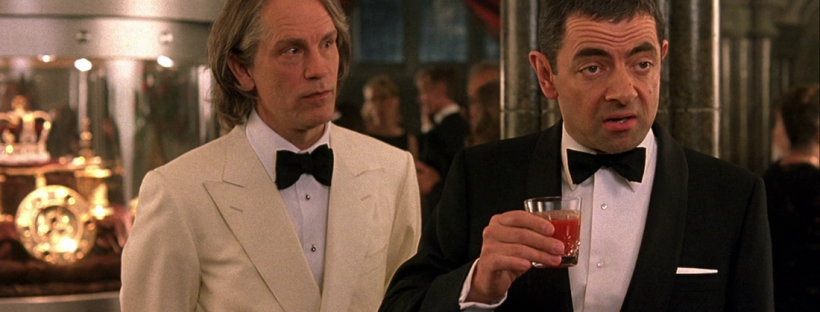
Image Source:
https://strikingfilmreviews.wordpress.com/2016/03/28/johnny-english/

Epic Fail, those are the words that describe the character of Johnny English. I really enjoyed the first of the three Johnny English movies because of the comedy that it brings. What really kept me watching was the string of failures that English experiences because of his overconfidence. He is very much excited to be a secret agent finally on the field but at the same time, he is overconfident despite his lack of experience. To a certain extent, there was a James Bond vibe to it, given that there are guns, luxurious sports cars, and a woman with action. However what makes it different is that English isn’t successful in executing the suave that James Bond brings. An instance of this is how Johnny was never really able to use his gun as the parts were messily assembled or had feces inside the barrel that did not allow him to fire a bullet. 

For an action film, this is very much different from American action movies. First, Johnny English does not show a lot of fighting scenes. In fact, it only teases them. The kicks and punches were countable and it is worth noting that the main character does not even do the heavy lifting. Also, gun shots were very limited, and when you start to expect them they don’t really come through especially when it came to the main character. Furthermore for an action film, there is really no killing scene and only implies it as it only shows an explosion where multiple agents were killed. Unlike in American films, killing scenes are made explicit enough to add a dramatic effect. Some American movies that come to mind in terms of action are Mission Impossible, Taken, or Die Hard. These movies show how the main characters prevail adversity with their skills as they convince the audience to see them as a legitimate hero that will become victorious. 

Johnny English shows the very opposite as he does not bring the typical hero effect. In fact, he is the last guy you would ever think of when it comes to saving the country or the world. To a certain extent, it makes the audience wonder how a guy like him would prevail in the end, especially with the presence of his overconfidence that is a main flaw that is rooted in his string of failures. Because of this, one would even think that the antagonist is even more skilled. However, English would be lucky and something out of his control allows him to be the hero, which will be discussed later on. This is different from American movies because the protagonists become victorious because of their abilities and smarts. 

I really enjoyed the laughter that Johnny English brings, especially when his overconfidence and unintentional acts affect the people around him. From the part where he clicks the pen and accidentally shoots the secretary unconscious to breaking in a hospital and threatening the doctors, patients, and nurses thinking they were all working for Savage or the part where he interferes a funeral, thinking it was all a setup as he walks on top of a casket.The funniest among them all is when he reveals the Archbishop’s buttocks to the entire nation, thinking that this one was an imposter. It seemed like Johnny English would never learn that he should tone down his confidence. 

Even though Johnny English faces a string of failures, the movie does not end with his demise. He actually becomes successful as it seemed like Lady Luck was on his side. For me, English is a guy who’s way of thinking is detached from reality. One instance of this was when he and Lorna, another agent, was imprisoned. English thought that a way to escape was blowing through the locked door knob, which was ridiculous and unrealistic. Because of this, some force out of his control has to save him. In this case, it was his loyal partner Bough who frees Johnny and Lorna. In the concluding scene of the movie, Johnny also gets saved as he daringly used the rope to swing in order to grab the crown of Savage, which ticks of the latter and reveals his evilness to the public. Johnny gets tangled and unintentionally drops to Savage and was crowned King, which was a shock to the crowd. Because of this, English had Savage arrested and the movie ended on a bright note. 

Overall, it is a movie that I really loved. Not only because it was Rowan Atkinson, but the character that he plays and the plot of the movie where it really showed the true character of Johnny English. It is like you can anticipate the failures he is about to face and then just appreciate the effects of his epic failures. 

A Cult Classic Comedic Romance, With A Little Bit of Stupidity And A Lot of Adventure

To be honest, I was scared of watching Heavy Trip. With its use of heavy metal music and characteristics, the film’s target audience are metal fans. Suffice to say, except that one time when someone played a metal cover of Let It Go and uploaded the video on Youtube, I have never really been a fan of heavy metal music, let alone soft metal ones. However, the film proved to be better than what I expected from it.

As Juuso Laatio’s and Jukka Vidgren’s first feature Finnish film, Hevi reissue (Heavy Trip) revolves around the adventure of friends Turo, Lotvonen, Pasi, and Jynkky as they try to make their way into fame and stardom from a little Finnish village called Taibalkoski to a Norwegian metal festival called Northern Damnation. In essence, the film may be a coming-of-age movie, a cult-classic, or whatnot, but what I can honestly say about it is, even though I was not part of its target audience, I was still able to enjoy watching it. Unlike the other films we have watched, this story was the most predictable for me. That is to say that although it focused on heavy metal music, I was unpredictably comfortable watching it, with its comedic, romantic, crazy, and sometimes cringey scenes that, put together, creates a feel-good film.

As a wannabe black metal band, and especially with long hair, Turo and his friends experience prejudice and mockery by the people in their small village. They were called losers, hippies, and Mia’s father even wanted Jouni to marry Mia instead of Turo, because according to him, the Impaled Rectum consisted of a druggies, addicts, and hippies and Jouni was the perfect son-in-law – not Turo. Essentially, with the exception of their families and Mia, the whole town did not like the Impaled Rectum. However, we can see that it was the opposite when they heard that the group would have their first gig – internationally! The guys who mocked Turo for his hair apologized and told him he was awesome, and everyone wanted to hear them play at where Jouni usually plays. With the exception of Mia’s father, this shows how the town only supported them when they were sure that the group had a future in what they’re pursuing. When they were not sure, they merely mocked and made fun of them – isolating them for what they stereotypically look like. However, and I have to say, that I admire what Mia’s father was trying to do. He was hard at Turo, because he wanted what he thought is best for Mia, and he thought that “best” was Jouni. But when Mia told him she wanted Turo and that her dad doesn’t have to protect her anymore, he was really supportive and tried to stop the military from advancing towards Turo when the band was playing. Essentially, even though he seemed a bit judgmental, as a father, he just wanted to protect his little girl.

Lastly, I think the death of Jynkky, although a bit extreme, was fundamental in the story. If it weren’t for them taking his casket and the casket accidentally falling into the water, the group would not be able to go the festival (by means of Vikings ships, I might say). Their adventure even had them admitted to play in the festival, which they know is what Jynkky wanted even if he was already dead.

Conclusively, Heavy Trip provided a fun and, somehow, unique way to end my last semester. Although it was a bit Hollywood-y, I think with the story’s mix of comedy, romance, adventure, craziness, and maybe a bit of stupidity, it kind of sums up my experience in the class. That is, the films we have watched throughout the semester, with the various film genres we’ve encountered, can be summed up by Heavy Trip.

Marathon of Outcomes (Bonus paper)

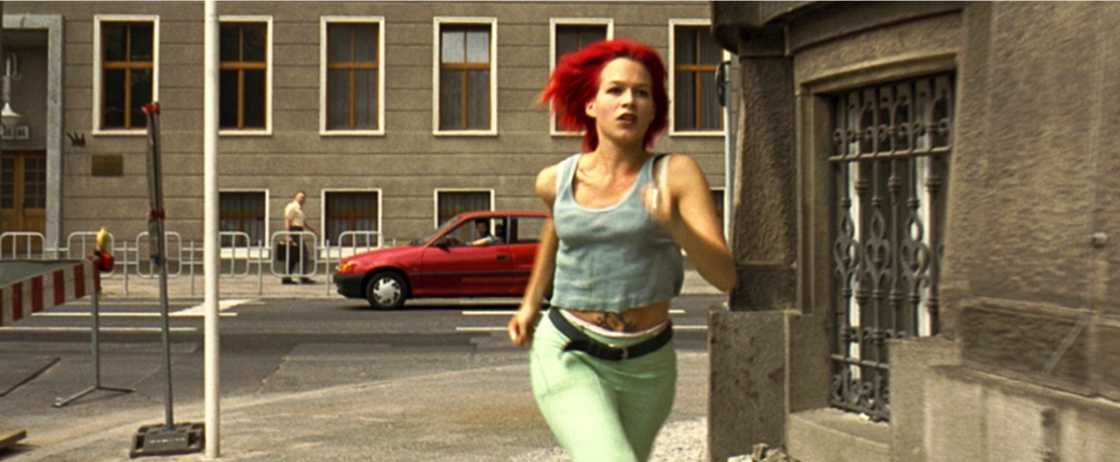
Image source:
http://rubinmuseum.org/events/event/future-run-lola-run-03-09-2018

Run Lola Run, was a German film marathon of different outcomes. For me, I believe I could compare this to other movies where the plot is not really similarly structured as Hollywood movies. The movie does not give the answers to the background of the characters. At the same a lot of things were not really explained in the movie. For instance, when Lola the main character runs by a couple of people who do not really make an impact in the movie somehow get a segment where snippets of their future are shown. The most important aspect of all I believe is how Lola is able to go back in time or even resurrect in order to go through the same situation again. For me, it was the most important because it is how the movie keeps on progressing. I could very much relate to the movies we have watched such as L’avventura where you do not really get the answers you were expecting. In the latter, the question we were expecting to be answered was what happened to Anna. 

Another segment that caught my attention was how they used a running segment in the form of cartoons. It kind of reminded me of films such as Lizzie McGuire or Enchanted. For me, it gave a whimsical feeling and saw it as quite fictional as the world of animation and cartoons comes together with live action. 

In terms of the introduction, I actually felt like the movie was like a game. The characters were shown with their faces in boxes like a video game. In a sense, the movie was like this. This is because every time a character dies, somehow the whole movie allows its characters to restart the whole movie again. Like in a game, when your main player dies, the whole game restarts again. In the movie, at first Lola dies when she gets unintentionally shot by the police after they did a holdup in the supermarket. She resurrects and starts all over. Lola escapes the hands of the police as they never suspected she was the holdup-per in the bank. Unfortunately her boyfriend, Mannie, dies due to a collision with an ambulance. Lola only gets it right the third time wherein she plays in a casino as Lady Luck was on her side. However in the end, it wasn’t needed as Mannie finds the man who got the bag of 100,000 marks. Like a usual game, she had three lives. I thought she also had like special skills similar to a character in a game, she had the ability to run and to scream. 

I also liked the part where she goes through various adversities and tries to overcome them. An obstacle that I believe that really rattled her was when her “father” revealed to her the truth that he is not the real father and he has the desire to leave he family for a new mistress, who is his coworker as well. 

Overall, it was a movie that had a lot of thrill. What kept me watching was how is she gonna get 100,000 marks in 20 minutes. Even though the money was not needed in the end, I thought it was entertaining to see whether she was going to get it or not.