Three Billy Goats Gruff: A Movie Review of Trollhunter (2010)

Given its title, I was expecting this film to start in such a high note or at least open with an intense action scene wherein our protagonist is being chased down by an enormous troll. I also thought it was going to be an action-adventure film with a mortal hero that hunts overpowered trolls with his sidekicks. Soon after realizing that it is a “found footage” documentary type of film, I got disappointed for I am not a fan of those types of movie. I like how they add a more realistic and intimate touch to the stories that they tell. However, I am not too fond of the first person point-of-view and the film qualities that come along with it. Going back to the movie, the opening scenes gave me the chance to immerse myself into it. They gave a quite dark and serious tone that makes you feel that something big is about to unfold. The footage of the interviews made by our protagonists gives a certain involvement for the audience. The perspective puts us in the shoes of our characters but what differs is that we already have our notions of the possible outcomes in the film. It makes you want to stop our protagonists from proceeding further given the feeling of impending danger but the story goes on.

I personally find the film very tiring to watch. Some scenes take longer than usual for a significant event to happen. Despite the suspension of disbelief, it was difficult for me to agree with the logical reasoning of our characters because I am really not on the same page as them. As a regular viewer who imagines the things that I would do if I were in their position, I do not really find myself making the same decisions. Also, I must be used to seeing “found footage” films in the form of horror movies which are way more fast-paced and thrilling. I tried to appreciate the film as it is anyway.

On a more positive note, I loved the idea behind the film’s story. I am familiar with the idea of trolls given my knowledge about Norse Mythology, stories from childhood fairy tales and folklore, and contemporary films and cartoons. This film gave me a newfound appreciation for this mythological creature and its significance to Norwegian culture. I never expected a film to include trolls in a much modern setting but this movie was able to mix the two quite well. It also stays true to how these creatures are presented in other media or in the original folklore. I remember knowing certain details about trolls such as their vicious nature and weakness to sunlight among others. These were carried into the movie, even with its own modifications like Hans’ UV light anti-troll weapon. Details such as these draw me closer to a movie because it has something to say especially when it comes to the culture of the country being represented. If a similar movie was made about the creature from Philippine folklore, I would love to watch it.
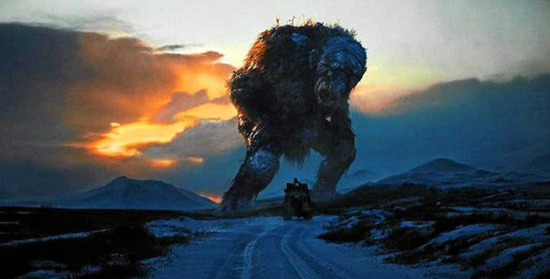
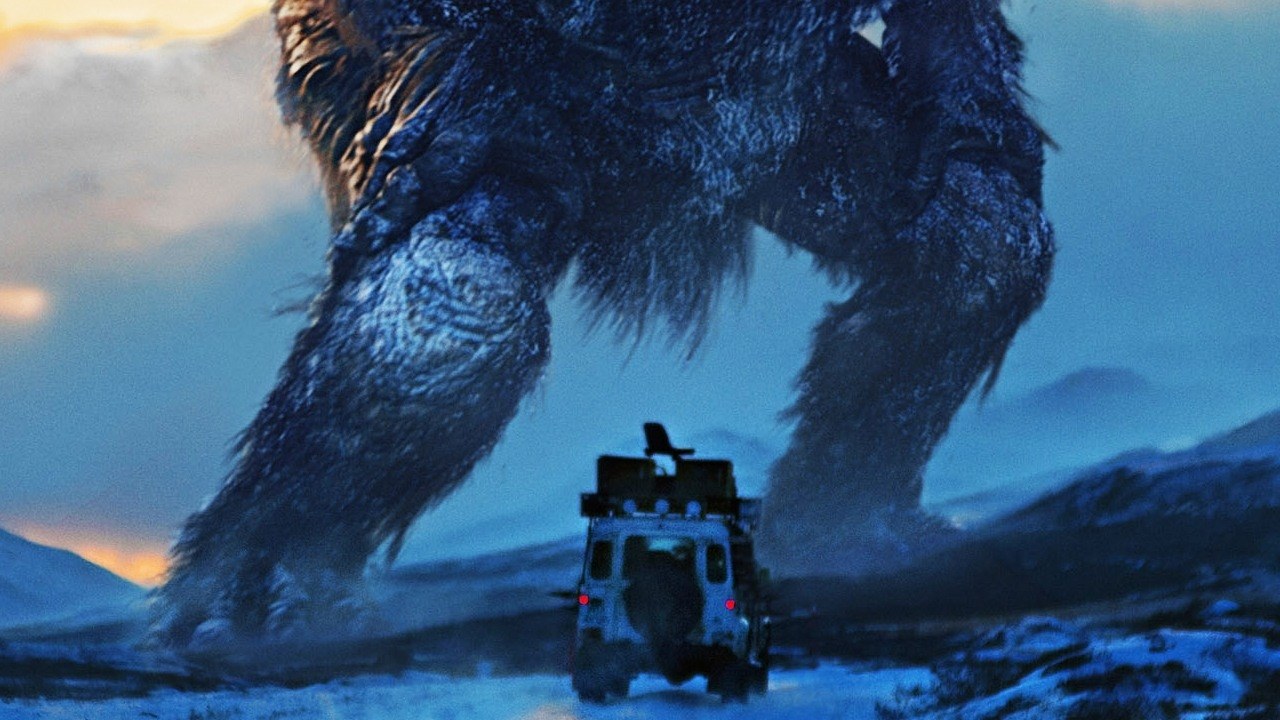
creatures and cultures

When I found out that we were going to watch a found footage film named Trollhunter, I was excited; I love watching sci-fi films that tackle supernatural monsters and mythology. I was expecting that the film would be a lot more serious, like Cloverfield or The Blair Witch Project, but I was pleasantly surprised with how Øvredal managed to incorporate some light humor and satire into its sci-fi/fantasy/horror aspects.

I really liked how Øvredal gave the cinematography a found footage style. Trollhunter’s attention to details, especially of authenticity and continuity, was something I really appreciated with the film and something I think sets them apart from a lot of typical found footage films that focused too much on its horror elements. For example, when Kalle died and the camera lens cracked, they (annoyingly) kept that crack on film for almost 5 minutes until they could change the camera when Malica arrived with, both literally and figuratively, a new lens. The effort to try to convince the viewers about the authenticity of the found tapes was entertaining, especially at the start with the black screen with text and the end of the film with the press conference. They were really pushing for a conviction that the film was realistic and “raw and unedited”, making me think that maybe this wasn’t just an effort to try to portray a good found footage movie, but perhaps also trying to hint at the possibility of this reality—of trolls and secret government agencies actually existing.

Aside from this attention to detail, having a mockumentary style film provides the opportunity for the filmmaker to manipulate the plot and the scenes to their advantage. This helps in keeping the film interesting, while still maintaining that realistic and unprocessed aura. An example of this can be seen when we contrast the mockumentary to the documentary style of The Five Obstructions. Though its five remakes kept the film interesting, the scenes in between them could get boring at times.

Most importantly, I appreciated how much Norwegian culture was evident in the film. Even though it was trying to come off as a horror or sci-fi film, I couldn’t help but really notice how much of their culture was being reflected inadvertently. When I was doing research on the film’s background I found out that Øvredal really wanted his film to accurately represent Norwegian folk legends and he even used inspiration from many of the country’s myths. Even if the CGI and special effects were adequate for a monster movie, I was still fascinated with their portrayal of the trolls on the camera, because unlike most horror films, they really tried to show what they looked like and they stuck to physical details common in most popular folklore. Additionally, one of the best outcomes of having a documentary-style film is its random, yet seemingly normal insertions of the Norwegian scenery in the background whenever they were travel or filming the trolls.

Overall, I genuinely enjoyed Trollhunter for its style and story, but its subtle play on certain elements like culture and comedy really adds some depth to the movie for me, bringing it beyond the simple and characteristic thriller-fantasy film.

A fresh take on mythical beasts

This pseudo documentary, Troll Hunters (2010) which portrayed itself as “discovered” footage depicts three young Norwegian students who are on a pursuit of following a suspected hunter, only to find out he was not hunting bears as they initially thought, but trolls, which the government kept from the rest of the world. It was later then revealed that he was apparently employed by the government on a secret mission to hunt for trolls in the wild. This set on a journey for them to capture these trolls using a handheld camera, which Hans, the “troll hunter” permitted them to do so. Their adventure leads them experiencing several troll encounters, running around in the forests, hiding in caves as the trolls search for them and at some point, even fighting a gigantic troll. 

This seemingly comedic horror gave us a quirky and intriguing story line presenting us with satirical humour. The audience may not exactly understand whether or not the movie aims to be hilarious or frightening. Nonetheless, it was a fun movie to watch making you feel as if you are part of their adventure as the viewer. The cinematic execution did a great job with the choice of doing wobbly shots and night time takes from the handheld camera allowed itself to be a little more frightening due to the quality of the takes, not knowing what could come out or happen next. Despite it being loaded with special effects and their height almost implausible, the way the film portrayed these towering, monstrous creatures almost make you wanna believe in their existence.

However, I did find the part where they were said to only hunt Christians a bit weird and bizarre. This explains the first part where Hans asked them to promise they were not Christians or did not believe in God. Not to mention, it was mentioned they were not visible on satellite. How can these gigantic creatures not be seen on satellite? But then again, these sci-fi films have their own takes on these genres. 

This tale of whimsical, fantastic creatures bring forth details and background about the trolls themselves too. It informs the audience much about how trolls live, their diet, habits and other scientific facts about them that could engage the audience about their existence even more, which was a great addition. 

I think the filmmaker had great ambition for this film, with his idea of presenting the wondrous landscapes of Norway and bringing to life this old-time conspiracy of trolls with a little touch of Norwegian culture. The movie does not fail in leaving you in awe of the stunning Norwegian scenery as they try to frighten you with these humongous trolls— a fresh take on mythical beasts through this pseudo documentary film.

Trollhunter: a New Take on an Old Fairytale

troll-hunter-1280jpg-e94bb7_1280w

When we were told that the class would be watching the movie, Trollhunter, I thought I would be watching a film just like Ghostbusters (2016). I was a bit disappointed at the start of the film because I realized that unlike Ghostbusters, Trollhunter would not involve cool gadgets and funny action scenes. Despite this, I came to appreciate Trollhunter for the movie that it is. I can only imagine how much fun the director of the film must have had while making it. The film even gave updates on the situation of the characters in the end to somehow tell us that the film actually happened and the people in it are true. I really liked that the film was a mockumentary. This gave so much authenticity to the film that it almost had me fooled. Even when we all know that trolls are mythical creatures that do not exist, I started to question this. What if trolls actually exist in that part of the globe? Maybe that’s why there are a lot of weirdly-shaped rocks in the forest because those were trolls that have been hit with light. My sanity tells me, maybe not.

leappad-dreamworks-trolls-game_80-490600_1Another thing that I thought of when I heard the title, Trollhunter, was that maybe it was going to be a cute movie. Given that I watched the movie, Trolls (2016), a fantasy-adventure movie with lots of singing and dancing, I was shocked about how ugly and terrifying the trolls were portrayed to look like in the film. They were mean and even killed one of the characters. It was a good thing that the main characters did not die because the movie would end up being even more tragic.
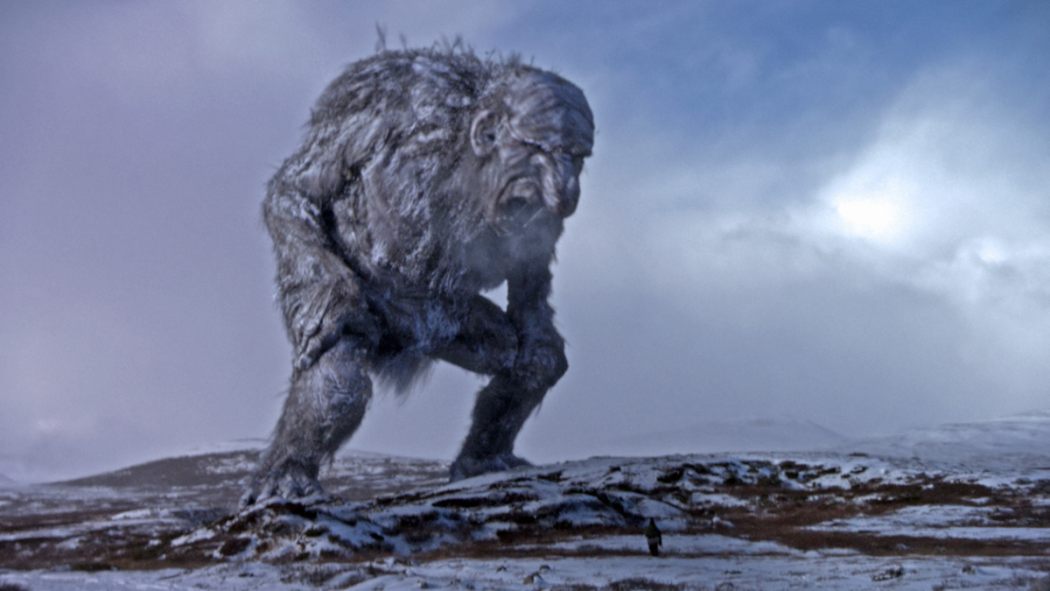
The film can be described to have a genre that is a horror/thriller. The CGI effects of the movie were very good, in my opinion, and scared me a little bit. The trolls seemed real next to the human characters, which made the film more exciting. The plot of the film was also very interesting. I liked how there was some sort of biological and scientific explanation to the trolls. It was nice to think that trolls are real especially because of how they were described in the movie. They were just like regular animals, mammals, that mate, and that have different classifications. Some live in the mountains, and some live in the forests. The different types of trolls meet up somewhere and throw rocks at each other. I wish the film showed a clip of the trolls fighting with one another, this would have given the film a Lord of the Rings/Narnia vibes.

All in all, the movie was a fun experience. It gave a new and different perspective on the old mythical creature. Among all the European films that we have watched in class, I can say that this one is among my favorites. It is quite a thriller but still a feel-good movie that is perfect to watch on a lazy night.

Actors: deconstructed

Holy Motors was such a frustrating film to watch. Honestly, it took a while for me to form insights and gain comprehension on the movie because, as it was mentioned in class, perhaps it was not created to be understood. It was so strange — sometimes, I found myself cringing at the scenes. That appointment with Eva Longoria freaked me out because he looked and acted crazy. He bit off her finger! What made it weirder for me was the fact that the model did not react to it. I had questions like: “Was she even a real person?” “What is happening?”

However, the more that we watched the film, the more that I started to realize that he was an actor, and his “appointments” were his projects. Suddenly, I thought of an insight about the model scene. I thought that it was a symbolism of how actors and models — people who are always subjected to the spotlight — can find solace in each other because out of everyone else around them, only their fellow celebrities can understand what they really feel. Only their fellow celebrities can understand that yes, fame may seem fun because they earn so much and they get so much attention, but there are also downsides to being famous. With great fame, comes the stress, haters, and the like. I am not sure if that was what the scene meant, but that was what it meant to me.

Because of the realization that he was merely acting in every single scene, I started to doubt the realness of the scene with his “daughter”, especially when the group who reported on Holy Motors pointed it out. At first, I thought that it was a symbol of how actors are human too. They have their own lives, their own families. The feel of the scene was very different from the others. Oscar was driving his own car. He was also acting calmer and more like an actual father when he was berating his daughter. I want to believe that it was a scene that wanted to show the audience that actors are human too, but what if it was not even a real scene? What if it was another appointment. I would honestly be disappointed if I found out that it was just another appointment for Oscar, and that girl was a random stranger.

Indeed, Holy Motors was a strange film. The different appointments seemed so real every time. One would think that the film was about the old lady, or the weird alien sex, or the crazy-man-biting-off-a-finger. However, the film was about Oscar himself and how he lived his life as an actor. The film still left many questions in my head. I still do not understand why his home had chimpanzees. I still cannot comprehend why the limos started to talk to each other at the end of the movie. The film was truly bizarre, as is all the other films we have watched in class, but I am glad that I was able to get something out of it even though I am not really sure if that was the intention of the director or not.

trollhunters

When I first heard the title of the film that we were going to watch, I got a bit excited because I thought it would be a fun and adventurous type of film with a slight hint of comedy in it. A few minutes into the movie, I found myself slightly disappointed to see that it was a found footage mockumentary type of movie. I think this was my first time watching a film in this genre and although it’s creative and witty in the sense that it tries to appear as if it were a real phenomenon since it’s supposedly a found footage, I don’t think I could say that I’m a fan of it. Some of the scenes were difficult to watch because of the shaky recording and for a time, a broken camera. The CGI also wasn’t very convincing that the trolls were real.

Nonetheless, Trollhunters was still somewhat interesting given that it’s a fictional movie with a bit of a suspense factor that made me want to know what would happen next to the characters. I also didn’t know anything about Norwegian culture and folklore, so I got curious about the trolls and the associations and descriptions that came with them. One of the troll “facts” that surprised me was that they can apparently smell Christian blood. I got curious as to why they specifically could smell Christian blood, so I researched more on it and found that apparently, trolls are demonic entities cast out by God into the darkness and that’s why they only become alive at night. Because of this, trolls developed a grudge against God and His Christian believers. Pretty cool. Although I didn’t feel any personal connection or engagement with the film, (probably because I didn’t understand its history or context especially that of the trolls) it still found a way to piqued my interest. Throughout the film and even afterwards, I found myself thinking: Why were trolls so special? Where did the idea come from? Are they our version of the duwende, the aswang, the kapre? The film urged me to get to know not just Norwegian folklore, but also their history and other cultural practices.

Overall, the film was a good break from the previous films we’ve seen that were more symbolic and weren’t as straightforward with its storyline as this one is, especially coming from watching Holy Motors which was admittedly a very difficult experience for me. While Holy Motors “wasn’t meant to be understood,” this one definitely was. It was entertaining and some parts were exciting, and I appreciate how the film tried to be as authentic and real as it could be. If there’s anything that left me in awe in the movie, it would definitely be the beautiful scenery and landscapes of Norway. The place has always been in my bucket list for my future travels and the film just made me want to see those vast lands for myself all the more someday in the future.

Trolling alone

Having to watch Trollhunter, a 2010 Norweigan dark fantasy/black comedy mockumentary alone, I did not know what to expect from the film. I thought to myself, “Given that the central theme of this film would be about trolls, would other fairytale characters be included?” “Would this be pure CGI or would it be obvious that they used people with prosthetics?” “Would this actually be a scary one or would this be another banal fiasco?”

As I moved on to viewing the film, it caught my interest in an uncanny way. First, I loved how the “found footage” format was utilized because despite the film being fantastical and animated, it displayed some level of rawness to the film. The quirkiness and comical college students who played the main characters also added to the element of reality within the supernatural bounds of the film. Another element I took interest in, is the subtle celebration of Nordic culture and geography. With the footage, the audience can get a taste of the utmost beauty of the Norweigan scenery. Moreover, their national legends include those of trolls because their people actually believed that these creatures do reside in the forests and mountains. This mockumentary is a compelling way to show who they are, where they are from and what they believe in. The animal herds, the power lines, and the speech of the Prime Minister regarding trolls, showcase an ingenious possibility that maybe the government is actually tiptoeing around actual troll control. Additionally, the film reflects how only a minimal number of Norweigans actually involve themselves with religious affirmations.

trollhunterimage_1050_591_81_s_c1

Another enthralling feature is its magnificent sound editing. The transition from lighthearted dialogue to hearing sudden growls in the background and stalwart footsteps approaching the main characters will put you off your feet. With the use of night vision, it was way scarier than it should have normally been.

With its “found footage” format, one film I can relate this to is the 5 obstructions that was shot in documentary style. Other than that, its fantastical elements can somehow be attributed to that of Holy Motors, where one can not distinguish which reality is real and at the end of the day, you are forced to believe in what you have experienced.

A comment I can give is that it’s crafted with artistry, given it’s a new take on featuring a mythical creature. It may have some cliche, overused elements such as the “bite that didn’t seem to be anything but turns out to be fatal”, the “footage-that-remains-but-the people-who-filmed-it-cannot-be-found-anymore”, the “sudden-traitor-revelation (oops I am a Christian, sorry I didn’t say it before hand now we will all get in trouble)”, these can all discredit the authenticity of the film, however I believe these were all utilized for added entertainment to the audience.

Trollhunter, a bit bizzarre, is still a must watch for people who like to take a comfortable seat with a thick blanket to hold onto when the footsteps are getting faster and the screams of the main characters are getting louder. On your seat, you cross your fingers and hope your favorite character does not get killed off or eaten by the monster.


-161997-

Humor and Secrecy

Trollhunter was a movie that showed a coexistence of humor and suspense. I believe the movie was a great artwork that thrilled its audience with the kind of thrill you get from horror movies such as Jaws, Anaconda, Crocodile, and etc. In this case, the movie made use of mysterious creatures in the form of trolls. I thought it was also creative of them to make the film into a video made by students, of which were silenced by the government in order to prevent the public from knowing the existence of trolls. Because of this nature, the film was able to get away with shaky cameras and poor video effects, as the nature of the film made it understandable. 

In terms of the plot, it was very clear where the students want to expose the existence of trolls. Hans, the expert troll hunter, was the key to success for their mission. It started with convincing, then their persistence pays off and Hans made them a key figure in his pursuits. To be honest, I expected a lot more casualties especially with a film like this that evokes danger. By having more casualties, it would really give the trolls a lot of credibility as a dangerous creature. However, the movie did just enough to show what it is capable of such as barreling through trees, eating sheep, and killing their fellow camera crew. In terms of the ending, it was announced at the beginning and the real ending of the movie simply showed how it was played out. I believe the ending of the movie gave the audience a feeling of curiosity on the situation of the kids and doubt towards the government. The movie also inserted a short humorous clip that showed the government admitting to the existence of trolls to the public, with no one noticing. 

One of the things I expected from the story was the effect of the bite on one of the main characters. After discovering that trolls had rabies, the character showed signs of weakening as if it is showing a more negative effect of the bite. However, the movie does not show what happens, although it gets away with it due to the fact that it was a film made by students who disappeared. 

I believe the film also allows its audience to question the reality of hidden mysteries. For instance, the development of power lines is known to power cities, households, buildings, and etc. However in the movie, its hidden reason is to limit the movement of the trolls. Furthermore, the movie also conveys how the government is very serious about hiding facts from the public such as the existence of trolls. Instances of this could be seen on how they cover up troll incidents with dead bears, as authorities would always be a step ahead of the media. Another instance is how government cars chased the students who filmed the movie in the ending in order to prevent critical information from decimating to the public sphere. 

Overall, I believe Trollhunter was a great suspense film. It made me watch, as there is always a thrill whether the characters will make it out alive or not in every troll situation. Furthermore, it also allowed Hans to exhibit his skills and show why he is the man they call on to control troll activities.  

The Five Obstructions (2003)

Lars von Trier and Jørgen Leth’s The Five Obstructions (2003) features its two directors as its sole protagonists, with the former challenging the latter, his mentor and good friend, to a series of filmmaking challenges he calls “obstructions” in which Leth is asked to remake his film The Perfect Human, von Trier’s favorite film, a total of five times, each remake with a different twist and instruction.

Despite being a very recent offering, The Five Obstructions could be considered one of the more advanced films for new fans of European film. I say this because most, if not all of the noted staples of European cinema according to Wollen (1972) were present in the film.

For instance, what was immediately striking about The Five Obstructions was that the plot once again was far from linear. Narrative intransitivity was very much present; although the five obstructions were shown in what seemed to be chronological order, none of these seemed to build off each other and presented fresh starts and clean slates each time. As a result of this approach, the scenes were segmented, episodic, and never necessarily transitioned into each other smoothly, with loose ends hardly being tied up and leaving the viewers to make sense of each event. Especially in the film’s opening moments, the audience’s full attention is demanded in order for them to make sense of the on-screen scenarios.

Multiple diegesis was also very much present. Even though the two protagonists an were the only two elements that remained constant throughout the entire film, nothing in the film seemed to exist solely to tie each obstruction together. To an extent, the environment each obstruction was taken up in seemed to be a world of its own.

The film’s articulation of these individual worlds are where European cinema’s unpleasure and estrangement played out. For instance, strange and unusual images were shown in the scenarios of The Perfect Human, as one particular obstruction portrayed a luxuriously-dressed Leth in the middle of poverty. I felt this kind of visual stimulus alone provoked my sensibilities rather than cause entertainment or pleasure. This occurred many more times throughout the film as each obstruction gave them viewer something to ponder intensely about, enough to be a distraction at times. Estrangement, on the other hand, was obvious in that the characters within the aforementioned film (including the perfect man himself) did not actually contribute to the film’s plot unfolding or to the dialogue and themes in any way.

A certain dedication to theatrics and experimentation is present in the film’s finest details. Everything from the dialogue and word choice of dramatic words (obstruction, suffering, torture) to the concepts and execution (limiting the sudden use of film animation) is creative, unconventional, and wildly eclectic in the way only European cinema seems to have the capacity to present.

I feel as though the film was heavy with themes of self-discovery; this became more evident as each obstruction was overcome, particularly towards the end where the film seemed to find itself launched into a deeply reflective and relatable commentary on the human psyche. What the film ultimately left with me as a viewer is the idea that the idea of perfect evolves, and this notion holds truest for artists aiming for just that. In Leth’s rehashing the same idea five times we see the misery of struggle, of work and toil, but ultimately this only serves to reveal a certain perfection in the struggle, as the fifth obstruction reveals his most authentic self having gone through the first four and escaped his comfort zone. The film’s experimental edge also comes in that the obstructions were a way to demonstrate cultural ideas of the perfect man (Cuba, cigarettes, etc.).

By the end of the movie, closure does not come in the way the plot’s progression would have its viewers expecting. Audiences eventually find that the goal was not simply the accomplishment of the five different obstructions but something much more human and much more meaningful. While not necessarily a complete rejection of proper closure, this demonstrates aperture in a number of ways; the film’s end is rich with equally valid meanings that any viewer can glean a message from. Both protagonists are also to an extent self-aware about the meanings of the entire experience and how these might affect them later on.


Holy Motors

The film, Holy Motors, was directed by Denis Levant as he emerges us into the life of Oscar, an old man, sometimes man, sometimes woman, sometimes old, sometimes young. We see the life of Mr. Oscar in a day as he switches from appointment to appointment, each with a distinct and different agenda, and with a different identity as well. We see him turn into a murderer, beggar, father, musician and a lunatic. 

What qualifies as a good actor? A true actor usually immerses himself into his or her character and can properly emanate their identity. We see how Oscar knew how to work with his audience. We encounter that theater quote that says “the show must go on” and indeed, it did for Oscar whether anyone is there to participate in it or not. He was ready to kill a person or even act like a lunatic in public. We always go back to the question of whether what he is doing is real or not. After he was murdered, it was normal for us to think that it is clearly the end of the film, he is dead. But it is not what happens, then again, what is reality in their film?

One of the things we encounter in the film is how the line what is real and what is not real start to fade. Whatever we encounter in the film, whether it is a murder or a scandal, they do not always make sense, but they do not have to. The film is quite passive in its portrayal of scenes and characters that the mind of an individual is at a loss. Was that really his child? Did he actually die? Was that man killed? Or, were they all actors playing a part in one huge scene? Question upon question seem to boggle in our heads wondering if we should believe what we see. The quote “seeing is believing” becomes confusing because each appoint becomes as bazaar and absurd as the previous one. 

As Mr. Oscar attends each appointment, he commits to an obligation, a promise that his “boss” is asking him to fulfill. For each identity he emerges in, for each role he has to play, he starts to lose his own identity, his own self. He becomes another person, and another, and another. We keep going back to the question of what is real and what is not real, and this can be intertwined with Mr. Oscars sense of identity. Like his performances, everything is merely just an act. Nothing seems to be real. Nothing seems to be true. As unreal as Mr. Oscar’s own identity. It was a conflict that he kept going back to in the film, which is what gave him such a sad life. We saw how in the ending, he really did not have anyone to come home to. In that world, in that reality, he was merely a cog in someone’s greater scene, just acting on whatever is asked of him