
Volver is a slap on the face of machismo in Spain. In a country known steeped in machismo, a film that tackles femininity through the daily problems of a typical family can seem quite odd at first. It can even be compared to mainland Chinese being expected to teach other people how to use Facebook when they are banned from using Facebook themselves.
However, Volver successfully captures the essence of feminism shockingly well. Its dark but funny script makes for a memorable experience that women from all corners of the world would surely find enjoyable.

The female characters in the film prove that it is possible to exude strength and power even in a society where women are taught to stay home, sit pretty, and satisfy their husbands’ sexual desires. In fact, Raimunda does the exact opposite of all these things. Being the best mother she can be, Raimunda works to support her daughter, Paula. She even rejected her husband, Paco, when he came on to her one night. Perhaps because of this unmet sexual need, Paco chose to force himself on Paula. But we all know this was a stupid move done by him which cost him his own life. Well-deserved, if you ask me.
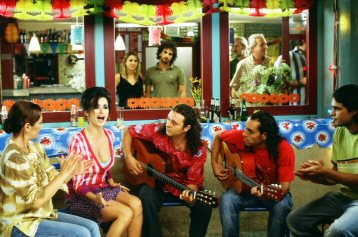 After Paco’s death, Raimunda’s life changed in a good way. She did not just become the head chef of a restaurant, which she became very passionate about, she also became a happier person– singing with a band on a random Spanish street. Without a doubt, the male characters in Volver were antagonistic, unreliable, and useless. Raimunda’s father did not just rape her, he also cheated on his wife with a different woman. Aside from this, Sole’s husband left her without notice. And as we already know, Raimunda’s husband lost his job and then attempted to rape his own daughter.
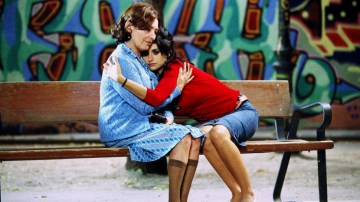 Ultimately, the way the male characters slowly eased out of the film and were not really given much attention to shows how they don’t really have that much importance to the women they left behind. A sense of sisterhood and of female togetherness were enough to support one another and carry on with their lives in flying colors.
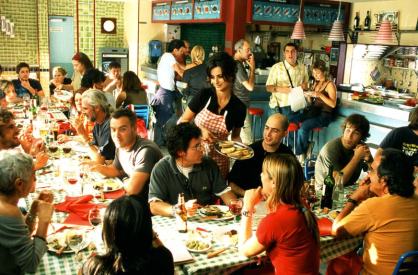
Moreover, there were a lot of topics present in the film, including incest, sexual abuse, and motherhood. Aside from these, I believe that self-fulfillment was also an important factor which contributed to the women’s identities. Although women were not supposed to work, Sole had a successful salon hidden in her apartment, which she enjoyed very much. Besides this, Raimunda’s restaurant was a hit to her customers, which brought her great achievement. This says a lot about the significance of finding something that you are passionate about, which can also define you as a person. I can relate to this as my philosophy in life. For me, it’s not enough to merely survive, you also have to make something of yourself in order to live. How Sole and Raimunda were able to do this in a society which restricted women from doing so explicitly demonstrates women empowerment. Above all, Sole and Raimunda give me hope that if they were able to become successful women given the society they were in, what more, I?


 Just by looking at the pictures…seriously, wow!?!!!
 For someone who loves traveling and seeing nature, like myself, The Clouds of Sils Maria can never go wrong. I really felt as if the film brought me to Europe, where the characters were, but my aching back from slouching while watching the film reminded me that sadly, I was still in the Case Study Room of the Social Sciences building. So, I made a promise to myself that if ever I get the chance to visit any of the 3 countries that they shot in, Germany, Switzerland, or Italy, I would surely visit the sights that I saw, most especially the “snake”. But unlike Val, I hope to not mysteriously disappear.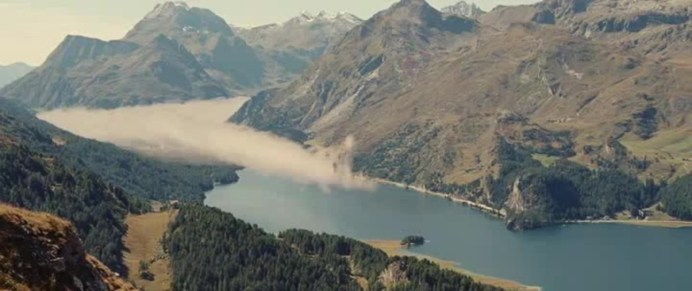
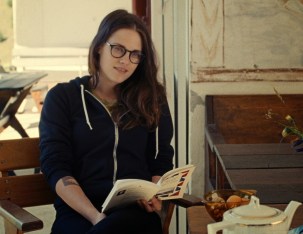 However, I enjoyed the constant exchange of lines between Maria and Val while rehearsing for Maloja’s Snake. It was fun to watch especially because it reminded me of how my sister and I practice her lines for her movies. Although, the tension between Maria and Val while rehearsing for Maria’s lines became confusing, for me. Maybe it was because of the hints of lesbianism within both sets of characters: Maria-Val and Helena-Sigrid. Just like in Holy Motors (2012), there were times when the distinction between acting and real life became unclear. Somehow, Maloja’s Snake came to life and reflected the reality of Maria and Val.
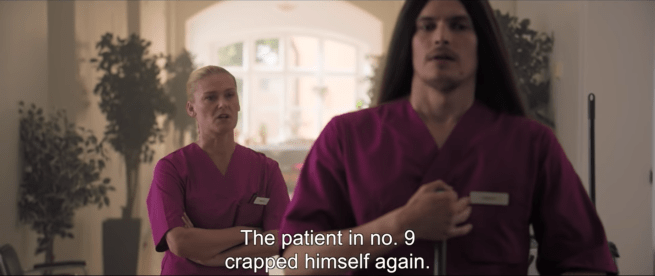
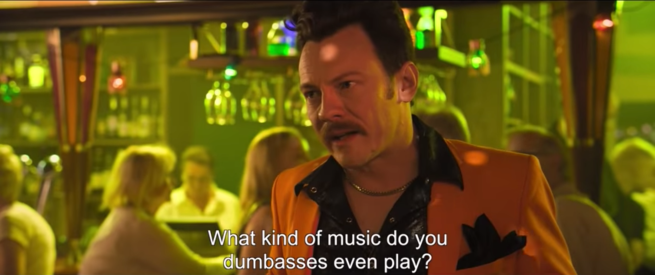

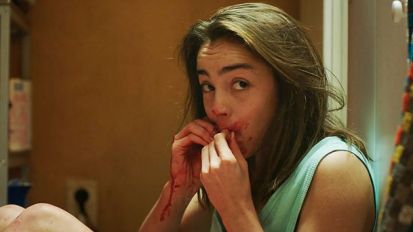 Raw is probably one of the most disturbing films I have watched, along with Apocalypto (2006) and Jeepers Creepers (2001). The scenes when Justine ate a raw rabbit’s liver, when Alexia was trying to give Justine a bikini wax, when she cut her finger off and Justine ate it, and when they were at the morgue (I can go on and on…) are among the plenty scenes that are just way too much to handle, I had to cover my eyes. However, different from the other disturbing films I mentioned, Raw had some quirky and comedic scenes, which help make the film more dynamic and fun to watch. An example of this would be the iconic scene when Alexia and Justine peed while standing up. The whole class burst out laughing, and I laughed with them. It might come off as a joke on the surface. But now, when I think about it deeper, the scene actually hints to women empowerment: indeed, what men can do, women can do too!
 It is true that college is a time of self-discovery. And Justine demonstrates this explicitly. During her time in college, she did not just have a complete 180° transformation from being vegetarian to straight up cannibal, she also had a sexual awakening. Justine’s solo dress-up grinding scene in front of a mirror was weird and quite funny, to be honest. But it can also be considered as one of her ways of exploring herself and trying out new things, no matter how strange it may seem. Justine’s 2 major awakenings were both manifested in her sex scene with Adrien. Not only did she lose her virginity in that scene, but she also ecstatically bit her own arm for satisfaction. A coincidence? I don’t think so. This scene was ingenious and well-thought-out, in my opinion, as it successfully encapsulates Justine’s new-found identity.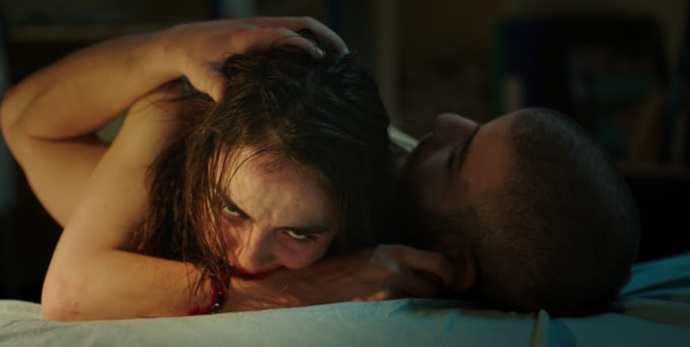
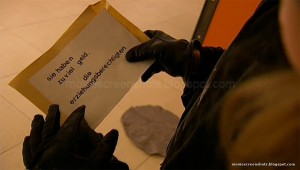


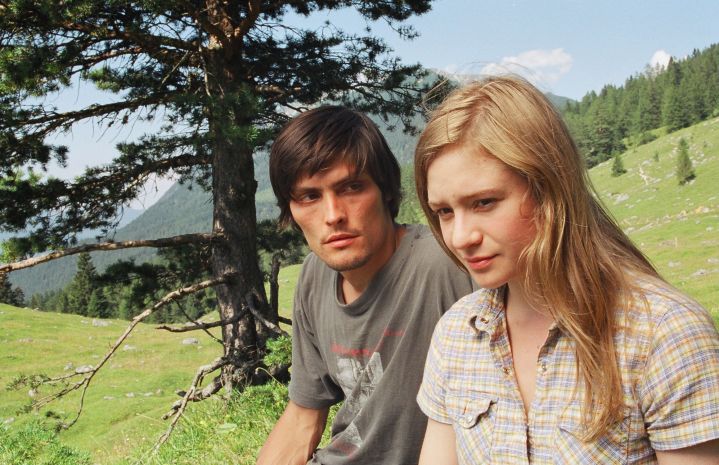
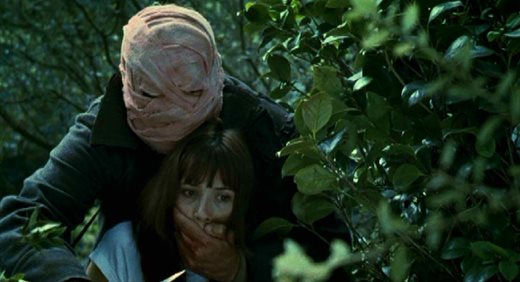
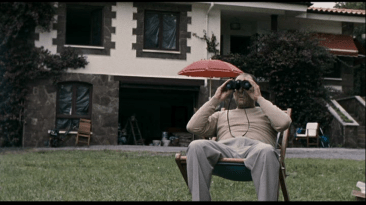
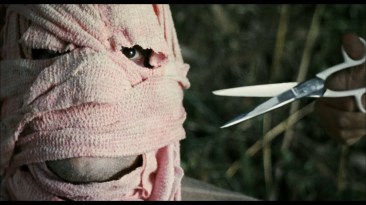
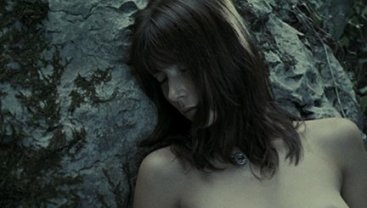 How the movie turned out eventually was not really what I was expecting at the beginning. There was no sense of adventure at the start of the movie. Having an old man with a big stomach who likes lounging on his deck chair, and has sexual engagements with his wife as the protagonist of the film, I thought the movie would revolve around Hector and his perversions. After all, he looked like a “dirty old man”. And the scene where he was spying on the woman who was stripping in the woods only affirmed this thought. But all of a sudden, the film became a bit more mysterious and weird when the naked woman was shown lifeless, lying down on the rocks. And the appearance of the man with a bloody bandaged face gave the whole class a jumpscare. The scene exemplifies the saying, curiosity killed the cat. Now we know, if ever we see a woman getting naked in the middle of the woods, do not follow her! The movie also made me think about the ugly outcome of the woman who only tried to help Hector. In the end, she was used, abused, and even sacrificed. The movie made it understandable why a lot of people have trust issues, who can blame them?
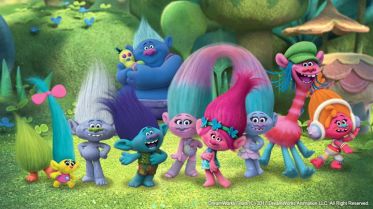 Another thing that I thought of when I heard the title, Trollhunter, was that maybe it was going to be a cute movie. Given that I watched the movie, Trolls (2016), a fantasy-adventure movie with lots of singing and dancing, I was shocked about how ugly and terrifying the trolls were portrayed to look like in the film. They were mean and even killed one of the characters. It was a good thing that the main characters did not die because the movie would end up being even more tragic.
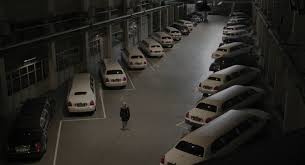
 To say that Leos Carax’s film, Holy Motors, is a very memorable movie to watch is quite an understatement. I found myself still reflecting on the movie minutes before I went to sleep. The movie is truly a unique one. Of course, as all European films we have watched in class, the movie was weird and confusing. Despite my confusion, I enjoyed watching the film. The movie was marvelous, vibrant, witty, different, and puzzling. Personally, there was not a dragging moment. I was always looking forward to the next role he would play every time he gets in the limousine.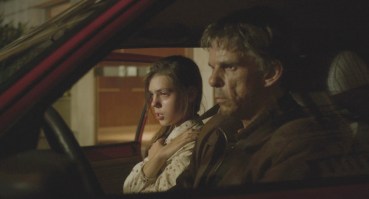
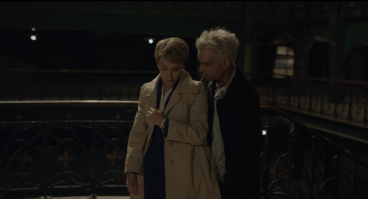
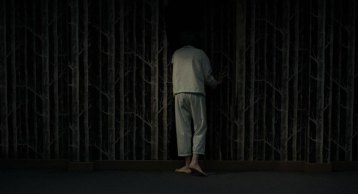

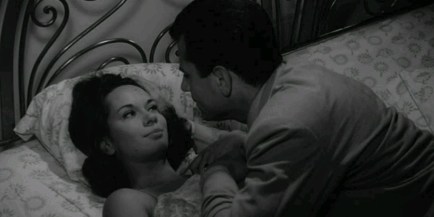

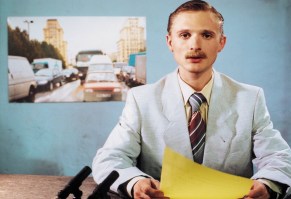
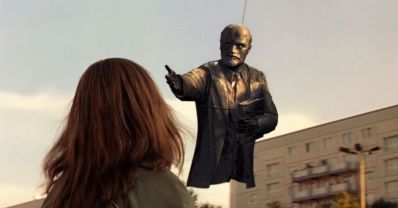 The film, Goodbye Lenin! is one of the most comprehensible movies that we were tasked to watch in class, next to A Woman is a Woman. For me, being able to understand the plot of the film gives the viewer a deeper sense of appreciation for the movie. The film was still quite peculiar (I’m starting to think maybe all European films are…), yet I was able to enjoy it much more than the others. The film was comedic, historical, and dramatic all at the same time. While there were times when I’d find myself laughing along with the whole class during funny scenes, I also found myself learning and being interested in the fall of the Berlin wall. Not just this, I also felt sad when Christianne died at the end of the movie. I think the class felt quite sad too as I was able to hear sniffing sounds, as if crying, from the people behind me. This just goes to show how Wolfgang Becker’s movie was successful in capturing the audience’s attention. Personally, the film taught me a few things about different types of love.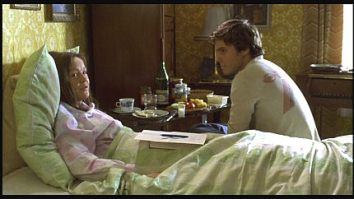


 European Film (2019)