Raw: the Mighty Justine

Similar to how Trollhunter was a new take on the old mythical creatures, trolls, Raw, too, was a new take on an old favorite topic, cannibalism. Using Silence of the Lambs as my context, Raw really was a different experience. Of course, Hannibal Lecter looks much scarier than the innocent-looking Justine, no one would guess that she’s actually a cannibal. Raw is still pretty much a horror film. Yet, the film is more than just that. The film also touches up on an awakening of the self and a coming-of-age. Somehow, this acceptance of the self also exudes feminist ideals in a very clever way.

f732fa_0690afc6f8ca4a239ec032524f1f44bb_mv2Raw is probably one of the most disturbing films I have watched, along with Apocalypto (2006) and Jeepers Creepers (2001). The scenes when Justine ate a raw rabbit’s liver, when Alexia was trying to give Justine a bikini wax, when she cut her finger off and Justine ate it, and when they were at the morgue (I can go on and on…) are among the plenty scenes that are just way too much to handle, I had to cover my eyes. However, different from the other disturbing films I mentioned, Raw had some quirky and comedic scenes, which help make the film more dynamic and fun to watch. An example of this would be the iconic scene when Alexia and Justine peed while standing up. The whole class burst out laughing, and I laughed with them. It might come off as a joke on the surface. But now, when I think about it deeper, the scene actually hints to women empowerment: indeed, what men can do, women can do too!
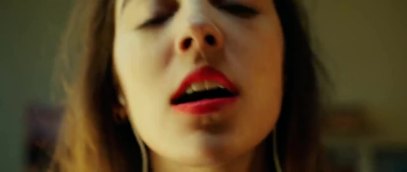
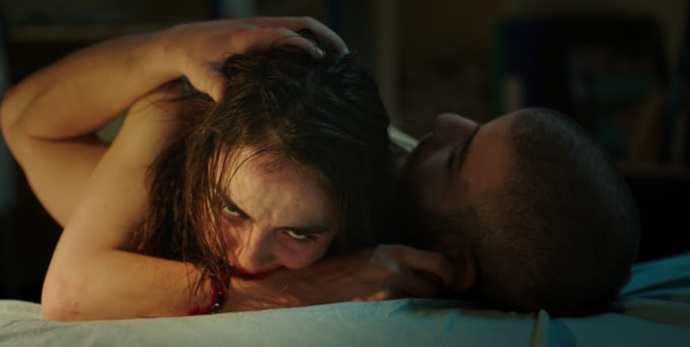
LeadingBelovedArabianwildcat-posterIt is true that college is a time of self-discovery. And Justine demonstrates this explicitly. During her time in college, she did not just have a complete 180° transformation from being vegetarian to straight up cannibal, she also had a sexual awakening. Justine’s solo dress-up grinding scene in front of a mirror was weird and quite funny, to be honest. But it can also be considered as one of her ways of exploring herself and trying out new things, no matter how strange it may seem. Justine’s 2 major awakenings were both manifested in her sex scene with Adrien. Not only did she lose her virginity in that scene, but she also ecstatically bit her own arm for satisfaction. A coincidence? I don’t think so. This scene was ingenious and well-thought-out, in my opinion, as it successfully encapsulates Justine’s new-found identity.
raw

The fact that the condition traces up from her mother to her sister, expresses female power. The men in their lives, such as her father and Adrien, learned to live with it with no conditions. The way Justine gave in to her desires and embraced herself despite it being a challenge to social norms illustrates a sense of might, power, and courage. And with her father’s expression of acceptance towards her identity by showing her his scars at the end of the film, surely, nothing can stop her now.

raw

There are many ways to describe this lip-biting (pun intended) movie, but the best phrase that fully encapsulates the movie is “a realistic zombie movie”.

There are many jaw dropping scenes in this psychological horror movie. The movie features a vegetarian teenager that studies in one of the most prestigious veterinary schools in Germany. She was a gifted student that aced nearly every test. Her cannibalistic instincts are awakened once she eats a raw rabbit kidney for her initiation in the school. After the rabbit kidney, she starts to crave for meat – specifically raw meat. She would go on frenzies by looking for raw meat everywhere she met until eventually, there was literally nothing that could satisfy her other than the taste of blood.

After she got the taste of human meat from her sister’s finger—which was undoubtedly the most graphic and shocking scene in the entire film. The scene leaves no room for the viewer to breathe. As I was watching the scene along with my classmates, I could not help but scream and cover my eyes as she devoured her sister’s finger as if it was a piece of chicken wings. The scene ended with her eating it to the bone as her sister woke up to what she was doing.

After the incident, the movie revolves around her denying her craving for human flesh. Her sister, who was a cannibal like her, tried to show her how to get “fresh meat” by causing cars to crash and eating off the victims’. Additionally, she would get serious allergies and caused her to hallucinate. She even tried to eat her hair to satisfy her cravings. Her denial bubbled up her cravings until she could not handle it anymore. Her built up desires and cravings led her to biting one of her schoolmates’ lip when she was at a party. This caused her to have a reputation of being a freak.

The movie ends with her dad revealing that her mom is just like her, and how the cannibalism runs in their family. Furthermore, he mentions how he allows her to eat parts of him to keep her sane by opening his polo and showing her his scars. Through this scene, I realized that this is why they were brought up to be vegetarians – to suppress their cannibalistic nature. It also explains her mom’s aggressiveness when a cafeteria mistakenly put a meatball in her mashed potato.

It is not your typical zombie movie wherein the main characters go on a zombie-killing rampage like in World War Z. What differentiates this horror movie from all the zombie movies I have ever watched is that it feels real. There are no hordes of zombies running towards the main characters or human beings trying to kill each other in order to save themselves. Just seemingly ordinary people who are mentally sick. I personally find this much more terrifying.

After watching the movie, I became skeptical about who I was close to and thinking to myself: “I wonder if he/she is actually a cannibal”. Then it hit me: this is what a psychological horror is.

The movie left me scarred but interestingly hooked. For some reason, I left the classroom wanting more.

Raw and Real

Deemed to celebrate humanity’s greatest taboos– RAW is being critiqued as merely a showy coming-of-age cannibal film, but it truly deserves more credit for that. This film, as a matter of fact, can top your list of the most grotesque films that have ever been made. On the surface level, the scenes can be seen as plainly nasty and absurd. However, it is visceral and elegant in  its artful way of reflecting systemic conflicts that can occur in a daily life of a freshman on her first year of medical school. Julia Ducournau might have possibly utilized the indulgence of human meat as a metaphor for an adolescent’s sexual awakening but more than that, the evolution of identity and discovery of a sense of self is explored all throughout the film. Justine, an archetypal vegetarian virgin, a rookie in the vast complex extremities of the playing field, represents a huge percentage of teenagers who have established a set of values and principles, that are yet to be destroyed by the evils of the environment.

Growing up in a conservative, vegetarian and veterinarian family, Justine seeks to excel in school, putting other unsubstantial things aside. Initially resistant and repulsed by the disheveled chaos in medical school, she suddenly discovers how a tiny nibble of raw rabbit flesh can stir up something intrinsic in her- a hunger for something uncanny she never really acknowledged.

Momentarily, a significant scene is shown in the film where Adrien her roomate, finds her snudging into the refrigerator tearing into a raw chicken breast, preconditioning her indulgences in the near future. With the plot build-up, it can be divided into the various metamorphic stages of a creature turning into its most natural form, similarly to how a werewolf will first turn on its first full moon– this film showcased Justine on her way to becoming what she truly is.

Another perplexing but powerful scene was when Justine, slowly watched the blood trickle from her sister’s fingers on her hand, and her eyes were glistening as she knew what she wanted to do with it. The moment she gave into her desires, lead her to a lifestyle that is so drastically contradictory to the philosophy she was raised with. Here we see her character evolution, from a reserved girl who felt lost within herself, to a brazen young woman who has finally accepted herself and found her place.

Beguiled into her newfound lust for human flesh, Justine craves for someone to understand her, thinking that it was her sister who would help control her, it was surprisingly her homosexual roommate Adrien. Given that he was able to guide her and watch out for her and she actually felt safe with him– it was truly terrifying to find him lifeless at the end of the film. Suddenly the mood from being so terrifying became so heart-wrenching for quite a few minutes. This then shows a distressing fact that with her situation, the people close to her are bound to get hurt.

The element of relatability is evident in the film given lots of realities are portrayed. A concrete one which is the rookie initiation that is played out in the first scenes of the film, included buckets of blood, delirious parties, body paint carnality and forced feeding of raw animal parts. Tackling peer pressure, conformity to one’s environment and unending indulgence, Raw is intimate and analogous to an adolescent growing up. This realism leads Justine’s bloody rights of passage to go beyond callousness into something custom-built for the audience.


Bloody Instinct

Raw was a movie that had involved a lot of blood and gruesome shots that were difficult to watch. For me, I believe the movie exerted efforts to place emphasis on the sense of gore into the movie. The best instance for this is when Justine wakes up with Adrien. Justine tries to please him however she finds out that Adrien’s leg has been devoured by Alexis, the sister of Justine. The shot of what is left of Adrien’s leg does not go uncensored. 

I believe the camera shots of the film like to focus on details that are not exactly the most comfortable. One case would be the bikini wax scene of Justine being made by her sister. Furthermore, the same case can be said when Justine slowly eats the finger of her sister just right after, which I will go back to later on. Another scene would be how Justine sneaks in the refrigerator after eating shawarma with Adrien. She eats a piece of raw seafood that sparks this behavior. This is also the case where Justine fights with Alexis after the video went viral for the whole school to see an intoxicated Justine being teased by her sister with a dead human body. The fight involved a lot of scratching, exaggerated biting, and deep wounds. 

In terms of the movie’s plot, it does cover the holes. One thing that shocked me at first is when Justine ate the finger of her sister, Alexis was pissed. However, I honestly expected a more shocking response or one that exhibits panic. But then, we would find out that her sister also exhibits the same behavior. In fact, we would also find out at the end of the movie, the ending scene implies that the behavior is inherited from their mother, wherein their father shows Justine his scars. This explains the reason why the mother only cooks vegetables for the family, as meat triggers this type of behavior. Furthermore, the movie does not fail in conveying to its audience that their mother was also part of the same fraternity. I believe implicit endings are very common in European films, one of which is L’avventura, where the ending show its characters not saying anything to each other. In the case of Raw, words were mentioned however it ends with details that convey sufficient closure. 

The title of the movie seems to be linked to the plot as well. This is because Raw somehow could be related to animalistic instincts and tendencies. Justine and Alexis exhibited this in terms of diet and behavior. The same could also be said in the love scene where Justine becomes aroused and had the urge to bite Adrien. It is worth noting that Justine and Adrien are not a couple, which shows also how it is linked to the title of the movie.

For me, the movie does not fall short in relaying to its audience as a gore film. I believe it can be as bloody as the likes of the Saw movies, where explicit blood, wounds, and injury are very much exposed to the audience. I am not really a fan of Gore movies as I am afraid of blood and the movie did a great job in showing scenes that actually made me uncomfortable.

Raw: An Unusual and Disturbing Coming-of-Age Story

Image result for raw european filmDisturbing in every possible way, the storytelling in the film Raw from the direction of Julia Ducournau is one of the most clever I have seen yet in the screen. The brutality of the scenes, with blood, violence and tragedy found in every frame, gives off the impression that the film only meant to scare, and to terrify the viewer. Yes, I found myself scared and most definitely terrified. But the scenes were also meant to trigger depth. The scenes uniquely and creatively tell a coming-of-age story, one that has not been told yet in the cinematic sphere making it truly one of a kind.

The storyboard was structured brilliantly—first, introducing the character of the vegetarian Justine in her most innocent self before eventually moving on to the complex and disturbing scenes. At the beginning, her apprehensions to her surroundings manifested through her mannerisms and littleness acts (reserved, soft-spoken) were a stark contrast to what she would eventually be by the end of the film. By establishing this version of Justine empowers the later scenes.

She was introduced as a typical normal girl with a regular family, beginning her first semester of school: sounding like any other ordinary film. But this is not just any other film, as things get messy when she later discover new things about herself, things she only discovered in the unusual setting of the veterinary school. The tension in the irony of her character and setting is the enabler of her late discoveries. She is a lifelong vegetarian studying at a veterinary school, learning about the anatomy of animals. She has surrounded herself with an environment that appears to be in conflict with her ideals and her perceived personality/persona and lifestyle that she grew up with.

Being in this conflict with her environment, Justine finally gave in to her urges. Later on, we see how her urges got bigger and bigger, that she started losing control. I feel as if the material of the film is contextualizing the concept of desire and lust taking over the character of Justine where her late discovery of the flesh magnified the level of desire. Being so different from her initially perceived self, I think she felt more herself, freer. By the end of the film, the walls that she had set at the beginning—soft, quiet, shy—were all broken down, possibly quite literally (with a lot of scenes having broken bones, smashed flesh).

Now that I think about it: the scenes are definitely necessary, even those are insanely graphic and brutal—the finger, the lip—to prove its points. Perhaps, the film is not something that can easily be rewatched. I figured, one is already enough for the film to execute its objective which is to open the eyes of the viewer, both literally (with the chills and goosebumps) and figuratively—there are still things yet to be seen in the world by our small selves. For Justine, her self-discovery was indeed very explicit, vivid, even violent. But the ending truly hit me the most: her dad opened his shirt, uncovering scars on his chest, as he tells her she will eventually learn a solution.

Here we go again (and again)

I honestly did not expect a thriller to be shown in class. I am very scared of horror films/thriller films/films with jump scares/films with gore/etc. so when I realized that Timecrimeshad a little bit of all of that, I kind of panicked. It started off upbeat and colorful, which made me think that it was going to be a fun film. However, as the film went on and the mystery and the ‘killer’ and the jump scares started to pop out one by one, I started to realize that it was going to be ‘exciting’ in the worst way possible.

The movie starts off in an interesting way. Compared to all the other movies we watched in class, this one caught my attention right off the bat. My curiosity peaked even higher when I realized that it was not just a normal thriller with an unknown killer on the loose. The film also had a sci-fi element to it with Hector travelling back through time to get away from the killer. At first, I thought it was your typical slasher film because of the first few scenes. However, when the story progressed and the scenes started to interlock and make everything make sense — especially the scene where Hector gets into an accident and wraps his head in a bandage — it started becoming less scary and way smarter than I thought it was going to be. I liked that scene because it revealed a plot twist which would hook the audience more when watching the film.

Aside from the ‘cool’ concept, the makers of the film were also able to allow the audience to experience empathy towards the characters. The character that caught my attention the most when it comes to ‘feeling for the character’ is the innocent girl who Hector makes undress. When she first appeared, I thought that she was a weird person for undressing in the forest randomly. I also got annoyed with Hector for checking her out (haha). Then as the movie passed, it was revealed that she was unwillingly undressing because Hector was threatening her in order for the past to happen once again. I felt bad for her because she was just an innocent passerby; it could have easily been another person. Yet she was unlucky enough to encounter Hector right after he crashed his car. I felt even worse for her because she was simply trying to help him — and look where that led her to. It was unfortunate for her to be used as a catalyst for the story to progress.

Hector, on the other hand, was a complex character. I did not really know what to feel about him. I think my feelings were more negative than positive. He made a lot of bad choices that could have been avoided if he had just stayed at home or something. I also did not like the fact that he rarely listened to the scientist who created the time machine. Hector was not knowledgeable of the dynamics of time travel at all, and yet he chose not to listen to the expert. He was kind of annoying, but at least he was flawed. Flawed characters are way better than perfect ones because it humanizes them.

Timecrimes was fun to watch as compared to all the other movies because it was easier to understand than the rest. I enjoyed it even though I am not a fan of thrillers. What I liked about it was the plot twists in the middle because it enticed me to pay attention to the film more.

Raw: Getting a Bite Out of Horror Films

Never would I thought that I would enjoy a coming-of-age movie that had one of the weirdest twists of all—a young veterinarian student struggling with her craving for human flesh. Before watching the film, I thought I would be scared out of my mind with the gore and jump scares that a normal horror movie would entail. But Raw had that eerie ambiance and familiar charm that leaves you wanting more.

First, one of the most noteworthy things was the acting. Garance Marillierwas excellent in portraying the life of Justineso smoothly that the audience tends to forget that this is a work of fiction and would never happen in real life. It was through her subtle reactions and genuine ways of responding to a situation that made people think, in some strange way, that they may see themselves in her. The cannibalism aside, Justineis relatable in the sense that she just wants to fit in, make her parents proud, and find her tribe in college. People are exposed to a lot of things during this time, and “going with the flow” is just one of the coping mechanisms that we see here, even though we learn that it is bad to repress these things and keep these scary thoughts to ourselves.

The chemistry between the different actors worked so well. Having Alexia, her sister, and Adrien, her roommate and close friend,as the supporting characters brought different perspectives and voices to the story. Alexiasort of acted as the devil’s advocate in a sense that she made her do things she wouldn’t want to—in order to “enjoy life more”. Adrien, on the other hand, was very supportive and caring towards her even though he didn’t understand what she was going through at first. Putting the two together with Justine, someone so passive and agreeable, made a very interesting trio.

Lastly, coming out of the movie, aside from having to process just exactly what happened throughout all the gory and “WTF” moments, it made me think more about life and freedom. The last scene, where the father revealed to Justine that her mom was actually a cannibal, paired together with the fact that they were raised to be vegetarian, made an interesting juxtaposition. Perhaps the movie is a lesson to both parents and children that are about to depart from their homes and go off into college, or experience the real world for the first time. That no matter how much you try to shield your child from the “bad things”, or the truth, it will find its way to them no matter what. And once this freedom is tasted by them who was once sheltered, and deprived of it, it will leave them wanting more and even be unable to control the craving.

Whether you choose to look at the film in a literal or a figurative sense, a lot of praise needs to be given to Raw. It disturbs you, but you can’t look away. It’s about cannibalism, but it’s also so much more. You can’t help but root for the characters even though what they’re doing is completely wrong and out of the realms of what is morally correct to do. Yet Ducournau gives us a show while breaking the norms of what a coming-of-age/horror/drama film should be.

Timecrimes

The film, Timecrimes, talks about Nacho Vigalondo’s cinematic masterpiece about a time-travel thriller plot that opens with a man name Hector who finds himself eyeing this beautiful women by the woods who happened to be undressing. Once he starts investigating what was happening, he was then stabbed by this man with a pair of scissors whose head was wrapped in blood-drenched bandages. Seeing this, Hector flees the scene and ends up in a science laboratory when a scientist asks him to get inside this weird-looking device which happened to be a time machine. From then on, the upcoming events started to unravel and create chaos to Hector and his wife. The essence of the film was how it pulls you deeper and deeper into each and every scene. It’s like getting stuck in quicksand, the more you move, the more you are swallowed. This is what Hector and the audience felt for each time he climbed into that time machine. For each action, there are several twists that come after it. Slowly but surely, keeping the audience entertained and asking for more. 

After I watched “Timecrimes”, it was very confusing to figure out the timeline of the whole thing. Time-travelling still leaves me confused, as there are different kinds of time-travelling that continue to manifest in several movies. Such as in Harry Potter and the Prisoner of Azkaban, Harry and Hermione go back in time and save Buckbeak, during that same timeline, there were two pairs of Hermione and Harry. We also are exposed to the kind of time travel that when you undo something in the past, it affects the present, such as in Back to the Future. But with this film, “Timecrimes”, it left me with so many questions that I wanted to ask after the end of the film. Who or what started the loop? Did Hector get arrested? Did the loop close eventually? Did the scientist plan everything? 

Little did I know that, whatever was previewed in the film, stays in the film. There is no point asking whether someone started the loop or not. The reason why we ask this or why we usually think this way is because we see time as very linear. We wake up in the morning and go to sleep at night, then repeat. There is a start and an end. But that did not matter in the film, like many anti-cinema elements, linear is not one of them, and neither was the Hector’s time travelling. In fact, the loop that caused the whole should not have mattered because the loop just seemed to have existed, there was no beginning nor end to it. 

But, what specifically caught my eye in the film is its mix of genre. It can definitely pass off as horror, thriller and science fiction genre at the same time, with small bits of humour that was dotted across it. For a low budget film, it all made sense, there was no need for some heavy machinery or editing to show the brilliance of time travelling. Vigalondo perfectly executed each and every scene and was well thought of. 

Das Edukators

The Edukators was a classic european film which tries to depict a form of robin hood but instead of stealing from the rich and giving to the poor, they try to send a message to all wealthy individuals/families that comfortability is not acceptable with regards to their lifestyle. What I feel the “Edukators” are trying to demonstrate with their acts is that they are anti capitalistic and are trying to advocate for socialism. In this respect, I found the movie interesting as they were taking the fight into their own hands. But it is all about perception as how would the edukators know what is too much money to be had? Who gives them the power to decide?

I see the movie as a political movement trying to be created by the youth as they crave a sense of change in the way things are run in that time’s society. The only problem is deciding where to start and struggling with the process of doing so. And so with this combo, a juvenile idea was born of desperation which involved breaking and entering and even kidnapping. What it shows however is the struggle of the people at that time who are helpless and are in desperate need for change. This is all because no real way to channel the pent of anger of politics is being adapted.

Timecrimes (2007)

In one line, I feel the easiest way to describe Timecrimes (2007) would be science fiction without a budget. The film sees a middle-aged man who is one day attacked by a masked man and is forced to run for his life after he explores the woods surrounding his house. What follows is a rollercoaster of plot twists within plot twists, as the protagonist, Hector, discovers the tragic nuances of time travel.

Because of the time travel aspect of the story, things very quickly turn meta, as the spectator and protagonist becomes the director who becomes the storyteller of a narrative we see three different times. As the character and main vehicle for moving the story forward, Hector directs and oversees the movement of the story, making sure things go along exactly how he remembers them to and according to how he wants things to play out.

It’s hard to pinpoint an exact genre for Timecrimes after one watch. I would think most would classify it as a science fiction, which is not the most unreasonable prospect; after all, it deals with the violation of a certain physics principle in an act of playing God. However, it can also be described as horror or a thriller because of the way it makes its audiences feel, particularly in its opening moments where a sense of dread permeates most scenes as Hector is suddenly plunged into a fight for survival. Yet it can also be described as a black comedy in all its complex twists and turns; I feel as though one cannot help but laugh at how confusing everything is, which by virtue of the plot becomes almost the main point of the film, all in the name of the protagonist covering up and undoing his past (present? future?) actions.

The use of sound also deserves mention here, as the eerie music at the start for instance serves to heighten the level of ambiguity and ultimately tension, which for a time leaves the impression similar to that of thrillers and horror flicks. Costumes were also utilized very well, albeit sparingly; Hector telling the girl to cut her hair for example, or the scissors he kept in his pocket throughout the entire affair.

Two elements of European cinema as outlined by Wollen (1972) present (pun intended) in the film are estrangement and identification: from the get-go, viewers will find it hard to understand and buy into the point of view of the character as this tends to constantly shift. Hector directs the girl but at the same time he initially started as a spectator. Part of it is that his function as a character changes. He does things to get his old self to do these things. For instance, his character is seemingly very unremarkable in the beginning of the film, which presents him as a balding middle aged guy simply enjoying domestic life. As the film progresses, however, he shifts from audience to storyteller to director. Us as the audience end up having to figure things out, piece the plot together on our own, and see where it goes. His role changes from victim to victimizer as he begins to take charge more. As a director who orchestrated the whole thing, he goes back to where it started by the film’s rather open-ended conclusion.

Narrative transitivity was another element that was masterfully demonstrated in the film. Truthfully, I found it hard to pinpoint whether the narrative structure is transitive or not. Not just the time travel aspect but the fact that the character himself does not know what’s happening at first. In terms of narrative structure: he’s trying to undo something (him looking at the girl through the binoculars) and at the end of the film, they end up back on the deck chair. Husband and wife just lounging around. Sort of starts with a thesis statement and restates it except differently.

This inquiry of the film’s narrative structure also leads me to question its diegesis. After first watch, I feel it’s easy to think of the three time periods as worlds of their own. However, the film is at the end of the day still an example of single diegesis in that it all still works together: we watch a single event that only happens once, but the character is inserted in different points of the narrative, but his relationship to the narrative changes.

All things considered, the film seemed to make use of all of these different elements to emphasize the concept of time travel, as the elements mentioned seemed to work together in giving time travel the main spotlight. The plot’s movement, the genre, the narrative and its structure, the characters and their points-of-view all ultimately pointed back to the time travel aspect and made Timecrimes a truly unique watch, one that I feel definitely belongs among the European cinema greats.