Caught In a Loop

I felt a lot of thrill in the first part of the movie. It really showed a lot of suspense, as if the main character was being haunted. In a sense I thought it would be a creepy serial killer, similar to movies like Happy Death Day, where the killer wears a mask to haunt the main character. In the first part of the movie, when there was a naked lady, I thought that it would either be a woman who could possibly be a ghost or a woman who was a victim. The latter one was correct but there was a deeper story at play. When I saw the title, I thought it would be a form of detective film, similar to NCIS however it would actually be more of a time travel film although some detective films do entertain the element of time travel in order to see or to know missing parts of the story. 

When I heard, it was a low budget form of film, it was indeed inconsistent with the nature of the film, as it involved time traveling which entails advanced technologies however the low budget film somehow pulls it off by placing it in a rural setting. I thought that the rural setting was indeed a way to cover up the low budget. On the other hand, the house of the scientist also contributed to covering up the low budget factor. I believe it tried to look futuristic with the coffee maker, laboratory, and etc. However, I thought it looked like a regular mansion that a rich person may own instead of a house that contains inventions and advanced technologies. 

It would not take long in the movie for viewers to realize who the killer is. However, I thought it was also entertaining how everything in the movie is caught in a loop where it uncovers how each sequence plays out through the view of each Hector that came from different times. It would then be uncovered that it was Hector himself, that causes all these catastrophes. Of course, this would be in different forms and also with the scientist contributing to the event. 

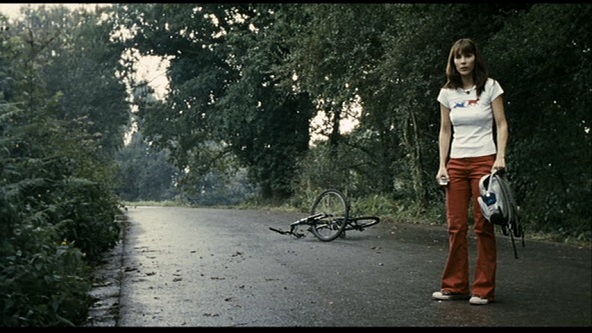
I believe in one scene of the movie, which brought back the suspense was when the woman dies. At first, I thought he killed his own wife accidentally by trying to chase the other woman, whom he met in the forest. However, it will soon be found out that it was the latter who was unintentionally killed. I believe the different characters of Hector is the one that really drove the plot. 

Overall, I believe it was a great movie that uncovered different aspects of a specific story. I really enjoyed the film, especially when it comes to solving crimes and this was a movie that was different from what I have seen before. Usually, there is a detective that drives the plot but in this case, it was Hector himself through different versions of himself that allows the story to unfold. 
Old themes. New Films.

There’s something in me that feels so lighthearted and giddy when I think of Time Travel films. It exhilarates the life out of me when I see the element of space-time continuum being warped to alter appreciable and significant events in a character’s lifetime.

This is because for me, it satisfies the human’s cravings for accomplishing their what-if’s and what-nots in life.

timecrimes3.jpgWhat if you go back to save the one you loved? What if you go back in time to see what had not happened if you did this and if you did that?

These are some of the typical questions we relate to time travelling. With regards to the childhood favorite,

Back to the Future, or the heart-wrenching Time Traveler’s Wife or maybe much more stellar sci fi classics such as Men In Black or Star Trek—  we see in these films how time travel is utilized to bring delight to the audience and to somehow add supplementary color and vitality to the plot.

However, one can see in TimeCrimes that the time travelling element in this film, somehow frustrates the audience and leaves them with unresolved conflict with regards to how the interminable loop of Hectors even started.

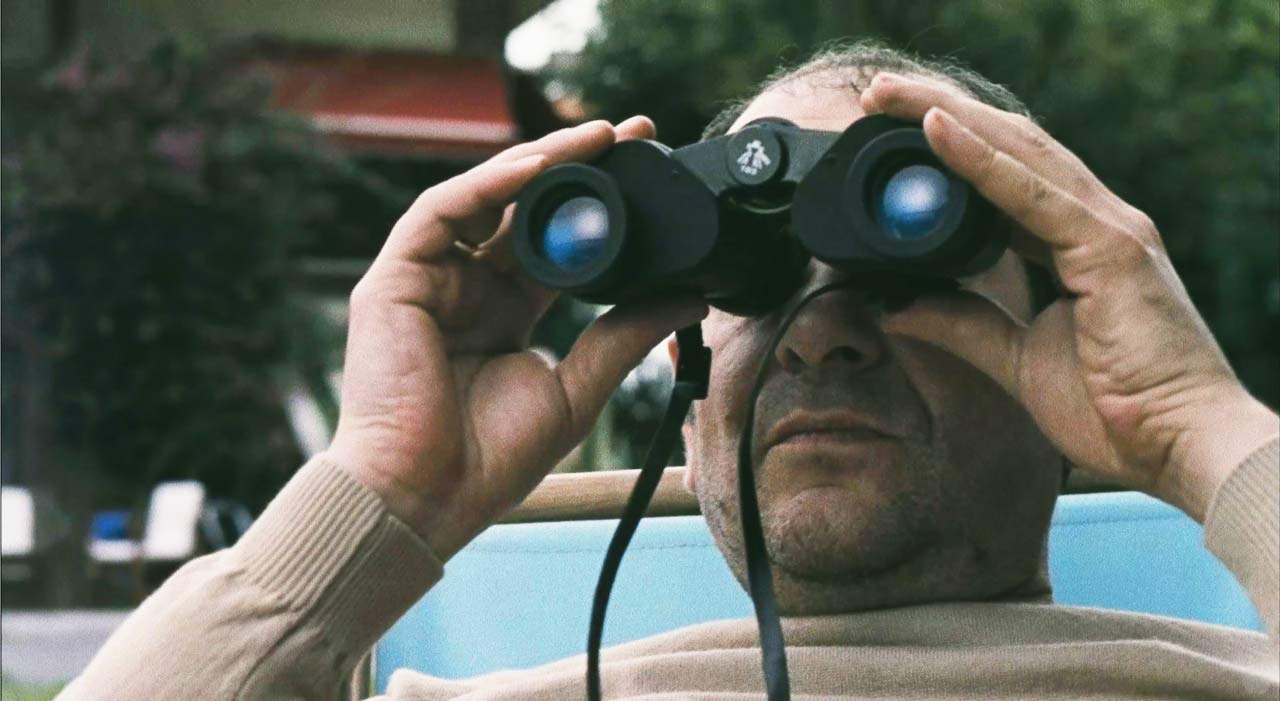
Beginning with such humane perversion from a normal husband-father figure with a big belly and binoculars– any middle-aged man would gain interest from the mysterious barren woman in the forest. It just so happens that the act of delving into it and recklessly desiring for more, lead him to an irrevocable shithole of physical pain, perplexing strategy-making, and indispensable violence.

1280_timecrimes.jpg

This then emphasizes the concept of adultery being something that could have been never intentional but more of a mere natural attraction to men. As the plot thickens, one would see how Hector is doing everything to cover his tracks, not just to kill the other Hectors but also to eradicate his now known precarious infidelity.

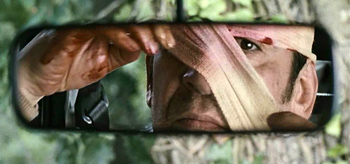
In this film, given that you have different versions of the same character, the audience would gain a variety of perspectives, therefore also having the power to switch from one film genre to another. At the start, my friends and I were literally stuck to each other, shaking and screaming as the bandaged man was first presented in the scene up until he was chasing Hector to the building. With the first few scenes, one would surely believe that this is a horror/thriller given the Friday the 13th aesthetics and all that. As it progresses, specifically when his face starts bleeding and he sees the bandage on his hand, it would surely make filmbuffs realize that Hector is the bandaged man. This would then switch the film into a mystery/suspense film where we get to solve clues as he tries to figure out what to do next. Action comes in third and last, as a lot of chasing, hitting and hiding were involved. With a little stint of comedy, you would realize that as a bandaged man, he was actually just trying to peep through the window to see what was happening inside the building but initially, the thought of seeing his bloody face at the start of the film really caused a jumpscare to the entire class.

timecrimes-trailer-tsrimg-v2.jpg

In light of all that has been mentioned, one thing that gave this film an edge was how he recycled the “hurt-one-woman-to-save-the-other” concept for adulterous conflicts by making it not seem so dramatic, rather showcasing the act of cutting the younger woman’s hair, one of his full blown compulsory decisions as a “faithful” husband to his wife. This blew the audience aghast regarding the liquidation of values of Hector who did not want to hurt his wife in the first place but ending up doing so, in the worst way possible.

My greatest admiration for TimeCrimes is how it showcased classic styles, dilapidated themes and overused elements but presented it in a nuanced and convoluted way like no other Time Travel film I have ever seen before. 

-161997-


Trollhunter: A search for the human

T

To this day, if I’m being honest, there’s still a part of me that wonders if Trolls are real or not. That disclaimer in the beginning really confused me, because it said the footages recovered were actually true. I was hooked in the idea until I saw the [pretty decently] edited CGI trolls, where I started asking, are these footages really try or was the film staged in and stylized in a way that it looks like a documentary series of hunting down trolls. Apart from that, the film had a particular moment that pinches the heart. Hans, the guys who kills trolls, moved me when he remorsefully recalled how [because of the nature of his job] he had to kill women and children trolls—speaking volumes to the humans watching it. I am not a fan of shaky editing but for this film, I loved how the shots looked like they were shot by a cameraman, running, chasing and part of the story just as the protagonists are part of the story. It’s an interesting piece to watch and it gives humanity to something that we never would’ve thought we could pick some learning from—trolls. 

Holy Mo[ley]tors!

Holy Motors

To say that “Holy Motors” is a great film would be to undermine the wonderful experience that it is. This episodic tale of how a man transforms from a character to another has set the bar high for me when it comes to the films that I watch. Equipped with heavy costume changes and set designs, the film (although set in a homogenous world) seems to take you to another dimension along with the change of Mr. Oscar’s costumes. It was a thriller. I loved how each costume change feel like another movie on its own. I appreciated how meta the film is, as it seemed to showcase the difficulties, nuances and complexities of acting and cinematic creation in itself. I also personally loved the mysterious quality (i.e. the model’s non-reaction and chillness as Mr. Oscar, clad in prosthetics and tattered clothing, abducted him from the photoshoot) to it because it hooked me and kept me watching until the very last bit of the film. I appreciate the scenes that made me think and the parts where I couldn’t understand what was going on, because like I said in class I don’t you always have to understand everything in a film. In a way, “Holy Motors” opened my eyes to the extremes man could reach to portray and realize his artistic sensibilities and it resonated with me as a theater person. 

Goodbye, Lenin

Goodbye, Lenin 

This could-have-been plain, old, boring historical movie, Goodbye Lenin, moved me to tears as it showcased the delicateness and fragility of human relationships. I am personally a sucker for films that dabble on topics such as family, personal ties and social reality. I thought the movie showcased all of it and integrated each aspect in a very subtle, unobtrusive manner. Some films on history would just feel so didactic, I wouldn’t want to watch it. But Goodbye, Lenin intertwined history with the personal narrative of a family—it showcased how much the transition from a communist society to a western-influenced society would influence the lives of families back then. The symbolisms, like the concrete sculpture of lenin being flown away by the helicopter just as the woman went out of the house for the first time AND that coca cola ad, were really iconic and strikingly comic. The film also highlighted the extremes people would be willing to go just to protect their family and be able to safeguard the lives of their own, even at the expense of truth. Additional complement goes to the colorization of the film. It was altogether a wonderful ride and I would watch it again just to be able to pay attention to the small details in the film. 

Timecrimes: Not Your Ordinary Time Travel Flick

Timecrimes was a ride of emotions while watching the film: it was thrilling, mysterious, mindblowing, and at times humorous. The story follows the misadventures of a middle-aged married man named Hector who just moved in the outskirts of the Spanish countryside. Everything seemed normal until a strange phone call, an encounter with a “neighbor”, and a madman starts to follow him. 

The first few minutes of the film start to escalate very quickly. He experiences a peeping Tom moment, and when he tries to investigate what happened, it appeared to look like a woman was assaulted in the woods. He then gets stabbed and runs away—quite awkwardly, at that—into the laboratory of a scientist that speaks of time travel. The events of the movie are so absurd that when one tells it plainly, it loses its charm. I believe that the point of the film is to bring the audience a ride of questions, feelings, and realizations. Slowly, but surely, the plot unfolds itself in a way that is understandable but at the same time too smart to be outwitted. Vigalondo does a good job in this balancing act of being a too complicated science-fiction, a thrilling murder mystery, and the mundane events of life.

One of the other things that made this film what it is is the acting of Karra Elejalde, since he did a superb job of playing the different Hectors. The first one was completely clueless, very curious, and (literally) falls at his feet at times. This stumbling, completely ordinary middle-aged man makes the thriller completely different from all the others. Vigalondo was able to make a believable character, but also was able to develop him as the story progressed.

When Hector 2 showed up, that was when most of the audience got it. This is not your ordinary time travel movie where the hero fixes something in the past. The hero is the reason for his own demise, and there is nothing he can do about it. This paradoxical framework in which the film surrounds itself is another aspect of the film that is worth taking a look at. The storytelling was done in a way that as the events unfold itself, the viewer is brought deeper into the story and even to another perspective. The first time around, we were following the one being chased. This time, we are with the so-called “villain”, which just so happened to be the same man! It’s hard to wrap your head around it at first, but Vigalondo pulled off the storyline with such cinematic genius.

After watching it, Timecrimes would be the kind of movie you would want to rewatch or show to your friends. They would never expect any of the twists, and they would laugh, cringe and cower at the same time. It’s a time travel film that doesn’t take itself too seriously, while putting all the right elements of one. Vigalondo, who also plays the scientist, is sort of a reflection of the audience. We think that we are in control of the situation, but the film proves us otherwise, and we are just enjoying the ride.

Trollhunter: Diving Into Norway’s Troll Folklore and Culture

Trollhunter is definitely something else in terms of what we know of found footage films. Who knew that there would be such a film out there about a group of students that decided to film a bear-poacher-revealed-troll-hunter? One would think from the first few minutes that this would either go the serious route concerning environmentalists, or the thriller route wherein something would go wrong in their misadventures. But the movie throws these expectations out of the window and gives us a story we never thought we wanted—namely, about Norwegian trolls.

One of the things that stood out to me was how each actor brought their own flare to the story. Thomas, their front man, is sometimes too curious for his own good and is the regular “eager beaver”. Johanna, who was skeptical for the most part, represented the superego in our heads that tell us these mystical creatures aren’t real. Hans, who could be considered the star of the show, juxtaposes the students as he answers all of their questions seriously and in a rugged fashion. Perhaps there is just something intriguing when it comes to finding out about closed off characters, and finding the humanity in them. Throughout the story, we get to learn that he used to be in the navy, and that he is barely compensated or recognized for risking his life for his job.

The film also made me appreciate the beauty and culture of Norway. Instead of learning about their landscapes and folklore from a boring informational tour, we get instead to learn them through the different dialogues the characters have, the scenic shots as they hunt trolls, and the authenticity and detail that they put into making the trolls believable. There were some facts that I found interesting that Hans would bring up, such as that their heads grow after they’re born, they like to eat concrete and charcoal, and even smell Christian blood. The most fascinating one was when the veterinarian was explaining to the students that with the use of the flash gun, it turns trolls into stone, as they can’t turn Vitamin D into calcium and their bodies overreact. They even put into some morality in them, saying that it’s quite traumatic for these trolls even just for a little while.

Overall, it was an entertaining, although draggy at parts, way to be introduced to Norway’s culture and lifestyle. We got to learn that most of them are actually non-practicing Christians in the film, although it seems like it is in passing. It also makes a reference to farmers and their problems with predators eating their livestock, or when power lines are needed to pass through wild life because of their regulations. All these easter eggs, cultural references, and stories add up to a very Norwegian kind of movie, but also enjoyable by outsiders because of the Hollywood-type elements as well. It is not meant to be confined by one genre, because ultimately, it should be allowed to portray the personality and mystery of Norway and its people and all of its facets—even if they are about something as seemingly absurd as trolls.

Lights, Camera, Action!: Holy Motors As An Homage to Film

The first scene of Holy Motors tells the audience two things: this is about the art of film, and this is what you won’t expect it to be. Carax, the movie’s director, is seen opening the door into what seems to be a theatre. Everyone’s eyes are mesmerized onto what is on screen which is out of frame. Shots of the early works of scientist and early Chrono photographer Étienne-Jules Marey, and this gives us a look into what this narrative is about. Yet, as one tries to wrap their head around what the film means, it loses its meaning altogether.

We are introduced to a middle-aged man named Mr. Oscar, who is driven around in a limousine and has several “appointments” or acts. He dresses up and delves himself into completely different scenarios, giving the audience different reactions as well. From an old beggar, to a motion capture actor, to a red-haired madman, the possibilities of Lavant and his skills are virtually endless. But behind the scenes, after every act, he seems to be quite lonely and hopeless in the confines of his limousine. He tells of the man from the agency that what made him carry on is the beauty of the act, but he misses the cameras. This scene could symbolize that no matter how many times actors fall in love with their role and the art, a part of them seems missing when it comes to feeling fulfilled with their job. Perhaps it is because of the different masks that actors have to put on when they portray their roles, and how sometimes method acting can take a toll on one’s sanity.

Yet, what makes this film so melancholically beautiful is that it appreciates, and at the same time critiques, what filmmaking is. There are no connections whatsoever with all the different appointments, yet the viewers are glued to the screen and are invested to know what happens next. Perhaps the reason for this is that Carax does not want the audience to overthink or follow a linear narrative. Movies are made to entertain, and maybe even to reflect life and one’s deeper insights towards it. Through the different characters Oscar portrays, the different interactions he has with other people and actors, makes us think whether we are ever truly genuine with ourselves and others. The different scenes, although quite absurd, are not so far from what we experience in life. Love, chaos, beauty, life, death, are all universal themes that we experience and the art of film is what connects them together.

All in all, Carax does a wonderful job in paying an homage to cinema through Holy Motors. We get to appreciate the art form as it is without putting too much thought into it, because the meaning of things is subjective to each and every person. But at the same time, the overall somber mood that the film emanates makes us realize that film is dying. When Oscar says that “[The cameras] used to be heavier than us. Then they became smaller than our heads. Now you can’t see them at all,” it makes us reflect on what we consider entertainment and real film. As things such as reality television and online influencers start to emerge, we forget to appreciate film for what it is and all the effort that is put into making one. And for that, Holy Motors should be praised in all its confusing and surprise-filled glory.

Good Bye, Old!

The sudden shift in the type of movies we have been watching in our class has honestly been refreshing for me. I think it’s nice to be shown a type of movie that is familiar to my taste. Wolfgang Becker’s Good Bye, Lenin! showed us elements that are quite similar to the West’s Hollywood. The comedic scenes and transitions reminded me of a lot of films that mainstream media are more familiar with. However, what struck me the most is the film’s take on the historic shift from a past to a new future.

A lot of the films we have been watching in class were glimpses of how European art films shaped the way most modern European films are now today. Yet, in Good Bye, Lenin!, it’s not through the film’s elements that we’re shown a change in something, but rather in the story of the film itself. Through the use of the historical context of Germany, the film showed us a more personal view of such event to a person who has lived their lives as part of the old which, in the film is replaced by a radical new. While Christiane Kerner, a perfect model citizen of the then existing Socialist Unity Party of East Germany, was kept hidden from the massive shift to West Germany’s more capitalistic approach, her son Alex tries his best to shield her away from what he assumed would be a horrific scene for his ailing mother. It is through this fear that I saw a general fear for a change, which of course was something different from what the other characters in the film were experiencing as they immediately welcomed the change in their everyday lives. For me, Alex’s efforts exhibit his extreme fear for losing the traditional life he had before. Despite his constant assurance that all these things were for the sake of his mother, I firmly believe that Alex was just scared to change his life and what he has to leave behind in his past, which coincidentally includes his mother.

The story itself was tragic, however Good Bye, Lenin! shows us a more lighthearted way of understanding something that was very significant to the people of Germany, especially those coming from German Democratic Republic. For me, the use of history in the film is art in itself because it shows us a side of Europe that we will never know. Their sentiments will never reach us as we did not experience this event personally, but the film shows us an easy way to understand the feelings of people like Christiane and Alex Kerner.

I’d like to note that while the film’s story shows us the characters trying to hide the fragments of the new Germany, we can’t deny that the film itself is showcasing elements that were greatly influenced by the mainstream west films. This for me best exemplifies the change of European cinema as coming from the individual minds of great filmmakers, to coming to accept the influence that Hollywood cinema and other mainstream media has on the new films that Europeans are able to produce.

Trolls: retold

Usually, I steer clear of documentaries. I find the pacing too slow for my liking, which is how documentaries are made. When I saw the title of the film — Trollhunter — I would have never thought that the movie was going to be in the form of a documentary (or a mockumentary, more specifically). I thought it was going to be a fictional adventure, so I was stunned (and slightly disappointed) when I realized that Trollhunter is a (fictional) documentary.

Despite my obvious dislike for documentary films, while post-processing the film inside my head, I realized that the film was not so peculiar at all. I thought about it this way: it was a different way of showing their audiences about Norwegian folklore. It is like how there are various retellings of Greek and Roman mythology (which are my two favorite types of mythology). If I do not find those modern retellings weird (I actually find them really interesting and cool), then why can’t I appreciate Trollhunter, a documentary-type retelling of Norwegian mythology?

As I thought about it in this way, I started to dig deeper into the “weird” beliefs found in the film. I found it strange that trolls could pinpoint Christian blood. Some say that people started believing less in trolls when they learned about Christianity. Trolls apparently got “offended” which led them to hating Christians. Therefore, whenever trolls smelled Christian blood, they would attack. Others say that it was merely based off of Norwegian folklore that the ancients created back in the day. It is interesting how these Norwegian beliefs were integrated into the movie.

My favorite thing about the movie is the fact that they humanized Hans. Hans seemed so cold and indifferent at the start, most especially when he refused to participate in the students’ documentary. As the film goes on and he agrees to participate, he still appears to have no concern and compassion whatsoever for anyone but himself. He was only keeping the students close to him because he had a motive of his own — to use their documentary to expose the trolls. However, as the film passed, I realized how human he was through the emotions he showed. The real reason why he keeps hunting trolls is because of the fact that he has seen what they had done to innocent people — pregnant women, children, etc. I am the type of person whose favorite characters are usually the mean ones on the exterior but have hearts of gold. Hans is one of those characters.

Besides Hans, the other main characters were also easy to empathize with. They were just students trying to give their all for their project — I can relate (hahaha). Even though the path ahead of them was dangerous, they still went through with it because they needed to do so for the grade. I also liked how each character had a different personality. Thomas was the leader; he was always the one who pushed the group to continue. He was confident to stay in front of the camera at all times. He was also the most eager in finding out the truth about the trolls. Johanna, the group’s sound engineer, seemed to be a bland character to me up until the part when Kalle dies and Finn confronts them about their tapes. I admire how she stood her ground when Finn threatened them to give them their camera. Kalle, the cameraman, was the quietest one of the group, but when he died, it was so difficult for me to watch. I felt so bad for him because he was just trying his best, going along with the group, but he ends up dying in the end just because he was Christian.

Trollhunter was peculiar, but it was interesting. It was an interesting play on Norwegian folklore. I am glad I came to appreciate it at the end.