Mad hatter

“What makes you carry on, Oscar?”

“What made me start: the beauty of the act!”

“Beauty? They say it’s in the eye… the eye of the beholder,”

“And, if there is no more beholder?”

Holy moly, was this film something else. From the stellar performances, the surreal and unbelievable scripts and storylines and roles, to the odd sequences that they really managed to pull off, the film was truly something else and it is something that any one would remember for a long time.

As soon the opening sequence rolled in, I did not really know what to expect out of the film. Monsieur Oscar bids his family farewell as he enters this long, sleek white stretch chauffer-driven limousine and answers a phone call, telling who ever is at the other end of the line that he is well set to go and do his job… his co-called “appointments” that were, in fact, pretty unusual and unconventional the way one would expect them to actually go. He exits the vehicle and suddenly, we are faced with the character of an elderly woman frolicking around the streets and begging for money. At this point, I was already in the peak of confusion. What the heck was happening? Honestly, I do not think it even immediately registered to me that this man’s appointments actually meant living parts of his days as an elderly beggar, an assassin, a strange creature who lived in a sewer, a grumpy father, and an old man on his deathbed. He internalized these roles so naturally, and there were absolutely no questions nor objections made throughout these booked appointments. It was also interesting how his limousine was mobile dressing room, where all of his characters and roles are created and, eventually, come to life. There were quite a number of scenes that left me confused, mouth gaped wide open as I try to make sense of what I was actually seeing right in front of me. To this day, I, perhaps, still do not know. The film really tried to disturb one to the core, showing things that were absolutely absurd, unreal, and too strange to be true, and changes up with no explanation at all. But I never had time to question any of it, nor did I really feel the need to challenge it further. Films just do that — present us with the strangest of sequences and narratives and characters, and we do nothing but accept that this is the world that exists at the moment. The ending sequence was also pretty confusing, although humorous in some way, it was strange to witness a whole long scene of cars just talking amongst themselves as if it were a normal thing that you would see in your every day. However, Holy Motors was a film that felt like a true classic, and something that I would recommend people who are interested in European Film to watch and indulge in themselves. As Monsieur Oscar even says, “I have a plan to go mad”.
Time capsule

Good Bye Lenin! was perhaps, one of my favorite films throughout the whole entirety of the class, as it felt intimate and personal despite the story revolving around a context that was far out of my reach. For someone who barely had any idea of the specifics of what really happened and went down during the fall of the Berlin Wall, the way the film was presented and sequenced still allowed me to kind of catch up and get on the flow of things. However, besides gaining more knowledge on the details of Germany’s history, I was really fascinated by the narrative set by the story about a boy and his mother, and two siblings trying to navigate their way through big changes in their lives.

“These are 30,000 East Marks! That was our money, for 40 damn years! Now you, you Western fuck, you want to tell me it’s worth nothing?”, Alex remarked frustratingly. The shift in political ideology meant the currencies meant nothing, and the end of the revolution was the beginning of a massive change awaiting to happen. I honestly felt uncomfortable and uneasy in all the scenes of Alex and the mother, finding myself at the edge of my seat because I was always worried that the mother would eventually find out about all of the lies and fabrications done by the people around her, just so she would not see what is actually happening outside of the time capsule bedroom that she was practically imprisoned in for reality would most likely break her heart, perhaps, both literally and figuratively.

I honestly resonated well with the characters, as they tried to navigate their way through adulthood and the changes that it brought to their lives. In the face of a capitalist, materialist society, life is fast paced and horribly confusing, and often times, the world seems to constantly take away one’s sense of security and stability. Ariane even had to give up her prestigious economics degree from university and ended up working in Burger King where every day seems like it was exactly the same as yesterday—lines rehearsed, smiles practiced, hours counted, and body already trained to get into the routine of things. It was a painful reality that I could still see happening even to this day. As someone who is graduating soon, it always worries me as well how I am ever going to find a sense of belongingness and security again in these days wherein life is so quick and it always seems like every day is a battle for survival, just like what Alex and Ariane had to deal with. I think majority of the film was really also about a group of youth learning to let go and get the hang of things, which I felt was relatable to a lot of us who watched it.

“The country my mother left was a country she had believed in, and which we kept alive until her last second. A country that in fact never existed like this. A country that in my memory will always be connected to my mother.”

A tale of two sisters – rehashed

Perhaps, there are certain things that you see or encounter that just leaves you in a space of discomfort, confusion, and a certain form of an odd illusion. Persona (1966) was just that for me. The film is, simply put, utterly strange in its own charming, artistic way. I am not one for interpreting such films, as something like Persona left my mind in absolute chaos. To this day, I still do not fully understand what the film truly means. But then, perhaps, that is part of the beauty of the whole thing. I might actually say that this film feels a lot like a horror film—a beautiful one, however. It disturbs me to the core, but it leaves so many beautiful marks at the same time. I remember talking to a few friends right after seeing the film in class, and telling them honestly that I would be totally up to watch it again if I had the chance to do so. 

Watching the relationship between Alma and Elisabeth Vogler unfold and progress throughout the entirety of the film was quite the experience. I found myself at the edge of my seat in every sequence, waiting for that moment wherein Elisabeth would finally speak after suffering that nervous breakdown that caused her to spiral into a case of anguish. The scenes of one-sided silences were somewhat eerie, and there was something so discomforting about the strangeness of some of the sequences. There was this one long scene that stands as the most highlighted portion of the film: it was when Alma exposes Elizabet’s past for her, the same monologue delivered twice in two different angles that showed each of the women’s reactions and expressions through it all. The film provided so many visuals and images that were disturbing to say the least, but it disturbed me to a point that I just seemingly wanted to keep figuring it out more and more. I could not seem to understand the latter portion of the film when things started to become confusing, with various scenes showing that the two women’s identities seem to have started overlapping and interconnecting, almost melding into just one shared persona, and that made things ultimately complicated for the two, whose friendship was already shaken and falling apart. The story line was truly complex, and I am sure that every one who watches it for the first time often finds themselves hungry for answers and for clarity due to all the questions that have popped up in their heads throughout the whole film experience. And obviously, in fact, I am indeed one of those people.

The director, Ingmar Bergman, once posed the question about the film: “What is true, and when and how does one tell the truth, if there is such a thing?”. Perhaps, the film left me asking more and more questions and never actually gave me any concrete answers, but perhaps, the second time around, I’ll fall in love with its strange charm even more.

A mess of characters

La’aventura was perhaps the most unsatisfying movie I have seen so far. The plot of the movie seemed quite simple at the start. It begins by showing Anna, a wealthy socialite, who has plans to go to an island with her friends. However, when she and her friends arrive on the island, Anna suddenly disappears after having an argument with her fiancé, Sandro. The group of friends begin to search for Anna, but she seems to have magically disappeared from the island. Although the characters still look for Anna throughout the film, her disappearance suddenly becomes a background plot midway in the movie. Rather, the plot shifs from a mystery to the unlikely love story between Sandro, and Anna’s best friend, Claudia.

The sudden change of protagonist and the relegation of Anna as a mere background character left me quite upset since Anna was built up to be the main character in the beginning of the film. In addition, she seemed to have many more stories to tell with the way the film had set her background as an unhappy rich girl, whose father was an ambassador. In comparison, the film never gave a proper background to Claudia except being Anna’s best friend. Although this was the case, Anna suddenly became forgotten in the film and became merely an afterthought. In fact, most of the characters seemed to have forgotten her midway through the film, aside from Claudia and Sandro. For Sandro, however, he seemed only interested in finding Anna to please Claudia. This was one of the reasons why I was quite unhappy with the film. Most of the characters seemed to be so selfish and never really cared for their missing friend. The way they even commented on her disappearance seemed so harsh that I doubted they were friends in the first place. In fact, the only person I considered decent in the movie was Claudia since she seemed to be the only one with a conscience in the film. Other characters seemed to act on impulse and not even think whether what they were doing was right or wrong.

Although I have to commend Director Antonioni for his amazing camera work. As seen by the beautiful long camera shots seen throughout the movie. The way the characters were written made the movie quite unappealing to me which negated even the stunning cinematography. In addition, he never gave a proper closure to the movie and just made more questions by the end. For example, “What happened to Anna?”, “Did Sandro and Claudia end up together?”, and many more. These questions were so relevant to the plot that they needed to be answered. In fact, the question “What happened to Anna?” was what kept me watching the film despite me hating most of the characters. Although La’aventura might be good movie if one were to watch it for its cinematography, if one were to watch it for the plot then I would be afraid they would be quite disappointed. The movie just seemed rather pretentious to me.

A coming of age ceremony

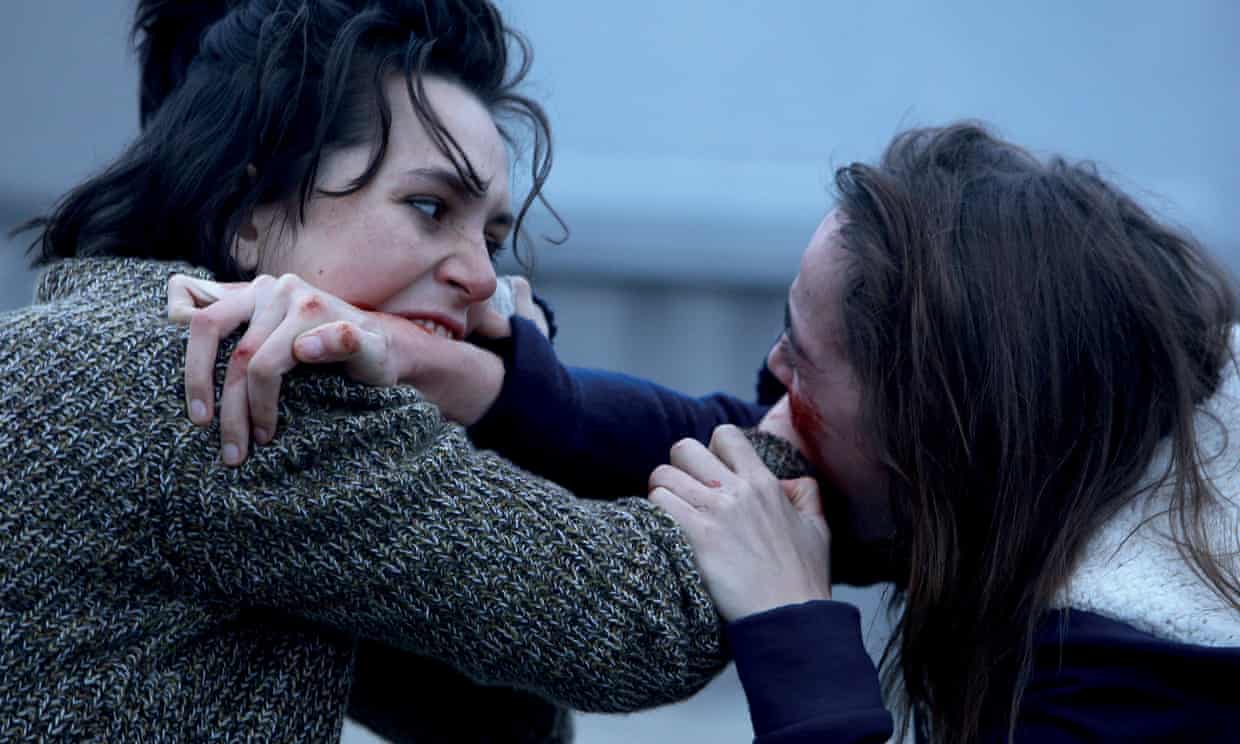
Raw was perhaps the most unique horror film I have watched to date. The premise of the film was quite simple. It was a about a teenage girl, Justine, who just entered college and was then forced to eat raw meat for their school’s initiation. However, due to her never tasting meat since she was raised as a vegan, she began to have an obsession towards raw meat as soon as she tasted it. This new obsession of hers eventually led her to try human flesh, which she started to crave. This craving of human meat led to a series of discoveries and problems for Justine as she goes through her freshman year.

However, rather than making me terrified, Raw left me more intrigued as the movie went on. It constantly revealed shocking truths about the characters which left my eyes glued to the screen. In the revealing of these truths, the characters became more fleshed out especially Justine and her sister Alexia. The movie was able show a good parallel between the sisters, which made me see two different sides of the problem in the movie. Should Justine try to restrain her cannibalistic urges and deny who she is, or should she be like her sister who fully accepts that she herself is a cannibal? Although the answer seems obvious when you consider the cannibalistic aspect of the problem, it made me ask myself whether it is better to stay true to myself and just not follow society’s expectations or should we just hide who we are in fear of being judged. This problem was not only reflected by the cannibalism of Justine. In fact, it was reflected when she first entered college. In the start of the film when we see she was forced to eat raw meat, she struggled as to whether she should eat the raw meat or stick to her principles as a vegan and just be seen as an outcast by the other students. In fact, in other scenes in the movie, Justine was constantly put in similar tough situations where she was forced to either go against what she believed in or to conform to what others expected her to do. This premise of the movie is what made me find myself relating to the characters and even sympathize with them. Although the problem of struggling with cannibalism is not a common thing for college students, Justine’s problem of facing difficult teachers, wanting to make her parents proud, and budging under peer pressure is something most college students can relate to. If we changed the main problem of the movie to something other than cannibalism, then the movie would have been an enjoyable family film.

The mix of Raw from between a horror and a coming of age ceremony made it a truly surprising movie. Rather than being terrified, I never expected to philosophize about my life and think about what I want to do with myself. It made me question whether I should remain as my raw self, free and true to myself, or should I hide who I am in order to be accepted? When we see the inner struggles of the characters, we can see how the title of Raw really is quite fitting for the film.  

Persona:What is happening?

Persona was a very confusing film that left me unsettled and disturbed for some reason. The film carried an atmosphere that belonged to a horror/thriller movie and had moments where you would think “something will go wrong”. This feeling was carried out from the start of the film- from when a boy woke up from a hospital and started viewing scenes of a crucifixion and a lamb being killed – to the near end in where the two main characters, Elisabeth Volger and Alma, were holding each other. The movie was quite unique in this sense that it brought the impression of a horror/thriller even though it was a psychological drama.

Although I felt disturbed from watching the film, I appreciate the directing of Director Ingman Bergman and how he carried out the plot of the film. He was able to hold the atmosphere of suspense throughout the entire movie and made me question the events happening. This helped me have a deep impression of the film and made it stand out from the movies I am used to watching. In addition, he was able to portray the characters in a light which made you empathize with them (although this feeling only lasted at the start), but at the same time make them feel as though they were aliens. Alien in the sense that at times their actions seemed to go against reason and how their intentions seemed unclear, like how Elisabeth decided to remain silent for no apparent reason and how Alma had a sudden change of character in the middle of the film. The fact that their intentions and actions are never really explained didn’t help in my impression of the characters being alien and added to my confusion.

I found it quite ironic though that I became as confused as I was in the end. Before I even watched the film I believed I had the entire plot figured out due to the title almost explaining what the movie was about. In fact, in the near the end of the film it did try to imply that my belief that they were the same person was correct, however, the final scene in which it showed a camera crew filming from outside the house made question myself. Looking back at it, I question whether the movie was a film about a person having split personality, or it was a film about two actresses making a movie, or the events never really happened, and it was a film about a boy watching a film. This is actually one of the biggest criticisms I have with Persona, the fact that there is no proper closure. Rather than answering the questions of the viewer and giving them a clear explanation of what is happening, it leaves you with more questions. It makes wonder whether the intentions of the director was nothing more than to leave his viewers uncomfortable and wondering.

Overall though, Persona was a refreshing movie and allowed me to have a different perspective on how movies should be. It kept me questioning what was happening throughout the film, while at the same time holding me in suspense. It is a memorable film and has set the bar for European film quite high for me.

Tender and Juicy

Image Source:
https://www.theguardian.com/film/2017/apr/09/raw-julia-ducournau-cannibal-fantasy-review-kermode

Raw by Julia Ducournau is definitely not for the faint of the heart (or those who easily lose their appetite). It is not particularly “tender” to audiences in showing scenes that involve cannibalism but for some weird reason, this film really sparked my curiosity. Instead of looking away during all the intense flesh-eating action, I watch intently as Justine, the protagonist, chew on her scrumptious human meal. There is something about this film that makes cannibalism look more than just a savage and unethical act. The way I saw it, it signifies that strong and passionate desires of the siblings in the movie. No matter how intensely gruesome and ridiculous it is, they can’t resist doing it because that is who they really are and that is what they really want. The film is just different from the other gory movies that I saw in a sense that it has something deeper to tell to its viewers. Even though using cannibalism as a representation is a bit too sick and overboard, I got the idea that the film is about the struggles the one has to overcome in finding one’s identity. It is a coming of age movie after all. The film begins with an innocent Justine who is just entering her first year in college. Because of her sister Alexia, she is further pushed into her own awakening.

If Raw was a wholesome film about something else that does not involve cannibalism, it would’ve been really easy and fun to watch. Its cinematography is different from the other films watched in class because it is only released recently. Although it contained a lot of horrendous scenes, the direction is still aesthetically pleasing. The two main characters, Justine and Alexia, are particularly strong in their own ways and their relationship with one another may resonate well with the audience. It kind of signifies the path that Justine has been led into. She goes through a lot of struggle and rejection in her growth to realizing who she really is. Her growth in the film may be relatable for the teenagers of today, except for the flesh-eating qualities. The film also wouldn’t make much sense if it was taken too literally or realistically. It works more on metaphors and representation. One could argue about certain possibilities in the movie such as the actions that should’ve been done in order to prevent our protagonists from turning into savages and ending in disastrous results but that is not really how it work in real life. The reality is, we are often left on our own in trying to figure out ourselves and that brings the impact for the movie.

Out of all the gory or horror movies that I have watched, Raw must be one of the most interesting ones. It does not pointlessly make use of cannibalism just to showcase terror. It makes use of terror to make a point to its viewers. If you can sit through the entire duration of the film without closing your eyes, you will Rget to truly appreciate Raw for what it really is and what it is really trying to say.

Turn back the clock

As Image Source:
https://letterboxd.com/film/timecrimes/

As seen in the image above, the way our protagonist looks through his imaginary binoculars kind of resembles an infinity sign. That is kind of fitting to what Timecrimes is really all about. It’s more than an hour of struggling with Hector, the central figure in the story, to get out of the time loop that he found himself in. Although the movie is about time travel, it is quite different from the mainstream or more conventional films that follow the same concept. It is rather banal for something that falls under the science fiction. One would expect a lot of spectacle and special effects but that is not the case for this movie. The director, Nacho Vigalondo, relied more on his brilliance in making this film work. The storytelling focused more on tackling the consequences of time travelling rather than its excitement factor. What makes it a lot interesting is that it sparks curiosity among the viewers and it provokes you to think critically. In a way, it wants you to participate in the mind-boggling events that Hector is going through. The plot devices are there to help the audience and the protagonist connect the dots. The binoculars, scissors, and walkie-talkie are among the most significant objects that are used throughout the film. You really have to pay attention to these things because they will eventually help make sense of everything as the story progresses. Even the characters such as El Joven and the woman in the woods played pivotal roles in the unfolding of events. All these factors were smoothly interconnected.

The film might be a bit weird and confusing for the first few parts but it definitely keeps you hooked. You’ll find yourself looking for more answers, and eventually, struggle in trying to figure out what is happening. There is a sort of involvement required as the story follows Hector. The audience is part of the dilemma that he is facing, from the curiosity in the beginning and the estrangement from Hector himself as he grow increasingly unpredictable due to the events.

I particularly enjoyed how Timecrimes appeared to be a perfect mix of varying genres. The science fiction aspect is there but it remained dark and ominous all throughout. It even felt like a purely horror/thriller movie during the scenes where Hector 1 is being chased by the “masked killer” Hector 2. Despite the series of unfortunate events, the film found time to present humor through the naivety of Hector. It wasn’t much of a roller-coaster because the essence of the film remained intact. In fact, the mix of genres may have even contributed to the overall effect of Timecrimes. Overall, the movie is a must-watch for me. It found its beauty in its simplicity while still managing to be magnificently challenging to watch.

Money Heist: Desperation for Revenge, for Money, and a New Life (Bonus)

Image result for money heist netflix posterAs a fan of a lot of television series that are mostly American, it was very interesting for me to see how these are created in Europe and I wanted to see how it differs from American shows, from the plot to the series structure and how they also showcase the culture of different countries. After watching Perfume, I wanted to watch more. I stumbled upon Money Heist, a Spanish Netflix series created by Alex Pina, and it has now become one of my favorites.
The show is the ultimate heist story because the group planned a huge heist to not rob a bank or a company but to enter the Royal Mint of Spain in Madrid to create more and more money, specifically 2.4 billion Euros, which has never been done before. The group is composed of eight different types of prisoners or outlaws ranging from a teenager to a father, all recruited and headed by the Director who organized everything as revenge for his dead father. While the group conducted the heist and entered the Royal Mint during a school field trip, the Director was just behind the scenes in their hideout, managing and planning everything. Despite the plan being planned very perfectly, there were blips and mistakes in the execution because of love between two lovers which was forbidden and other unavoidable human flaws. In the end, the group were able to pull the whole heist of but with a few lives lost. All the romances that sprung up during the heist still continued on and they were able to live the lives they have always wanted, albeit with a few changes. The TV series is similar to the Ocean’s film trilogy but with cultural differences as well as other things.

The film was a very fresh and entertaining TV series that will make you hang at the edge of your seat, anxiously waiting for what’s going to happen next like if the perfect plan will work out or not. However, most of the scenes were very predictable like a romance between a hostage and her captor, called Stockholm Syndrome and between the head detective and the Director. Moreover, just like any other European film, there were various nude scenes and sex scenes; however, it did not overshadow the story of the TV series which was good since other film and show just rely on sex scenes to make them interesting. The sex scenes were more of a stress reliever because of everything else going on in the show.

Most, if not all the scenes in the show were inside of the Royal Mint but there are also scenes outside in Madrid like the hideout of the heist group and the restaurants and plazas around the Mint which were all very beautiful as expected of the breathtaking, historical, and cultural structures around Europe. I would recommend watching this show to other people because it is very entertaining to see how a very intelligent person can mastermind something huge like this and how he has anticipated almost everything that was going to happen minus the various blips mentioned earlier. The main reason for this happening was revenge for the Director’s father but each person had their own personal motives as well. I think just like the German TV series, Perfume, this all revolves around desperation. Desperation for revenge, desperation for money, desperation for new life. Desperation makes us do a lot of things, sometimes they can be good and sometimes bad.

Blind Date: A Fresh Take on Rom-Coms (Bonus)

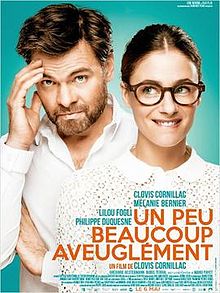
220px-Un_peu,_beaucoup,_aveuglément_poster.jpgGiven the different genres of film that we watched throughout the semester, I was interested to see a European film’s take on romantic comedy and how it compares to Hollywood films. I came across Un peu, beaucoup, aveuglément, also known as Blind Date, which is a French film by Clovis Cornillac. After watching the film, I still saw the cheesy and cliché aspects of how romcoms are made, but I loved the twist given to this film and how it also tackles a unique plot with the help of the likable characters. It tackles the usual story of how people get attracted not because of how they look like but because of their personality and the way they think.

Most of the film happens in just one setting: the apartment of Machine, who just moved in. She is a pianist and finds out that her apartment and the one beside hers have a problem because they could hear everything that was happening in the other apartment. Machin, the owner of the other apartment initially tries to make her leave by scaring her through playing strange music and moving the paintings to make it seem like there is a ghost in the apartment which teases the comedic aspect of the film. However, Machine finds out that it was her neighbor that was doing those things and they start to annoy each other, playing loud music and using loud machines, since Machin was a puzzle creator. It was interesting to see how the cinematography was made, transitioning from both apartments and there was one point where their places were shown side-by-side to emphasize what they were going through and how they were just separated by a thin wall.

The narrative was very easy to follow with the help of the chemistry by both characters. Their situation changes when Machin finally talks to her while she was playing the piano and tells her to loosen up. This starts their interesting relationship where they prefer not to see each other but establish that they are now more than just neighbors. I liked how the film showed the connection of the characters despite not seeing each other and it also leaves the viewers relating to their stories and personalities. I also liked the comedic aspect of the film that showed the quirkiness of the characters, especially when Machine was trying to look for him when he said that he always wears cowboy boots and she tries to focus on the shoes of the people around her. She even mistakes someone for him and invites him to her apartment but realizes that she got the wrong guy. Blind Date also makes use of its charm, especially in my favorite scene where they both invited their closest friends, cooked the same meal, pushed their tables against the wall and had dinner while exchanging stories. At first, their friends were questionable about their unconventional relationship but they understood and enjoyed it in the end.

Overall, I liked how the film focused on their relationship and how it did not have any draggy parts to keep the viewers hooked throughout the entire film. There were some plot holes in the movie but it still worked because of how it incorporated drama and deeper narratives such as Machine’s relationship with her father. It was a very charming and cute movie that are more in line with the films that I watch and I really liked it.