
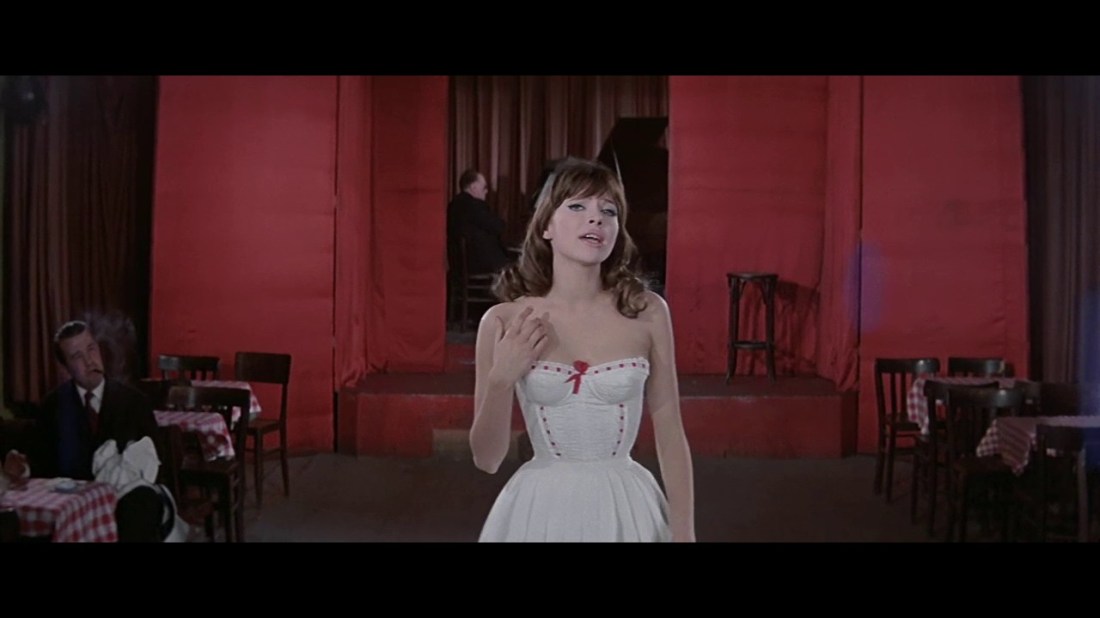
I have never been to a film class before, and although I have only watched a few European films, Jean-Luc Godard’s 1961 avant-garde masterpiece, Une Femme est Une Femme, portrayed the most playful acting from all the French films I have watched. It is important to consider, though, that I am not completely knowledgeable of the culture in 1960’s France (when the film was produced). Thus, some of the factors that I may point out may be wrong.
Revolving around a stripper named Angela, her boyfriend, Emile, and their friend, Alfred, A Woman is a Woman conspicuously showcases a whimsical rendition of how men and women are stereotyped when it comes to relationships. However, deeply embedded into the film, and is what we will be focusing on, is a portrayal of a not-yet-matured relationship of two individuals who do not yet know the repercussions of their actions as well as what they really want.
From the title of the film itself, “A Woman is a Woman” suggests the stereotypical notion that women’s wants are absolute. That is, as portrayed in the film, women want babies, and when women want something, they would do anything to get it — no matter how they would get it. It also portrays women as emotionally-driven, dramatic, always pouting, and pabebe. This was showcased throughout the film, when Angela kept pouting in front of Emile when he keeps rejecting her request for a baby. Her being emotionally-driven is also conveyed in a scene where the camera focuses on her while tears were rolling down her cheeks. Furthermore, Angela’s non-admittance of missing Emile when they were talking on the phone and, then, covering the phone and wistfully admitting to herself that she does miss him showcases the childishness of individuals like her during the early stages of a relationship.
The same can be said for Emile. The film portrays him as a guy who is not yet ready to marry nor have a child. Although this may not pose a problem in his character, there are scenes where, while arguing with Angela regarding her request, Emile can be seen riding his bicycle in circles inside their apartment. This may either suggest his thought that the two of them are merely going in circles, his lack of maturity, or both. Furthermore, his inability (or, maybe, unwillingness) to admit his jealousy towards Alfred and, contradictingly, further irritating (rather intentionally) Angela may seem a bit immature in their relationship.
There are also scenes that, although amusing, showcase the adolescence of their relationship. In the scene where the two did not want to talk to each other, they kept going to bookshelves and pulling out books in their attempts to concoct words and literally arguing without talking to each other. This can also be seen when the two of them keep trying to sass each other and, humorously, settling the argument with a demonstration of the proper technique of pronouncing “r.” More importantly, the adolescence in their relationship was conspicuosly showcased with a text telling the audience that Angela and Emile are so deeply inlove with each other that would go far beyond what they can go through, which would lead to reprecussions — that is, Emile’s “approval” that Angela can have Alfred’s child and Angela’s “compliance” just to spite Emile.
The film also portrays other factors in the film, such as when Angela was shown a picture of Emile with another woman — suggesting that Emile cheated on her. The scene kept going back and forth to the picture and to a close up from Angela’s somber face. For this, it seems to portray how Angela may be obsessing (and maybe overthinking) about Emile and the woman he is with in the picture, which is usually a typical reaction in inidividuals in seemingly committed relationship.
Conclusively, Une Femme est Une Femme sets a mostly-realistic portrayal of adolescent relationships, showcasing flaws that two imperfect individuals may have even though they truly are in love with one another and exhibiting it through colorful and entertainment dramatics.
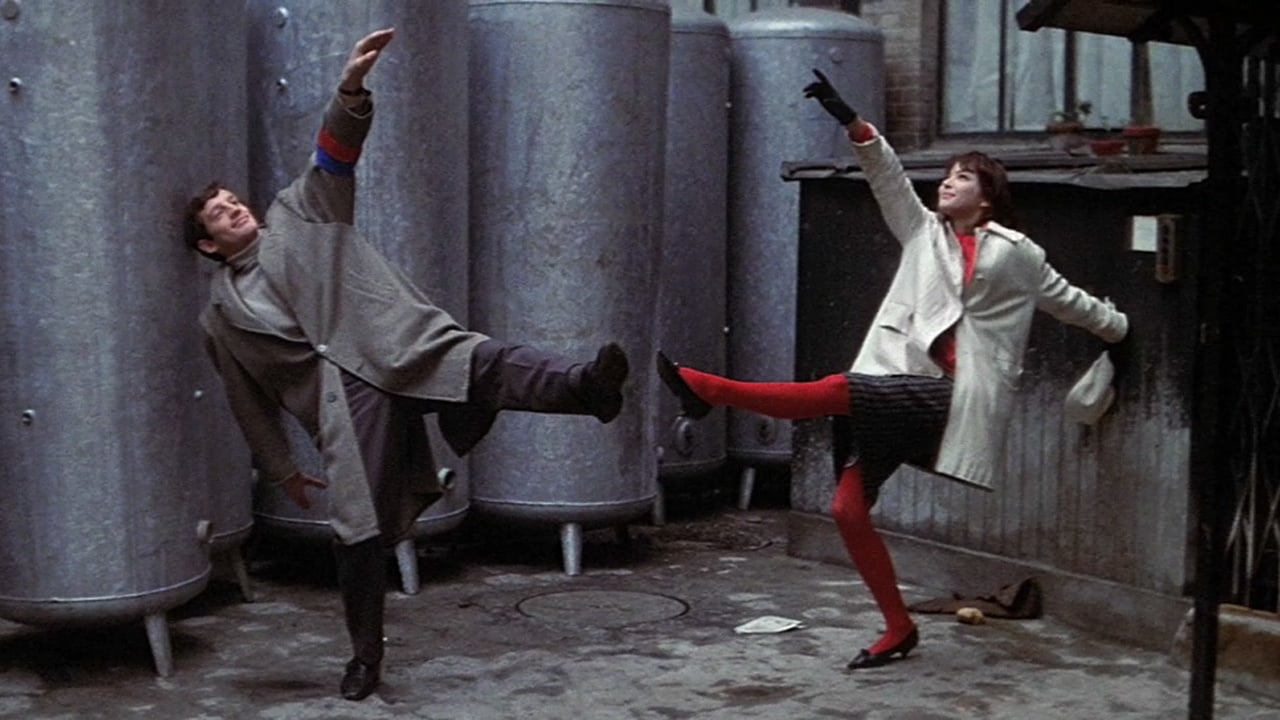
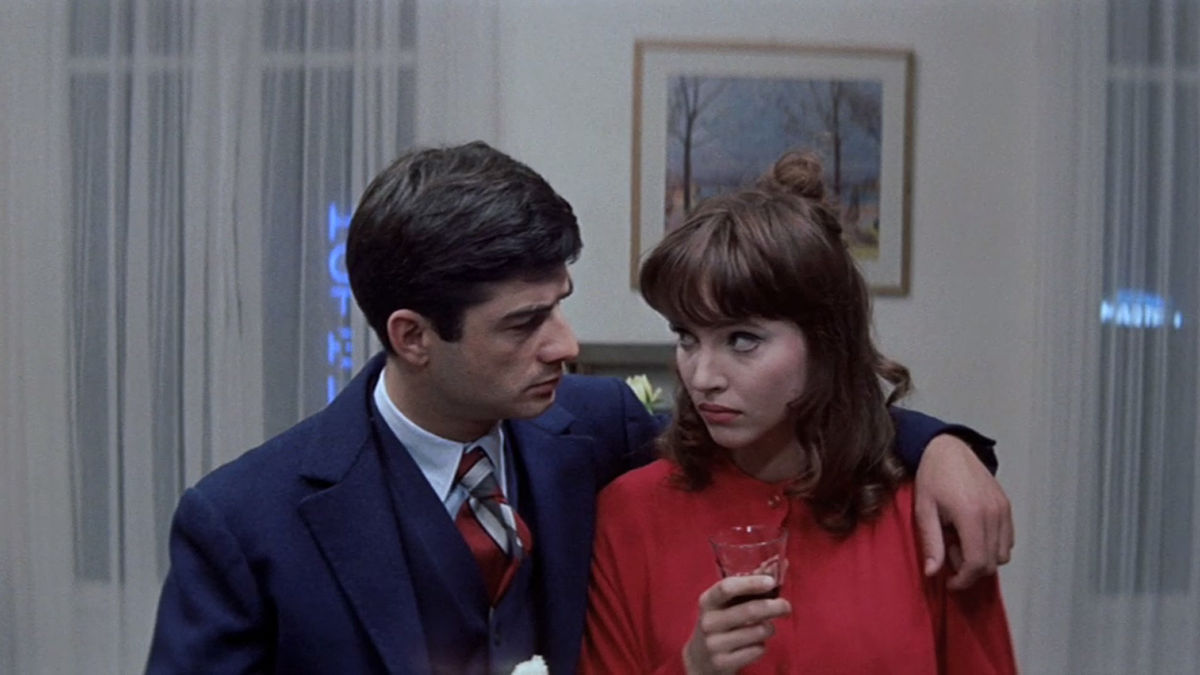
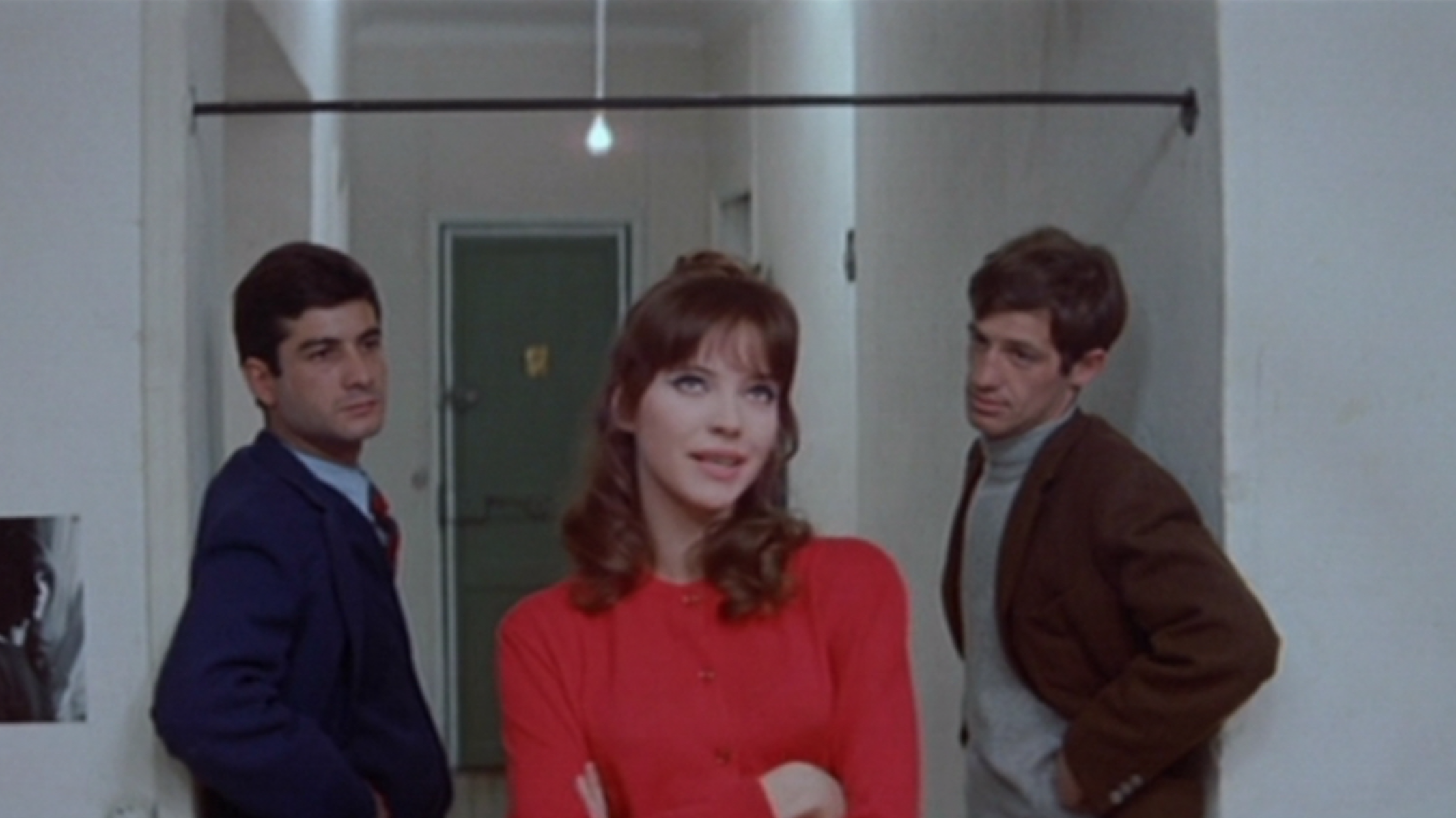
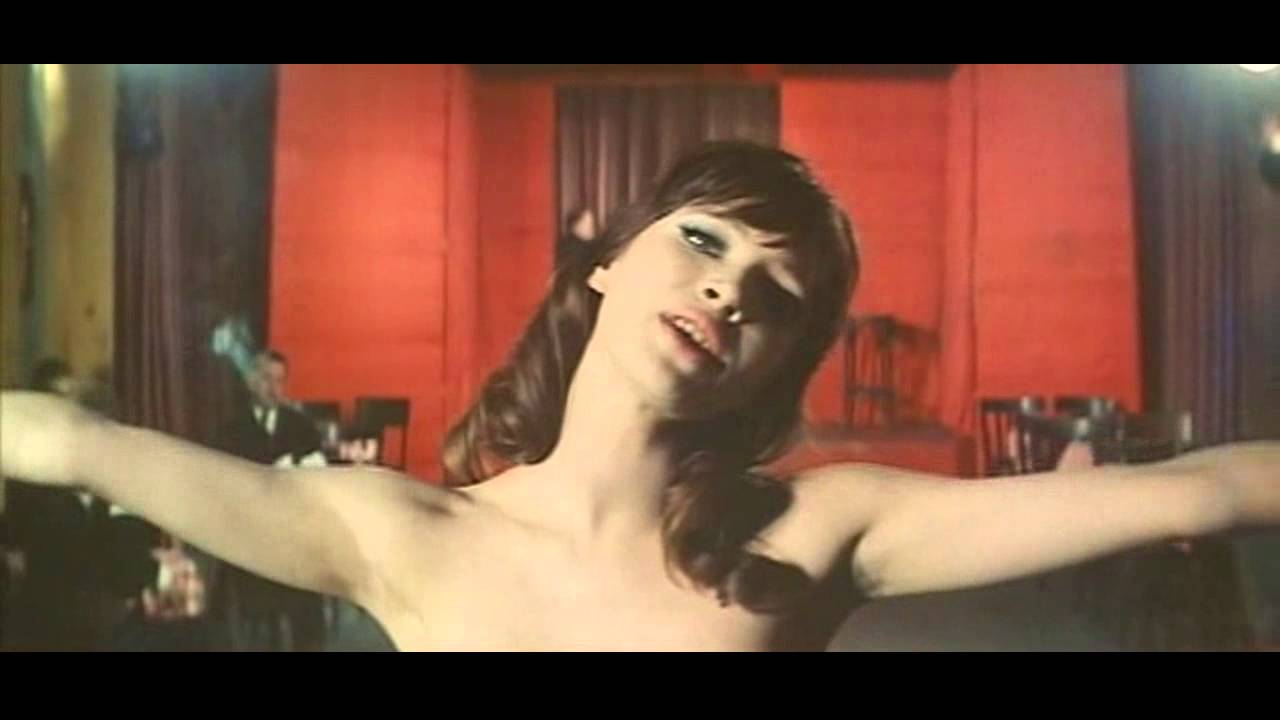 Also, Anna Karina portrayed Angela in such a way that made her a model of women empowerment. The way Angela strolled the Parisian streets with so much confidence and regard for herself, the way she put on her make-up and did her hair, the way she dressed and carried
 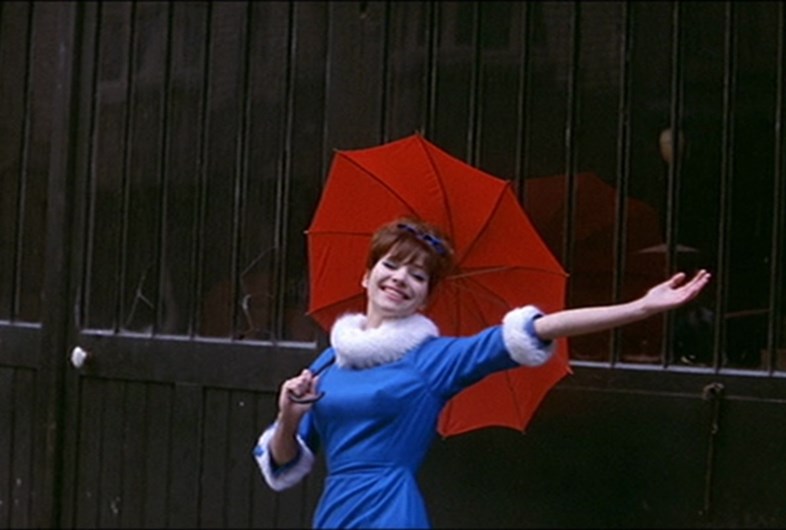 herself, the way she asserted herself and knew what she wanted, the way she messed up on cooking for Emile, and most importantly, the way she found no problem in her job as a stripper, all emphasized Angela’s fierce femininity and womanhood. Angela’s strong female character inspires women to be as confident as she is in her own skin. She somehow proves that not all women can do domestic chores like cooking for her boyfriend/husband and instead, focus on a non-conventional, sexual and seductive career that exposes her feminine body, yet this does not make her any less of a person. She is still able to live her life the way she wants and make everyone fall on their knees. It’s truly quite a tragedy for people who get in her way.
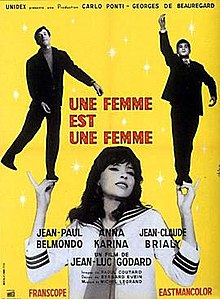 Coming into this course, I expected to watch films that are different and unique compared to those that I usually watch. To start the course, A Woman is a Woman was the perfect movie to set the mood and my expectations for the rest of the films that we will be watching throughout the semester. It was visually playful, weirdly different, and entertaining. It was visually playful despite being released in 1961 since I initially expected it to look like the usual old films. I would consider this film to be weirdly different because it was not the typical story that I see in movies. The use of music, the unusual way that the movie was shot, the dialogues, and the times that the characters acknowledged the presence of the camera were some of the things that made the film different. One of the things that was quite disturbing for me at the start was the bursts of music that also stopped abruptly, which was a bit confusing for me since I did not see the point in it. For instance, one of the scenes that highlighted the play on music was when the soundtrack stopped whenever the character sings, which was very contradictory but somehow, it works when you look at the entirety of the film. In addition, Godard was able to add a comedic element to the movie to keep the viewers engaged and intrigued by whatever was happening.
 European Film (2019)