
Of all the movies, I would say that “Heavy Trip” is the film right up my alley. It tells the story of an aspiring black metal band that hopes to make it big someday. Since the formation of the group 12 years ago, the Finnish ensemble has lacked the experience of performing live. However, after one of the members chance upon meeting the director of a metal festival, their lives take an abrupt turn. After adopting the name “Impaled Rektum,” the group embarks on a journey that surely tugged on the heartstrings of its audience – including my own. “Heavy Trip” was the perfect combination of a success story, and well-timed comedy.
Author: daniravena
not a writer/blogger lol
Timecrimes
From its namesake, one can only assume that the film will dabble on time travel. Although many directors have ventured into this genre in the past, what I believe differs Timecrimes from the mainstream time travel movies that I’ve watched is that its protagonist does not travel back many years into the past, however it takes him 90 minutes before the incident he so-recently experienced. As a moviegoer, I normally trace back the steps of the protagonist to paradoxically be a step ahead of the movie. I have the tendency to build up theories in my head of which particular moment resulted to the present. However, what “Timecrimes” put emphasis on is that every moment, and detail leading up to the present is significant. Therefore, a change in any of these could result in various outcomes. Indeed there were scenes that were predictable, but the film was able to add some twists and turns that still managed to surprise me. “Timecrimes” is a film that reminds its audience of the simple principle of cause and effect.
Trollhunter
“Trollhunter” is André Ovredal’s comedic take on the alleged troll sightings in Norway. The movie revolved around the government’s attempt to conceal the supernatural beings from the human eye. As more of the story is told, the movie even goes as far as to assume that animal herds are involved in this conspiracy. Old footages of trolls were also included in the film. However, there were moments that felt unnecessary during the film. I think that the story could have been told within a shorter period of time. All in all, ‘Trollhunter” is a film to watch for someone with an interest for trolls and comedic relief.
Holy Motors
I knew Holy Motors was an unconventional film at first sight. The beginning scene was somewhat disturbing, however, the film was mind-boggling enough to keep my attention. The film was nothing short of extravagant. Its charm lied within the grand details that were dream-like, and yet these stories were portrayed to be different versions of an individual’s reality. It’s as though the director directly drew inspiration from his imagination, and strung all of his ideas together to create a film. Although there was no clear plot for the movie, I would still consider it as a masterpiece. It was imaginative, unique, and daring. Watching the film was a different experience, however I think that the story-telling style used in the creation of the movie would not cater to the masses. Holy Motors is a film of acquired, and sophisticated taste. Although I consider films as a medium of art, I believe that this movie is the very definition of abstract.
Goodbye, Lenin!
Hallelujah! A movie that I was able to understand! Goodbye, Lenin was, by far, the most interesting movie for me since it was both entertaining yet still very informative about European Culture. Alex, the main character of the film, thought that the only way to prevent his mother from getting ill once again was to pretend that they were still living in a capitalistic government in East Germany. However, the western type of government already took over. This movie was both fun and peculiar at the same time since the manner of how they controlled their mother’s situation was out of the ordinary.
The Five Obstructions
The film “The Five Obstructions” by Danish director Lars von Trier, was definitely one of the most challenging movie that I had to analyse. To start off, I was a little confused as to why scenes from being a documentary would change to a man eating inside a box-like figure is being shot by the camera for a long period of time without even having a proper conversation. Next issue that I had was the fact that this movie was created based from Jorgen Leth’s “The Perfect Human” in 1967.
I will be honest, I really did have a hard time following the movie that is why I hardly have anything to say about the film. However, this curiosity of mine bothered me because I really wanted to understand the film as much as I can. With the help of the internet and some analysis of the film available, I just learned that the film was sort-of a documentary that included certain challenges or “obstructions” that Tier and Leth created. As the movie progresses, we find out the Leth has been leading over Trier but then he makes one more challenge which forces Leth to recreate his own “The Perfect Human” film. This “fifth obstruction” gives a clue that there is still a continuation after this documentary.
Compared to the other European film that I was able to watch, this film was indeed harder to understand even though it was created more recently than the other films. A reason as to why I found this film difficult was may be because this film was in documentary form. Unlike the other films which focused on visuals and cinematography, this film by Trier brought out a more sophisticated and yet a clever way of telling a story.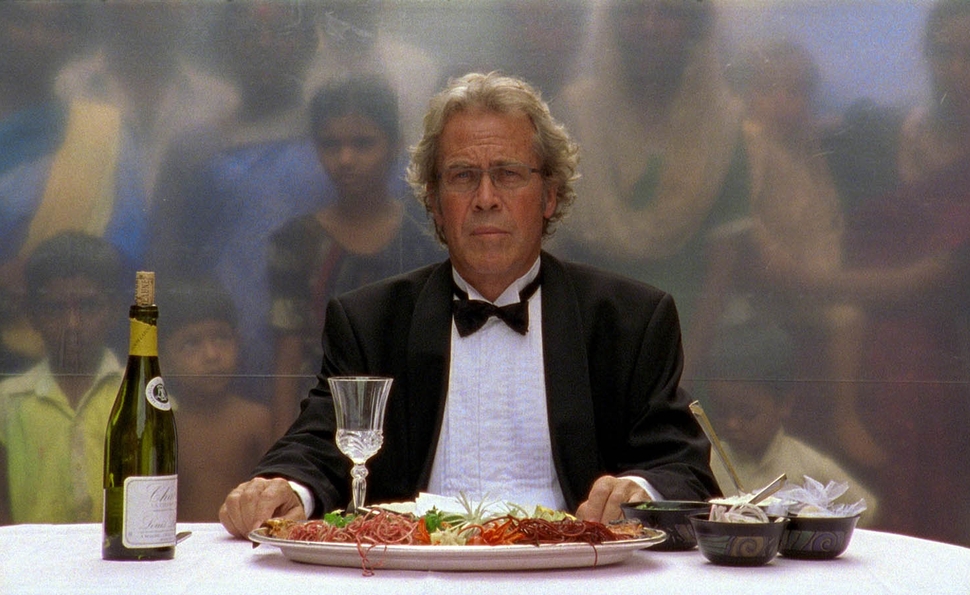
L’avventura di chi? (The Adventure of Who?) – My reaction on Antonioni’s L’Avventura
Michelangelo Antonioni’s L’Avventura is not your typical love story wherein the rich woman marries the rich man and they live happily ever after, no. The movie was actually quite far from that, which may have also been the reason as to why I surprisingly found this movie very interesting. The title L’Avventura or “the adventure” in English narrates that there will be a certain mystery to the film that the characters will have to deal with. I quickly assumed that they will all be stuck in a remote island filled with trees and killer creatures that will slowly take the life of each character one by one. I was wrong. Instead of an island filled with exotic plants and creatures, they were in an island filled with nothing but rocks. Even a shore wasn’t present in that island. At that certain point, my expectations for the film lowered since it turned out to be pretty dull in the middle parts of the film.
The black and white cinematography of the film shows the classic and sophisticated style of film that European authors and directors are known for. Along side with the visuals of the movie, the script-writing was also a factor as to why this movie can be difficult for regular film viewers to understand. This film does not have that much climax, rise and even a fall to its plot. Not much emotion was shown which is a little ironic since the title is about adventure. After trying to grasp the message that the director may want to exhibit to his audience, the biggest question I had in my head was “This is the adventure of which character?”. This was the question I kept on asking myself since the movie started with Anna saying goodbye to her father, which then move to her and her lover Sandro talking about their life together. After her disappearance, the story quickly revolved on Anna’s best friend Claudia who Sandro started to be attracted to.
In summary, I am not quite sure if I enjoyed the movie or feel disappointed (especially with the ending) with the film. I really found the visuals and the character very appealing especially with the 1960’s feel in Italy. However, with the film’s plot and how the story lacked progression, I found it to be a little bland.
Persona
The film Persona by Ingmar Bergman starts off with Elizabeth, an actress who is being treated by psychiatrist, watching peculiar scenes on television such as a man burning himself and a face of a small boy. These scenes may have some hidden meanings to it but Bergman, having such a creative mind, would never tell it as it is. Or does he? The film continues to Elizabeth’s sudden silence and her nurse Alma, who was at first doubting her own capabilities to help the actress’ condition, staying in an isolated home without anybody else with them. This was a method suggested by the doctors in order to help and find the reason as to why Elizabeth stopped talking.
In some parts of the film, I was somehow bothered and confused to see how certain scenes happened. The weird relationship that Elizabeth and Alma had, the abortion story of Elizabeth, and the intimate scene between Alma and Elizabeth’s husband. Throughout the film, I was trying my best to interpret each scene and look for a possibility that theres a hidden meaning to it. However, Bergman may jus have simply shown such scenes as it is. Straight to the point. Although with those circumstances, I still found the movie very interesting since it was the first film that I watched with just black and white colours. It gives the feeling of old and classic films that are rare these days.
I also found it brilliant when the movie was slowly showing these two such apposite characters in the beginning, becoming one. This was even taken to a literal context when the two faces were merged and vaguely even being to distinguish which character was which. The artistry and amount of drama in this film truly highlights the beauty of European films.
A WOMAN IS A WOMAN: TOO UNCANNY OR STRANGELY BRILLIANT?
A Woman is a Woman, Jean-Luc Godard’s creation, has a simple yet unconventional type of plot in France during the 1960’s. A beautiful lady named Angela who worked at a strip club had been longing to have a baby with her boyfriend, Emile. However, this idea was not something Emile agreed on and thus led to Angela showing a child-like attitude with her playful type of teasing to try and convince Emile of her plea.
Honestly, I have no idea of the type of movies even how European movies are different from the normal “Hollywood Film” that I am more accustomed to watching. The start of the film was a little bizarre for me since there were scenes wherein the music would suddenly stop and then come right back on. There were also scenes wherein random people on the street would look straight to the camera and do nothing. It is in these certain parts of the film that shows how distinctively different European Films are to the typical commercial cinema that I am more exposed to. Even with this twisted and peculiar cinematography, the film was still something I would want to watch again because of how different it is. It was not an easy film to watch at first because of the manner of how the movie presented its characters but what captured me the most was how realistic to life the scenes were. The short glimpse of France and the people walking on the streets made me feel like the movie was something that happened in real life, which really does.
At a certain age, women have certain desires that men would not always understand. Having a baby is one of those desires that may be difficult for other men but that motherly-instinct just sometimes appears and at times can not be controlled. At the end of the film, Emile then realises that losing Angela because of not wanting a baby would be far more painful. Because of this, I think that the movie can either be interpreted as women being manipulative and controlling due to the things they do in order to get what they want or the movie can also be interpreted as how intelligent and powerful women truly are which I think makes the movie brilliant.
 European Film (2019)