Edukators movie review

The first thing I noticed from this movie was that it had the same actor as goodbye lenin. Although his role was different in this movie, the whole “rebel” “fighting for a cause” was very similar. Personally, I didn’t enjoy the movie that much. I felt like peter and jan seemed like spoiled children who wanted to stir up trouble because they couldn’t get what they wanted. Although I liked the idea of them never stealing anything (except that time when peter stole a rolex) because it set them apart from normal burglars. When jan explained to jule why they do what they do, he said something like: to stir them up, so they know that even with all their riches and security, you can still get to them. They aren’t untouchable. I think this for me was what I agreed with the most in their whole cause. I appreciated that they had this ideaology. It wasn’t about stealing and then giving back to the poor because if they had done that then the rich will only be empowered to crush the poor. What they were doing involved letting the rich understand the implications of their lavish lives. It was meant as an eye opener. So for me, I found this clever and well thought off. But also I felt like, even if they succeed in barging into these houses and creating this kind of movement, how far would it go? What kind of change could they actually bring? Maybe the families would get stirred, maybe they would even think about it from time to time or subconsciously get affected by it but after while, they’ll still go back to living their lavish lives. For me, it felt like a cause that didn’t have as much potential even if it did have good ideas and was rooted on a good thing.

Things went downhill after jule and jan on impulse they trespassed the owner of the house whom june owned a lot of money to. It would have been ok if they stopped and went home after rearranging everything. Since they had to go back to fetch jule’s phone which I felt was extremely dumb of her. Knowing everything they were doing, she should have at least been more careful. This led to the owner eventually catching them in his house. On impulse, they decided to kidnap him. This was a way for them to avoid the cops and any trouble. It wasn’t related to their cause but really just a way to save themselves. June most especially since it was her idea to go inside this man’s house. I think that’s when I started to see how their group was toxic. I guess I could say that since the start, I knew that something would eventually go wrong. Even if they don’t steal anything, what they’re doing is still technically illegal so it would eventually come to a point where they would get caught. But as they kidnapped the rich man and as they lived a life in a far away province, you start to see how the rich man and the “edukators” weren’t completely different people. For the rich man at least, life happened and he had to cope. He wasn’t born rich and he didn’t even believe in the same things when he was younger but when you live longer and see how the world changes, you start to change as well. I completely agreed with him when he showed respect for the three by saying that I don’t think what you’re doing to me is right but I do appreciate the ideologies you have. I learned to see and understand both sides at this point.

The rich man said that it’s a system that can’t be changed, he is merely playing the game but he didn’t create the rules. However, the edukators pointed out that it’s not who created the gun but the one who pulls the trigger. This moment for me was the most intense part. How can you be part of a system and be expected to go against what is considered a norm in society ? It’s almost impossible to change something you’re part of but at the same time you realize that there is so much capacity that you have towards a situation. In the end. It will always be up to you to challenge this system.

Edukators was a film that helped me understand how people will always lean towards the betterment of themselves and that the trick is to challenge this notion. Along the way, there will be bumps and confusion but that shouldn’t stop you from doing what you truly believe in. The ending quote “some people never change”, is a reminder for all of us not to be cowards and stand up for what we want. Don’t be passive in this world and keep moving forward.
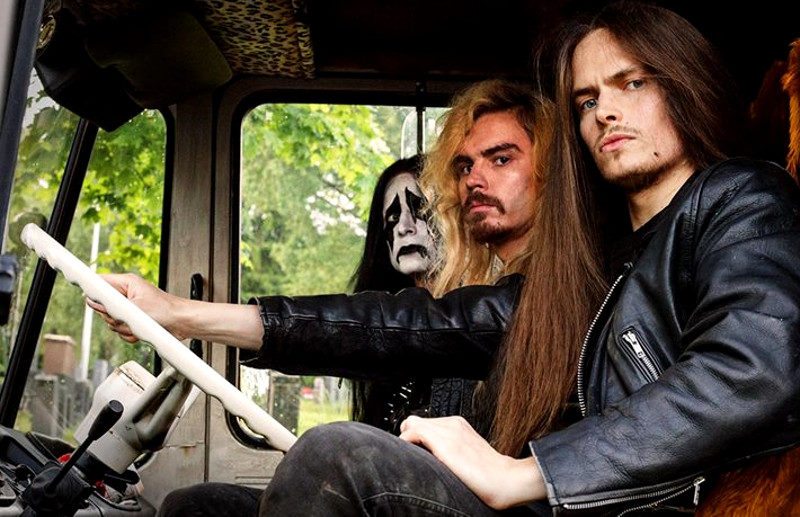
Heavy Metal?

Image Source:
https://www.episodi.fi/uutiset/bandi-nimelta-impaled-rektum-vaihtoi-nimensa-hevi-reissuksi-trailerilla-kohelletaan-kuin-kummelissa-parhaimmillaan/

At first glance, comedy and heavy metal seem to be a strange combination. How would you expect something intense and powerful to be comical? I can’t really imagine these men with long hair and face paint to be laughter-inducing. To my surprise, that is what Juuso Laatio and Jukka Vidgren did with their spoof entitled Heavy Trip. I consider it a feel-good movie just because of the good vibes and laughter that it brings. Despite the language barrier and difference in cultures, I was still able to appreciate the humor of this film. It made a lot of references that heavy metal fans would particularly enjoy but its comedic factor is something to be cherished by the wider audience. It may even teach a thing or two to the audience about the stigma that is attached to Heavy Metal. The characters in the film are being discriminated for being different. But then, you get to see how these Heavy Metal artists live a “normal” life after all and are capable of getting involved in wacky and goofy circumstances. They have their own dreams as well as seen in their pursuit of the chance to play in the music festival in Norway. The film bears similarities with other comedy movies about bands and their journey to stardom. In watching Heavy Trip, I was reminded of School of Rock and Tenacious D in The Pick of Destiny. The characters are actually comical in themselves given their own backstories and complexities. Their collective naivety also adds to what makes them lovable. They may be facing their own troubles and misfortunes but as a viewer, you do know that they will eventually figure things out. That is the reason why you can just relax and enjoy the show for the entirety of the movie as they “make a fool” out of themselves. Whether or not they reach success in the end, the journey that they went through as a band is what really matters more. As a viewer, the film makes you feel as if you’re part of their adventures and ups and downs. It is thrilling yet fun rollercoaster ride. 

I am really into comedy films just for the laughs and the good vibes. Heavy Trip was totally unexpected and it certainly did not disappoint. It serves as a proof that comedy can still cut through cultural differences especially if it pertains to popular culture references. The filmmakers certainly did not restrain themselves from stretching that humor that was presented in the film. They were able to maximize their potential without offending too much. The brilliantly-written script just goes to show the directors’ knack for jokes. Their timing proved to be perfectly fitting as well for the different scenes of the film. I may not fully understand the language but the subtitles, body language, and tone proved to be sufficient in retaining the comedic factor of Heavy Trip. I would not mind watching this movie over and over again and I would certainly try watching European films that are similar to this one. 

Bonus – Masculin Féminin

What stood out for me in this film is its use of episodes throughout the film that interrupt the main story for its subplots. There are scenes that just jump from one setting to an entirely different setting with different characters, and we do not see the correlation between those scenes. One example is during the first part of the film, when Paul meets Madeline for the first time in a cafe, and then the woman shoots her husband for leaving with the child. After she shoots him, the scene just changes to another setting wherein Paul meets his friend in another restaurant. Even though I did not find the plot that exciting, the random sequences kept me interested because of how strange the scenes were, and we see this in the first part when the woman shoots her husband. The couple had no connection with Paul and any contribution to the story, and yet that was how the scene ended. We also see how the story progresses slowly and how the characters are not particularly active towards a goal. The episodes in the film just show the everyday life of Paul and his friends concerning love and politics, and they do not have big events that alter the course of the film.

The prop that stood out for me was the cigarette because Paul smokes in majority of the film. Not only is Paul smoking a lot in the film, but he also smokes in a way to impress people around him and make him look cool.  One example is during the scene in the bowling place when he sees Madeleine and her friend come, and then he gets his cigarette and flips it to his mouth. The manner in which he puts it to his mouth is unnecessary, and the only reason he is doing that is to catch Madeleine’s attention. Another instance is when he and his friends ate in the restaurant, and they see the German and the prostitute and another adult couple smoking. After seeing these people, Paul brings out his cigarette and flips it again to his mouth. The cigarette reveals Paul’s character as a typical young man who wants to impress girls and look cool through the means of smoking. He also uses smoking as a means to appear mature to Madeleine because smoking is seen as an adult thing, and we see majority of the characters that smoke are adults in the film.

The acting of Madeline caught my attention because even though she is romantically involved with Paul, I did not see her showing that much affection and attention to him. An example is when he went to the studio with her friend to visit her singing, and after he entered the room where she was singing, she did not mind him. We can also see in the many interactions between Paul and Madeleine that she doesn’t really emote as if she doesn’t really care. This acting gives the impression that Madeleine isn’t sincere in her relationship with Paul and most probably just thinks of herself. We can see evidence of Madeleine’s dishonesty in the bathroom scene wherein she has her first real conversation with Paul, and she admits it herself that she has lied. Another instance is when she was having her interview after her recording, and  states that she rarely wears makeup but we know that isn’t true.

Things never change

Timecrimes is a film which starts with the main character, Hector, being chased by a killer to a lab somewhere in a forest. He meets a researcher in the lab who helps him escape the killer by letting him enter a pod. However, in reality, the pod Hector entered into was a time machine which sends him a few hours back into the past. As he tries to discover how to fix his predicament, he realizes that he was the killer chasing himself all along and that the events which led him to the lab was all his doing. Although he tries to change the past, he merely repeats the events. In the process, however, a girl is killed which makes Hector feel guilty. In order to prevent this tragedy, he travels in time once again, but he realizes everything is futile since the events will always repeat themselves. In fact, the actions of his first time travel happened because of his actions in his second time travel.

This paradox of something happening because he went back in time left me wondering throughout the film. Wondering what he could have done otherwise to fix his situation to a better one or whether the other Hector’s are also doomed to repeat the same cycle endlessly. This was perhaps one of the best parts of the movie, it kept the audience engaged. Rather than trying to explain the rules of time travel in the world of Hector, it left it to the viewers imagination. This kept me focused on the screen to try to discover what other thing I may have missed in order to try to consider what Oscar could have done to fix his situation. If I were in Oscar’s shoes, I would have probably tried everything to fix my mistakes to make sure that they don’t that my mistakes don’t haunt me in my timeline.

Considering that it was a budget film, Timecrimes was able to make do with the resources it had on hand and made a fantastic film. Although I wouldn’t consider it the best film we have seen in class so far, the plot of the movie was still intriguing and kept my attention. This was especially so for the beginning when I thought the film to be a horror movie due to how it started out. Also considering the cover of the film was Hector wrapped in bandages and looking like a serial killer. The sudden shift to that of time travel movie and trying to figure out the puzzle of what is actually happening helped keep my intrigue throughout the film. And although I wouldn’t say the acting was superb, the actors were still able to do their parts well enough which contributed to my immersion of the film.

Overall, Timecrimes was a fun film to watch. If I have friends or family interested in watching European film, I would recommend this movie to them since it was easy to watch (when compared to what we have seen in class so far), but still had a way which made it different from most Hollywood films.

Bonus – Wild strawberries

While Wild strawberries can be a confusing film, I still enjoyed it because narrative style and cinematic codes used in the film greatly helped in making it a successful story about redemption. The flashback and dream scenes make the story confusing in understanding the story, and the main character unreliable. The first instance is the vision Isak had that introduced Sara and his brother Sigfrid together in the woods and sharing a kiss, and while all this is happening Isak is there watching. After gathering the berries, they family heads into the house for lunch, and then during lunch Sara gets upset from the teasing of the twins. While all this is happening, Isak is present and watching even though he was not truly present in that memory because it was stated that he and the father were out. Since he was not there, the events that happened in the vision are not reliable information but instead a subjective perspective, and so this makes Isak unreliable as a character. The second instance is the vision of his wife’s rape scene in the woods wherein the examiner states how Isak stood on that very spot behind the trees watching his wife get raped, and that he can never forget. However before this event, the scene was of Isak failing his doctor examination and being deemed incompetent as a result, and yet we know for a fact that Isak passed his test and became a great doctor. These events make the audience confused because there seems to be a blur between dream and memory.

The film made good use of lighting to emphasize one of the key themes of the story which is Isak’s loneliness and cold personality. From the first dream scene, the camera angle zooms out to show Isak on the street framed against a dark square while the rest of the building is white. This view shows how he is framed out or segregated from the rest of the white, and this gives a hint to the loneliness he has felt for most of his life. The second instance is during the lunch scene of the family, and we see again Isak watching from a distance in the dark doorway leading to the stairs while the dining area is bright. This time by showing a group of people having lunch and Isak separated, this also reinforces the idea of how Isak has lived his life as lonely outsider. The last instance is during the scene wherein he watches his wife get raped from a dark area behind a ladder while the area of Karin is bright as well. We see that even during his marriage they were not happy together because he was a cold husband as stated by Karin.

The film’s cinematography greatly helped in conveying the message of the important scenes. One instance is during the first dream scene wherein the camera angle zooms out to give a view of Isak walking the street because I think this is useful in showing how alone he is in the dream. It reflects what Isak has felt throughout his life which is loneliness and being an outsider. The scene is also quiet and foreboding, and this gives a feeling of a horror movie. The second instance is during the family lunch vision because of how the camera angles the scene wherein you see the family eating up close while Isak is seen far away watching. This helps in conveying to the audience the distance he must have felt from people even like family and friends. The last instance is during the scene of his wife being raped because it shows the perspective of Isak which is very far from the scene happening. This can show how even in his marriage he felt distant and unhappy with his wife, and the wife even states how their marriage wasn’t successful.

Trollhunter


Trollhunter is a film directed by André Øvredal is a documentary about the Norwegian folklore about trolls. The film initially started with three college students who were researching about bears, but as they were trying to interview, Hans who they thought was a hunter for bears. It turns out that this character was the one who gets rid of the trolls through multiple ways. I personally think that the CGI effects that they used from the trolls were okay, there were some parts that their depiction of the trolls seemed to be real. Although, there were some scenes that was obvious for me that they made use of these special effects. The other factual data that they have provided about the trolls made it all seem legitimate. They even tries to assess the blood of a troll in an actual laboratory.

However, films inspired from fantasy and sci-fi genres sometimes makes a person question what is real or not. Though, I found it odd how Hans had to ask if anyone of them were Christian. The way I perceived this is that it was some sort of lowkey discrimination going on. That put me off a bit from the film because the way I understood is that just because you’re Christian — you bring trouble or your most likely to get killed.  

Since this documentary mainly involved hunting down trolls, I think part of their efforts in making the film believable is to produce made up information about the research on how to dispatch each different troll and even edit videos of politicians (at the last segment of the film) that would support or convince the viewers that this happened in real life. Their efforts in making the film look like a real documentary made it believable when the necessary shots that involved running around the forest were placed in the perspective of the cameraman. Generally, this was a film genre that I normally would not watch on my leisure time. The movie itself was hard enough to relate with, which is why I did not find it as entertaining as I thought it would be.  

News of the Dead (bonus entry)

[REC] (d. Jaume Balagueró; Paco Plaza, 2007)

After watching Trollhunter, I was suddenly reminded of other found footage movies. And it led me to rewatch one of my favorite foreign-language horror movies ever – [REC]. While there is a competently made nearly shot-by-shot American remake called Quarantine that isn’t half bad, there is really just something about the original that makes it infinitely superior.

[REC]’s premise is really simple. A reporter and her cameraman go on an ordinary late-night news hunt that leads them on patrol with the fire department to an apartment building where an old woman needs assistance. But what initially seems like a routine night out for the two turns into a nightmare as the building is quarantined and something is clearly not right with the tenants.

After watching it, it’s very easy to say that [REC] is pretty much a zombie movie filmed with a found footage lens. What makes the movie unique from other zombie and found footage films, however, is that the movie is fast-paced and intense. Plenty of found footage horror movies rely on the slow burn, and the subtle reliance of the audience’s attention to pick up on the smallest creepy details. [REC] throws this approach out the window as the film’s intense camerawork is matched by the tense zombie encounters.

What really makes [REC]’s zombies scary, however, is that they are used in an almost subtle yet Dawn of the Dead-esque manner. What this means is that while the film’s zombies are fast and aggressive, they are utilized well to the point that whenever a zombie encounter does happen, it’s never not terrifying or intense.

Additionally, the film does an excellent job with the opening exposition and atmosphere. The film seems to open on a deliberately slow manner, almost to lull you in to the routine-ness of the newscast crew. What this ends up doing is that the second the characters reach the building, the film just thrusts you inside an intense and terrifying ride and never really lets go. Additionally, as the characters panic, the subtle background noises of helicopters, alarms, and loud noises help add to the paranoia and claustrophobia that the film’s characters experience, and vicariously, the audience.

There is always something happening in the film to the point that it is not the found footage camerawork that makes one feel uneasy, it’s the film’s events. The chaos works very well for [REC], and this is actually where the film struggles a bit. The film is so hell-bent on thrilling and scaring, that the characters suffer. With the exception of the main character Angela (portrayed excellently by Manuela Velasco), everyone else in the film feels like they are two-dimensional and undercooked characters, only there to exist to become typical horror movie fodder. In addition, the film’s final act ends up feeling even more rushed and half-baked due to the intense manner of the film, and ends up scratching some heads in a manner that is probably unintended by the film.

Still, when the film is an exhaustingly tense and scary 78 minutes, it is hard to complain. [REC]’s purpose is to terrify and entertain, and it is a purpose that it performed well in spades. [REC] is one of my favorite horror movies ever, and if there is ever a found footage film that merits essential viewing, this is it.

The fight of the century

The film and media industry is truly competitive and intimidating for majority of the people in the field are, let’s just say, attention-hungry, fame-thirsty, and perhaps, even greedy. However, who can really blame them? It takes years and years to master a skill in writing a perfect screenplay, learning how to expertly use a professional camera, figuring out how to portray a hundred characters on stage, and even set design takes a long time to master and learn. The Five Obstructions (2004) is a “documentary” shot film that shows two Danish film makers and directors having the sparring battle of their life: creating a perfect “The Perfect Human” through Von Trier’s unconventional remake of Leth’s short film.

“…a little gem that we are now going to ruin,”

The film was playful and interesting for the way it was shot and sequenced was pretty new and unconventional. The two characters of the story were also quite the personalities, with their competitiveness and confident arrogance battling against each other. Von Trier, already being a successful man, grew more and more and more frustrated with how Leth was still handling the obstructions he offered with much grace and expertise, causing him to push for more drastic conditions and limitations in an attempt to ruin his efforts. Honestly, it was quite a relief and it was entertaining to witness the constant failing attempts of Von Trier to ruin Leth’s career with his obstructions, and how Leth continues to stay composed throughout it all. To what extent could he finally make Leth spiral down and ruin his perfect film of “The Perfect Human”? The ways he tried to do so were very entertaining and amusing, nonetheless.

As someone who is pursuing film and media as well, the struggle to come up with perfection after every content made and produced and created rings true to this day and age. Especially in this day and age, actually. The competition out in the creative field becomes stronger and stronger as more developments and more ideas are coming to life, and the struggle that Von Trier showcased is something very relatable as well to a lot of people in the creatives. Von Trier seemed to have always been chasing something that was perfect, grand, excellent, brilliant, and great, and to witness someone of perfect composure and graceful expertise can shake one’s confidence. However, in the process of trying to ruin Leth through the obstructions and the limitations, he just allowed Leth to become more and more free to create something that was ultimately better than the ones before it. It was in this spontaneity that perfection was born out of. And perhaps, that’s something pretty hard to grasp as well. I really felt for Von Trier’s constant frustration, which may have been amusing at the same time, but pitiful nonetheless. I empathized with his struggles, however, still applauding Leth for his constant bouncing back.

This is a film about a game that just keeps going wrong for the game master, and sometimes, there are just certain things that we have to let go of. Remember: there is always a loser in competition. What a battle, indeed.

A rollercoaster of events

What is happening? That was the constant question running throughout my mind as the film was playing. No matter how many times I thought I figured the film out, another scene would break all my theories of what is actually going on.

Holy Motors! begins with a man called Oscar entering a limousine for work. He then goes around the city playing various roles such as an old lady, a stunt performer, an assassin and even a creature living in the sewers. At the start of the film, I believed Oscar was just an improve actor or someone who accepts random acting jobs for money. However, as the film progressed, Oscar kept entering weirder situations which defied human logic. I began to even wonder if the events happening were even on Earth or if Oscar was actually human. For example, despite being stabbed and shot multiple times, he would get back up as soon as his limousine driver, Celine, tells him that they would be late for their next job. This made me constantly question what this job is and whether anything happening was actually real or just being acted out. In one of the scenes in the movie, Oscar seemed to show his true self after meeting a woman he knew with the same job as his. Although the movie implied that what was happening was real, I still wondered whether that was another act, or it was truly his genuine self being shown.  This skepticism of my mine was due to how in one of the previous scenes where he picked-up his daughter, I truly believed that that was his true self which was unfortunately not true. This see-saw of what is real and what isn’t just left me confused throughout the film. I would even consider this the most confusing film I have ever seen.

However, despite being the most confusing film I might have seen, Holy Motors! was able to entrance me to the screen the entire time. There were so many things happening each moment that I felt I would miss something if I turned away. In addition, the quality of the cinematography was amazing. Each scene had its own different mood and the background made for each of Oscar’s characters seemed so unique that you could make a movie for each of them. At some points in the film, I just completely gave up on trying to discover what was going on and just appreciated the effort placed on the makeup, camerawork and props made for the movie. Also, the acting of Sir Dennis Lavant, as he portrayed multitude of different characters kept me in awe due to the range of his characters.

Although I wouldn’t consider Holy Motors! as a film for everyone, I would still recommend it to my family and friends due to how amazing the visuals and the camerawork of the film is. It was able to grab my attention, and although I was disturbed and confused by the end of it, I was left satisfied by the end of the movie, even if it just brought more questions. I would suggest to those who will watch to just enjoy the film for what it is so that they can appreciate what the film has to offer.