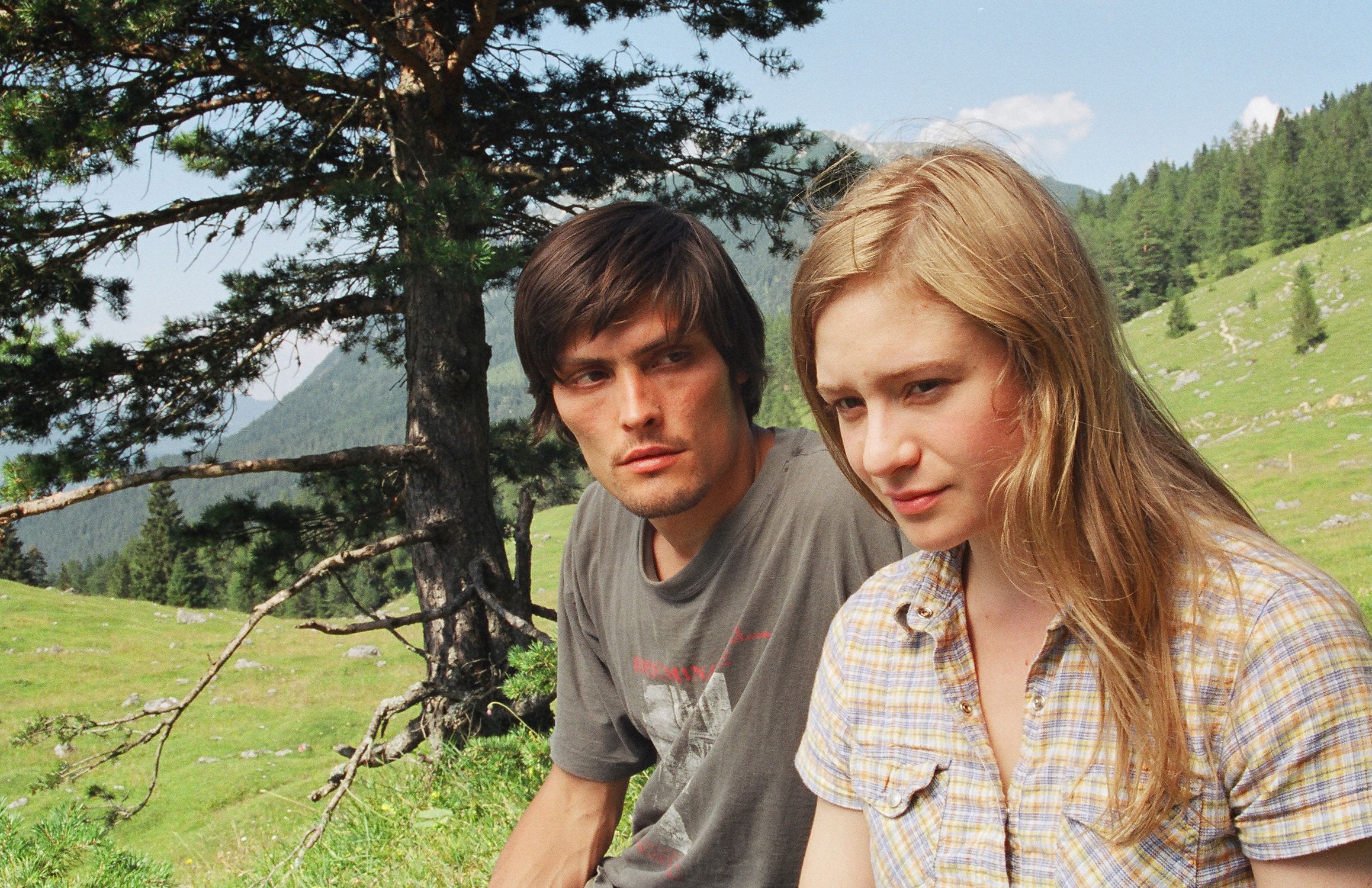
The Edukators: Powerless in a System Designed to Oppress

Image result for the edukatorsBeautifully crafted with surprising hints of humor and entertainment, Hans Weingartner’s The Edukators (2004) has successfully painted a picture of how a personin the case of the film, Jan and Peter, “the Edukators”cannot single-handedly change a system that they, themselves, are parts of.

The theme of the film, being political by nature, makes it relevant to today’s times, and I find myself reflecting on the seemingly norm but tragic reality that we remain powerless against a system that is designed to oppress. But, a brilliant point of the film is showcased in the introduction of the film. With furnitures scattered around the house, in places where they are not supposed to be in, it was a message by Jan and Peter: if we cannot change the system instantly, then we’ll make sure to shake the establishment for now. That is what they certainly did, and they did so using humor—a Greek statue entangled by a rope, expensive relics thrown in the toilet. This is their way of educating the elites.

A conflict arises through the persona of Jule. She has been a victim of an economically unjust system where her tiny paycheck as a waitress has to pay off a debt she got from crashing an expensive car belonging to an already rich and wealthy businessman Hardenberg. She was able to convince Jan to target Hardenberg’s house next.

The point-of-view displayed by using handheld cameras brought out a lot of elements for the film. During the break-in, it allowed the film to showcase the acting. A sense of candidness is portrayed. When Jule and Jan are breaking into Hardenberg’s house, it feels as if the I, the viewer, am part of them. As the camera follows the characters, it created a lot of depth for reflection. It put myself in the shoes of the characters.

Why did Jan agree into this? This is where principles were tested. In my opinion, the moment Jan agreed to Jule, he compromised his ideals. A seemingly innocent act, one would even think routinary, is undermined by a flawed intention of revenge, to get back on someone, and quite ironically to feel a sense of power over that person. This is where we are slowly being introduced to the concept of compromise, to the reminder that one cannot fully stand against a system, one that is so established, and all-encompassing.

This was shown in full-swing in the character of Hardenberg, upon his kidnapping. They learned that Hardenberg was a radical as well, at least years ago before he succumbed to society’s requirements and necessities. He got himself a good job, married, and has abandoned his ideals since. The material of the film reflected a gravitating trend in today’s society where a lot of people, once soldiers of their beliefs who would blatantly resist the status quo, will simply fade into the society they once tried to change.

All in all, despite the laughs and gaggle caused by what might pass as light moments in the film, its message remains consistent and constant throughout the very long screening time; the beautiful but tragic showing of the challenges of being a principle-based self in a society this complex.


the edukators

Yay! Another film that follows a straightforward narrative that was very easy to understand! The Edukators is about individuals who break into rich people’s houses, not to steal anything but to rearrange their furniture and mess up their homes to leave a message that they are being watched and are unsafe in their supposedly rich people secure homes. They leave notes in the houses they visit that would say, “Your days of plenty are numbered.”

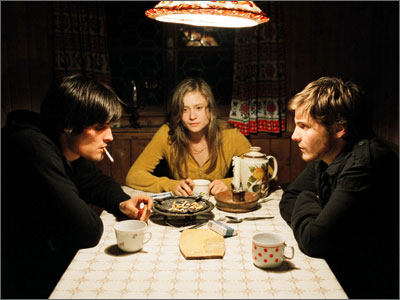
The Edukators is a film that captures the frustrations of people who feel deeply disturbed and unsatisfied about the unjust political and economic systems. It revolves around different conflicting oppositions such as rich versus poor, old versus young, and Capitalists versus anti-Capitalists. I personally liked this film because it reminded me of the eye-opening lessons I learned from Theology 141 that introduced me to the unjust realities of the world, and how sin is not just personal but also social, as it is also embedded in the sinful systems and structures that surround us. In the film, we see how the rich live comfortably in their mansions while the poor, who work just as hard, struggle to survive and get by each passing day. The rich is not necessarily at fault because perhaps they were fortunate enough to be born into their wealth, but it becomes a problem when they continue to want to be rich just for the sake of having more, while others barely have anything. Or worse, if their desires start to affect the lives of others. The pivotal lunch scene in the film shows Hardenberg guilty of this, and he doesn’t even seem sorry for it, defending himself by saying, “I play the game, but I didn’t make up the rules.” This is a reality that we face in the kind of world that we live in, and I appreciate the film for talking about it. I also found it empowering and inspiring to see how much passion the young characters had for fighting for their ideals. But I also thought that their methods for doing so is very radical, impulse-driven, ineffective, and obviously unethical. They tried to scare off the rich and they did so successfully, but it doesn’t really do anything about making the rich realize the structures they are in that would move them to action against the system. I think the only thing that that would probably make them do is to tighten their security even more, and just move on with their luxurious lifestyles. The only person they actually got to educate was Hardenberg when they kidnapped him. They had good intentions and the right ideals, but not the best methods.

Production-wise, the film was very simple. There were some awkward scenes, inconsistent angles, and weird use of music, plus its unnecessarily long running time, but I’d still say it’s a good effort for a movie with a message like this one.

Overall, The Edukators is a very hopeful kind of film that calls its viewers to reflect on issues relevant to the society today and urge them to respond to these issues and take action in the ways that they can. It’s one that touches one of my personal advocacies, and that’s my most favorite thing about this film.

The Edukadors – Movie Review

Inspired by the vestige of the idealism that fueled the unsatisfied workers in the 40’s, two anti-capitalistic rebels Jan and Peter do what they can do go against those that have succeeded in capitalism. They call themselves the Edukators and break into the homes of the affluent and shift around the furniture. They leave taunting messages on top of their centerpiece that instill fear and regret to the house owners for amassing such wealth for themselves. Putting the morality of their actions aside, what appealed to me was how Jan and Peter had ideologies, something that served as their basis of action and that motivated them to do what they believed in. Would I do such thing if I were in their shoes? – probably not. However their ideology is something worth respecting, for its getting rarer to find ideologically driven individual these days.

As their “Edukating” continues, a dark horse appears to put everything that they had worked for at a risk – the beautiful Jule, Peter’s girlfriend, gets a tad too close to Jan during Peter’s vacation in Barcelona. Drawn by Jule’s attractions, Jan reveals to her the Edukators and eventually gives in to Jule’s request to break into the guy who she is indebted to. One mistake after another, this leads to the kidnapping of a man who turns out to a former member of the radical vintage, who once shared the same ideologies and sentiments as Peter and Jan.

Should they face up to their destinies as radicals and execute him – or are they just too softcore? It’s well acted, especially by Brühl (known for Good Bye Lenin!); the break-in scenes will leave fingernails pretty closely bitten, and the political and generational rancour between jailers and captive is nicely managed too. I couldn’t help feeling, though, that if the Austrian director Michael Haneke had been in charge, he would have done something a lot more extreme with the ending.

The Edukators: the Unedukated

edukators-300x170

edu3If there is one thing that I was edukated on from this movie, it is that I would not want to be one of the edukators. Though it can be said that they were fighting for an ideology that I also believe in, which is anti-capitalism, I do not believe they were able to carry out this revolt in an appropriate manner. In my opinion, an appropriate way for revolting would be presenting a solution to the problem. For me, messing up rich people’s houses, turning their furniture upside down, and leaving threating notes such as “Your days of plenty are numbered” does not quite hit the mark. Yes, it may scare the capitalists for a while, but eventually, they could just hire cleaners to clean their house or security personnel to protect them, and automatically undo the damage that has been done. After all, they are powerful like that. Because of this, the edukators’ form of “revolt” comes off as childish and immature, somewhat an empty gesture. It is melodramatic in a way that they find so much success and fulfillment in every house that they trash, as if it actually abolishes the capitalist system in the world. I know that other people might say, “at least they’re doing something.” But for me, what is the point of doing something if it does not reinforce your motive for doing it, anyway? The only effect that I can think of about their “revolts” is that they feel good about themselves afterward. It is ridiculous and selfish for me, a waste of time, and a waste of energy. Had they chosen to not make use of violence to propel their idealism, maybe their “revolt” would actually make more sense and make an impact on something.

Screenshot 2019-05-21 at 13.32.07Another reason which makes their “revolts” all the more nonsensical, is the fact that they even became indebted to someone they brought torment to. After kidnapping Hardenberg, they realized they really have no plan whatsoever, and the best thing to do is beg Hardenberg to not press charges against them for what they have done. Thankfully, he chose to stay quiet when he had all the right to sue them. Ironic, is it not? Not just ironic, but also hypocritical how the edukators preach about the common good, yet find themselves in a love triangle caused by a disrespect for someone’s dignity and trust. Jan and Peter were best friends, for crying out loud! If Jan and Jule could think of hurting Peter, someone who loved and cared so much for them for so long, how different are they from the heartless people they are so against?

edukators

When I thought about writing this review, I really did not want it to have such a pessimist tone to it. To be honest, I want to see the positive side of the edukators’ propaganda. I want to understand their motive in a more optimistic way. But sadly, I cannot find myself doing so. All I can say is, maybe the edukators are the ones who need to be edukated.

Edukating the world

Two best friends have a secret between the two of them. These two youngsters living in Germany are behind the revolutionary movement “The Edukators” who break into big villas owned by billionaires, rearranging the furnitures and leave obscure messages for the wealthy home owners to see. They don’t commit theft but they go through all these lengths just to send a message. Jan and Peter are most definitely not your average pranksters, they have a message they want to be heard. They surely have a quirky and creative take on political activism, with a vision to subvert the unjust system.

The real story begins when Peter leaves for Barcelona and his girlfriend, Jule, is left behind. In Peter’s absence, Jule and Jan fall in love with each other. In an impulsive break-in, June and Peter end up in a rich businessman’s house, Hardenberg, who was also the owner of the Mercedes Benz Jule’s crashed and is currently paying for. She is faced with multiple obstacles including the huge insurance claim debt because of the car, losing her job as a waitress and losing her apartment due to late payment. 

These youngsters despise how these people have to be so arrogant and assert their power over those who are in the working class just because they have a lot of money. The sense of entitlement of the bourgeoisie is manifested in the restaurant scene where the customers asked to take their orders back just because their brandy was not in the right glass, not to mention, the treatment of her overly domineering and abusive boss. In their dialogues, we feel the frustration and discontent the three had for the wrongs of global capitalism and their vision to change the system.

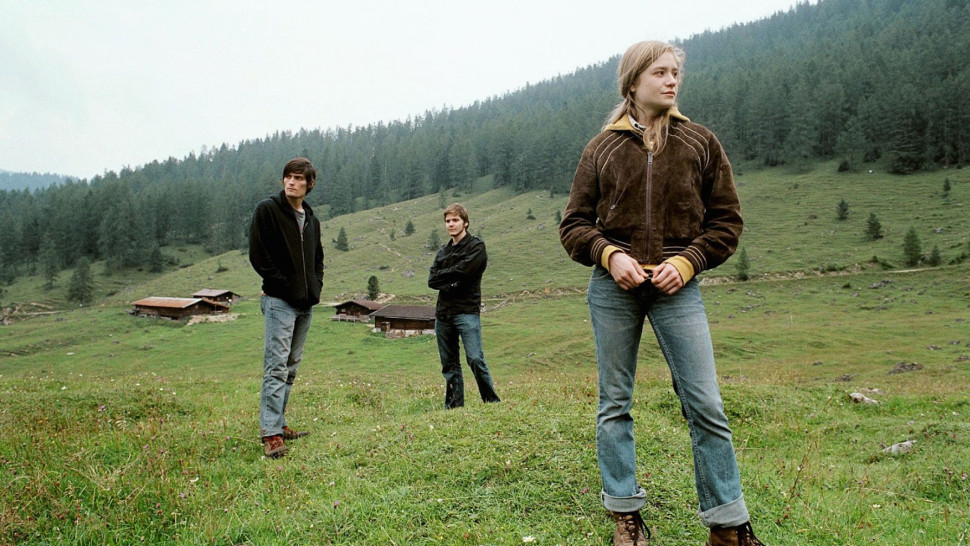
Because of a mishap caused by their friend, Jule, they are left with no choice but to kidnap and take Hardenberg into hostage. Bringing him to a mountain retreat, things get  more interesting when the three have a conversation with Hardenberg. They learn more about each other including Hardenberg’s past as a revolutionary teenager who worked his way up, and talked about how this revolutionary spirit in him just faded away through the years. It is a great movie because the other side of the story is heard as well through Hardenberg.

In the end, despite parting ways in good terms, even waiving Jule’s debt, Hardernberg pushed through with calling the police but before they could even be caught they had already flown to Spain. They left him with a note, “some people never change”, which was fairly true, even after all the everything he had learned from the trio about why they what they do, he still refused to see the point. Some just choose to see what they want to see and shuts off the predicaments the rest of the world faces. I think this scene encapsulates one of the most important lessons of the story. 

There are many themes portrayed in the movie like revolution, rebellion and even, love. The movie puts great emphasis on real-world affairs like the injustices of reality and the disparities in the system. Their anti-capitalist movement makes you want to question the system you’re living in, even your own values and the lifestyle you have. They aim to fight against the system and make these capitalists think with the messages they leave  like “you have too much money” and “your days of plenty are numbered”. The Edukators is a daring movie that wishes to explore and dive into political activism. It is truly an inspiring and thought provoking movie especially for the youth with these youngsters in pursuit of denouncing the evils of capitalism one millionaire home at a time. 

162622

Idealism, Romance, Life

The Edukators was a film of ideologies and frustrated individuals who want to change the capitalistic system and despises those who thrive in it. I believe that the explores the idea of naïveté, where young adolescents act upon the dream of living in an ideal world thinking that it benefits everyone however they come to a realization that the ideal world they dream of is a dominantly just a selfish and impossible desire that may never become a reality. 

In the film, the behavior of the main characters in Jan, Peter, and eventually Julie manifested this wherein they would break-in big villas and disarrange the furniture while leaving a threatening note. For me, I believe the behavior was one that may not translate into actions such as theft however it does express a form of disrupting a sense of peace. Because of this, as an individual who is about to embark on this kind of world, it made me question whether our motives to transform the world is really for the betterment of the people in the country or whether it was just for myself. As the film progresses, the main characters come into this realization when Julie admits that kidnapping Hardenberg, who Julie owes a debt to after she collided with his Mercedes Benz. It was a realization that showed how actions may seem to fight for justice, however it was motivated to benefit oneself over other people. 

I liked the idea of how Hardenberg also developed a relationship with the main characters. It showed a glimpse of Hardenberg’s past, as he could easily relate with the main characters who had respectable idealisms. It shows how Hardenberg’s character is quite dynamic as he reverts back to the old ways, where he detaches himself from his city and material possessions. 

Aside from the thrill of seeing how the main characters would get away with the kidnapping of Hardenberg, I also liked how the film factored in the love triangle between Jan, Julie, and Peter into the plot. For me, it added some more flavor and tension to the film as it dealt with the “free-flowing love” that everyone experiences as Hardenberg mentioned. It goes to show how reality can change us in ways we could never imagine. For instance, Jan has always been very grounded on his morals. However when he gets close to Julie, he would give in despite knowing that it would become a messy situation as his friendship with Peter could result into danger. 

Overall, it was a movie that showed a lot of idealisms for the young adolescents. Furthermore, it also shows how actions can result into consequences, which is why it is imperative to know the real underlying motives of our actions as idealisms can blind us into thinking it is right. In relation to this, the characters in the film despised people like  Hardenberg, however, people will eventually buy into the system, as reality will come toward you where it can possibly transform you into the person you were very much against. 

a reflection of who we are

The Edukators touches on the history of post 90’s Germany very much like the film “Goodbye Lenin”. After the fall of Great Berlin wall, youngsters from both sides of Germany mobilized to seek new lifestyles. Most of them squatted in empty buildings given when rents had skyrocketed. Given the historical background, the film depicts underlying films of human reality as it tells a story about the degradation of humanity as globalisation dominated. As capitalism rose, the value of humans suddenly aligned with the money that they produced. With regards to the system, the proletariat seemed more hopeless than ever. This is evident in the main character Jule who is burdened with almost a hundred thousand worth of insurance debt that cannot be paid with her job as a waitress. Similar to Good bye Lenin, the film showcases an intense desire for political reform but instead of creating a microcosm of the old regime, The Edukators focuses on the art of revolution. Displayed in the two pranksters, Jan and Peter who break into homes of the bourgeois, not stealing anything but merely rearranging their furniture to threaten these capitalists regarding their privileged lifestyle. This is a novel way to attempt in destabilizing the status quo. It is a way of manifesting their passion for change into a form of art.

edukators-800-800-450-450-crop-fill.jpg

Another perspective is taken into account when the kidnapped businessman Hardenberg’s life is given attention. In the cabin, we go deeper into his past and discover that he was actually once like them– a rebel in the 1960s. The audience then witnesses a concrete example of how rebels evolve into conformists as they degenerate politically and adapt to the norms of society. Hardenberg gives a speech in the middle of the film regarding growing up. To bring forth change back in your 20’s is heroic but once you grow older, revolting against the socio-political norms is stupid.

edukators-4-300x170.jpg

It might seem depressing given that this is the society that we live in today however this film is just stating basic truth. All of us at the start, want to make a difference. But when we grow older, we realize that we all want a great home to live in, enough money to feed and take the kids to school, and to have those monthly vacations we desire. Radicals ending up as mere reactionaries is a normal human reality that we seem to decipher as “evil”.

More than the capitalist conflict, the complex relationships of humans are delved into in the convoluted love triangle between Jule, Jan and Peter. There is the common conflict of temptation versus fidelity. It is truly hard to battle the overwhelming eagerness to be with someone who understands you even if that person is your boyfriend’s best friend. In this film, the plot takes a bold step in exhibiting the fundamental weakness of human beings, that of which is attraction. At the same time, we also see the noble strengths of man which is the ability to forgive despite betrayal.

edukators-1.jpg

With regards to the structure of the film, it is very organized but it is not strict with the way it is shot. The dialogue is very natural portraying a dramatic yet truthful reflection of the post-war German youth. The visuals are shot in broad daylight with the cameras following the actors, as to give freedom to them and to display some sort of lightness in film.


Enlightening, comical and at times frustrating, The Edukators mirror not only the way of life back in the 90’s but also, the never-ending, worsening human realities of the contemporary youth.


-161997-


your days of plenty are over

It’s easy for me to decide that The Edukators was my favorite film we dealt with in this class. The way it melded its elements together—the musical direction led by artists like Franz Ferdinand and Jeff Buckley, the landscape provided by the view of the Alps, its dialogue between socialist and capitalist messages, and their light insertions of romance and humor, all these played wonderfully in the film. More than anything, this film manages to remain relevant through its portrayal of economic activism and revolution as a silent war between the poor and the rich—a war that is still continuing to this day.

From a surface level, Weinggartner’s film focuses on three friends, the Edukators, who break into rich people’s houses and take one of the owners hostage to prevent him from revealing their truths. It would seem like The Edukators would be a violent film, but it actually tackled the discourse between youthful idealism and older pragmaticism very peacefully. Jan and Peter’s method doesn’t involve theft nor violence, but rather to move furniture around—a creative manifesto that forces isolated rich people, detached from reality, to see how their greed has hurt other people. But I can’t help but call into question their modus operandi. Is this technique the best one to push for their cause, or is it just a superfluous method? Though their movement managed to disturb the rich, did it, as implied by their alias, educate them?

The director, Weinggartner, also used his own experience during his time as a former activist to convey his message. We can see snippets of this in his use of storytelling for Hardenberg to really show a genuine experience. For instance, Hardenberg’s life is a great example of how someone, even a rebellious student, can subtly fall into the practices and lifestyles he is against. For Hardenberg, and many other people, he started to see the changes as a necessity (for his safety, for his family), until all of a sudden, he became the person he was, at some point, so infuriated by.

Despite its heavy implications on political and socialist movements, The Edukators still managed to be a comedic film that places value on relationships, both romantic and platonic. The love story between Jan and Jule provides a sort of side story, of a man who falls in love with his best friend’s girlfriend. This love triangle is similar to the one portrayed in A Woman is a Woman, though played a lot more realistically than the French musical. But it becomes a sore point for the trio, especially when it gets in the way of how they go about their mission to get themselves out of the mess they created. Obviously, the film holds many similar political semblance as Daniel Bruhl’s other film he starred in, Good Bye, Lenin!, but it varies in that it places importance on this friendship and their measures of action, contrary to Good Bye, Lenin!

The film also shows scenes of the Alps and the landscape surrounding it. This homage to culture is also seen in Trollhunter’s portrayal of the Norwegian landscape and L’Avventura’s scenes shot all around Italy. More importantly, these three films’ use of landscape indicates an element of isolation, a choice to be away from reality and civilization. Overall, The Edukators’ acts on a socialist message designed not just for Germans, but all people, through its use of storytelling, art, and love.

Timecrimes: A Time Travel Narrative done well

Despite what seems to be a low-budget production, the execution of a genius plot in the sci-fi thriller, Timecrimes (2007) or Los Cronocrimenes made it very enjoyable to watch. As compared to the movie, Trollhunter, which was the only other action filled fictional film we’ve seen the entire semester, Nacho Vigalondo’s Timecrimes (2007) was quite clearly a much more exciting film. Just like in any Time Travel narrative, occurrences of twists and turns made the film much more appreciable as the smallest of changes in Hector’s always found a way to leave the audience craving to find out what would happen in the following sequences.

The film is centered around a middle-aged man, who just moved into a new house with his wife. While using his binoculars in the back of his garden, he spots a young woman taking her top off that suddenly disappears in his following glance at her. He gets curious about the disappearance, so he goes to look for the girl. He finds the girl unclothed and unconscious deep in the woods. While he did this, he gets stabbed by the man in the cover of the film, the pink bandaged attacker.

Fleeing away from the violence of the bandaged attacker, he goes into a nearby building meeting a scientist, who is played by the director himself. He hides in his machine, which suddenly brings him back in time. After this scene, much of the problems in terms of messing up time were bound to happen.

What I enjoyed the most about the movie was how mind-boggling certain situations were. The film was able to put me on the edge of my seat as I was trying to figure out why certain things were happening to the characters in the film. As the movie went by, some of the things I questioned became much clearer in a manner that would somehow still blow my mind.

As the movie did make me question a lot of things, most of them were answered as the movie went by. There should be a big emphasis on the word “most” as the movie still somehow left some things unanswered and left the audience to figure them out themselves. Although this was the case, it wasn’t done in a very annoying way as how it is in other movies that I’ve seen in the past.

Overall, I can easily admit that Timecrimes (2007) by Nacho Vigaldo was clearly the most interesting movie that we’ve the encountered the entire semester. Its genius twists in the tale really made me so curious as to how and why certain things would happen in the film. Despite being one who hates to read on a film’s plot and summary before they even appear in front of my eyes, for once, I was tempted to use my phone to be able to finally understand even clearer the situations that were occurring in certain scenes and sequences. Despite the urge to do so, I made sure to do it so that I would be able to enjoy the rest of my time watching the film. That’s what’s so great about movies that make you think; you keep asking for more of it until you are satisfied and that all your questions are answered.

With a few weeks left in the course, I look forward to watching my last few films and hopefully enjoy them as much as I did in this film.

Young Idealists and Change: Reflections on The Edukators

The Edukators was not discreet in discussing the issues on capitalism, which are of course, still relevant to this day. The idealism seen in the young characters are pretty much what we see online, especially on Twitter which is the common medium that people of my generation are using. I believe most of us share the sentiments of the characters Jule, Peter, and Jan; we all have been victims of an unforgiving system, with the rich being more powerful than ever. And with the oppression of the poor, especially those who are educated yet are continuously being punished by an unfair system, brings forth ideas that incite anger and frustration. Such emotions therefore reveal ideals among the young who are motivated to begin movements, whether violent or not, much like the characters in the movie. Radical ideas such as anti-capitalism may sound too violent for some, but The Edukators were able to show us a different way to advocate for change.

The German film seems to be coming from a view of a person who was once part of the old Germany which was once divided by opposing ideals. Capitalism was not present in East Germany whose people predominantly believed in Socialist ideals. Coming from this background, a lot of Germans may be longing for the life that Socialist Germany brought, much like what was shown in Good Bye, Lenin! However, because of the changing society, growing unrest from the imperfect system, and inspiration of a peaceful revolution, people demanded for an open country. Yet the new ideals that came with such change also failed them in the future. Its greatly exemplified through the everyday struggles of the characters in The Edukators. I think that it is through this that we see Europe’s struggle in finding justice in its struggle to find the perfect balance between the bourgeoisie and proletariat. The masses rising above the injustices of their country’s system is not uncommon in European history, that is why even to this day, we see that protests are prevalent in such countries.

I believe that European political movies such as The Edukators are very much in touch with their history. Although unlike before, the themes we see are far less radical than we think. Violence is always out of the picture, as seen in Jule, Peter, and Jan’s choice to let their prisoner go. We see that despite their constant struggle against a violent system, the film rather propagates ideas that poetic resistance.