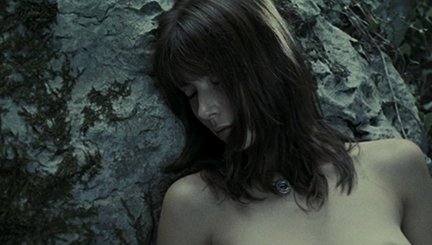
Timecrimes – Sound and the Concept of Time Travel

Timecrimes has undoubtedly become my favorite film in this class so far. The premise and concept of time travel set is not a new concept, and extends over a variety of different genres – i.e., the action genre, as seen in Arnold Schwarzenneger’s Terminator (action), or even to that of drama and romance such as Rachel McAdam’s The Time Traveller’s Wife. Timecrimes, thus, delves into the thriller/mystery genre with respect to the central theme of time travel.

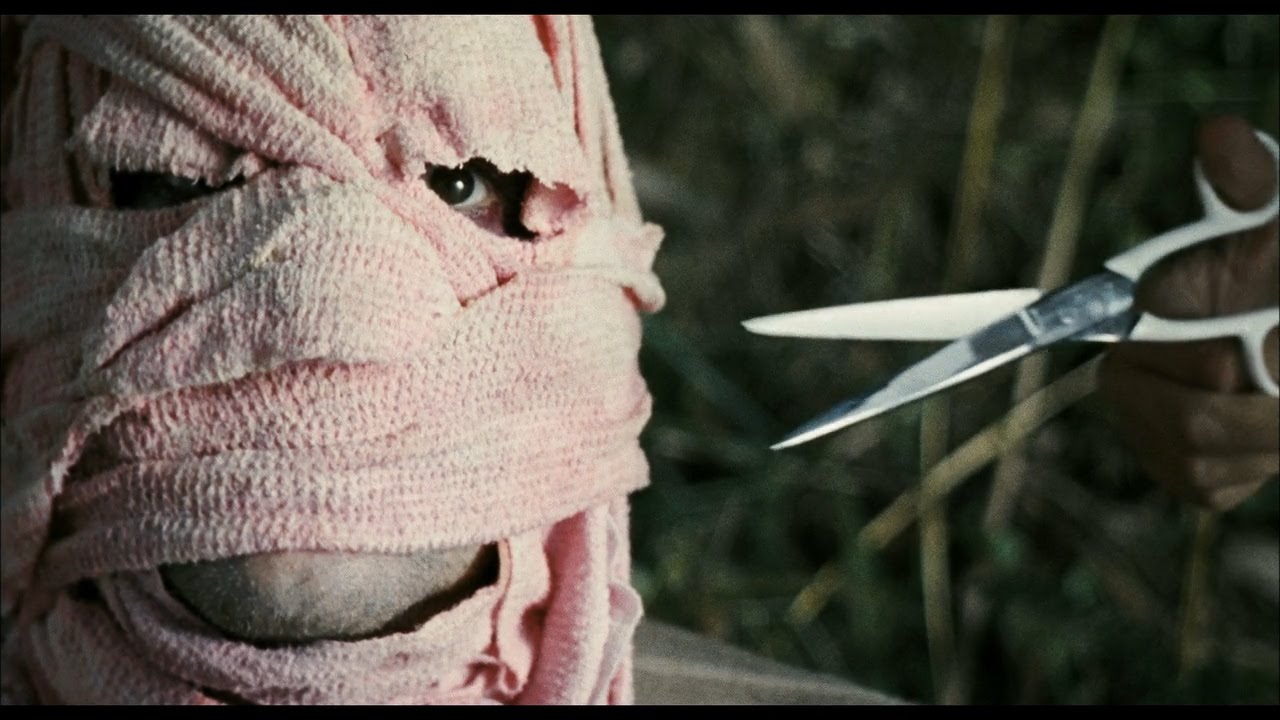
It was quite interesting to learn that Timecrimes is actually a low-budget film. It may be said that given its limited funding (approximately $2 million), the film delivered its intent – to create a thriller, to keep its viewers on the edge of their seats, to create a storyline that, while not the most original, still did not fail to garner interest and was distinctly unique in its own way. Even the rather simply-looking time machine – something conceived of as futuristic and implies the need for a higher budget – was integrated well into the storyline to explain its simplicity and also compensate for the lack of funding. Timecrimes is a testament to how an apparent incompatibility between a film’s budget with regards to its genre need not necessarily equate to a bad film. Another example of this is their use of a simple pink-tinged bandage for Hector 2 – a prop not in the least bit expensive, yet nonetheless creepy and rather frightening.

Furthermore, going into the more technical aspects, what I noticed in the film was its masterful background track and its use of music to further heighten and evoke specific feelings from viewers with regards to what is on screen – a start constrast from Trollhunters, which featured a distinct lack of non-diagetic sound. Both films are low budget, thus requiring them to rely quite heavily on other aspects of film in order to compensate for an apparent lack in another. Trollhunters used the found footage style film in order to equate for a lack of music (assuming a majority of the budget went to the CGI-animated trolls), while Timecrimes went the opposite direction, investing heavily on elaborate music and non-diagetic sound in order to compensate for a lack of stunning, high-technology, or even simply decent visuals that a film of its genre usually requires. I thoroughly enjoyed the film. The concept of time travel is so universally appealing – the idea of being able to go back in time, forward, or to reenact certain events – all dictate the human being’s desire to delve into the impossibilities of life. Film is a way for us to delve and experience vicariously the “What if’s” of life that real living will never be able to grant us.
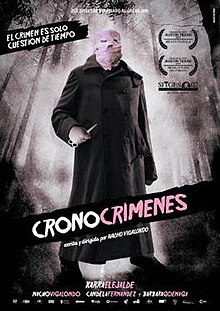
Timecrimes

Compared to the past films, Timecrimes is one of the most thrilling and interesting films because of its use of time travel and horror. I am very fond of horror and science fiction films because how it explores the unreal and makes it seem so real that it makes my imagination go free. Timecrimes starts of very mysterious and strange because of how we see Hector see a woman undress in the forest. Then when Hector investigates, a bandaged man stabs him, and this causes him to flee to a building and into a time traveling machine. Then we see the mystery of the bandaged man become clear, because it turns out to be Hector himself who became injured and forced the woman to undress. Learning this later in the film shocked me, but it also made sense as the film progressed. Even though this film is a thriller, I still find some elements of horror in it especially at the start. It shows this through the air of mystery with the bandaged killer, and through the several jump scares in the film.

I really enjoyed this element of time travel because it adds more intensity to the thrill of the film. The character is fighting against time to fix his mistakes, and this makes the audience more curious about if he will succeed or not. Time is always passing, and so if he made a big mistake then his efforts would mess with the timeline again. This concept reminds me of the film interstellar because the main character is also in a race against time to save the Earth. There are is one scene wherein the planet they visited made them so many years on Earth, and at that point there seems to be little hope. Timecrimes does this as well when Hector fails to follow the scientists advice of letting time unfold, and this leads to the death of his wife.

I find the main character to be very flawed because of how he acts without really thinking and on what he wants. One of the main roots of the problem in the film is that he is unfaithful to his wife. During the initial part of the film, he is sitting outside of his house, and then he sees a woman undressing in the forest. Instead of staying in the house, he goes out to check the naked woman, and this starts the chain of events which he tries to fix in the film. Another example is when Hector travels back in time, the scientist tells him to just stay put and let time unfold, but instead Hector goes out and drives away and gets into an accident. If he had just listened to the scientist, then things probably would have been better, and he would not have had to go back again in time to fix. I think it is these flaws that make him very relatable for the audience. We all make mistakes and can give in to temptation, but the struggle to fix these mistakes and become better is what makes us human.

a crazy afternoon

Nacho Vigalondo’s Timecrimes stars Karra Elejalde, who plays Hector, an everyday man who, seemingly by accident, is pushed into a time loop with his future and past selves. From this description, you would think that Timecrimes was just going to be another science-fiction slash time travel movie, but Vigalondo adds another element—one of horror. Unlike many of the time travel genre’s accompanying elements of action, humor or romance (like the Back to the Future trilogy, Harry Potter and the Prisoner of Azkaban, Groundhog Day, or Time Traveller’s Wife), Timecrimes gets the audience hooked at the premise of the film wherein Hector is being chased by what appears to be a deranged killer.

Time travel plots usually provide a way for man to manipulate his ending (or past) towards his preference; an opportunity to play around with destiny and fate, which will predictably result in a mess. I find that time travel movies will typically have an interesting premise but towards the middle can get a bit repetitive, while the end is practically foreseen. I used to think that directors and writers would get lazy with their work by just creating the same scene over and over again, but Timecrimes doesn’t fall to this same mistake. East time travel is different, in that something is revealed which changes the viewer’s perspective entirely, showing just how much thought is put into the process. It’s an interesting method of interacting with the audience—by having the character go through the realizations in sync with the viewer.

Vigalondo seems to place an important role on identity in the diegesis of the film. Hector develops as he goes through each time travel, he tries to play smarter by doing exactly what was done to him by the previous Hector, like calling his house and hanging up, luring a new Hector, and letting the woman from the forest die, as long as it would get him back to his normal life. As the movie progresses, the plot becomes wider (as more time travelling occurs), but still manages to remain focused on the same character, and better yet, the same Hector. We get to understand the identity and fate of Hector, which is quite contrary to the audience’s experience in a complex film like Holy Motors, where even though the whole movie centers around one character, Oscar, the viewers never get to know the reality of who he is exactly.

Initially, I thought it was strange that we were going to watch another science-fiction movie, right after Trollhunter, but after watching Timecrimes you can see that they’re not much of the same type. Trollhunter is more adventurous and mythical, while Timecrimes makes use of a low budget and keeps the visuals very simple. This film proves that a good horror or sci-fi film doesn’t need crazy special effects or colossal amounts of blood and jump scares, rather, a good, properly thought-out storyline accompanied with committed and talented actors, like that of Elejalde, will do just the trick.

Timecrimes: A Polarizing Take on Time Travel

Image result for timecrimesWith a low budget, a complex plot, a simple execution, and an unpredictable story line, Timecrimes easily became one of my favorite films that we have watched this semester. Despite being a low-budget film, they still made it work as it does something interesting with their take on time travel as a thriller/sci-fi/suspense film. I found myself really hooked in the film as the plot twists and turns during the movie really made it unpredictable, which I really enjoyed.
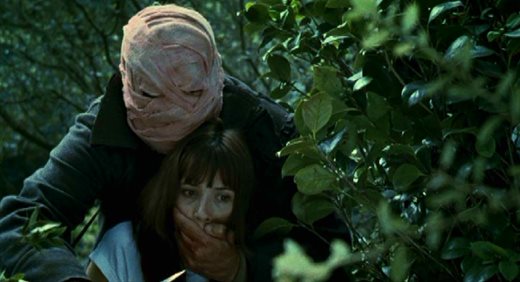
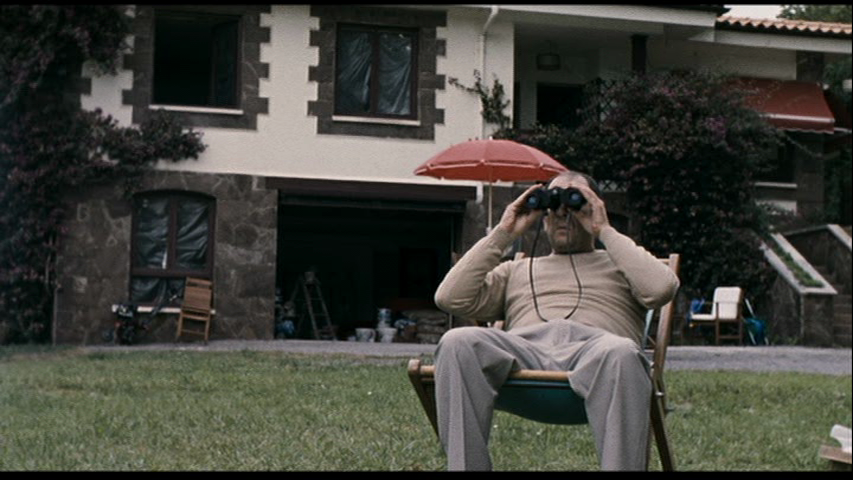
Having only four characters in the movie, Timecrimes made use of a small setting, which takes on time traveling where Hector, the main character, finds himself being part of a time loop as he is forced to interact with his other selves to keep things in place. It shows how his actions were already predetermined and he is challenged on how to execute these actions when he realizes that it is also him who needs to make the decisions for things to remain the same as it happened in previous timelines.

There are a lot of things that I didn’t expect in this film, but as each part of the story unfolded, it all made sense in the end. For instance, we really didn’t understand the woman who undresses in the forest at first, but it eventually shows how she was innocent and how she was just trying to help, but he was only forced by Hector to do these things. One might be confused while watching the film since it has three timelines and three Hectors, but I found it enjoyable to see how each Hector contributed to the series of events that happened in the movie.

Relatively, the film is one of the time travel films that I really enjoyed since it really invoked suspense and how it unfolded the story made it easier to understand, compared to other time travel films that are more confusing. It was evident that the story was very well thought-out, since these types of films are actually difficult to execute because of every detail that needs to be accurate for it to work. Just by missing a small part of the film changes everything because during the film, there were parts that I didn’t understand initially, but eventually made sense when the next timeline was shown.

I was personally polarized by how each plot unfolded and how the horrifying chain of events by Hector’s encounters with himself came about. This is something usual that happens in time travel films and how things go wrong when you change something or when you interact with your other self, but Hector was able to manage to keep things together, but ultimately at the expense of killing the woman in the forest in the process. I also observed the shift in Hector’s personality and character throughout the film, having to make choices that were predetermined for him since he did not have any other choice.

Overall, I really found Timecrimes as a clever and complex film that is enjoyable to watch. I also like how it really made the viewers think since it had three timelines, each adding another layer to the film.

Timecrimes

Timecrimes is one of my favorites from the films we have watched in class so far. It’s well-paced, elaborate, and generally enjoyable. Time travel films really aren’t my thing because they open up a lot of questions in my head, or are usually filled with holes. For example, Donnie Darko was a really difficult watch for me because it was confusing, and it left me with a lot of unanswered queries whose answers I had to look up on the Internet. However, the film departs from this vagueness, and delivered a more comprehensible time travel thriller.

The appeal of Timecrimes lies in its patient storytelling, which led to the multiple timelines part of the story being pulled off successfully. Vigalondo painstakingly untangles the mystery presented to us at the beginning of the film and presents the many layers behind the peculiar events that were occurring. Similar to Trollhunter, the attention to detail was impeccable, and it was vital to the unfolding of the narrative. The props for each scene in the movie such as the binoculars, the scissors, and the walky-talky all found a place in the narrative being woven by the time loop that Hector found himself in. This also helped facilitate a better understanding of the sequence of events. I also really enjoyed the emplotment of the narrative i.e. the retelling of the same narrative over and over again, with the subsequent retelling revealing more details and adding depth to the previous one. It also really helped that the different iterations of Hector were given distinct names which facilitated an easier digestion of the narrative. What I enjoyed about the movie is that it appeared as if the characters participated actively in our attempt to understand what is going on, unlike other time travel movies which leave it up to the viewers to make sense of the narrative. However, it achieves this without spoon-feeding it to the viewers, still retaining the thrill of piecing together all the components in the puzzle.

If I were to say something negative about the movie, it would be about my feelings about the main character, Hector. I never really liked him throughout the duration of the film. Hector 1 for example seemed a little off to me because of the actions that he chose to do. Who in the right mind would go to a forest after having seen, with their pair of binoculars, a woman undress? The fact that he’s been staring while the woman undressed is a little creepy as well. He also seemed exceedingly trusting, especially in the scene where the scientist was leading him to the silo. I realize now that he needed to do these things in order to drive the plot, but still I found his choices extremely questionable. I also did not enjoy the woman (who remained nameless throughout the movie despite suffering the most among all of the characters) being used merely as a plot device. I genuinely felt that she deserved better than that, especially after knowing that her involvement in the plot was due to the fact that she sought to help Hector 2 who was involved in a car crash. Nonetheless, the film was a great watch, and is my favorite time travel film so far.

Timecrimes: a Roller Coaster Ride

time-crimes

Timecrimes or Los Cromocrímenes directed by Nacho Vigalondo is truly a must-see film especially for those who are into time traveling. It presents a different perspective to these types of movies which typically gear towards emotional, scientific, and action, such as The Time Traveller’s Wife, Interstellar, and The Terminator. Instead of following the plot of these popular movies, I think that Vigalondo took a risk when he decided to make a time-traveling film that has a thriller/horror genre.

vlcsnap-2010-12-09-07h20m22s32

maxresdefault (1)DUt0x9HU0AIpSwPHow the movie turned out eventually was not really what I was expecting at the beginning. There was no sense of adventure at the start of the movie. Having an old man with a big stomach who likes lounging on his deck chair, and has sexual engagements with his wife as the protagonist of the film, I thought the movie would revolve around Hector and his perversions. After all, he looked like a “dirty old man”. And the scene where he was spying on the woman who was stripping in the woods only affirmed this thought. But all of a sudden, the film became a bit more mysterious and weird when the naked woman was shown lifeless, lying down on the rocks. And the appearance of the man with a bloody bandaged face gave the whole class a jumpscare. The scene exemplifies the saying, curiosity killed the cat. Now we know, if ever we see a woman getting naked in the middle of the woods, do not follow her! The movie also made me think about the ugly outcome of the woman who only tried to help Hector. In the end, she was used, abused, and even sacrificed. The movie made it understandable why a lot of people have trust issues, who can blame them?
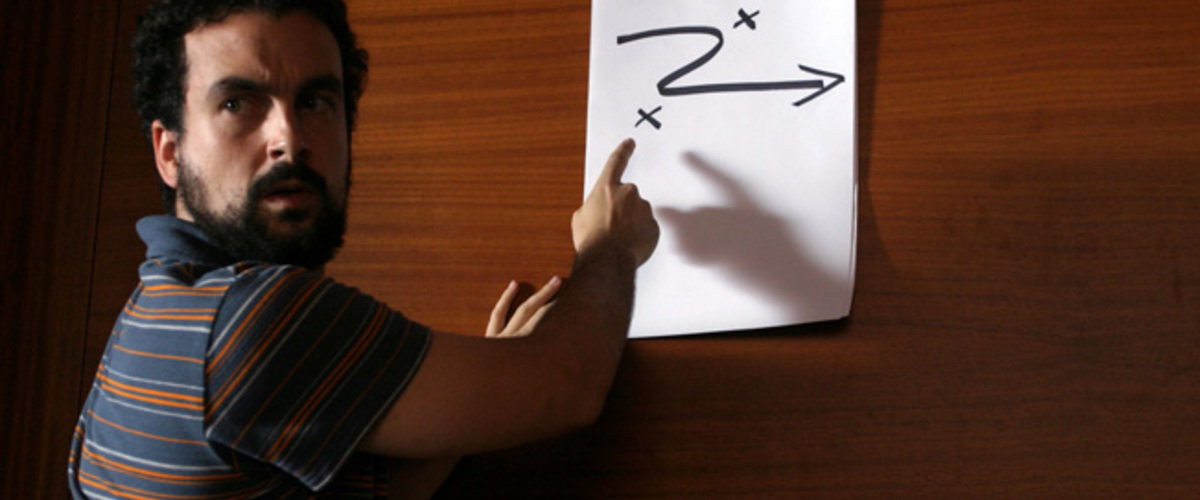
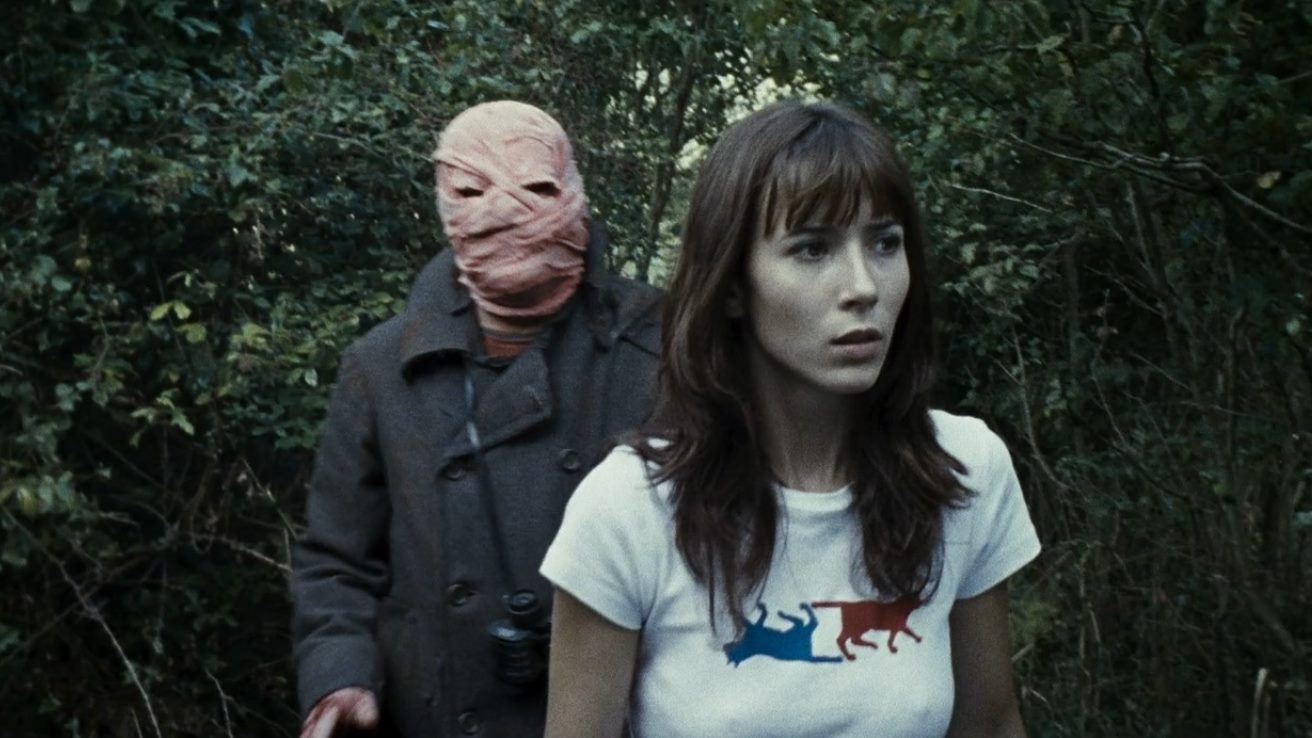
I’m not really a fan of horror movies so I was strategically covering my eyes in the scenes that followed this. Thankfully, the fear that we were all feeling came to an end when we realized that it was in fact, a time-traveling movie and that the man who was trying to kill Hector was none other than Hector himself, only older by a few hours. Thus, it can be said that the genre changes as the different Hectors are explored in the movie. From jumpscares, horror, tension, to time traveling and sci-fi, and then ending with somewhat a thriller, suspense, and danger, the movie really was quite a roller coaster of an experience!

Although the film was made with a low budget, it sure it did not feel like so. The fact that it won an award for best picture only proves this. All in all, the movie was successful in conveying the different emotions and feelings of the story. It left me with a question in my head: What started the loop? How did it all start? Although mind-boggling, the timeline was presented well, and it surely leaves the audience with their own interpretation, which I find appropriate for this movie. I might have felt confused, but it was a good kind of confusion which kept me at the edge of my seat, excited to watch even more.

“We still have a while before it starts raining.”: Time Crimes (2007)

dir. Nacho Vigalondo

Time travelling films have always been an interesting niche in cinema. The bad ones fail spectacularly but the good ones are always proof of stellar writing and good direction. It definitely takes a lot to make a non-linear narrative be cohesive and make sense. However if it’s done well, it leaves a lasting impression as one of the superior science films. Time Crimes is, in my opinion, one such film. It’s a hidden gem that more people deserve to know about.

No one knows how time travel works or it’s implications, and this film doesn’t necessarily answer those questions. Instead, it acts as a chronicle of our main protagonist’s journey within the span of an afternoon wherein he has to do increasingly difficult tasks that challenge his morality. Part of what makes this film great is seeing our protagonist’s transformation through it all.

Instead of our typical attractive young lead commonly seen backflipping through explosions in science fiction films, we have Hector. Hector is as ordinary as they get but like any other character, his life changes drastically when he gets shaken out of his normal routine by an extraordinary event. What then follows is an intense character study where we see our protagonist transform with every single time he gets out of the time machine.

This movie obviously has a low budget to work with and it compresses the setting, characters, and production design, but it works in the film’s favour. This puts more focus on the limited actors’ performances, as well as the few significant props that we saw. All of them were important within this narrative and screen time isn’t wasted on anything unnecessary.

Three other people play roles in Hector’s time travelling journey. We have his wife, Clara, who serves as Hector’s motivation. He starts nonchalant towards her and it’s clear that she’s more taken with him than he is with her. He ever goes as far as creeping on a random lady in the forest and following her. After though, he seems to realize his priorities and think that his actions have led to this unlikely journey, making him choose Clara once again.

The woman in the forest is a victim and even worse, she’s unnamed. we start out thinking that she’s quite suspicious, because honestly who in their right mind would choose to get naked in the middle of the forest. My initial thoughts led me to her being part of a witch coven or a cult. In reality, she starts out kind and even tried to help Hector which quickly becomes tragic. Hector uses her for his own benefit, leading the other Hector to commit the same mistake he did so that the time loop reaches its fulfillment, and she dies in the process. So it seems that her kindness was rewarded with death.

And lastly the scientist, played by Nacho Vigalondo himself. From the beginning, he’s the only one who’s actually in ‘the loop’ (forgive the pun) regarding Hector’s whole time travelling conundrum. It’s interesting to note that the actual director plays the guy dictating Hector what to do.

The tone and pacing of this movie are great as well. The first part sets the movie up as a thriller but then the plot twists give it a slightly comedic note e.g. when Hector, wearing the bandages, tries to find the exact place where he scared the first Hector away. It’s a clear subversion of expectations.

Overall, this was a clever little movie with a well-written screenplay that does the most with what is has. I truly believe Nacho Vigalondo’s debut feature film, which he wrote, directed, and performed in, deserves a place among some of the best time travelling/science fiction films out there. Apparently, there are Hollywood plans of making a remake but that might just make it lose its charms. What makes it so great is that it present a good story stripped to its barest form, emphasizing only what’s important and what the audience should know.

timecrimes

I’m not a fan of thriller or horror films given my very low tolerance for scary movies, but watching Timecrimes was honestly an enjoyable experience for me. Prior to watching the film, I had no idea that it would have a hint of horror into it so I was caught off guard when the first jump scare scene rolled out. To my surprise though, I found myself glued to the screen.

The film was about a man named Hector and how he was caught in a seemingly unending time loop. Wanting to resolve this problem and go back to his normal and peaceful life with his wife, he ends up “messing up” the future and harming a few people along the way. Although I have seen different kinds of time travel films before, Timecrimes for me was unique and different. First of all, it felt relatively more realistic compared to other time travel films that are more adventurous and mystical. Another interesting element was the way the plot unfolded and how the film interacted with the viewers, because it felt as if we were going through the realizations and surprises along with Hector. The film was enjoyable to watch because it makes you really want to know what happens next. You don’t want to miss any important and relevant details about the character and what he does, so you stay focused. It keeps the audience on the edge of their seats waiting for what Hector is up to next (and if their predictions about what he’s going to do are right). How is he going to get out of this one? Will his actions, in his attempt to go back to his normal life, actually ruin the course of events of his life? I had a bunch more questions in mind while watching the movie and while some of them were eventually answered as the plot went on, like, Why was that girl naked in the forest?, or Why was there a weird phone call?, the ones that bothered me the most were never really answered: How did this all begin? What’s the history behind the time travel machine? Is Hector’s life just going to be an unending cycle of what all happened? Even though it was very frustrating not to have the answers to these questions, I think the fact that the film makes us think about it and the questions it left unanswered even after a few days after watching the movie, is one of the things that makes it really effective as a film in its genre.

In terms of the movie production, I found it really impressive how this film was able to effectively pull off its thriller/time travel/sci-fi genre given that it was produced with a limited budget. Usually, you would expect movies like this to cost a lot given its supposed use of advanced technology, but Nacho Vigalondo’s Timecrimes was successfully able to make do with limited characters and setting, and simple machines and props. All it took was a well thought-out storyline.

Overall, it was a very creative film especially as a low-budget one, and it’s one that I would probably recommend to my friends who like movies from this genre.

In pursuit of closing the loop

This sci-fi movie, Timecrimes (2007) or Los Cronocrímenes  is a time travel jargon filled narrative but with a fresh and ingenious take on it. There have been plenty of time travelling movies in the past, such as Time travellers wife or everyone’s favourite, Back to the future. Not a lot of the time travelling movies that were out in the theatres were a hit but I think Timecrimes was able to pull it off with its intelligent and well thought of plot twists. It was mind boggling to think travelling just a few hours back could change things drastically and we clearly see how this has affected Hector’s life. It’s one of those mind-blowing films, it will always have you thinking, “what will happen next?” Or “how can they possibly resolve this?” And you find yourself at the edge of your seat while watching the series of events unfolding.

However, what was most puzzling to me was how did it all begin? Who started the loop and why? How did Hector get to the time machine in the first place? Because he still had memories of the phone call, the woman who stripped, the man with the bandages around his head, even before he travelled back in time. How did it all begin? The audience are always thinking, always analysing the situation at hand and derive meaning from the happenings. Nonetheless, I think leaving a few things unanswered for the audience to ponder on was a good move. The open ending and the baffling series of events allow it to be even more intriguing. 

It is not overly complex that will leave you totally confused with the next sequence of events that follow, the audience can still catch up with the series of events. The opening of the film feels like a horror movie with a thrilling background music, portraying itself to be one. No details are given. Although, I think this was able to set the tone quite perfectly. But the second sequence unravels the narrative making things clearer and allows the audience to go deeper into what the plot is really about. Things actually make sense now we get the bigger picture, how the fabric of the space-time continuum is ripped altogether. Despite the thrilling scenes and plot twists, the film was still able to inject a few humorous moments here and there that were subtle but somehow, still worked. 

This one is a lot more naturalistic unlike other time travel movies that are far more adventurous. You feel the frustration of the character watching things go horribly wrong as he tries to find his way back home and his desperation for his life to go back to normal. The audience empathises with him.

What’s interesting about this movie is that, it’s frightening but not in the horrific sense. Frightening enough to bewilder you, giving you a strange feeling after the movie. It puts a spotlight on the inevitable consequences of time travelling— your actions are bigger than you think and it could totally mess everything up in the real world.

It’s an inventively crafted film with endless possibilities and unimaginable loopholes. An introspective approach to the time travelling genre that will leave the audience wanting to know more, but is left to enjoy the rollercoaster ride as Hector helplessly moves towards a possible solution to go back to his ordinary life. 

162622

Trollhunter (2010)

Trollhunter (2010) is a Norwegian dark fantasy film written and directed by André Øvredal, most known for mystery and thriller flick The Autopsy of Jane Doe (2016) among other works.

The film presented an interesting take on the found-footage execution that has become something of a trope in recent years. As a viewer completely new to dark fantasy and what the genre was all about, I felt this was achieved by marrying this with elements of European cinema (and European culture in general) including Norse mythology and Norwegian culture.

Being that the film was released under a decade ago, it presents a rather modern take on European cinema in comparison to the other films taken up in class. This will be an accessible watch even for or viewers of mainstream, American cinema: it was entertaining and full of action and suspense given its found footage format. It was also a unique take as found footage was very popular at the time but was largely concentrated in the horror genre. I expected the director’s approach to be similar to those films (e.g. Paranormal Activity, Blair Witch Project), but what came out was instead something like Jurassic Park and was more of an adventure movie than a thriller. It was interesting to see found footage outside of horror and the supernatural where the found footage was more of the medium than the point of the entire affair.

I quite appreciated that the film’s director refused to lean on the tropes of the found-footage format to be engaging. It was very refreshing to see an entry in the genre that didn’t rely on jumpscares, which I’d seen so much of that I almost expected more of the same from this film. There were no jumpscares, yet the film brought a certain sort of fear into the hearts of the audience. Rather than scare us with anticipation and aggression (as jump scares do), the film toyed with viewers as we came to grips with the unknown. Because of the commitment to this form, I felt it made the audience think about whether trolls were real or not, especially towards the end of the film (Press conference at the end, the filming with a broken camera, etc.)

Most of the dark fantasy aspect came from the trolls themselves. The film included many elements of Norwegian culture and folktales. I appreciated that the world of the trolls seemed to be very fleshed out. Examples of this include the different species and breeds of trolls, each with special names and abilities, along with the existence of a secret organization formed to keep the existence of these trolls a secret from the public eye. The fact that the trolls turned into stone in direct sunlight and possessed the ability to sense a Christian man’s blood further elevated this eclectic fantasy element to the film. All these afforded the film a distinctly Norwegian and mythical flavor that I felt made the film very interesting to viewers.