L’Avventura: A Commentary on Poignancy and Alienation within the Bourgeoisie

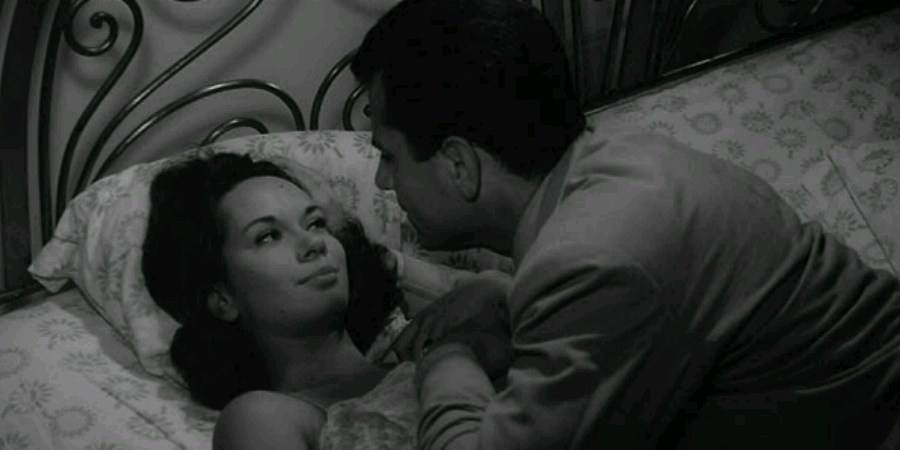
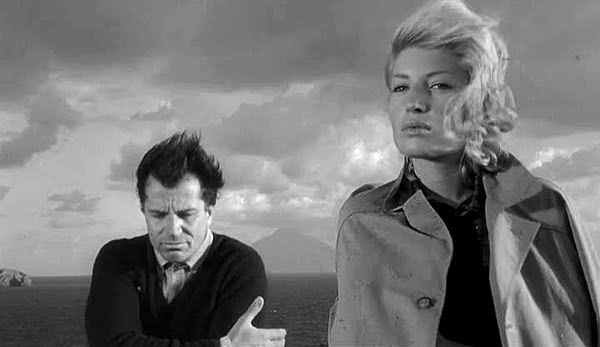
Monica Vitti and Gabriel Ferzetti

L’Avventura is one of my favorite films that were presented in class. I think it’s raw, honest, and sad in a beautiful and poetic way. I believe it’s a commentary on the feelings of isolation and lonesomeness that exist in the bourgeoisie class despite all the money, and is told by extremely careful and subtle narration. The movie didn’t have to use extreme dialogues, animated movements, and literal depictions of their sadness, the grave atmosphere of the movie was enough to understand the poignancy of the character’s lives.

I am personally a fan of old films yet I wonder why I haven’t heard of L’Avventura before. I think it might have been because it’s in another language, but I wish I had discovered it sooner. It sort of reminds me of Gone with the Wind despite there having so many differences between the two. Gone with Wind was loud, energetic, with bright technicolor, the complete opposite of L’Avventura’s somber and miserable mood, but I find them alike in many ways. First of all, the length and the promise of an adventure at the very start were factors the two movies share. A grand scale of stories in beautiful different places were also presented by the two that you think they’re both celebrations of life. It turns out, the more they progress, the more they break your heart. Tragedies about characters who are rich and obviously to be blamed for their troubles in many ways, but still you understand them and their decisions, and their transparency just sort of speak of their humanity that you end up rooting for them. However, going back to the movie at hand, the subtlety of the narration in L’Avventura was much more impressive to me. Every shot was well-thought out. Shots of the character’s faces even without the characters speaking at all tell so much anguish and pain. Even shots of boats and waves and legs and buildings carry emotion that I don’t know how Antonioni did it.

If European cinema in the 60s were made to be responses to the conventional ways of storytelling of Hollywood, L’Avventura certainly made its mark. There’s cinematic power in how Antonioni watches, and waits, and observes the decisions of the people in front of his camera. A review of the film even mentioned that, “The characters’ motivations were left opaque and unexplained, and the story never quite resolves itself — rather like life.” In many aspects, the film was distant with the characters just like how we can never truly hear other people’s minds, there is distance among every one. The movie also like life, showed that the adventure isn’t about a grand journey with magnificent views, but in a person, a character’s journey within himself and understanding his own motivations, within his inhibitions.  The adventure of the film was the discerning, troubled, alienated characters that bounce off the screen and speak volumes. The brilliance within the characters wasn’t even just revolving around the main protagonists. Even a supporting character like Giulia, had such a heartbreaking storyline that you feel her misery even when she smiles. And Anna, who we thought was the main character but disappeared so early in the film (in a Hitchcock’s Psycho kind of way), had been long gone from the movie, but I still remembered every shot of her unhappy face whenever her best friend Claudia and her lover Sandro frolic and kiss away. The film was an emotional adventure that can only be best experienced by witnessing it and going in-depth with its rich miserable individuals.
L’Avventura

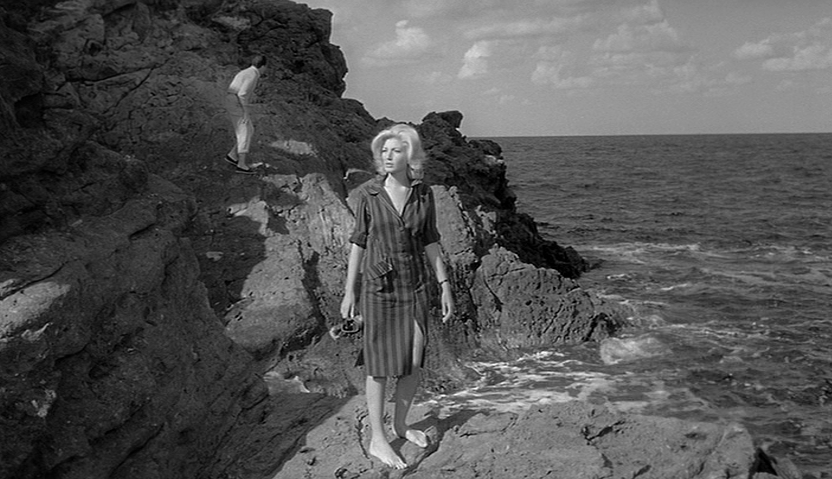
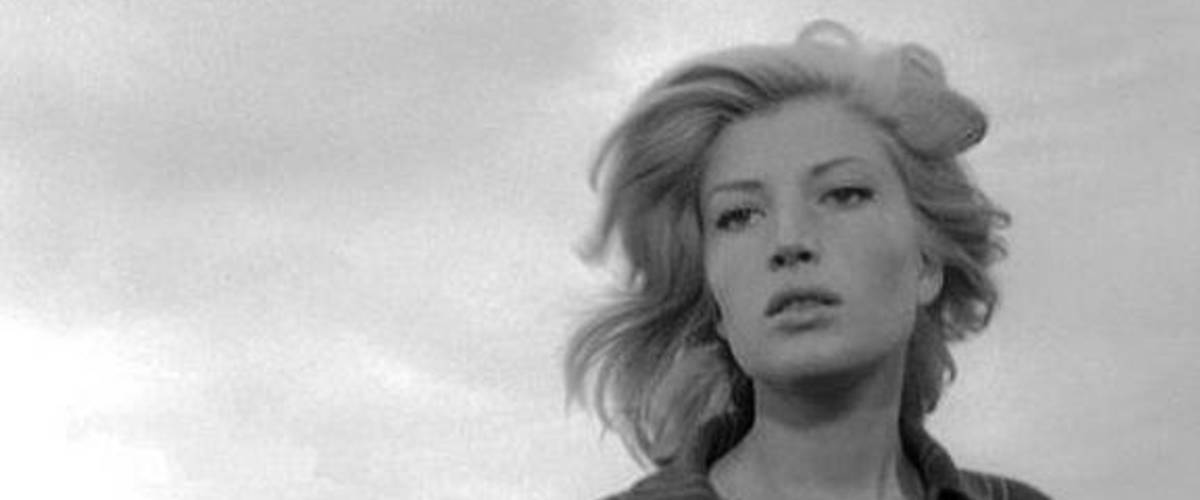
L’Avventura is a 1960s film by Michaelangelo Antonioni. The plot revolves around the search for a woman who disappeared by her lover and her best friend. The plot eventually delves away from the search and focuses on the relationship of the lover and the best friend.

This is the only film that I wasn’t able to finish for class, as it was too dragging for me. Although critics loved this film, it is not for my taste.

A visual adventure: L’Avventura (1960)

L’Avventura (English: The Adventure) released in 1960 is perhaps the hardest yet most worthwhile film to appreciate in our class roster for the semester. The film forces our attention with long pauses that tend to get draggy as the film forges on. It seemed to me that the mood and the characters were the central focuses of director Michelangelo Antonioni instead of the story and narrative.

Yet for most if not all the film’s viewers, it becomes quite hard to make sense of the muddled plot in all of this chaos. It reads like a warning to the rich and privileged that the act of traveling can very well reveal uncomfortable personal truths, derail your carefully-cultivated relationships, and throw you into existential crisis.

Through the film’s runtime, it felt as though the film was not really plot-centered anymore as the movie started to wear on Antonioni’s directing style has always been noted for exploiting colors and this showed as the film highlighted the many beautiful images director was able to capture in the absence of plot. It almost afforded him a certain kind of creative freedom and elevated the cinematography to another level. However, as only a casual filmgoer who never completely understood these technical aspects of film, it took a while to appreciate the cinematography.

Later on, though, I felt I grew to understand it at least a little bit: in the absence of Anna, for instance, the shots of choice served to heighten the growing tension among the group of friends, as well as the feeling of lostness that came with being on their own in an island far from civilization.  

It comes off as a modernist piece of art that does away with the story. However, it doesn’t do this in the same way as the willfully obtuse Holy Motors does: there is a clear story here; it just doesn’t seem to want you to follow it. In fact, the execution here is the complete opposite: rather than take hold of the audience’s attention with an eclectic, sensory experience, the film leaves you to your own devices and leaves you to make sense of the visuals on your own.

Truthfully, I felt like I could not figure out any of the characters’ motivations as they were all rather blank and opaque in their own ways. This was one way the use of color (or lack thereof) was exploited as the black and white definitely contributed to this as well.

At the end, the question remains: Where is Anna? Yet, as a viewer, I found that this was not the most pressing matter anymore once the final credit rolled.

L’Avventura: What

Oh boy, this movie was crazy. Not only was there an extra plot which the movie went for, but there was no closure for what happened with the missing woman, Anna. The story behind that was left dangling while a love story developed between Claudia and Sandro. Using the premise and feigning it as an inciting incident was a clever trick to attract attention to what happened with the missing woman. While we were curious of what had happened with Anna and her whereabouts, the story begins to separate itself something different. There are not many examples of films that use the introductory characters (and their disappearance) as a means to justify or situate a setting or plot. Especially when a good amount of screen time was given just for Anna. The movie then shifts into a love story between Claudia and Sandro, finding a way to mediate this strained or scuffed relationship. As one of the introductory films for this course, it really was a challenge to get through this movie due to its runtime and its shift in narrative.

While the movie was set in a black-and-white scene, the film manages to take on numerous vista shots, showing off cities and glamour shots of the island the characters were staying at. To its credit, it illustrates the adventure these characters took, from the moment Anna was missing to the very end. Despite the lack of color, there’s color in their expressions as the  frustrations of their newfound relationship developed. The disappearance of Anna was left to accommodate this relationship and how Claudia can cope with her struggle of moving on.

As a character-driven movie, the film relies on the interactions of both Claudia and Sandro as they mention Anna over and over again. Given the runtime and how the film was black-and-white, the film for me was difficult to follow in times because of these concentration with their relationship and instead of the pressing matter of Anna’s disappearance.

The movie, in itself, is a tale about a relationship that should’ve been really about Anna. It subverted my expectations since I thought the adventure was looking for Anna and the possibility of Anna emerging from the narrative once more. Instead, the movie took its good time to develop the characters of Claudia and Sandro, a decision very bold in direction. It diverts the attention of the emergency situation and finds a place to create a conflict / romance between characters because of Anna’s disappearance.

In this sense, I appreciate the film for taking risks in diverting narratives. However, the length made it difficult to watch, and the characters themselves where hard to follow.

The Lost Girl: A Discussion on L’Avventura

Monica Vitti in L’avventura, directed by Michelangelo Antonioni

Why do people do the things they do? Oftentimes, we struggle finding an answer to the question because people can be unpredictable. In Michelangelo Antonioni’s 1960 Italian film L’avventura, we see how the disappearance of Anna sets in motion the unpredictable actions of her lover Sandro and her best friend Claudia. Initially, Anna seems like a main character that we will follow but after the romance buds between Sandro and Claudia, she was gradually forgotten. We may have expected a thriller, but that is not what we get. When the film seems to shift into a love story, we are misled once more. We ask: What is going on?

In L’avventura, there is no cause-and-effect driven narrative — events appear without explanation. We wonder, “Why did Anna disappear?” or “Why did Sandro suddenly kiss Claudia?” We can provide theories, but we will never get our answers. Because of this, most people are left confused and disinterested in finishing a long, seemingly incomplete film. The difficulty in understanding L’avventura lies in Antonioni, who chooses to withhold information. He refuses to give a back story or definite characterizations that films usually provide. Not only are we uncertain of what the characters are thinking or feeling at a given time, but they, themselves, are not too sure. For instance, Sandro simply says, “Why would I do that?” when he ruined an art piece. Admittedly, we can understand these instances where the character does not know the motivation behind his or her actions and suddenly, they become more real. To add to that, the haunting landscapes contributes to the distance and alienation that we feel from the characters. By doing so, Antonioni presents how the audience can still experience tension and fascination without the conventions of storytelling. He does not tell us how you should feel about the scenes; rather, he allows you to reflect on your own.

Aside from the unique take on cinema, L’avventura compels the audience to follow the film, despite the long, slow running time, through the emphasis on visual compositions. The ending shot with Sandro beside the blank wall and Claudia near the volcano was beautiful. At the end of the film, there is no resolution to the storyline. We are left with one of the biggest questions: “What happened to Anna?” Questions of plot are often answered in conventional Hollywood films, especially for events that drove the storyline. However, Antonioni leaves us with mysteries and instead, poses a challenge for us to think about the personalities of the characters.

Similar to a typical adventure, Antonioni’s L’avventura exhausts the audience with the long, slow running time. Yet, you leave the cinema with renewed vigor after witnessing one of the most mysterious and visually striking films of all time. It may not have been the adventure we were expecting, but it sure was a thrilling and unforgettable one. L’avventura deserves to be a classic because of how it paved the way for European cinema to become a breeding ground for interesting, artistic, and thought-provoking films.

L’Avventura: Sandro’s Toxic Masculinity

The film was very artistic in the way that the scenes made use of beautiful images. The film was also black and white, which added to the dramatic effect of the film.

hero_EB19970119REVIEWS08401010338AR

lav4

It can also be said that the film can teach its viewers a lesson or two about life. First and foremost, closure is important. The film starts by showing the love story of Sandro and Anna. But then, Anna goes missing. In Sandro and Claudia’s (Anna’s best friend) attempts to find her, they fall into a love affair with each other and somehow forget that Anna is missing. This made me feel so uneasy and uncomfortable the whole time because I was just waiting for Anna to reappear again or maybe for the characters to talk about her again because it felt like the character and the situation just suddenly vanished. Had they given the viewers some kind of explanation as to how Anna disappeared and suggestions that they would not continue the quest for her anymore, then maybe I would have enjoyed the movie more. But, this teaches us that we don’t get everything we want and are expecting. Just like in real life, there are some things that we just do not know the answer to. Some mysteries remain mysteries until the end of time.

Image result for l'avventura movie

For me, the movie reflects toxic masculinity. I was bothered by the way Sandro just kept changing partners not long after his lover went missing. The image where Sandro was sitting down on the bench while the woman was standing up beside him when it was clear that they could both be sitting down on the spacious bench, shows that men are superior over women in the film. There was no sign of chivalry at all. Sandro played with women and used them as a distraction for Anna’s disappearance. Sandro gave up searching for his supposed significant other. He lost interest and patience so quickly in finding her. It may be sad to say that Sandro reflects an aspect of our life that we cannot control. Sometimes, we lose interest and passion in something that we thought we’d always love forever. Sandro proves that for some people, it is very easy to replace relationships and find new things to care for. Sandro proves that in a relationship between two people, there is always someone who gives more and receives more. In the movie, it seems like Sandro was the one who took Anna for granted, maybe that’s why she chose to disappear.

The only thing that I like about the movie is that it teaches us to learn how to move on and be comfortable with being uncomfortable. It is inevitable that there are questions that we would never know the answers to no matter how hard we try. I also learned that there are some irrational and unreasonable people who we will encounter in our life, but it’s best to accept this because life goes on. Some people try to be unapologetic because they think it’s okay to broken, since everyone is broken in their own way anyway. But personally, I think we should avoid the likes of Sandro. We must always try to be the best versions of ourselves and face life with a deep sense of ownership and responsibility.


Where is Anna / who is Anna

One of the most misleading films I have ever watched was L’Avventura. I originally thought that the movie had a searching-for-a-missing-person kind of plot because it began with Anna’s disappearance on the island the main characters went to for a vacation. However, I noticed how Anna being gone just paved the way for more drama to ensue. It seemed to me like it was merely used as a catalyst to drive the story forward.

Poor Anna – stuck as an afterthought 20 minutes into the film. They never even found her!

After looking for Anna for a solid 5 minutes, the rest of the crew seemed to focus on their own lives already. It suddenly became a story about “forbidden love” between Sandro and Claudia. It was a classic spin on the best-friend-and-boyfriend trope in romance movies. But was the “love” between them real? Was it sincere? Or was it just for fun? (How millennial could they have gotten?)

Sandro and Claudia establish some kind of sexual tension while figuring out where Anna (Sandro’s ACTUAL girlfriend) went. Normal, decent people would not have acted on this “tension” because 1) it was inappropriate — Sandro had a girlfriend and Claudia was the said girlfriend’s best friend and 2) they should have been focusing on looking for the girlfriend! I guess we can infer that they were, in fact, neither normal nor decent. Well, at least, Claudia had a little decency to reject Sandro for a few minutes, but I still think she made a mistake. At least she got what she deserved with Sandro cheating on her. Perhaps some people may believe that Claudia did not really deserve what she got, but I believe that she did. If my best friend gave up on looking for me when I go missing just because she wanted to be with my significant other, a part of me would not really want him/her to have the happiest of endings. Speaking of the significant other: Sandro, on the other hand, could not seem to keep it in his pants. He did not act like a taken man should act — it was as if his girlfriend did not exist! He was probably the worst character on the film — not that any of them were better in comparison, they were just less… unbearable than Sandro.

All of these thoughts bring me back to the question: where is Anna? More importantly: who even is Anna? Her character was not fleshed out in the film, making it difficult for me to empathize with her disappearance. In the first (and only) scenes where Anna was present, she was portrayed as a carefree, selfish, tantrum-throwing adult woman. What made me feel bad for her was how the other characters acted after she disappeared, not because I cared about her character specifically.

All I have to say is: if I suddenly go missing, I hope my friends care about me enough to look for me for more than a few minutes. I also hope none of my friends would ever betray me the way Sandro and Claudia did while I was gone.

The adventure of L’Avventura

Coming into this elective and having watched two amazing films so far, my expectations for L’Avventura by Michelangelo Antonioni was set high. I was expecting something thrilling; something that is beyond my expectations of cinema. Indeed, my knowledge of 60s European films were limited to the oddness, yet captivating screenplay of A Woman is a Woman by Jean-Luc Godard and the eerie themes of Persona by Ingmar Bergman. Yet, despite my high expectations of being surprised with another kind of film, L’Avventura seems to both fail and exceed such expectations.

Honestly speaking, L’Avventura is the most confusing film I have ever experienced. Not only did it confuse me with its extraneous plot points, it also made me feel generally confused about my feelings towards the film and the activity of being made to watch the film for class. What was I supposed to feel about a movie that I have a hard time understanding to begin with? It may sound harsh, but such feelings led me to believe that this movie is testing me in some way. However, one thing I learned in this class is that one’s personal expectations never seem to meet what the films we’re shown present to us. There is always something surprising, or at least something worth being at awe at.

L’Avventura fulfills such expectation in a way one would not expect it to. When we think of something that surprises us, we think of extravagant things; things that deviate from what is normal, where such deviation creates an exciting feeling for the weird and the unknown. However, L’Avventura is neither extravagant nor exciting. A lot of scenes were prolonged stills of the characters expressing their emotions. In fact, the progression of the film is so slow that when you set the film at twice its regular speed, it would still look like a normally shot film. (This is proven by the fact that my friends and I tried this while watching the film, and to our amusement, the film was still comprehensible despite its unusual speed).

The film then is made surprising by its unusual way of storytelling. It may not have been as exciting as the other films we have watched so far, but it still exceeded my expectation regarding European cinema in the 60s. What makes it great for me is its ability to evoke strong emotions to its audience. It’s almost as if the mournful emotions the characters portray permeate through the screen towards its audience. We mourn for the characters’ inability to communicate their intentions just as the characters mourn for their state, made problematic by their choices. The frustration is strong for both me and the characters as they struggle to solve the real dilemma.

Despite L’Avventura’s inability to bring excitement to its audience, I believe it did bring something significant to us. It surprised us in a way that no known and popular films would. The emphasis on the slow progression allowed us to immerse ourselves with the emotions portrayed by the characters, especially in the slowest moments of the film. This, I believe is what made L’Avventura the most surprising film I have watched for this class so far. It brought me something boring, yet different and meaningful than what was initially expected. Maybe the title itself shows us that there’s an adventure one can seek when watching L’Avventura––and that is seeing its beauty amidst our preconceived expectations.

Third

L’Avventura by Michelangelo Antonioni

L’avventura weaves a tale of finding yourself through lust and within people. We are thrust into a world where the characters are all simply wanting more to their lives. Wanting, needing for a change, to escape. The first 30 or so minutes helped establish the characters especially Anna. Anna who seems to be in a limbo of sorts especially in her relationships. In the beginning with her strained relationship with her father, her relationship with her lover, Sandro which based from her character showed how she has been slowly building a wall in their relationship. She complains about wanting to be alone yet also wanting to still be with him. Her final scene with Sandro became her “wake up call” of sorts to finally go on her own adventure and we never see her again. Anna’s adventure was never really for us to see. Claudia and Sandro’s first scene shocked me because other than the fact that they shared a kiss (although strained and it also confused me how they only met three days prior. From this, it can be seen how dependent and needy Sandro to have a woman by his side 24/7. He always seems to try and present to the women he pursues as charming, waxing poetically about how much he is willing to sacrifice for them. In the end it never really became trying to find and rescue Anna but the back and forth relationship of Anna and Sandro.

The view of women in the movie presents them as objects to the male gaze. A very traditional way viewing female characters that has been a on going problem as well in media. Women seen like Gloria Perkins for example. A writer yet is flocked by men not for her writing but simply because she tore her skirt which showed a hint of her undergarments and her natural beauty. Not much was known about her and she even has sex with Sandro on a couch. The movie itself is highly romanticized. Women are captured in a way that makes you see their beauty through the frames.

This movie for me was kind of hard to watch as it was quite dragging at times and the plot was not really my type. The characters especially Sandro were quite annoying (as men usually are). At the end, I may not have enjoyed the plot as much but the way the movie was filmed was absolutely breathtaking. the sprawling mountains and the vast ocean created a great atmosphere for the movie and helped to elevate the boundless emotions and problems within the characters themselves. The black and white of the movie was something I did not mind as well.


The Adventure

The story of the L’avventura is misleading because the central point of the movie is not the search for the mysterious disappearance of Anna, but about what happens between Claudia and Sandro as they search for her. I found the film L’avventura to be a great example of the complexity of human emotion and relationships. The film shows this complexity of relationships through the characters Sandro, Anna, and Claudia. We can see that Sandro and Anna are having a difficult time in their relationship because he is always out on long business trips. Sandro does not listen to her and instead ignores her, and this causes her to run away and disappear. Sandro and Claudia begin searching for her together, and also a relationship forms between them. Claudia is not open to it at first but later on in the film, the two become romantically involved. Although it seems they are both in love, there are times of uncertainty in Claudia’s love like when she waits for Sandro to return from the hotel and is surrounded by hungry looking men. She feels guilty about seeing Anna and runs away to a store. Sandro also complicates the situation when he flirts with another woman named Gloria and they have sexual intercourse. The end scene shows that Sandro and Claudia have come to reconcile and there is a hint at a continued relationship. The character Anna becomes unimportant to the film’s story because her mysterious disappearance becomes unsolved. I believe that the title does not refer to the search for Anna, but describes the relationship and emotional rollercoaster among the characters in the film. After watching the film, I find the motives and thoughts of the characters confusing because at the end of the film Sandro and Claudia still end up together and Anna is forgotten. Sandro is a shallow and selfish man who just wants to get satisfied because of how he moves from on from each woman, and yet Claudia still falls for him.

Although the film is highly acclaimed, I find the story to be dragging and unexciting because of how little is accomplished over the two hours of the film. The start of the film is where the most excitement and build up is because we are introduced to the rocky relationship between Sandro and Anna and then all of a sudden her mysterious disappearance. The search for her starts off exciting because it makes the audience curious about her, but then the film veers away from her and instead focuses on Claudia and Sandro’s relationship. I did not get that invested in their relationship because the characters do not display that deep of an emotional bond and are just in it for the sexual pleasure. Claudia is so quick to come back to Sandro, and he moves from girl to girl that it makes the relationship seem so shallow. I also think that this story of their relationship is prolonged too long over the course of the film because how there is little development in the characters and in the story. Although I do believe that this story greatly reflects society as there are many shallow relationships and people in the world.