Good Bye, Lenin! (2003)

Wolfgang Becker’s Good Bye, Lenin! (2003) sees siblings Alex and Ariane going to great lengths to conceal East German society’s many social developments from their mother Christiane, who falls into a deep coma just months before the fall of the Berlin wall and the collapse of socialism and eventual triumph of capitalism.

This premise alone reveals two of the film’s greatest strengths: its historically-charged themes and its sociopolitical commentary. Despite its often humorous undertones, the film’s entire world is underscored by the social and historical significance of its covered context. Viewers need not be comprehensively knowledgeable on world history or their own political leanings to be aware of the gravity of each situation. In this sense, the film is also very educational for the most part; as a viewer from the Philippines, I was genuinely unaware of certain events that happened in the film, and I was moved to read up on them later on.

Although the film took place in one singular world, the illusion of an unchanged world in Christiane’s point of view signified a certain multiple diegesis, one of the noted staples of European cinema according to Wollen (1972), although this was one instance where the viewer was wholly aware of these two quasi-separate worlds, and the effect of this multiple diegesis seemed to be minimal as it hinged on the story and not the actual mechanics of the film.

Speaking of the story, one universal theme the film touched on was love for family. For as absurd and contrived as Alex’s efforts were, the viewers at every point saw a certain fire and determination in his eyes, and it was clear that his actions were ultimately motivated by a pure and unadulterated love for the woman who raised him.

All things considered, Good bye Lenin is a remarkable entry-level sort of film for audiences looking to explore European cinema. Since the film was released rather recently, the plot’s progression was linear and easy to follow. As a viewer, I truthfully did not feel like I was watching a foreign flick, save for the European language and the need for subtitles. What I mean is that the experience was rather straightforward, accessible, and entertaining, all qualities I’ve come to not expect from European films. The strangeness, intransitivity, unpleasure, and foregrounding I have come to expect from these films was strangely absent in this film for the most part.

I feel as though this comes as something of a reminder that European cinema is not necessarily countercinema, even though the two do share many significant similarities. That is not to say the watch felt similar to an offering from mainstream or Western cinema. Because even though the most obvious elements separating European films from those in the mainstream market, everything from the film’s plot to its execution to all the minuscule details in between seemed to still contain a very distinctly European flavor, likely due in part to its historical subject matter.

I realize it seems like I am contradicting myself here, but Good Bye, Lenin! effortlessly fuses the historical with the sentimental; Alex’s attempts at reviving the Germany of old, particularly that of the German Democratic Republic afforded the film a cheeky sort of comic relief as he goes to great, often unreasonable lengths to continue his illusion. These included but were not limited to dressing in old, un-Westernized garments, producing fake food supplies by looking for old jars, to filming and directing faux news programs with the help of his friend and co-worker Denis, an aspiring filmmaker. And although the implications behind his attempts were heavy (since he was doing these to preserve his mother’s health), the absurdity of the lengths he went to lent the film a certain absurdity that made it quite an entertaining watch overall.
The Edukators

The Edukators is a film that revolves around the lives of Peter and Jan who call themselves “edukators”, as they happen to be activists who would break into the homes of rich individuals but would never steal or break things, instead, they would rearrange the furniture inside that house. They would move a few pieces of furniture in the living room and kitchen, and put them all in the wrong places. All of which is to send these wealthy people a message that someone knows them and is watching them. 

After watching this film, it reminded me of the youths tendency to rebel. Minds as young and eyes as fresh as ours, the youth of today finds themselves seeing things just a little bit differently. Change is a common idea that sparks between these youthful minds, and the current disposition will not be tolerated. Until now, we see ideas that seem to clash with each other especially since the youth are more daring and are not afraid to do things differently, and that was one of the few things that I have encountered in the film. It always common to see the ideas of the youth clashing with the old and conservative reality that surrounds them, the reality that they have to immerse themselves with. Watching this film just left me in awe wit the reality that we are all immersed in. The scriptwriting, visuals and plot is articulate and eloquent enough to provide discourse between the audience and the film. The truths and arguments that were shared by the main characters of the film, show an underlying reality to it until today. And what is great is that, this discourse that you engage with the film, allows you to reflect and assimilate yourself with the characters, allowing it to connect to your own thoughts. It is considered to be revolutionary and different in such a way. 

It plays with innocence in such a way that being young is not as simple as people think it is. It is far more complex and difficult. You have fresh and unorthodox ideas that you take into heart but want to share with the world. Yet it is not as easy and as conservative individuals think it is. 

For many, this film may come off as political film that fixates on the intricacies of capitalism and how it has affected many of the individuals who reside in Germany. It dares to explore the great lengths of political idealism in a state that refuses and neglects change. 

Elements in the movies such as the love triangle between the three characters definitely add depth to the film as it was a slight distraction that was provided among the strong plot twists that eventually emerged in the film. In my opinion, it ended very marvellously with the group of friends still maintaining to keep their friendship with each other despite what they have been through together. This movie definitely made its way to my favorites given it’s burst of ideologies. 

light-hearted and laughable

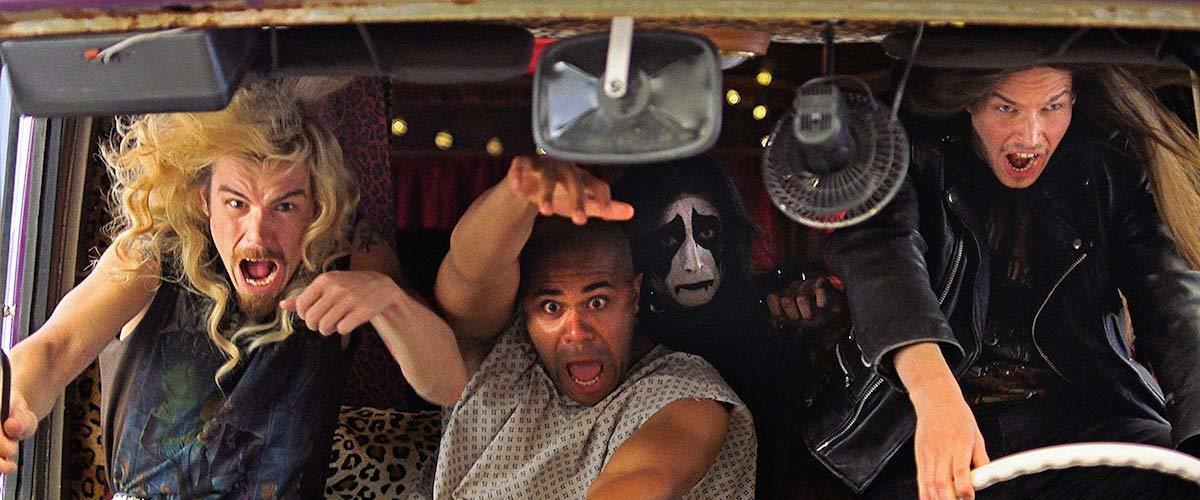
Juuso Laatio and Jukka Vidgren’s Heavy Trip follows a group of friends as they try to make it big in their small, Finnish town of Taivalkoski with their wannabe black metal band (later named Impaled Rektum). This film has been the most mainstream and modern film we have watched so far, and holds many similarities to a typical American comedy film (see The Hangover, Horrible Bosses, or Bridesmaids). However, it manages to transcend being a simple comedy film with its predictable, yet well-played plot and its setting in a specific cultural context. Similar to Good Bye, Lenin!, Heavy Trip shows that a good film doesn’t have to be difficult to watch (like Holy Motors or Raw) or have an intense plot (like Timecrimes), for as long as it makes its audience happy and feel good, then they’ve done their job.

For a movie that was centered around heavy death metal music (and other dark things, like the sounds of a dying reindeer getting caught in a bond grinder), Heavy Trip was incredibly funny, light, and dorky. From their awkward hair flips and impressive attempts at speaking English to stealing Jynkky’s coffin and having a bachelor’s party ruined by the Norwegian border patrol, the film is hilariously awkward, yet likable. The same description of awkward and likable goes for their characters; Laatio and Vidgren really developed the four guys well throughout the film and the actors portraying them did a great job with embodying their characters.

Though the killing off of Jynkky seemed like a random and cheap plot twist, it was an event that bolstered the second half of the film to be more driven by dedication, while still remaining funny. Not to mention, Jynkky’s death was practically foreshadowed at the beginning of the film where Turo states that he has legally been declared dead twice. This is where we can see an aspect of the film as a story about passion and dedication towards their goal. Personally, I have never heard so much heavy metal music in one sitting as I did when watching this movie, and even though I’m not familiar with the genre, I could tell that Impaled Rektum’s music playing was good. It’s also evident that these people know their stuff, especially Pasi, who can name every heavy metal song with just a few notes. Though similar to Holy Motor’s theme of commitment, Heavy Trip is different in that it deals with reality in a much more relatable sense, especially in the context of taking risks. This film also tackles friendship in a beautiful manner. Not every group of friends will drop everything, steal a van and cross the border to perform in a music festival, all while bringing along their friend’s coffin.

Overall, Heavy Trip was the funniest movie we’ve watched and a great end to the semester. Similar to our first film, A Woman is a Woman, which was light and not-so serious, Heavy Trip really proved itself as a music-driven and comedic film. Sir was right in saying although it may not have been the best movie created, or even the best movie we’ve watched in class, it sure as hell was funny. In conclusion, the past 11 films we have watched in this class have shown how wide and full of variety European cinema can be. But more than this, it has shown how culture will always present itself to the audience, either through music, landscape, or any other element.

Rock Band Comedy

Image source:
https://www.rogerebert.com/reviews/heavy-trip-2018

Movies revolving a band are not really my type. However, Heavy Trip was a movie I enjoyed as it showed a lot of comedy and a little bit of romance. I believe the characters really did an amazing job in executing their roles. They really produced a lot of laughter, from the whole band to the police officer and to the antagonist, Jouni. One funny moment is when the band chose to travel to Norway and they were branded terrorists. Moreover, the other van that they met showed a parody, and a separate parody for the soldiers in the area that were obviously inexperienced and showed insufficient training. In relation to Jouni, he was an antagonist that resembled one that had shallow goals, as he was destined to fail. He made it clear that his main intention and goal was to sleep with Miia, who is also the love interest of Turo the main character. However, he becomes responsible for his defeat as Miia catches him making love to another woman. In terms of the band itself, they really showed a lot of humor as a group. The name of the band, for instance, was decided to be “Impaled Rectum”, which was very funny. 

Another thing I noticed in the movie is how it makes use of a typical Hollywood plot where the main character is brought out of his comfort zone and to face adversities where he eventually meets a climax to see whether he is successful or not. In the case of the Heavy Trip, the main character was successful as he was able to perform in Norway in front of a large audience. 

In terms of the reputation of Heavy Metal, the movie tackled the stereotypes and prejudices linked with it. For instance, the residents in the area would always make fun of Turo’s long hair as they called him “homo” or “gay”. Another strong stereotype was that this kind of music is very much associated with anti-Christ or satanist. This could be linked with how one of the band members, Pasi, would describe Heavy Metal or the songs that the band plays. However, the movie obviously supports Rock as the movie allows the band to perform at the stage while glorifying the vibe of a troublemaker that comes as well with being a rockstar as the movie ends with the whole band being arrested and yet, they were still continued to be cheered on. 

Overall, I really enjoyed the movie because it was a light movie that made me laugh with their jokes and funny segments. Moreover, I could also relate to the main character, Turo, as he is always scared to go out of his comfort zone or to take risks for bigger things. As a person, I know what it is like to be scared of moving on to bigger things, as it takes courage. In the case of the movie, he was motivated to be like a hunter not afraid to take away a lion’s food. In the end, he was able to fulfill his goal of performing in front of a crowd. 

Raw

Raw is without a doubt the goriest movie (but not the oddest) film we have seen throughout the course of the semester. Going into the film not knowing anything at all made the experience much more shocking and disturbing than it already is.

The movie begins by depicting the image of Justine as a young innocent intelligent girl that is repressed and sheltered by her parents. She’s about to enter college in order to become a veterinarian. As she enters college, we already get a hint that this young innocent girl, that’s hasn’t even eaten meat in her entire life, is about face an entirely new chapter in her life as the university that she enrolls herself in is one that is actually filled with some crazy people. Although there is much change when you enter university life as compared to years prior, we get a taste of how intense and definitely unique this school is in the initiations that Justine had to go through, such as when they dumped tons of blood on the freshmen and even force them to eat the rabbit kidneys. In the latter, we encounter Alexia, Justine’s sister, who forces her to do it despite her being vegetarian as she seemed to be aware of what could happen if she didn’t do it.

It was in that very moment that everything seemed to change for Justine. She began to see the changes in her body when she first shoved meat into her mouth, as she began to experience some nagging itches in her body later that night. Despite the irritations that she began to experience in her body, it is was definitely evident that she began to show interest and have an appetite towards meat, to raw meat and actually becoming a cannibal. It became some kind of addiction that she couldn’t control. This was the beginning of much that was about to happen to Justine in this typically new setting. Who knew that entering university could change someone’s life radically in that particular way?

The movie definitely wanted to establish itself that depicts cannibalism in somewhat a realistic way. Despite the plentiful of graphic moments, it wasn’t one that I could not take. Normally when it comes to horror movies in general, I’d be one that was hesitant to even open my eyes and watch but given the setting in which we watch around our classmates, I didn’t feel the need to really feel frightened (Despite being in a similar setting as in the movie). Somehow the film is able to make you want to continue to watch and keep your eyes open as curiosity starts to kick in to understand the reason behind the things that were happening to the students. Although it was a horror film, it did a good job on focusing on the characters that were part of the story. It was not just made to scare the audience with the use of jump scares, but rather it showed us the different relationships whether it be familial or between friends. It was easy for me to appreciate this type of horror film as the director made sure that it was actually the gory scenes that really made it a horror movie. It looks like it took a lot of thought and experience to make it a great horror film as this genre of film seems to slowly be depreciating in terms of its quality.

A Trip To Remember

Heavy Trip (d. Jukka Vidgren; Jusso Latio, 2018)

After a semester of films that ranged from the confusing to the phenomenal, to the straightforward to the abstract, and from the discernible to the WTFness, After that rollercoaster of a film selection, it only feels fitting to end on Heavy Trip, a heavy metal film that despite its rough exterior, has an incredibly funny tone and warm heart.

The film’s premise is something that is actually almost familiar. A budding young band wants to get a gig and perform and grow big. But what makes the film unique from the start is that the film heavily embraces the heavy metal aesthetic. It is loud, it is chaotic, and it truly feels jarring if one is not a fan of heavy metal. However, whether one loves metal or not is irrelevant to the enjoyment of the film, which is actually another great part about the film. Even though I am personally not a fan of metal music, I can still see that the way the film tackles the genre’s history with respect. There is a clear showcase of genuine love of heavy metal throughout the film, whether from the many references to other acts as well as its original music.

Another thing that I also liked about the movie was the central cast. While there’s certainly nothing here that would probably be acclaimed at famous film festivals, the cast of the film, particularly the central band, are all very well acted with good comedic timing and performances. It really made them feel believable as not just a band, but a strong group of friends.

The movie is also very very accessible, even to people unfamiliar with the metal genre. An amusing example is near the beginning of the film, where one of the characters discovers their new original song by literally putting a dead reindeer through a meat grinder and enjoying the music coming from the accident. It almost feels like a double layer joke – it is funny because of the ridiculousness of the whole scene, but it is also funny because it does exactly sound like most heavy metal in the film. It is something tonally different from what is to be expected from metal, and yet it is still distinctly metal.

While there are some problems (for starters, the film’s primary antagonist in the form of a scheming and womanizing singer never really feels like a big threat), these are really just minor nitpicks at what is, essentially, a near-perfect comedy. Most comedies that I have seen, even among my favorites, admittedly have scenes that feel unnecessary or a moment in the film where it appears that nothing much is going on. But Heavy Trip does not really suffer from this. Its runtime is fast, the movie going through comedic set-piece after comedic set-piece that makes sure that even its weaker moments are quickly overshadowed by the next thing.

And that’s honestly just what makes the movie just a good time. Heavy Trip is just a feel-good movie with humor that never really gets old (the farcial scene of the border patrol agents in Norway on the final act is one of the most I’ve ever laughed at a movie in a very long time), music that can easily be appreciated, and a cast that just clicks at almost every turn.

All-in-all, Heavy Trip may be a simple film, but after the heaviness of plenty of the films in the course? It just feels appropriate to end here, with a film that is both simple and yet distinctly unique.

Raw Movie Review

Raw is probably one of the most disturbing films I’ve ever watched. I literally couldn’t watch almost half of the film. I also didn’t expect that she was going to enjoy eating human flesh. But for the most part when I look at the movie, I see it as an exaggerated experience of the freshman experience. Most of us know the feeling of entering college, having new experiences, getting exposed to things we were sheltered from before. There are new changes going on with Justine just like how every person struggles or tries to find themselves when put in a new setting.

                  What really sparked justine’s new found appetite was when she succumed to her initiation. Even if it seemed that she didn’t have a choice, we know that she actually did yet she chose to still do it. She originally seemed like she hated it and that she even had negative reactions in her body (the rash and scabs she got) but then we start to see a transformation. It starts with just wanting to eat meat, then eating raw meat and finally trying human flesh (her sister’s finger. At this point I really felt that the movie was just getting more bizarre and really escalating quickly.

                  Justine and her relationship with her parents reminds me of my own. I have always had strict parents. I remember sneaking around and always making up lies so I don’t get caught. So for me, I understand the need for freedom and the craving for it the more your parents deprive you of it. For Justine this freedom was regarding meat. The more she was deprived of it, the more she craved for it and couldn’t stop herself. The more she tried to stop herself from what she really wanted, the more deprived she felt and again she starts to crave for it more. On the parents perspective, I think it’s normal how parents will always want to protect their children no matter what. My mom got pregnant at eighteen with my eldest brother and both my mom and dad  had to struggle to make ends meet while studying so I think this was the reason they were very strict with me and my siblings. This is also explained why the mom of alexia and Justine would go crazy even if the slightest meat touched their food. I used to think she was just a typical vegetarian who probably loved animals. I didn’t realize that it was because she was also a cannibal and she didn’t want her children to experience what she was experiencing. Sometimes we think of parents as hypocrites but I honestly think that parents only try to prevent you from doing mistakes they have also made because they aren’t proud of it. At the same time, these mistakes are also part of understanding oneself and moving towards adulthood. With Adrienne’s character we also see the change and struggle to discover himself. He used to think he was gay but found himself drawn to Justine. So here we again see how different settings really create confusion to each person. We start to have doubts and even if we don’t like it, we know that change happens among all of us. Which isn’t always a bad thing because it also opens us to possibilities we never knew were possible.

                  Another issue in the film is the relationship of Justine and Alexia. I used to think they were very distant from each other and very different in attitude as well. But as the movie progresses, you see more and more the influence of Alexia in showing Justine who she really is. For a time, I thought that Alexia was just bad influence and trying to get Justine to be like her so that she wouldn’t feel alone. But the more I think about it, the more I realize that Alexia was opening justine’s eyes. One way or another she was bound to realize what she was capable of and Alexia would have preferred Justine to discover this with her guidance because she understood and loved her sister more than anyone else. However I also feel that the reason alexia killed addriane was because of the jealousy of alexia. She might have felt that addriene was competition for her love for her sister. In the end even after Alexia killed addriene, the bond of the sisters was stronger than ever. They had this understanding that nobody else had.

Who the real educator be

Goodbye Lenin was set during the breaking of The Berlin Wall. Now we go 40 years forward in the edukator, and it seems that the western ideas have taken over. There is no mention of the east, west germany, and all their respective ideologies, but glimpses of the divide are still apparent in 2003 as seen through The Edukator. Jan and Peter are two best friends who call themselves the educators and break into homes of the rich and powerful and re-arrange the furniture to instill fear into those who they believe to be abusive and terrible people. Motivated by a personal grudge, Peter’s girlfriend secretly joins Jan for the first time as they break into Hardenberg’s house and do their usual re-arranging. 

Since  Jan and Jule abruptly raided his home, they were not expecting his arrival. When Hardenberg caught Jules at his home, Jan and Jules’ choices were either to get caught, or to either kill/kidnap hardenberg. They chose to kidnap him with Peter’s aid. It was quite obvious how lost and regretful the three were, doing the kidnapping. They never wanted to commit a crime this extreme, but they believed that they were left with no choice. Honestly, everything was meticulously done and prepared for before Jules came into the picture and messed shit up. Jules screwed things up even more when she allowed herself to have a secret love life with her boyfriend’s best friend. How annoying right?

The 3 alongside Hardenberg end up staying at a cabin away from town as they figure out what to do next. The 3 grew fond of him as he started to become more of a friend than an enemy. Debates arise over dinner as Hardenberg tries to defend his ideas and actions. The edukators made themselves judge, jury, and executioner as if they were better people than their victims, but throughout the film I realised the insignificance of their doings, and their own inadequacies with the help of Hardenberg. As the film went by, it seemed that Hardenberg was more in control of the three. Finally exposing Jan and Jules’ secret relationship, the three are in shambles, and it seemed that they were more faulty than that of Hardenberg. As things start to calm down, they finally let Hardenberg go back home. Throughout the film, the three edukators seemed to learn more from Hardenberg, rather than them teaching him a lesson, so it really made me think, who is the real edukator?

Tenth

Raw by Julia Ducournau

The first time I watched Raw I could not stop thinking about it days after. It really is one of those horror movies that leaves you disturbed, shocked, confused, and for me wanting a lot more. I was never really a horror movie fan until I saw this movie and watching it for the second time during class helped cement my love for the horror genre. Jump scares and slasher killer horror genres never really scared me, sometimes I would find it funny even. But this movie really changed how I view horror. That it can be simple, not needing a killer chasing after his victims with an intense score in the background with the villain laughing maniacally, but can still be disturbing and brings fear and unease to its viewers. I really love this movie because just as what it is named, it is truly so raw; from the acting, the protagonists’ relationships and even to the meat she was eating all these elements created such a masterful film.

The story revolves around Justine (who is a vegetarian), a Freshman in taking up veterinary school just like her older sister Alexia. Something stirs in Justine who suddenly starts craving for meat after having her first taste of it in the form of a rabbit kidney as their first hazing experience into the school. She starts eating raw chicken and then after sometime she had a taste of real human flesh in the form of her sister’s severed finger. The progression into her cannibalistic self was so eerie and made sense once it was established that Alexia, her sister, also was a cannibal. More over was it a horror film but the plot emphasizes the relationship of Alexia and Justine and Justine’s road to finding her true self, a sort of ‘coming of age’ trope but with a whole lot of blood and gore.

This is what I loved about the movie because other than it being horrific and bloody there was a way in which oddly enough through cannibalism she was able to be who she was meant to be. Since it actually ran in the family (it was revealed that her mom as well was also a cannibal) she finally got to be free to choose and get something for herself rather than always having to be conformed into what society deems as normal. Raw goes beyond into the thinking of what it takes to be a woman trying to find herself in such a closed and oppressing world and makes its protagonist so out of the realms of what is normal and makes her a cannibal.

I just really love this move a whole lot. With the amazing acting from both Alexia played by Ella Rumpf and ofcourse Justine who was played by Garance Marillier, the actresses really helped to bring the movie to life. The story yet unconventional could be able to resonate with a lot of women who may be going through trying to find themselves (minus the eating human flesh element)

Ninth

The Edukators by Hans Weingartner

The movie was very interesting. Watching a more political driven and thought provoking movie was quite different from the weird and crazy that we have been seeing in class. It was nice to have an understanding of what Germany was going through during this time and having it so well named, The Edukators. With the plot revolving around 3 teenage activists who rearrange furniture and items from upper class homes yet never stealing anything but identifying themselves as “The Edukators”. There is some weird tension between the three as Jule and Peter are seeing each other yet Jan has feelings for Jule. The story begins when after Jule and Jan “edukating” (yes I will use that word now) the home of someone Jule had a debt to, a wealthy businessman named Hardenberg who catches them in the act of retrieving back Juel’s cellphone. They kidnap Hardenberg and then take him to a remote island to deal with the hostage.

The movie then shows us the different sides of how to act in the new modern capitalistic society. There are these 3 teenagers who are idealistic, dreaming of dismantling the system to create a whole new order as they have been exploited and cheated by society. What would it mean to be truly free? Should we be able to take a stand against those of the higher classes and fight for our rights for equality? or just be someone like Hardenberg who we learn was just like these teenagers who were hopeful, but has now changed his ways and followed what society deemed was the only way to move forward, to become corporate and somehow loose all the ideals you once fought for.

And from the movie, I truly did become in a way, educated. It made me think what does it truly mean to want to start change? To actually be a part of something that will be able to affect our society and somehow radically change it. Is that even still possible? Whether you may be one of the 3 teens or have turned into Hardenberg and rather just go with what society dictates of you they are both highly plausible and not something that should be taken against you. Everyone is entitled to their own beliefs and opinions and I think the main take away from this film for me was that we should be able to just coexist with whatever political ideologies you may stand for. To respect one another and be able to see each other as people who are more than just their political stances.

This movie was quite enjoyable and was a good movie to ponder and discuss on after watching. Although I did not really enjoy the relationship / love triangle aspect of the movie as it becomes a sort of cliche side story to an already interesting plot. Overall I found the relationship funny and not really something that I found value adding to the overall story. But the conversations between the teenagers and Hardenberg made the move so special.