Good Bye, Lenin!!!

If you were to watch this film without knowing the history of Germany, it would be very difficult for you to understand the references and comedic jokes that we shown in the film. 

“Good Bye, Lenin talks about the separation of East and West Germany during the years of 1980. As they were nearing the final days before the Berlin Wall collapses, riots and protests started to occur across the different cities of Germany. A communist and supporter of the Berlin Wall, Christiane, came across her son, Alex participating in the riot and was eventually beaten up by the police. Because of which, she suffers a heart attack and enters into a coma. During the 8 months of her being unconscious, the Berlin Wall collapses and the East and West Germany become unified. Several changes started coming into Germany. And her children do the best they could to hide this from her before she falls into another heart attack. 

In the film, “Good bye, Lenin”, time plays an important role in reliving, restoring, and dismantling old memories. It puts importance in the shift of changes in Germany and how it was able to rekindle the characters in the film. Which is why, when we encounter the post-war era of Germany, we see the different varieties of cultures that was broadcasted in the books, newspapers and television. The people of Germany in the film came to celebrate bigger change that was done in their country, which is one of the most pivotal themes that reflects the entire film. It was easy for Germany to accept the changes in their country, but not for the Alex’s family. As soon as their mom fell into a coma, they changed the interior of their house, and the sister started a new line of work and was dressing differently as well. But, once the mom woke up from her coma, they started putting things back to the way they were and started keeping from her the fall of the Berlin Wall. All of which was done because of Alex’s love for his mother, which is definitely what kept the whole plot running. 

The playful story that went on in this film did not have to involve politics, and fixated more on the relationship between Alex and Christiane under a historical point in time of Germany. Other than that, it talks about the feeling of nostalgia among the characters. Given that time plays an important role, the feeling of nostalgia of the past lingers and the relationship of the family revolves around it. 
Trollhunter: European vs American

Compared to the past films, I enjoyed watching Trollhunter the most because of its mix of European culture and American style narrative. It showed American style of narration because of its straightforward plot, dynamic characters, and the many action scenes. The college students are shown to be active characters because of how they set out to make a documentary about the bear poacher named Hans. They soon find out that he is a Trollhunter, and they follow along in his journey by helping him hunt trolls. This is a contrast to many European films because many of their characters are not very active, and so little is accomplished. The action scenes are very exciting, and they are not very common in the usual European films. The scene which I enjoyed the most was the fight with the last troll named the Jotnar in the snowy mountains. During this scene, Hans failed several attempts in killing it, and then it became him facing the troll of one on one. At this point I thought he was going to fail because of how impossible it looked in the scene, and it was like a David and Goliath battle. However, Hans was able to defeat the Jotnar by shooting it with a missile which turned the troll into stone.

After researching about the background of this film for a presentation in class I believe that what made this film uniquely European cinema, is the incorporation of the many cultural references of Norway. The characteristics and appearance of the trolls in the movie are faithful to Norwegian legend like for example, the multiple heads, ability to smell Christian blood, and turning to stone when exposed to sunlight. There are also a references to Norwegian fairy tales such as Three Billy Goat Gruffs, which can be seen during the part wherein Hans lures a troll by using three goats. There is another reference to a fairy tale entitled Soria Maria Castle wherein Thomas stands in the same pose mirroring the painting by Theodore Kittelsen, and then asks his friends if he looks like a famous painting. Another European film characteristic is how the film does not end with closure but instead it leaves it open ended. After Hans defeats the last troll, the government comes after the college students, and they lose the footage during the chase. Then the film states how the students are never found nor heard from again. This leaves the audience to speculate what happened to the students since no information was given, and this is a common trait of European films.

Even though this film incorporates American style of narration, I do not think it loses its identity as European film because the many cultural references in the movie are unique only to Norway. If this film was remade in American cinema, then it would become entirely different because it would lose these cultural references and even the Norwegian humour present in the film. It would likely be about a different creature like Bigfoot or the Yeti, and it would American humour instead.

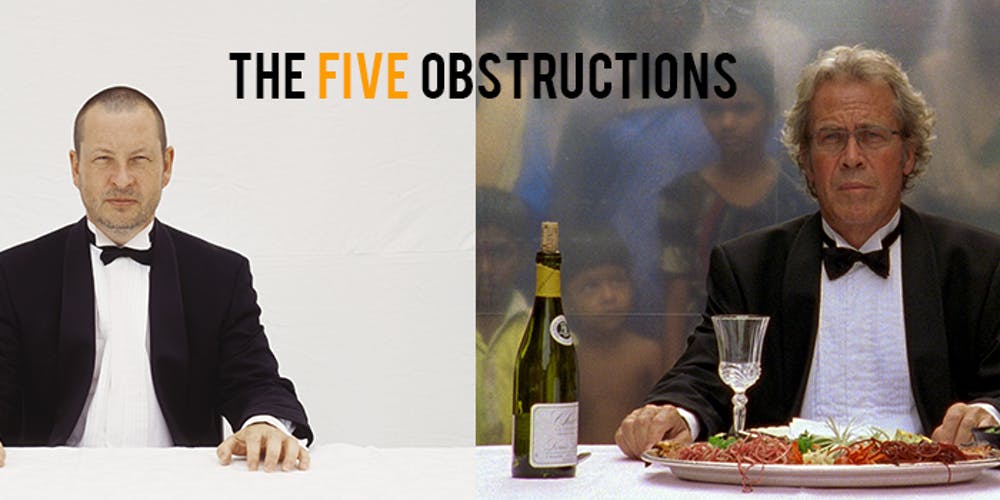
A Cross of Old and New: A Reflection on The Five Obstructions

Late 20th century European cinema has shown me films in many art forms which I never would’ve expected coming from the familiarity of Hollywood cinema. The past few films in class showed me different takes on both the story and the execution of the film, often times playing and messing with many common tricks in the way a film is expected to be. This art movement in Europe experimented with many elements which brought forth many filmmakers who have made their mark in the history of film. To end this era, however, was a step forward to modern European cinema which of course still have remnants of its previous craft. Lars von Trier and Jørgen Leth’s The Five Obstructions is a cross between these two eras, having both elements of experimental art cinema and the modern-day style of documentary film.

I feel as though the two known directors of this film represent the two times in European cinema, with Leth as the man of the past and von Tier as the modern man. My observation was that through von Tier’s obstruction, Leth was able to explore a kind of cinema that is still discovering. Five very different variations of Leth’s The Perfect Human was produced out of von Tier’s obstructions, yet all of this is from Leth’s own conceptualization and understanding of the set rules. He was able to explore deeply into what was asked of him and oftentimes have to go against conventions that he has been comfortable with. For example, he expressed his displeasure with cartoons, yet was able to go beyond this discomfort and produce something that is still very Leth-esque. Much like many filmmakers in the old European art cinema, Leth went against common executions of narratives in film, almost as if creating his own style. Similar to this, some of the films we have watched offer unconventional ways of storytelling, which I perceived to be “never before seen.”

Although I may refer to Europe’s art cinema as old, it can’t be denied that a lot of the techniques in producing such films were pretty new at that time. Although these forms may not be considered modern today, maybe those in their time upon the film’s creation believed that such films will lead to a different kind of modern cinema. Leth’s use of common modern techniques showed us that it can still change and could potentially lead us into a new realm of cinema; one that Hollywood has never even touched on yet. And this for me is where von Tier’s role comes in; as the man who pushes for the new. His obstructions may have been very difficult for Leth, however it was because of these prompts that Leth was able to produce such films. Von Tier forces the filmmaker to go beyond himself to produce films that would define a new era for cinema. This for me is what modern is; it is something that goes beyond the limitations of the past and creates its own, new interpretation of what it represents and what is beyond itself. The Five Obstructions, being a documentary shows us a new format of film where one can watch the old style of European art cinema unfold through modern-day techniques.

Time After Time

Timecrimes (2007, Nacho Vigalondo)

Timecrimes is an interesting movie. From the start, the film takes an almost instantaneous 360 degree spin. When at first one thinks they are just watching a weird movie that starts off with a man named Hector (Karra Elejade) peeking at a naked hiker all-the-while placating his wife, the film’s intensity suddenly ricochets when his perversion leads to a mysterious man stabbing him with scissors and pursuing him through the woods. After an absolutely intense chase sequence where the security of the protagonist is never confirmed, he ends up inside a mysterious facility where he inexplicably travels back in time to the start of the day. Then, he must find out a way to ensure that he is the only real Hector that exists.

That is the basic gist of the movie, and it’s honestly something that has been done a lot before. Films like Groundhog Day, Looper, and even Happy Death Day are all American films that focus on a protagonist that finds themselves messing with time figuratively and literally. What sets Timecrimes apart, however, is how gritty and unpolished the film looks, and yet at the same time, the film’s writing is air-proof. Even the smallest details have an eventual explanation, and it’s staggering how a time travel film like this manages to fill in all the plot holes that usually hurt films like this.

Another thing that I really liked about the film was the way it plays with tone. While the aforementioned opening act of the film is intense, frantic, and almost even terrifying (the class had a lot of people yell and jump during several moments), this is later on placated by some amazing dark humor when Hector (spoiler) finds out that he ended up being the mysterious assailant from the start, and goes very far to make sure that he makes his double cease to exist.

I also think that another aspect of the film that I really enjoyed was the length. In today’s day and age, films usually take at least two hours, and even then, they are not perfect. Movies that have a simple premise can last even longer, and yet they have plot holes galore, or the pacing hurts the film. Timecrimes’ breezy 92 minute premise somehow feels short, and at the same time it never feels like there is any downtime on screen. Every minute, something important is happening, and the second you think the film begins to wear out its welcome, it moves on to another thing. It’s really nothing like any time travel movie I’ve seen before, and it feels very refreshing to watch.

Ultimately, Timecrimes was a movie I enjoyed a lot. While I do have some problems with it (namely that despite the film’s events, the characters all feel rather hollow and insignificant in the long run – the plot feels more important than the characters which is almost an irony considering how one should complement the other), this was a fun thriller and a unique perspective on time travel that I did not regret using my own time on.

Seventh

TrollHunter by André Øvredal

What does it mean to believe in something? Is to see something with your very own eyes the easiest way to finally understand that something is real? The movie Trollhunter made me think how do we truly start to believe in something and to what extent are we able to reach to be able for others to start believing as well?

I will be honest in saying that this movie was not my favorite. I rank it the lowest from all the other movies we have watched for this class. There was something about the ‘script’ or dialogue of the characters were flat coupled with the fact that trolls for me were kind of an ‘okay’ and not really amazing thing to be talked about for a movie. The CGI of the trolls were kind of off for me. Although, I was impressed with how it was filmed in a “found footage” mockumentary way. This would make most of the viewers more interested, giving it more of an edge. Even if they did say it was a found footage movie, it was obvious that it was not real enough for there to be actual trolls in Norway because of the way the trolls looked for me. The action and interactions with the trolls were quite cool since this was a found footage movie its almost as if you are part of the action itself, the viewer becomes the camera man witnessing these trolls up close and fighting them.

The trolls in Norway plot is a heavily cultural thing. There are many Norwegian folktales about how there are many different species of trolls in the country as like the ones in the movie. I feel that maybe this was also why I did not really like the movie because I could not really connect with the culture (especially coming from a highly traditional catholic society). This movie went to be rated highly by Norwegian critics which in turn means that a huge part of how one may actually enjoy a movie is if it is something they can relate to and actually believe in as well.

This goes back to the questions I posed in the beginning, what does it mean to believe in something? The movie gives us a confusing answer, yes that trolls are real (knowing that it was seen ‘in real life’ by these students) yet they suddenly disappeared, gone forever with only a movie to account for evidence. Is that enough for others, the viewers of the movie specifically, to be able to believe in trolls as well? We may never get to know. How strong are your beliefs? In the end, we see the Norwegian Prime Minister actually say that these trolls were real which was quite funny and a big win towards the students and Hans to be able to spread their point across to others.

Overall if you are into the mockumentary or found footage type of genre this is a great movie because other than it being action packed it was funny at times in that dead-pan sort of way. But for me this may not be my kind of movie.

Disappointing Trolls

My experience in watching Trollhunter, a Norwegian mockumentary filmed in 2010, was actually quite an odd one. Knowing nothing about the film, including its title and genre, I was caught off guard with all the unnatural things that had happened in the movie. Being one that loves to use his free time in watching documentaries, I honestly got excited as I thought it would be about how the Norwegian hunters handled the problem of illegal bear hunting in a small town in Norway. As I figured out that there was actually a lot more to it than hunting bears, as it was really about hunting down exploding trolls, it really reminded me of my experience watch movies similar to paranormal activity due to its usage of “recovered film”. It tried to depict footage of fictional creatures as ones that would appear as something that were real to the audience. A few years back, my gullible self was actually fooled by some friends into thinking that footages of Paranormal Activity were actually real-life ones, which was the only reason why I was actually scared. I made sure to not be fooled in the same way this time around when we caught this film.

Compared to the impact that Paranormal Activity films had on me, I can proudly say that the Trollhunter did not scare me one bit. Sadly, the visual or CGI effects seemed to be really off and obviously fake compared to what modern technology can do to convince the human eye. Being a movie that was produced and released in 2010, I can hardly blame the filmmakers on that one. As I try to recall the Paranormal Activity films, I don’t remember the need for much visual effects as the creatures that would interact with the humans were invincible spirits. That could be a reason on why I was also much more scared as I watched that film. When it came to the sound effects that were used in the film, they did not fail to make the underwhelming looking trolls come to life. It was probably the closest thing in the entire film that would get me frightened by the fictional trolls.

As someone who doesn’t love to watch horror films, Trollhunter wasn’t scary at all. Ironically also because of this, it made it quite disappointing. It doesn’t put a mark on me as much as some other ones do. I could still easily sleep as compared to what other horror films can do to me. There is some sort of factor that western horror films lack in terms of being able to leave a mark on the audience. Besides the fact that they tried to make the film look like it was a recovered film, it felt like the directors and writers just tried to use jump scares to frighten the audience. The movie’s plot was really disappointing. Sadly, it basically just went from hunting bears, to hunting imaginary trolls. That was really about it, as it even had no clear ending.

Unfortunately, Trollhunter (2010) is not a film I would recommend to people that are interested in watching it. The movie was quite plain and lacked a lot of things in terms of what it wanted to present to the audience. Despite this, I look forward to watching the last few European films that this class has to offer.

Fantastic Trolls and Where to Find Them

Trollhunter was a generally very amusing film to watch as the mockumentary of films such as The Blairwitch Project, the Paranormal Activity series and all. This film also did it’s job of entertaining as well as having a thrilling aspect to it. I found a lot of plot holes however to backgrounds and whatnot. One example would be the bite of the troll in the start of the film. It was such a small bite that sort of simulated a bear bite. I found this strange because when the trolls were shown, they were gigantic which also showed the inconsistency of certain parts in the movie. I loved the aspect of university students wanting to create a documentary about bears and ended up hunting a mythical creature. It was this whole switch up that made it entertaining because the students were in such disbelief but Hans seemed so non-chalant about it and made it seem like an everyday occurrence.

Films involving mythical creatures and folklore interest me so much. All the different aspects Andre Ovredal brought about in the film such as religion talking about christianity being an obvious and easy way to identify if someone is catholic by the trolls. It was an interesting choice for the students to pick bear hunting as a topic for their documentary as bears are also very tribal and a symbol for primal instinct for tribal people. Hopefully a french film about werewolves is the next idea for the cannes film festival hits because that would be a very interesting take on one of France’s oldest folklore tales.

Troll Hunter Review

I was excited to watch a relatively more modern film. It also gave me the impression that it was a movie that wasn’t going to be difficult to understand because it’s basically straightforward. Personally I thought it would be a fantasy/comedy like ghost busters or some kind of parody film. I didn’t really understand why were watching this kind of movie after coming from the previous deeper and more difficult to interpret. The film for me gave of a low budget film vibe which is expected since it showcases found footage and amateur videos. It was sometimes hard to see the images because of how shaky the videos were. If it weren’t showcased this raw, it wouldn’t make sense given the story line. They wanted to make it seem like it was a legit phenomenon (even if we know trolls aren’t real). They even filmed with a broken camera which really made it seem more real. I also liked how they showcased the sceneries and culture of Norway which I found interesting given that there is not a lot that I know about the place.

The Troll Security Service aspect of the film which the secret job of Finn sort of reminded me of UFO sightings and Area 59 stories that have been reported in the US. It’s also similar to the story line of stranger things. I think that although these stories could be fake or just all hearsay, I feel that there is some truth in it. The fact that people can create stories that have a similar themes means that there could be explicit things that governments hide. These conspiracies make me wonder to what extent governments do cover up scandals.

One of the things that struck me the most was the mention of religion (Christianity) in the movie. I was curious as to why trolls could specifically smell bloods of Christians. Upon researching, I find out that Norway is considered a Christian country. Majority are Christians (70%) but it also makes you wonder what about the minority of 30% which isn’t as small either. I think this might have played a part in the movie where it shows how only rare people can come across trolls at the same time, trolls aren’t really in line with Christian teachings.

I did like the build up to how the troll was revealed. In the start, I wasn’t sure if they would ever show the entire troll. The low quality of the camera also made it a bit hard to see the full image of all the scenes. But I still appreciated how the trolls were revealed. It also made the the documentary as real as it could be. The CGI for me needed more help though because it didn’t look as real especially when the camera would zoom into the trolls. Although I still think that the vague ending also strengthens how the form and thought put in this movie was. The acting and the script were also executed well in terms of the film’s structure, it was believable that they felt they were in trouble and danger.

Hunter ng Trolls

I am a big fan of horror movies. Having known beforehand that Trollhunter is a horror/drama film, I set my expectations really high. Sadly, I found the movie very underwhelming. It isn’t your average horror film. When I finally realized while watching that it was one of those horror ‘found footage’ sub genre films, I thought that it would continuously gather more suspense, and a sense of fear. I think that I expected the movie to be this way due to the fact that I grew up with films such as “The Paranormal Activity” series that use the same film strategies as Trollhunter. The movie being a documentary type of film, felt really draggy at times. I feel that the film really lacked when it came to horrific/nail-biting scenes.

Although I didn’t find the film worth watching, I guess the film excelled at other aspects. One would think that the film would excel in showing the spooky parts of Norway, and its culture, but the film actually did a better job in showing the pleasing parts of it. Looking past those ugly, low quality trolls, we see the grand scenery that Norway takes pride off. I also think that I wasn’t able to connect much to the film, due to my non-existent knowledge of Norwegian culture. Knowing that this is one of the better films that the Norwegian film industry has to offer, I can’t help but assume that there’s more to it then what I saw.

Ultimately, I didn’t enjoy watching the film. I felt that the quality of this 2010 film was unsightly, especially when it came to the trolls. There was too little action, and when there was, it would be very underwhelming. On a positive note, the film was actually able to get me involved with the characters, but this involvement wasn’t so  pleasing and I always found myself annoyed by the decisions the characters would make. If they were to remake this movie with more action, suspense, and thrill, I would definitely watch it. A good takeaway from watching this film is that I appreciate Norway more.

Trollhunters

Found footage films have always been quite a favorite of mine – the authenticity they lend to a film has the capacity to evoke another level of fear in viewers, if done correctly. One has to appreciate the level of skill that goes into making an effective horror film found-footage style, and the variety of challenges directors and editors have to overcome as opposed to traditional horror films. One of the most important challenges would most likely be the lack of music or non-diagetic sound. Non-diagetic sounds and background music instrumentals play a pivotal role in films, especially in horror films, whether it be to compound the viewers’ anxiety, distorting and channeling normal sounds into music that has the capacity to evoke suspense, surprise, and the like. Found footage films, in order to lend to the authenticity, thus have to make do with diagetic sounds in order to evoke the same level of fear and anxiety in its viewers.

Another way the film compensated for the lack of normal horror movie techniques was the singular deep blue hue used all throughout that contributed both to the film’s authenticity and dictated the rather dreary tone for the entire movie.

Finally, an interesting contrast I found between this particular film and other found footage films is that in Trollhunters, the antagonist is not clearly depicted and shown on screen. In an attempt to presumably heighten the horror or mystery, and further evoke a first-person feeling of “being in the film” found footage celebrates (by only seeing what the protagonist sees or even less) many found footage films either do not show the antagonist or monster (e.g., The Blair Witch Project, Quarantine) or are shown rather briefly, depicted either as far in the background, against a backdrop of smoke, brief half-second glimpses (e.g., the 2008 monster film Cloverfield). Trollhunters clearly shows the trolls – the monsters – in the film, and through this was still able to convey heightened feelings maybe not of fear, rather, of suspense, more often found in action films. The scene with the troll chasing the car for example, brought out in me a feeling I often feel when playing video games and am being chased by whatever villain was in the game.

Overall, I quite enjoyed the film. Aside from the fact that I personally enjoy not just found footage films, Trollhunters managed to bring together two of my all time favorite genres – action/sci-fi, and comedy. It was interesting to see how the director managed to combine all these different genres (on top of the film already being found footage) without concocting a complete mess of a disarrayed film that did not know what it was doing. While at some times various scenes, sequences, or plot points seemed rather bizarre, overall it was a great amalgamation and reinterpretation of traditional found-footage horror, and a testament to how European cinema, despite delving into more mainstream Hollywood film concepts, still manages to surprise and add its own uniquely weird and untraditional twist that highlights European film director’s individuality, as well as the European film as a whole.

Extra Comments: Trollhunters may then be described as a more careful attempt at film making as compared to other found footage films, in the simple fact that the videos taken by thee characters are supposed to be a thesis. Furthermore, what separates found footage films in general from other films is that there is no suspense as to whether the main characters succeed – any found footage film, especially if there is a deliberate reason as to why it is found footage, is always about the failure of why they were shooting in the first place.