Baby: Actually About Love, Not Prostitution (Bonus)

Image result for baby netflixThe third European TV series that I have watched so far also gave something different and new compared to the first 2 but still tackling dark themes (Perfume and Money Heist). It portrays how everything might look perfect but everyone needs a secret life to survive. Baby is an Italian Netflix tv series directed by Andrea De Sica and Anna Negri. It is actually based on a true story when two high school girls in a wealthy part of Rome were selling their bodies to buy luxury products. I liked how the series showed authenticity and ultimately, the screenwriter, Re Salvador, shares that the series is actually about love, not prostitution despite the reviews claiming that the show normalizes the lives of sex traffickers.

The story revolves around two teenage girls from an elite high school in Rome who engage in prostitution. It is very easy to identify with the characters as well as to empathize with what they are going through because they are somehow relatable and it allows the viewers to connect with them. The two girls are very different: Chiara is a popular track and field star who excels in school and seemingly has a perfect life; however, she is actually living a friends with benefits lifestyle with her best friend’s brother who has a girlfriend. Her parents are also on the brink of their marriage and are thinking of a divorce. On the other hand, the other teenage girl, Ludovica, is an outcast because of her sex scandal with one of the boys in school with all the students calling her a slut and shaming her everyday. She also lives in a troubled home as she is raised by a single mother who spends all their money on various young men to have a relationship with her.

Just by looking at the main characters of the series, they bring an interesting twist because both of them have seemingly different lives but due to their problems at home, they are brought together and they start to become friends. At one party, the head of a prostitute den takes notice of Chiara and Ludovica and asks them to work for them by going on dates with older men. Ludovica agrees due to the money she needs to pay off her school debt and Chiara agrees due to not being content with her life and wanting to find thrill and excitement. While watching the series, I found the characters very intriguing and it was interesting to see what was going on in the minds of the protagonists and to see where their adventures take them.

The cinematography of the TV series is very beautiful because it features places around Rome in the day and is contrasted with the underground nightlife there. There are also nude and sex scenes present. I guess this comes from the fact that in Europe, sex and other things pertaining to sex are very out in the open and is not taboo. In addition, I loved the series’ soundtrack that was fitting to the theme and overall feel of the series. The music used in the TV series is also very interesting because they feature Italian songs that the younger generation usually listen to like EDM and other party music.

Ultimately, Baby brings something new and fresh, and the atmosphere it gives is appropriate given that it is a teen drama that puts teenagers in a very adult and dark place. There were no scenes in the show that were particularly shocking; most of them were expected but it was still very entertaining to watch and it lets you see the different culture of the Italians and what makes them do what they do. Overall, I enjoyed watching it because it sheds light upon real issues and experiences.

Money Heist: Desperation for Revenge, for Money, and a New Life (Bonus)

Image result for money heist netflix posterAs a fan of a lot of television series that are mostly American, it was very interesting for me to see how these are created in Europe and I wanted to see how it differs from American shows, from the plot to the series structure and how they also showcase the culture of different countries. After watching Perfume, I wanted to watch more. I stumbled upon Money Heist, a Spanish Netflix series created by Alex Pina, and it has now become one of my favorites.
The show is the ultimate heist story because the group planned a huge heist to not rob a bank or a company but to enter the Royal Mint of Spain in Madrid to create more and more money, specifically 2.4 billion Euros, which has never been done before. The group is composed of eight different types of prisoners or outlaws ranging from a teenager to a father, all recruited and headed by the Director who organized everything as revenge for his dead father. While the group conducted the heist and entered the Royal Mint during a school field trip, the Director was just behind the scenes in their hideout, managing and planning everything. Despite the plan being planned very perfectly, there were blips and mistakes in the execution because of love between two lovers which was forbidden and other unavoidable human flaws. In the end, the group were able to pull the whole heist of but with a few lives lost. All the romances that sprung up during the heist still continued on and they were able to live the lives they have always wanted, albeit with a few changes. The TV series is similar to the Ocean’s film trilogy but with cultural differences as well as other things.

The film was a very fresh and entertaining TV series that will make you hang at the edge of your seat, anxiously waiting for what’s going to happen next like if the perfect plan will work out or not. However, most of the scenes were very predictable like a romance between a hostage and her captor, called Stockholm Syndrome and between the head detective and the Director. Moreover, just like any other European film, there were various nude scenes and sex scenes; however, it did not overshadow the story of the TV series which was good since other film and show just rely on sex scenes to make them interesting. The sex scenes were more of a stress reliever because of everything else going on in the show.

Most, if not all the scenes in the show were inside of the Royal Mint but there are also scenes outside in Madrid like the hideout of the heist group and the restaurants and plazas around the Mint which were all very beautiful as expected of the breathtaking, historical, and cultural structures around Europe. I would recommend watching this show to other people because it is very entertaining to see how a very intelligent person can mastermind something huge like this and how he has anticipated almost everything that was going to happen minus the various blips mentioned earlier. The main reason for this happening was revenge for the Director’s father but each person had their own personal motives as well. I think just like the German TV series, Perfume, this all revolves around desperation. Desperation for revenge, desperation for money, desperation for new life. Desperation makes us do a lot of things, sometimes they can be good and sometimes bad.

Blind Date: A Fresh Take on Rom-Coms (Bonus)

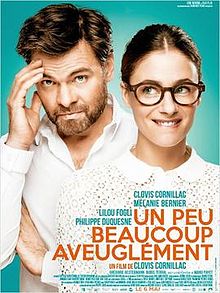
220px-Un_peu,_beaucoup,_aveuglément_poster.jpgGiven the different genres of film that we watched throughout the semester, I was interested to see a European film’s take on romantic comedy and how it compares to Hollywood films. I came across Un peu, beaucoup, aveuglément, also known as Blind Date, which is a French film by Clovis Cornillac. After watching the film, I still saw the cheesy and cliché aspects of how romcoms are made, but I loved the twist given to this film and how it also tackles a unique plot with the help of the likable characters. It tackles the usual story of how people get attracted not because of how they look like but because of their personality and the way they think.
Most of the film happens in just one setting: the apartment of Machine, who just moved in. She is a pianist and finds out that her apartment and the one beside hers have a problem because they could hear everything that was happening in the other apartment. Machin, the owner of the other apartment initially tries to make her leave by scaring her through playing strange music and moving the paintings to make it seem like there is a ghost in the apartment which teases the comedic aspect of the film. However, Machine finds out that it was her neighbor that was doing those things and they start to annoy each other, playing loud music and using loud machines, since Machin was a puzzle creator. It was interesting to see how the cinematography was made, transitioning from both apartments and there was one point where their places were shown side-by-side to emphasize what they were going through and how they were just separated by a thin wall.

The narrative was very easy to follow with the help of the chemistry by both characters. Their situation changes when Machin finally talks to her while she was playing the piano and tells her to loosen up. This starts their interesting relationship where they prefer not to see each other but establish that they are now more than just neighbors. I liked how the film showed the connection of the characters despite not seeing each other and it also leaves the viewers relating to their stories and personalities. I also liked the comedic aspect of the film that showed the quirkiness of the characters, especially when Machine was trying to look for him when he said that he always wears cowboy boots and she tries to focus on the shoes of the people around her. She even mistakes someone for him and invites him to her apartment but realizes that she got the wrong guy. Blind Date also makes use of its charm, especially in my favorite scene where they both invited their closest friends, cooked the same meal, pushed their tables against the wall and had dinner while exchanging stories. At first, their friends were questionable about their unconventional relationship but they understood and enjoyed it in the end.

Overall, I liked how the film focused on their relationship and how it did not have any draggy parts to keep the viewers hooked throughout the entire film. There were some plot holes in the movie but it still worked because of how it incorporated drama and deeper narratives such as Machine’s relationship with her father. It was a very charming and cute movie that are more in line with the films that I watch and I really liked it.

Parfum: Desperation of Being Loved (Bonus)

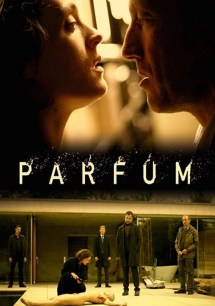
s592.jpegParfum is a German TV series that airs I found Netflix. The story revolves around a famous singer who was found dead in her house and all of her body parts that secrete a scent like her armpits, genitals, and scalp was removed. She was part of a group of friends in their teenage years; they were a group of 5 and this girl was adored by everyone she meets. When they were teenagers, their group had an obsession about the book, “Perfume” by Patrick Süskind and they tried to replicate making scents by first, killing a dog in their hideout. I found some similarities with Raw, given the bloody scenes and intentions of the characters. So in the present, they speculated that someone might have used her scent as well to make a perfume that can make people fall in love with whoever uses that scent. With her death, they got a detective to work on the case and there were 2 more killings in the tv series, one was a prostitute.

The atmosphere of the tv series was very dark, given that it is a drama that revolves around a murder case. It really depicted real-life problems like an abusive husband, dealing with fame, being a mistress, and so on; however, they were not dramatized and romanticized and it showed both the good and the bad things around those problems that actually happen in society. Despite the film being set in a German country, it was still understandable and showed the cultural differences of their country with the usual American TV shows. Moreover, the structure of the tv series was not linear which makes it sometimes confusing; however, the stories that the past shows were very informative and entertaining that makes one want to have more information about the past. All of the flashbacks and stories about the past were very detrimental in figuring out the plot line and helped in the very shocking plot twist.

After watching the tv series, I was left shocked and trying to be the pieces together because it was very unexpected. I would recommend this tv show to other people because it is something new and fresh in contrast to all those romantic comedies coming out. In the TV show, it turns out that none of the obvious suspects were the actual killer and it was the sweet, innocent psychiatrist who were murdering the three girls just because she wants to be loved. She was giving their body parts to Moritz, the perfume maker who does not care where the ingredients for his perfume-making is sourced. However, that was just season 1 of the tv series and there will be a next one wherein the detective will make use of her newfound knowledge about scents to fix her problem with her boss who will be the father of her baby. However, there is a catch because he is married and they have children. Ultimately, the story shows how there are some people who are very desperate to be loved that they will result to drastic measures – may it be about a daughter craving the attention of her mother who is only concerned about her twin or a mistress trying to have what she cannot have that results to home-wrecking.

Nothing to Hide: But Everyone’s Got Something (Bonus)

Image result for nothing to hideGiven the variety of movies that we watched this semester, I wanted to try something new and watch a more modern European film in a different genre, more like the ones that I usually watch. I came across Fred Cavayé’s Nothing to Hide, a dramatic comedy which caught my attention and just looks like a typical movie about friends. However, watching it really changed what I initially thought the movie would be and it added to one of the surprisingly great movies that I watched so far. It had a very simple plot but the complexity of the characters and the revelations unveiled as the film went on just caught me by surprise and it was definitely worth the watch.

The film revolves around a normal group of couple friends on a night with a rare eclipse. At first, I did not really understand the significance of the eclipse but then the film’s ending just blew my mind and made me think twice about the whole movie. The main premise of the film is that they play a game wherein everyone puts their phones on the dinner table and whenever a phone rings, they have to read the message that they received aloud or answer the call on speakerphone. At first, it might seem like a typical movie but once the phones start to ring, each of the characters’ secrets start to come out and the movie just gets more and more intense from then on. From revealing hidden secrets like being homosexual to all kinds of cheating and figuring out that someone was going to have a baby with his mistress, every plot twist and revelation were both shocking and heartbreaking. It helped that the characters were very interesting and likable, but then contrary to the film’s title, everyone has something to hide. They were very charismatic and the brilliance of their acting were very believable that made me really feel their frustrations and heartbreaks.

Being a dramatic comedy, Nothing to Hide still included parts of humor wherein it showcased the realistic and fun aspect of the film. You can see the bond that the group of friends had and made it seem like they were all normal. However, when put to the test, questions such as what would happen if you can view the phone of your partner sparked suspicion among the couples that eventually led them to playing the game. These questions even spark curiosity to the viewers because you may start to think about it as well. The dramatic aspects of the film were really captivating as people started confronting each other and their secrets were forced to be revealed. Everyone started doubting their partners and the tension whenever a phone rings was really felt.

In the end, they all leave the apartment, the eclipse ends, and things go back to the way they were which reveals that the game did not really happen. The structure of the film really made me think because it seemed like a simple story but then it never actually happened. This even makes things worse because it just goes to show that they were all hiding their secrets from each other and I guess eventually, these secrets would have to come out. I would have to say that I really liked the film and it really made me think about how every person is hiding something and it is inevitable that the truth always comes out, so I believe. Despite the simplicity of the story, the plot and the performance really kept me hooked and made the film captivating. I was definitely enticed to see more European films like this to see how they compare to the films that I usually watch.

Heavy Trip: Enjoyable Experience Through Music and Humor

download.jpegGiven the movies that we watched throughout the course, from musical comedies to fantasies portrayed as realistic to movies that absolutely made no sense, Jukka Vidgren and Juuso Laatio’s Heavy Trip was a great movie to cap off the series of movies. It provides a new take and perspective on European cinema and it was overall an interesting and fun cinematic experience that allowed me to connect to the story and the characters. Being a fan of music myself, heavy metal is not really something that I listen to but it was able to add something new and fresh to the movie since not everyone really likes this genre. Despite this, the plot, the use of humor, and even the musical score made the movie particularly enjoyable.

Revolving around a metal band that dreams of playing in front of an audience, their experiences throughout the movie really allowed the viewers to connect with them and really feel invested in their journey. Turo, in particular, was for me a likable and even relatable character that really just wanted their band to be recognized. This pushed him to lie about getting the gig in Norway and his character development was really seen in how by the end of the movie, he really tried to put himself out there and do the things that are outside of his comfort zone. I was also drawn in by the members of the band, being outcasts when they were younger but they found music that brought them together. Despite their everyday struggles, they still find time for their music and I felt their accomplishment when they reach a milestone for their band after creating their first original song.

After being recognized by random people in the community when they heard about their gig, it was evident that this put a ton of pressure on Turo, being the only one who knows that they did not really get the gig. I remembered really feeling sad for them when he finally got the call that they did not get it. However, when the truth about the gig is finally revealed, it did not seem to be a big deal for the other members of the band. The scene when Turo gets emotional after seeing the picture of their band really contributed to the excitement of them getting back together and still going to Norway. By the end of the movie, they get arrested but still includes an atmosphere of fulfillment in finally being able to perform and reassuring that they will be back.

Although there were some parts that I found unnecessary to the plot, their use of humor and the film score contributed to how viewers get drawn in by the characters so that they could empathize with them. In my opinion, one of the unnecessary parts was the death of Jynkki, the drummer of the band, because it did not really add anything to the movie and I feel like it the ending could have been better if they stayed together until the end, when they were finally able to perform in the festival. I also find the cliff scene and getting washed on the shore irrelevant to the movie because it did not really add anything new. For me, the film score really contributed to the overall experience because it enticed excitement and thrill in particular scenes such as when Turo went to the zoo and when Jynkki went to the police station to get the van back. In addition, I loved the humor used in the film because it added more elements and made it more enticing to watch.

Overall, I found Heavy Trip to be one of the more enjoyable movies that we watched so far. I would say that it is a movie that is more similar to American films and I loved the humor and performance of the characters that made it more likable. In the end, Turo says that “Sometimes it’s better to just do things and think afterwards,” which was the main message of the movie and I would say that it was a really great movie to end the course.

Raw: An Unusual and Disturbing Coming-of-Age Story

Image result for raw european filmDisturbing in every possible way, the storytelling in the film Raw from the direction of Julia Ducournau is one of the most clever I have seen yet in the screen. The brutality of the scenes, with blood, violence and tragedy found in every frame, gives off the impression that the film only meant to scare, and to terrify the viewer. Yes, I found myself scared and most definitely terrified. But the scenes were also meant to trigger depth. The scenes uniquely and creatively tell a coming-of-age story, one that has not been told yet in the cinematic sphere making it truly one of a kind.
The storyboard was structured brilliantly—first, introducing the character of the vegetarian Justine in her most innocent self before eventually moving on to the complex and disturbing scenes. At the beginning, her apprehensions to her surroundings manifested through her mannerisms and littleness acts (reserved, soft-spoken) were a stark contrast to what she would eventually be by the end of the film. By establishing this version of Justine empowers the later scenes.

She was introduced as a typical normal girl with a regular family, beginning her first semester of school: sounding like any other ordinary film. But this is not just any other film, as things get messy when she later discover new things about herself, things she only discovered in the unusual setting of the veterinary school. The tension in the irony of her character and setting is the enabler of her late discoveries. She is a lifelong vegetarian studying at a veterinary school, learning about the anatomy of animals. She has surrounded herself with an environment that appears to be in conflict with her ideals and her perceived personality/persona and lifestyle that she grew up with.

Being in this conflict with her environment, Justine finally gave in to her urges. Later on, we see how her urges got bigger and bigger, that she started losing control. I feel as if the material of the film is contextualizing the concept of desire and lust taking over the character of Justine where her late discovery of the flesh magnified the level of desire. Being so different from her initially perceived self, I think she felt more herself, freer. By the end of the film, the walls that she had set at the beginning—soft, quiet, shy—were all broken down, possibly quite literally (with a lot of scenes having broken bones, smashed flesh).

Now that I think about it: the scenes are definitely necessary, even those are insanely graphic and brutal—the finger, the lip—to prove its points. Perhaps, the film is not something that can easily be rewatched. I figured, one is already enough for the film to execute its objective which is to open the eyes of the viewer, both literally (with the chills and goosebumps) and figuratively—there are still things yet to be seen in the world by our small selves. For Justine, her self-discovery was indeed very explicit, vivid, even violent. But the ending truly hit me the most: her dad opened his shirt, uncovering scars on his chest, as he tells her she will eventually learn a solution.

The Edukators: Powerless in a System Designed to Oppress

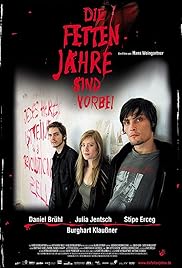
Image result for the edukatorsBeautifully crafted with surprising hints of humor and entertainment, Hans Weingartner’s The Edukators (2004) has successfully painted a picture of how a personin the case of the film, Jan and Peter, “the Edukators”cannot single-handedly change a system that they, themselves, are parts of.
The theme of the film, being political by nature, makes it relevant to today’s times, and I find myself reflecting on the seemingly norm but tragic reality that we remain powerless against a system that is designed to oppress. But, a brilliant point of the film is showcased in the introduction of the film. With furnitures scattered around the house, in places where they are not supposed to be in, it was a message by Jan and Peter: if we cannot change the system instantly, then we’ll make sure to shake the establishment for now. That is what they certainly did, and they did so using humor—a Greek statue entangled by a rope, expensive relics thrown in the toilet. This is their way of educating the elites.

A conflict arises through the persona of Jule. She has been a victim of an economically unjust system where her tiny paycheck as a waitress has to pay off a debt she got from crashing an expensive car belonging to an already rich and wealthy businessman Hardenberg. She was able to convince Jan to target Hardenberg’s house next.

The point-of-view displayed by using handheld cameras brought out a lot of elements for the film. During the break-in, it allowed the film to showcase the acting. A sense of candidness is portrayed. When Jule and Jan are breaking into Hardenberg’s house, it feels as if the I, the viewer, am part of them. As the camera follows the characters, it created a lot of depth for reflection. It put myself in the shoes of the characters.

Why did Jan agree into this? This is where principles were tested. In my opinion, the moment Jan agreed to Jule, he compromised his ideals. A seemingly innocent act, one would even think routinary, is undermined by a flawed intention of revenge, to get back on someone, and quite ironically to feel a sense of power over that person. This is where we are slowly being introduced to the concept of compromise, to the reminder that one cannot fully stand against a system, one that is so established, and all-encompassing.

This was shown in full-swing in the character of Hardenberg, upon his kidnapping. They learned that Hardenberg was a radical as well, at least years ago before he succumbed to society’s requirements and necessities. He got himself a good job, married, and has abandoned his ideals since. The material of the film reflected a gravitating trend in today’s society where a lot of people, once soldiers of their beliefs who would blatantly resist the status quo, will simply fade into the society they once tried to change.

All in all, despite the laughs and gaggle caused by what might pass as light moments in the film, its message remains consistent and constant throughout the very long screening time; the beautiful but tragic showing of the challenges of being a principle-based self in a society this complex.

Timecrimes: A Polarizing Take on Time Travel

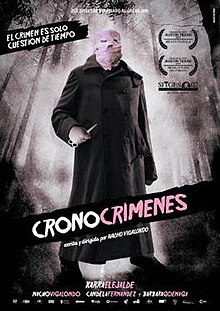
Image result for timecrimesWith a low budget, a complex plot, a simple execution, and an unpredictable story line, Timecrimes easily became one of my favorite films that we have watched this semester. Despite being a low-budget film, they still made it work as it does something interesting with their take on time travel as a thriller/sci-fi/suspense film. I found myself really hooked in the film as the plot twists and turns during the movie really made it unpredictable, which I really enjoyed.
Having only four characters in the movie, Timecrimes made use of a small setting, which takes on time traveling where Hector, the main character, finds himself being part of a time loop as he is forced to interact with his other selves to keep things in place. It shows how his actions were already predetermined and he is challenged on how to execute these actions when he realizes that it is also him who needs to make the decisions for things to remain the same as it happened in previous timelines.

There are a lot of things that I didn’t expect in this film, but as each part of the story unfolded, it all made sense in the end. For instance, we really didn’t understand the woman who undresses in the forest at first, but it eventually shows how she was innocent and how she was just trying to help, but he was only forced by Hector to do these things. One might be confused while watching the film since it has three timelines and three Hectors, but I found it enjoyable to see how each Hector contributed to the series of events that happened in the movie.

Relatively, the film is one of the time travel films that I really enjoyed since it really invoked suspense and how it unfolded the story made it easier to understand, compared to other time travel films that are more confusing. It was evident that the story was very well thought-out, since these types of films are actually difficult to execute because of every detail that needs to be accurate for it to work. Just by missing a small part of the film changes everything because during the film, there were parts that I didn’t understand initially, but eventually made sense when the next timeline was shown.

I was personally polarized by how each plot unfolded and how the horrifying chain of events by Hector’s encounters with himself came about. This is something usual that happens in time travel films and how things go wrong when you change something or when you interact with your other self, but Hector was able to manage to keep things together, but ultimately at the expense of killing the woman in the forest in the process. I also observed the shift in Hector’s personality and character throughout the film, having to make choices that were predetermined for him since he did not have any other choice.

Overall, I really found Timecrimes as a clever and complex film that is enjoyable to watch. I also like how it really made the viewers think since it had three timelines, each adding another layer to the film.

Trollhunter: A Realistic Portrayal of Fantasy

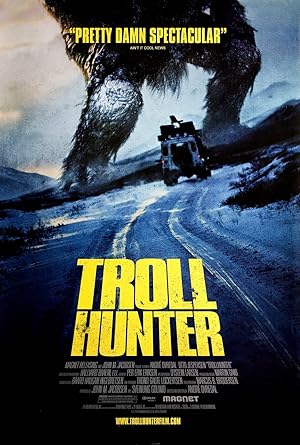
Related imageTo be honest, this film was one of my least favorites so far compared to the previous films that we watched in this course. To some extent, the plot was intriguing but I did not really feel super into the film. Nonetheless, I liked how it was structured as a “found footage” mockumentary and the film’s take on trolls was pretty interesting. The portrayal of the movie as found footage allowed the viewers to feel that they are actually part of the adventure of the Norwegian students as they tried to capture footage of trolls after learning that the hunter that they followed hunts trolls instead of bears, which was kept as a secret by the government. I found this found footage type of movie that is just continually rolling as a way usually used by horror films to make it seem more realistic but I did not really connect with the Trollhunter as I usually do in these types of films, and I could not really pinpoint why.

Based on my prior knowledge and expectations of the idea of trolls, certain aspects of the film did not really make sense for me and I was a bit disappointed with how they were portrayed in the film. The weirdest part for me was that the trolls could smell the blood of Christians, which ended up killing the cameraman when they were trapped in an abandoned mine with a pack of trolls. The killing of Kalle, the cameraman, was one of the scenes that I found interesting tough because it stayed true to the film’s structure and it even maintained the broken lens of the camera until they found a new cameraman. I also liked how the shots seemed so natural as how cameras are usually held and even the shaky footage added to the realistic feel of the film, which it was going for despite tackling trolls, which I would say are far from reality.

André Øvredal’s film attempts to portray fantasy to make it look like reality through his film. Admittedly, the CGI effects used and how the scenes that had both the trolls and the characters in the same frame were impressive. Given that the film was in the form of a found footage, the director tried to make sure that the same suspense was still portrayed, without the aid of a film score and relied on the natural sounds that were present in the scenes. Despite the absence of the film score, it still contributed to the authenticity of the film and contributed to making it more real.

After learning that trolls are really a part of Norway’s folklore, the film made sense as it portrayed their culture and even included the beautiful landscapes in Norway. I liked how it included the discussion on the tolls so that the viewers have a better understanding of the fantasy that the film tackles such as the habits and the different kinds of trolls. While watching the film, I found it a bit too dragging and slow-paced but overall, I still enjoyed André Øvredal’s take on portraying fantasy as realistic through the use of found footage, and the film gives another take on European cinema.