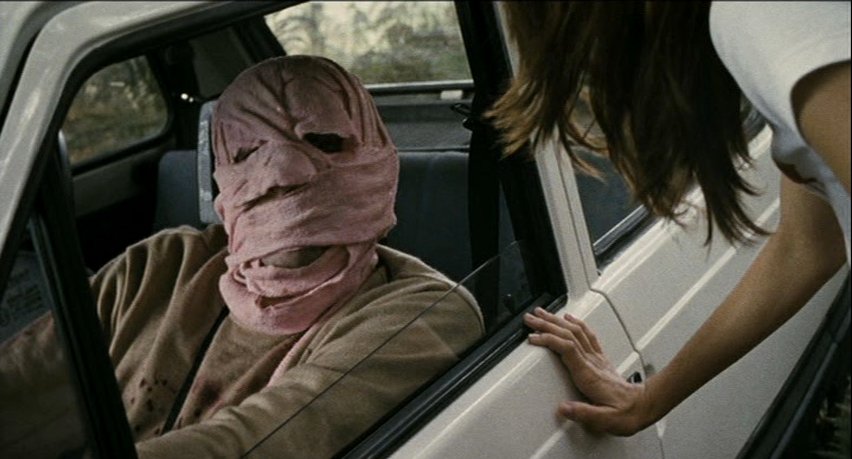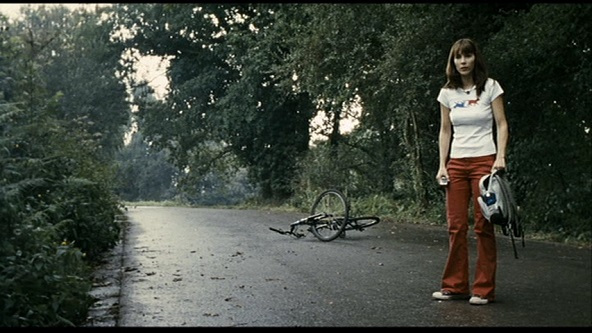
An Unrefined Science Fiction

Bárbara Goenaga

It’s such a shame that I had watched a British-Australian film called Triangle prior to watching Timecrimes. A quick overview of my tragedy, Timecrimes and Triangle carry the same concept of looped time and a character horribly realizing he (or she) is making matters worse for every time he or she repeats time. They’re extremely the same in concept that I didn’t enjoy Timecrimes as much as I believe I could have if I had never seen a narrative like that before.

As someone who was already familiar of the plot before, I didn’t have that much of a reaction anymore towards the twists and the turns and the juxtapositioning of the stories together. Although I do still recognize the wonder in them, I was much engrossed on how the film played with emotions despite being a science fiction film. Hector’s struggles grew more and more severe throughout the movie, and as they grew more intense, suffocating desperation fills the air. You can’t help but feel frustrated with the character but also everything that the character was doing that just worsening his situation. Why can’t he just get it right? He shouldn’t have done that! I just want him to completely solve this. I was filled with so many emotions. Moreover, unrelenting sadness smotherly pervades this Spanish movie despite its character’s anti-heroic tendencies, that surprisingly it’s not hard to feel for him as his next actions just merely confirm his already doomed outcome. For all these emotions the film was able to generate in me, I have so much respect for it.

Timecrimes in my opinion is a three part structure. The first act is tense, mysterious, and suspenseful effusing with the feel of a horror film. The score is chilling and reminiscent of horror flicks. The second act dabbles more in the science fiction element of the movie getting deep with the time travel concept and morphed realities. The third act is a perfect denouement of the events finishing off in silent manner with a relatively open ended resolution, leaving plenty of space to formulate questions.

The film is cleverly crafted even with the quite noticeable absence of visual effects. The movie has a B-movie feel to it, that contributes to the rawness of the story and the coarse, unrefined charm of it. Though there was lack of anticipation while watching the film mainly caused by already being familiar with the narrative, I still found the movie smart with all its other choices.

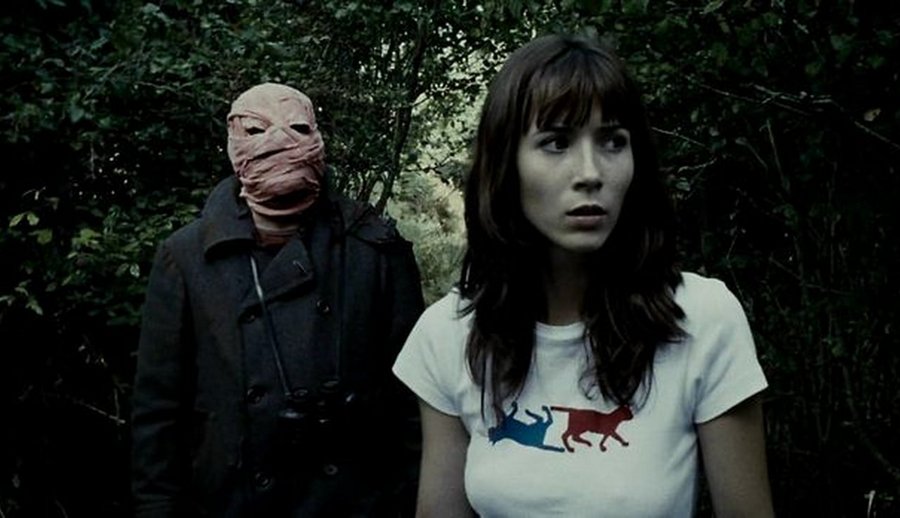
Timecrimes

Timecrimes is a sci-fi film by Nacho Vigalondo. It centers around Hector, a man who finds himself in a timeloop with different versions of himself running around their small setting.

This film felt very mainstream psychological horror to me, as it used the usual tropes of the genre in a typical way. They brilliantly used time-travel in a way that it was easy to understand and it did not hinder the plot. The time-travel plot left no plot holes as there were no hanging plot devices like another version of the main character left unchecked.

I love the way the plot unfolded because it shows how the main character’s problem got bigger as he kept travelling back. The character was wiser than he seems, as he solved his problems in peculiar ways.

This film is one of the films that I enjoyed in class, and I would recommend this to people who enjoy sci-fi movies.

Turn back the clock

As Image Source:
https://letterboxd.com/film/timecrimes/

As seen in the image above, the way our protagonist looks through his imaginary binoculars kind of resembles an infinity sign. That is kind of fitting to what Timecrimes is really all about. It’s more than an hour of struggling with Hector, the central figure in the story, to get out of the time loop that he found himself in. Although the movie is about time travel, it is quite different from the mainstream or more conventional films that follow the same concept. It is rather banal for something that falls under the science fiction. One would expect a lot of spectacle and special effects but that is not the case for this movie. The director, Nacho Vigalondo, relied more on his brilliance in making this film work. The storytelling focused more on tackling the consequences of time travelling rather than its excitement factor. What makes it a lot interesting is that it sparks curiosity among the viewers and it provokes you to think critically. In a way, it wants you to participate in the mind-boggling events that Hector is going through. The plot devices are there to help the audience and the protagonist connect the dots. The binoculars, scissors, and walkie-talkie are among the most significant objects that are used throughout the film. You really have to pay attention to these things because they will eventually help make sense of everything as the story progresses. Even the characters such as El Joven and the woman in the woods played pivotal roles in the unfolding of events. All these factors were smoothly interconnected.

The film might be a bit weird and confusing for the first few parts but it definitely keeps you hooked. You’ll find yourself looking for more answers, and eventually, struggle in trying to figure out what is happening. There is a sort of involvement required as the story follows Hector. The audience is part of the dilemma that he is facing, from the curiosity in the beginning and the estrangement from Hector himself as he grow increasingly unpredictable due to the events.

I particularly enjoyed how Timecrimes appeared to be a perfect mix of varying genres. The science fiction aspect is there but it remained dark and ominous all throughout. It even felt like a purely horror/thriller movie during the scenes where Hector 1 is being chased by the “masked killer” Hector 2. Despite the series of unfortunate events, the film found time to present humor through the naivety of Hector. It wasn’t much of a roller-coaster because the essence of the film remained intact. In fact, the mix of genres may have even contributed to the overall effect of Timecrimes. Overall, the movie is a must-watch for me. It found its beauty in its simplicity while still managing to be magnificently challenging to watch.

Timecrimes: A movie in Three ways


Despite the film taking the least time in its setting (about one hour), we see here a journey of a man who ends up in a time-loop when his future Hector (self) assaults him. Timetravel movies, in my opinion, are really a hit-or-miss because of how easily convoluted the narrative can get on itself. Films such as Avengers: Endgame, and Back-to-the-Future accomplish this by using the scenes of one timeline sparingly, while accomplishing plenty while the characters are at one timeline. This was also done in Timecrimes, when Hector devises numerous schemes and tactics that eventually lined up with the events we viewed in the film. Rather than Timecrimes justifying its convoluted timeline for Hector, it tries to create a flowing narrative for our viewing experience. We begin to say “Ah, so that’s how it happened,” denoting on how a certain event was justified in the whole narrative. Truly, it is a movie done in three ways, where we as the audience must unpack how the curious hour-long adventure of Hector began and ended.

Starting from Hector 1, he was lounging about with his wife, when he saw a certain woman in the woods. He soon became a victim when Hector 1 was assaulted by (at the time) an unknown man. He rushes out in a panic, confused until he ended up in a vat provided by a mysterious scientist. By this point, we were following the narrative of a suspense thrill film for the sake of Hector’s safety.

When Hector 2 comes out of the Vat, realizing what must be done to repeat the events of time. Instead of being worried for Hector’s safety, we become more curious of how Hector 2 executed the story of the assailant, while following what we knew from the scenes preceding those. It was a curious display as Hector 2 tried, with great effort, to replay and recall what happened during the Hector 1 timeline so that the events follow through. This resulted in Hector’s wife dying (?)

The most shocking part was how they began to introduce Hector 3, a more tired and no non-sense character who seemed to want to get things over with. This began our shift from how we were concerned for Hector’s safety, the journey to how the events proceeded, and back to how Hector can find a way to save his wife. In the end, he managed to find some way to save his wife and get things back to normal.

Despite the extremely confusing process of Hector’s journey in time, the narrative becomes sound and the story is concise. All the scenes that preceded and followed other scenes were justified in the sense of how Hector did something to make them happen. All of the doings and events happening in the film, in some way, make up a movie – with the three of them directing a different flow to Hector’s challenge. From escaping a killer, orchestrating the attack, to finding a way to save his own wife, Hector changes faces just to remove himself from the situation he was locked in, no matter how hard and how precise that needed to be.

Here we go again (and again)

I honestly did not expect a thriller to be shown in class. I am very scared of horror films/thriller films/films with jump scares/films with gore/etc. so when I realized that Timecrimeshad a little bit of all of that, I kind of panicked. It started off upbeat and colorful, which made me think that it was going to be a fun film. However, as the film went on and the mystery and the ‘killer’ and the jump scares started to pop out one by one, I started to realize that it was going to be ‘exciting’ in the worst way possible.

The movie starts off in an interesting way. Compared to all the other movies we watched in class, this one caught my attention right off the bat. My curiosity peaked even higher when I realized that it was not just a normal thriller with an unknown killer on the loose. The film also had a sci-fi element to it with Hector travelling back through time to get away from the killer. At first, I thought it was your typical slasher film because of the first few scenes. However, when the story progressed and the scenes started to interlock and make everything make sense — especially the scene where Hector gets into an accident and wraps his head in a bandage — it started becoming less scary and way smarter than I thought it was going to be. I liked that scene because it revealed a plot twist which would hook the audience more when watching the film.

Aside from the ‘cool’ concept, the makers of the film were also able to allow the audience to experience empathy towards the characters. The character that caught my attention the most when it comes to ‘feeling for the character’ is the innocent girl who Hector makes undress. When she first appeared, I thought that she was a weird person for undressing in the forest randomly. I also got annoyed with Hector for checking her out (haha). Then as the movie passed, it was revealed that she was unwillingly undressing because Hector was threatening her in order for the past to happen once again. I felt bad for her because she was just an innocent passerby; it could have easily been another person. Yet she was unlucky enough to encounter Hector right after he crashed his car. I felt even worse for her because she was simply trying to help him — and look where that led her to. It was unfortunate for her to be used as a catalyst for the story to progress.

Hector, on the other hand, was a complex character. I did not really know what to feel about him. I think my feelings were more negative than positive. He made a lot of bad choices that could have been avoided if he had just stayed at home or something. I also did not like the fact that he rarely listened to the scientist who created the time machine. Hector was not knowledgeable of the dynamics of time travel at all, and yet he chose not to listen to the expert. He was kind of annoying, but at least he was flawed. Flawed characters are way better than perfect ones because it humanizes them.

Timecrimes was fun to watch as compared to all the other movies because it was easier to understand than the rest. I enjoyed it even though I am not a fan of thrillers. What I liked about it was the plot twists in the middle because it enticed me to pay attention to the film more.

Timecrimes (2007)

In one line, I feel the easiest way to describe Timecrimes (2007) would be science fiction without a budget. The film sees a middle-aged man who is one day attacked by a masked man and is forced to run for his life after he explores the woods surrounding his house. What follows is a rollercoaster of plot twists within plot twists, as the protagonist, Hector, discovers the tragic nuances of time travel.

Because of the time travel aspect of the story, things very quickly turn meta, as the spectator and protagonist becomes the director who becomes the storyteller of a narrative we see three different times. As the character and main vehicle for moving the story forward, Hector directs and oversees the movement of the story, making sure things go along exactly how he remembers them to and according to how he wants things to play out.

It’s hard to pinpoint an exact genre for Timecrimes after one watch. I would think most would classify it as a science fiction, which is not the most unreasonable prospect; after all, it deals with the violation of a certain physics principle in an act of playing God. However, it can also be described as horror or a thriller because of the way it makes its audiences feel, particularly in its opening moments where a sense of dread permeates most scenes as Hector is suddenly plunged into a fight for survival. Yet it can also be described as a black comedy in all its complex twists and turns; I feel as though one cannot help but laugh at how confusing everything is, which by virtue of the plot becomes almost the main point of the film, all in the name of the protagonist covering up and undoing his past (present? future?) actions.

The use of sound also deserves mention here, as the eerie music at the start for instance serves to heighten the level of ambiguity and ultimately tension, which for a time leaves the impression similar to that of thrillers and horror flicks. Costumes were also utilized very well, albeit sparingly; Hector telling the girl to cut her hair for example, or the scissors he kept in his pocket throughout the entire affair.

Two elements of European cinema as outlined by Wollen (1972) present (pun intended) in the film are estrangement and identification: from the get-go, viewers will find it hard to understand and buy into the point of view of the character as this tends to constantly shift. Hector directs the girl but at the same time he initially started as a spectator. Part of it is that his function as a character changes. He does things to get his old self to do these things. For instance, his character is seemingly very unremarkable in the beginning of the film, which presents him as a balding middle aged guy simply enjoying domestic life. As the film progresses, however, he shifts from audience to storyteller to director. Us as the audience end up having to figure things out, piece the plot together on our own, and see where it goes. His role changes from victim to victimizer as he begins to take charge more. As a director who orchestrated the whole thing, he goes back to where it started by the film’s rather open-ended conclusion.

Narrative transitivity was another element that was masterfully demonstrated in the film. Truthfully, I found it hard to pinpoint whether the narrative structure is transitive or not. Not just the time travel aspect but the fact that the character himself does not know what’s happening at first. In terms of narrative structure: he’s trying to undo something (him looking at the girl through the binoculars) and at the end of the film, they end up back on the deck chair. Husband and wife just lounging around. Sort of starts with a thesis statement and restates it except differently.

This inquiry of the film’s narrative structure also leads me to question its diegesis. After first watch, I feel it’s easy to think of the three time periods as worlds of their own. However, the film is at the end of the day still an example of single diegesis in that it all still works together: we watch a single event that only happens once, but the character is inserted in different points of the narrative, but his relationship to the narrative changes.

All things considered, the film seemed to make use of all of these different elements to emphasize the concept of time travel, as the elements mentioned seemed to work together in giving time travel the main spotlight. The plot’s movement, the genre, the narrative and its structure, the characters and their points-of-view all ultimately pointed back to the time travel aspect and made Timecrimes a truly unique watch, one that I feel definitely belongs among the European cinema greats.

A Simple Thrill: Reflections on Timecrimes

Of all the films we have watched in class, Timecrimes has by far been the closest to how I perceive a Hollywood film would be, which made me more comfortable in watching it. However, it is also different because it is able to pull in an audience so deep into its plot that you’ll just be left with wanting more of the thrill you got watching it. As a fan of thrillers, Timecrimes was honestly one the best thriller films I have watched, close to Christopher Nolan’s Memento.

Nacho Vigalondo’s film was simple; everything we saw was ordinary, yet it did not fail in bringing us the excitement of trying to figure out what was going on in the film. It’s simplicity for me is what made it great because ordinary things turned into something surprising. And it is through these things we see in the film that we’re able to piece together a story that one cannot figure out without the guidance of the characters in the film’s complicated timeline. For example, I immediately knew that there was something odd about the woman whom Hector 2 accidentally killed on the rooftop because, while Hector 2 perceived her to be his wife, I for one knew I can’t be her because of how the framing of the scene highlighted the woman’s shoes. I knew from then on, that this woman was the woman in the forest because she was wearing the same black shoes that was also previously emphasized in a frame in the previous scenes. Purposely framed scenes like this which emphasizes little details are important, especially in thriller films that require the audience to figure out elements in the story. Yet, despite these little clues, the story of Timecrimes itself seems to fit each other perfectly, like a puzzle.

I compared this film to Memento due to its odd use of the film’s narrative. Memento, although not a sci-fi time travelling film, was able to utilize its story in such a way that would have the audience solve a mystery along with its character. Similarly, Timecrimes leaves us solving for what is really happening in the story, or rather, what really did happen. It’s also confusing at times since the story itself is stuck in an infinite loop where the cause and effect of such events comes from a single source.

I think that what makes this film all the more thrilling is the fact that it ended so perfectly, with each scene falling into place. However, we’re left to wonder, what if the characters were to make a single mistake? Would it change the entire plot? Would it create a drift in time? How would that look like in such a simply made film? Questions like these is what makes me love films such as Timecrimes, and for this I have to say it is my favorite film so far.

History as His Future

Nacho Vigalondo’s 2007 Spanish science-fiction time-travel thriller film, Los Cronocrimenes (Timecrimes) aimed to enhance its viewers skepticism, which it had successfully done with it’s storyline’s use of dark humor and bizarre twists. Having said that, I think it’s safe to say that the film was amusing. In watching it, one would think that the antagonist would be some delusional and mentally disabled person (especially during the scene when said person pretended to be copying Hector with his binocular). However, it’s funny to realize that said “antagonist” was Hector himself!

The storyline mainly revolves around Hector, a middle-aged man who finds himself part of a time loop, and his dilemma of stopping his other selves from continuing to exist, which consequently causes more trouble and makes him go back in time again and again – or maybe just three times.

At first, I thought it was going to be like The Cabin in the Woods, where cannibals and psychotic people reside in the woods, waiting for people to go there. As said before, this was especially supported by the scene where Hector 2, with his blood-stained bandages and knowledge of what he himself showed Hector 1 before, tried to act like a mentally-deranged person with imaginary binoculars. However, especially once Hector has been teleported a couple of hours back and when his bandage started to become pink because of blood he got from his car accident, it then started to become clear that Hector may have been behind everything. At that time, though, I thought the person who had seemingly hit his car accidentally and had caused him to have a bloody face was just a random passerby, but then another plot twist was it was really him! Essentially, he was the mastermind behind everything that happened that day – he just played himself.

Lastly, I like how the film manages to answer all of the puzzles it seemed to show at the start of the film – which is mainly answered from the actions of Hector 2 and Hector 3.  However, one thing that remains a mystery to me was why Hector went into the woods to investigate about a girl who he creepily watched getting naked in the woods. I do not know if he was being a pervert or being concerned for the woman. The film made it look like he was concerned, but why would you go to the woods to look for a woman that you had just seen naked with your binoculars? Because she suddenly disappeared? Maybe it’s confusing to me because I’m not a guy nor am I Spanish, but personally, if I saw a naked woman strip naked in the forest and then disappears, I would not go to the woods just to look for her. For me, that part made Hector look like a creep. However, I quickly forgot about that when somebody suddenly stabs him in the arm. That gave me “thriller” vibes, which I’m not really fond of because I easily get scared.

Conclusively, Timecrimes is a unique time travel thriller that maybe aims to tell its viewers that history has already been written, maybe by ourselves or, in this case, our future selves. In the film, the actions of the future ironically dictate the actions of the present, and that is why I think the film truly did deserve appraisals for its creativity.

Eighth

Timecrimes by Nacho Vigalondo

This film was quite the entertaining ride. It really caught me off guard how the narrative progressed because I genuinely thought it would be a sort of slasher horror film that would end in the protagonist’s death. In the beginning I did not expect for the time travel aspect to be a part of the plot because there was never an indication from the movies aesthetics that it would take this turn. The time travelling was confusing at times but it helped reason with the earlier missing plot points that made you go “ah, so that’s why he did what he did”. As the story goes back and forth to deepen the plot I kept anticipating the cause and effects of each of his actions.

Yet the movie surprised me as a time travel thriller that was exciting and really kept me on my toes wondering what would happen next. The film started off simple, a husband and wife going about their day but suddenly the husband, Hector, sees something odd beyond the fences of his home. It was a wild trip from that point on wards. Seeing everything unfold and seeing how he had to follow through with these all the wrong things pilling on top of each other. It was shocking to watch how he had to kill an innocent woman and having to have three versions of himself reliving the day over and over. It was quite scary at times because in the beginning you never realize the madness in Hector until he acted upon it. The slow and steady decent to him becoming his own enemy and making that day his own personal and living hell. All three Hectors sort of blurred into each other wherein we would have to watch the same events and connecting why and how the events took place. You do not know whether to sympathize with the Hectors or would rather see them as a villain. You sympathize with him because he is just an average man protecting himself and his wife but then you also see him as a villain in him having to be the reason for someone’s death and being the cause for a temporary paradox that affected lives.

I enjoyed the movie a lot as I have never seen a time travelling movie such as this and with an added thriller/horror added to it. It was action packed and fun to see how each event unfolded. In the end you see how much man would do to resolve his problems and yet want to avoid it at all costs. I would recommend this movie to people who may be into these time travelling science fiction-y drama because as stated it sort of deviates from the average as it adds more depth with it being a thriller/horror. The actors especially Hector played by Karra Elejalde was brilliant making the viewers hooked on to the story wanting to see how everything played out in the end.

The Sudden Time Loop: A Discussion on Timecrimes

Karra Elejalde in Timecrimes, directed by Nacho Vigalondo

Oftentimes, time travel films focus on the technical and technological aspects of the fluidity of time that it becomes increasingly difficult for others to follow the story. Enter the 2007 Spanish science fiction thriller Timecrimes, directed by Nacho Vigalondo, which focuses on a simple man named Hector who finds himself in a time loop and a desperate journey to undo his mistakes. One of the great things about the film is that despite the lack of special effects commonly used in science fiction films, Timecrimes takes you an intriguing adventure that you cannot help but watch. This is not to say that the film is easy to understand since it does not focus on the technical aspects; rather, the film confuses you through the story itself because of the use of narrative intransitivity. There is no cause-and-effect driven narrative in the beginning because we do not know what started the the time loop in the first place. Initially, we think that it might be the scientist, but we are quite unsure as the film progressed. There seems to be no relation between the scenes, such as “Why was there a naked lady in the forest?” However, the interconnection between the main character’s actions becomes clearer in the middle of the film as we discover that there are two other versions of Hector. By revealing the intentions behind the initial actions at a latter part of the film, the audience is hooked and patiently waiting for the explanations to their questions. The film becomes exciting and despite being a thriller — where one is usually scared, you are begging for more once some things start to make sense.

However, boy were we wrong to expect that we will get an explanation for the whole story. Happy endings usually provide satisfaction to the audience since they usually tie up the loose ends of the story. However, although Timecrimes might have given us a sort of happy ending since Hector 3 was able to rescue her wife at the cost of the life of an innocent girl, we find it hard to move on and get up from our seats because we have even more questions that were left unanswered. The biggest question at the end of the film remains: How did the time loop start? We can come up with as many theories as we can, but we will never get the resolution we need. Yet, instead of ruining the film for the audience, this technique of leaving questions unanswered heightens our experience and allows us to appreciate the complexity of the story. The happy ending we get is reality, that sometimes, our happiness comes at the expense of someone else’s pain. Being unable to have our questions unanswered gives room reflection and ignites a rich discussion with others who watched the film. In the end, Timecrimes reminds us that perhaps, there are things that will happen in our lives with which we cannot provide an explanation, and the only way to survive is to deal with them.